A coffee maker can look clean while old coffee oils, fine grounds, and mineral scale collect in places you cannot easily see. Those residues can cause stale flavors, slower brewing, restricted water flow, odors, or inconsistent performance. The safest approach is to wash coffee-contact parts regularly and descale the internal water system according to the owner’s manual, clean indicator, usage, and local water hardness.
Quick Answer
Wash the carafe, filter basket, reusable filter, and other coffee-contact parts after use. Clean the reservoir and drip tray regularly, then descale when the clean light or owner’s manual says it is due. Use an approved descaler or distilled white vinegar only when the manufacturer permits it, and finish with the required fresh-water rinse cycles.
Key Takeaways
- Routine washing removes coffee oils, grounds, milk residue, and surface grime; descaling removes mineral deposits from the internal water path.
- There is no universal descaling interval or vinegar ratio. Follow the clean indicator and instructions for your exact model.
- Some machines permit distilled white vinegar, while others specify a dedicated descaling liquid, tablet, or cleaning program.
- Hard water, heavy use, slower flow, visible scale, or a clean/descale warning may mean maintenance is due sooner.
- Never circulate bleach, dish soap, essential oils, milk, or another unapproved cleaner through the internal water system.
- Run the required fresh-water cycles after descaling and do not brew coffee until the rinse water is clear and free of cleaner odor or taste.
At a Glance
| Time Required | About 15 minutes for routine washing; roughly 30–90 minutes for many descaling programs, depending on the model |
| Difficulty | Easy |
| Tools Needed | Mild dish soap, nonabrasive sponge or brush, soft cloth, fresh water, and the manufacturer-approved descaler or permitted vinegar mixture |
| Cost | Low; usually the cost of one dose of approved descaler or a small amount of distilled white vinegar when the manual permits it |
Warning: Turn off and unplug the coffee maker before washing removable parts or wiping the appliance, and let the hot plate cool completely. Never immerse the powered base, cord, or plug. Do not mix vinegar with chlorine bleach or another cleaner. Pod-machine piercing needles can be sharp, so follow the manual before touching or clearing them.
Why Cleaning Your Coffee Maker Matters for Taste
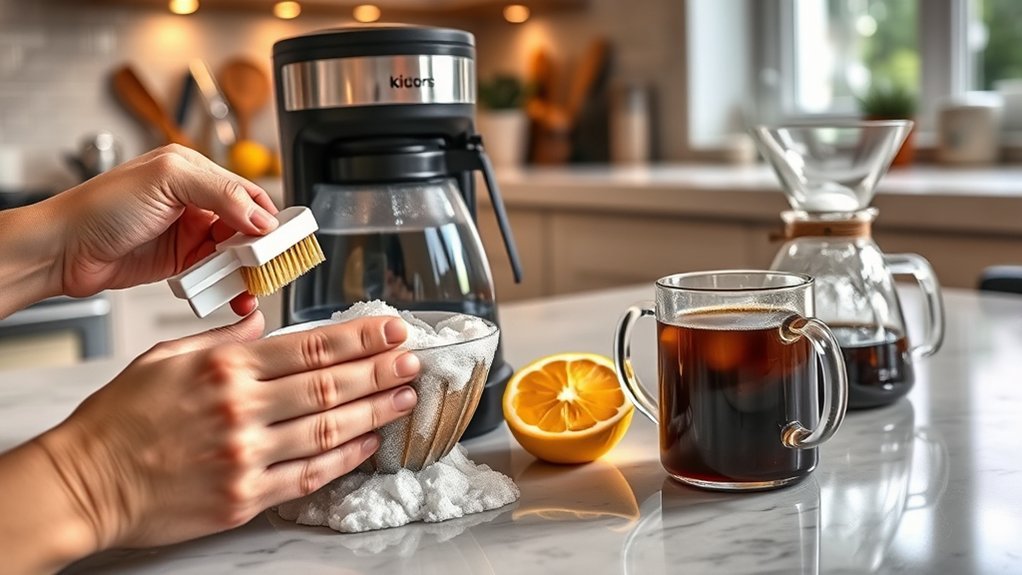
Coffee oils cling to the carafe, reusable filter, brew basket, lid, and water outlet. As those oils age, they can leave stale, bitter, or rancid flavors in a fresh pot. Fine grounds may also collect around the basket or outlet and interfere with even water flow.
Mineral scale is a different problem. Calcium and other minerals naturally present in water can collect inside the reservoir, heater, valves, and tubing. Manufacturers such as Cuisinart and Keurig explain that mineral buildup can interfere with normal brewer performance and may contribute to slower flow.
Damp coffee residue can also support microbial growth in waste areas. A 2015 study of capsule machines documented varied bacterial communities in coffee-leach residue collected from waste trays and capsule-container areas. The study did not show that every unclean coffee maker produces unsafe coffee, so it should not be treated as a general food-safety test. It does support regularly emptying and cleaning areas where wet coffee waste accumulates.
Routine cleaning removes old coffee oils, grounds, and spills. Descaling targets mineral deposits inside the water system. A complete maintenance routine needs both.
Cleaning Versus Descaling
| Task | What It Removes | Typical Method |
|---|---|---|
| Routine cleaning | Coffee oils, grounds, spills, milk residue, and surface grime | Warm water, mild dish soap, and a nonabrasive sponge, brush, or cloth on approved removable surfaces |
| Descaling | Calcium, lime, and other mineral deposits in the internal water path | The manufacturer-approved descaling solution or a distilled white vinegar mixture specifically permitted by the manual |
Dish soap can clean a carafe, basket, reservoir, or other washable component, but it should not be pumped through internal tubing unless the owner’s manual expressly directs you to do so. Likewise, baking soda may help scrub stains or neutralize odors on approved removable surfaces, but it is not a universal substitute for an acidic descaler.
Recommended Cleaning Frequency for Your Coffee Maker
Cleaning schedules vary by machine, usage, and water hardness. Use the following table as a practical starting point, then follow the instructions for your exact model whenever they differ.
| Frequency | Recommended Task |
|---|---|
| After each use | Discard grounds or pods and wash or rinse the carafe, brew basket, reusable filter, milk-contact parts, and other coffee-contact pieces as directed. |
| Weekly or regularly | Wash the removable reservoir and lid when permitted, empty the drip tray, wipe the exterior, and inspect the water outlet or pod-holder area for residue. |
| When indicated by the machine or manual | Run the full descaling or clean cycle. Depending on the manufacturer and model, the schedule may be based on brew count, calendar time, water hardness, or an automatic clean/descale indicator. |
| More often with hard water or heavy use | Watch for white deposits, slower flow, extra noise, reduced output, or a recurring clean light and descale sooner when the manufacturer recommends it. |
Note: A calendar reminder can help, but the owner’s manual and clean indicator should take priority. Current examples differ considerably: Cuisinart publishes roughly one-to-three-month guidance depending on water hardness, certain Keurig brewers specify every three months, and Mr. Coffee publishes a 40–80-brew recommendation for some machines.
How to Tell When Your Coffee Maker Needs a Deep Clean
Do not rely on taste alone. Check the machine for several common warning signs:
- White or chalky deposits: These commonly indicate mineral scale.
- Longer brew time or reduced output: Restricted water flow may be slowing the cycle.
- Unusual sputtering or extra noise: Scale, trapped air, or a partial blockage may be affecting water movement.
- Stale, oily, or rancid flavor: Wash the carafe, basket, reusable filter, lid, and water outlet.
- Musty odor: Empty standing water, clean removable parts, and let them dry fully.
- Grounds overflowing into the carafe: Check the filter size, coffee amount, basket alignment, grind size, and outlet rather than assuming scale is the only cause.
- Clean or descale light: Run the exact program described in the manual. A normal brew cycle may not complete or reset a dedicated descaling program.
Bitterness can also come from over-extraction, water that is too hot, an overly fine grind, too much coffee, stale beans, or unsuitable water. Cleaning the machine may help, but it will not correct every brewing problem.
Before You Start
- Find the model number and open the owner’s manual or official manufacturer support page.
- Confirm whether the machine permits vinegar or requires a dedicated descaling product.
- Check whether a charcoal, resin, or other water filter must be removed before descaling.
- Confirm whether the machine has a dedicated clean or descale mode that must be activated with a specific button sequence.
- Empty the carafe, reservoir, pod holder, and brew basket.
- Discard used grounds, filters, and pods.
- Turn off and unplug the machine before washing removable parts or wiping the exterior.
- Allow the hot plate and other hot components to cool.
Pro Tip: Take a quick photo before removing several small parts. It can make reassembly easier, especially on pod brewers, grind-and-brew machines, or models with reusable filters and multiple basket pieces.
What Not to Put Through a Coffee Maker’s Water System
The reservoir and internal tubing are not general-purpose cleaning containers. A substance that is safe on a removable surface may still be unsuitable for the heater, pump, valves, seals, or enclosed water path.
- Chlorine bleach: Do not run household bleach through the brewer unless the manufacturer gives explicit instructions for that exact model. Never combine bleach with vinegar or another acidic cleaner.
- Dish soap: Use it on approved removable parts, not in internal tubing unless the manual specifically tells you to do so.
- Essential oils or scented cleaners: These may leave difficult-to-remove residue or damage materials.
- Abrasive powders: Keep them away from internal water passages and delicate finishes.
- Baking soda: It can be useful on some removable surfaces, but do not assume it is an approved internal descaler. Follow the exact model instructions.
- Milk, creamer, cocoa, syrup, or sugary liquids: Do not circulate these through a standard water reservoir unless the appliance was specifically designed for that use.
Easy Steps to Clean Your Coffee Maker With Vinegar When Approved
Distilled white vinegar can dissolve mineral deposits in many standard drip coffee makers, but it is not the required or approved method for every machine. Some manufacturers specify their own descaling liquid, tablets, quantities, or button sequence. Follow the owner’s manual even when its directions differ from the general process below.
Essential Cleaning Ingredients
- Mild dish soap
- A soft sponge or nonabrasive brush
- A clean microfiber or lint-free cloth
- Fresh water
- The approved descaling product for your model
- Distilled white vinegar only if the manufacturer permits it
- A container, mug, or carafe large enough to collect the full cleaning cycle
Avoid steel wool, abrasive powders, scented vinegar, essential oils, and unapproved household chemicals. Never put bleach into the reservoir or combine bleach with vinegar.
Step-by-Step Cleaning Process
- Remove washable parts. Take out the carafe, filter basket, reusable filter, reservoir, drip tray, and other removable pieces allowed by the manual.
- Wash coffee-contact parts. Use warm water, mild dish soap, and a nonabrasive sponge or brush. Rinse thoroughly so no soap remains.
- Prepare the descaling solution. Add the exact product quantity or vinegar-to-water ratio listed for your model. Do not assume that a 1:1 mixture, full-strength vinegar, or another internet recipe is correct for every machine.
- Remove the water filter if directed. Some charcoal or resin filters must be taken out before a descaling cycle.
- Position the empty carafe, mug, or container. Make sure it can safely hold the amount dispensed without overflowing.
- Run the clean or descale program. Use the dedicated button or mode when available. If the manual specifies a partial brew and soaking period, follow its timing exactly.
- Complete the cycle. Do not interrupt an automatic program unless the manufacturer directs you to pause or power off the machine.
- Discard the used solution. Rinse the carafe, collection mug, and reservoir with fresh water.
- Run fresh-water cycles. Run the number of rinse cycles required by the manual. Two or three cycles may be appropriate for some machines, while others require a different amount.
- Check for cleaner odor or taste. Continue rinsing if the water still smells or tastes like vinegar or descaling solution.
Do not brew coffee until the reservoir, water path, carafe, basket, and other coffee-contact parts have been fully rinsed.
How to Clean Each Part of a Coffee Maker
Carafe and Brew Basket
Wash these parts after use with mild dish soap and warm water. A soft bottle brush can reach the bottom of a narrow thermal carafe. For brown stains, soak the carafe with warm soapy water and use a nonabrasive brush. Baking soda may be used as a gentle surface scrub when the material and manufacturer allow it.
Water Reservoir and Lid
Empty standing water regularly. Hand-wash or wipe the reservoir according to the manual, rinse it thoroughly, and let it air-dry. Dishwasher instructions differ by model: some reservoirs are dishwasher-safe, while others can warp or become damaged. Avoid wiping the inside with a lint-shedding cloth when the manufacturer recommends air-drying instead.
Drip Tray and Pod Holder
Empty and wash the drip tray before residue becomes sticky. On a pod brewer, remove loose grounds from the pod holder and surrounding area. Do not place your fingers near piercing needles. Use the manufacturer’s approved cleaning tool or procedure.
Hot Plate and Exterior
Unplug the coffee maker and let the plate cool. Wipe the plate and exterior with a damp, soft cloth. For a dried spill, lay a damp cloth over the cooled spot briefly to soften it, then wipe it away. Do not pour water directly onto the machine or let moisture enter buttons, seams, vents, or the power connection.
Milk Frother or Milk System
Clean milk-contact parts after every use because dried milk becomes harder to remove and can develop an unpleasant odor. Follow the model’s instructions for purging steam wands, washing tubes, and cleaning frother components. Never assume an electrical frother can be submerged or placed in a dishwasher.
Built-In Grinder or Grind-and-Brew System
Empty old beans and loose grounds as directed by the manufacturer. Brush dry coffee residue from approved grinder chutes, burr areas, or grounds channels using the supplied tool or a dry soft brush. Keep water away from grinder motors and electrical components unless the manual specifically identifies a removable part as washable. Oily residue in a grinder can make freshly brewed coffee taste stale even when the water system is clean.
Espresso Machine Group Head
Espresso machines need additional care beyond ordinary descaling. Rinse the group head, clean the portafilter and basket, wipe the shower-screen area as directed, and purge milk residue from steam equipment after use. Backflush only when the manufacturer says the machine supports it, and use the specified detergent, blank basket, or cleaning cycle. Descaling and backflushing are different procedures.
Special Care for Pod Brewers
Pod brewers can collect grounds around the pod holder, funnel, entrance needle, exit needle, and drip tray. Remove and wash only the parts the manual identifies as removable. If a needle is clogged, use the manufacturer’s recommended cleaning method rather than inserting your fingers into the pod holder.
Many pod machines also require a specific descale mode. Completing ordinary water-only brews may rinse the machine but may not complete the programmed descaling sequence or turn off a descale warning. Follow the button sequence and rinse volume listed for the exact brewer.
Cleaning a Coffee Maker After Storage or Several Days Without Use
If a coffee maker has been stored or has sat unused for several days, empty old standing water and inspect the reservoir, basket, drip tray, and other removable parts. Wash anything with visible residue or odor, then run a fresh-water cleansing cycle before making coffee. Some manufacturers specifically recommend a water-only cleansing brew after storage or a period of nonuse.
If the machine was stored for a long period, smells musty, shows visible growth, leaks, or produces discolored rinse water, stop and consult the manual before brewing. Replace any water filter that has exceeded its service interval.
Essential Steps After Cleaning Your Coffee Maker
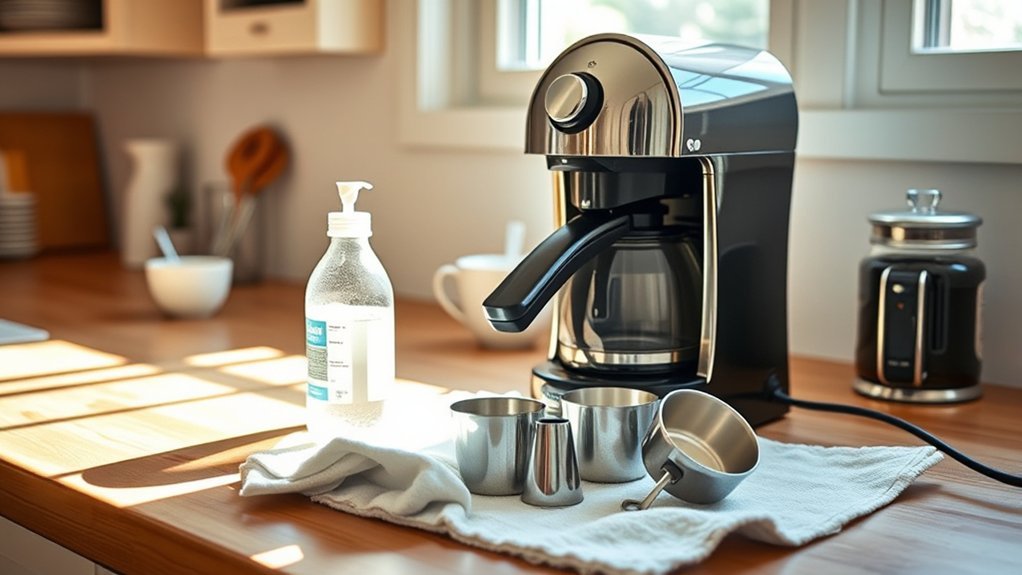
- Inspect every part. Look for cracks, loose seals, clogged screens, damaged filters, or residue that did not wash away.
- Rinse thoroughly. Soap, vinegar, or descaler left behind can affect the next pot’s flavor.
- Allow parts to dry. Air-drying removable parts helps reduce trapped moisture and musty odors.
- Reinstall filters correctly. Replace the water filter if it has reached the interval specified by the manufacturer.
- Reassemble the machine. Confirm that the basket, reservoir, carafe lid, drip tray, pod holder, and other removable pieces are seated correctly.
- Run a water-only test. Check for normal flow, leaks, error lights, unusual noise, and lingering cleaner odor.
- Discard the test water. Brew coffee only after the rinse water is clear and odor-free.
Troubleshooting After Cleaning
| Problem | What to Check |
|---|---|
| Vinegar or cleaner smell remains | Rinse the reservoir and run additional water-only cycles. Wash the carafe and basket again, then retest with fresh water. |
| Clean or descale light stays on | Confirm that you activated the dedicated clean/descale mode and completed every required rinse. Some models require a specific button sequence before the indicator resets. |
| Brewing is still slow | Repeat descaling only if the manual allows it. Check the outlet, basket, pod holder, filter, valve, and water intake for another blockage. |
| Coffee still tastes bitter | Clean the grinder and reusable filter, then review bean freshness, grind size, coffee dose, water quality, brew time, and temperature. |
| Grounds appear in the cup | Check the filter, basket, grind size, pod holder, and any entrance or exit needle that the manufacturer identifies as user-cleanable. |
| Machine leaks | Stop using it until the reservoir, seals, carafe, basket, hoses or user-accessible valves are inspected. Replace damaged removable parts or contact the manufacturer. |
| Machine will not start | Check that all removable parts are seated correctly, the cleaning program has finished, and the outlet works. Do not open or repair internal electrical components yourself. |
How Regular Cleaning Improves Your Coffee’s Taste
A clean machine cannot improve poor-quality beans, but it prevents old residue, stale oils, and restricted water flow from masking their flavor. Keeping the water path, basket, filter, grinder, and carafe clean produces a more consistent result from one brew to the next.
| Cleaning Benefit | Possible Effect on the Brew |
|---|---|
| Removes old coffee oils | Reduces stale, bitter, or rancid flavors |
| Clears grounds and residue | Promotes cleaner flow and can reduce overflow or grounds-in-cup problems |
| Removes mineral scale | May restore normal brewing speed and improve consistency |
| Dries damp removable parts | Helps reduce trapped moisture and musty odors |
| Cleans a built-in grinder | Reduces stale-ground residue that can affect aroma and flavor |
Frequently Asked Questions
Can I use other cleaning solutions besides vinegar?
Yes, but use only a cleaner approved for your model. A commercial coffee-machine descaler may be required or preferred. Baking soda can help clean stains and odors on some removable surfaces, but it should not be run through internal tubing unless the manufacturer specifically approves that method.
How often should I replace my coffee maker?
There is no universal replacement age. Consider replacement or professional service when the machine has a damaged cord, recurring leaks, overheating, repeated electrical problems, unavailable parts, severe corrosion, or performance problems that proper cleaning and approved repairs do not solve.
Does hard water affect coffee maker cleaning?
Yes. Hard water contains more scale-forming minerals, so deposits may return sooner. Follow the manufacturer’s hard-water schedule, watch for white buildup and slower flow, and consider filtered water when the manual permits it. A standard carbon filter may improve taste but does not necessarily remove all hardness minerals.
Is it safe to clean a coffee maker with bleach?
Do not run household bleach through a coffee maker unless the manufacturer gives explicit instructions for that exact model. Bleach may damage materials or leave unwanted residue in an enclosed water path. Never combine bleach with vinegar or another acidic cleaner because the mixture can release dangerous chlorine gas.
Can I clean my coffee maker in the dishwasher?
Only place parts in the dishwasher when the owner’s manual or a dishwasher-safe symbol confirms compatibility. The answer varies by model. Never put the powered base, cord, warming plate, electrical frother, grinder assembly, or an unapproved reservoir in the dishwasher.
How often should I descale my coffee maker?
Follow the clean or descale indicator and the schedule in the owner’s manual. Manufacturer intervals vary from a specified number of brews to calendar-based schedules such as every few months. Heavy use and hard water can shorten the interval.
Why does my coffee still taste bad after cleaning?
First, make sure no soap, vinegar, or descaler remains. Then check the grinder, reusable filter, beans, water, grind size, coffee-to-water ratio, brew time, and brewing temperature. A clean machine can still produce bitter, sour, weak, or stale-tasting coffee when the recipe or ingredients are unsuitable.
What should I do if my coffee maker has not been used for several days?
Empty old standing water, inspect and clean removable parts, refill the reservoir with fresh water, and run a water-only cleansing cycle before brewing coffee. If the machine has been stored for a long time or has a musty odor, visible residue, leaks, or unusual rinse water, follow the manufacturer’s storage and cleaning instructions before using it.
Conclusion
For better-tasting coffee, clean the parts that touch coffee after use and descale the internal water system at the interval specified for your machine. The most important rule is to follow the exact model instructions: vinegar strength, approved descaling products, dishwasher compatibility, filter removal, needle cleaning, rinse volume, and clean-cycle timing are not universal. A consistent routine helps prevent stale residue, mineral buildup, slow brewing, musty odors, and avoidable equipment problems.
Sources
- Cuisinart: How to Clean a Coffee Maker — routine washing, coffee-oil and mineral buildup, vinegar methods, filter care, and descaling guidance.
- Keurig: How to Descale Your Coffee Maker — model-specific descaling modes, rinsing, mineral-scale removal, and brewer maintenance.
- Mr. Coffee: How to Clean Your Coffee Maker — usage-based cleaning guidance, including the published 40–80-brew recommendation for certain machines.
- Ninja DualBrew Support — clean-cycle, approved-descaler, vinegar, and model-care guidance.
- CDC: Chlorine Chemical Safety — safety guidance on chlorine exposure and the danger of mixing household bleach with incompatible cleaners.
- The Coffee-Machine Bacteriome — peer-reviewed research documenting bacterial communities in coffee-waste residue areas of capsule machines.