


To cook meat for baby food puree, start by choosing tender cuts like chicken breasts or ground turkey. Cook the meat to safe temperatures—165°F for chicken, 160°F for ground meat. Chop it into small pieces, then blend with low-sodium broth until smooth. For added flavor, mix in fresh herbs or sweet vegetables. Allow the puree to cool and store it properly. Discover more tips on getting the perfect consistency and flavor for your baby’s meals.
Key Takeaways
- Select lean, tender cuts of meat like chicken or turkey, ensuring freshness and avoiding processed options for optimal nutrition.
- Cook meat to safe internal temperatures: 165°F for chicken and 160°F for ground meat, using a meat thermometer for accuracy.
- Chop cooked meat into small pieces and blend with low-sodium broth or water, adjusting liquid for desired puree consistency.
- Enhance flavor by adding fresh herbs or naturally sweet vegetables, and experiment with fruits for balanced taste in the puree.
- Store leftover purees in airtight containers, refrigerate for a few days, or freeze for longer storage, reheating thoroughly before serving.
Choosing the Right Meat for Baby Food Purees

When preparing baby food purees, you’ll often want to choose the right meat to guarantee your little one gets crucial nutrients.
Start with meat selection criteria that prioritize tender cuts like chicken breasts, beef chuck, or ground turkey. These options not only provide crucial protein sources but are also easier to cook and puree.
Lean meats, particularly chicken and turkey, deliver higher protein levels, while beef and pork offer important iron and zinc for your baby’s growth.
Always select fresh, high-quality meats and steer clear of processed varieties, which may contain harmful additives.
Introducing a variety of meats, including fish, can help your baby explore different flavors and textures while enhancing their iron intake—an crucial part of their development.
Preparing and Cooking Meat Safely for Baby Purees
To guarantee your baby’s meat purees are safe and nutritious, it’s crucial to follow proper cooking techniques. Start by choosing tender cuts like beef chuck or sirloin, ensuring they’re fresh and free from additives.
Prioritize meat safety by cooking to safe temperatures—145°F for beef, 165°F for chicken, and 160°F for ground meat. This eliminates any risk of foodborne illness.
Prioritize meat safety by ensuring proper cooking temperatures: 145°F for beef, 165°F for chicken, and 160°F for ground meat.
Use cooking utensils that are clean and appropriate, like pots for boiling or steaming, to retain nutrients and tenderness. Once cooked, let the meat cool, then chop it into small pieces for easy blending.
Finally, blend the meat with a liquid such as low-sodium broth or water, adjusting for the desired puree consistency.
Key Cooking Methods for Baby Purees
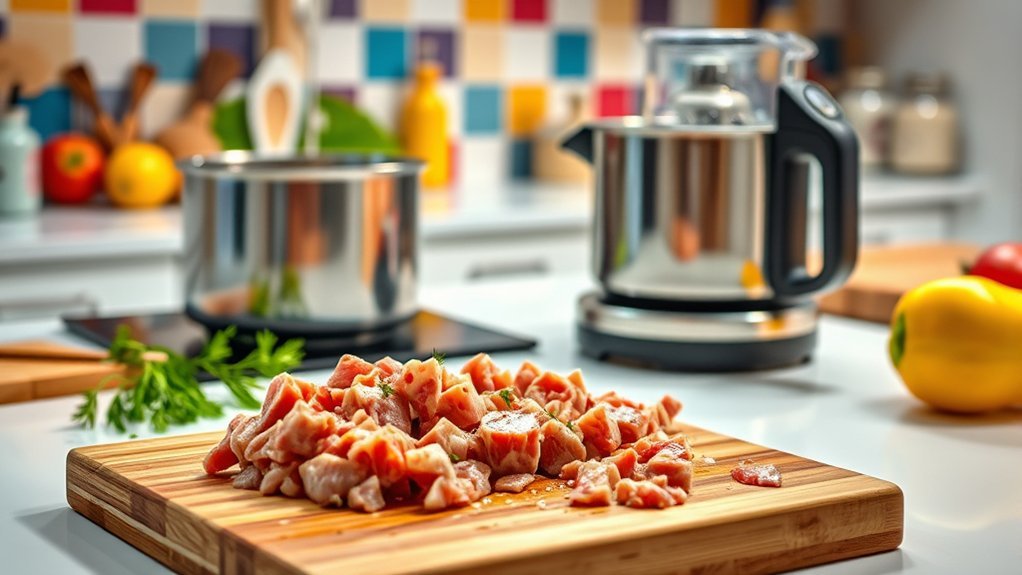
After confirming meat is prepared safely, you can choose from various cooking methods that suit your baby’s puree needs.
Steaming is a fantastic option due to its steaming benefits; it retains more nutrients and flavor compared to boiling.
If you opt for boiling, be aware that while it tenderizes the meat, it may leach out some nutrients.
Cooking meat in broth, like chicken or beef stock, offers broth advantages by enhancing the flavor and adding extra nutrients to your puree.
For ground meats, pan-frying or browning before adding liquid guarantees thorough cooking and boosts the flavor profile.
Always remember to check that the meat reaches the correct internal temperature to keep your baby safe from foodborne illnesses.
How to Achieve the Perfect Puree Consistency?
Achieving the perfect puree consistency for baby food requires careful attention to both cooking and blending techniques.
Start by cooking the meat thoroughly until it reaches the appropriate internal temperature—160°F for ground beef—to guarantee safety and tenderness. Chop the cooked meat into small, 1-inch pieces to facilitate blending.
Use a high-power blender or food processor, adding liquid like low-sodium broth, water, or breast milk gradually—about 1/4 cup of liquid per cup of cooked meat. Blend until you reach a smooth, velvety consistency, adjusting the liquid based on your baby’s age and chewing ability.
Monitor the texture closely; if lumps remain, continue blending or strain the puree for a finer consistency, especially for younger infants.
Follow these puree techniques and blending tips for ideal results.
Flavoring Tips for Enhanced Baby Purees
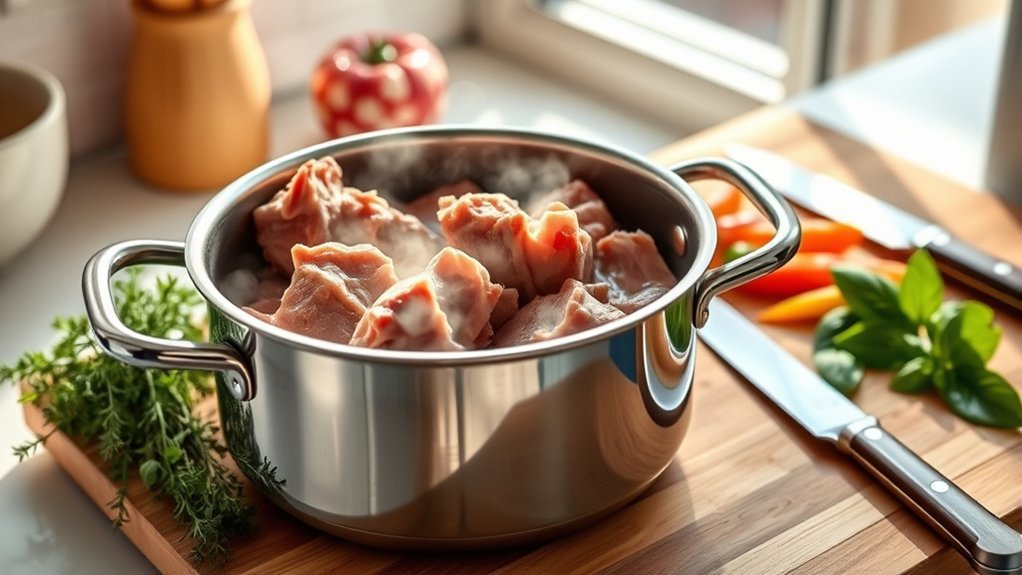
When you’re preparing meat purees for your baby, consider adding fresh herbs like oregano or basil to enhance the flavor without extra sodium.
Mixing in naturally sweet vegetables, such as sweet potatoes or carrots, not only boosts taste but also packs in essential nutrients.
These simple adjustments can make your baby’s meals more enjoyable and nutritious.
Fresh Herb Combinations
To elevate the flavor of meat purees for your baby, consider incorporating fresh herbs, which can enhance taste without the need for salt. Proper herb selection can create a delightful flavor balance, making meals more appealing. For example, try combining parsley, basil, and thyme for chicken, or rosemary and thyme with beef for a richer profile. Always chop herbs finely and add them to the cooking liquid, allowing their flavors to infuse.
| Herb Combination | Flavor Profile |
|---|---|
| Parsley & Basil | Fresh & Mild |
| Rosemary & Thyme | Earthy & Robust |
| Oregano & Thyme | Savory & Aromatic |
Remember to introduce herbs gradually to monitor for any allergic reactions.
Adding Natural Sweetness
How can you make meat purees more appealing for your baby? Start by adding naturally sweet ingredients like cooked carrots, sweet potatoes, or apples. These sweet vegetable combinations not only enhance meat flavor but also pack in essential nutrients.
Mixing in fruits such as pears or bananas can create a balanced puree, broadening your baby’s taste experience. For added creaminess and healthy fats, consider incorporating a small amount of mashed avocado.
You can also experiment with mild herbs like basil or parsley to develop a more complex flavor profile that’s still gentle on your baby’s palate. Finally, cook the meat with a touch of sweet broth from simmered vegetables like butternut squash to infuse subtle sweetness.
Storing and Reheating Baby Purees
Storing homemade meat purees properly is crucial for maintaining their freshness and safety, especially since babies are more vulnerable to foodborne illnesses.
Keep your purees in airtight containers in the refrigerator for up to 4 days. For longer puree storage, freeze them in freezer-safe containers for up to 4 months, labeling each with the date and recipe name.
Store homemade meat purees in airtight containers in the fridge for up to 4 days, or freeze for 4 months with labels.
When you’re ready to serve, use reheating techniques like the microwave, heating in 20-second intervals and stirring in between to guarantee even warmth. Always check that the puree reaches a safe temperature of 165°F.
After reheating, assess the texture and add a bit of liquid if needed for the right consistency. Your baby’s health and enjoyment are paramount!
Troubleshooting Common Challenges in Pureeing Meat
When pureeing meat for your baby, you might encounter texture issues or flavor preferences that need addressing.
Make certain the meat is cooked to the right temperature, as this not only guarantees safety but also affects the puree’s consistency.
If the puree turns out too thick or lumpy, adding a bit of liquid while blending can help achieve the smooth texture babies need.
Texture Issues While Pureeing
Although pureeing meat for baby food can seem straightforward, texture issues often arise that can affect the final product. To guarantee a smooth puree, start with thoroughly cooked and tender meat; tough or undercooked meat leads to lumps.
If your puree is too thick, make texture adjustments by gradually adding small amounts of broth or water while blending. Utilize high-power blenders or food processors for best results, as they break down meat fibers effectively.
If lumps persist, strain the puree through a fine mesh sieve for a smoother consistency. Remember to adjust blending time based on your baby’s age and chewing ability; younger infants may need a smoother puree, while older babies might prefer a chunkier texture.
Ensuring Proper Cooking Temperature
To guarantee your meat is safe and suitable for pureeing, it’s important to cook it to the proper internal temperature. Beef should reach at least 145°F, while ground beef must hit 160°F to verify meat safety and eliminate any risk of foodborne illness.
Using a meat thermometer is vital for accuracy. After cooking, let the meat cool for at least two hours; this not only enhances safety but also improves texture for pureeing.
Keep an eye on the meat as it cooks—changes in color or texture can signal whether it’s fully cooked. If you encounter lumps in the puree, verify the meat’s tender and blend it with enough liquid for a smoother consistency.
Managing Flavor Preferences
Managing flavor preferences in meat purees can be a delicate balance, especially as babies develop their taste buds. To navigate this, consider incorporating these strategies:
- Cook meat in low or no-sodium broth for added depth.
- Introduce herbs like oregano or parsley to create complex flavors.
- Mix purees with sweeter vegetables like sweet potatoes or carrots for a milder taste.
Engaging in flavor experimentation is key to supporting your baby’s taste development.
If your little one is sensitive to textures, guarantee the meat is blended smoothly and adjust the consistency with liquid.
By experimenting with various meat and vegetable combinations, you’ll discover what delights their palate and encourages a diverse diet.
Embrace this journey of taste!
Frequently Asked Questions
Can I Use Frozen Meat for Baby Food Purees?
Yes, you can use frozen meat for baby food purees. Just make certain you follow safe thawing methods, like refrigerating or using a microwave. Proper thawing maintains meat safety, guaranteeing your baby’s food remains healthy and nutritious.
How Do I Know if the Meat Is Fully Cooked?
You can tell meat’s fully cooked by checking its internal temperature. Follow temperature guidelines: 165°F for poultry, 145°F for pork, and 160°F for ground meats. Use a meat thermometer for accuracy and safety.
What Meats Should I Avoid for Baby Purees?
Avoid rich cuts like pork and beef, as they’re heavy storms for tiny tummies. Stick to gentle poultry options like chicken or turkey and opt for lean fish alternatives, ensuring your little one sails smoothly through mealtime.
How Long Can I Store Meat Purees in the Fridge?
You can store meat purees in the fridge for up to three days. For longer meat storage, consider freezing them. This guarantees ideal puree shelf life while keeping your baby’s meals safe and nutritious.
Can I Mix Different Meats in One Puree?
Absolutely, you can mix different meats in one puree! Combining various meats creates delightful flavor profiles, enhancing nutritional value. Experiment with meat combinations to discover which blends your baby enjoys most while introducing diverse tastes.
Conclusion
To conclude, cooking meat for baby food purees can be straightforward and rewarding. By choosing the right cuts and using safe cooking techniques, you can provide nutritious meals for your little one. Remember, achieving the perfect puree consistency is key, and don’t hesitate to add flavors that make your baby’s taste buds dance like it’s 1999! With proper storage and reheating methods, you’ll guarantee your baby enjoys fresh, delicious meals every time. Happy pureeing!