A coffee maker showerhead can develop restricted or uneven flow when mineral scale, coffee oils, or stray grounds collect around its openings or elsewhere in the water path. The safest fix depends on your machine: a drip brewer uses a spray head or showerhead, while a pod brewer may have sharp entrance and exit needles. Check your model’s manual before removing parts, inserting tools, or choosing a cleaner.
Quick Answer
Unplug the coffee maker and let it cool. Clean accessible showerhead surfaces with a damp cloth; use a soft brush only if the manual permits it. Remove parts, use soap, descale, or clear pod needles only according to the model instructions. Never probe a drip showerhead with metal unless the manufacturer specifically directs it.
Key Takeaways
- Turn off, unplug, and cool the brewer before touching the showerhead, pod holder, or needles.
- Clean a drip showerhead with a soft cloth or a soft brush only when the model allows it; do not force metal objects into its openings unless the manual directs you to do so.
- Treat coffee oils with a compatible coffee-equipment cleaner and mineral scale with the descaling method specified for your model.
- Use the correct filter, coffee amount, and manufacturer-recommended grind. Grounds that are too fine can contribute to slow basket drainage and overflow.
- Filtered water may help with scale only when the treatment reduces hardness minerals. A basic taste-and-odor filter may not remove much calcium or magnesium.
At a Glance
| Time Required | About 15–30 minutes for accessible surface cleaning; a complete model-specific descale cycle may take much longer |
| Difficulty | Easy for accessible, user-cleanable parts; stop if the repair requires opening the appliance housing |
| Tools Needed | Model manual, soft damp cloth, soft toothbrush or nylon brush if permitted, warm water, mild dish soap for approved washable parts, and a compatible cleaner or descaler if needed |
| Cost | $0 if suitable supplies are already on hand; otherwise the cost varies by the cleaner or descaler approved for your machine |
How to Clean Your Coffee Maker Showerhead Safely
Before cleaning, identify the part that is causing trouble. A traditional drip coffee maker normally has a fixed or removable showerhead above the filter basket. A single-serve pod machine may instead have an entrance needle in the lid and an exit needle inside the pod holder. Those needles are sharp and require model-specific handling.
Warning: Turn off and unplug the brewer, remove any used pod or filter, and let all parts cool before cleaning. Never immerse the main appliance, open its housing, or place your fingers near pod-brewer needles.
1. Check the Manual and Remove Loose Parts
Look up the cleaning instructions for your exact model. Confirm whether the showerhead is removable and whether the filter basket, pod holder, funnel, reservoir, or other removable components may be hand-washed or placed in a dishwasher. Parts that look similar can have different locks, seals, and cleaning restrictions.
For example, the official Bonavita Enthusiast manual instructs users to unplug the brewer, rotate its removable showerhead clockwise to unlock it, clean it gently with a soft damp cloth, and click it back into place.
2. Wipe or Wash the Showerhead
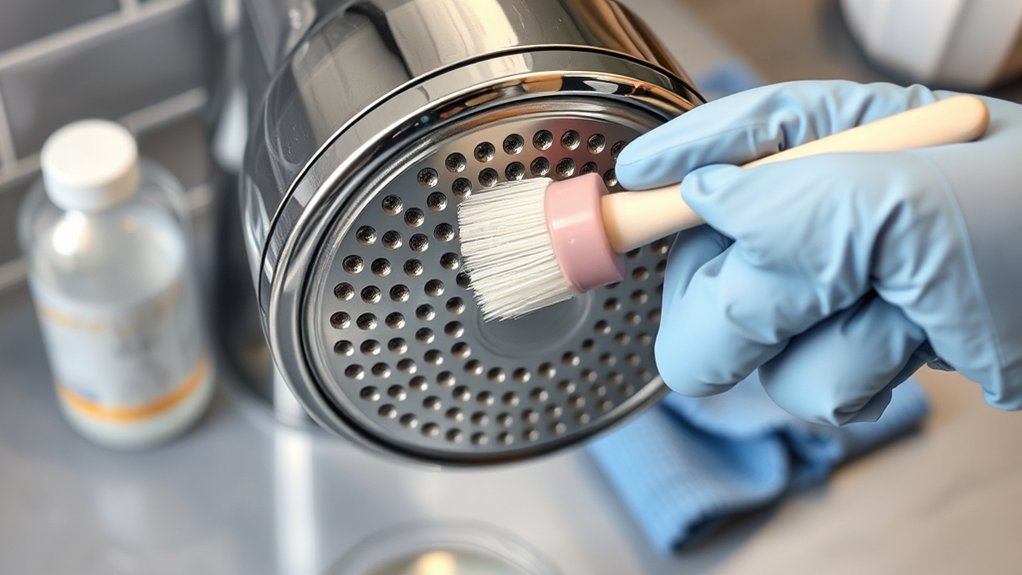
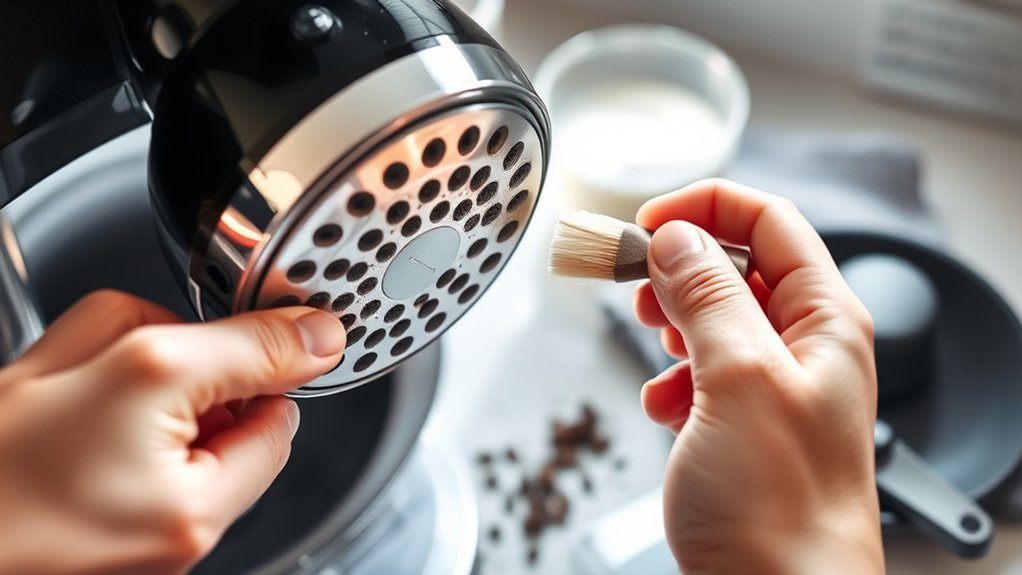
If the showerhead is fixed, wipe only its accessible surface with a soft damp cloth after the machine has cooled. A clean, soft manual toothbrush or nylon brush can help loosen visible residue when the manufacturer permits brushing, but do not force bristles, pins, or other tools deep into openings or internal tubing.
If the showerhead is removable and its manual permits washing, rinse it with warm water. Use mild dish soap only when the model instructions allow soap on that part, then rinse thoroughly so no soap remains. Do not soak the showerhead in vinegar, descaler, coffee cleaner, or another solution unless the manufacturer or approved cleaning-product directions specifically allow that treatment and contact time.
3. Treat Coffee Oils and Mineral Scale Separately
A coffee-equipment cleaner and a descaler do different jobs. Coffee-equipment cleaners are formulated to remove coffee oils and stains from compatible brewing parts or systems. Descalers target mineral deposits in the water path. Use either product only where the brewer instructions and product directions allow it.
If an approved removable part looks oily or brown, clean the surface as directed or use a compatible coffee-equipment cleaner. If the entire brewer has become slower, noisier, or displays a descale warning, run the complete manufacturer-approved descale cycle instead of concentrating cleaner only around the visible showerhead openings.
4. Rinse, Reassemble, and Test Safely
Rinse every washable part with fresh water and let it drain. Reinstall the showerhead, basket, funnel, pod holder, gasket, or other component exactly as the manual shows. Make sure each piece is fully seated and locked before reconnecting the appliance.
Complete the manufacturer-required fresh-water rinse cycles. Keep lids, baskets, and other brew parts in their normal operating positions while the brewer is running. Do not reach into the brew area or lean over a running machine to inspect hot water.
For a drip brewer, one safer way to check distribution is to place a clean paper filter in the correctly installed basket with no coffee grounds, then run a water-only cycle if your manual permits it. After brewing has stopped and the basket is safe to handle, inspect the filter. A broad wet area without the same large dry section appearing repeatedly suggests that water is reaching the brew area more evenly. A persistent dry wedge or concentrated wet spot may justify another inspection, a model-approved descale, or service.
Pro Tip: Take a quick photo before removing a showerhead, basket valve, pod holder, or gasket. The picture makes it easier to reinstall each part in the correct position.
Diagnose the Flow Problem Before Cleaning Again
A weak or uneven showerhead does not always mean the visible holes are clogged. Use the symptom pattern to decide what to check next instead of repeatedly poking the openings or running cleaner through the machine.
| What You Notice | More Likely Cause | Best Next Step |
| Visible film or crust around one or more accessible showerhead openings | Surface residue or scale | Cool and unplug the brewer, then wipe or clean the part using the method allowed for your model. |
| Flow has gradually become slower, weaker, or noisier across the brewer | Mineral scale deeper in the water path | Run the complete model-approved descale procedure rather than treating only the showerhead face. |
| Water or grounds overflow the drip filter basket | Fine grind, too much coffee, folded filter, blocked basket valve, or poor basket seating | Correct the filter, grind, dose, basket position, and drip-stop operation before blaming the showerhead. |
| Pod brewer makes a partial cup or leaves grounds in the beverage | Grounds in a pod holder or entrance/exit needle, or internal scale | Follow the model’s pod-holder and needle-cleaning procedure, then descale if required. |
| Leak, burning smell, electrical fault, cracked part, or no water delivery after normal maintenance | Mechanical or electrical failure | Stop using the brewer and contact the manufacturer or a qualified repair technician. |
Note: A showerhead does not necessarily release identical streams from every opening at every second of a brew cycle. Some brewers pulse or vary their water delivery. Look for a repeatable change from the machine’s normal performance rather than judging a single moment of the cycle.
Signs Your Coffee Maker Showerhead May Be Clogged
A restricted showerhead can interfere with the way water reaches the coffee bed. However, no single symptom proves that the showerhead itself is the cause. Check the filter basket, grind, water path, removable parts, and descale status as well.
- Uneven distribution: A repeatable area of the brew bed receives much less water than the rest after the brewer has been safely tested.
- Dry patches in the coffee bed: After brewing, part of the grounds remains noticeably drier than the rest on repeated brews.
- Longer brew time: The same batch takes noticeably longer than it normally does.
- Reduced output: With the same fill level and brewing setup, the machine consistently produces noticeably less beverage than it used to, beyond the normal water retained by the coffee grounds and brewer.
- Overflow near the basket: Water or grounds rise above the filter, especially when the filter is folded, the basket is misaligned, too much coffee is used, or the grind is too fine.
- Visible residue: White crust, oily film, or dark particles surround accessible spray openings.
- Partial cups or model-specific alerts: A pod brewer dispenses a smaller serving than selected or displays a flow or descale warning.
Uneven flow points to a water-delivery problem, but the showerhead is only one possible cause. Check the basket, filter, grind, scale level, removable parts, and model-specific water path before replacing components.
Why Coffee Maker Showerheads and Water Paths Clog
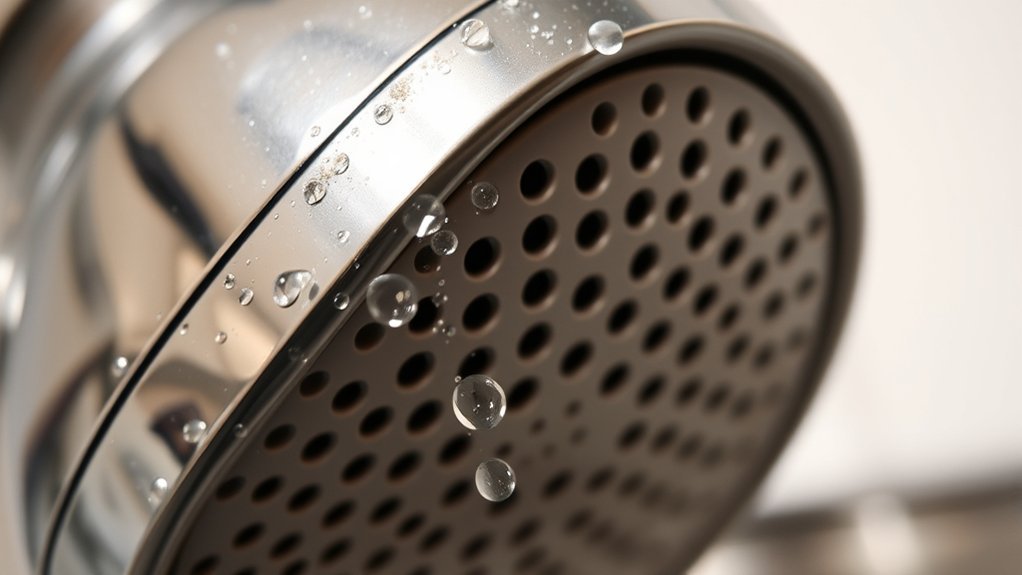
Several kinds of buildup can affect a coffee maker, and each one requires a different response.
Mineral Scale
Hard water contains dissolved minerals, especially calcium and magnesium. When mineral-rich water is repeatedly heated or evaporates from surfaces, scale can build up in water-using equipment. The U.S. Geological Survey identifies calcium and magnesium as major causes of water hardness and notes that mineral buildup can occur in household coffee makers. In a brewer, deposits may narrow internal passages and slow the flow before water reaches the showerhead.
Coffee Oils
Steam, splashing, an overfilled basket, or contact with used grounds can leave an oily film on nearby brewing parts. Mild dish soap or a compatible coffee-equipment cleaner may remove oils from parts approved for that treatment, while mineral deposits normally require the machine’s descaling procedure.
Grounds and Filter Overflow
Grounds should not routinely enter a drip brewer’s showerhead. When grounds appear above the basket, check for too much coffee, a filter that has collapsed or folded, an incorrectly seated basket, a blocked or sticking drip-stop valve, or a grind that is too fine. Bonavita’s troubleshooting guidance warns that fine grounds can contribute to water and grounds overflowing the filter.
In a pod brewer, small grounds can collect inside the pod holder or entrance and exit needles. Follow only the cleaning procedure provided for that machine.
Cleaning-Product Residue
Soap, powder, vinegar odor, or improperly diluted cleaner can remain when parts are not rinsed thoroughly. Residue may affect flavor and can collect around small passages. Measure cleaning products as directed and complete every required fresh-water rinse before brewing coffee again.
Drip Showerheads vs. Single-Serve Needles
Do not use one unclogging procedure for both machine types.
Drip Coffee Maker Showerhead
A drip showerhead distributes hot water over a basket of ground coffee. Clean accessible surfaces with a soft damp cloth, and remove the part only if the manufacturer designed it for user removal. Use a soft brush only when the instructions allow it. Avoid paper clips, needles, metal pins, drill bits, or other hard probes unless the manual specifically identifies an opening and an approved tool.
Pod-Brewer Entrance and Exit Needles
Single-serve machines can use sharp needles to pierce a pod. The official Keurig K-Express Use & Care Guide, for example, instructs users to remove the pod holder before clearing its exit needle with a straightened paper clip. It provides a separate paper-clip procedure for holes in the entrance needle and warns users not to put their fingers inside the pod holder.
That paper-clip method applies to the needle openings identified in the Keurig instructions. It should not be assumed safe for another brand, a drip showerhead, a valve, a seal, or internal tubing.
Cleaning Products: What to Use and What to Avoid
- Soft damp cloth: A safe starting point for many accessible surfaces and for removable showerheads whose manufacturer specifically calls for damp-cloth cleaning.
- Mild dish soap: Suitable for many removable washable parts when the manual permits it. Rinse completely before reinstalling the part.
- Coffee-equipment cleaner: Designed to remove coffee oils and stains from compatible parts or brewing systems. It is not the same as a mineral descaler.
- Manufacturer-approved descaler: The preferred option when the manual calls for a dedicated product or guided descale cycle.
- White vinegar: Use it only when the instructions for your brewer permit it. Hamilton Beach publishes vinegar-cleaning procedures for specified coffee makers, and Breville publishes a general vinegar-and-water drip-coffee-maker method. However, a generic brand article does not override an individual model manual. Bonavita warns that vinegar may be ineffective for its cited BVC2201TS model and difficult to rinse out.
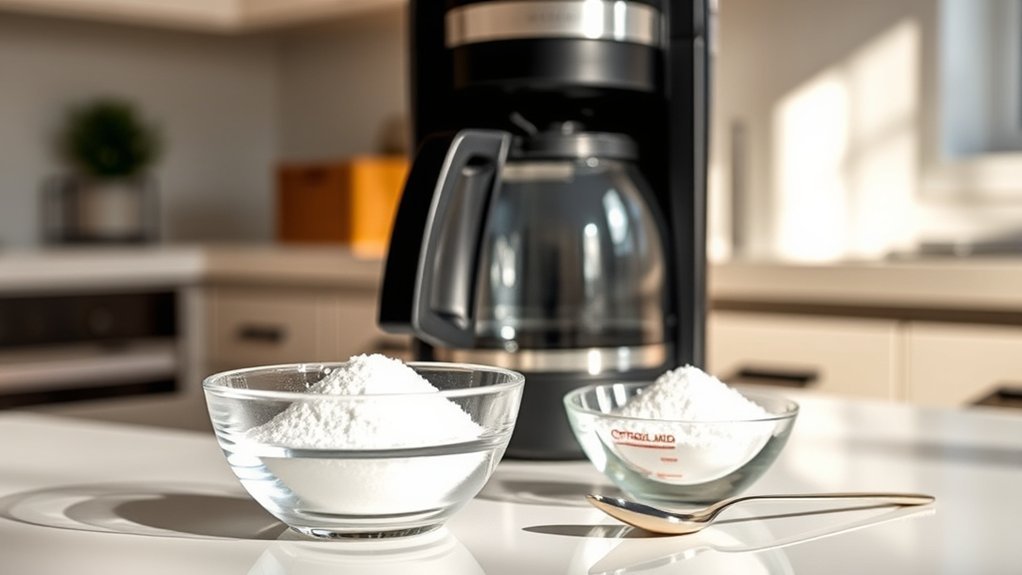
- Baking soda: Do not assume it is safe for the brewer’s internal water path. If a manual permits it on a removable washable surface, rinse the part thoroughly. Do not run baking soda through pumps, tubing, valves, or a heating system unless the manufacturer explicitly directs you to do so.
- Bleach: Do not put bleach into a coffee maker unless the appliance manufacturer provides an explicit sanitizing procedure for that model.
Warning: Never mix bleach with vinegar, descaler, ammonia, or another cleaner. The CDC warns that mixing household bleach or disinfectants with other cleaners can release dangerous vapors.
Essential Maintenance Tips to Prevent Future Clogs
Use the Right Grind, Filter, and Coffee Amount
Use the grind recommended for your brewer. Many flat-bottom drip machines work well with a medium grind, but the correct setting depends on the basket, filter, coffee dose, and brewer design. Do not switch automatically to a finer grind when troubleshooting. Grounds that are too fine can slow basket drainage and contribute to overflow.
Use the correct filter shape and size, keep paper filters from folding over, and do not fill the basket above the manufacturer’s limit. Confirm that the basket is fully seated and that any user-accessible drip-stop valve moves freely.
Choose Water Your Machine Allows
Water treatment can affect both flavor and scale, but the word filtered does not tell you how much hardness has been removed. Some filters mainly improve taste or reduce chlorine and other impurities while leaving much of the calcium and magnesium responsible for hardness. Other treatment methods can change mineral content more substantially.
If mineral scale is the problem, choose water based on what the treatment actually removes and what your coffee maker permits rather than assuming every filtered water source will prevent scale. Even with treated water, continue to follow the brewer’s required descaling schedule.
Note: Do not assume distilled, softened, reverse-osmosis, or heavily demineralized water is suitable for every coffee maker. Some machines provide specific water requirements or prohibit distilled water. Follow the water guidance in your model manual.
Follow a Model-Specific Maintenance Schedule
- After brewing: Discard the filter, grounds, or used pod. Rinse washable baskets and funnels after they have cooled.
- Regularly or when residue appears: Inspect the accessible showerhead, basket, drip-stop area, pod holder, and other user-cleanable brewing parts.
- At the descale alert or manual interval: Run the complete descale process. Depending on the model, the interval may be based on elapsed time, number of brews, a maintenance light, or local water conditions.
- More often when permitted and needed: Follow the manufacturer’s advice if scale returns quickly, brewing becomes slower, or hard-water conditions require more frequent descaling.
Do not wipe a hot showerhead immediately after brewing. Wait until the brewer is off, unplugged, and cool enough to touch safely.
When to Contact the Manufacturer or a Repair Technician
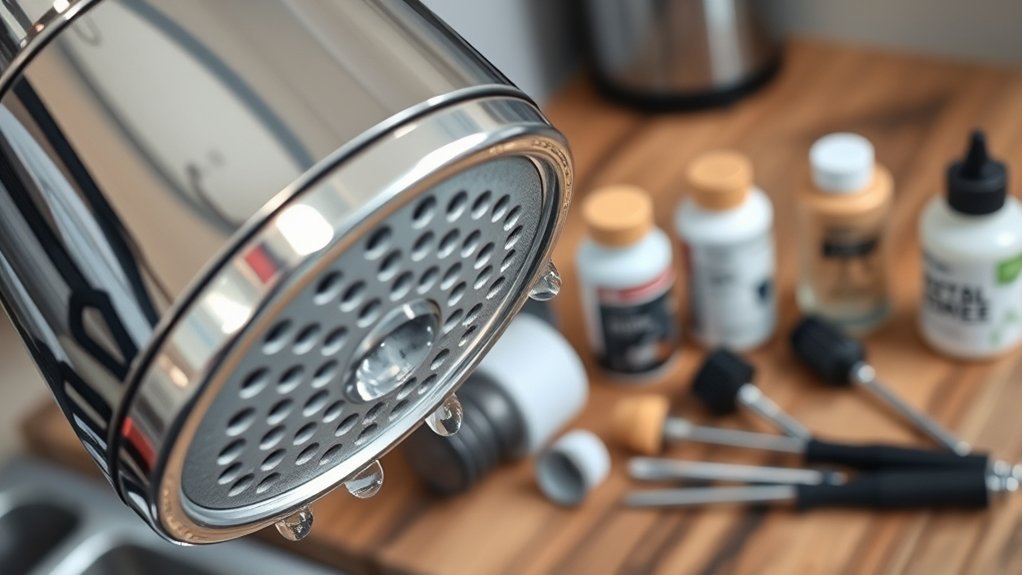
Stop home troubleshooting when the problem involves sealed internal parts, electricity, leaks, or physical damage. Many household coffee makers have no user-serviceable components inside the housing.
Contact the manufacturer or a qualified repair technician when:
- The machine leaks from its base, electrical housing, cord area, or control panel.
- You notice a burning smell, smoke, sparks, a damaged cord, or repeated circuit interruptions.
- A descale or error message returns after the complete recommended procedure.
- The brewer still produces a partial cup after the approved needle cleaning and descaling steps.
- The showerhead, pod holder, gasket, valve, or locking tabs are cracked, loose, or deformed.
- Water does not reach the basket even after the reservoir, basket, removable parts, and accessible water path have been checked.
- Normal flow does not return after the cleaning and descaling steps specified for the model.
- Removing the obstruction would require opening the appliance housing or manually scraping scale from an internal heating component.
- You are not comfortable handling a removable part or working near sharp pod-brewer needles.
Do not escalate from gentle cleaning to aggressive probing simply because one opening still appears blocked. A damaged outlet, seal, valve, pump, heater, or internal tube may require service rather than a sharper tool.
A repair may be worthwhile when the machine is otherwise in good condition and parts remain available. Replacement may be safer or more practical when there is electrical damage, major leakage, corrosion, repeated failure, unavailable parts, or a repair cost close to the price of a comparable new brewer.
Frequently Asked Questions
Can filtered water prevent coffee maker showerhead clogs?
It depends on the filter. Water treatment that meaningfully reduces calcium and magnesium may slow mineral scale, while a basic filter designed mainly for taste, odor, or chlorine may leave much of the hardness unchanged. Filtered water also cannot prevent coffee-oil residue or stray grounds. Use water approved for your machine and keep descaling as required.
How often should I clean and descale the showerhead?
Clean accessible residue when it becomes visible and follow your manufacturer’s schedule for deeper cleaning and descaling. Some machines use a time interval, some count brewing cycles, and others display a descale alert. Water hardness and brewing frequency can affect how quickly scale returns.
Is vinegar safe for cleaning a coffee maker showerhead?
Only when the instructions for the coffee maker permit it. Some manufacturers publish vinegar-cleaning or descaling methods, while others recommend a dedicated descaler or warn that vinegar can be difficult to rinse away. Do not soak a removable showerhead or run vinegar through the machine based on a generic recipe alone.
Is it safe to use bleach for cleaning?
Do not use bleach inside a coffee maker unless the manufacturer provides a specific sanitizing procedure for that model. Bleach must never be mixed with vinegar, descaler, ammonia, or another cleaner. For ordinary coffee residue and mineral scale, use the approved washing and descaling methods instead.
What type of toothbrush is best for cleaning?
Use a clean, soft-bristle manual toothbrush or soft nylon detailing brush only on parts and surfaces that permit brushing. Apply light pressure so you do not enlarge an opening, scratch a finish, or dislodge a seal. Avoid an electric toothbrush unless the manufacturer specifically recommends one.
Can I use a paper clip to clear the holes?
Use a paper clip only when the manual identifies a specific needle or opening and explains how to clear it. Keurig provides this instruction for certain entrance and exit needle openings, but it is not a universal drip-showerhead cleaning method. Never place your fingers near a pod-brewer needle.
Can I use baking soda for coffee maker maintenance?
Do not assume baking soda is suitable for the machine’s internal water path. If your manual permits it on a removable washable surface, rinse the part thoroughly. Do not run baking soda through the reservoir, pump, heater, valve, or tubing unless the manufacturer explicitly approves that procedure. It is not a substitute for a proper descaler.
How can I test whether the showerhead is distributing water evenly?
Do not reach into or lean over a running brewer. If your drip machine permits water-only brewing, place a clean paper filter in the correctly installed basket with no coffee and run a normal water-only cycle. After brewing stops and the basket is safe to handle, inspect the wet filter for a large dry area that repeats in the same position. Use the result as a troubleshooting clue, not as proof of a specific failed part.
How often should I replace my coffee maker?
There is no universal five- or seven-year replacement rule. Keep the machine while it operates safely, heats and dispenses correctly, and can be maintained with available parts. Replace it when electrical damage, major leakage, corrosion, repeated failure, unavailable parts, or uneconomical repair makes continued use unsafe or impractical.
Conclusion
Keeping a coffee maker showerhead clear starts with identifying the correct component and the type of restriction. Clean accessible residue with gentle tools, use the proper descaling procedure for mineral buildup, and reserve vinegar, paper clips, or other specialized methods for machines whose instructions permit them. Correct filters, an appropriate grind, suitable water, and regular maintenance can prevent many repeat flow problems.
When testing the brewer after cleaning, keep it assembled normally and avoid reaching into the hot brew area. If cleaning and descaling do not restore normal performance—or if the machine leaks, smells hot, has damaged wiring, contains cracked parts, or requires access to sealed internal components—stop using it and contact the manufacturer or a qualified technician.
Sources
- Bonavita Enthusiast Use & Care Guide — showerhead removal and cleaning, descaling, filtered-water guidance, grind recommendations, and troubleshooting.
- Keurig K-Express Use & Care Guide — entrance and exit needle cleaning, sharp-needle safety, descaling, water guidance, and partial-cup troubleshooting.
- U.S. Geological Survey: Hardness of Water — calcium and magnesium hardness and mineral buildup in water-using equipment, including coffee makers.
- Hamilton Beach Frequently Asked Questions — manufacturer examples of approved vinegar-cleaning procedures for specified coffee makers.
- Breville: How to Clean a Coffee Maker — a brand-published example of a general vinegar-and-water drip-coffee-maker cleaning method; individual model instructions still take priority.
- CDC: Cleaning and Disinfecting With Bleach — bleach handling and the warning against mixing household bleach or disinfectants with other cleaners.