Using a hotel coffee maker is usually simple, but the exact steps depend on the machine in your room. Before brewing, identify the type of pod or packet it accepts, inspect the brewer for damage or residue, and follow any directions printed on the lid, machine, or coffee package. Correct water measurement and safe cup placement help prevent weak coffee, overflow, and hot splashes.
Quick Answer
To use a hotel coffee maker, inspect the machine, read its printed directions, insert the correct pod or coffee packet, add fresh water only to the stated level, center a heat-safe cup under the spout, and press Brew or Start. Keep the chamber closed and wait until dripping stops before removing the cup.
Key Takeaways
- Read the instructions printed on the brewer because hotel machines use different pods, packets, baskets, brewing sequences, and water amounts.
- Do not use a machine with a damaged cord, loose plug, leak, burning smell, visible mold, missing part, or other obvious damage.
- Use fresh potable water and fill only to the brewer’s marked line or stated capacity.
- Keep the cup centered under the spout and never open the brew chamber while hot water is flowing.
- Discard the used pod or packet and wipe up spills, but leave repairs, descaling, disassembly, and internal sanitation to hotel staff.
At a Glance
| Time Required | About 5–10 minutes |
| Difficulty | Easy |
| Tools Needed | Hotel coffee maker, compatible coffee packet or pod, fresh potable water, and a heat-safe cup |
| Cost | Usually included with the room |
Common Hotel Coffee Maker Confusions

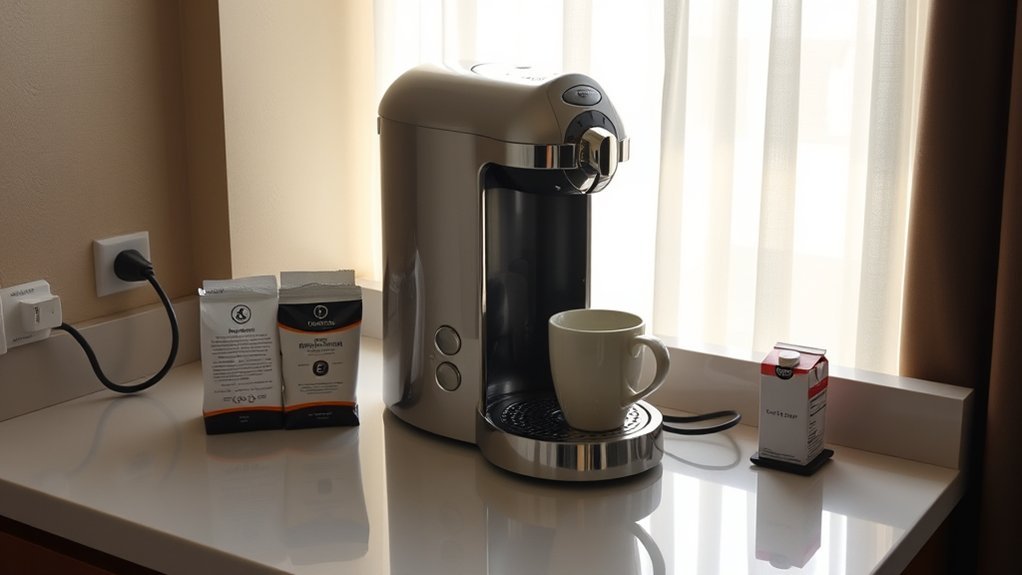
Hotel coffee makers can look similar even when they use different supplies. Before opening a packet or adding water, look for instructions on the lid, side, base, coffee package, or nearby instruction card.
The most common designs include:
- Disposable basket and filter packet: Some Café Valet machines use a disposable brew basket with a matching coffee filter packet. The Café Valet CV1, for example, works with the Café Valet basket-and-packet system and has a 10-ounce reservoir.
- K-Cup-style brewer: These machines use a rigid capsule that sits in a pod holder. The Hamilton Beach Commercial HDC311 is one hotel model that accepts K-Cup packs and brews up to 10 ounces.
- Soft-pod brewer: This design accepts a round or flat paper pod rather than a rigid capsule.
- Small drip brewer: This type may use a paper filter, a small basket, and a carafe or cup.
Do not force a pod into a holder that does not match. Do not cut open a sealed pod or filter packet unless the package or brewer instructions specifically tell you to do so. If the correct setup is unclear, ask the front desk or housekeeping staff.
Note: A “cup” is not a dependable measurement for every machine. Use the reservoir marking, water window, printed directions, selected brew size, or stated ounce capacity instead.
When to Skip the Brewer and Ask Hotel Staff
Do not improvise when the machine is visibly dirty, damaged, leaking, missing a required basket, supplied with the wrong type of pod, or too confusing to operate safely. Ask the hotel for a replacement brewer, compatible supplies, or another way to get hot coffee.
If a model number is visible and you or the hotel have a specific product-safety concern, the U.S. Consumer Product Safety Commission recall database can be used to check current U.S. recalls and safety warnings. A normal-looking machine does not require a recall search before every use.
Getting Your Hotel Coffee Maker Ready to Brew
Step 1: Inspect the Machine and Brewing Area
Make sure the coffee maker is sitting upright on a stable, dry surface. Keep paper, clothing, plastic bags, and other items away from the brewer and its cord.
Check the water reservoir, pod holder, basket, drip area, and cup platform. Do not use the machine if you find standing old water, heavy residue, insects, visible mold, a missing basket, a cracked housing, or a leak near electrical parts. Ask hotel staff for a clean replacement or another coffee option.
Step 2: Plug In the Machine Safely
If the brewer is not already connected, make sure your hands and the plug are dry before plugging it directly into the appropriate wall outlet. The plug should fit securely without being forced.
Do not use the machine if its cord is frayed, cracked, pinched, unusually hot, or pulling away from the housing. The U.S. Consumer Product Safety Commission warns that damaged cords can create shock or fire hazards.
Warning: Stop using the brewer if it sparks, smokes, smells like burning plastic, repeatedly trips the outlet, or leaks near the cord or plug. Switch it off only if you can do so without touching wet or damaged electrical parts. If there is an active fire or heavy smoke, leave the immediate area and alert hotel staff or emergency services. Do not open the housing or attempt a repair.
Step 3: Fill With the Correct Amount of Water
Use fresh, cold, potable water. Bottled or filtered drinking water is optional and can change the taste when local tap water has a noticeable mineral or chlorine flavor.
Pour water into the reservoir only to the marked level or amount shown in the brewer’s directions. Some single-serve models hold 10 ounces, while others use a different amount. Overfilling can cause overflow, grounds in the cup, or hot splashing.
Keep water away from the power button, cord, plug, and electrical openings. Close the reservoir lid when the design includes one.
Note: During a drinking-water advisory, follow local instructions rather than relying on the coffee maker. The CDC advises bringing tap water to a full rolling boil for 1 minute during a typical boil-water advisory, or 3 minutes above 6,500 feet. During a do-not-drink or do-not-use advisory, boiling may not make chemically contaminated water safe, so use commercially bottled water as directed.
Step 4: Insert the Compatible Coffee Packet or Pod
Open the brew chamber or basket area and place the correct packet, pod, or disposable basket in the position shown by the machine’s instructions.
For a Café Valet-style system, open the outer coffee package as directed and place or slide the supplied disposable brew basket and intact coffee filter packet into the brewer. Do not tear open the filter packet itself unless the instructions specifically say to do so. For a K-Cup-style machine, place the capsule in the pod holder without removing its foil lid. For a soft-pod machine, center the paper pod so the chamber can close evenly.
Close the lid or basket fully, but do not force it. A lid that will not close can mean the pod is misaligned, the wrong format is being used, or a required holder or basket is not seated correctly.
Note: K-Cup-style holders can contain sharp puncture needles, and very hot water can remain in the pod area. Keurig’s safety instructions warn users not to put fingers into the pod holder or open the brewing assembly during a brew cycle.
Step 5: Position the Cup and Start Brewing
Place a clean, heat-safe cup directly under the spout. Center it carefully so the coffee does not hit the rim and splash onto the counter.
If you are using a travel mug, check the available height and remove or adjust the cup platform only when the brewer is designed for that change. Do not hold a cup in your hand while the machine is brewing.
Press the button labeled Brew, Start, or On. Some machines have one button, while others require you to select a cup size first.
Step 6: Wait for the Brewing Cycle to Finish
Stay near the machine while it runs. Do not lift the lid, pull out the basket, remove the pod, or move the cup while water is flowing.
Wait until the pump stops and the spout has finished dripping. A few final drops may fall after the main flow ends, so pause briefly before removing the cup.
The safest brewing routine is simple: use the correct packet, add only the stated amount of water, keep the cup centered, and wait until all dripping stops.
Step 7: Finish and Clean Up
Carefully remove your cup by its handle or an insulated section. Let the drink cool before taking a large sip.
Once the machine has stopped and the brew chamber is safe to open, discard the used pod, packet, and disposable tray as directed. Wipe up water or coffee that spilled on the counter.
Turn the brewer off when a power switch is provided. If the instructions allow unplugging and the plug is easy to reach, pull it by the plug rather than tugging on the cord.
As a hotel guest, do not pour soap, hand sanitizer, bleach, vinegar, milk, syrup, or other cleaning chemicals or ingredients into the reservoir. Vinegar may be part of an approved descaling procedure for some machines, but descaling, disassembly, and internal sanitation of hotel-owned equipment should be handled according to the manufacturer’s procedure by hotel staff.
Choosing and Using Coffee Packets

Select a Compatible Coffee Packet
Choose from the packets supplied for the machine, such as regular, dark roast, flavored, or decaffeinated coffee. Confirm that the packet shape matches the basket or holder before inserting it.
Check the package seal. Do not use a packet that is torn, wet, already open, unusually swollen, or heavily damaged. For the best flavor, choose a packet within its printed best-by date when possible. A best-by date generally describes peak quality rather than an automatic safety cutoff, so ask hotel staff for a fresher packet if the supplied coffee is old or stale.
Loose coffee grounds are suitable only when the brewer includes an approved reusable basket or filter and the machine’s directions permit them. Placing loose grounds directly in a pod chamber can clog the brewer or send grounds into your cup.
Store Personal Coffee Packets Properly
If you travel with your own compatible packets, keep them sealed in a cool, dry place until you are ready to brew. Heat, moisture, and damaged packaging can reduce freshness.
Avoid storing coffee packets beside a wet sink, open toiletries, or cleaning products. Pack only the format you know the hotel brewer accepts, or bring an independent travel brewing method.
Pro Tip: Photograph the brewer’s name and model during your first stay. On a return trip, you can bring the correct packets without guessing about compatibility.
Hotel Coffee Maker Hygiene
You cannot confirm an appliance’s full cleaning history simply by looking at it, but a brief inspection can reveal clear reasons not to use it.
- Look for old liquid, visible residue, unusual discoloration, insects, or a stale or musty odor.
- Use a clean cup rather than a visibly dusty or stained one.
- Wash your hands before handling the packet, lid, and cup rim.
- Do not wipe electrical controls with a dripping-wet cloth.
- Do not use the brewer if the reservoir or basket cannot be inspected and the machine smells dirty or musty.
If the brewer is designed to run without a pod and the printed instructions allow it, you may run one plain-water cycle into the cup and discard that water. This can rinse away loose coffee residue, but it does not disinfect a dirty brewer or replace the manufacturer’s cleaning procedure.
When the machine looks unclean, ask hotel staff for a replacement brewer, a cleaned machine, sealed disposable cups, or another way to obtain coffee. Do not attempt to sanitize hotel-owned equipment with unapproved chemicals.
Brewing Coffee Safely and Avoiding Burns
Water, steam, the brew chamber, the used packet, and the finished drink may remain hot after brewing. Keep your face and hands away from the spout while the machine is running.
- Do not open the lid or remove the basket during brewing.
- Use a cup that is large enough for the selected brew volume.
- Keep the cup on the platform instead of holding it under the spout.
- Turn the cup handle outward so you can lift it without reaching around the machine.
- Keep children away from the brewer, cord, pod holder, and hot drink.
- Let the used pod or basket cool before touching or discarding it.
Warning: If hot coffee or water burns your skin, move away from the heat and cool a minor burn under cool running water; do not apply ice. MedlinePlus recommends medical evaluation for serious burns. Seek prompt medical help for a deep burn, a burn larger than your palm, an electrical burn, a burn involving the face, eyes, hands, feet, or major joints, or any burn whose severity you are unsure about.
Hotel Coffee Maker Troubleshooting
| Problem | What to Check | Safe Next Step |
|---|---|---|
| The machine will not start | Check that the plug is fully inserted, the power button is on, the lid is closed, and the reservoir contains water. | Try the printed starting sequence once. If it still fails, contact hotel staff rather than moving it to another outlet or opening the housing. |
| The lid will not close or an indicator flashes | The pod may be misaligned or incompatible, or a removable holder, basket, or funnel may not be seated correctly. | Do not force the lid. Reseat only the removable parts described in the printed directions. If it still will not close, ask hotel staff for help. |
| Water overflows | The reservoir may be overfilled, the cup may be too small, or the packet may be misaligned. | Turn the machine off if safe, keep away from hot liquid, let it cool, and report the problem. |
| Little or no coffee comes out | Check the water amount, lid position, pod alignment, and whether a disposable basket or other removable holder is required. | Do not insert a tool or your fingers into a pod needle or spout. Ask hotel staff to inspect or replace the brewer. |
| The coffee is weak | Too much water, a mild packet, or an incorrect cup-size setting can weaken the drink. | Use the packet’s intended water amount or choose a stronger roast on the next cycle. |
| Grounds are in the cup | The packet may be torn, incorrectly placed, or incompatible. A small amount of stray grounds can also result from a filtration problem. | Let the machine cool and inspect the disposable packet or filter. Discard the drink if the packet tore or the machine appears contaminated; otherwise, request another packet or brewer if the problem repeats. |
| There is smoke, sparking, leaking, or a burning smell | These signs can indicate an electrical or internal failure. | Stop using the brewer immediately and contact hotel staff. Do not touch wet electrical parts. If there is an active fire or heavy smoke, leave the immediate area and alert hotel staff or emergency services. |
How to Enhance Your Hotel Coffee Flavor

Start with a sealed packet and fresh water. Choose a dark roast when you prefer a bolder roasted flavor, a regular roast for a more balanced cup, or decaf when you want less caffeine.
If the tap water has a strong taste or odor, use bottled or filtered drinking water when it is available and permitted. Use plain, still, potable water rather than sparkling, flavored, or nonpotable water. If you want to use distilled or another specialty water, follow the brewer’s instructions because machine designs and manufacturer recommendations vary.
You can improve the finished drink by adding cream, milk, cinnamon, cocoa, vanilla syrup, or another sweetener to the cup. Never put milk, creamer, sugar, spices, or syrup into the water reservoir.
A very small pinch of salt in the finished cup can soften the perception of bitterness for some people, but it is optional. Add it only after brewing so it cannot enter or clog the machine.
Let the coffee rest briefly before tasting it. This reduces the chance of burning your mouth and makes it easier to judge whether it needs cream or sweetener.
Make Your Coffee Experience Even Better
Prewarming your cup with hot tap water can help the coffee stay warm longer. Empty and dry the cup before placing it under the brewer, and keep water away from the machine’s electrical parts.
Pair your drink with hotel breakfast, biscotti, fruit, or a pastry. If you prefer a specific roast, creamer, or sweetener, carry sealed portions that do not require refrigeration. If the hotel supplies refrigerated dairy milk or creamer, keep it chilled and follow the package storage instructions.
An insulated travel mug can reduce spills and hold heat, but confirm that it fits beneath the spout and has enough capacity for the selected brew. Use the adjustable cup rest only when the brewer includes one and its instructions show how to move it.
How to Handle Hot Surfaces, Cups, and Used Packets
Do not grab the brew chamber, spout, or internal packet holder immediately after the cycle. Even when the outside of the machine feels cool, the packet and water path may remain hot.
Lift the finished cup by its handle. Keep it level and avoid filling it so close to the rim that normal movement causes a spill.
When you open the brew chamber, stand slightly to the side in case trapped steam escapes. Keep your fingers away from pod-puncture needles. Let the packet or disposable basket cool, hold it by any designated tab or unheated edge, and place it in the trash.
If the machine has an automatic shutoff, allow it to complete its normal cycle. Otherwise, switch it off after brewing. Do not wrap the cord around a machine that is still warm.
Frequently Asked Questions
Can I use my own coffee grounds in a hotel coffee maker?
Only when the brewer has an approved filter basket or reusable accessory and its instructions permit loose grounds. Do not pour grounds into a K-Cup holder, soft-pod chamber, or proprietary disposable-packet system. An incompatible format can clog the brewer or send grounds into your cup.
What should I do if the coffee maker does not start?
Check that it is securely plugged in, switched on, filled with the correct amount of water, and fully closed. Some machines will not start when the lid or pod holder is open. If it still does not work, contact hotel staff. Do not disassemble it or repeatedly test different outlets.
How often should a hotel coffee maker be cleaned?
Hotel staff should follow the brewer manufacturer’s cleaning and descaling schedule and the property’s sanitation procedures. As a guest, discard your used pod or packet, remove simple disposable parts, and wipe up spills. Report visible residue, mold, standing water, or unusual odors instead of attempting a deep cleaning yourself.
Can I make tea with a hotel coffee maker?
You may be able to brew plain hot water for tea if the machine is designed to operate without a coffee pod. Check the printed instructions first. The water may retain a coffee flavor, and the brewer should not be used as a substitute for the required boiling procedure during a drinking-water advisory.
Can I brew hot water without coffee?
Some hotel brewers allow an empty water-only cycle, while others require a pod, basket, or closed holder to operate correctly. Follow the machine’s directions. Do not assume the water reaches a full rolling boil or is suitable for a task that specifically requires boiled water.
How much water should I add?
Use the amount shown by the fill line, water window, printed instructions, or selected cup-size setting. Do not rely on a universal “one cup” rule because hotel brewers have different capacities. Never fill above the stated maximum.
Should I run a water-only rinse cycle first?
A plain-water rinse can remove loose coffee residue when the machine is designed to run without a pod and its directions allow it. It does not disinfect a dirty brewer. If you see mold, insects, heavy buildup, or standing old water, ask hotel staff for another machine.
Can I use an insulated travel mug?
Yes, when the mug fits beneath the spout and its capacity is larger than the selected brew volume. Adjust or remove the cup platform only if the machine is designed for that purpose. Keep the mug standing on the base rather than holding it during brewing.
Conclusion
A safe hotel-room brew starts with the machine’s own directions. Inspect the brewer and cord, identify the correct packet or pod, add only the stated amount of potable water, center a suitable cup beneath the spout, and wait for the cycle and final dripping to finish before touching the brew chamber.
Discard the used supplies, wipe up spills, and leave internal cleaning, descaling, and repairs to hotel staff. When the brewer is dirty, damaged, leaking, supplied with incompatible coffee, or unclear to operate, asking for a replacement or another coffee option is safer than improvising.
Sources
- Café Valet CV1 Single-Serve Coffee Maker — CV1 packet compatibility, 10-ounce capacity, disposable basket system, and automatic shutoff.
- Hamilton Beach Commercial HDC311 — K-Cup compatibility, 10-ounce brew capacity, printed instructions, and adjustable cup-rest information.
- U.S. Consumer Product Safety Commission: Electrical Safety — damaged-cord, plug, shock, and fire precautions.
- U.S. Consumer Product Safety Commission Recall Database — current U.S. product recalls and product-safety warnings.
- CDC Drinking Water Advisories — boil-water, do-not-drink, and do-not-use guidance, including rolling-boil times.
- MedlinePlus: Burns — burn first aid, cool-water treatment, avoiding ice, and guidance on when medical care is needed.