To make homemade baby food, first choose fresh, organic ingredients and wash them thoroughly. Cook the food by steaming or roasting to preserve nutrients, then blend or mash it to a smooth consistency, adding breast milk or water as needed. Introduce one new food every 3-5 days to watch for allergies, and store in airtight containers. For more detailed tips and common mistakes to avoid, keep going to guarantee your baby enjoys nutritious meals.
Key Takeaways
- Select fresh, organic fruits and vegetables, wash thoroughly, and peel or remove seeds as necessary before cooking.
- Cook ingredients by steaming or roasting to retain their nutrients, ensuring they are soft enough to mash or puree.
- Use a high-quality blender or food processor to puree the cooked ingredients, adding breast milk or water for the desired consistency.
- Portion the pureed food into ice cube trays or airtight containers, labeling them with the contents and date for easy storage.
- Introduce new single-ingredient foods every 3-5 days to monitor for any allergic reactions in your baby.
How to Make Homemade Baby Food: A Simple Guide

Making homemade baby food can be a rewarding experience, and it starts with choosing fresh, organic ingredients. Focus on selecting vibrant vegetables and fruits, ensuring they’re thoroughly washed to avoid contamination.
Cooking methods like steaming or roasting help soften the ingredients while retaining essential nutrients. Once cooked, blend or mash them with a bit of breast milk or water to create a smooth consistency suitable for your infant.
Introduce one new single-ingredient food every 3-5 days to monitor for allergic reactions, promoting safety in your baby food journey. Store your creations in airtight containers, refrigerating them for up to three days or freezing in portions for up to three months.
This approach maximizes the baby food benefits while simplifying ingredient selection.
Essential Tools for Making Homemade Baby Food
Creating nutritious homemade baby food requires a few essential tools that can streamline the process and enhance the quality of your meals.
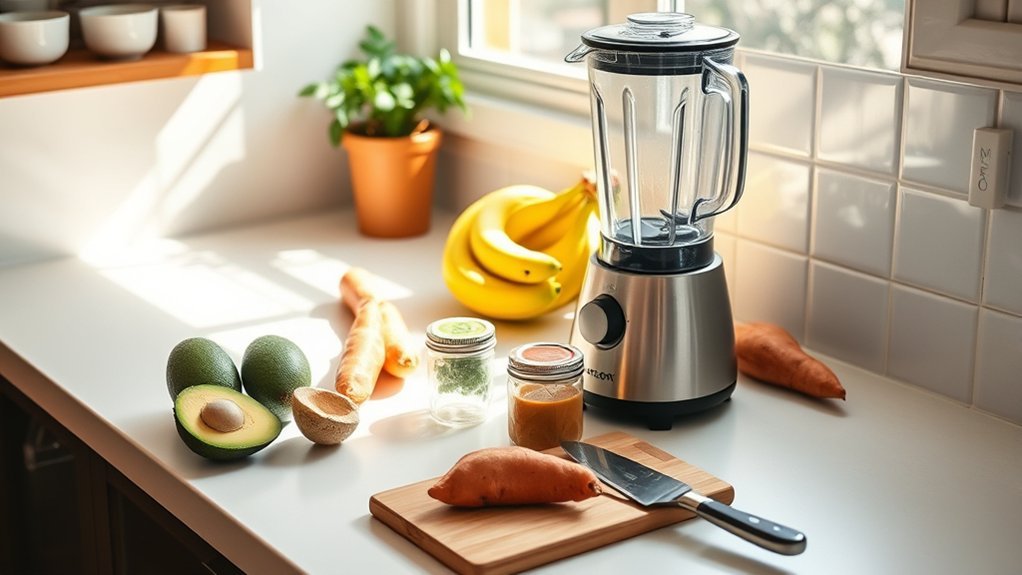
Start with a high-quality blender selection or food processor for achieving smooth purees. A steamer basket is also crucial, as it cooks vegetables while preserving their nutrients. You’ll need a cutting board and knife for safe ingredient preparation.
Begin with a quality blender or food processor for smooth purees, and use a steamer basket to retain nutrients.
For portioning and freezing, ice cube trays or silicone molds are ideal; they allow for easy thawing later. If you prefer a manual option, a food mill provides control over texture.
Don’t forget measuring cups and spoons for accurate portions, and airtight containers or glass jars for effective food storage, keeping your homemade baby food fresh and safe.
Step-by-Step Guide to Preparing Baby Food
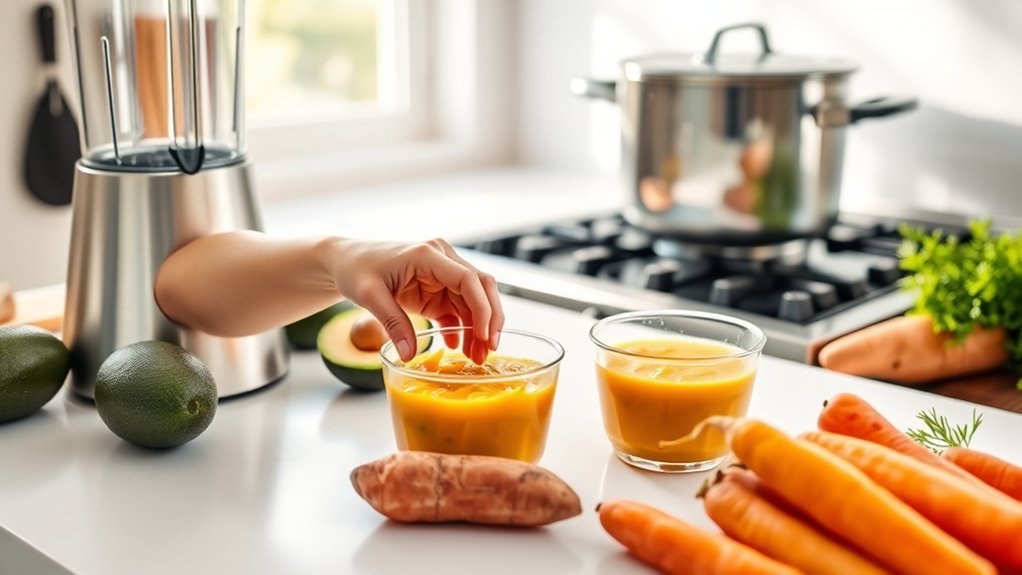
When it comes to preparing baby food, following a systematic approach can make all the difference.
Here’s a step-by-step guide to help you create nourishing meals for your little one using organic produce and ensuring texture variety:
- Select and Wash: Choose fresh, organic fruits and vegetables. Wash them thoroughly, peeling or removing seeds as needed for safety.
- Cook: Steam or bake the produce until soft enough to mash or puree, ensuring it meets your baby’s developmental stage.
- Puree: Use a blender or food processor to puree the cooked ingredients, adding a small amount of liquid to achieve the right consistency.
- Portion: Store the pureed food in ice cube trays or small containers, labeling them clearly with dates and contents.
Enjoy crafting healthy meals!
Storing and Freezing Baby Food
After you’ve prepared nutritious and delicious baby food, proper storage and freezing techniques are key to maintaining its quality and safety.
For effective baby food storage, use airtight containers in the refrigerator for up to three days. If you want to extend freshness, freeze individual portions in ice cube trays for up to three months.
Always label your containers with contents and dates for proper rotation. When you’re ready to use frozen baby food, thaw it in the refrigerator overnight or under warm running water.
Avoid refreezing thawed portions; consume any leftovers within 24 hours. To guarantee texture quality, cool your purees before freezing to prevent condensation and ice crystals.
Enjoy providing your baby with wholesome meals!
Safely Introduce New Flavors in Homemade Baby Food
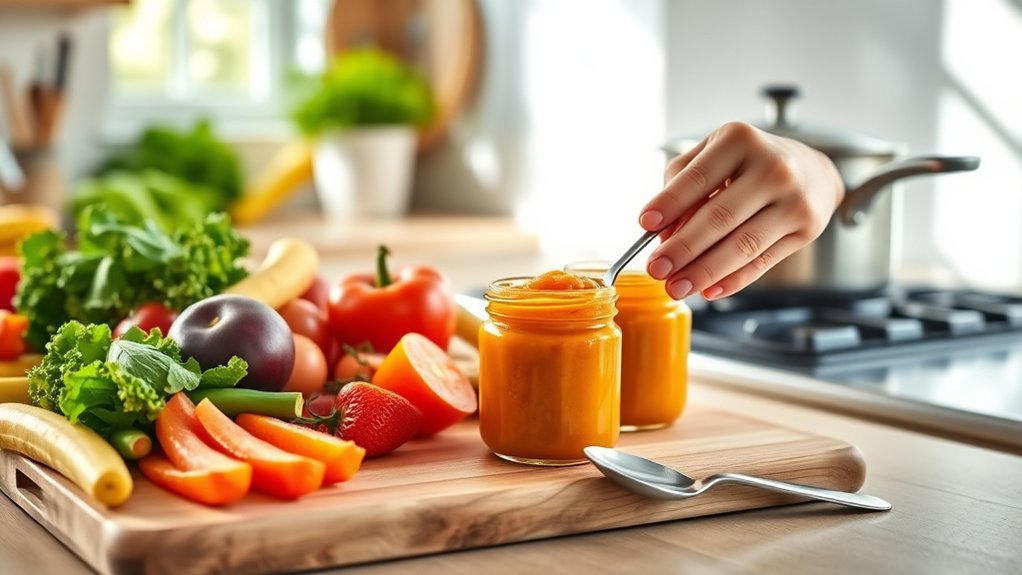
When introducing new flavors in homemade baby food, it’s essential to start with single-ingredient foods every 3-5 days to monitor for any allergic reactions.
After your baby adjusts to a new flavor, you can gradually mix in additional ingredients to expand their palate.
Always consult your pediatrician about introducing high-risk allergens and be attentive to signs of readiness before adding new foods.
Monitor Allergy Reactions
Introducing new flavors in homemade baby food can be an exciting journey, but it’s crucial to monitor your baby for any allergic reactions.
To guarantee a safe introduction of new foods, follow these steps:
- Introduce one new single-ingredient food at a time.
- Wait three to five days before offering another food to observe any allergy signs, such as rashes, swelling, vomiting, or diarrhea.
- Start with low-risk foods like pureed fruits and vegetables before progressing to higher-risk allergens like eggs and dairy.
- Keep a food diary to track what your baby eats and any symptoms that arise.
If you suspect an allergy or have concerns, consult with a healthcare provider for personalized advice.
Stay vigilant and enjoy this wonderful experience!
Gradual Flavor Combinations
Once you’ve monitored your baby for allergic reactions to single ingredients, it’s time to explore gradual flavor combinations.
Start by mixing small amounts of new flavors with familiar ones, using flavor pairing to enhance acceptance. For instance, combine mashed avocado with a new fruit like pear to introduce your baby to different tastes.
Begin with mild foods, then gradually progress to robust flavors like beets or spinach. This texture progression helps your baby adapt to varying consistencies and encourages experimentation.
Keep track of your baby’s reactions to each combination, noting preferences and any sensitivities. This thoughtful approach will empower you to expand your baby’s palate safely and joyfully, allowing them to embrace new culinary adventures.
Top Mistakes Parents Make When Preparing Baby Food
When preparing baby food, it’s easy to overlook key safety practices that can impact your baby’s health.
Introducing multiple ingredients at once can complicate allergy detection, while overcooking nutrient-rich foods can diminish their benefits.
Ignoring Food Safety Practices
Ignoring food safety practices can put your baby’s health at serious risk.
To guarantee your homemade baby food is safe and nutritious, follow these essential guidelines:
- Wash hands and utensils: Always clean your hands, utensils, and produce before preparation to avoid harmful bacteria.
- Cook thoroughly: Make sure to cook all foods, especially meats, to the correct internal temperatures to eliminate pathogens like Salmonella and E. coli.
- Avoid cross-contamination: Use separate utensils and containers for raw and cooked foods to prevent cross-contamination.
- Store properly: Refrigerate homemade baby food for no more than 1-2 days and avoid freezing it longer than 1-2 months to maintain nutritional quality.
Prioritizing food safety and kitchen hygiene can help keep your baby healthy and thriving.
Introducing Multiple Ingredients Too Soon
Proper food safety practices are only the first step in preparing healthy baby food. Introducing multiple ingredients too soon can complicate allergen identification, making it hard to spot any adverse reactions.
The American Academy of Pediatrics advises waiting 3-5 days before adding a new single-ingredient food. This approach allows you to monitor your baby’s response effectively.
Blending various foods might seem nutritious, but it risks digestive discomfort and may hinder your baby’s flavor development. By prioritizing individual, nutrient-rich foods like fruits and vegetables, you’ll help your baby develop a preference for distinct flavors and avoid overwhelming their palate.
This careful introduction lays the foundation for a diverse diet as they grow.
Overcooking Nutrient-Rich Foods
While preparing healthy baby food, it’s important to avoid overcooking nutrient-rich foods, as doing so can greatly diminish their health benefits. The overcooking effects can involve significant nutrient loss, impacting your baby’s growth and development.
Here are some tips for nutrient preservation:
- Choose Steaming: Opt for steaming vegetables instead of boiling to retain vitamins and minerals.
- Monitor Cooking Time: Cook vegetables just until they reach a soft texture, avoiding mushiness.
- Check for Doneness: Use a fork or knife to verify vegetables can be pierced easily without becoming overly soft.
- Watch the Colors: Bright colors indicate freshness and nutrient density; overcooking dulls these hues.
Frequently Asked Questions
What Age Can I Start Introducing Homemade Baby Food?
You can start introducing homemade baby food around six months. This aligns with the baby food timeline when most infants are ready for solids, allowing them to explore new tastes and textures as they develop.
Can I Mix Different Fruits and Vegetables Together?
Yes, you can mix different fruits and vegetables together! Experiment with fruit combinations like apple and banana, or vegetable blends such as sweet potato and carrot. Just make certain your baby tolerates each ingredient before combining.
How Can I Tell if My Baby Is Allergic to a Food?
To tell if your baby’s allergic to a food, watch for symptoms like rashes, vomiting, or difficulty breathing. If you suspect an allergy, consult your pediatrician for allergy testing to confirm your concerns.
How Long Can Homemade Baby Food Be Stored in the Fridge?
Think of your homemade baby food as delicate art; it’ll thrive in storage containers for up to three days in the fridge. Follow refrigeration tips to guarantee freshness, preserving both flavor and nutrition for your little one.
Should I Add Spices or Herbs to Baby Food?
You can add spices and herbs to baby food for enhanced flavors, but prioritize spice safety. Start with mild options like cinnamon or basil, ensuring they’re suitable for your baby’s age and dietary needs.
Conclusion
Making homemade baby food is not only rewarding but also guarantees your little one gets the best nutrition. Did you know that 90% of parents believe homemade baby food is healthier than store-bought options? By following the steps outlined in this guide, you can provide fresh, nutrient-rich meals tailored to your baby’s tastes. Remember to store and freeze leftovers safely, and don’t shy away from introducing new flavors. Your baby’s journey to solid foods can be both fun and nutritious!