
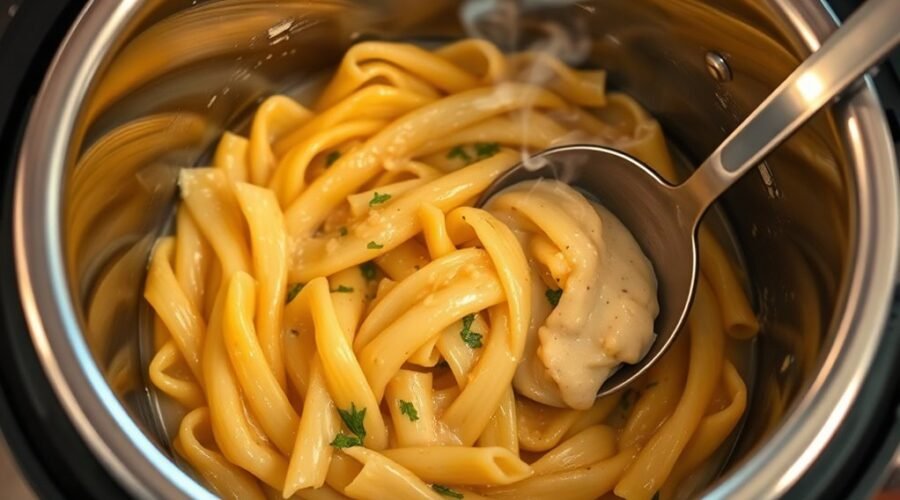
To cook pasta in Instant Pot cleanly every time, use a 1:2 pasta-to-liquid ratio (4 cups of water or broth per 16 ounces of dry pasta, just enough to submerge the noodles) and cook on High Pressure for half the lowest box time minus 1 to 2 minutes, followed by a controlled Quick Release. Adding 1 tablespoon of olive oil or butter and keeping the pot under half full prevents starchy foaming and mushy noodles.
Why Instant Pot Pasta Works (and Its Limitations)
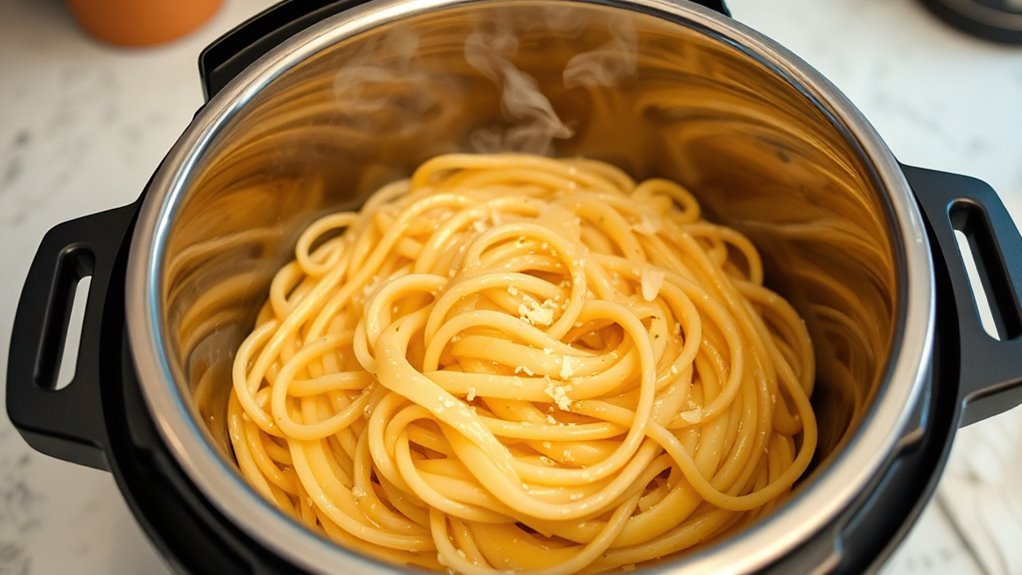
Pressure cooking hydrates dry pasta in a sealed pot with minimal liquid, so the noodles absorb seasonings directly from broth and aromatics while leaving behind a concentrated, starchy cooking liquid that helps sauces cling without draining.
- Pros: True one-pot cleanup, no waiting for a large stockpot to boil, and deeper flavor when cooked in broth.
- Limitations: Delicate shapes (angel hair, fresh egg pasta) overcook easily under pressure, and starchy foam can sputter through the steam valve if you overfill the pot or skip oil.
The Exact Instant Pot Pasta Ratio & Timing Formula
Two numbers determine whether pressure-cooked pasta turns out al dente or gummy: liquid volume and pressure time. Use enough liquid to barely cover the dry noodles—typically 2 cups of liquid per 8 ounces of pasta (or 4 cups per 16-ounce box), plus 1 teaspoon of kosher salt and 1 tablespoon of oil or butter per pound.
For the cook time, check the lowest stovetop time printed on your package, divide it in half (round down if odd), and subtract 1 minute for tender pasta or 2 minutes for firm al dente.
| Pasta Shape | Typical Box Time | Liquid (per 16 oz) | Instant Pot High Pressure | Release Method |
|---|---|---|---|---|
| Penne / Rigatoni | 10–12 min | 4 cups | 3–4 min | Controlled Quick Release |
| Rotini / Fusilli | 8–10 min | 4 cups | 2–3 min | Controlled Quick Release |
| Elbow Macaroni | 7–8 min | 4 cups | 2 min | Controlled Quick Release |
| Medium Shells | 9–11 min | 4 cups | 3 min | Controlled Quick Release |
| Spaghetti (broken in half) | 8–10 min | 4 cups | 3–4 min | Controlled Quick Release |
| Whole Wheat Penne | 10–12 min | 4–4.5 cups | 3–4 min | Controlled Quick Release |
How to Cook Pasta in Instant Pot: Step-by-Step
- Sauté aromatics or raw meat first (optional): If you are browning ground beef, Italian sausage, or garlic, use Sauté mode first, then deglaze the bottom of the pot with a splash of broth and scrape up every browned bit to prevent a Burn warning.
- Add pasta, liquid, salt, and fat: Add dry pasta, cold water or low-sodium broth (if you make homemade stock, our Instant Pot bone broth recipe works well here), salt, and 1 tablespoon of olive oil or butter. Press the noodles down gently so they are submerged—do not exceed the pot’s halfway line.
- Layer thick sauces on top without stirring: If cooking with marinara or diced tomatoes, pour them directly on top of the pasta and liquid and leave them unmixed so tomato sugars stay off the heating element.
- Pressure cook on High: Lock the lid, set the valve to Sealing, and select Pressure Cook (High) using the half-box-time minus 1–2 minutes formula.
- Perform a controlled Quick Release: As soon as the timer beeps, pulse the steam release valve open in short bursts (opening for 3–5 seconds, closing briefly if starchy foam appears) until the float valve drops.
- Stir and rest 2 minutes: Open the lid, stir well, and let the pasta sit uncovered for 2 to 3 minutes so the starchy liquid thickens into a glossy glaze. Stir in dairy, cheese, or cooked proteins now.
Best Pasta Shapes & When to Add Sauce, Cheese, and Protein
Short, sturdy shapes with ridges or tubes—penne, rigatoni, rotini, cavatappi, and medium shells—cook most evenly in an Instant Pot because water circulates freely around them. If you cook spaghetti or linguine, break the strands in half and scatter them in a crisscross pattern rather than a flat bundle so they do not fuse into a brick.
- Dairy & cheese (heavy cream, cream cheese, Parmesan, cheddar): Always stir in after pressure cooking with the pot switched to Keep Warm or Off. High pressure can curdle milk and scorch melted cheese on the base.
- Quick-cooking vegetables (peas, baby spinach, broccoli florets): Fold in after releasing pressure; residual heat wilts greens and warms frozen peas in 2 minutes without turning them olive-gray.
- Cooked proteins & beans: Stir in shredded rotisserie chicken, cooked shrimp, or tender Instant Pot black beans right after opening the lid so they warm through gently.
Troubleshooting Common Instant Pot Pasta Problems
| Problem | Likely Cause | How to Fix It |
|---|---|---|
| Mushy or overcooked noodles | Cook time too long or used Natural Release | Subtract 2 full minutes from half the box time and Quick Release immediately |
| Undercooked / crunchy center | Noodles sat above the liquid line | Stir well, cover with the lid (heat off) for 2–3 minutes, or pressure cook 1 extra minute |
| Burn notice before pressure builds | Thick tomato sauce or dairy touched the bottom | Deglaze thoroughly after sautéing and layer thick sauces on top without stirring |
| Starchy foam spraying from valve | Overfilled pot or skipped oil/butter | Stay below the 1/2 fill mark, add 1 tbsp oil, and pulse-release steam |
| Sauce looks too watery | Opened immediately without resting | Stir and rest uncovered 3 minutes, or simmer 1–2 minutes on Sauté while stirring |
Easy One-Pot Variations & Leftover Storage Safety
Once you have the base formula down, you can adapt it into garlic Parmesan pasta (cook in chicken broth with minced garlic, then stir in butter, heavy cream, and grated Parmesan), one-pot marinara pasta (cook with 3 cups water plus a 24-ounce jar of marinara layered on top), or a creamy spinach and sausage skillet-style pasta. For more hands-off weeknight dinners in the same appliance, explore our Instant Pot slow cooker recipes.
Food Safety Note: Cool leftover cooked pasta promptly and refrigerate it in shallow airtight containers within 2 hours of cooking (1 hour if the room temperature is above 90°F) to keep it out of the 40°F–140°F bacterial danger zone. Cooked pasta keeps in the refrigerator at 40°F or below for 3 to 4 days; reheat leftovers with a splash of water or broth to 165°F before serving.
Frequently Asked Questions
What is the exact cooking time formula for pasta in Instant Pot?
Take the lowest stovetop cooking time printed on the pasta box, divide it in half (rounding down if odd), and subtract 1 to 2 minutes on High Pressure, followed by a Quick Release. For example, penne with a 10-to-12-minute box time cooks for 3 to 4 minutes at High Pressure.
Can I cook gluten-free pasta in an Instant Pot?
Yes, sturdy brown rice, chickpea, or corn-blend gluten-free shapes work well if you subtract 2 full minutes from half the box time and use an immediate Quick Release. Rinse or stir gently right away, as gluten-free pasta turns mushy faster than wheat pasta.
How do I prevent starchy pasta water from sputtering out of the valve?
Never fill the inner pot past the halfway mark, stir in 1 tablespoon of olive oil or butter per pound of pasta before sealing, and release steam in short controlled bursts (pulse the valve open for a few seconds, then close if foam rises) rather than leaving it wide open.
Should I stir jarred tomato sauce into the pasta before pressure cooking?
No—layer thick tomato sauce on top of the pasta and liquid without stirring it down to the bottom. Tomato sugars scorch easily on the stainless-steel base and trigger a Burn notice; stir everything together only after pressure releases.
Can I double an Instant Pot pasta recipe without changing the cook time?
Yes. Keep the same pressure-cook time as a single batch, double the liquid proportionally, and stay below the halfway mark of your Instant Pot (a 6-quart pot comfortably handles up to 1 pound of dry pasta). The pot will simply take a few extra minutes to come to pressure.


[…] with a pinch of sea salt, fresh ginger, and lemon juice, or use it as the cooking liquid for creamy pasta in Instant Pot and comforting chicken soup from our Instant Pot slow cooker […]