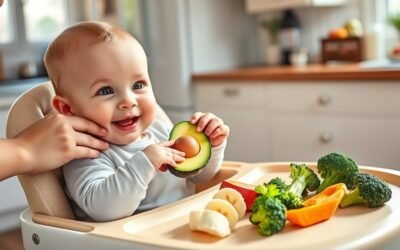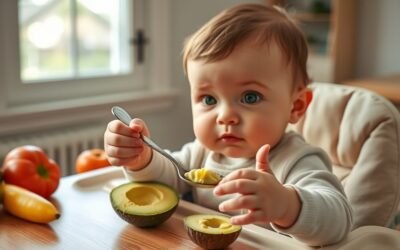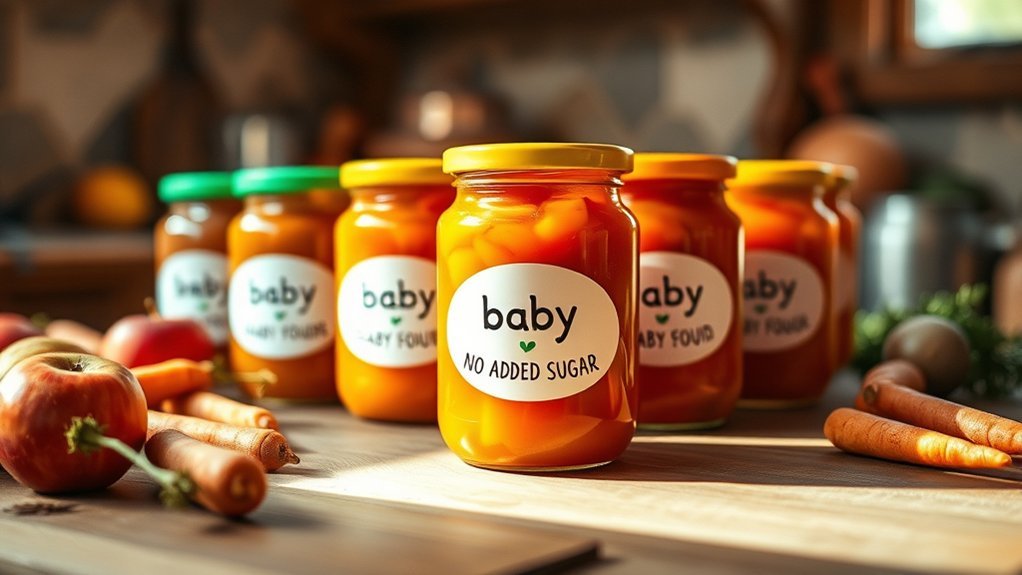
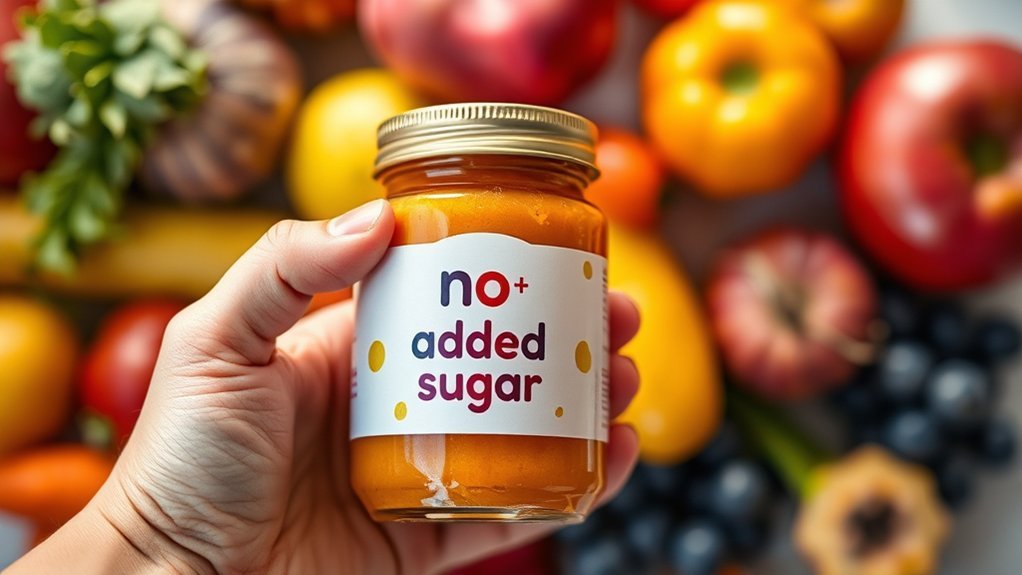
“No added sugar” on a baby-food label does not mean the food contains no sugar. It means sugar or a sugar-containing ingredient was not added to sweeten the product under applicable labeling rules. Naturally occurring sugars from fruit, vegetables, or plain dairy may still appear under Total Sugars.
Quick Answer
On a baby-food label, “no added sugar” means the product was made without sugar or a sugar-containing ingredient added to sweeten it under FDA rules. It can still contain naturally occurring sugar from fruit, vegetables, or milk. Check both “Includes X g Added Sugars” and the ingredient list before choosing.
Key Takeaways
- “No added sugar” is not the same as “sugar-free.” A fruit-based food can have 0 grams of Added Sugars while still containing naturally occurring sugar.
- For infants and young children, choose foods with 0 grams of Added Sugars whenever possible.
- There is no universal FDA limit such as 7 grams of Total Sugars per 4-ounce serving. Compare similar foods instead.
- Read the ingredient list as well as the Nutrition Facts panel. Ingredients are generally listed from greatest to least by weight.
- Judge the whole food, including its iron, protein, healthy fat, sodium, ingredients, and age-appropriate texture—not only the sugar number.
At a Glance
| Time Required | About 2–3 minutes per product comparison |
| Difficulty | Easy once you know which label lines to check |
| Tools Needed | Nutrition Facts panel and ingredient list |
| Cost | $0 |
What Does “No Added Sugar” Mean?
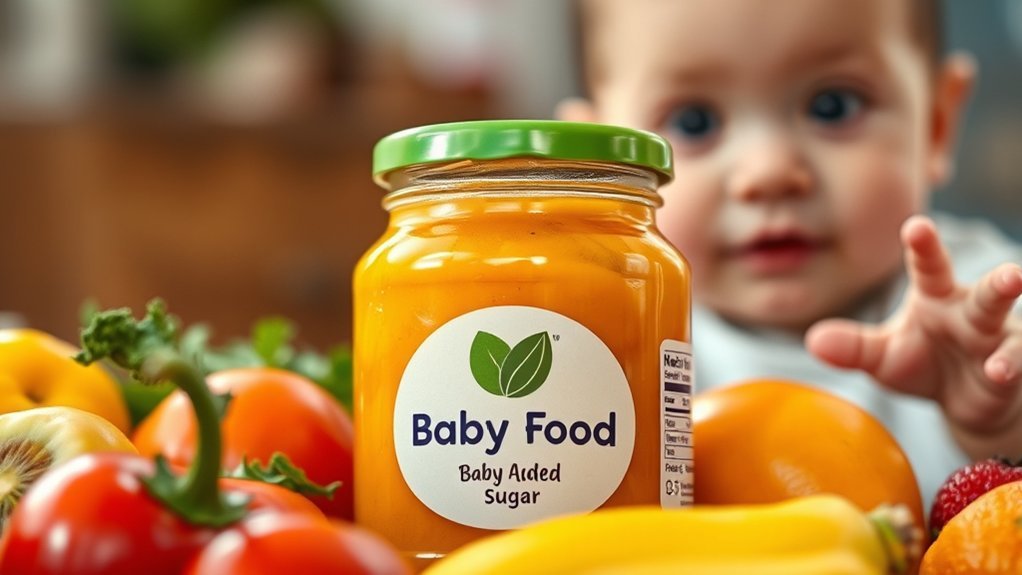
The phrase “no added sugar,” “without added sugar,” or “no sugar added” is a regulated food-label claim. Under 21 CFR 101.60, the product must meet specific conditions. In general, the manufacturer cannot add sugar or an ingredient containing sugar that functions as an added sweetener.
The claim does not mean the product has zero grams of sugar. A puree made from pears, bananas, mangoes, sweet potatoes, or another naturally sweet ingredient may show several grams of Total Sugars while still showing Includes 0g Added Sugars.
The regulation also makes clear that the claim does not automatically mean a food is low in calories. Products that do not qualify as low-calorie or reduced-calorie foods may need to direct shoppers to the Nutrition Facts panel for more information.
Note: A front-label claim is a starting point, not a complete nutrition review. Turn the package over and check the Nutrition Facts panel and ingredient list before deciding whether the food fits your child’s needs.

Power your essentials anywhere with a 999Wh pure sine wave power station delivering up to 1000W continuous with 2000W surge. It supports fast charging via USB-C PD 60W and USB-A QC 18W, plus simultaneous output for multiple devices through AC, USB, wireless, and car/DC ports. Recharge using AC, car, or solar with a built-in MPPT controller and dual cooling fans, while the upgraded battery management system protects against surges, short circuits, and overheating.

ORGANIC ROOTS: Contains 1 pouch of baby food pure made from organic sweet potato, carrot and beet plus healthy fats from olive oil.

Clearly Crafted: When it comes to caring for your baby, transparency is everything. Thats why we bring you Clearly Crafted. Our clear packaging lets you see the ingredients in each recipe, in all its vibrant color. its goodness you can see
No Added Sugar, Sugar-Free, and Unsweetened Are Different
| Claim | What It Usually Means | What It Does Not Guarantee |
|---|---|---|
| No added sugar | No sugar or qualifying sugar-containing ingredient was added to sweeten the food. | It does not mean zero Total Sugars, low calorie, or nutritionally complete. |
| Sugar-free or no sugar | The food contains less than 0.5 gram of sugar per labeled serving and reference amount, subject to other labeling conditions. | It does not necessarily mean the product is unsweetened or free of non-sugar sweeteners. |
| Unsweetened or no added sweeteners | No sweetener was added, although the food may contain naturally occurring sugar. | It does not mean the food contains no sugar. |
These claims answer different questions. For baby food, an unsweetened product with 0 grams of Added Sugars and a short, recognizable ingredient list is usually more useful than a package relying on a large front-label slogan.
The Difference Between Natural, Total, and Added Sugars
The FDA Nutrition Facts label separates sugar information into two related lines:
- Total Sugars includes naturally occurring sugars plus any added sugars in the serving.
- Includes X g Added Sugars shows how much of the Total Sugars came from sugars added during processing or preparation.
For example, plain fruit puree may contain naturally occurring fructose and glucose. Plain yogurt may contain lactose. Those sugars appear under Total Sugars even when the Added Sugars line is 0 grams.
Added sugars can include cane sugar, sucrose, dextrose, corn syrup, maple syrup, honey, molasses, malt syrup, and concentrated fruit or vegetable juice used as a sweetener. A product can also contain a non-sugar sweetener, so check the ingredient list for ingredients such as stevia, monk-fruit extract, sucralose, or other sweetening agents.
| Sugar or Sweetener Type | Examples | Where to Check |
|---|---|---|
| Naturally occurring sugar | Sugar naturally present in fruit, vegetables, or plain dairy | Included in Total Sugars |
| Added sugar | Cane sugar, syrup, honey, dextrose, sucrose, or concentrated juice used as a sweetener | Included in Total Sugars and declared under Includes Added Sugars |
| Non-sugar sweetener | Stevia, monk-fruit extract, sucralose, or similar ingredients | Ingredient list; it may not add grams to the Added Sugars line |
Why Reading Labels Matters for Baby Nutrition
Infants and young children need nutrient-dense foods because they eat small amounts while growing quickly. Current CDC infant and toddler guidance says they should not have added sugars. Calories from sweeteners can take the place of foods that supply iron, protein, healthy fat, zinc, and other nutrients.
Label reading also helps separate a useful factual claim from a broader marketing message. Words such as “organic,” “natural,” “made with fruit,” “non-GMO,” or “no artificial flavors” do not tell you how much Added Sugars, sodium, iron, or protein a product contains.
A 2024 study of 651 U.S. infant and toddler foods found that 60% failed the nutritional requirements of a WHO European profile model, while 44% exceeded its category-specific Total Sugar criteria. These were international benchmark results, not findings that the products violated U.S. law.
The same study found that 99.4% of the reviewed products displayed at least one package claim prohibited by the WHO promotion model. That finding shows why shoppers should look beyond the front of the package, but it does not mean every claim was illegal or factually false under U.S. labeling law.
How to Read a Baby-Food Nutrition Label
- Start with the serving size. Every calorie and nutrient number on the panel refers to that amount. The FDA explains that serving size is a standardized labeling reference, not a recommendation for how much your child must eat.
- Find Total Sugars. This includes naturally occurring and added sugars. There is no FDA Daily Value for Total Sugars, so do not apply an unsupported universal cutoff.
- Read the Added Sugars line. Look for “Includes 0g Added Sugars” when choosing food for an infant or young child.
- Check the ingredient list. Food ingredients are generally listed from greatest to least by weight. Notice whether fruit, vegetables, grains, dairy, meat, legumes, or another whole food appears first.
- Review the whole nutrient profile. Compare protein, iron, healthy fat, sodium, fiber, ingredient quality, texture, and allergens—not only sugar.
Pro Tip: Compare products in the same category and use the same serving size or the same weight. Comparing a fruit puree with a meat-and-vegetable meal by sugar alone does not give a fair picture of either food.
Key Ingredients to Monitor in Baby Food Labels
A short ingredient list can make a product easier to understand, but length alone does not determine quality. Focus on what the ingredients are, their order, and whether the food supplies useful nutrients.
| Ingredient or Label Detail | What to Look For |
|---|---|
| Whole foods | Fruit, vegetables, beans, grains, dairy, meat, fish, eggs, or another recognizable food listed prominently |
| Added sugars | Choose 0 grams of Added Sugars and watch for sugar, syrup, honey, sucrose, dextrose, molasses, and similar ingredients |
| Fruit puree | Naturally sweet and may raise Total Sugars even when Added Sugars is 0 grams |
| Juice concentrate | If it appears in the ingredients, check how the manufacturer declares it on the Added Sugars line; concentrated juice used as a sweetener generally counts as added sugar |
| Non-sugar sweeteners | A no-added-sugar claim does not replace the ingredient check; plain, unsweetened foods are preferable when practical |
| Sodium | Compare similar foods and choose the lower-sodium option; avoid relying on one universal cutoff for every product category |
| Organic certification | The USDA Organic label concerns production and ingredient standards, not whether a product is low in Total Sugars or free of Added Sugars |
Warning: Do not give honey or foods made with honey to a child younger than 12 months. Honey can cause infant botulism. “Natural,” “organic,” or “no refined sugar” wording does not make honey safe for a young infant.
How to Judge Total Sugar Without a Universal Cutoff
The FDA has not established a Daily Value for Total Sugars because no universal recommended daily amount applies to all naturally occurring and added sugars. That is why a fixed rule such as “under 7 grams per 4 ounces” can be misleading.
Use these checks instead:
- Choose 0 grams of Added Sugars for infants and young children.
- Compare the Total Sugars in similar foods, such as two pear purees or two plain yogurts.
- Use the same serving size or compare the values per 100 grams when that information is available.
- Notice whether the product is mostly sweet fruit or whether it also supplies vegetables, protein, iron, or healthy fat.
- Avoid making every meal sweet. Offer savory and mildly bitter foods along with fruit.
A product with naturally occurring fruit sugar is not automatically unhealthy. The key questions are whether sugar was added, what the main ingredients are, and how the food fits into the child’s overall diet.
Marketing Claims That Need a Closer Look
Front-label statements can create a “health halo,” making one positive feature feel like proof that the entire product is nutritious. Common examples include:
- Organic
- Natural
- Made with real fruit
- Non-GMO
- No artificial colors or flavors
- No added sugar
Some packages may also use voluntary symbols such as the “Veggies Early & Often” icon. These features may provide useful information, but none replaces the ingredient list or Nutrition Facts panel.
The USDA Organic label, for example, verifies compliance with organic production and handling rules. It does not promise that a product has 0 grams of Added Sugars, a low amount of Total Sugars, or a balanced nutrient profile.
Tips for Choosing Baby Food With No Added Sugar
- Use the front claim as a filter. A no-added-sugar statement can help narrow the choices, but always verify the back label.
- Confirm the Added Sugars line says 0 grams. This is more useful for infants and young children than an arbitrary Total Sugars target.
- Read the first few ingredients. They make up the greatest portion of the food by weight.
- Choose variety. Rotate fruit, vegetables, legumes, grains, eggs, dairy, meat, fish, and other age-appropriate foods instead of relying mainly on sweet fruit blends.
- Compare savory foods separately from fruit foods. Different categories naturally have different sugar, protein, and fat profiles.
- Consider texture and feeding skills. As your baby develops, include safe mashed, lumpy, and finger-food textures rather than depending only on smooth sweet pouches.
- Choose convenience without guilt. Commercial food can be part of a healthy diet when the product is age-appropriate and the overall diet is varied.
How Sugar Affects Your Baby’s Taste Preferences
Babies naturally respond to sweet flavors. Repeated food experiences then help shape which tastes and textures become familiar. Frequently offering strongly sweet foods may make plain vegetables, grains, yogurt, or water seem less appealing by comparison.
This does not mean that naturally sweet fruit should be avoided. Fruit provides useful nutrients and can be part of a varied diet. The goal is to avoid adding sugar and to give your child regular opportunities to experience savory, tart, and mildly bitter flavors as well.
The American Academy of Pediatrics advises avoiding foods and drinks with added sugar for children younger than 2 years. Added-sugar foods can crowd out more nutrient-dense choices and establish a pattern in which highly sweet foods are expected.
Strategies to Reduce Sugar in Your Baby’s Diet
| Strategy | How to Use It Safely |
|---|---|
| Choose plain foods | Select plain yogurt, oatmeal, cereal, and other foods without added sugar or sweeteners. |
| Use whole or mashed fruit | Add a small amount of mashed banana, pear, berries, or unsweetened applesauce when fruit fits the meal rather than sweetening every food. |
| Avoid juice before 12 months | Do not give fruit or vegetable juice before the first birthday unless a clinician directs otherwise. |
| Prefer whole fruit after 12 months | Whole fruit provides fiber and is preferred to juice. The AAP advises limiting 100% juice to no more than 4 ounces daily for children ages 1–3. |
| Avoid sugary drinks | Do not offer soda, fruit drinks, sweetened water, sports drinks, sweet tea, or flavored milk to a child younger than 24 months. |
| Use the correct main drink | Breast milk or iron-fortified infant formula should remain the main milk drink before 12 months. Plant beverages do not replace infant formula. |
| Offer varied flavors | Serve age-appropriate vegetables, beans, eggs, grains, meats, fish, dairy, and fruit so sweetness is only one part of the child’s diet. |
Note: This article provides general nutrition information. Ask your child’s pediatrician or registered dietitian for individualized advice if your child was born prematurely, has poor growth, diabetes, a metabolic condition, food allergies, feeding difficulties, or a medically prescribed diet.
Frequently Asked Questions
Can babies have natural sugars in their diet?
Yes. Naturally occurring sugars in fruit, vegetables, breast milk, formula, and plain dairy can be part of an age-appropriate diet. The main recommendation is to avoid added sugars and to offer a variety of nutrient-dense foods rather than relying mainly on sweet foods.
Does no added sugar mean sugar-free?
No. “No added sugar” means qualifying sugar or sugar-containing sweeteners were not added during processing. “Sugar-free” generally means the food contains less than 0.5 gram of sugar per labeled serving and reference amount, subject to additional labeling conditions.
Are organic baby foods always free from added sugars?
No. Organic certification concerns how agricultural ingredients are produced and handled. An organic product can still contain organic cane sugar, syrup, juice concentrate, or another sweetener. Check the Added Sugars line and the ingredient list.
How can I tell if a fruit concentrate is used?
Read the ingredient list for terms such as “apple juice concentrate,” “pear juice concentrate,” or “concentrated fruit juice.” Then check the Includes Added Sugars line. Concentrated juice used as a sweetener generally counts as added sugar, although technical labeling treatment can depend on how it is used.
What are the long-term effects of too much sugar on babies?
One sweet food does not determine a child’s health. However, regularly serving added-sugar foods can displace nutrient-dense foods, raise the risk of tooth decay after teeth emerge, and build a dietary pattern centered on highly sweet products. A varied diet without added sugars is the better foundation.
Are there age-specific sugar recommendations for infants?
Yes. CDC and AAP guidance says children younger than 24 months should not have added sugars. Naturally occurring sugars in nutrient-dense foods do not need to be eliminated. Juice should not be given before 12 months, and honey should never be given before 12 months.
Is a high Total Sugars number always a reason to avoid a baby food?
Not by itself. A fruit puree may naturally contain more Total Sugars than a vegetable or meat puree while still having 0 grams of Added Sugars. Compare similar products, inspect the ingredients, and consider the food’s complete nutrient profile.
Conclusion
“No added sugar” is useful information, but it is not a complete health rating. The product may still contain naturally occurring sugar, and the claim does not guarantee that the food is low-calorie, balanced, or free of non-sugar sweeteners.
For an infant or young child, look for 0 grams of Added Sugars, read the ingredients in order, and compare the food with similar products. Favor a varied diet that includes vegetables, fruit, iron-rich foods, protein, healthy fats, grains, and age-appropriate textures. That approach is more reliable than judging a product by one front-label phrase.
Sources
- Electronic Code of Federal Regulations: 21 CFR 101.60 — federal conditions for “no added sugar,” “sugar-free,” and related nutrient-content claims
- U.S. Food and Drug Administration: Added Sugars on the Nutrition Facts Label — definitions of Total Sugars and Added Sugars
- U.S. Food and Drug Administration: How to Understand and Use the Nutrition Facts Label — serving-size and label-comparison guidance
- Centers for Disease Control and Prevention: Foods and Drinks to Avoid or Limit — added sugar, honey, juice, milk, and beverage guidance for young children
- American Academy of Pediatrics: How to Reduce Added Sugar in Your Child’s Diet — age-specific added-sugar and juice advice
- Coyle et al., Nutrients, 2024 — nutritional and promotional analysis of 651 commercial infant and toddler foods sold in the United States