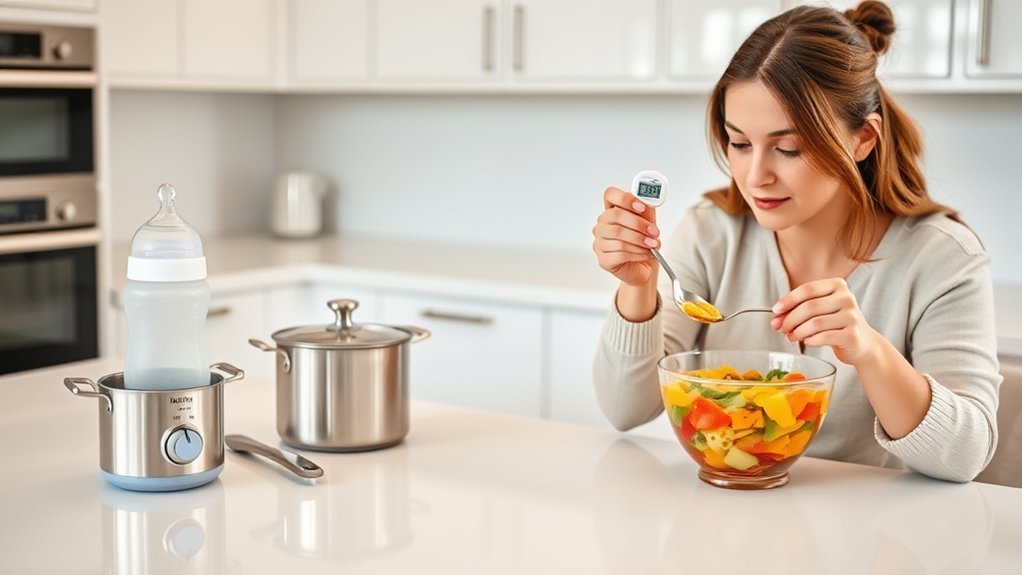
Reheating baby food safely takes only a few minutes, but the details matter. Use a clean saucepan or microwave-safe dish, heat previously cooked food until it is steaming throughout, stir well, and then let it cool to a comfortable lukewarm temperature before feeding. Portioning food before heating also helps prevent saliva contamination and waste.
Quick Answer
Reheat baby food on the stovetop over low heat or in a microwave-safe dish in short bursts. Stir until the food is evenly steaming, let microwaved food stand for 30 seconds, and cool it to lukewarm before serving. Never save food from your baby’s bowl or reheat cooked food more than once.
Key Takeaways
- Heat previously cooked baby food until it is steaming throughout; for cooked leftovers, the USDA reheating target is 165°F (74°C).
- Stir carefully and let microwaved food stand before checking the temperature because microwaves can create hot and cold spots.
- Transfer jarred food to a separate dish before heating, and serve with a clean spoon.
- Only reheat cooked food once. Discard anything left in the feeding bowl or touched by a used spoon.
- Thaw frozen portions in the refrigerator or with a microwave defrost setting, never on the counter.
At a Glance
| Time Required | About 2–10 minutes, depending on portion size and method |
| Difficulty | Easy |
| Tools Needed | Clean saucepan or microwave-safe dish, spoon, lid or microwave cover, and optional food thermometer |
| Cost | No extra cost with basic kitchen equipment |
How to Reheat Baby Food Safely
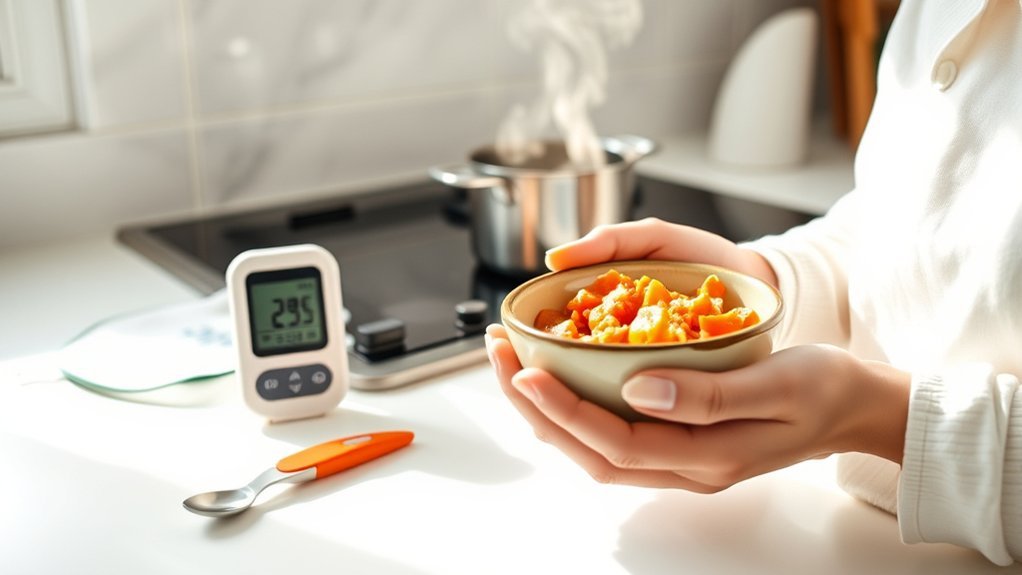
These instructions apply to purées, mashed foods, and other previously cooked solid foods. Baby food does not have to be warm if it was stored safely and your baby accepts it cold or at room temperature. When you do reheat it, the goal is to heat it evenly enough to reduce food-safety risk and then cool it enough to prevent burns.
For previously cooked food, heat the portion until it is steaming throughout. FoodSafety.gov recommends reheating leftovers to 165°F (74°C). With a very small purée portion, a thermometer may be difficult to use, so stir thoroughly, check several areas, and allow the food to cool before serving.
Use a clean spoon to move only the amount your baby is likely to eat into a separate dish. The FDA advises against feeding directly from a jar and then refrigerating it because saliva on the spoon can contaminate the remaining food.
Warning: These directions are for solid baby food, not bottles. Never microwave infant formula or breast milk because dangerous hot spots can form even when the bottle feels cool.
Key Methods for Reheating Baby Food
Stovetop and microwave reheating can both work well. Choose the method that gives you the most control for the food’s texture and portion size.
| Method | Best For | Main Safety Step |
|---|---|---|
| Stovetop | Meat, egg, thicker purées, and larger portions | Use low heat and stir continuously so the food heats evenly without scorching. |
| Microwave | Small fruit, vegetable, grain, or mixed-food portions | Heat in short bursts, stir, let stand for 30 seconds, and check several spots. |
| Double boiler | Delicate foods that scorch easily | Keep the food moving and make sure it becomes steaming throughout. |
A double boiler can provide gentler heat, but it does not prevent cross-contamination by itself. Clean hands, utensils, containers, and work surfaces are what reduce contamination risk.
Step-by-Step Guide for Stovetop Reheating
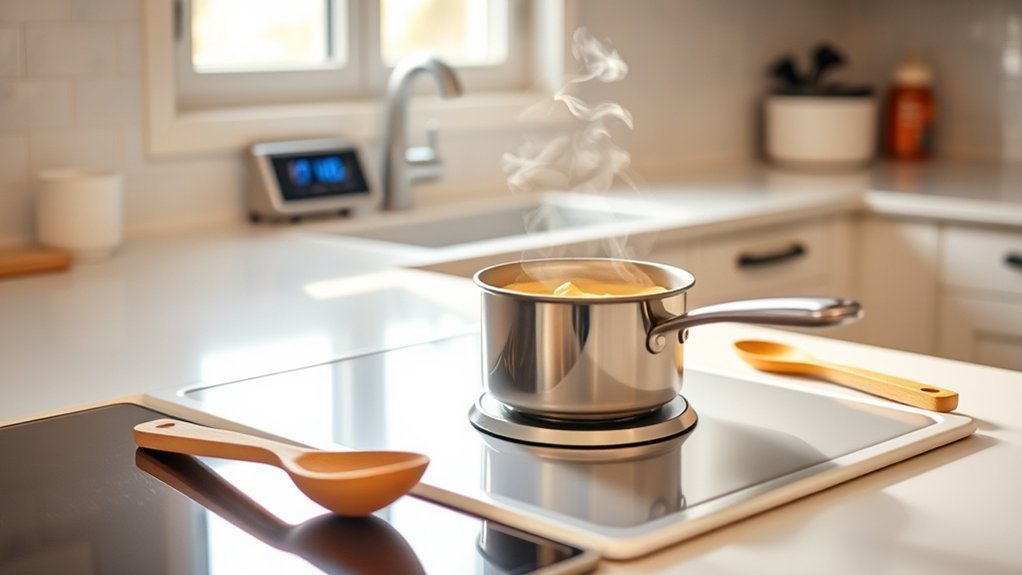
Stovetop reheating gives you good control over thick purées and foods that may splatter or overheat in a microwave. It also makes it easy to adjust the consistency with a small amount of water, breast milk, prepared formula, or another suitable liquid added after heating according to safe handling guidance.
Essential Stovetop Equipment Needed
- A clean, small saucepan or double boiler
- A clean silicone or wooden spoon
- A serving bowl and a separate clean feeding spoon
- A food thermometer, when the portion is large enough to measure accurately
Choose a pan that lets you stir the food easily. A double boiler helps reduce scorching, while a regular saucepan is faster for most small portions.
Step-by-Step Heating Process
| Step | Action |
|---|---|
| 1 | Put one meal-sized portion in a clean saucepan. Add a teaspoon or two of water only if the food is very thick or likely to stick. |
| 2 | Heat over low to medium-low heat. Stir continuously and scrape the bottom and sides of the pan. |
| 3 | Continue until the food is steaming throughout. For cooked leftovers, aim for 165°F (74°C) when you can measure it reliably. |
| 4 | Transfer the food to a clean serving bowl and stir again so heat can escape evenly. |
| 5 | Let it cool to lukewarm. Test a small amount with a clean spoon before feeding. |
Pro Tip: Heat only one serving. Keep the untouched food cold so you do not have to cool and reheat the same batch again.
How Can You Microwave Baby Food Safely?
Microwaves are convenient, but they can leave cold spots next to very hot areas. Use a microwave-safe glass or ceramic dish, spread the food into an even layer, and cover it loosely with a microwave-safe lid or vented cover.
- Transfer one serving from the jar or storage container to a microwave-safe dish.
- Heat in 10- to 15-second bursts. Microwave power and portion size vary, so do not rely on one fixed time.
- Stir from the center to the edges after every burst.
- When the food is steaming throughout, let it stand for at least 30 seconds.
- Stir again, then test several spots with a clean spoon. Serve only when the food is lukewarm.
The FDA specifically says not to microwave baby food in its jar. The agency also recommends using the stovetop for baby-food meats, meat sticks, and eggs because their fat content can cause splattering and overheating.
Note: A dish may feel cool while the food in the middle is too hot. Stirring, standing time, and testing more than one spot are all necessary.
Reheating Frozen Baby Food Tips
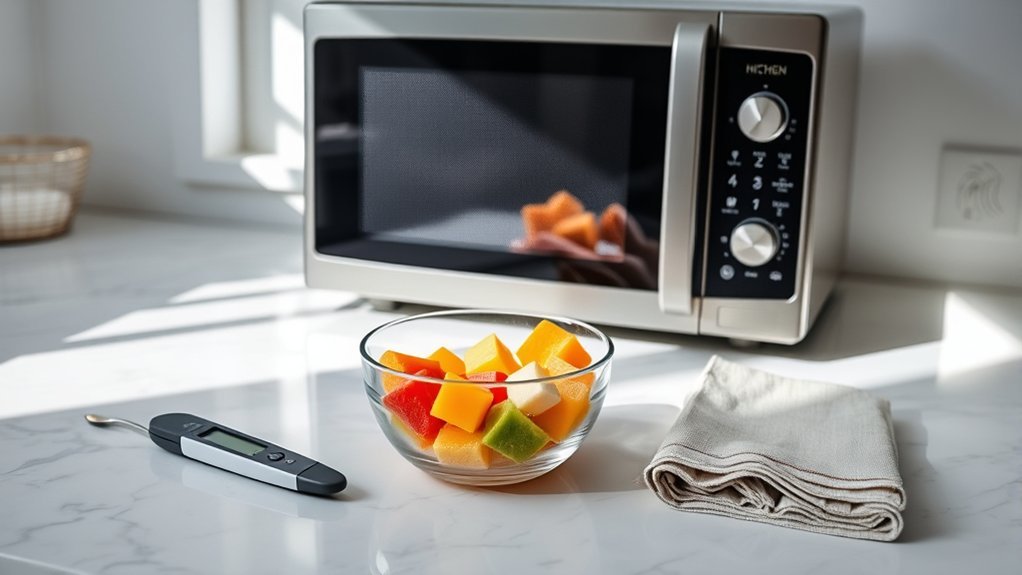
Frozen baby food should be thawed and reheated with the same care as refrigerated food. Small, labeled portions make it easier to thaw only what your baby needs.
Safe Thawing Methods
The safest baby-specific options are to thaw food in the refrigerator or use the microwave’s defrost setting. The NHS advises never thawing baby food at room temperature and using thawed food within 24 hours. Food thawed in the microwave should be reheated and served promptly because parts of it may begin warming during defrosting.
Keep thawing food covered and separated from raw meat, poultry, seafood, and eggs. Never refreeze a portion that has been reheated or offered to your baby.
Proper Reheating Techniques
After thawing, use the stovetop or microwave directions above. Stir until the entire portion is steaming, then cool it before serving. A partially frozen center can remain cold even when the outside is very hot, so break up the food and check the middle carefully.
Rice needs extra care. Cool cooked rice within one hour, refrigerate or freeze it promptly, use refrigerated rice within 24 hours, and reheat it only once until steaming throughout.
Single-Serve Portion Benefits
Freezing purées in clean ice cube trays or small food-safe containers gives you consistent portions and reduces waste. Once tray portions are solid, transfer them to a clean freezer container or bag, label the food and date, and keep them covered.
The American Academy of Pediatrics suggests using frozen homemade baby food within about three months for best quality. Always follow a commercial product’s label when its instructions are stricter.
Common Mistakes to Avoid When Reheating Baby Food
- Heating the whole jar: Portion food into a separate dish so the untouched food stays cold and uncontaminated.
- Skipping the stir-and-stand step: Microwave hot spots can burn a baby even when the dish feels cool.
- Serving food while it is still hot: Reheated food should be steaming first, then cooled to lukewarm before feeding.
- Reheating the same food more than once: Heat one serving and discard half-eaten food.
- Thawing on the counter: Use the refrigerator or microwave defrost setting instead.
- Using a slow cooker to reheat leftovers: FoodSafety.gov warns that slow cookers may keep food too long in the 40°F–140°F danger zone before it becomes hot enough.
- Relying on smell or taste to prove safety: Harmful bacteria may not change a food’s smell, taste, or appearance.
- Using damaged or unapproved containers: Heat food only in cookware or dishes labeled safe for the chosen method.
How to Ensure Your Baby Food Is Safe to Eat
Use this quick safety check before each meal:
- Wash your hands and use clean utensils, dishes, and work surfaces.
- Check the package date and follow the manufacturer’s storage and heating directions.
- Keep the refrigerator at 40°F (4°C) or below and the freezer at 0°F (-18°C) or below.
- Discard perishable food left at room temperature for more than two hours, or more than one hour when the temperature is above 90°F (32°C).
- Heat previously cooked food until steaming throughout, then cool it before feeding.
- Stay with your baby while eating and use a separate clean spoon for temperature testing.
The safest routine is simple: portion first, heat once, stir well, cool before serving, and discard anything that touched your baby’s mouth.
This article provides general food-safety information. Ask your pediatrician for individualized guidance if your baby was born prematurely, has a weakened immune system, follows a medical diet, or has feeding or swallowing concerns.
Storing Leftover Baby Food After Heating
The word “leftovers” can mean different things, and the safe action depends on whether the food was contaminated during feeding.
| Food Situation | What to Do |
|---|---|
| Food left in the baby’s bowl or touched by a used spoon | Discard it after the feeding. Do not refrigerate, freeze, or reheat it. |
| Untouched food left in the original jar or storage container | Refrigerate promptly and follow the label or the storage limits below. |
| A portion that was heated but not served | For a simple, conservative baby-food routine, discard it rather than cooling and reheating it again. |
| Food left out too long | Discard after two hours at room temperature, or one hour above 90°F (32°C). |
FDA storage guidance for opened or freshly made baby food varies by type:
- Strained fruits and vegetables: 2–3 days refrigerated
- Strained meats and eggs: 1 day refrigerated
- Meat-and-vegetable combinations: 1–2 days refrigerated
- Homemade baby food: 1–2 days refrigerated
Label containers with the food and date, store them in the coldest part of the refrigerator rather than the door, and use the shortest limit when ingredients have different storage times.
Signs Your Baby Food Has Spoiled or Is Unsafe
Discard baby food immediately if you see mold, a swollen or leaking package, a broken seal, unexpected bubbling, severe discoloration, or an unusual odor. Do not taste questionable food.
However, food can contain harmful bacteria without obvious spoilage signs. Time, temperature, storage history, and spoon contamination are more reliable safety checks than smell or appearance. When you are unsure how long food has been open, thawed, warm, or refrigerated, throw it away.
Frequently Asked Questions
Can I reheat baby food multiple times?
No. Reheat cooked food only once. Portion the amount your baby is likely to eat, keep the rest refrigerated, and discard anything left in the feeding bowl.
What is the best way to store leftover baby food?
Store only untouched food. Place it in a clean airtight container, label it with the date, refrigerate it promptly, and use the storage limit for its ingredients. Never save food that has touched your baby’s spoon or mouth.
How long can I store reheated baby food in the fridge?
Do not plan to store and reheat the same baby-food portion again. Discard food from the feeding bowl and any heated excess. Refrigerate only untouched food that stayed in its original container, following the label or the FDA storage limits listed above.
Is it safe to add spices before reheating baby food?
Mild herbs and spices can add flavor. Avoid honey before 12 months, limit added salt, and avoid added sugar. Introduce new ingredients in age-appropriate textures and follow your pediatrician’s allergy guidance.
Can I reheat baby food in a slow cooker?
No. A slow cooker may take too long to move refrigerated food through the bacterial danger zone. Reheat baby food quickly on the stovetop or in the microwave instead.
Does baby food have to be warmed?
No. Safely stored baby food may be served cold or at room temperature if your baby accepts it. Reheating is usually a preference, but previously cooked food that you choose to reheat should be heated thoroughly and then cooled before serving.
Can I microwave baby food in the jar?
No. Transfer one serving to a microwave-safe dish so you can stir it thoroughly and test the temperature. Heating in the jar can produce an unevenly hot center.
Do these microwave directions apply to formula or breast milk?
No. Never microwave formula or breast milk. Warm a bottle in warm water if needed, mix it to even out the temperature, and test it before feeding.
Conclusion
Safe reheating comes down to five habits: portion first, heat once, stir thoroughly, cool before serving, and discard anything contaminated during feeding. The stovetop gives excellent control, while the microwave is safe for many solid foods when you use a separate dish, short heating bursts, a standing period, and careful temperature checks. Store untouched food promptly and follow the shortest applicable storage limit.
Sources
- U.S. Food and Drug Administration — Once Baby Arrives — jar handling, microwave precautions, temperature testing, and baby-food storage limits
- NHS Best Start in Life — Storing and Reheating Food — thawing, steaming, cooling, one-time reheating, rice, and feeding leftovers
- FoodSafety.gov — Leftovers: The Gift That Keeps on Giving — 165°F reheating target, two-hour rule, microwave stirring, and standing time
- FoodSafety.gov — 10 Smart Tips to Keep Leftovers Safe — warning against reheating leftovers in a slow cooker
- Centers for Disease Control and Prevention — Foods and Drinks to Avoid or Limit — honey, added sugar, and high-sodium foods for infants and young children
- American Academy of Pediatrics — Homemade Baby Food — freezing portions and recommended freezer-use timing