A coffee maker is an appliance or manual device designed to extract soluble flavors, aromatic oils, and caffeine from ground coffee beans using hot or cold water. Coffee makers span a spectrum from non-electric immersion and percolation tools—such as pour-over drippers, French presses, and stovetop moka pots—to complex electric drip machines, single-serve pod appliances, and high-pressure espresso machines. Choosing the right coffee maker involves balancing your preferred flavor profile, daily batch volume, desired level of brewing control, budget, and willingness to perform routine cleaning and descaling.
Quick Answer
A coffee maker extracts soluble flavor compounds from ground coffee using water and separates the liquid from spent grounds. Drip machines automate water delivery, espresso machines use high pump pressure, and manual brewers give you direct control over brew variables. Choose a model based on flavor, serving capacity, counter space, budget, and cleaning requirements.
Key Takeaways
- Coffee makers operate using four primary extraction methods: percolation (drip/pour-over), full immersion (French press/cold brew), pressurized extraction (espresso/moka pot), or vacuum siphonage.
- Automatic drip machines offer unmatched batch convenience, while manual pour-over and immersion brewers maximize tactile control over extraction variables.
- Final cup quality depends on six foundational brewing factors: coffee-to-water ratio, grind size distribution, water temperature (92°C–96°C), water mineral content, contact time, and filter media.
- Advertised “cup” capacities reflect small 4- to 5-fluid-ounce tasting cups rather than standard 8- to 12-ounce mugs; always evaluate usable fluid volume in ounces or milliliters.
- Routine cleaning removes rancid coffee oils, while periodic descaling dissolves mineral scale; descaling frequency and chemical choice depend on water hardness and manufacturer specifications.
What Is a Coffee Maker and How Does It Work?
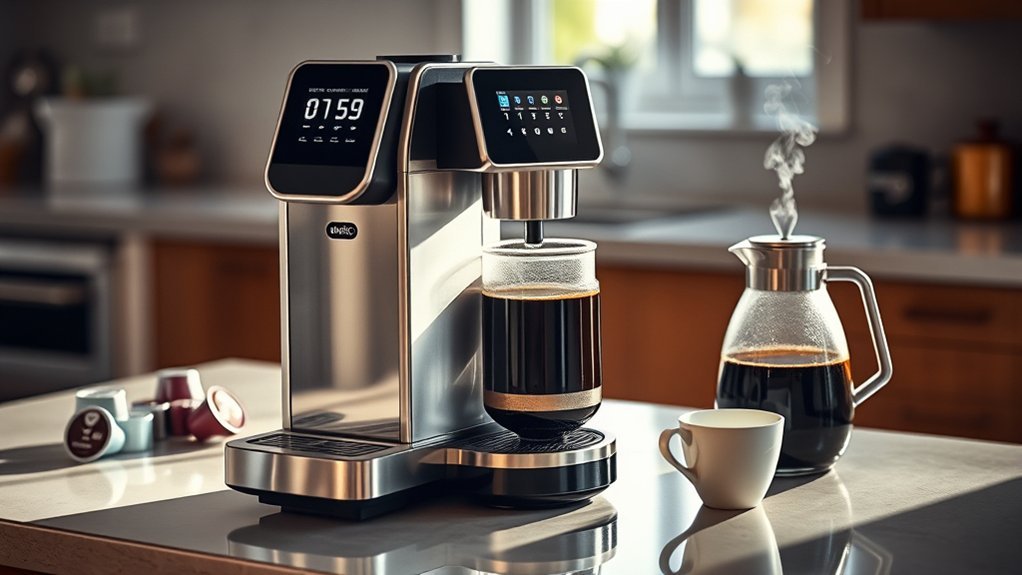
A coffee maker is a brewing appliance or manual tool that manages the interaction between water and roasted coffee grounds to execute solid-liquid extraction. During brewing, hot or ambient water acts as a solvent, dissolving organic acids, sugars, lipids, caffeine, and volatile aromatic compounds while leaving behind insoluble cellulose structures. The device then passes the resulting solution through a filtration barrier (paper, cloth, or metal mesh) to produce clean liquid coffee.
While manual devices rely on gravity, human physical pressure, or steeping time, an automatic electric drip coffee maker utilizes a clever, pump-free thermal siphon mechanism to move water against gravity:
- One-Way Check Valve: Cold water flows from the reservoir into a heating tube located at the base of the machine. A one-way ball or flapper valve permits water to enter the heating channel but prevents it from flowing backward into the reservoir.
- Resistive Heating Element: An electric heating element bonded to the aluminum water tube rapidly boils a small fraction of the water, generating expanding steam bubbles.
- Thermal Siphon Lift: As steam bubbles expand inside the narrow vertical riser tube, they push columns of hot water upward toward the top of the brewer.
- Showerhead Dispersion: The hot water reaches a dispersion plate (showerhead) positioned above the brew basket, distributing the water over the ground coffee bed.
- Filtration & Collection: Gravity draws water through the coffee bed and filter into a glass or thermal carafe resting below.
For automatic filter brewers, the Specialty Coffee Association’s Certified Home Brewer standards establish strict performance benchmarks. Certified machines must heat water to a stable bed temperature between 92°C and 96°C (197.6°F–204.8°F) within the first minute of brewing and maintain uniform contact time to achieve the ideal Golden Cup extraction yield (18%–22%).
Understanding the distinction between cleaning and descaling is critical for equipment longevity. Cleaning removes accumulated coffee oils and micro-grounds that turn rancid and taint flavor. Descaling removes calcium carbonate and magnesium scale deposited by hard water on internal heating elements, preventing clogs, thermal inefficiency, and pump failure.
Overview of Different Coffee Maker Types
Coffee makers are categorized by their underlying extraction physics, level of automation, batch capacity, and taste characteristics. No single design is universally superior; each serves distinct lifestyle needs and flavor profiles.
Automatic Drip Coffee Makers
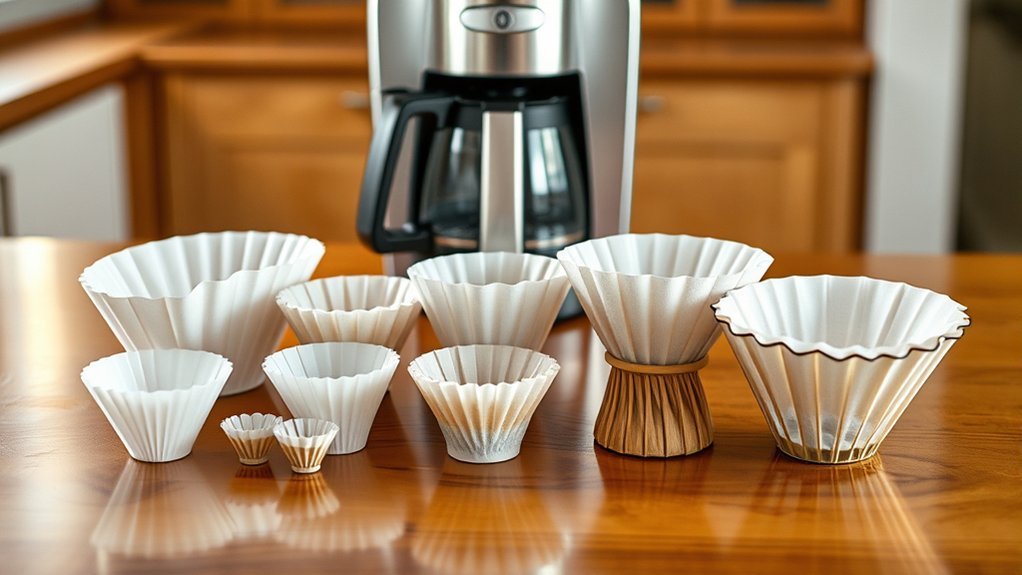
Automatic drip coffee makers remain the standard household brewer across North America. They heat reservoir water automatically and shower it across a bed of medium-ground coffee contained in a paper or permanent basket filter. Ranging in capacity from 4-cup compact units to 14-cup family models, their primary advantage is hands-off multi-serving convenience. High-end models feature programmable timers, bloom pre-infusion cycles, and insulated thermal carafes.
Pour-Over Coffee Makers
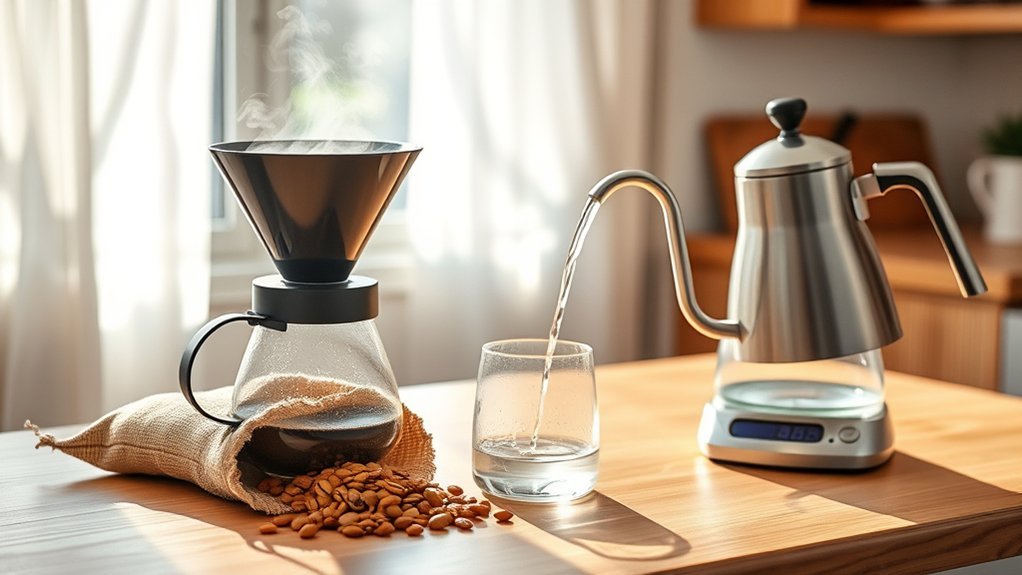
Pour-over drippers—including conical designs like the Hario V60, flat-bottom wave designs like the Kalita Wave, and integrated glass vessels like the CHEMEX—are manual percolation devices. The user pours hot water from a gooseneck kettle over ground coffee in controlled circular motions. Pour-overs offer maximum control over flow rate, water dispersion, and brew temperature, yielding high clarity, nuanced acidity, and clean separation of origin notes.
According to Hario’s official V60 guidance, brewing typically requires a 1:15 to 1:16 coffee-to-water ratio, medium-fine grind, and an initial 30- to 45-second bloom pour to release trapped carbon dioxide gas before finishing with steady, concentric pours.
French Press Coffee Makers
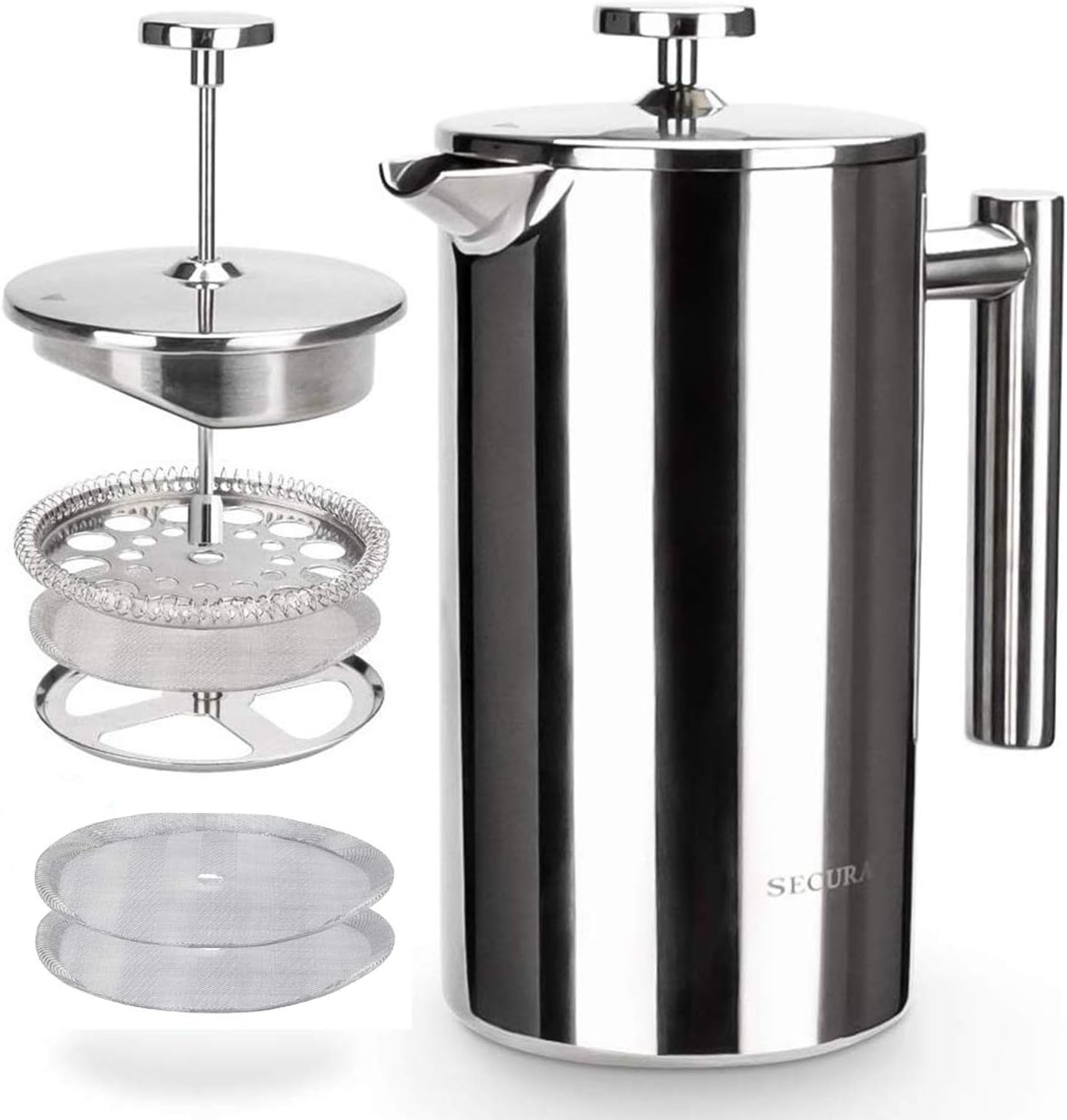
The French press (press pot or cafetiere) is a classic full-immersion manual brewer. Coarsely ground coffee steeps directly in hot water inside a cylindrical glass, stainless steel, or ceramic beaker for 4 to 5 minutes. Depressing a fine stainless-steel mesh plunger separates the grounds from the brewed liquid. Because metal filters do not absorb natural diterpenes (cafestol and kahweol) or trap microscopic fines, French press coffee is characterized by a heavy, velvety body and rich mouthfeel.
Single-Serve and Capsule Coffee Makers
Single-serve pod and capsule machines (such as Keurig K-Cup and Nespresso Original/Vertuo systems) utilize pre-portioned, hermetically sealed capsules containing roasted coffee and integrated mini-filters. Piercing needles puncture the capsule, and pressurized water extracts a single cup in under 60 seconds. While they provide instant convenience, portion control, and zero loose-ground cleanup, they incur significantly higher recurring costs per cup and create ongoing packaging waste.
Espresso Machines
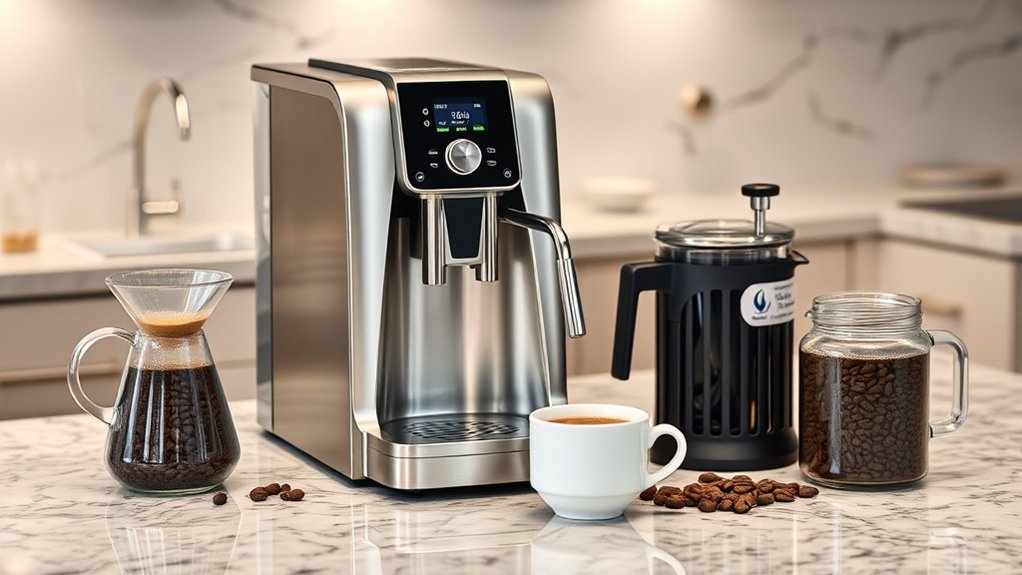
Espresso machines produce a dense, concentrated 1- to 2-fluid-ounce beverage crowned with a velvety layer of emulsified oils and micro-bubbles known as crema. They operate by forcing heated water through a finely ground, densely tamped coffee puck at approximately 9 bar (130 psi) of pressure. As documented by the Specialty Coffee Association in its research on espresso extraction, 9 bar remains the global standard for modern espresso preparation.
Espresso equipment spans three primary configurations:
- Manual (Lever) Machines: The user manually pulls a mechanical lever to compress a spring or piston, modulating pressure flow by hand.
- Semi-Automatic Machines: An electric pump generates constant pressure, but the user must grind, dose, distribute, tamp, and time the shot manually.
- Superautomatic (Bean-to-Cup) Machines: Built-in conical burr grinders, automated tampers, computerized brewing chambers, and automated milk frothers execute drinks at the press of a button.
AeroPress and Press-Style Brewers
The AeroPress is a versatile manual piston brewer that combines immersion steeping with manual pneumatic pressure. Ground coffee steeps in a cylindrical chamber before an airtight rubber plunger is pushed downward by hand, forcing the brew through a micro-paper or metal disc filter in roughly 20 to 30 seconds. According to the AeroPress manufacturer specifications, the standard chamber accommodates up to 10 fluid ounces (296 ml) of water. Its rapid brew time reduces bitterness and produces an exceptionally clean, low-grit cup.
Moka Pots
The moka pot is an octagonal stovetop brewer consisting of a lower boiler, a funnel filter basket, and an upper collection chamber. As water boils in the sealed lower vessel, expanding steam pressure (approximately 1.5 to 2 bar) forces boiling water up through the coffee grounds and out of a central column into the upper pot. It yields an intense, heavy-bodied coffee that serves as an economical alternative to true pump espresso for milk-based drinks.
Stovetop and Electric Percolators
A percolator continuously cycles boiling water over a bed of coarse coffee grounds using steam vapor lift. Unlike a drip machine (which passes fresh water through the grounds only once), a traditional percolator recirculates already-brewed coffee over the grounds repeatedly until the heat is removed. This produces a robust, piping-hot cup, though prolonged boiling can lead to over-extracted, bitter flavor notes if brewing is not carefully timed.
Cold-Brew and Siphon Brewers
Cold-brew makers steep coarse coffee grounds in cold or room-temperature water for 12 to 24 hours. Cold extraction selectively dissolves flavor compounds, extracting fewer sharp organic acids and bitter tannins, resulting in a naturally sweet, low-astringency concentrate. Cold drip (Dutch cold brew) setups use slow, adjustable drippers that pass iced water through a column of grounds over 4 to 8 hours.
Siphon (vacuum) brewers use two heat-resistant glass globes, a vapor-pressure differential, and an external burner. Expanding vapor in the lower chamber pushes water up into the top chamber where grounds steep; removing heat creates a partial vacuum that draws the brewed coffee back down through a cloth or paper filter, yielding an aromatic, crystal-clear cup.
Coffee Maker Types at a Glance
| Brewer Type | Extraction Style | Best For | Flavor Profile | Main Tradeoff |
| Automatic Drip | Percolation (Gravity) | Multi-cup batch brewing | Balanced, medium body | Limited manual variable control |
| Pour-Over | Percolation (Manual) | Single origin & craft beans | Clean, bright, high clarity | Requires kettle skill & attention |
| French Press | Full Immersion | Heavy body & rich texture | Robust, dense, oily | Fine sediment; messy cleanup |
| AeroPress | Immersion + Pressure | Travel & fast single cups | Smooth, clean, low bitterness | Limited 1-to-2 cup capacity |
| Pod / Capsule | Automated Pressure | Speed & minimal effort | Standardized, mild body | High cost per cup; pod waste |
| Semi-Auto Espresso | High Pressure (9 bar) | Espresso & milk drinks | Intense, syrupy, thick crema | High cost; steep learning curve |
| Superautomatic | High Pressure (Automated) | One-touch specialty drinks | Concentrated, rich | High price; complex maintenance |
| Moka Pot | Steam Pressure (~1.5 bar) | Budget concentrated coffee | Bold, heavy, pungent | Prone to heat-scorching |
| Percolator | Recirculating Steam | Hot, dark, large batches | Dark, pungent, astringent | Can over-extract coffee |
| Cold Brew Maker | Extended Cold Immersion | Iced drinks & low acidity | Sweet, mellow, chocolaty | 12–24 hour brewing duration |
| Siphon (Vacuum) | Vapor Pressure / Vacuum | Brew enthusiasts & display | Delicate, highly aromatic | Fragile glass; complex setup |
Exploring Coffee Brewing Methods and Their Flavors
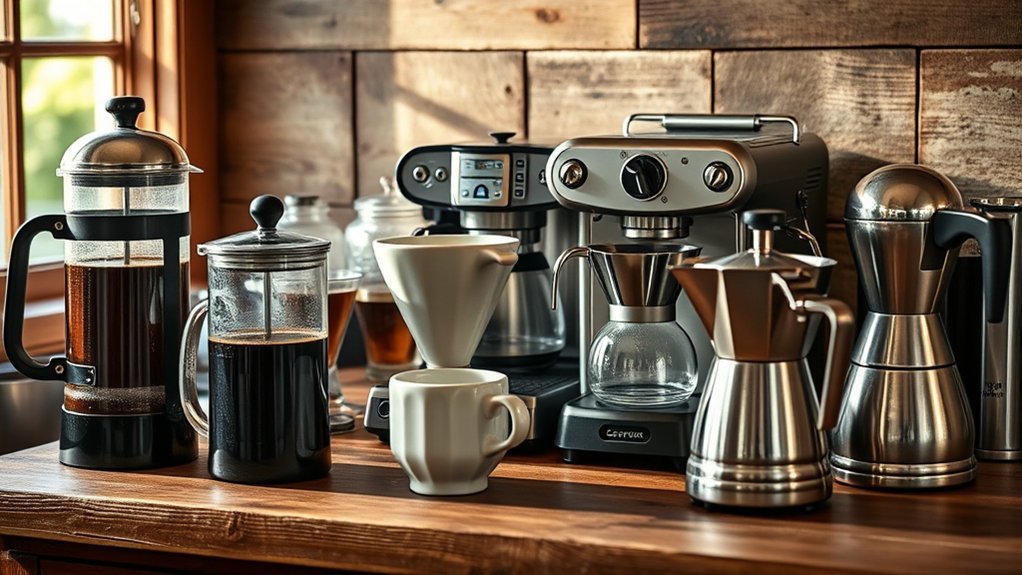
Every coffee brewing device operates within the fundamental laws of extraction chemistry. The flavor, mouthfeel, sweetness, and aroma extracted into your mug depend on how four primary variables interact with your coffee maker’s design.
Coffee-to-Water Ratio
The proportion of dry coffee mass to water mass directly determines dissolved beverage concentration (Total Dissolved Solids, or TDS). For standard drip and pour-over filter brewing, the universal starting range is 55 to 60 grams of coffee per 1,000 grams (1 liter) of water (a brew ratio of 1:18 to 1:16.7). In contrast, espresso recipes utilize concentrated ratios between 1:1.5 and 1:2.5, while cold brew concentrates often steep at heavy 1:4 to 1:8 ratios.
Use a digital kitchen scale measuring in 0.1-gram increments. Volumetric scoops introduce up to 25% weight variation due to roast density and bean size differences.
Grind Size and Contact Time
Grind size dictates total surface area exposed to water and governs water flow resistance through a filter bed. Finer grinds dramatically increase surface area and slow down percolation flow, requiring shorter contact times. Coarser grinds allow water to pass rapidly, necessitating longer contact periods to prevent under-extraction.
- Extra Coarse: Cold brew (12–24 hours immersion).
- Coarse: French press, percolator (4–5 minutes immersion).
- Medium-Coarse: CHEMEX, automatic flat-bottom drip machines.
- Medium: Conical pour-overs (Hario V60), standard siphon brewers.
- Medium-Fine: AeroPress (1–2 minutes), Moka pot (stovetop pressure).
- Fine: Commercial and domestic espresso machines (25–30 seconds under 9 bar).
- Extra Fine (Powder): Turkish cezve/ibrik brewing.
Water Temperature and Quality
Water constitutes roughly 98.5% of drip coffee and 90% of espresso. Brewing water should be fresh, odor-free, and heated to 92°C to 96°C (197.6°F–204.8°F). Water below 90°C fails to extract sweet sugars and heavier aromatic compounds, leaving the cup sour and underdeveloped; boiling water above 98°C can extract bitter, astringent chlorogenic acids and tannins.
Mineral content is equally crucial. Water with moderate calcium and magnesium ions (total hardness around 50–150 ppm CaCO₃) enhances flavor extraction by binding with volatile organic compounds. However, excessively hard water (above 200 ppm) accelerates internal mineral scale accumulation, while pure distilled or reverse-osmosis water lacks the mineral ions needed for extraction and can cause flat, sour coffee.
Pro Tip: When dialing in your coffee maker, adjust only one variable at a time. If your brew tastes sour or thin, grind slightly finer while keeping your dose, water volume, and temperature identical.
How to Choose the Right Coffee Maker for Your Preferences?
Selecting the ideal coffee maker requires matching the appliance’s mechanical strengths with your daily routine, flavor preferences, and maintenance tolerance.
Brewing Method Preferences
Align your choice with the primary beverage you consume daily:
- For Drip & Black Coffee Enthusiasts: An SCA-certified automatic drip maker or manual pour-over cone delivers optimal flavor clarity and balanced body.
- For Dense, Full-Bodied Brews: A stainless steel French press or AeroPress with a metal filter delivers rich, mouth-coating texture without paper filter absorption.
- For Lattes, Flat Whites, and Cappuccinos: A pump-driven espresso machine with a dedicated steam wand is mandatory; moka pots offer a strong stovetop alternative on a tight budget.
- For Fast Morning Rushes: A high-performance pod machine or superautomatic bean-to-cup unit provides push-button speed with zero mess.
Capacity and Size Considerations
Brewer capacity ratings can be misleading. In the coffee machine industry, an advertised “cup” is typically measured as 4 to 5 fluid ounces (118–148 ml)—the size of a traditional porcelain coffee cup—rather than a modern 10- to 16-ounce mug.
Note: A standard “12-cup” drip coffee maker holds approximately 60 fluid ounces of water, producing roughly four to five average 12-ounce mugs. Always check total fluid capacity rather than manufacturer cup labels.
Always verify vertical counter clearance. Many automatic drip and espresso machines require top-loading access for water reservoirs and whole bean hoppers, requiring at least 18 to 22 inches of overhead clearance beneath kitchen upper cabinets.
Convenience and Cleaning
Assess the total operational workflow before purchasing. Machines with removable, top-rack dishwasher-safe water tanks, filter baskets, and drip trays streamline morning routines. Conversely, dual-boiler espresso machines with integrated milk frothing lines require immediate purging, steam wand wiping, and periodic backflushing with specialized detergent.
Purchase Price and Running Costs
Consider the total cost of ownership across the lifetime of the appliance:
- Manual Brewers ($20–$50): Low upfront investment, minimal ongoing maintenance, negligible replacement part costs.
- Automatic Drip Machines ($50–$350): Moderate upfront price; recurring costs limited to paper filters and descaling agents.
- Capsule Systems ($80–$250): Inexpensive entry hardware, but high operational costs ($0.75–$1.25 per pod), translating to hundreds of dollars annually for regular drinkers.
- Semi-Automatic & Superautomatic Espresso ($400–$2,500+): High entry cost, requires a dedicated espresso-grade burr grinder ($200–$600), and incurs routine costs for water filters, group gasket replacements, and descaling solutions.
Essential Features to Consider When Choosing a Coffee Maker
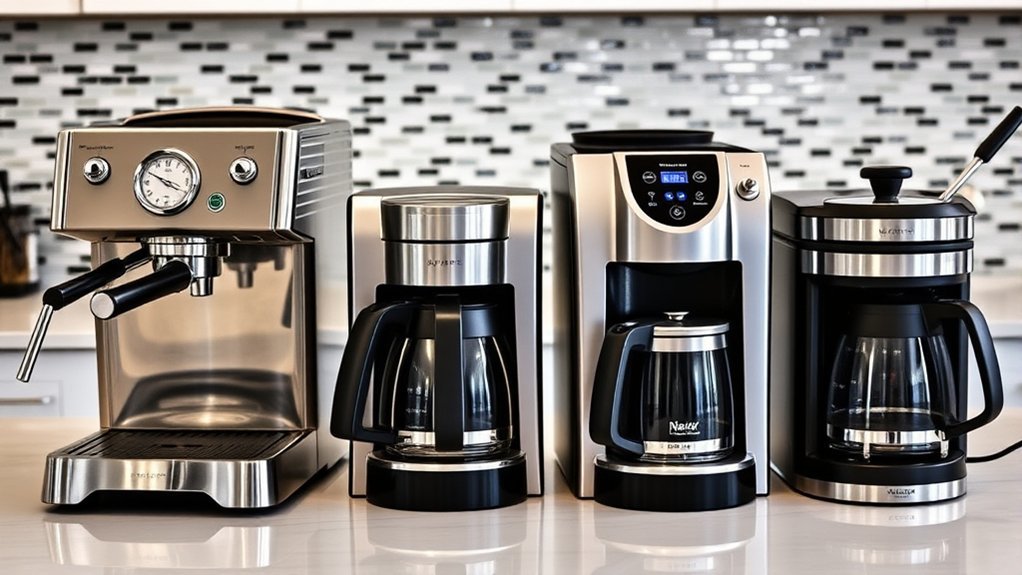
When comparing specific models, prioritize engineering features that enhance extraction precision and simplify maintenance:
- Thermal vs. Glass Carafe: Double-walled stainless steel thermal carafes maintain beverage temperature for hours through vacuum insulation without a heating plate. Glass carafes rely on heated base plates that can bake the coffee, creating harsh flavors after 20 minutes.
- PID Temperature Control: Proportional-Integral-Derivative (PID) controllers regulate boiler elements electronically, maintaining water temperature stability within ±1°C.
- Pre-Infusion (Bloom Feature): Briefly saturates the coffee bed with low-pressure water for 30–45 seconds prior to full extraction, degassing trapped carbon dioxide for smoother, more even extraction.
- Integrated Burr Grinder: Built-in steel or ceramic conical burrs grind fresh beans immediately before brewing, preserving volatile aromatics.
- Wide Dispersion Showerhead: Multi-hole showerhead designs distribute water evenly over the entire diameter of the coffee bed, preventing channeling and localized over-extraction.
- Removable Water Reservoir: Simplifies refilling and direct sink cleaning, reducing countertop spills and interior bacterial biofilm buildup.
- Programmable Auto-Start: Allows scheduling morning brew cycles so fresh coffee is ready upon waking.
Troubleshooting Common Coffee Maker Issues
Warning: Always unplug electric coffee makers and allow internal boilers, heating plates, and steam tubes to cool completely before inspecting or servicing components. Never disassemble sealed electrical enclosures or bypass safety switches. Refer to the manufacturer’s user manual for model-specific repairs.
Coffee Maker Will Not Turn On
Verify that the power outlet has active power by testing with another small appliance. Ensure that magnetic water reservoir sensors, brew basket micro-switches, and lid interlocks are completely seated. If the power cord or thermal fuse shows signs of heat damage, discontinue use immediately and contact customer support.
Coffee Maker Brews Slowly or Stops Mid-Cycle
A sluggish brew cycle or sputtering steam release indicates heavy internal mineral scale narrowing the thermal siphon heating tube. Run a full descaling cycle using an approved chemical descaler. Alternatively, check whether an excessively fine coffee grind is choking the paper filter basket.
Coffee Maker Is Leaking Water From the Base
Water pooling beneath the machine typically stems from three causes: a worn silicone gasket around the water reservoir exit valve, an overfilled water tank exceeding the internal overflow drain tube, or brittle internal tubing connected to the boiler. Inspect the reservoir O-ring for tears, cracks, or mineral debris.
Coffee Grounds Overflowing the Filter Basket
Basket overflow occurs when water cannot drain through the filter as quickly as the showerhead distributes it. Common causes include using too fine a grind size, using multiple paper filters simultaneously, adding excessive ground coffee beyond the basket’s maximum fill line, or a jammed drip-stop spring mechanism at the bottom of the filter basket.
Coffee Tastes Weak or Watery
Under-extracted, watery coffee occurs when the brew ratio has too much water relative to coffee, the grind is too coarse for the contact time, or the heating element is failing to reach the required 92°C–96°C temperature range. Increase your coffee dose (targeting 55–60 g/L) and calibrate to a finer grind setting.
Coffee Tastes Bitter or Harsh
Harsh bitterness is caused by over-extraction: water extracting unpleasant, slow-dissolving plant tannins. Switch to a coarser grind, reduce brew contact time, verify that the brew basket is free of stale residual coffee oils, and avoid leaving carafes sitting on active electric hot plates.
Coffee Tastes Sour or Thin
Sourness indicates sharp organic acids were extracted without the balancing sugars and aromatics that follow later in the brew cycle. To resolve under-extraction, grind finer, increase water temperature, extend steep time, or ensure the brewer achieves a full pre-wetting bloom phase.
Coffee Is Not Hot Enough
Preheat cold ceramic mugs or stainless-steel carafes with hot water prior to brewing. If an automatic brewer delivers liquid below 85°C (185°F) into the carafe, mineral buildup on the thermoblock heating element is likely insulating the water from heat transfer; perform an immediate descaling cycle.
Tips for Maintaining Your Coffee Maker for Longevity
Consistent preventive maintenance preserves extraction flavor and extends the mechanical operational life of your coffee equipment:
- Daily Post-Brew Clean: Discard spent grounds and capsules immediately after brewing to prevent mold and bacterial growth. Rinse filter baskets, carafes, and drip trays with warm water and mild dish soap.
- Daily Steam & Milk Hygiene: For espresso machines, purge the steam wand for two seconds and wipe down the exterior with a damp microfiber cloth immediately after steaming milk.
- Weekly Deep Clean: Soak carafes and brew baskets in warm water with an oxygenated coffee detergent to dissolve stubborn polymerized coffee oil deposits without scratching surfaces.
- Water Filter Replacement: Replace in-tank charcoal or ion-exchange resin water filter cartridges every two to three months as designated by the manufacturer.
- Periodic Descaling: Descale every 1 to 3 months, or whenever your appliance’s service light illuminates. Hard-water areas (over 180 ppm hardness) require more frequent descaling cycles.
According to technical maintenance guidelines from CHEMEX for the Ottomatic brewer, users should descale every 40 brew cycles (or three months) under normal water conditions. Furthermore, prefer formulated citric acid or sulfamic acid descaling agents over household white vinegar. Acetic acid (vinegar) can linger in internal silicone tubes, leave an unpleasant odor, and damage specialized internal EPDM rubber seals over time.
Frequently Asked Questions
Can I Use Ground Coffee Instead of Whole Beans in All Coffee Makers?
Most coffee makers accept pre-ground coffee, including drip machines, pour-over drippers, French presses, moka pots, and semi-automatic espresso machines, provided the grind size matches the brewing method. However, capsule-only machines require compatible pods, and some superautomatic bean-to-cup machines accept whole beans only unless equipped with a designated bypass dosing chute.
How Much Coffee Should I Use for the Best Flavor?
For standard filter, pour-over, and drip coffee, a golden starting point is a 1:16 to 1:18 coffee-to-water ratio by weight. This translates to roughly 55 to 60 grams of coffee per 1,000 ml (1 liter) of water, or about 2 level tablespoons of ground coffee for every 6 fluid ounces of water.
Are Single-Serve Coffee Makers Worth the Investment?
Single-serve pod machines are worthwhile for individuals prioritizing speed, push-button simplicity, and zero cleanup. However, the high recurring cost per cup ($0.75–$1.25 per pod) and environmental packaging waste make them more expensive in the long run than manual or automatic drip brewers.
How Often Should I Descale My Coffee Maker?
Descale every 1 to 3 months (or every 40 to 80 brew cycles) depending on your water hardness and usage. If your machine runs slowly, sputters excessive steam, or produces lukewarm coffee, run an immediate descaling cycle with a manufacturer-recommended solution.
Can Coffee Makers Brew Tea or Other Beverages?
Certain coffee makers can dispense hot water for tea bags or use compatible specialty capsules (such as chai, hot cocoa, or tea). However, you should never place milk, tea leaves, or flavorings directly inside a coffee maker’s clean-water reservoir, as this can contaminate internal boilers and void the warranty.
What Water Temperature Is Best for Coffee?
The industry standard brewing temperature is 92°C to 96°C (197.6°F to 204.8°F). Water in this range dissolves sugars and aromatic compounds cleanly without extracting the astringent, bitter tannins associated with boiling water.
Is a Paper Filter Better Than a Permanent Filter?
Paper filters absorb coffee diterpenes (oils) and trap fine particulate sediment, producing a lighter-bodied, crystal-clear cup with easy cleanup. Permanent metal mesh filters allow micro-fines and natural oils into your mug, resulting in a heavier mouthfeel and zero disposable waste.
Is a Thermal Carafe Better Than a Glass Carafe?
A double-walled stainless steel thermal carafe is superior for keeping coffee hot for several hours without altering flavor, because it uses vacuum insulation instead of an electric hot plate. Glass carafes are less expensive and transparent, but continuous hot plate heating scorches delicate coffee oils over time.
Conclusion
Selecting the right coffee maker comes down to matching your flavor preferences with your everyday routine. Automatic drip machines provide efficient batch brewing for households, manual pour-over drippers and French presses maximize clarity and body control, single-serve pod systems deliver rapid individual portions, and pump-driven espresso machines create concentrated shots for cafe-style milk drinks.
Regardless of the brewing device you choose, remember that the machine is only one part of the brewing equation. Consistently delicious coffee relies on freshly roasted beans, a precise coffee-to-water ratio, optimal grind sizing, clean filtered water, and routine descaling maintenance to keep your brewer performing at its peak.
Sources
- Specialty Coffee Association — Certified Home Brewer Program Requirements — Water temperature standards, extraction contact time, and Golden Cup brewing ratios.
- Specialty Coffee Association — Defining the Ever-Changing Espresso — 9-bar pump pressure standards, extraction yield, and crema mechanics.
- Hario USA — Alpha Series V60 Brewing Guidance — Manual percolation ratios, bloom timing, and pouring technique.
- AeroPress — AeroPress Original Specifications — Manual pressure extraction specifications and chamber fluid volume.
- CHEMEX — Ottomatic Resources — Automatic drip maintenance, descaling cycles, and citric acid cleaning guidelines.