
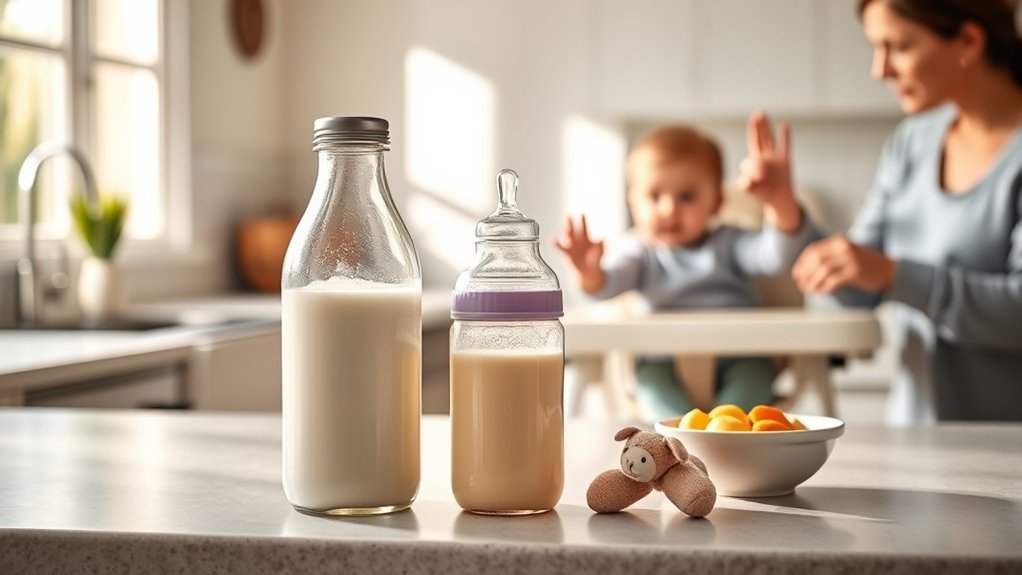
Cow’s milk becomes an option as a main drink after your child turns 12 months old. The safest choice for most toddlers is plain, pasteurized whole milk served with a varied diet. Before the first birthday, breast milk or iron-fortified infant formula should remain the main drink, even if your baby already eats yogurt, cheese or foods prepared with milk.
Quick Answer
Babies can start drinking plain, pasteurized whole cow’s milk at 12 months, but not as a replacement for breast milk or formula before then. For a toddler who drinks milk, about 16 ounces per day is a practical target. Keep intake below 24 ounces and continue serving iron-rich foods.
Key Takeaways
- Wait until 12 months before using cow’s milk as a main drink.
- Choose plain, pasteurized, unsweetened whole milk for most children from 12 to 24 months.
- About 16 ounces a day is a useful target, but yogurt and cheese can also count toward your toddler’s dairy intake.
- Avoid routinely exceeding 24 ounces because excess milk can displace iron-rich foods.
- Fortified, unsweetened soy beverage is usually the closest plant-based substitute, but discuss alternatives with your child’s healthcare provider.
- Call 911 for breathing difficulty, throat swelling, faintness or other signs of a severe allergic reaction.
At a Glance
| Starting Age | 12 months for cow’s milk as a main drink |
| Best First Choice | Plain, pasteurized, unsweetened whole milk |
| Practical Daily Target | About 16 ounces, adjusted for yogurt, cheese and the child’s overall diet |
| Upper Limit | Generally less than 24 ounces per day |
| Serving Method | An open cup or training cup, preferably with meals |
| Do Not Use | Raw milk, sweetened milk or plant beverages as infant-formula replacements |
Medical note: This guide provides general feeding information. A pediatrician or registered dietitian should give individualized advice for premature children, poor growth, anemia, food allergies, restricted diets or other medical concerns.
When Can Babies Start Drinking Cow’s Milk?

Your child can begin drinking whole cow’s milk at 12 months. According to the Centers for Disease Control and Prevention, cow’s milk should not replace breast milk or iron-fortified formula before the first birthday.
Before 12 months, cow’s milk:
- Does not contain the right balance of nutrients for an infant.
- Contains more protein and minerals than an infant’s kidneys can easily manage.
- May increase the risk of intestinal bleeding.
- Is low in iron and can displace iron-fortified formula or breast milk.
Warning: Do not give babies or toddlers raw or unpasteurized milk. Raw milk can contain harmful bacteria such as Salmonella, E. coli and Listeria. Use only milk and dairy products labeled pasteurized.

Power your essentials anywhere with a 999Wh pure sine wave power station delivering up to 1000W continuous with 2000W surge. It supports fast charging via USB-C PD 60W and USB-A QC 18W, plus simultaneous output for multiple devices through AC, USB, wireless, and car/DC ports. Recharge using AC, car, or solar with a built-in MPPT controller and dual cooling fans, while the upgraded battery management system protects against surges, short circuits, and overheating.

One quart (32 oz) of organic 2% milk

365 by Whole Foods Market products give you that dance-down-the-aisles feeling, virtual aisles too!
Can Babies Eat Dairy Before 12 Months?
Cow’s milk as a beverage is different from dairy used as food. Once a baby is developmentally ready for solids, usually around 6 months, you may introduce age-appropriate portions of pasteurized yogurt, cheese and foods prepared with cow’s milk.
Introducing dairy foods does not mean that cow’s milk can replace breast milk or formula. Breast milk or iron-fortified infant formula should remain the main source of liquid nutrition until 12 months.
What Type of Cow’s Milk Is Best?
For most children from 12 to 24 months, choose milk that is:
- Whole milk: Young children need dietary fat for growth and development.
- Pasteurized: Pasteurization reduces the risk of serious foodborne illness.
- Plain and unsweetened: Flavored milk can contain added sugar.
- Fortified with vitamin D: Most U.S. cow’s milk is fortified, but checking the label is helpful.
A pediatrician may recommend reduced-fat 2% milk for a child with excessive weight gain or a strong family history of obesity, high cholesterol or cardiovascular disease. Do not switch to skim or low-fat milk before age two solely to reduce calories without discussing it with your child’s healthcare provider.
How to Transition From Breast Milk or Formula to Cow’s Milk
Some toddlers accept cow’s milk immediately, while others need time to adjust to its taste and temperature. A gradual transition is optional, not required.
- Start after the first birthday. Offer two to four ounces of whole milk in an open cup or training cup with a meal.
- Keep the serving pressure-free. Let your child taste it without forcing them to finish.
- Replace formula feedings gradually. Replace one formula serving at a time over several days if that makes the change easier.
- Mix only when useful. You may combine prepared formula or expressed breast milk with cow’s milk and slowly increase the cow’s milk portion. Prepare formula exactly as directed before mixing it with anything else.
- Serve milk with meals. Offer water between meals so your toddler does not sip milk throughout the day.
- Keep serving varied foods. Include meat, eggs, beans, lentils, iron-fortified cereal and other iron-rich foods.
Pro Tip: If your toddler rejects cold milk, try serving it slightly warmer at first and gradually move toward refrigerator temperature. Avoid sweetening it with syrup, sugar or flavored powder.
Do You Have to Stop Breastfeeding at 12 Months?
No. Starting cow’s milk does not require you to stop breastfeeding. You may continue breastfeeding for as long as you and your child wish. If you choose to wean, the CDC recommends gradual weaning, such as replacing one feeding at a time.
Most healthy children older than 12 months do not need toddler formula, toddler drinks or “next-stage” milk. These products may cost more than cow’s milk and can contain added sugars.
Cow’s milk should complement a varied toddler diet—not replace meals, water or iron-rich foods.
What to Know About Cow’s Milk Allergy in Babies
A cow’s milk allergy happens when the immune system reacts to one or more milk proteins. It is different from lactose intolerance, which is a problem digesting the natural sugar in milk.
Cow’s Milk Allergy Versus Lactose Intolerance
Cow’s milk allergy can affect the skin, digestive system, breathing or circulation. It can cause a severe, potentially life-threatening reaction.
Lactose intolerance usually causes digestive symptoms such as gas, bloating, cramps or diarrhea. It does not cause hives, swelling, wheezing or anaphylaxis. Primary lactose intolerance is also uncommon in young infants.
Immediate and Delayed Reactions
Some milk-allergy symptoms develop within minutes to two hours. These immediate reactions may include:
- Hives, itching or sudden skin redness.
- Swelling of the lips, face, tongue or throat.
- Vomiting or severe stomach pain.
- Coughing, wheezing or trouble breathing.
- Paleness, weakness, confusion or fainting.
Other milk-protein reactions can be delayed for several hours or longer. Possible signs include:
- Repeated vomiting or diarrhea.
- Blood or mucus in the stool.
- Persistent eczema that worsens after dairy exposure.
- Feeding difficulty, ongoing discomfort or poor weight gain.
These symptoms can have many causes, so do not diagnose a milk allergy based on one symptom alone. A pediatrician or allergist may use the child’s history, examination, testing and, when appropriate, a medically supervised food challenge.
Management and Formula Alternatives
If a baby younger than 12 months has a diagnosed cow’s milk protein allergy, ordinary plant beverages are not suitable replacements for breast milk or infant formula. A clinician may recommend an extensively hydrolyzed formula or, for some children, an amino acid-based formula. Soy infant formula is suitable in certain situations but is not the right choice for every milk-allergic baby.
Do not remove all dairy from a baby’s or breastfeeding parent’s diet without professional guidance. Unnecessary restriction can make it harder to meet protein, calcium, vitamin D and energy needs.
Many children eventually outgrow cow’s milk allergy, but the timing varies. Do not test tolerance at home after a serious reaction. Reintroduction should follow the child’s pediatrician or allergist’s plan.
Symptoms of Cow’s Milk Allergy and When to Get Help
Contact your child’s healthcare provider promptly if symptoms repeatedly follow milk or dairy exposure, especially vomiting, diarrhea, blood in the stool, worsening eczema or poor growth. Keep a record of the food, amount eaten, timing and symptoms, but do not intentionally repeat an exposure to prove that milk caused the reaction.
Warning: Call 911 immediately for trouble breathing, wheezing with distress, throat or tongue swelling, faintness, severe weakness or symptoms involving more than one body system. Use prescribed epinephrine immediately when your child’s allergy action plan instructs you to do so. Do not rely on an antihistamine to treat anaphylaxis.
The American Academy of Pediatrics’ HealthyChildren guidance lists skin, respiratory, digestive and circulation symptoms among the possible signs of food allergy.
Best Cow’s Milk Alternatives for Babies and Toddlers
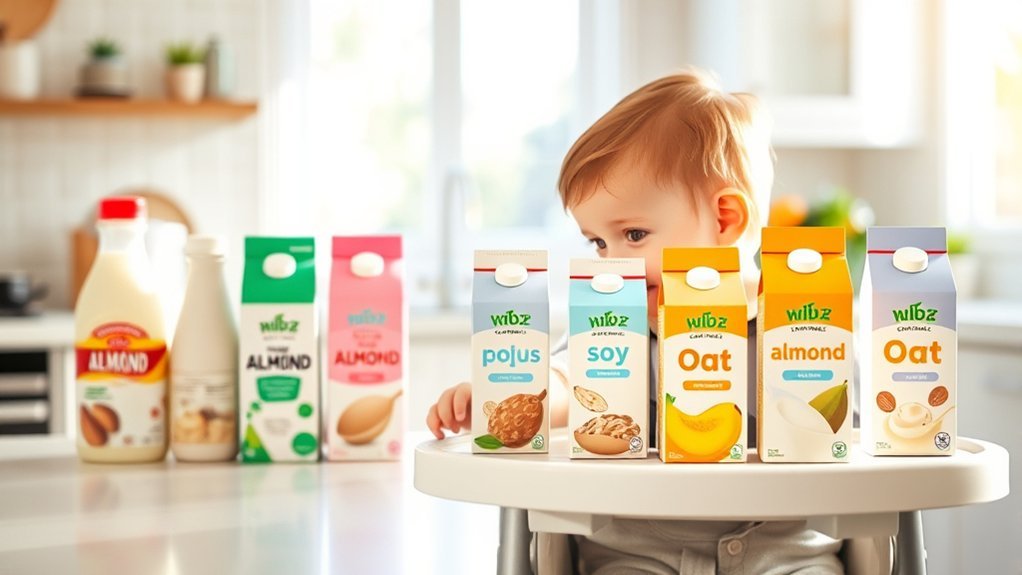
The child’s age matters when choosing an alternative.
Alternatives Before 12 Months
For babies younger than 12 months, the appropriate main drinks are breast milk or iron-fortified infant formula. Plant beverages sold as almond, oat, coconut, rice or soy “milk” are not infant formula and should not replace it.
A baby with a medical reason to avoid standard formula needs a pediatrician-recommended infant formula, not a supermarket plant beverage.
Alternatives After 12 Months
For toddlers who cannot drink cow’s milk, fortified, unsweetened soy beverage is generally the closest plant-based substitute because it usually provides more protein than almond, oat, rice or coconut beverages. The American Academy of Pediatrics notes that most other plant beverages are not nutritionally equivalent to cow’s milk.
When comparing products, choose one that is:
- Unflavored and unsweetened.
- Fortified with calcium and vitamin D.
- Adequate in protein and calories for your child’s diet.
- Free from ingredients to which your child is allergic.
Shake fortified plant beverages before pouring because added nutrients may settle. Review the Nutrition Facts label each time you change brands because nutrient levels vary.
Note: A child who cannot have both dairy and soy may need individualized advice from a pediatrician or registered dietitian to ensure adequate protein, fat, calcium, vitamin D, vitamin B12 and iodine.
Recommended Daily Intake of Cow’s Milk for Toddlers
Children 12 through 23 months need about two daily servings from the dairy group, according to current CDC toddler-nutrition guidance. Those servings may come from milk, full-fat yogurt, cheese or an appropriate fortified alternative.
For a toddler who drinks cow’s milk, about 16 ounces, or two cups, per day is a useful practical target. This can be divided into smaller servings with meals. Your child may need less fluid milk when they regularly eat yogurt and cheese.
Avoid routinely offering more than 24 ounces of milk per day unless your child’s healthcare provider has given different instructions. Too much milk can:
- Reduce hunger for other foods.
- Displace iron-rich foods.
- Make it harder for some children to get enough iron.
- Contribute to constipation in children whose diets are low in water and fiber.
Example Daily Pattern
- Breakfast: Four ounces of whole milk with iron-fortified oatmeal and fruit.
- Lunch: Water with the meal and a serving of yogurt.
- Dinner: Four to eight ounces of whole milk with beans, meat, egg or another iron-rich food.
This is only an example. Appetite varies from day to day, and children should be allowed to respond to their hunger and fullness cues.
Frequently Asked Questions
Can babies drink skim or low-fat milk before age two?
Whole milk is the standard choice for most children from 12 to 24 months because young children need dietary fat. A pediatrician may recommend 2% milk for a child with excessive weight gain or a strong family history of obesity, high cholesterol or cardiovascular disease. Skim or 1% milk should not be used routinely before age two without medical guidance.
Is it safe to mix cow’s milk with other foods?
Yes. Pasteurized cow’s milk may be used in oatmeal, sauces, mashed foods and other age-appropriate meals after a baby begins solids. Before 12 months, however, cow’s milk should not replace breast milk or iron-fortified formula as the baby’s main drink.
What should I do if my toddler refuses cow’s milk?
Do not force it or automatically sweeten it. Offer small amounts with meals and try a different cup or temperature. A toddler can also obtain dairy nutrients from yogurt and cheese. When dairy is unsuitable, fortified unsweetened soy beverage is usually the closest plant-based substitute. Ask a pediatrician or dietitian to review other alternatives.
Can cow’s milk cause constipation?
Milk does not cause constipation in every child, but excessive intake can fill a toddler up and displace water, fruit, vegetables and other fiber-rich foods. Keep milk within the recommended range and speak with a pediatrician if constipation is persistent, painful, associated with blood or accompanied by vomiting or poor growth.
How should cow’s milk be stored after opening?
Keep milk refrigerated at 40°F or below and return it to the refrigerator promptly after pouring. Follow the package’s storage and use-by instructions. Discard milk left at room temperature for more than two hours, or more than one hour when the temperature is above 90°F.
Does my child need toddler formula after 12 months?
Most healthy toddlers do not need toddler formula. After 12 months, a varied diet plus breast milk, plain whole cow’s milk or an appropriate fortified alternative can usually meet their needs. A clinician may recommend a specialized product for a child with poor growth, a restricted diet or another medical concern.
Is lactose-free cow’s milk suitable for toddlers?
Pasteurized, unsweetened lactose-free whole milk can be a suitable option after 12 months for a child who has difficulty digesting lactose. It is not safe for a child with a cow’s milk protein allergy because lactose-free cow’s milk still contains milk proteins.
Conclusion
Most babies can begin drinking plain, pasteurized whole cow’s milk after their first birthday. Introduce it in a cup, aim for about 16 ounces per day when milk is the main dairy source, and avoid routinely exceeding 24 ounces. Continue offering iron-rich foods and remember that breastfeeding may continue after 12 months.
Watch for possible allergy symptoms, distinguish milk allergy from lactose intolerance and seek emergency help for breathing trouble, throat swelling or faintness. When cow’s milk is unsuitable, choose an alternative based on your child’s age, nutritional needs and healthcare provider’s advice.
Sources
- CDC: Cow’s Milk and Milk Alternatives — introduction age, dairy servings, milk type, raw-milk safety and fortified alternatives.
- CDC: Weaning From Breastfeeding — gradual weaning, cups and feeding after 12 months.
- American Academy of Pediatrics: Why Formula Instead of Cow’s Milk? — milk amounts, iron concerns and whole-milk guidance.
- American Academy of Pediatrics: Recommended Drinks for Young Children — plant beverages, added sugars and toddler drinks.
- American Academy of Pediatrics: Food Allergies in Children — allergy symptoms and emergency treatment.
- U.S. Food and Drug Administration: Are You Storing Food Safely? — refrigerator temperature and safe time limits.