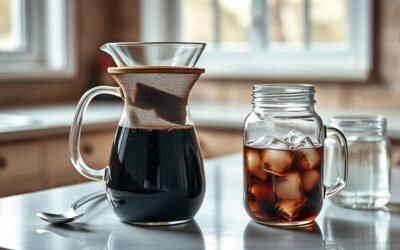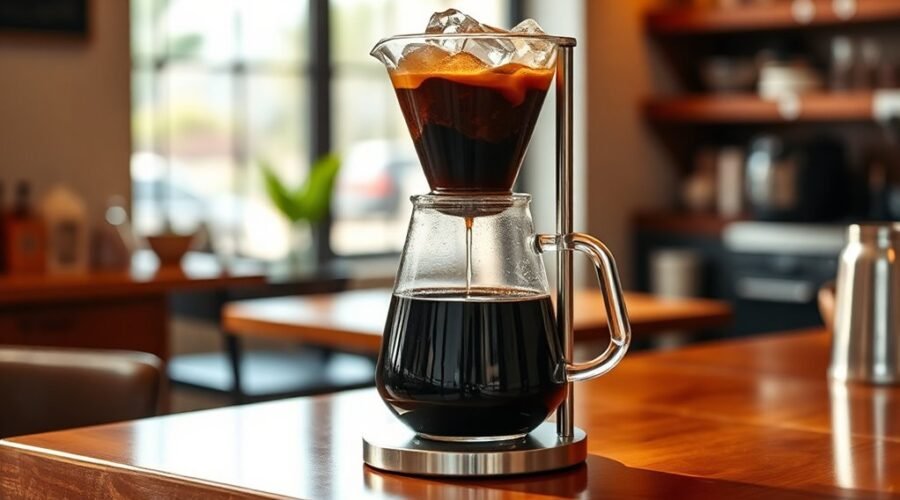
The Yama cold brew tower is a Kyoto-style gravity slow-drip brewer that passes ice-cold water drop by drop—at roughly 1 drop every 1 to 2 seconds (35–40 drops per minute)—through a bed of medium to medium-fine ground coffee. Using a reusable ceramic filter beneath the grounds and a paper dispersion filter on top, the 6–8 cup model brews 32 oz in about 3 to 4 hours, while the 25-cup model brews 100 oz in roughly 8 to 12 hours.
At-a-Glance Official Yama Specs
Drip Rate: 1 drop every 1–2 seconds (35–40 drops/min) • Grind Size: Medium to medium-fine • Filters: Ceramic filter at bottom of middle chamber + paper filter on top of grounds • Materials: Hand-blown borosilicate glass, brass drip valve, wood or bamboo frame.
Yama 6–8 Cup vs. 25-Cup Tower Specifications
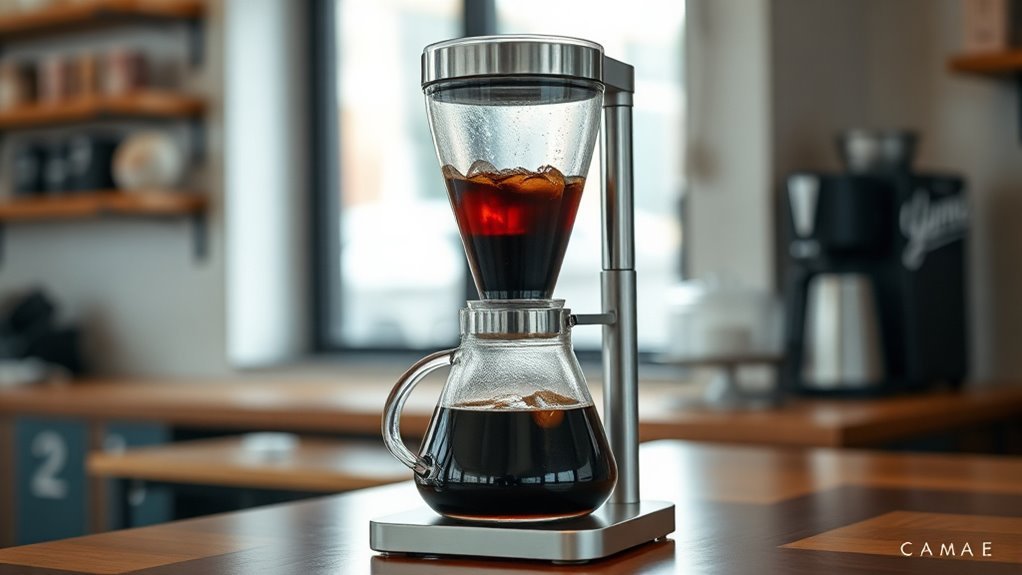
Before assembling or buying a tower, check your countertop clearance and batch size. Specifications from Yama Glass and Espresso Parts highlight key differences between the home and commercial models:
| Specification | Yama 6–8 Cup Tower | Yama 25-Cup Tower |
|---|---|---|
| Brew Capacity | 32 fl oz (~950 mL) | 100 fl oz (~3 L) |
| Approx. Height | ~30 inches (too tall for low upper cabinets) | ~44.25 inches (floor/bar display scale) |
| Typical Brew Time | 3–4 hours (up to 6 hours on slower recipes) | 8–12 hours (usually needs 1–2 ice/water refills) |
| Target Drip Rate | 1 drop / 1–2 sec (35–40 drops/min) | 1 drop / 1–2 sec (35–40 drops/min) |
| Best Use | Home enthusiasts & small tastings | Cafés, bars, offices & events |
Both towers share the same four borosilicate glass pieces—an upper ice/water beaker with brass valve, a middle coffee chamber, a decorative glass spiral coil, and a lower collection carafe—housed in a wooden or bamboo frame.
How to Set Up and Brew With a Yama Cold Brew Tower
Unlike immersion cold brew where grounds soak in a single jar, slow-drip percolation continuously introduces fresh cold water to a stationary bed of coffee. Follow these verified steps from Yama’s 6–8 cup manual and 25-cup manual:
- Close the brass valve and place the ceramic filter: Verify the upper drip valve is fully shut. Rinse the reusable ceramic filter with clean water and seat it securely at the bottom of the middle coffee chamber so grounds cannot enter the glass coil.
- Grind coffee medium to medium-fine: Use a burr grinder to produce an even medium to medium-fine grind (finer than coarse immersion grounds). For a visual comparison against immersion settings, see our cold brew grind size guide.
- Weigh and level the coffee bed: A reliable 6–8 cup starting recipe (from Kaldi’s Coffee) uses 100 g ground coffee, 500 g cold filtered water, and 500 g ice (a 1:10 total weight ratio). Add the grounds to the middle chamber and tap gently to level—never tamp tightly. For other strength targets, consult our cold brew coffee ratio chart.
- Add the paper filter and pre-wet the grounds: Lay a clean disposable paper filter flat on top of the coffee bed. Pour a shallow splash of cold water over the paper filter (or mist in layers) so the entire bed is evenly damp before dripping starts—this single step prevents dry pockets and channeling.
- Fill the upper chamber with ice and cold water: Add ice first, then filtered cold water, staying below the upper rim. On 25-cup batches, plan to refill the top chamber once or twice as it empties.
- Dial in 1 drop every 1 to 2 seconds: Slowly crack open the brass valve and time your drops with a stopwatch until you hit 35 to 40 drops per minute (roughly 1 drop every 1.5 seconds).
- Monitor and readjust every 2 to 3 hours: As water height in the upper beaker falls, gravity head pressure decreases and the drip slows. Check the valve periodically and nudge it open slightly to keep a steady cadence.
- Finish, swirl, and refrigerate: Close the valve once the upper chamber empties and let the coil finish draining. Swirl the carafe to blend early concentrated drops with lighter tail drops, then taste before diluting over ice.
Troubleshooting Slow-Drip Extraction Issues
| Symptom | Likely Cause | Fix for Next Batch |
|---|---|---|
| Weak or watery cup | Grind too coarse, fast drip, or channeling | Grind slightly finer, pre-wet evenly, slow valve to 1 drop / 1.5–2 sec |
| Harsh or overly bitter | Brew ran too long (>6 hrs on 6–8 cup) or overly fine grind | Coarsen grind slightly or speed drip closer to 40 drops/min |
| Drip stalls mid-brew | Falling water pressure, clogged valve, or fine silt | Open brass valve slightly; clean valve & ceramic filter after brew |
| Dry pockets in coffee bed | Skipped paper filter or dry-started bed | Always use a top paper filter and pre-wet the grounds gently |
Pros, Limitations, and Food Safety
- Pro — Crisp, aromatic clarity: Slow-drip extraction preserves delicate floral and fruity aromatics that immersion cold brew often mutes, making single-origin light and medium roasts shine.
- Pro — Showpiece design: Hand-blown borosilicate glass and a spiral coil turn cold brewing into a countertop conversation piece.
- Limitation — Fragile and tall: At 30 to 44.25 inches tall, glass parts require careful hand-washing and a stable surface away from foot traffic or low cabinets.
- Limitation — Hands-on valve monitoring: Unlike set-and-forget jar immersion, the brass valve needs periodic checks to hold a steady drip rate.
Glass & Food Safety: Never force glass joints together or brew with cracked glass. Because Kyoto slow-drip brews at cool/ambient temperatures with no heat-sanitizing step, wash every component thoroughly after use and refrigerate finished coffee promptly at 40°F (4°C) or below per FDA refrigeration guidance. Finish within 5–7 days for peak taste and safety.
For container recommendations and spoilage warning signs, see our guide on how long cold brew stays good in the fridge.
Frequently Asked Questions
What drip rate should I set on a Yama cold brew tower?
Aim for roughly 1 drop every 1 to 2 seconds—matching Yama’s published benchmark of 35 to 40 drops per minute. Check and readjust the brass valve every 2 to 3 hours because dropping water pressure in the upper chamber naturally slows the drip.
What grind size works best in a Yama cold brew tower?
Use a medium to medium-fine grind—finer than coarse immersion cold brew, yet coarser than espresso. Too coarse lets cold water rush straight through and taste thin; too fine clogs the ceramic filter and stalls extraction.
Where do the ceramic and paper filters go in a Yama tower?
Seat the rinsed reusable ceramic filter at the bottom of the middle coffee chamber beneath the grounds, and lay a disposable paper filter flat on top of the leveled coffee bed to disperse falling drops evenly and prevent channeling.
How long does a 6–8 cup vs. 25-cup Yama tower take to brew?
Yama’s instructions cite roughly 3 to 4 hours for the 6–8 cup (32 oz) model (up to 6 hours on slower recipes) and roughly 8 to 12 hours for the 25-cup (100 oz) commercial model, depending on your drip rate and dose.
Can I brew loose-leaf tea in a Yama cold brew tower?
Yes. Yama’s instructions note that you can brew loose, larger-leaf tea in the middle chamber instead of coffee—rinse the leaves briefly, keep the drip steady, and watch for leaf blockage.
How should I clean and store my Yama tower?
After every batch, discard the top paper filter, disassemble the borosilicate glass pieces carefully, wash the glass and reusable ceramic filter with warm water and mild nonabrasive soap, flush the brass valve and glass coil thoroughly, and air-dry completely before reassembling.