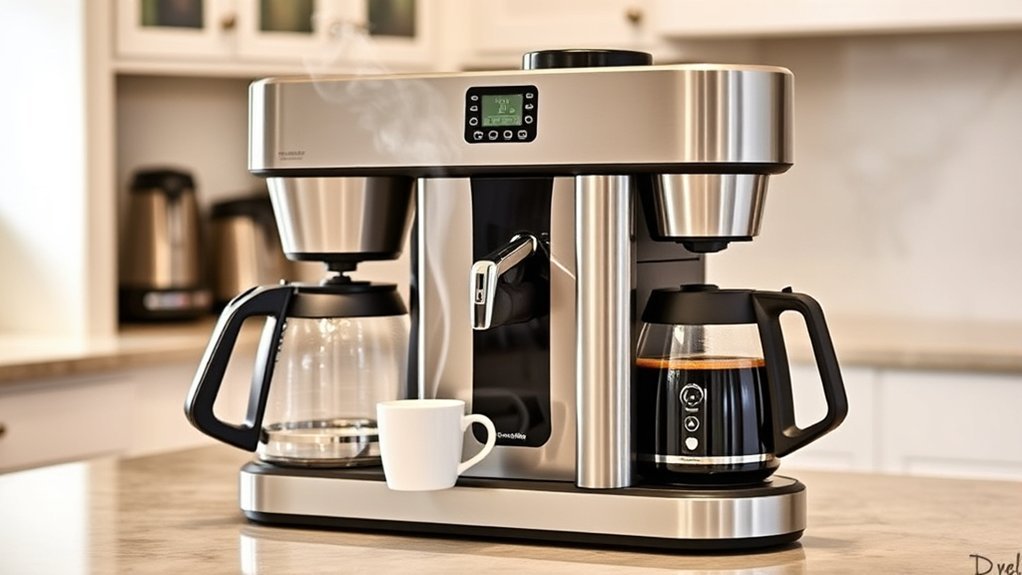
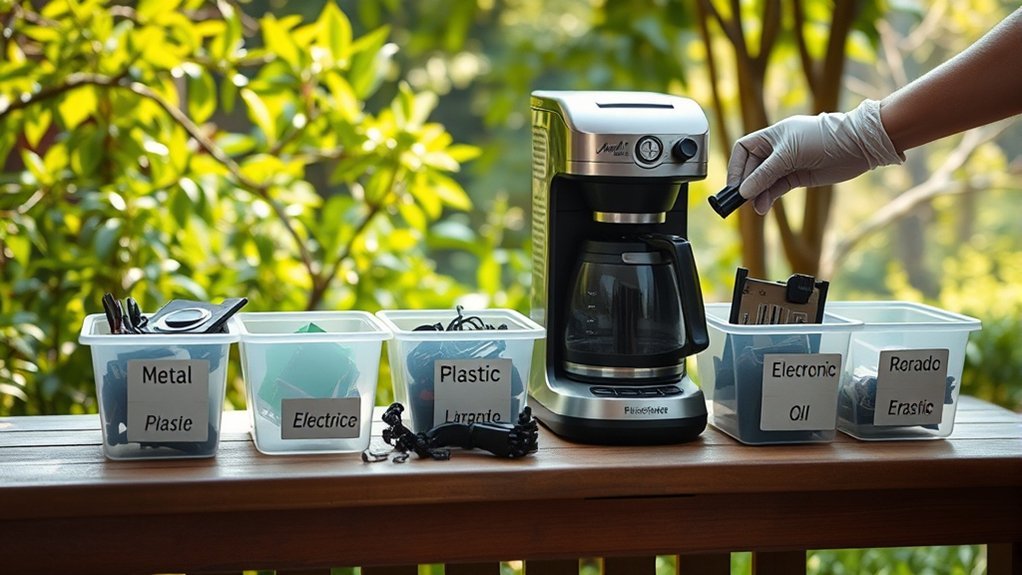
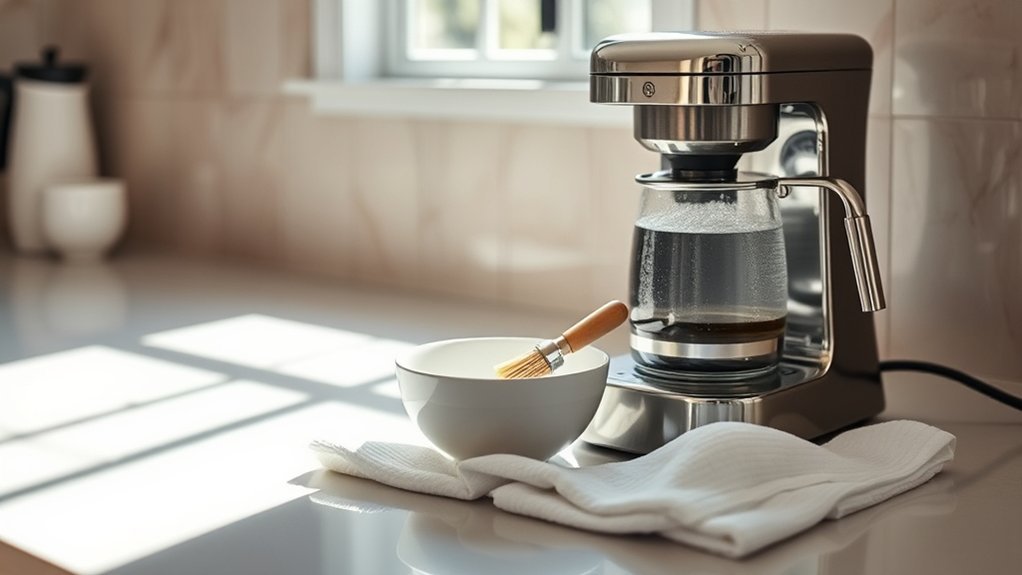
Your coffee maker’s manual, programmed water-hardness setting, or descale alert should determine the final maintenance schedule. Water hardness and daily use then help you understand why that interval may be shorter or longer. Many home machines fall somewhere around a three- to six-month cycle, but there is no universal schedule that applies to every model.
Quick Answer
Follow your coffee maker’s manual, programmed water-hardness setting, or descale alert first. If no interval is provided, many home machines fall somewhere around every three to six months, but harder water and heavier use can shorten that. Test hardness directly, then adjust based on your model’s guidance and actual performance.
Key Takeaways
- Your model’s manual, programmed hardness setting, or descale alert takes priority over a general calendar.
- Harder water usually builds scale faster, but manufacturers use different schedules, counters, and alert systems.
- Use a hardness-specific test strip or water report. A TDS meter does not directly measure hardness.
- Ordinary carbon filtration can improve taste without removing the calcium and magnesium responsible for most water hardness.
- Use a descaler approved for your machine. Use vinegar only when the instructions for that exact model permit it.
At a Glance
| Time Required | Often about 15–45 minutes, but the exact cycle is model-specific |
| Difficulty | Easy, provided you follow the correct model-specific sequence |
| Tools Needed | User manual, approved descaler, large container, fresh water, soft cloth, and a hardness test strip if you are setting a maintenance interval |
| Cost | Usually the cost of one dose of manufacturer-approved descaler |
Understanding Water Hardness and Its Impact on Descaling Frequency

Water hardness describes mainly the amount of dissolved calcium and magnesium in water. When hard water is heated inside a coffee maker, some of those minerals can form scale on heating elements, valves, boilers, tubing, and other internal surfaces.
The U.S. Geological Survey uses the following general hardness classifications, expressed as milligrams per liter of calcium-carbonate equivalent. One grain per gallon, or gpg, is approximately 17.1 mg/L as CaCO3.
| Classification | Hardness as CaCO3 | Approximate Grains per Gallon | Practical Fallback Range* |
|---|---|---|---|
| Soft | 0–60 mg/L | 0–3.5 gpg | About every 4–6 months |
| Moderately hard | 61–120 mg/L | 3.6–7.0 gpg | About every 3–4 months |
| Hard | 121–180 mg/L | 7.1–10.5 gpg | About every 2–3 months |
| Very hard | More than 180 mg/L | More than 10.5 gpg | Consider checking monthly; descaling may be needed every 1–2 months |
Note: *The intervals above are conservative planning ranges for situations in which the manufacturer provides no schedule. They are not USGS recommendations or universal manufacturer rules. A model-specific interval, programmed hardness setting, or descale alert always takes priority.
Water hardness tells you how quickly scale may become a problem. Your machine’s own maintenance system tells you when to act.
Power your essentials anywhere with a 999Wh pure sine wave power station delivering up to 1000W continuous with 2000W surge. It supports fast charging via USB-C PD 60W and USB-A QC 18W, plus simultaneous output for multiple devices through AC, USB, wireless, and car/DC ports. Recharge using AC, car, or solar with a built-in MPPT controller and dual cooling fans, while the upgraded battery management system protects against surges, short circuits, and overheating.
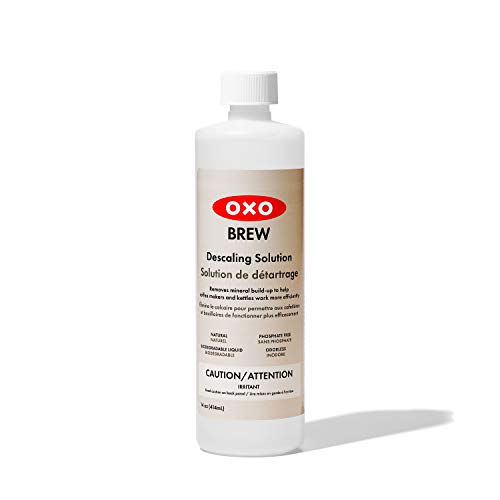
Helps keep your coffee makers and kettles working efficiently and using less energy

INCLUDES: 4 Keurig Rinse Pods, 1 Descale Solution, and 2 Water Filter Cartridge Refills
How to Test Your Water Hardness at Home
The most useful home method is a hardness-specific test strip. Dip the strip in the same water you normally pour into the coffee maker, wait for the time stated on the package, and compare the result with its color chart.
You can also check your local utility’s annual water-quality report. Look for “hardness,” “total hardness,” or a value reported as milligrams per liter of calcium carbonate. If your home uses a private well or a treatment system and you need a precise result, a certified laboratory can test the water.
A bottle-and-soap demonstration may show that water is relatively hard, but the result also depends on the soap and testing technique. It is not precise enough for programming a machine’s hardness setting.
A digital TDS meter measures total dissolved solids rather than hardness alone. Calcium and magnesium can contribute to TDS, but sodium, chloride, sulfate, and many other dissolved substances can also change the reading. Two waters can therefore have similar TDS values but different hardness.
Pro Tip: Test the water that actually enters the reservoir. If you install a softener, reverse-osmosis system, or scale-reduction filter, test the treated water again instead of assuming that “filtered” automatically means “soft.”
How Often Should You Descale Your Coffee Maker If You Have Hard Water?

If your water is in the USGS hard range of 121–180 mg/L and the manufacturer gives no schedule, checking the machine every month and using roughly a two- to three-month descaling interval is a cautious starting approach. Very hard water can create deposits faster, so some households may need to inspect performance monthly and descale more frequently.
That does not mean every machine above 7 gpg should automatically be descaled every month. Keurig recommends a three- to six-month interval for many of its brewers, while other manufacturers calculate maintenance reminders using water hardness, beverage count, or both.
Shorten your working interval if water flow slows, beverage volume drops, heating or brewing takes noticeably longer, the pump becomes unusually noisy, steam performance declines, or the machine produces a descale warning sooner than expected.
If scale repeatedly returns within only a few weeks, verify your water hardness before repeatedly running chemical descaler. The problem may be extremely hard water, an incorrect hardness setting, an exhausted filter, or a separate flow fault.
What to Do If You Have Soft Water: Descaling Guidelines
Soft water generally creates scale more slowly, but it does not eliminate the need for maintenance. When the manufacturer gives no interval, roughly every four to six months can be a practical starting range for soft water, followed by adjustment based on use and machine performance.
Do not automatically extend the schedule just because your water tests soft. For example, Nespresso’s current Vertuo Up guidance says descaling frequency depends on both usage and water hardness, gives roughly 300 cups or about 100 liters as a general rule, and directs users to the machine or app alert. Other Nespresso models can use different procedures or thresholds.
Cleaning and descaling are separate tasks. Washing the carafe, brew basket, pod holder, drip tray, milk system, and other removable parts removes coffee residue, oils, and milk deposits. Descaling targets mineral buildup inside the water path.
Soft water can also result from ion-exchange treatment, which replaces hardness minerals such as calcium and magnesium with sodium or potassium ions. Because dissolved substances remain in the water, a softened-water sample may have low hardness without showing a correspondingly low TDS reading.
Why Coffee Maker Descaling Schedules Differ by Manufacturer
A major reason there is no universal descaling calendar is that manufacturers use different maintenance systems. Some give a fixed time interval, some adjust the reminder according to a hardness setting, and others use beverage volume or an electronic counter.
| Manufacturer Example | Published Guidance | What It Shows |
|---|---|---|
| Keurig | Many brewers: every 3–6 months | Some brands publish a broad calendar interval. |
| Nespresso Vertuo Up | About 300 cups/~100 L as a general rule, with hardness, usage, and the alert also considered | A machine can combine usage with an electronic reminder. |
| Philips drip coffee makers | For specified models used regularly, Philips gives different frequencies for soft and hard water | Water hardness can materially change the recommended calendar. |
Philips guidance, for example, recommends two or three descales per year for certain regularly used coffee makers with soft water and four or five per year with hard water. Its Café Gourmet guidance is more frequent, showing why the exact model matters as much as the brand name.
Note: Manufacturer examples are not interchangeable. Use them to understand why recommendations vary, not to set the schedule for a different coffee maker.
How Filtered Water Helps Reduce Descaling Frequency

Filtered water can reduce scale only when the treatment lowers calcium, magnesium, or other scale-forming components. The word “filtered” alone does not tell you what the system removes.
The CDC explains that water softeners remove minerals including calcium and magnesium. Reverse-osmosis systems may also reduce calcium and magnesium, depending on the system. Standard activated-carbon filters are commonly aimed at substances affecting taste and odor and should not automatically be assumed to soften water.
- Check the treatment claim: Look for a specific claim about hardness, calcium, magnesium, or scale reduction.
- Test the treated water: Use a hardness strip rather than assuming the filter changed the mineral level.
- Replace filters on schedule: An exhausted cartridge may not perform as intended.
- Keep following maintenance guidance: A suitable filter may lengthen the interval, but it does not automatically cancel the manufacturer’s descaling requirement.
Note: A built-in coffee maker filter may be designed for a specific water circuit and bypass rate. Do not substitute an unrelated cartridge unless the manufacturer says it is compatible.
Best Bottled Waters for Your Coffee Maker
Instead of choosing bottled water by brand alone, compare its mineral information and confirm that the type of water is suitable for your machine. Mineral composition can differ among brands, sources, regions, and even products sold under similar names.
Drinking or spring water with low-to-moderate mineral content is often easier on a coffee maker than heavily mineralized water. Do not assume that “premium mineral water” is better for brewing; high calcium and alkalinity can increase scale formation.
Reverse-osmosis and distilled waters contain few scale-forming minerals, but that does not make them universally suitable. Some coffee makers rely on a certain level of dissolved minerals for sensing or normal operation, and very low-mineral water can also change coffee extraction and flavor.
Optimal Mineral Composition
Brewing water involves a balance between flavor and equipment protection. Calcium, magnesium, and alkalinity can influence extraction, acidity, and taste, while excessive scale-forming hardness creates a maintenance problem. The Specialty Coffee Association explains that alkalinity and hardness influence how coffee acids and flavors appear in the cup.
- Avoid very hard mineral water: It can increase scale formation and shorten the useful maintenance interval.
- Do not assume zero minerals is ideal: Distilled or heavily demineralized water can affect flavor and may be unsuitable for certain machines.
- Check your manual: Some models specifically restrict distilled or highly demineralized water.
- Test uncertain water: A hardness strip provides more useful information about scale risk than the marketing description on a bottle.
Avoiding Excessive Scaling
Choose water with low-to-moderate hardness and watch how the machine performs over time. White mineral deposits around a reservoir, faucet, kettle, or other heated water appliance can be a clue that the same water has significant scale-forming potential inside the coffee maker.
If you use reverse-osmosis water, check your machine instructions before making it the permanent water source. Some espresso machines specifically advise against extremely low-mineral water unless minerals are added back in a controlled way.
Do not use distilled water solely as a way to avoid descaling. Even if it greatly reduces mineral scale, it does not eliminate coffee oils, milk residue, dirty removable parts, or general reservoir hygiene.
Signs You Need to Descale
A calendar gives you a maintenance baseline, but changes in performance can show that scale is developing faster than expected.
- Descale or maintenance alert: Follow the model’s prompt and complete the full procedure.
- Slower water flow: Brewing takes longer or pauses more than usual.
- Reduced beverage volume: The machine dispenses less water even though the selected setting has not changed.
- Unusual pump noise: The pump becomes louder, strained, or uneven.
- Temperature problems: Coffee becomes noticeably cooler or heating takes longer.
- Weak steam performance: On espresso machines, steam output may become less consistent.
- Visible mineral deposits: White or chalky residue appears around water-contact areas.
- Inconsistent taste: Scale can affect flow and heating, although stale beans, dirty equipment, grind size, and brewing settings can cause similar taste problems.
Warning: Unplug the machine and seek manufacturer support if you notice leaking near electrical components, a burning smell, sparks, damaged wiring, or repeated breaker trips. Descaling is not a repair for an electrical or mechanical fault.
Why Your Descale Light May Come Back Too Soon
A descale warning does not necessarily mean a sensor has directly detected a layer of scale. Depending on the machine, the reminder may be calculated from operating time, beverage count, water volume, or the hardness setting entered during setup.
Manufacturers including De’Longhi and Breville use water-hardness settings on some machines to determine or influence maintenance alerts. If that setting does not match the water entering the reservoir, the alert may appear sooner or later than expected.
- Retest the water: Use the same water that goes into the machine.
- Check the programmed hardness: Make sure the machine setting matches the test result.
- Confirm the full cycle finished: Some machines will not clear an alert if the cycle was interrupted.
- Complete every rinse step: A machine may require a specific rinse volume before the program is considered complete.
- Follow the reset procedure: Some models clear the warning automatically, while others require a button sequence.
If the warning remains after you correctly complete the model-specific procedure, contact the manufacturer rather than repeatedly running descaling solution through the machine.
How Water Quality Affects Coffee Taste and Brewing Efficiency
Water makes up most of a brewed cup, so mineral composition, alkalinity, chlorine, odor, and temperature can all influence flavor.
Hard water can increase scale formation and may alter extraction. High alkalinity can reduce the perception of acidity, while water with almost no mineral content can produce a different flavor balance. The best brewing water is therefore not simply the softest water possible.
A suitable filter may improve taste by reducing chlorine or unwanted odors. However, taste filtration and hardness reduction are separate functions, so check exactly what the filter is certified or designed to reduce.
Scale can restrict water flow and interfere with consistent heating. After a proper descale, normal flow or temperature may return, but descaling will not correct stale coffee, an unsuitable grind, incorrect dosing, dirty removable parts, or an unrelated mechanical problem.
Tips for Maintaining Your Coffee Maker Based on Water Type
Match your routine to the water you actually pour into the reservoir. A whole-house softener, refrigerator filter, bottled-water habit, machine filter, or reverse-osmosis system can make that water very different from the untreated municipal supply described in a utility report.
Hard Water Considerations
- Set the correct hardness level: If the machine has a programmable water setting, test your water and enter the matching level.
- Start conservatively when no schedule exists: Hard water may justify a roughly two- to three-month working interval, followed by adjustment based on actual performance.
- Watch for changes: Shorten the interval if flow, volume, heating, pump sound, or steam performance deteriorates.
- Use suitable treatment: Choose a system specifically designed to reduce hardness or scale-forming minerals if that is your goal.
- Keep maintenance records: Record the date, water source, and symptoms each time you descale. After several cycles, you will have a better picture of your machine’s real maintenance pattern.
Soft Water Benefits
Soft water generally creates mineral scale more slowly, which can reduce how often descaling is needed. It does not automatically guarantee better coffee flavor or eliminate ordinary cleaning.
| Potential Benefit | What It Means |
|---|---|
| Reduced Limescale | Lower calcium and magnesium hardness usually means mineral deposits form more slowly. |
| Potentially Longer Intervals | You may be able to descale less often when the machine instructions or alert system permits it. |
| Flavor Consideration | Moderately mineralized water can produce a different and sometimes more balanced extraction than nearly mineral-free water. |
| Machine Compatibility | Some machines are not designed for distilled or extremely demineralized water. |
| Ongoing Maintenance | Removable parts still require regular washing, and the internal water system may still require periodic descaling. |
Bottled Water Choices
- Choose drinking or spring water with low-to-moderate hardness rather than heavily mineralized water.
- Review the label for calcium, magnesium, bicarbonate, or total mineral information when available.
- Do not assume distilled or reverse-osmosis water is compatible with every machine.
- Avoid switching among random waters simply to create a homemade mineral blend unless you can measure the result and the machine manufacturer permits that type of water.
Best Practices for Descaling Your Coffee Maker Effectively
Descaling instructions differ among drip brewers, pod machines, semi-automatic espresso machines, and fully automatic espresso systems. Automatic cycles may require specific button combinations, solution volumes, pause periods, temperatures, or rinse steps.
Warning: Never mix descaling solution with vinegar, bleach, ammonia, dishwashing detergent, or another cleaner. Never run bleach through a coffee maker. Keep descaling products away from children, avoid skin and eye contact as directed on the label, and rinse spills promptly.
Step-by-Step Descaling Process
- Read the model instructions: Confirm the approved solution, dilution, cycle sequence, and whether any water-filter cartridge must be removed.
- Prepare the machine: Remove coffee grounds, capsules, paper filters, and any cartridge the manual tells you to remove. Empty the drip tray and waste container.
- Add the approved solution: Measure and dilute it exactly as directed. Use vinegar only when the instructions for that exact model expressly allow it.
- Place a sufficiently large container under the outlet: Make sure it can safely hold the volume released during the procedure.
- Run the designated descaling mode or brew sequence: Do not interrupt an automatic program unless the instructions tell you to do so.
- Complete every rinse: Empty and rinse the reservoir, refill it with fresh water, and run all required rinse cycles.
- Clean and reset: Wipe the machine, reinstall an approved water filter if required, and clear or reset the descale indicator according to the manual.
Do not apply a universal 30-minute soak or equal-parts vinegar recipe to every machine. Nespresso documentation warns against vinegar for the machines covered by its VertuoLine descaling instructions, while some other coffee makers provide their own vinegar-based procedures. The exact model instructions are what matter.
Pro Tip: Record the date whenever you descale. If symptoms return increasingly quickly, retest the water, verify the programmed hardness level, replace an exhausted filter if applicable, and consider whether the machine has a separate flow or mechanical problem.
Frequently Asked Questions
How often should I descale a coffee maker with hard water?
Use your model’s schedule or descale alert first. If the manufacturer provides no interval, roughly every two to three months can be a cautious starting range for hard water, with more frequent checks when the water is very hard or the machine sees heavy daily use.
Can using distilled water eliminate the need for descaling?
Distilled water greatly reduces mineral scale, but it does not eliminate cleaning or all maintenance. Some coffee makers advise against distilled or extremely demineralized water because sensors, pumps, brewing performance, or flavor may be affected. Check the manual before using it regularly.
Does descaling affect the taste of coffee?
It can. Removing scale may restore normal water flow and heating, supporting more consistent extraction. Descaling will not fix stale beans, an unsuitable grind, dirty removable parts, or an incorrect coffee-to-water ratio.
What happens if you do not descale regularly?
Scale can restrict flow, reduce beverage volume, lengthen heating or brewing time, increase pump noise, and make temperature or steam performance less consistent. Heavy buildup may eventually contribute to errors or component problems.
Is one descaling solution suitable for every coffee maker?
No. Use the product named or approved in your model instructions. Coffee makers can contain different metals, seals, coatings, boilers, thermoblocks, and water circuits, so a chemical accepted for one model may be unsuitable for another.
Can I use vinegar to descale my coffee maker?
Only when the exact model instructions permit it. Some coffee makers provide vinegar-based instructions, while manufacturers such as Nespresso and De’Longhi warn against vinegar for various machines. An approved commercial descaler is the safer default when the manual does not authorize vinegar.
Is cleaning the same as descaling?
No. Cleaning removes coffee oils, grounds, milk residue, and surface dirt. Descaling dissolves mineral deposits from the internal water path. A complete maintenance routine includes both.
Can a water filter replace descaling?
Usually not. A softening, reverse-osmosis, or scale-reduction system can reduce the amount of hardness reaching the machine and may lengthen the interval, but most coffee makers still require periodic maintenance. Follow the machine’s alert or manual.
Why did the descale light stay on after descaling?
The cycle may not have completed, the required rinse volume may not have passed through the machine, or your model may require a reset sequence. Complete only the steps specified for your model. If the light remains on afterward, contact the manufacturer instead of repeatedly adding descaler.
Can I use a TDS meter to decide when to descale?
Not by itself. TDS measures many dissolved substances, while hardness is mainly associated with calcium and magnesium. Use a hardness-specific strip, laboratory result, or water report when you need to set a machine’s hardness level or estimate scale risk.
Conclusion
The best descaling schedule combines three factors: the instructions or maintenance system built into your coffee maker, the hardness of the water entering the reservoir, and how heavily you use the machine. A three- to six-month range is common for some home brewers, but hard water, high brewing volume, or a model-specific maintenance program can produce a very different interval.
Test hardness with the right tool, program the machine correctly when it offers a hardness setting, confirm what your water filter actually removes, and use only an approved descaling method. Those steps give you a more reliable schedule than relying on a universal monthly rule, a TDS reading alone, or a cleaning solution that may be incompatible with your machine.
Sources
- U.S. Geological Survey: Hardness of Water — water-hardness definitions, calcium and magnesium, and classification ranges.
- Keurig: Descaling Solution and Maintenance Guidance — current three- to six-month guidance for many Keurig brewers.
- Nespresso USA: Vertuo Up Machine Assistance — model-specific descaling frequency, usage, hardness, and alert guidance.
- Philips: How Often Should I Descale My Coffee Maker? — examples of different descaling intervals based on water hardness and coffee-maker model.
- CDC: About Home Water Treatment Systems — differences among water softeners, reverse osmosis, filtration, and distillation.
- Specialty Coffee Association: Water and Coffee Acidity — how hardness and alkalinity interact with coffee extraction and flavor.