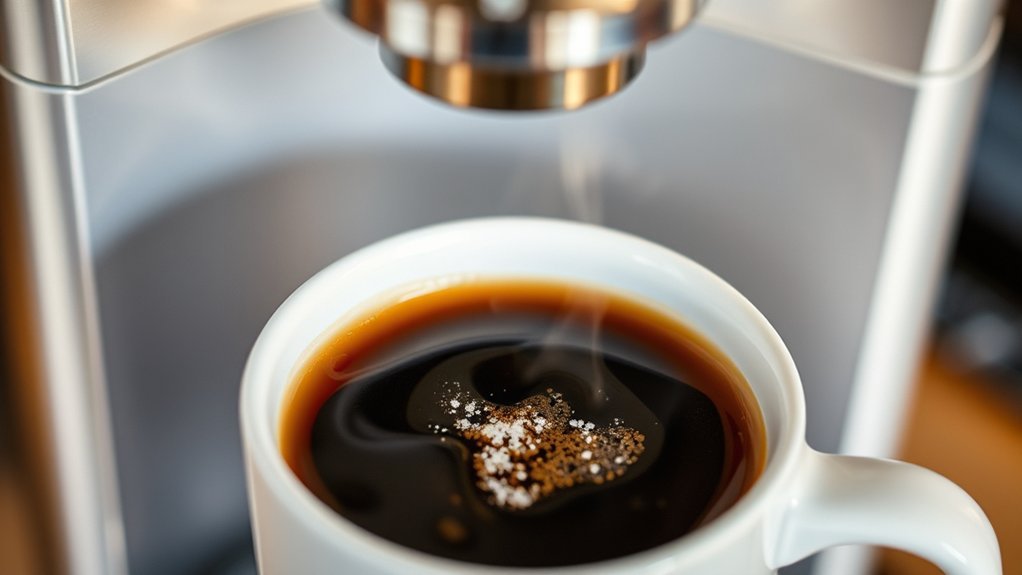
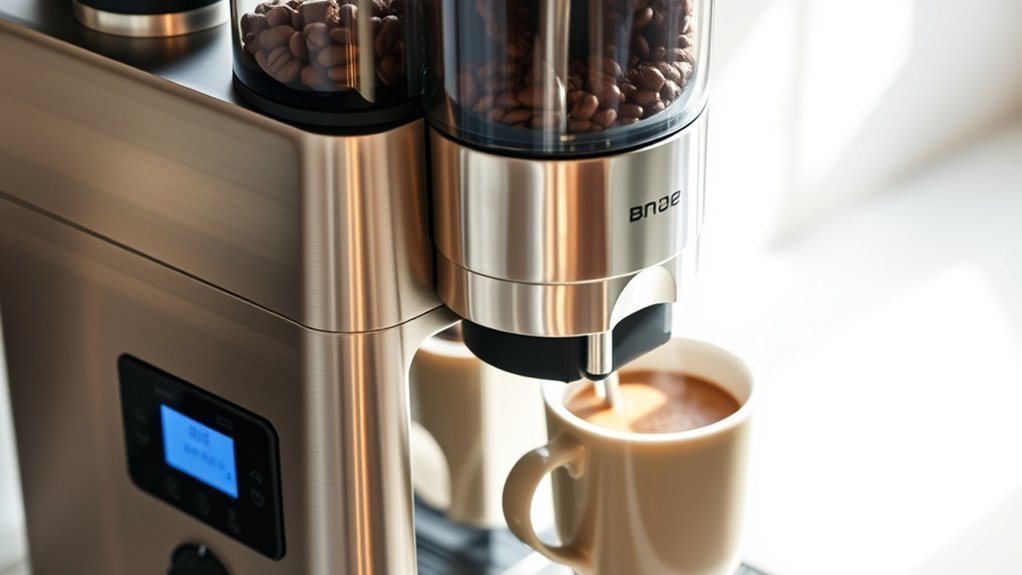
A grind and brew coffee maker combines a coffee grinder and an automatic brewer in one appliance. It grinds whole beans and then brews the resulting grounds during the same programmed cycle, reducing the number of separate tools and steps needed to make fresh coffee.
Quick Answer
A grind and brew coffee maker is a drip or single-serve brewer with an integrated grinder. It grinds whole beans, transfers the grounds to a filter or brewing chamber, and then brews automatically. Burr and blade versions exist. The main benefits are convenience and freshly ground coffee, while the tradeoffs include noise, cleaning, and added mechanical complexity.
Key Takeaways
- The grinder and brewer operate sequentially in one automatic cycle rather than truly grinding and brewing at the same moment.
- Burr grinders generally offer more control and consistency, but some current machines use simpler blade grinders.
- A hopper, reusable filter, strength control, iced mode, thermal carafe, and travel-mug setting are optional features rather than category standards.
- Integrated machines save counter space and preparation steps but usually require more grinder-chute cleaning than a basic drip brewer.
- For safe maintenance, unplug the machine, keep electrical and grinder components dry, and follow the exact model manual for cleaning and descaling.
What Is a Grind and Brew Coffee Maker?
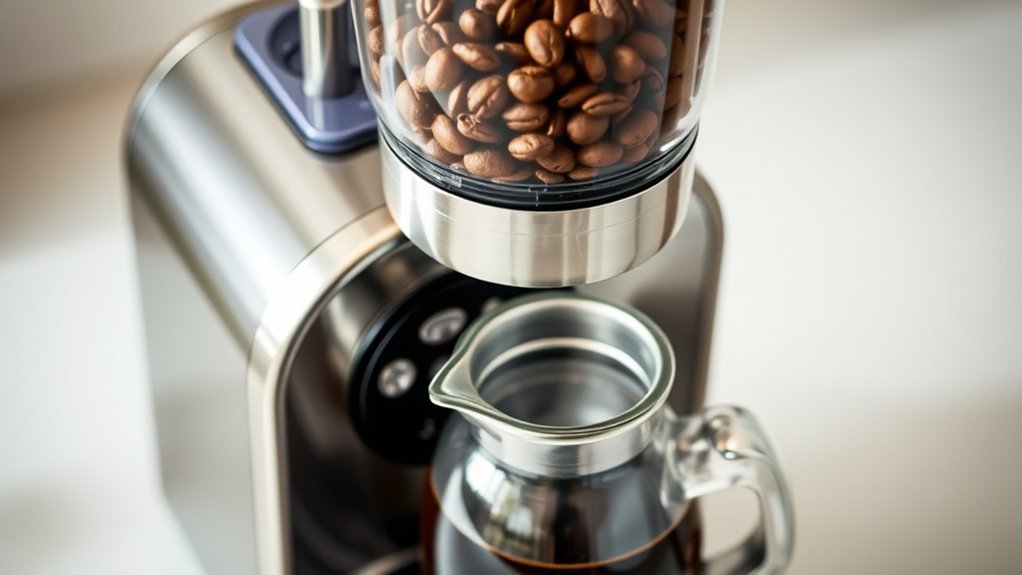
A grind and brew coffee maker is an automatic coffee machine with a grinder built into the same housing as the brewer. Depending on the model, it may prepare a full carafe, a single cup, or both.
Most machines follow the same basic sequence: beans enter the grinder, the machine doses the grounds into a filter basket or brewing chamber, and heated water passes through the coffee. Some units let you change the grind size, brew strength, cup volume, or start time. Simpler models may provide only a fixed grinder setting and basic brew controls.
The category includes both burr-grinder and blade-grinder models. Burrs crush beans between two grinding surfaces and usually produce a more controlled particle size. A blade grinder chops beans with a spinning blade and is often less adjustable, but it can make the appliance simpler and more affordable. Current manufacturer listings confirm that both designs are used in grind-and-brew machines.
| Component or Feature | What It Does | Is It Standard? |
|---|---|---|
| Built-in grinder | Grinds beans before the brew cycle. | Yes, but the grinder may use burrs or a blade. |
| Bean hopper | Stores beans above or beside the grinder. | No. Some machines use a small chamber filled for each brew. |
| Grind-size control | Changes how coarse or fine the beans are ground. | No. Adjustable burr models are more likely to include it. |
| Pre-ground or grind-off mode | Disables the grinder when ground coffee is placed in the basket. | Common, but not universal. |
| Reusable metal filter | Replaces disposable paper filters on compatible models. | Optional. |
| Single-cup or travel-mug brewing | Brews directly into a cup instead of a carafe. | Optional. |
Power your essentials anywhere with a 999Wh pure sine wave power station delivering up to 1000W continuous with 2000W surge. It supports fast charging via USB-C PD 60W and USB-A QC 18W, plus simultaneous output for multiple devices through AC, USB, wireless, and car/DC ports. Recharge using AC, car, or solar with a built-in MPPT controller and dual cooling fans, while the upgraded battery management system protects against surges, short circuits, and overheating.

【𝐒𝐦𝐚𝐫𝐭 𝐓𝐨𝐮𝐜𝐡 𝐂𝐨𝐧𝐭𝐫𝐨𝐥】This coffee maker is equipped with a large responsive touchscreen for straightforward daily operation. Tap the panel to select brewing settings and finish coffee preparation quickly.
How Does a Grind and Brew Coffee Maker Work?
A grind-and-brew machine automates the same basic tasks you would perform with a separate grinder and drip brewer. Although designs differ, the machine normally grinds first and brews second.
Grinding Mechanism Explained
When you start a brew cycle, the appliance releases or measures beans into its grinder. An adjustable burr model may let you choose a finer or coarser setting, while a blade model may grind for a preset length of time.
The machine then directs the ground coffee into a filter basket or internal brewing chamber. Some models calculate the dose from the selected cup quantity and strength. Others require you to add a measured amount of beans before every cycle.
A sealed or lidded hopper can reduce immediate exposure to air and debris, but it should not automatically be treated as long-term bean storage. The Breville Grind Control manual, for example, recommends storing only a limited supply in the hopper and keeping the rest in a cool, dark, dry place.
Brewing Process Overview
- You select the brew size and available settings. Options may include cup count, strength, grind size, carafe mode, or single-cup mode.
- The grinder processes the beans. The machine grinds a preset or calculated dose.
- The grounds move into the filter. A chute or dosing mechanism transfers them into the brew basket.
- The brewer heats and distributes water. Hot water passes through the coffee bed to extract soluble flavor compounds.
- The coffee enters a cup or carafe. The finished drink may flow into a glass carafe, thermal carafe, mug, or travel cup, depending on the model.
Note: A strength button does not always change water temperature. Many machines alter the amount of ground coffee, contact time, water flow, or a combination of these factors instead.
Benefits of Using a Grind and Brew Coffee Maker
Fresher Grounds for Each Brew
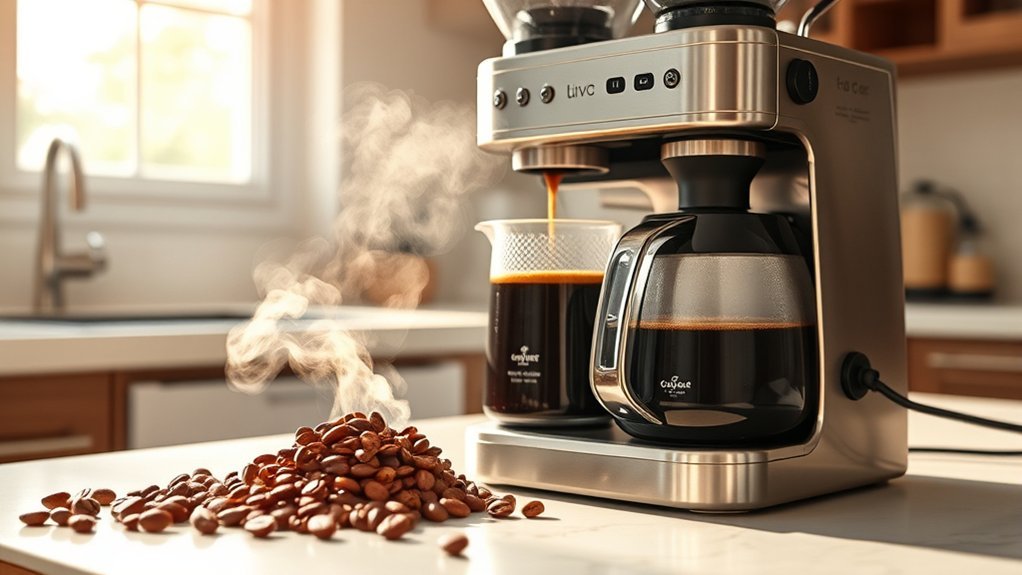
Grinding beans shortly before brewing reduces the time the grounds spend exposed to air. Grinding also releases aroma compounds, which is one reason freshly ground coffee often smells and tastes more vivid than coffee that has remained ground for a long period.
The advantage is convenience rather than magic: bean quality, roast date, water, grind size, dose, brewing temperature, and cleanliness still affect the finished drink. A built-in grinder cannot correct stale beans or a dirty brew basket.
Time-Saving Convenience
An integrated appliance removes the need to weigh or grind beans with a separate machine every morning. Programmable models can grind and brew at a scheduled time, while single-serve versions may grind directly for one cup.
| Potential Benefit | Practical Value | Related Tradeoff |
|---|---|---|
| One automatic cycle | Reduces separate grinding and transfer steps. | More internal parts require cleaning. |
| Freshly ground beans | Limits the time between grinding and extraction. | The grinder may be loud during early-morning use. |
| Programmable start | Coffee can be ready at a chosen time. | Water and beans may sit in the machine overnight. |
| Dose or strength settings | Allows some adjustment for taste and batch size. | Settings may not provide precise gram-level control. |
| Combined footprint | Can occupy less space than two full-size appliances. | The unit may still be tall and require cabinet clearance. |
Potential Drawbacks of a Grind and Brew Coffee Maker
The convenience of an integrated appliance comes with compromises that should be considered before purchase.
- More cleaning: Coffee dust and oils can collect in the burrs, blade chamber, dosing chute, basket, and reusable filter.
- More mechanical complexity: A grinder, chute, brewer, controls, and safety interlocks are combined in one machine. A failure in one system can affect the entire appliance.
- Noise: The grinder may run before the brew cycle, including when a programmed cycle starts early in the morning.
- Bean-switching inconvenience: A large hopper can make it awkward to alternate between regular, decaf, and different roast styles.
- Less grinder flexibility: The built-in grinder is normally optimized for the machine’s own drip-brewing system and may not suit espresso or other methods.
- Ground retention: Small amounts of coffee may remain in the grinder or chute, especially when the path is difficult to access.
- Counter clearance: A top-loading hopper and water reservoir may be inconvenient beneath low cabinets.
Must-Have Features in a Grind and Brew Coffee Maker
The best feature set depends on how you drink coffee, but the following items have the greatest effect on daily use:
- Accessible grinder and chute: Look for a removable upper burr, cleaning brush, openable chute, or clear manufacturer procedure.
- Pre-ground or grind-off mode: This is useful for decaf, flavored coffee, or times when whole beans are unavailable.
- Appropriate capacity: Choose single-serve brewing for one person or a carafe model for several cups.
- Adjustable grind or strength: More control can help you correct coffee that tastes weak, harsh, or unbalanced.
- Thermal or glass carafe: A thermal carafe holds heat without a warming plate, while a glass carafe lets you see the remaining amount and is often easier to replace.
- Filter choice: A reusable metal filter reduces disposable-filter use and can create a fuller-bodied cup. A paper filter usually produces less sediment and simpler cleanup.
- Clear water-level markings: Accurate filling helps prevent weak coffee, overflow, and incorrect serving sizes.
- Parts and warranty support: Check whether carafes, filters, burrs, lids, brushes, and water filters can be replaced.
Choosing Your Ideal Grind and Brew Coffee Maker
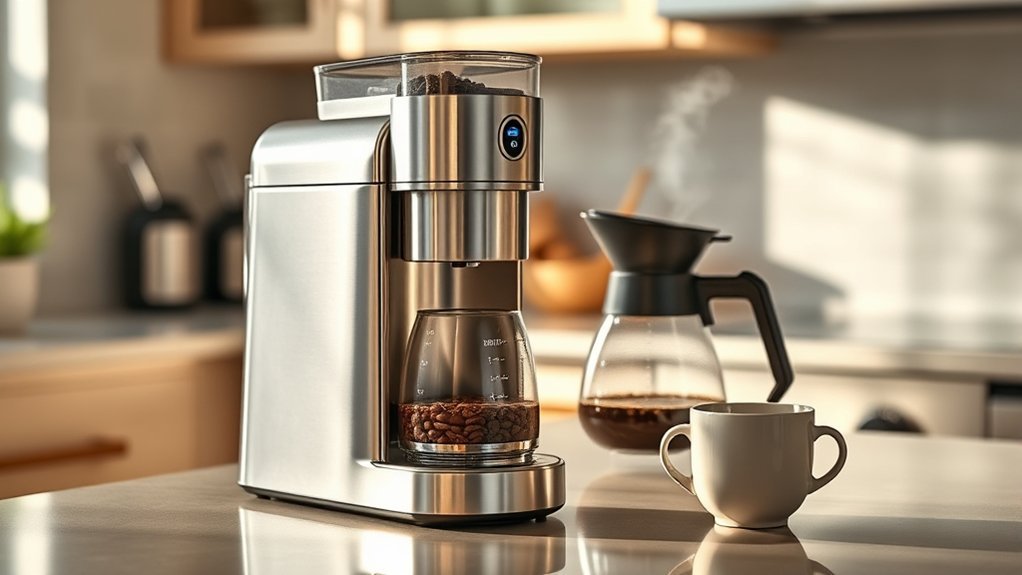
Start with your normal serving size and cleaning tolerance. A feature-rich machine is not automatically the best choice if you rarely use its settings or cannot easily reach the grinder chute.
| Buying Factor | Choose This When | Check Before Buying |
|---|---|---|
| Burr grinder | You value grind adjustment and more controlled dosing. | Number of settings, burr access, calibration, and cleaning method. |
| Blade grinder | You want a simpler automatic system and do not need fine grind control. | Whether the grinder chamber is removable and easy to dry. |
| Single-serve model | You normally make one cup at a time. | Cup sizes, mug clearance, reusable-filter capacity, and pod compatibility if desired. |
| Carafe model | You serve several people or drink multiple cups. | Minimum batch size, maximum capacity, and half-batch performance. |
| Thermal carafe | Coffee may sit for an extended period. | Pouring design, lid cleaning, heat retention, and replacement availability. |
| Glass carafe | You prefer visible volume markings and drink coffee soon after brewing. | Auto-off time, warming-plate control, and replacement cost. |
| Large bean hopper | You use the same beans for most brews. | Ease of removal, airtightness claims, and how much coffee remains in the grinder. |
Who Should Buy a Grind and Brew Coffee Maker?
An integrated machine is a strong fit when you want freshly ground drip coffee with fewer manual steps. It is especially useful when you use the same beans regularly, make coffee on a predictable schedule, and are willing to clean the grinder path.
Who May Prefer a Separate Grinder and Brewer?
Separate equipment may be better if you frequently switch beans, use several brewing methods, want precise control over dose and grind size, or prefer to replace the grinder and brewer independently. A separate grinder is also more practical when you need espresso-fine grinding in addition to drip coffee.
Effective Maintenance Tips for Your Grind and Brew Machine
Regular cleaning prevents old grounds, coffee oils, and mineral scale from affecting flavor or blocking the machine. The exact procedure must come from the manufacturer because removable and washable parts vary by model.
Warning: Turn the machine off, unplug it, and allow hot components to cool before cleaning. Never immerse the base, power cord, plug, grinder motor, or other electrical parts. Keep the grinding chamber and burrs completely dry unless the manufacturer’s instructions specifically state that a part is washable.
After Each Brew
- Discard used grounds after the machine has cooled enough to handle safely.
- Wash or rinse the brew basket, carafe, lid, and reusable filter as permitted by the manual.
- Remove grounds from the chute opening and surrounding surfaces.
- Dry the basket and chute area thoroughly before reassembly.
- Wipe the exterior with a soft, damp cloth and then dry it.
Clean the Grinder and Chute as Directed
Use the supplied brush or another manufacturer-approved tool to remove dry coffee dust from accessible burrs and the grounds chute. Some machines display a cleaning alert, while others need inspection based on usage and the amount of buildup.
The Cuisinart DGB-30 manual notes that residue in the outlet can restrict the flow of grounds and make coffee weaker. It also instructs users to dry washable grinder parts thoroughly before reinstalling them.
Descale According to Water Hardness and the Manual
Minerals in water can form scale inside the heating and water-delivery system. Descale when the machine’s clean indicator appears or at the interval specified for your water hardness and usage.
Do not assume that one vinegar mixture is approved for every machine. Some manuals specify diluted vinegar, while others call for a branded or commercially prepared descaling product. Follow the stated quantities and complete every fresh-water rinse.
| Maintenance Task | Useful Timing | Important Limitation |
|---|---|---|
| Empty and rinse the brew basket | After each use | Confirm whether parts are dishwasher-safe. |
| Brush the grinder and chute | When residue is visible or the manual/alert calls for it | Do not introduce water into dry-clean-only grinder parts. |
| Wash an approved removable hopper | As buildup develops | Reinstall only when completely dry. |
| Descale the water system | At the clean alert or manual interval | Frequency varies with water hardness and use. |
| Replace a water filter | At the manufacturer’s stated interval | Not every machine uses a replaceable water filter. |
Avoid These Common Mistakes With Your Grind and Brew Coffee Maker
- Using pre-ground coffee without disabling the grinder: Select the pre-ground, grind-off, or bypass setting when the model supports it.
- Adjusting the grinder for coffee that is already ground: Grind settings affect only whole beans processed by the built-in grinder.
- Overfilling the hopper, basket, or water tank: Excess coffee or water can cause jams, overflow, or incorrect dosing.
- Using espresso-fine grounds in a drip basket: Grounds that are too fine can slow drainage and contribute to basket overflow.
- Adding water near the bean hopper: Moisture in the grinding chamber can cause grounds to clump and block the chute.
- Using a paper filter and reusable filter together without approval: The additional resistance may slow flow and cause overflow.
- Leaving old beans in the hopper for long periods: Fill it with an amount you expect to use reasonably soon.
- Ignoring the chute: A clean brew basket will not solve weak dosing if the grinder outlet is blocked.
- Applying generic descaling instructions: Use the solution, concentration, and rinse procedure stated for the exact machine.
Pro Tip: When you regularly switch between regular and decaf, keep only a small amount of beans in the hopper or choose a model with an easily removable hopper and a dependable pre-ground mode.
Troubleshooting Common Grind and Brew Problems
| Problem | Likely Causes | What to Check |
|---|---|---|
| Coffee tastes weak | Too little coffee, coarse grind, low strength setting, blocked chute, stale beans, or too much water | Clean the chute, confirm the selected cup quantity, increase strength, and adjust one grind step finer if supported. |
| Coffee tastes bitter or harsh | Too much coffee, grind too fine, dark roast, dirty components, or coffee held too long on a warming plate | Reduce strength, move one grind step coarser, clean the machine, or transfer coffee to a thermal container. |
| Grinder runs but little coffee reaches the basket | Clogged chute, damp grounds, packed beans, empty hopper, or incorrectly seated hopper | Unplug the machine, follow the manual’s grinder-cleaning procedure, and ensure every part is completely dry. |
| Basket overflows | Grounds too fine, excessive dose, clogged filter, two filters used together, or carafe not positioned correctly | Use drip-ground coffee, clean the filter, reduce the dose, and verify the carafe and basket are seated correctly. |
| Fine grounds appear in the cup | Reusable metal filter, damaged mesh, very fine grind, or grounds left from an earlier cycle | Clean and inspect the filter, use a coarser setting, or switch to the approved paper-filter type. |
| Machine will not start | Open basket door, hopper not locked, empty tank, safety interlock, or power issue | Reseat removable parts, close doors firmly, add water, and check the error-code section of the manual. |
Maximizing Flavor With Your Grind and Brew Coffee Maker
Better coffee comes from controlling the variables the machine allows you to change and keeping the parts that touch coffee clean.
The Specialty Coffee Association’s home-brewer testing begins around 55 grams of coffee per liter of water and evaluates brewers within a hot-water range of roughly 92–96°C, or about 198–205°F.
- Start with the manual’s recommended dose. When the machine permits manual dosing, the SCA home-brewer requirements provide a useful reference point of about 55 grams per liter. Adjust for taste and the machine’s basket capacity.
- Change one setting at a time. Altering grind size, strength, water quantity, and beans together makes it difficult to identify what improved or harmed the cup.
- Use a drip-appropriate grind. If coffee is weak and the chute is clean, try one step finer. If it drains slowly, tastes harsh, or overflows, try one step coarser.
- Use fresh, properly stored beans. Keep the main supply sealed away from heat, moisture, and direct light rather than relying on the machine hopper for long-term storage.
- Choose the filter for your preference. A reusable metal filter can produce more body and some sediment. Paper usually creates a cleaner cup and easier grounds disposal.
- Use suitable water. Follow the machine manual, especially when it warns against distilled, demineralized, or excessively hard water.
- Do not chase temperature settings the machine does not offer. Instead, use brewing-temperature performance as one factor when comparing models. Research has examined the SCA’s commonly cited 92–96°C range for hot filter brewing.
- Serve coffee promptly. A thermal carafe can hold coffee without continuous heating, while coffee left on a warming plate may gradually lose aroma and develop a cooked taste.
Frequently Asked Questions
Can I use pre-ground coffee in a grind and brew machine?
You can when the machine has a pre-ground, grind-off, or bypass mode. Select that setting to disable the grinder, place drip-ground coffee in the approved filter, and stay within the basket’s maximum dose. Changing the grinder setting does not affect coffee that is already ground.
Is a burr grind and brew coffee maker better than a blade model?
A burr model generally offers more control over grind size and may dose beans more consistently. A blade model can still be convenient and may cost less, but it usually provides fewer adjustments. Cleaning access and brewing performance can matter as much as the grinder label.
Can a grind and brew coffee maker make espresso?
A standard grind-and-brew drip machine cannot make true espresso because it does not force water through finely ground coffee at espresso pressure. A strong or concentrated setting may produce bold drip coffee, but it is not the same brewing method.
How long does a grind and brew coffee maker last?
There is no dependable universal lifespan. Service life depends on build quality, brewing frequency, grinder wear, water hardness, cleaning, descaling, and the availability of replacement parts. Warranty length and manufacturer parts support are more useful buying signals than an unsupported maximum number of years.
Is a grind and brew coffee maker easy to clean?
Daily basket and carafe cleaning is usually simple, but the grinder and grounds chute add extra work. The easiest models provide removable burrs or chambers, a cleaning brush, clear chute access, and detailed instructions. Check those features before purchasing.
How often should I descale a grind and brew machine?
Follow the clean indicator or the interval in the exact model manual. Hard water and frequent use can increase scale buildup. Use only the descaling product or vinegar dilution approved by the manufacturer, followed by every required fresh-water rinse.
What is the average price of a grind and brew coffee maker?
Prices change with brand, capacity, grinder design, carafe type, and sales. Current single-serve and carafe machines can differ substantially, so compare live manufacturer pricing rather than relying on a permanent category average. Also include replacement filters, water filters, carafes, and descaling supplies in the ownership cost.
Why is my grind and brew coffee weak?
Common causes include a blocked grounds chute, too little coffee, a coarse grind, stale beans, a low strength setting, or too much water for the selected dose. Clean the chute first, verify the cup quantity, and then adjust only one brewing variable at a time.
Conclusion
A grind and brew coffee maker is most useful when you want freshly ground drip coffee without operating a separate grinder. The strongest models combine an accessible grinder, dependable dosing, suitable capacity, a pre-ground mode, and parts that are easy to clean.
Before buying, compare the grinder type, serving format, filter system, carafe, hopper design, cabinet clearance, noise, warranty, and replacement parts. After purchase, keep the grinder path dry, clean the chute before buildup causes weak dosing, and follow the exact manual for descaling. Those habits matter more than promotional claims about freshness or convenience.
Sources
- Specialty Coffee Association Coffee Standards — industry standards and terminology for coffee preparation.
- SCA Certified Home Brewer Program Requirements — brewing temperature, coffee-to-water starting ratio, extraction, and brewer-performance benchmarks.
- Breville Grind Control Instruction Manual — grinder operation, pre-ground mode, filters, cleaning, maintenance, and troubleshooting.
- Cuisinart Custom Grind & Brew Instruction Booklet — grinder-outlet cleaning, washable parts, descaling, and troubleshooting guidance.
- Brew Temperature, at Fixed Brew Strength and Extraction, Has Little Impact on the Sensory Profile of Drip Brew Coffee — research discussing brewing temperature and the SCA extraction-temperature range.