Learning how to night train potty starts with recognizing one key pediatric fact: staying dry overnight is mostly a biological milestone, not a willpower test. According to the American Academy of Pediatrics (AAP), nighttime dryness depends on bladder capacity, nighttime antidiuretic hormone (ADH) production, and the brain’s ability to wake up to a full bladder—which is why bedwetting stays common through age 5. Once your child consistently wakes up with a dry pull-up for several mornings in a row, a calm bedtime routine, double-voiding, and waterproof sheet layering make the transition smooth and shame-free.
How to Night Train Potty: Signs Your Child Is Ready
Unlike daytime potty training, you cannot force a child’s body to produce nighttime hormones earlier than it is ready. Wait until you see most of these readiness signs before dropping overnight pull-ups:
- Dry mornings: Your child wakes up with a dry diaper or training pant 5 to 7 mornings in a row (or consistently after naps).
- Waking to pee: They occasionally wake up on their own and ask to use the toilet, or notice right away when they feel wet.
- Solid daytime control: Daytime potty use is steady, and constipation is well managed (full bowels press on the bladder overnight).
- Child interest: Your child expresses interest in wearing regular underwear to bed without anxiety.
Step-by-Step Bedtime Potty Routine
- Front-load daytime hydration: Encourage plenty of water at breakfast, lunch, and afternoon snacks so your child is not parched right at bedtime. Avoid caffeinated drinks (such as chocolate milk or soda) and heavy evening fluids.
- Use double-voiding before lights out: Have your child use the potty at the start of the bedtime routine (before pajamas and stories) and again right before getting into bed to empty the bladder completely.
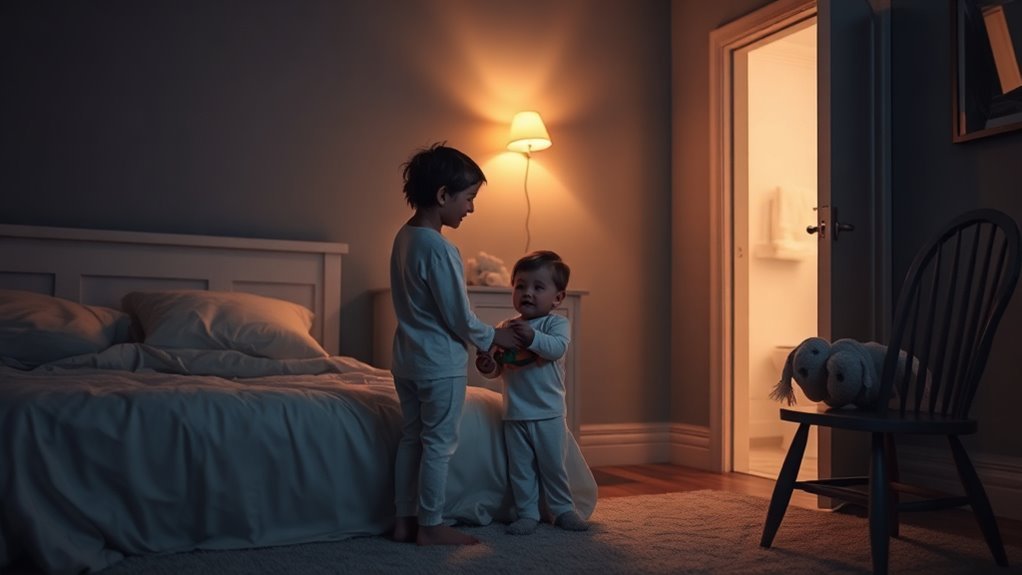
- Set up an easy bathroom path: Plug in a dim nightlight in the hallway and bathroom, keep a sturdy step stool by the toilet, and dress your child in loose, easy-to-pull-down pajama pants.
- Double-layer the mattress: Stack a waterproof mattress pad, a fitted sheet, a second waterproof pad, and a second fitted sheet—just as helpful at home as when packing comfortable toddler sleep gear or setting up a toddler travel bed for overnight trips.
- Keep accident cleanups calm and brief: If a wet night happens, strip the top sheet and pad, change pajamas quietly without scolding or shaming, and go straight back to sleep.
Night Training Tools: Pros and Limitations
| Approach | Best For | Pros | Limitations |
|---|---|---|---|
| Overnight Pull-Ups | Children still waking wet most mornings | Protects sleep quality for the whole family; zero stress | Does not actively teach waking to a full bladder |
| Cotton Underwear + Double-Layered Sheets | Children already waking dry 5+ mornings a week | Lets child feel wetness immediately; reinforces readiness | Requires quick middle-of-the-night sheet swaps during setbacks |
| Bedwetting Moisture Alarm | Older children (typically age 6–7+) motivated to stop bedwetting | Evidence-backed conditioning tool recommended by pediatricians for persistent enuresis | Takes weeks of consistent parent help to wake deep sleepers |
When to Pause or Call a Pediatrician
If your child has wet sheets nearly every night for two weeks straight and feels discouraged, it is completely fine to pause, return to overnight pull-ups without framing it as failure, and try again in a few months. Consult your pediatrician if bedwetting persists past age 7, returns suddenly after 6 or more months of staying dry, or occurs alongside constipation, painful urination, daytime leaking, loud snoring, or excessive thirst.
Frequently Asked Questions
What type of mattress protector works best for night potty training?
A breathable, quiet waterproof mattress pad with fitted elastic corners works best. Layering two sets—waterproof pad, fitted sheet, second waterproof pad, second fitted sheet—lets you strip a wet top layer in seconds at 2 a.m.
Should I wake my child up for a scheduled midnight potty trip?
A single dream pee before parents go to bed helps some families prevent wet sheets, though pediatricians note it does not speed up biological bladder maturation. If waking your child causes meltdowns or disrupted sleep, skip it and wait for natural readiness.
At what age do most children stay dry at night?
Nighttime dryness varies widely. According to the American Academy of Pediatrics (AAP), bedwetting remains very common through age 5, and many children naturally achieve consistent overnight dryness between ages 5 and 7 as their bladders and hormone levels mature.
Does limiting drinks before bed stop bedwetting?
Offering plenty of fluids earlier in the day and avoiding large drinks, caffeine, or sugary beverages in the hour before bedtime can reduce overnight urine volume—though you should never restrict water if your child is genuinely thirsty.
When should I talk to a pediatrician about nighttime bedwetting?
Check in with your pediatrician if bedwetting continues past age 7, starts suddenly after 6 or more months of dry nights, or comes with pain when urinating, daytime accidents, constipation, loud snoring, or unusual thirst.