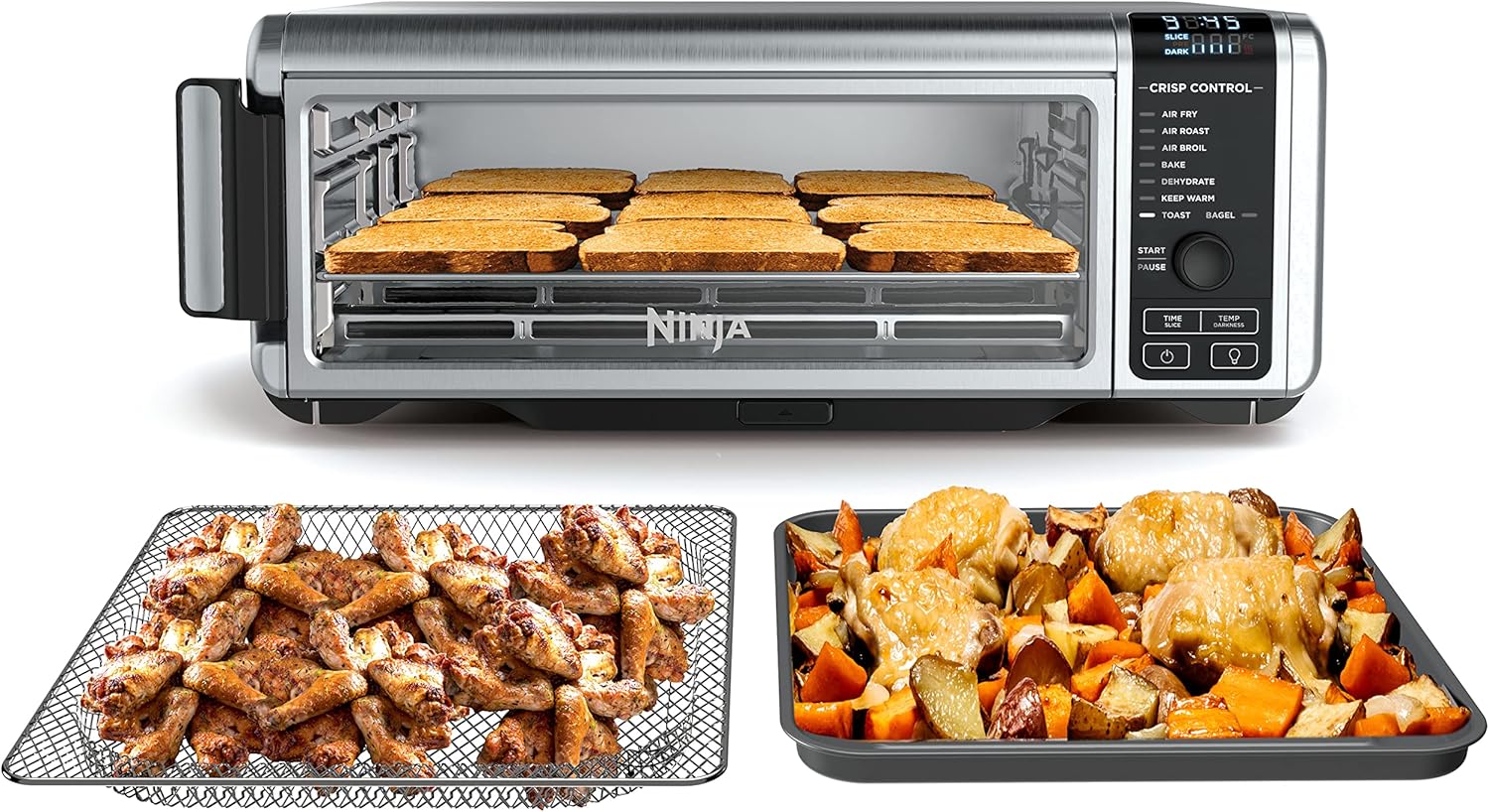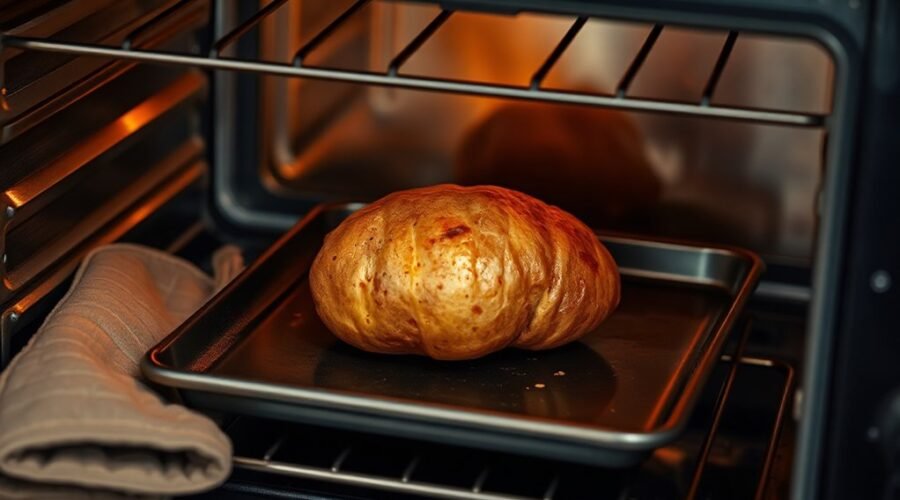
Making a baked potato in toaster oven appliances is ideal for loaded and twice-baked potatoes because the compact cavity crisps Russet skins and melts cheese toppings quickly without heating a full-size range. Bake pierced, oiled Russets uncovered at 400°F (205°C) for 40–80 minutes depending on whether you use small or jumbo spuds, then stuff, re-bake for 12–18 minutes, or safely reheat leftovers at 350°F.
Quick Answer
Preheat your toaster oven to 400°F (205°C), scrub and dry Russet potatoes, pierce with a fork, rub with oil and salt, and bake uncovered until the center hits 205–210°F (40–45 min for small, 50–60 min for medium, 65–80 min for jumbo). For twice-baked potatoes, scoop and mash the flesh with butter, sour cream, and cheddar, refill the skins, and bake 12–18 minutes until bubbly.
At a Glance
| Initial Bake Temp | 400°F (205°C) uncovered on the middle rack |
| Second Bake (Twice-Baked) | 375–400°F for 12–18 minutes until golden and bubbling |
| Leftover Reheat | 350°F (177°C) for 15–25 minutes (to 165°F internal) |
Small vs. Jumbo Russet Timing in a Toaster Oven
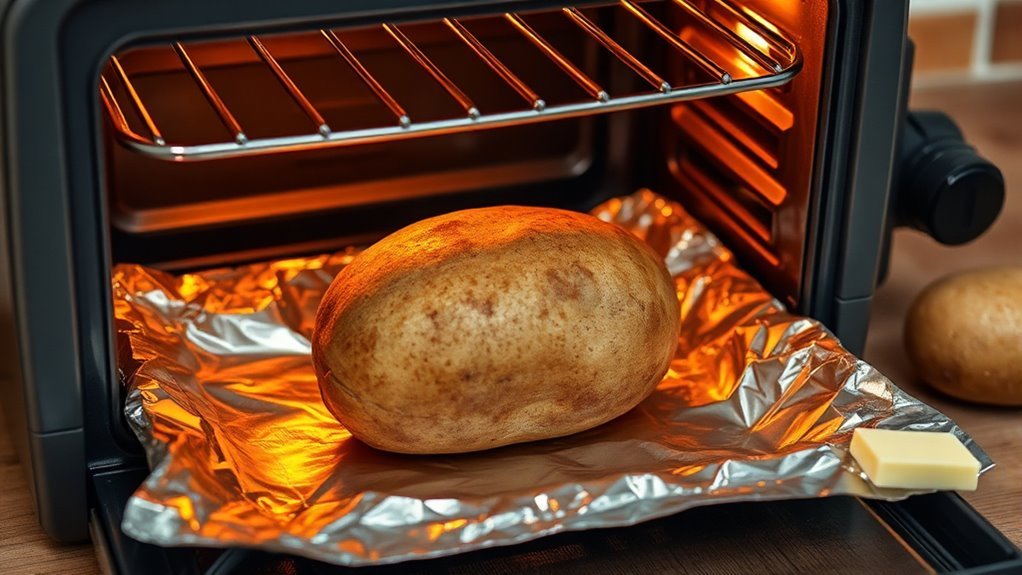
Thickness—not just total weight—drives how long a potato needs to reach the fluffy 205–210°F (96–99°C) interior recommended by the Idaho Potato Commission. For a basic single-potato timing refresher, see our guide on how to bake a potato in a toaster oven. When choosing spuds for loaded or twice-baked meals, match your bake time to potato size:
| Russet Size | Weight | Standard Bake (400°F) | Convection Bake (400°F) | Best Use |
|---|---|---|---|---|
| Small | 5–6 oz | 40–45 min | 35–40 min | Quick weeknight side |
| Medium | 8–10 oz | 50–60 min | 45–50 min | Classic loaded potato |
| Large / Jumbo | 12–16 oz | 65–80 min | 55–70 min | Twice-baked stuffed shells |
If you want to compare crispy-skin methods with sweet potatoes, see our companion guide on baking potatoes and sweet potatoes in a toaster oven.
Twice-Baked & Loaded Baked Potato in Toaster Oven Steps
Medium-large and jumbo Russets hold their shape best for stuffing because their thick skin forms a sturdy boat after the first bake.
- Prep and initial bake (400°F): Scrub 2 medium-large Russets under cool running water, pat dry completely, poke 6–8 fork holes around each potato, and rub with 1 teaspoon neutral oil plus coarse salt. Bake uncovered on the middle rack for 55–70 minutes until a fork slides through the center effortlessly.
- Cool slightly and scoop: Rest 10 minutes so you can handle them with a towel. Slice off the top third lengthwise (or halve lengthwise) and scoop the fluffy interior into a bowl, leaving a 1/4-inch rim of flesh inside each skin so the shells stay upright.
- Mix the filling: Mash the warm potato flesh with 2 tablespoons butter, 1/4 cup sour cream (or Greek yogurt), 2 tablespoons milk, 1/2 cup shredded sharp cheddar, 2 tablespoons chopped chives, salt, and black pepper. Fold in cooked crumbled bacon or steamed broccoli florets if making a full meal.
- Stuff and second-bake (375–400°F): Mound the filling back into the crispy shells, top with an extra pinch of cheddar, place on a foil-lined toaster oven tray, and bake 12–18 minutes until heated through and lightly browned on top.
Pro Tip: Short on time? Pierce the scrubbed Russet and microwave it for 4–5 minutes (turning halfway) to par-cook the center, then oil, salt, and finish uncovered in a 400°F toaster oven for 20–25 minutes—never put foil in the microwave.
Safe Storage & Leftover Reheating (Foil Botulism Warning)
A toaster oven is far better than a microwave for reheating leftover baked or twice-baked potatoes because dry heat restores the crisp skin instead of turning it rubbery. Before storing leftovers, however, follow strict food-safety rules regarding aluminum foil.
USDA & CDC Botulism Warning: Never hold aluminum foil-wrapped baked potatoes at room temperature. As documented by the CDC botulism prevention guide and USDA FSIS, Clostridium botulinum spores can survive baking and produce deadly toxin inside oxygen-free foil if kept in the 40–140°F danger zone. Keep foil-wrapped potatoes at 140°F or hotter until serving, or remove/loosen the foil and refrigerate within 2 hours (1 hour if above 90°F).
- Refrigerator storage: Store unwrapped or loosely covered leftover potatoes in shallow airtight containers at 40°F (4°C) or below and eat within 3–4 days.
- Reheating whole or halved baked potatoes: Preheat toaster oven to 350°F (177°C), place unwrapped potatoes on the rack or a small tray, and bake 15–20 minutes (20–25 minutes for jumbo whole potatoes) until the center reaches 165°F (74°C).
- Reheating twice-baked potatoes: Bake uncovered at 350°F for 18–22 minutes; loosely tent the top with foil for the first 10 minutes only if the cheese is already deeply browned.
Pros and Limitations of Toaster-Oven Baked Potatoes
- Pros: Faster preheat than a full-size oven, uses less energy for 1–4 potatoes, crisps skins evenly, and reheats leftovers without soggy microwave texture.
- Limitations: Limited rack height means jumbo potatoes sit closer to heating elements (watch for scorching on top), and crowding more than 3–4 large potatoes slows airflow and extends bake time.
Key Takeaways
- Bake Russets uncovered at 400°F: 40–45 min for small, 50–60 min for medium, and 65–80 min for jumbo spuds (205–210°F center).
- For twice-baked potatoes, leave a 1/4-inch shell, mash with butter/sour cream/cheddar, and re-bake at 375–400°F for 12–18 minutes.
- Reheat refrigerated leftovers unwrapped at 350°F for 15–25 minutes until 165°F inside for crisp skin.
- Never leave foil-wrapped baked potatoes at room temperature—loosen or remove foil and refrigerate within 2 hours to prevent Clostridium botulinum risk.
Frequently Asked Questions
How long does a jumbo Russet potato take in a toaster oven vs. a small one?
At 400°F (205°C), a small 5–6 oz Russet takes about 40–45 minutes, a medium 8–10 oz Russet takes 50–60 minutes, and a jumbo 12–16 oz Russet takes 65–80 minutes. Always confirm doneness by sliding a fork into the center or checking for an internal temperature around 205–210°F.
How do you make twice-baked potatoes in a toaster oven?
Bake whole Russets at 400°F until tender (50–65 minutes), let cool 10 minutes, slice off the top third, and scoop out the flesh leaving a 1/4-inch shell. Mash the flesh with butter, sour cream, cheddar, salt, and chives, spoon it back into the shells, and bake at 375–400°F for 12–18 minutes until heated through and golden on top.
Why is it dangerous to leave foil-wrapped baked potatoes at room temperature?
Aluminum foil seals out oxygen while trapping heat and moisture, creating an anaerobic environment where surviving Clostridium botulinum spores can germinate and produce deadly botulinum toxin. Per CDC and USDA guidance, keep foil-wrapped potatoes at 140°F or hotter until served, or refrigerate within 2 hours with the foil loosened or removed.
What is the best way to reheat leftover baked potatoes in a toaster oven?
Preheat the toaster oven to 350°F (177°C). Place unwrapped whole or halved leftover potatoes directly on the rack or a small baking tray and heat for 15–20 minutes (20–25 minutes for jumbo whole potatoes) until the center reaches 165°F and the skin re-crisps.
Can I freeze twice-baked potatoes and reheat them in a toaster oven?
Yes. Cool stuffed twice-baked potatoes completely, freeze them solid on a tray, then wrap individually in freezer-safe wrap for up to 2 months. Thaw overnight in the refrigerator and bake at 350°F for 20–25 minutes until the center reaches 165°F.
Should I use convection mode when baking potatoes in a toaster oven?
Convection mode circulates hot air and can cut baking time by 5 to 10 minutes while crisping the skin faster. Start checking for tenderness 10 minutes earlier than standard Bake times so the skin does not dry out before the center softens.
Conclusion
Matching your 400°F bake time to potato size turns a simple baked potato in toaster oven cooking into a crisp-skinned base for loaded dinners, twice-baked shells, and fast weeknight leftovers. Keep potatoes unwrapped for the best crunch, refrigerate leftovers promptly without tight foil, and reheat at 350°F to bring back that fresh-baked texture.
Sources
- Idaho Potato Commission: How Do You Cook a Baked Potato: 400°F baking temperature and 210°F internal doneness benchmark.
- CDC: Botulism Prevention: Safe 140°F hot-holding and loosened-foil refrigeration rules for foil-wrapped baked potatoes.
- USDA FSIS: Baked Potatoes and Clostridium botulinum: Botulism risk from holding foil-wrapped baked potatoes at room temperature.
- USDA FSIS: Leftovers and Food Safety: 2-hour cooling rule, 3–4 day storage, and 165°F reheating target.