

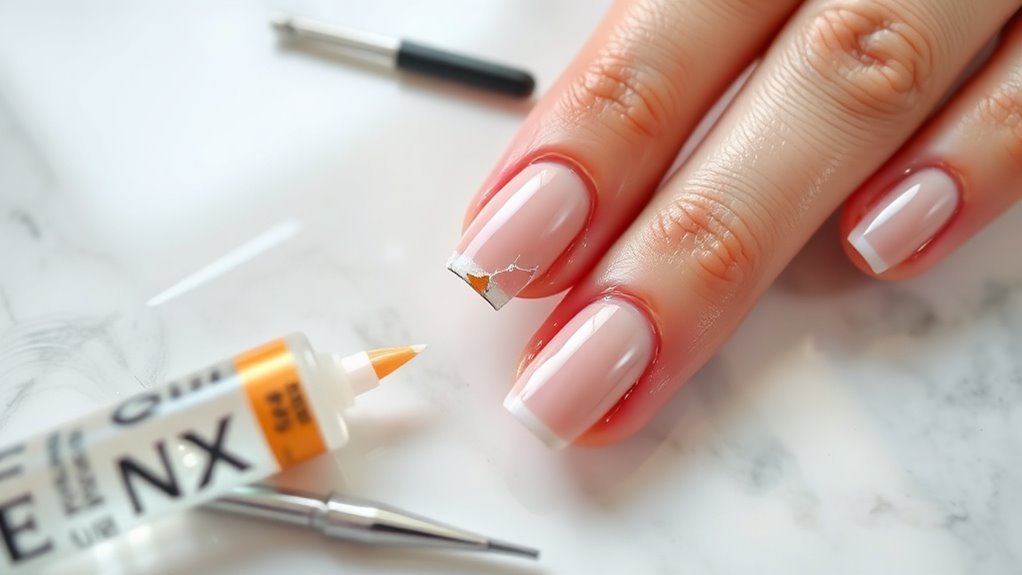
No—if you are wondering can you use super glue on nails, dermatologists and nail professionals strongly advise against using household super glue on natural nails or press-ons. Although both products rely on cyanoacrylate chemistry, hardware super glue is not formulated or safety-tested for skin contact, cures rigidly enough to peel natural nail layers, and can trigger severe exothermic thermal burns if it contacts cotton clothing or cotton pads.
Household Super Glue vs. Cosmetic Nail Glue: Key Differences
A common myth says nail glue and hardware super glue are identical because both list ethyl cyanoacrylate. In reality, formulation purity, additives, and flexibility differ significantly between industrial adhesives and cosmetic nail glues.
| Factor | Household Super Glue | Cosmetic Nail Glue |
|---|---|---|
| Primary Chemistry | Industrial ethyl or methyl cyanoacrylate with non-cosmetic stabilizers | Cosmetic-grade ethyl cyanoacrylate formulated for nail plates |
| Skin & Safety Testing | Not evaluated for human skin or nail-bed exposure | Manufactured under cosmetic safety standards for external nail use |
| Flexibility | Cures hard and brittle; snaps and strips nail keratin layers | Formulated to flex slightly with natural nail movement |
| Allergy & Irritation Risk | Higher risk of irritant or allergic contact dermatitis and fumes | Lower risk when kept strictly off cuticles and surrounding skin |
| Removal | Aggressive bond that often tears the nail plate if pried | Breaks down more predictably with warm soapy oil soaks or acetone |
Critical Burn Warning: Never Wipe Cyanoacrylate With Cotton
Medical literature from dermatology and burn units documents a dangerous hazard with both hardware super glue and liquid nail glue: when liquid cyanoacrylate soaks into natural cellulose fibers—such as cotton balls, cotton shirts, jeans, wool, or paper towels—it undergoes a rapid exothermic chemical reaction. The reaction releases intense heat within seconds and can cause deep, full-thickness thermal burns through clothing.
- Keep liquid adhesive bottles away from your lap, cotton sleeves, and fabric towels while working.
- If glue spills on clothing, pull the fabric away from your skin immediately and douse with cold water.
- Never press a cotton pad onto wet glue on your fingers or nail plate.
Can You Use Super Glue on Nails? Dermatology & Infection Risks
Beyond burn hazards, using industrial super glue on fingernails creates four avoidable problems:
- Nail plate delamination: Because rigid super glue does not bend with your nail, everyday bumps stress the bond and rip off thin top layers of keratin.
- Trapped moisture and infections: Micro-cracks in brittle glue let water seep underneath while blocking air, promoting bacterial discoloration (often called “greenies”) or fungal growth.
- Allergic contact dermatitis: Repeated skin exposure to uncured cyanoacrylate can cause painful redness, itching, swelling, and cracking around the nail folds.
- Chemical injury on broken skin: Applying hardware glue over a split that reaches the living nail bed causes intense stinging and tissue irritation.
Safer Ways to Fix a Broken Nail or Attach Press-Ons
For a minor horizontal crack above the pink nail bed, use cosmetic nail glue and a tiny patch of silk wrap or clean tea-bag paper instead of hardware adhesive:
- Wash and dry your hands completely, then trim any snagged edge cleanly.
- Apply one tiny drop of cosmetic nail glue over the crack—keep it off your cuticles and skin.
- Press a small piece of silk wrap or tea-bag paper flat onto the glue with a wooden stick, let it set, and seal with a thin second coat of nail glue.
- Lightly buff smooth once dry and finish with a protective clear top coat.
If you are attaching artificial tips rather than patching a crack, follow our step-by-step guide on how to apply press-on nails safely. When it is time to take glued nails off, never pry them—use gentle soaking methods from our press-on nail remover guide, and restore flexibility afterward by learning how cuticle oil protects nails and skin.
When to Skip Glue and Get Professional Care
Do not apply any glue—not even cosmetic nail glue—if the break bleeds, extends deep into the tender nail bed, shows swelling, throbbing pain, pus, or green/yellow discoloration, or if the nail plate is lifting away from the finger. Clean the area gently, cover it with a breathable bandage to prevent snagging, and consult a healthcare provider for signs of infection or a licensed nail technician for structural trimming once the skin has healed.
Frequently Asked Questions
Why can super glue cause burns on cotton or fabric?
Cyanoacrylate adhesives react rapidly with cellulose fibers in cotton, wool, and paper towels, triggering a fast exothermic (heat-releasing) chemical reaction. Dermatology and burn-center case reports document full-thickness thermal burns when liquid cyanoacrylate spills onto cotton clothing or is wiped with cotton pads.
Is nail glue the exact same ingredient as super glue?
Both typically contain ethyl cyanoacrylate, but cosmetic nail glue is formulated specifically for nail-plate use with viscosity modifiers and skin-safety quality controls. Industrial hardware super glues may contain harsher monomers (such as methyl cyanoacrylate), stabilizers, or solvents not tested for human skin contact.
Can super glue cause allergic reactions or nail infections?
Yes. Cyanoacrylate contact with skin can trigger allergic contact dermatitis (redness, itching, swelling, or blistering). In addition, rigid super glue cracks easily and traps moisture underneath lifted edges, creating an environment where bacteria like Pseudomonas (“greenies”) or fungi can grow.
How do you safely remove dried super glue from fingers or nails?
Never pull or pry bonded skin or nails apart. Soak the area in warm soapy water first, then gently roll the softened edge loose or apply a small amount of acetone nail polish remover (avoiding open cuts) and wash thoroughly afterward, followed by hand cream or cuticle oil.
What should you do if super glue or nail glue gets in your eye?
Flush the eye immediately with lukewarm running water for at least 15 minutes without rubbing or forcing eyelids open. Seek urgent medical attention right away even if discomfort seems mild.
[…] as you should check chemical safety precautions before trying DIY beauty hacks like using super glue on nails, verifying every active ingredient in your skincare routine before cold waxing prevents avoidable […]
[…] Always stick to cosmetic-grade skin preps and post-wax oils rather than household solvents or makeshift DIY beauty hacks—just as improper adhesives can injure skin or nails, a risk we detail in our guide on whether you can use super glue on nails. […]