Mold and other microbial growth are more likely to become a problem in a coffee maker when moisture, standing water, and residue remain on neglected surfaces. The safest prevention method is to use fresh water, wash accessible reservoir parts as the appliance manual directs, let cleaned parts dry, maintain water filters, and descale separately when the machine requires it.
Quick Answer
To prevent mold in a coffee maker reservoir, replace stale water, wash removable tanks and lids regularly, and let cleaned parts dry before reassembly. Keep filters on schedule and follow the manual for internal cleaning. Descale only when required; descaling removes mineral scale and does not replace washing contaminated surfaces.
Key Takeaways
- Replace water that has been sitting unused instead of repeatedly topping off an old reservoir.
- Wash removable reservoirs, lids, carafes, brew baskets, and other approved parts at the interval stated in the owner’s manual.
- Cleaning and descaling are different: washing removes residue and contamination from accessible surfaces, while descaling removes mineral deposits.
- Use vinegar only when your coffee maker’s manufacturer permits it; some brands require a dedicated descaler.
- Do not pump soap, bleach, or another improvised cleaner through internal plumbing unless the manufacturer specifically instructs you to do so.
- Maintain or replace water filters according to the model instructions, especially after prolonged non-use.
- If growth, film, or musty odor returns in inaccessible tubing after approved cleaning, stop using the machine and contact the manufacturer or replace it.
At a Glance
| Time Required | About 5–15 minutes for routine reservoir washing; roughly 15–60 minutes for a model-specific descale cycle when one is due |
| Difficulty | Easy, provided the owner’s manual is followed |
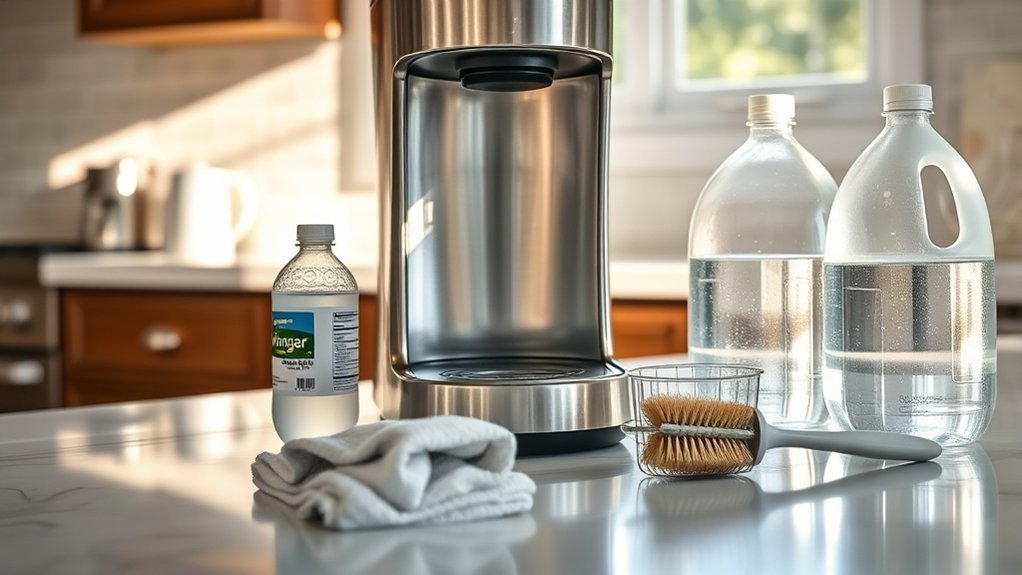
| Tools Needed | Soft nonabrasive sponge or cloth, mild dish soap if permitted, fresh water, and the approved descaling product when descaling is due |
| Cost | Usually a few dollars for routine cleaning; approved descaler and replacement-filter prices vary by brand |
Warning: Turn off and unplug the coffee maker before washing removable parts, and allow hot surfaces to cool. Never immerse the appliance base, cord, or plug. Never mix bleach with vinegar, ammonia, descaler, or any other cleaner. Do not put bleach into the internal water path unless the manufacturer explicitly directs you to do so.
Why a Clean Coffee Maker Reservoir Matters
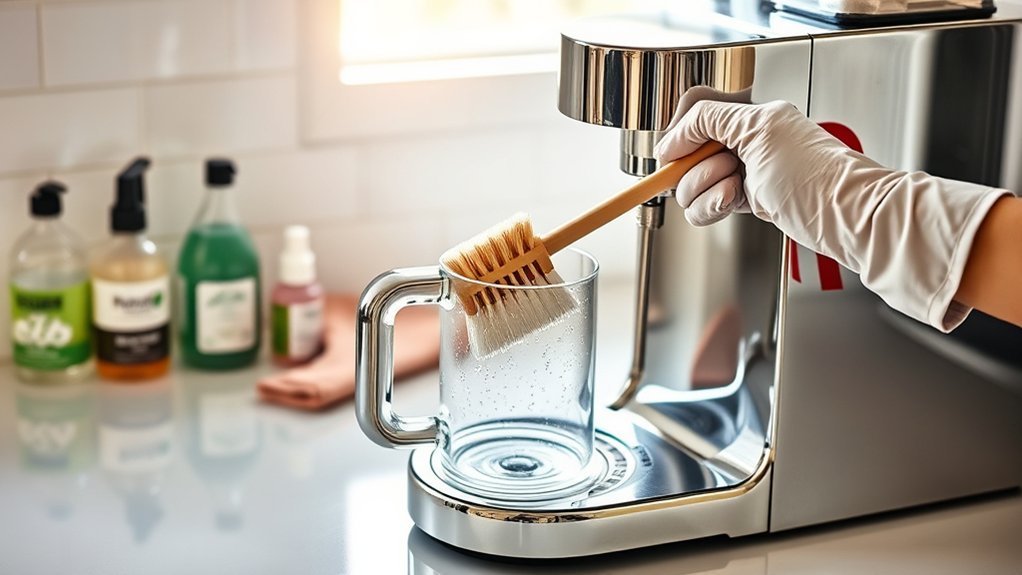
A coffee maker reservoir is often dark and damp. When standing water or residue remains on neglected surfaces, yeast, mold, or bacteria may find favorable conditions for growth. Regular washing also prevents stale odors and flavors from transferring to your coffee.
An NSF household germ study ranked coffee reservoirs among the germ hot spots found in participating homes. Its often-repeated “50%” figure requires context: yeast or mold was detected in 50% of the coffee reservoirs sampled from only 22 participating families in 2011. The result shows that reservoirs can be overlooked, but it does not prove that half of all coffee makers contain mold.
In NSF’s small 2011 household study, yeast or mold was detected in 50% of sampled coffee reservoirs, but the study involved only 22 participating homes.
According to the Centers for Disease Control and Prevention, mold exposure can cause symptoms such as stuffy nose, sore throat, coughing, wheezing, burning eyes, or skin irritation in some people. People with asthma or mold allergies may have stronger reactions, while people with chronic lung disease or weakened immune systems can face additional risks from mold exposure.
These general mold risks do not mean that every stain or film inside a reservoir will make someone ill. The practical response is to stop using a visibly contaminated machine until its accessible parts have been cleaned according to the appliance instructions.
How to Spot Possible Mold, Film, and Buildup in a Coffee Maker
Inspect the reservoir, lid, seams, valve area, water-filter holder, and other removable parts under bright light. Signs that the machine needs cleaning or closer inspection can include:
- Dark, white, green, orange, or fuzzy-looking spots
- A slippery or cloudy film that returns after rinsing
- A musty, sour, or stale odor
- Discoloration around a gasket, seam, float, or valve
- An off-flavor that remains after the carafe and brew basket have been cleaned
Note: You cannot identify a mold species, bacteria, or coliform organisms from appearance or odor alone. A visible film or unexplained growth is a reason to clean and inspect the machine, not proof that a particular microorganism is present.
Mineral scale can look white or chalky, while coffee residue may look brown or oily. Neither should be ignored, but they require different maintenance. Soap and gentle scrubbing can remove residue from washable parts, while a manufacturer-approved descaling solution targets mineral deposits inside the water path.
Cleaning vs. Descaling vs. Sanitizing a Coffee Maker
These terms are often used as if they mean the same thing, but they describe different jobs:
- Cleaning physically removes residue, dirt, coffee oils, and many germs from accessible surfaces using water, permitted soap, and scrubbing.
- Descaling dissolves calcium and other mineral deposits that build up in heated water passages. It does not replace washing a dirty reservoir.
- Sanitizing or disinfecting uses a validated method or chemical to reduce or kill microorganisms. Do this only when the appliance manufacturer provides a compatible procedure for the relevant food- or water-contact part.
The CDC distinguishes cleaning from sanitizing and disinfecting. For a coffee maker, product compatibility matters just as much as the general cleaning chemistry. A disinfectant that is suitable for a countertop is not automatically appropriate for a reservoir, seal, pump, heating system, or internal tube.
Note: Do not deliberately circulate dish soap, bleach, household disinfectant, or another improvised cleaner through sealed internal plumbing unless the coffee maker’s instructions specifically tell you to use that product that way.
How Often Should You Clean Your Coffee Maker?
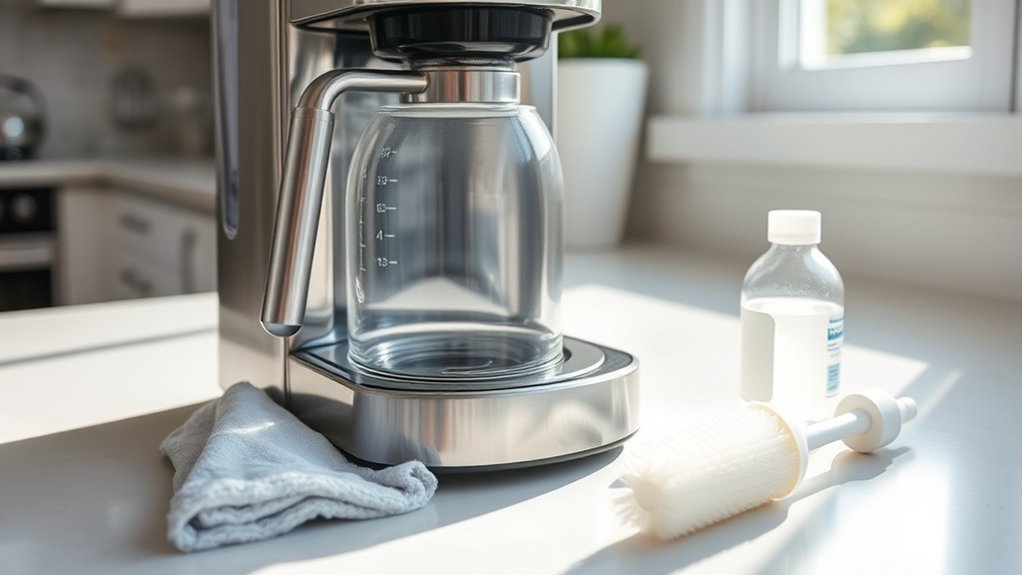
There is no single schedule that applies to every drip machine, pod brewer, or automatic espresso maker. Use the following routine as a practical starting point, then use the model-specific schedule whenever the manual gives different instructions.
| Interval | Maintenance |
|---|---|
| After use or daily | Discard used grounds or pods, rinse the carafe and brew basket, wipe spills, and replace water that has become stale instead of repeatedly topping it off. |
| Weekly or as directed | Wash the removable reservoir and lid if the manual permits it. Clean the drip tray, filter holder, and other removable parts. |
| When prompted or at the manual’s interval | Run the approved descaling cycle. The schedule may depend on elapsed time, brew count, water hardness, filter use, or a descale indicator. |
| Before long-term storage | Empty the reservoir, wash permitted parts, allow them to dry, and follow the manufacturer’s storage or system-emptying instructions. |
| After prolonged non-use | Inspect and rinse or wash accessible parts, review the condition of the water filter, and follow the manufacturer’s restart, cleansing-brew, or descaling procedure before making coffee. |
For example, NSF notes that common manufacturer recommendations have ranged from every 40–80 brew cycles to at least monthly. Keurig’s K-Supreme guide specifies descaling every three months or when its descale notification appears. Other machines use different intervals or calculate maintenance from water hardness and filter settings. The instructions for your exact brewer take priority.
Step-by-Step: Clean Your Coffee Maker Reservoir
The following method applies to a removable reservoir that the manufacturer allows you to hand-wash. If the reservoir is fixed, contains electronic sensors, or has special cleaning restrictions, use the separate fixed-reservoir guidance below.
- Read the cleaning section of the manual. Confirm whether the reservoir can be removed, whether dish soap is allowed, whether any parts are dishwasher-safe, and which descaler is approved for a separate descaling cycle.
- Turn off and unplug the machine. Let the brewer, warming plate, and water cool before handling any parts.
- Remove the water filter if required. Charcoal or softening filters often need to be removed before washing or descaling. Replace an expired filter according to the manufacturer’s schedule rather than reinstalling it indefinitely.
- Discard standing water. Empty water that has sat unused for an extended period instead of brewing with it or topping it off.
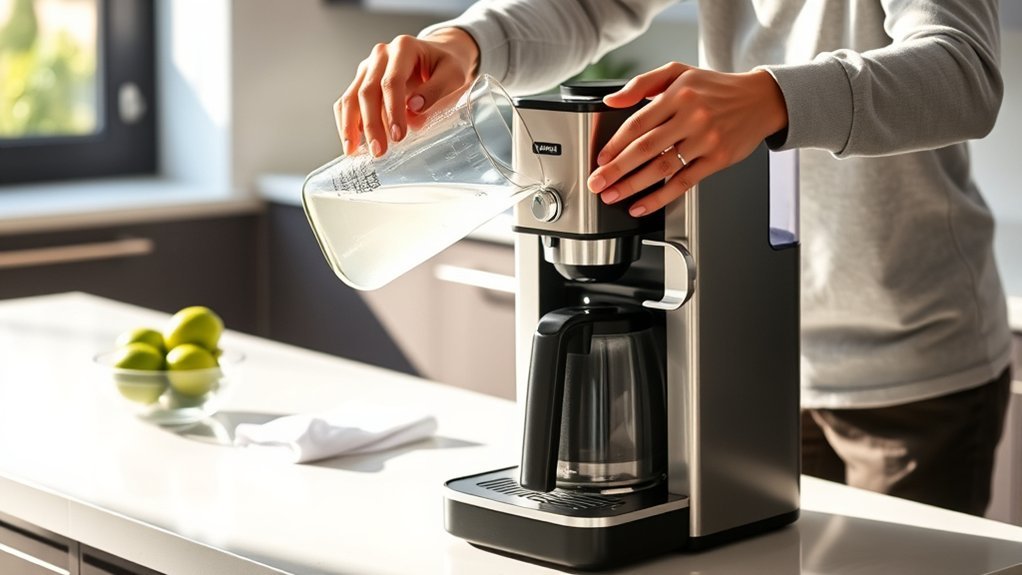
- Wash the removable reservoir and lid. Use warm water, a small amount of mild dish soap, and a soft nonabrasive sponge when permitted. Pay attention to seams, corners, floats, and the area around the outlet valve without forcing or damaging it.
- Rinse thoroughly. Remove all visible soap and loosened residue with clean water.
- Clean the carafe and brew basket separately. Coffee oils and grounds in these parts can cause odors and off-flavors even when the reservoir itself is clean.
- Let permitted parts dry. Place them on a clean drying rack or lint-free surface. Do not force towels into narrow valves or openings where lint could remain.
- Reassemble the machine. Reinstall the water filter only when the instructions say it is ready for continued use.
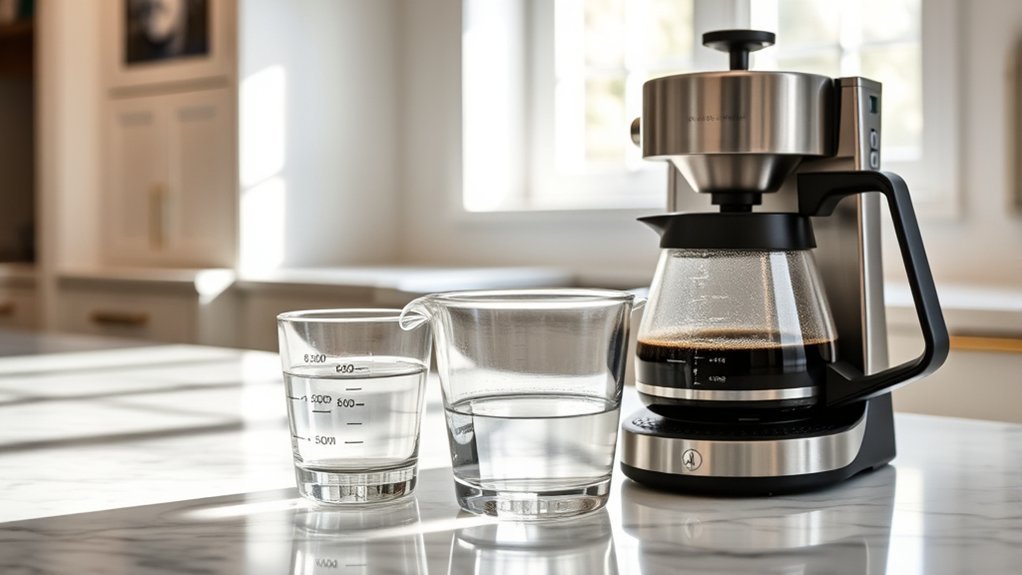
- Run a water-only cleansing rinse if directed. Use only the water volume and procedure specified for the machine.
- Descale separately when due. If the descale indicator is on or the maintenance schedule calls for descaling, complete that procedure with the approved solution and all required fresh-water rinses.
Pro Tip: Cleaning a reservoir is easier before residue dries around the water line, lid, float, or outlet valve. A soft bottle brush can help with corners only when the manufacturer permits its use and the brush cannot damage a sensor, valve, or seal.
If the Reservoir Is Fixed or Non-Removable
Do not assume the hand-washing procedure for a removable tank can be used on a built-in reservoir. A fixed tank may connect directly to pumps, heaters, sensors, valves, or electrical components.
- Unplug the cooled machine.
- Empty accessible standing water in the manner described by the manufacturer.
- Wipe reachable reservoir surfaces with the approved cloth or cleaning method.
- Do not pour soapy water, bleach, disinfectant, or an improvised vinegar mixture into the internal system unless the manual specifically calls for it.
- Use any manufacturer-provided cleaning, rinse, system-emptying, or descale program exactly as instructed.
- If visible growth remains where you cannot reach it, contact the manufacturer rather than disassembling sealed water, pressure, or electrical components.
What to Do if You See Visible Mold
- Stop brewing and unplug the machine.
- Discard the standing water, coffee grounds, pod, and any beverage made after the contamination was noticed.
- Remove and physically wash every approved removable part according to the manual.
- Inspect seams, the reservoir lid, valves, filter holder, carafe, and brew basket for remaining film or growth.
- If the manufacturer provides a specific cleaning or sanitizing procedure for the water-contact system, complete that procedure using only the specified product and concentration.
- If descaling is also due, complete the separate manufacturer-approved descale procedure. Do not treat descaling alone as a substitute for cleaning visible contamination.
- Run the full number of fresh-water rinse cycles required after any approved chemical treatment.
- Inspect the reservoir, lid, valve, and visible water path again before brewing coffee.
If spots, film, or odor remain in sealed tubing or inaccessible components, do not take apart electrical, pressurized, or factory-sealed parts yourself. Contact the manufacturer for service guidance. Replacement may be the safer option when internal contamination cannot be reached or the machine cannot be cleaned as designed.
After a Vacation or Long Period of Non-Use
If a coffee maker has sat unused for days or weeks, do not simply top off the old reservoir and brew. Empty any remaining water, inspect the tank and lid, and clean the approved removable parts before returning the machine to service.
Check the water-filter instructions as well. A filter that has exceeded its replacement interval or has been stored wet for a prolonged period may need to be replaced rather than reused. Then complete any cleansing-brew, rinse, storage-recovery, or descaling procedure specified by the manufacturer.
For example, the Keurig K-Supreme use and care guide instructs owners to empty the reservoir before storage and recommends rinsing the reservoir and descaling the brewer when preparing it for use after storage.
Effective Strategies to Prevent Mold in Coffee Makers
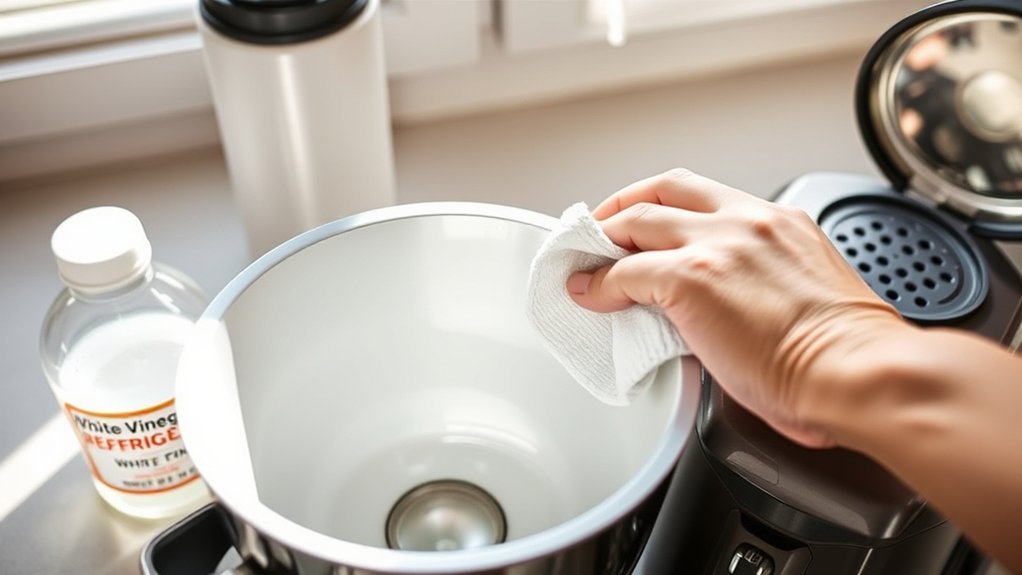
Mold prevention depends more on moisture control and consistent maintenance than on using a harsh cleaner. The U.S. Environmental Protection Agency identifies moisture control as the key to controlling mold. For a coffee maker, concentrate on fresh water, clean removable parts, proper drying, filter maintenance, and the approved descale schedule.
Regular Cleaning Routine
- Replace stale water instead of repeatedly topping off an old reservoir.
- Wash the carafe, brew basket, reusable filter, and other coffee-contact parts regularly.
- Wipe splashes and grounds from the area around the reservoir opening.
- Check the underside of the lid, water-level float, filter holder, and outlet valve.
- Replace disposable water filters on the schedule specified for the machine.
- Respond to a descale light instead of postponing the cycle.
- Clean more often when the machine is used by several people or sits in a warm, humid area.
The CDC’s household cleaning guidance explains that soap or detergent plus physical cleaning removes dirt and many germs from surfaces. Routine household disinfection is not always necessary, and any chemical used on a food- or water-contact component must be appropriate for that component.
Proper Water Storage
Use fresh potable water that meets your coffee maker’s instructions. Avoid leaving a full reservoir untouched through a vacation or another long period of non-use. If the manufacturer tells you to empty the reservoir before storage, wash and dry the removable tank before reinstalling or storing it.
Do not leave an open reservoir exposed on the counter indefinitely. Although airflow helps freshly washed parts dry, an uncovered tank can collect dust, insects, or kitchen debris. Dry removable parts in a clean area, then reinstall the lid as designed.
If you store drinking water separately, use a clean, food-safe, covered container. Do not pour leftover water from a dirty bottle, measuring cup, or carafe back into the reservoir.
Use Vinegar Solutions Only When Approved
Vinegar is not a universal coffee-maker cleaner. Its acid can help dissolve mineral scale, and Hamilton Beach permits plain white vinegar in the cleaning and descaling procedures for many of its standard coffee makers.
Other manufacturers give different instructions. De’Longhi tells owners of its fully automatic machines to use De’Longhi descaler and not vinegar. Keurig’s K-Supreme instructions specify Keurig Descaling Solution and a defined fresh-water rinse process.
Vinegar should therefore be treated as a model-dependent cleaning or descaling option rather than a universal disinfectant. Do not invent your own concentration or contact time when the appliance instructions specify something different.
Note: Descaling removes mineral deposits from heated water passages. It does not replace hand-washing the reservoir, carafe, lid, brew basket, or other removable parts where residue or visible contamination can collect.
Why Water Choice Matters for Coffee Maker Maintenance
Water affects coffee flavor, mineral scale, filters, and—in some machines—water-level sensors. However, there is no universal rule that distilled water prevents reservoir mold.
Some manufacturers recommend filtered or bottled water when tap water has an undesirable chlorine or mineral taste. Other machines are designed around ordinary potable tap water. Several Keurig manuals, including the K-Supreme use and care guide, explicitly state that distilled water should not be used.
Use these guidelines:
- Follow the water recommendation for your exact model.
- Use cold, fresh, potable water unless the manual states otherwise.
- Use a compatible water filter when recommended and replace it on schedule.
- Remove the filter before cleaning or descaling when the instructions require it.
- Expect harder water to create scale faster, which may require more frequent descaling.
- Do not assume mineral-free water will clean an already contaminated reservoir.
The best mold-prevention step is not a special type of water. It is preventing old water, moisture, and residue from remaining on neglected parts of the machine.
Signs Your Coffee Maker Needs to Be Replaced
A washable film or isolated spot does not automatically mean the coffee maker must be discarded. Replacement becomes reasonable when the machine cannot be cleaned safely, internal contamination keeps returning, or damaged components create an electrical or leak hazard.
Persistent Mold Growth
Consider manufacturer service or replacement when:
- Visible growth returns soon after the complete approved cleaning procedure.
- A persistent musty odor appears to come from sealed internal tubing.
- The reservoir is cracked, deeply scratched, cloudy, or permanently stained.
- A gasket, valve, float, or filter holder cannot be removed or cleaned as directed.
- The manufacturer says contaminated internal components are not user-serviceable.
Do not diagnose coliform bacteria or a specific mold species by sight. If someone in the household is especially sensitive to mold because of a serious mold allergy, chronic lung disease, or weakened immune system, use additional caution with a machine whose internal water path cannot be inspected or cleaned.
Unpleasant Coffee Taste
An unpleasant taste can come from several sources, so troubleshoot before replacing the appliance.
| Symptom | Possible Cause | First Action |
|---|---|---|
| Musty or stale taste | Old water, dirty reservoir, neglected filter, or residue | Discard the water and clean all approved removable parts |
| Bitter or rancid taste | Coffee oils, old grounds, over-extraction, or dirty carafe | Clean coffee-contact parts and check the grind and dose |
| Chalky or mineral taste | Scale buildup or unsuitable water | Run the approved descale cycle and review water guidance |
| Cleaner or vinegar taste | Incomplete rinsing | Run every required fresh-water rinse before brewing |
| Off-flavor that persists | Inaccessible residue, damaged materials, old filter, or mechanical fault | Replace the filter if due, contact the manufacturer, and consider replacement if the problem remains |
Frequent Mechanical Failures
Replacement may also be appropriate when the coffee maker has:
- Water leaking near electrical components
- A cracked reservoir or failed outlet valve
- Repeated error messages after the approved reset and cleaning procedures
- Brewing temperatures or volumes that remain inconsistent
- Burning odors, sparking, damaged wiring, or a hot plug
- Internal parts that the manufacturer says are not serviceable
Warning: Unplug a coffee maker immediately if it sparks, smells like burning plastic, trips a breaker, or leaks into its electrical base. Do not continue testing it by adding water.
Frequently Asked Questions
Can I use bleach to clean my coffee maker reservoir?
Do not put bleach into the reservoir or internal water path unless the manufacturer explicitly instructs you to do so. Bleach can damage materials or leave unsafe residue when used incorrectly. Never mix bleach with vinegar, ammonia, descaler, or another cleaner.
What should I do if I find mold?
Stop using the machine, discard the water, unplug it, and physically wash every approved removable part. Follow any manufacturer-specified cleaning or sanitizing procedure for the water system. Descale separately if it is due. If growth or odor remains in inaccessible tubing, contact the manufacturer or replace the machine.
Is vinegar safe to use in every coffee maker?
No. Some manufacturers permit plain white vinegar, while others require a dedicated descaling product and warn against vinegar. Check the cleaning instructions for your exact model before adding any acid or cleaner to the reservoir.
Can a coffee maker develop mold even when it is used daily?
Yes. Daily brewing does not physically wash the underside of the lid, reservoir seams, filter holder, outlet valve, carafe, or brew basket. Frequently topping off old water can also keep the same damp surfaces in continuous use without a proper wash.
Should I use distilled or filtered water?
Use the water type specified in the manual. Filtered water may improve taste or reduce scale in some machines, but several coffee makers state that distilled water should not be used. Water choice does not replace routine reservoir cleaning.
Should I leave the reservoir lid open after brewing?
Not necessarily. A freshly washed removable tank should be allowed to dry in a clean area, but leaving an assembled reservoir open indefinitely can allow dust or debris to enter. Follow the design and storage instructions for your model.
How often should I descale my coffee maker?
Follow the descale indicator or interval in the owner’s manual. The correct frequency depends on the machine, number of brew cycles, water hardness, and filter use. Descaling removes mineral scale and is separate from washing the reservoir.
Does the type of coffee bean affect mold in the reservoir?
Not directly. Coffee beans do not normally enter the water reservoir. Moisture, standing water, residue, and missed cleaning are more relevant to reservoir contamination. Coffee oils can still build up in the brew basket, grinder, carafe, or dispensing system.
Does brewing hot water kill mold in a coffee maker?
Do not rely on a normal brew cycle to clean a visibly contaminated machine. Brewing does not physically scrub the reservoir, lid, seams, valve, filter holder, or other surfaces where residue may remain. Clean accessible parts first and use only the manufacturer-approved internal cleaning procedure.
How do I clean a coffee maker with a non-removable reservoir?
Use the model’s specific procedure. Empty accessible water and wipe reachable surfaces only as permitted. Do not pump soap, bleach, disinfectant, or an improvised acid solution through internal tubing. If contamination remains in an inaccessible area, contact the manufacturer rather than opening sealed components.
Conclusion
Preventing mold in a coffee maker reservoir does not require an aggressive universal cleaning recipe. Use fresh water, wash approved removable parts, keep coffee residue out of the water system, maintain filters, allow cleaned parts to dry, and complete the specified descaling cycle when it is due. Cleaning and descaling solve different problems, so one should not be used as a substitute for the other.
Most importantly, use the instructions for your exact model because vinegar, distilled water, soap, filters, dishwasher cleaning, internal rinsing, and maintenance intervals are not handled the same way by every manufacturer. After a long period of non-use, inspect and clean the machine before brewing again rather than simply topping off old water.
If visible growth or musty odor remains after the complete approved cleaning procedure—especially in sealed tubing, a damaged reservoir, or another inaccessible part—stop using the machine and contact the manufacturer. Replacing a unit that cannot be cleaned safely is more sensible than repeatedly circulating unapproved chemicals through it.
Sources
- NSF — Clean the Germiest Home Items — household study context, coffee-reservoir findings, and manufacturer-cleaning guidance
- CDC — Mold — general mold health effects and moisture-related growth
- CDC — When and How to Clean and Disinfect Your Home — differences among cleaning, sanitizing, and disinfecting
- Hamilton Beach — How to Clean Your Coffee Maker — example of manufacturer-approved vinegar cleaning and descaling procedures
- De’Longhi — Cleaning a Fully Automatic Coffee Machine — manufacturer guidance requiring descaler instead of vinegar
- Keurig K-Supreme Use and Care Guide — reservoir care, descaling, storage, filter handling, and distilled-water restriction