When the Clean or Descale light appears on a coffee maker, it usually means the machine is due for descaling to remove mineral deposits left behind by water. The exact trigger and cleaning procedure vary by brand and model, so the safest approach is to follow your coffee maker’s manual rather than using a universal reset button combination or vinegar recipe.
Quick Answer
A coffee maker’s Clean light normally means it is time to descale mineral buildup inside the water system. Complete the full cleaning or descaling program listed in your model’s manual, including the fresh-water rinse. Do not assume vinegar ratios, reset buttons, or cleaning intervals are the same for every machine.
Key Takeaways
Key Takeaways
- The Clean or Descale light most often signals mineral-scale maintenance, not simply coffee grounds or oily residue.
- The alert may be based on brew count, programmed maintenance logic, water-hardness settings, or another model-specific system.
- Use the descaling product and procedure specified for your exact coffee maker. Vinegar is acceptable for some machines but should not be treated as a universal solution.
- A light that stays on often means the complete descaling and rinse sequence has not finished.
- Clean removable parts separately because descaling the water system does not replace routine cleaning of the carafe, filter basket, reservoir, or pod holder.
At a Glance
| Time Required | About 20–60 minutes, depending on the model and required rinse cycles |
| Difficulty | Easy |
| Tools Needed | Fresh water, a carafe or heat-safe mug, the model manual, and the manufacturer-approved descaler or manual-approved vinegar solution |
| Cost | Low; it depends on the descaling product your machine requires |
Power your essentials anywhere with a 999Wh pure sine wave power station delivering up to 1000W continuous with 2000W surge. It supports fast charging via USB-C PD 60W and USB-A QC 18W, plus simultaneous output for multiple devices through AC, USB, wireless, and car/DC ports. Recharge using AC, car, or solar with a built-in MPPT controller and dual cooling fans, while the upgraded battery management system protects against surges, short circuits, and overheating.

Descales your coffee maker, fighting hard water deposits and mineral buildup for a better tasting brew
![Quick & Clean [6-Pack] Keurig Cleaning Pods - K Cup Cleaner Pod For Keurig - 2.0 Coffee Machine Compatible, Removes Stains, Non-Toxic and Eco-Friendly](https://m.media-amazon.com/images/I/51lXaI5rgKL._SL500_.jpg)
Get That Fresh Coffee Taste Back - Over time, Keurig (TM) machines build up old grinds and residues, tainting the flavor of your coffee and espresso. Quick and Clean Keurig cleaning pods use a proprietary cleaning formula that cuts through and eliminates these residues, bringing taste back to normal
What Does the ‘Clean’ Light Indicate on Your Coffee Maker?
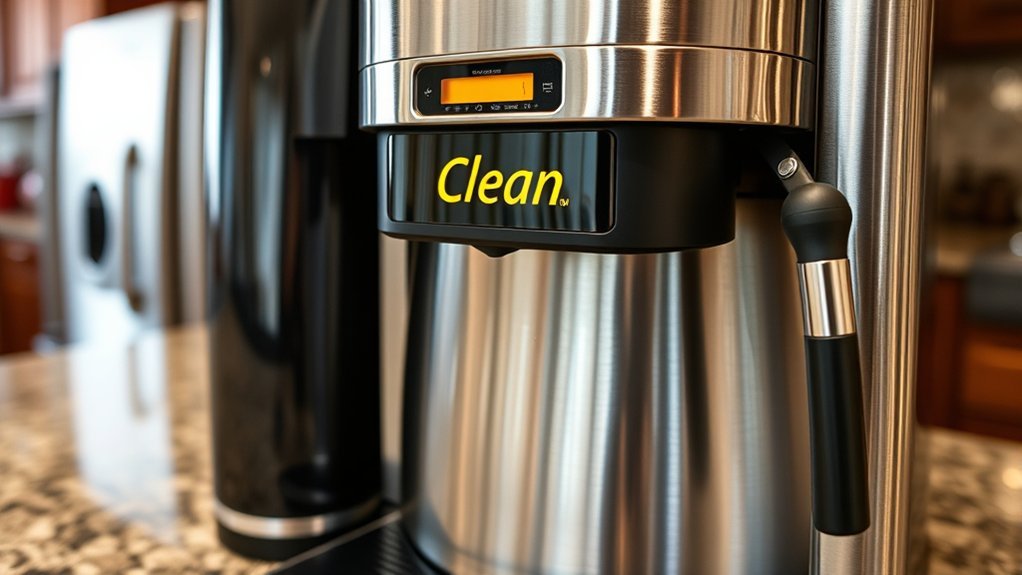
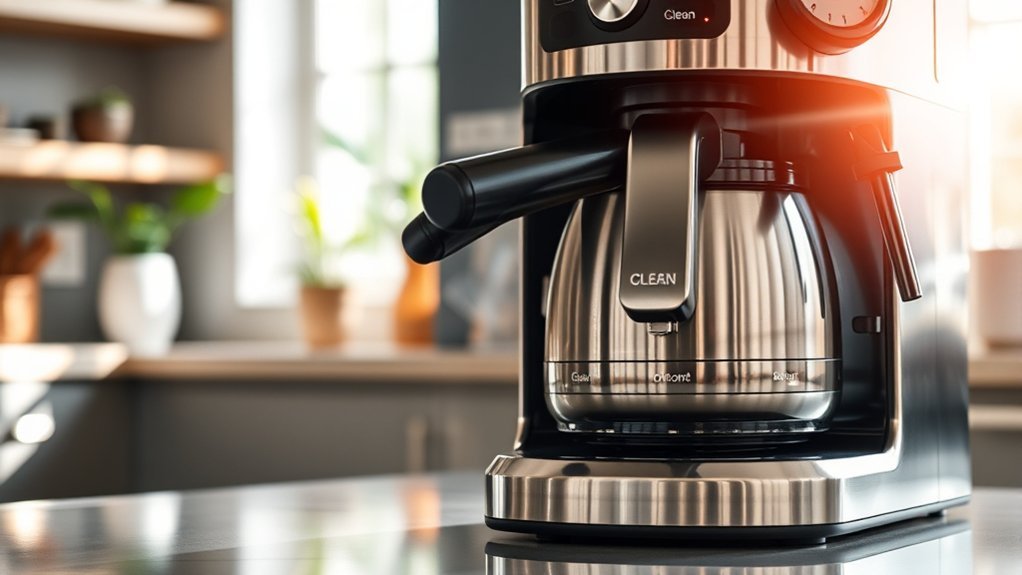
On many coffee makers, the Clean light indicates that calcium and other mineral deposits may need to be removed from the internal water path. This process is called descaling or decalcification.
For example, Braun states that a solid green Clean light means its applicable drip coffee maker requires descaling. Cuisinart also describes its Clean function as part of removing hard-water deposits.
However, the light does not work exactly the same way on every machine. Some brewers use a programmed maintenance counter. For example, the Keurig K-Express Essentials Gen 2 uses a maintenance alert after a specified number of brews. Other machines may base cleaning frequency partly on water hardness or usage.
Note: A Clean light is not necessarily a sensor that directly measures how much scale is inside the machine. Treat it as a maintenance alert and follow the procedure for your exact model.
Cleaning vs. Descaling: They Are Not the Same
Routine cleaning and descaling solve different problems. This distinction matters because running a descaling cycle does not automatically remove coffee oils or grounds from removable parts.
| Maintenance Task | What It Removes | Typical Areas |
|---|---|---|
| Routine cleaning | Coffee oils, grounds, stains, and spills | Carafe, filter basket, pod holder, drip tray, reservoir, exterior |
| Descaling | Mineral scale deposited by water | Reservoir water path, heater, tubing, and other internal water-contact components |
Why Cleaning Matters for Your Coffee’s Taste
Both coffee residue and mineral scale can affect the brewing experience, but in different ways. Old coffee oils and grounds may create stale or bitter flavors, while heavy mineral buildup can restrict water flow and interfere with normal brewer operation.
| Issue | Possible Effect | Recommended Action |
|---|---|---|
| Old Coffee Grounds or Oils | Stale, bitter, or muddled flavor | Wash removable coffee-contact parts regularly |
| Mineral Buildup | Reduced water flow, longer brewing, or incomplete brew volume | Descale according to the model manual |
| Blocked Pod or Brew Components | Slow flow or partial cups | Clean the applicable removable parts or needles exactly as instructed by the manufacturer |
| Clean/Descale Alert | Signals scheduled maintenance is due | Complete the full manufacturer-specified cycle |
Water hardness also matters. Hard water contains more dissolved calcium and magnesium and can create mineral scale inside coffee makers and other water-using appliances. That is why two households using the same brewer may need to descale at different intervals.
How to Clean When the ‘Clean’ Light Shows
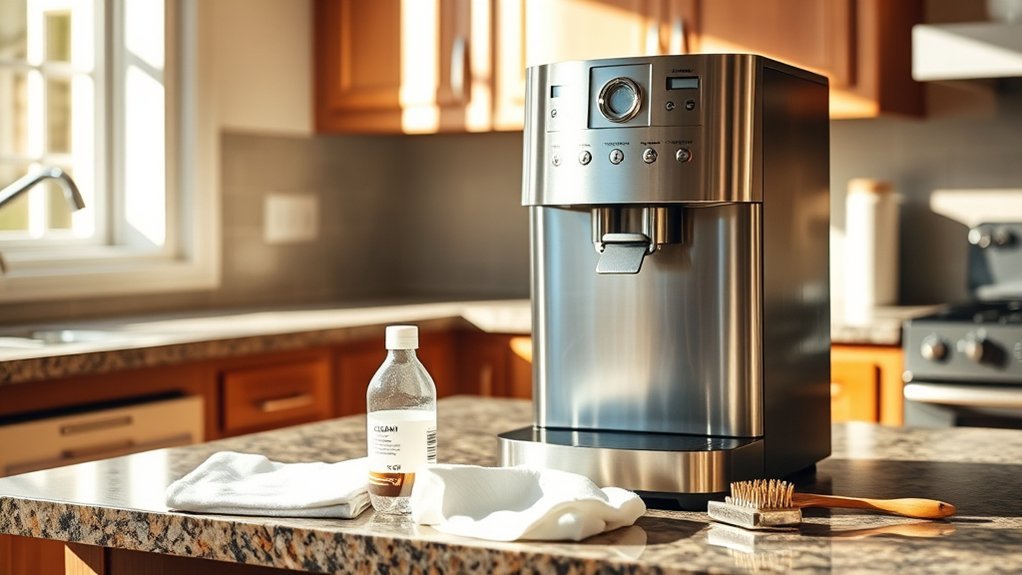
If your coffee maker’s Clean light is on, use the following workflow as a general guide. Your model’s manual takes priority over any generic instructions.
Warning: Descaling produces hot liquid. Keep hands away from the outlet while the machine is running, use a heat-safe carafe or mug, and keep children away. Turn off and unplug the brewer before washing or wiping parts when the manufacturer instructs you to do so. Never immerse the main appliance body in water.
- Identify the exact model. Check the label on the brewer and find its cleaning or descaling instructions.
- Remove coffee or pods. Empty used grounds and make sure no coffee pod is installed before running a descaling cycle unless your manual specifically says otherwise.
- Remove filters or accessories when directed. Some manufacturers tell you to remove charcoal water filters, permanent filters, or other components before descaling.
- Add the approved descaling solution. Use the manufacturer’s descaler or the vinegar-water mixture specified in your manual. Do not assume one vinegar ratio works for every machine.
- Start the programmed Clean or Descale mode. Some brewers require holding a Clean button; others use a particular combination of controls. Follow the exact sequence for your model.
- Let the entire cycle finish. Interrupting a programmed cleaning cycle may prevent the maintenance indicator from resetting.
- Discard the used solution safely. Remember that the liquid may still be hot.
- Complete every fresh-water rinse. Refill with clean water and run the number of rinse cycles specified in the instructions.
- Reinstall filters and removable parts. Do this only after the descaling and rinsing procedure is complete.
Pro Tip: Before starting, look up the manual for the exact model number rather than relying only on the brand name. Button sequences can differ even between coffee makers from the same product family.
Can You Use Vinegar?
Vinegar can be an effective acidic descaling option when your coffee maker’s instructions allow it. Cuisinart, for example, provides vinegar-based cleaning guidance for many of its drip machines. Other manufacturers may specify a commercial descaling solution instead.
Because solution strength, reservoir size, internal materials, and automatic cleaning programs differ, avoid copying a vinegar ratio from another coffee maker. After any approved vinegar treatment, complete the required fresh-water rinse cycles so no vinegar odor or flavor remains.
What to Do if the ‘Clean’ Light Won’t Turn Off
A persistent Clean light does not automatically mean the coffee maker is broken. In many cases, the machine has not recognized a complete descaling sequence.
Work through these checks in order:
- Confirm that you used the actual Clean or Descale mode. Simply running descaling liquid through a normal brew cycle may not reset an electronically tracked maintenance alert.
- Finish the complete rinse procedure. Some machines keep the indicator on until all required fresh-water rinses are finished. Keurig’s K-Express Essentials Gen 2, for example, states that its full descaling procedure must be completed to turn off the Descale light.
- Check the reservoir. Make sure it is seated correctly and contains enough fresh water to finish the rinse.
- Repeat the descaling procedure only if the manual recommends it. Heavy scale can require another cycle on some machines.
- Do not rely on random reset-button combinations. A shortcut meant for one model can be wrong for another, even when the control panels look similar.
- Check for a separate flow problem. On pod brewers, grounds or debris can sometimes restrict a needle or pod holder. Use only the manufacturer’s cleaning procedure because piercing needles can be sharp.
- Contact the manufacturer if the light remains on. Persistent alerts after the prescribed procedure may point to a control, sensor, flow, or service issue rather than ordinary scale.
Note: Unplugging and reconnecting a coffee maker may restart its electronics, but it should not be treated as a universal way to clear a maintenance warning. Many machines clear the alert only after the programmed cleaning process finishes.
How Clean Lights Differ by Brand
Manufacturer instructions show why model-specific guidance matters:
| Example | What the Alert Means | Important Detail |
|---|---|---|
| Cuisinart drip models with Clean function | Descaling/decalcification maintenance | Many models permit vinegar, but procedures vary. Check Cuisinart’s guidance and the specific manual. |
| Braun drip coffee makers | A solid Clean light on applicable models means descaling is required | Braun’s procedure uses descaling solution and includes fresh-water flushing. See Braun’s descaling instructions. |
| Keurig K-Express Essentials Gen 2 | The Descale light is a maintenance alert for mineral buildup | The full programmed descaling and rinse procedure is required to clear the notification. See the Keurig Use & Care Guide. |
Tips for Keeping Your Coffee Maker Running Smoothly
Descaling is only one part of coffee-maker maintenance. A few simple habits can reduce residue and help the machine brew consistently:
- Follow the Clean or Descale indicator instead of waiting for severe flow problems.
- Use your manual’s maintenance interval. Machines used frequently or with hard water may need descaling sooner.
- Wash the carafe and filter basket regularly to remove coffee oils and grounds that descaling solution is not meant to address.
- Keep the reservoir clean and fresh. Follow the manufacturer’s instructions for washing removable reservoirs.
- Replace water filters on schedule if your machine uses them.
- Use filtered water when your manufacturer permits it. It may reduce some mineral buildup, although filtration does not eliminate every dissolved mineral.
- Rinse thoroughly after descaling so cleaning solution does not affect the next pot of coffee.
- Wipe the exterior with a damp, nonabrasive cloth after unplugging the machine when appropriate.
The right descaling interval depends partly on water hardness. Virginia Tech notes that hard water can form mineral scale inside appliances such as coffee makers, which is why households with harder water may see maintenance alerts sooner.
Frequently Asked Questions
How Often Should I Descale My Coffee Maker?
There is no single schedule for every coffee maker. Follow your model’s Clean or Descale indicator and manual. Water hardness and brewing frequency can change how quickly scale accumulates, so a heavily used machine in a hard-water area may need maintenance sooner.
Can I Use Vinegar to Descale My Coffee Maker?
Yes, if the manufacturer permits it. Some Cuisinart coffee makers use vinegar-based descaling procedures, while other machines specify a commercial descaling solution. Check your exact model before choosing the cleaner or mixing ratio, then complete all required fresh-water rinse cycles.
What Happens if I Ignore the Clean Light?
Mineral scale can continue accumulating inside the water system. Over time, heavy buildup may reduce water flow, lengthen brewing, contribute to partial brews, and affect normal operation. Descaling when the manufacturer recommends it is easier than waiting for severe buildup.
Is the Clean Light the Same for All Coffee Makers?
No. One machine may call it Clean, another Descale, and another may display a maintenance message or icon. The trigger, button sequence, cleaning solution, and reset process can also differ. Use the manual for the exact model rather than instructions for a similar-looking brewer.
How Can I Prevent Mineral Buildup in My Coffee Maker?
You cannot always prevent scale completely, but you can slow it down by following the manufacturer’s water recommendations, maintaining any built-in water filter, and descaling on schedule. If your home has hard water, your coffee maker may need descaling more often.
Why Is the Clean Light Still On After I Descaled?
First make sure you completed the machine’s programmed descaling mode and every required fresh-water rinse. Some brewers do not clear the alert after an ordinary brew cycle. If you followed the full procedure and the indicator remains on, check the model’s troubleshooting instructions or contact the manufacturer.
Conclusion
The Clean light on a coffee maker is best treated as a reminder to check the machine’s descaling instructions. Mineral buildup can interfere with water flow and brewing performance, but the correct cleaning solution, button sequence, interval, and reset procedure vary by model. Complete the full descaling and rinse cycle, keep removable coffee-contact parts clean, and consult the manufacturer if the light remains on afterward.
Sources
- Cuisinart — How to Clean a Coffee Maker — Clean-function operation, routine cleaning, mineral buildup, and model-specific guidance.
- Braun — Clean Light and Descaling Guidance — Meaning of the Clean indicator, descaling solution, and rinse procedure.
- Keurig — K-Express Essentials Gen 2 Use & Care Guide — Maintenance alert, Descale Mode, full rinse procedure, and persistent-light troubleshooting.
- Virginia Tech — Hardness in Household Water — How hard water creates mineral scale in coffee makers and other appliances.