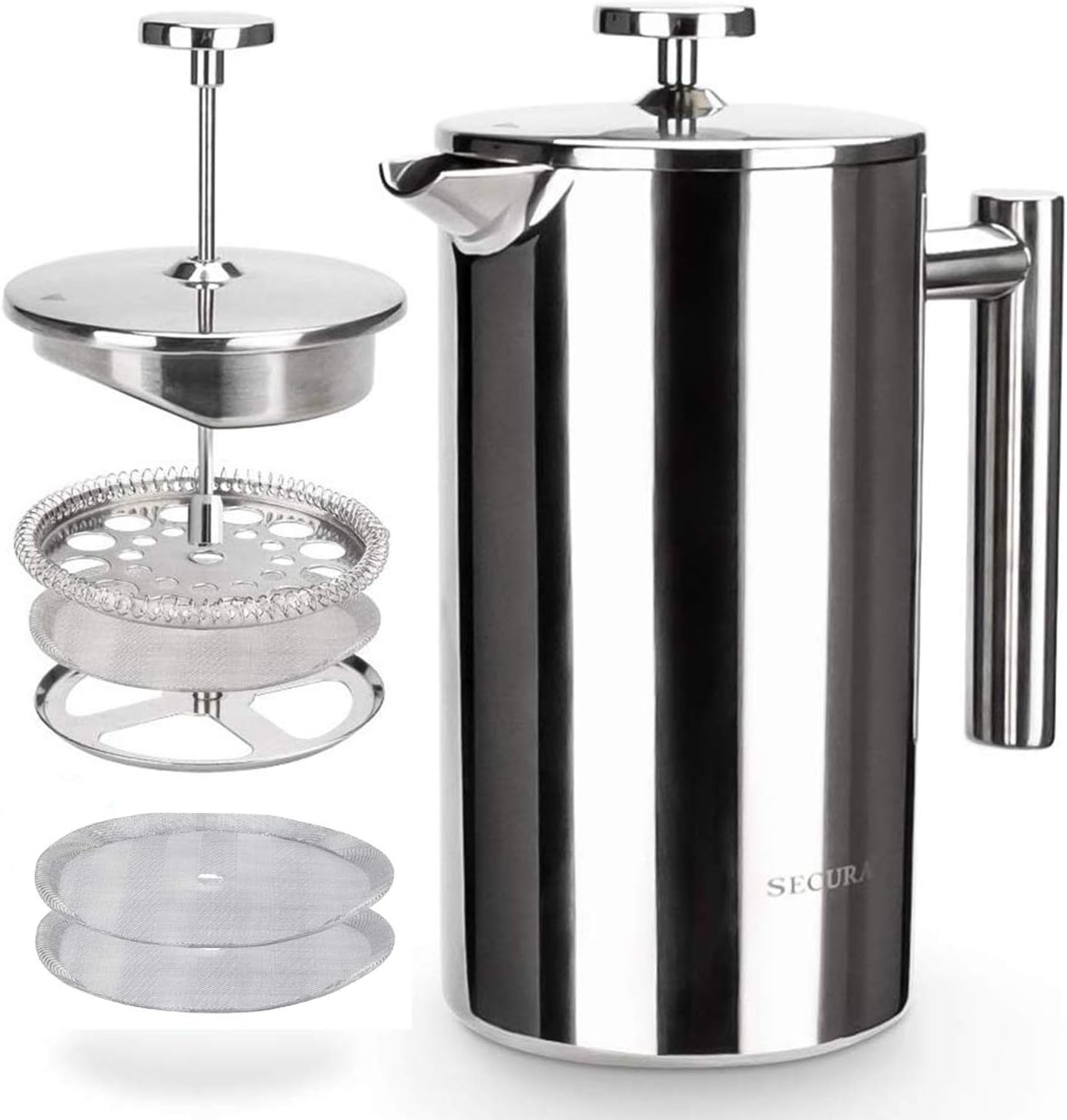
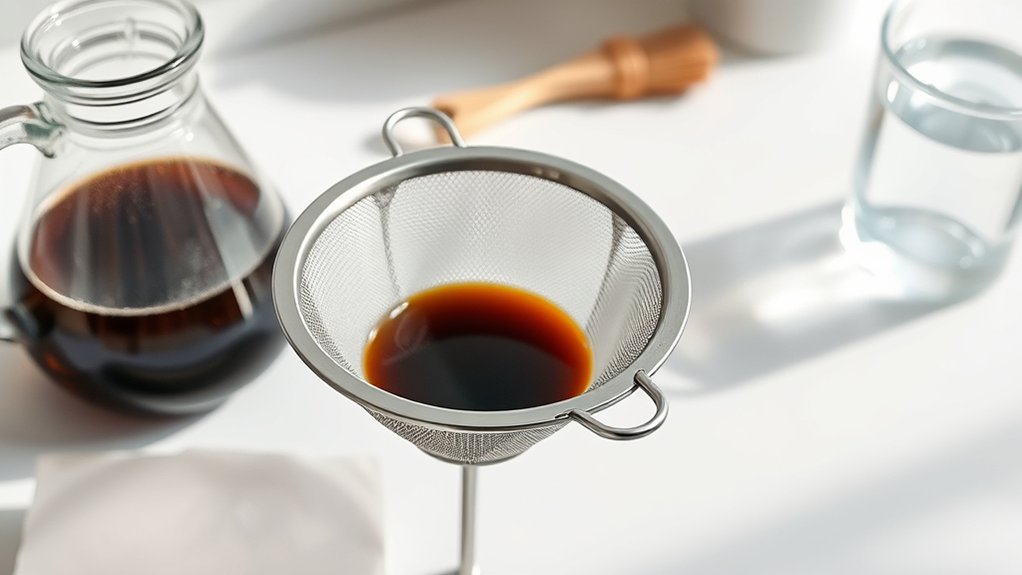
A permanent coffee filter is a reusable filter that replaces disposable paper filters in compatible drip machines, pour-over drippers, and single-serve brewers. Depending on the design, it may use stainless-steel mesh, gold-tone metal mesh, nylon weave, durable BPA-free polymer frames, or a combination of materials. Permanent filters eliminate single-use paper waste and let micro-fines and natural aromatic coffee oils pass into the cup, delivering a richer, fuller-bodied brew. Keeping one in peak condition requires a consistent habit: empty the grounds into compost or trash, wash with warm water and mild soap, rinse thoroughly, and allow the mesh to air-dry completely.
Quick Answer
A permanent coffee filter is a reusable mesh basket that replaces paper filters. To clean it, dump the spent grounds into the trash or compost, rinse both sides of the mesh with warm water, and gently wash with mild dish soap using a soft brush. Air-dry completely before reassembling. Only use dishwashers, vinegar soaks, or baking soda if authorized by the manufacturer.
Key Takeaways
- Permanent coffee filters are built for years of repeated brewing, but materials (stainless steel, gold-tone plating, nylon) dictate specific care requirements.
- Routine cleaning takes under 3 minutes: discard grounds into trash/compost (never rinse bulk grounds down the sink), wash with mild dish soap, and air-dry.
- Deep cleaning is condition-based—perform it when you observe slow drainage, persistent stale odors, or oily surface buildup.
- Never expose reusable filters to open flames, propane torches, or stovetop burners, which melt solder, scorch coatings, and ruin mesh integrity.
- Metal mesh allows diterpenes (cafestol and kahweol) and coffee oils into the brew, creating a heavier body compared to paper filtration.
- Replace your filter immediately if the mesh tears, the frame warps, seams detach, or water flow remains permanently restricted after deep cleaning.
At a Glance
| Time Required | 1–3 minutes for daily maintenance; 15–30 minutes for an approved deep-soak |
| Difficulty | Easy (beginner-friendly) |
| Tools Needed | Warm tap water, mild liquid dish soap, soft-bristle brush (or soft toothbrush), microfiber towel |
| Estimated Cost | $0 (uses basic household dishwashing supplies) |
Warning: Never attempt to burn out coffee residue with a propane torch, gas burner, lighter, or grill. Direct flame destroys micro-mesh weaves, melts plastic housing, burns food-grade adhesives, and releases toxic polymer fumes. Always allow hot filters to cool before handling.
What Is a Permanent Coffee Filter?
A permanent coffee filter is an engineered, washable filtration basket crafted to withstand hundreds of brewing cycles, eliminating the recurring need for disposable paper filters. They are produced in several standardized formats, including flat-bottom baskets, cone filters (#2 and #4 sizes), pour-over mesh cones, and refillable single-serve pods.
The term permanent denotes long-term reusability rather than an infinite lifespan. Construction styles differ widely across brands:
- Stainless Steel Mesh: Uses woven food-grade (often 304 or 316) stainless steel wire. Exceptionally durable, resistant to rust, and able to withstand thorough scrubbing.
- Gold-Tone Metal: Made from surgical-grade stainless steel electroplated with a gold-tone titanium coating, such as the Cuisinart Gold-Tone permanent coffee filter. The inert surface resists chemical oxidation and prevents metallic taste transfer.
- Nylon / Synthetic Mesh: Lightweight polymer mesh suspended in a plastic frame. Cost-effective and flexible, though more vulnerable to accidental tears and heat fatigue over time.
- Hybrid Single-Serve Pods: Reusable plastic capsules with fine side/bottom metal mesh screens, such as the Keurig My K-Cup system.
Because micro-mesh pore openings are larger than the dense cellulose fiber matrix of paper filters, permanent filters allow insoluble micro-fines and natural coffee oils (lipids) to flow into the carafe. This yields a full-bodied cup with a velvety mouthfeel, similar to a French press, along with a small amount of fine sediment at the base of your mug.
Note: Always confirm exact brewer compatibility prior to purchase. Even within the same brand, basket dimensions, rim flanges, and base shut-off valve activators vary between brewer models.
How to Clean a Permanent Coffee Filter Effectively

Establishing an efficient daily cleaning routine prevents coffee oils from oxidizing into bitter, rancid residues and keeps microscopic mesh openings free of fine silt. Official instructions, including Keurig’s reusable filter guidelines, prioritize mild soap and water washing after every brew cycle.
- Allow the filter to cool: Spent grounds and metal filter walls retain high heat immediately after brewing. Wait 5 to 10 minutes to avoid burns.
- Dispose of grounds properly: Tap the filter firmly over a trash can, organic compost bin, or garden bed. Never dump whole pucks of coffee grounds down the kitchen sink drain, as non-soluble grounds readily bind with kitchen grease to create severe plumbing blockages.
- Rinsing from the outside in: Hold the filter upside down under warm running water. Direct the stream against the outside of the mesh to push trapped coffee particles out rather than wedging them deeper into the pores.
- Wash with mild detergent: Apply a drop of mild liquid dish soap to a soft-bristle brush, soft sponge, or clean toothbrush. Gently brush the mesh inside and outside along the seam lines using light circular motions.
- Rinse thoroughly: Flush the filter under running warm water until all soap bubbles and dislodged particles are completely eliminated.
- Air-dry completely: Shake off excess moisture and place the filter upside down on a drying rack or clean mat where air can circulate through the mesh.
Pro Tip: Rinse the filter immediately after it cools. If wet grounds dry inside the basket, the natural coffee oils harden like varnish, locking micro-particles into the mesh openings.
Benefits of Using a Permanent Coffee Filter
Switching from single-use paper filters to a permanent reusable filter provides notable advantages in waste reduction, continuous cost savings, and cup profile customization.
| Benefit Category | Practical Advantage |
|---|---|
| Zero Single-Use Waste | Keeps hundreds of bleached/unbleached paper filters out of municipal waste streams annually |
| Cost Economy | One-time purchase eliminates recurring monthly filter shopping |
| Full-Bodied Cup Profile | Allows complex aromatic lipids and micro-fines into the brew, creating a richer texture |
| Never Run Out | Eliminates the morning frustration of discovering an empty paper filter box |
| Structural Reliability | Rigid baskets eliminate paper filter blowouts, basket collapses, and dry-ground overflow |
When considering cup texture and health, understanding diterpene compounds is important. Coffee contains naturally occurring lipid compounds, primarily cafestol and kahweol. According to research from Harvard T.H. Chan School of Public Health, cafestol acts as a potent stimulator of serum LDL cholesterol. Tight cellulose paper filters trap nearly all of these oily diterpenes, whereas metal mesh filters permit a portion of them to pass into the carafe.
Studies published in medical literature indicate that metal-mesh brewing yields diterpene concentrations lower than unfiltered French-press or Turkish coffee, but measurably higher than fine paper filters. Those monitoring their cardiovascular profiles or managing elevated LDL cholesterol may want to consult their physician regarding paper versus metal filtration.
Note: If you are on a cholesterol-lowering regimen or have been clinically advised to restrict dietary cafestol, paper-filtered drip coffee is generally recommended over metal mesh filters.
Daily Maintenance Tips for Your Permanent Coffee Filter
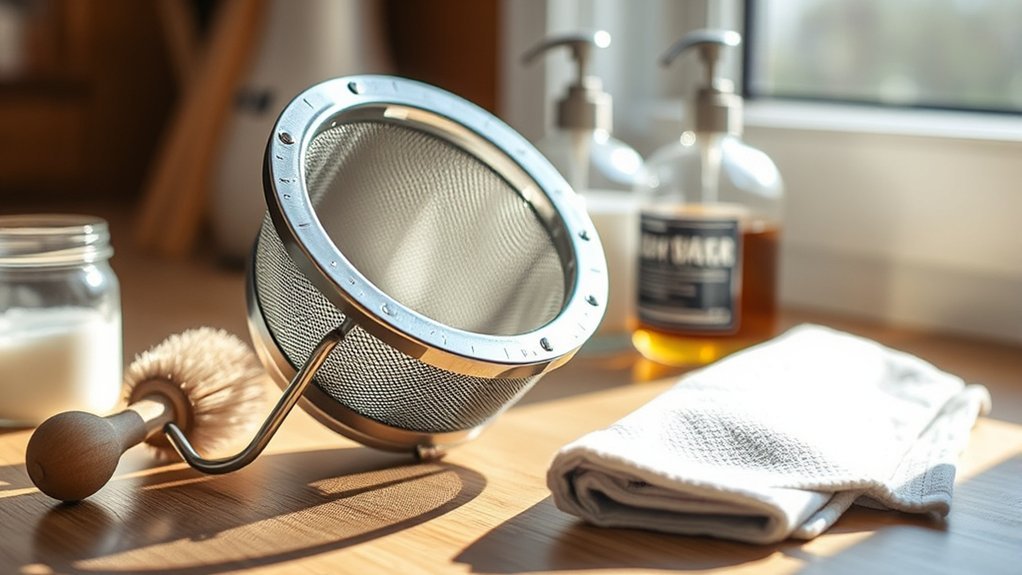
Daily maintenance protects the fine micro-pores from scaling and clogging while extending the physical lifespan of the filter assembly.
Daily Rinsing Routine
After knocking out the bulk coffee grounds into the compost bin, place a fine mesh drain catcher in your sink to trap residual grounds during the rinse. Run warm tap water through the bottom and sides of the basket to dislodge remaining silt.
Never let wet coffee grounds sit inside the brewer basket all day. Damp grounds cultivate mold in warm brewer housings and accelerate the oxidation of stale oils onto the filter surface.
In accordance with sanitation standards such as the FDA Food Code for commercial food-contact surfaces, allow utensils to drain and air-dry thoroughly rather than sealing them in airtight cupboards while damp.
Gentle Scrubbing Techniques
When coffee oils create a slick, water-repellent sheen across the mesh, water alone is insufficient. Use a non-abrasive nylon dish brush or soft toothbrush with mild, fragrance-free dish soap.
Never use steel wool, copper scouring pads, abrasive scouring powders, or metal cutlery to dislodge grounds. Even minor abrasions can tear delicate wire meshes, widen micron pore spacing, or strip gold-tone protective coatings.
Proper Drying Methods
Rest the cleaned filter upside down on an open dish rack or clean kitchen towel. Ensuring proper air circulation prevents bacterial growth, mildew, and musty odors from developing inside the basket.
If towel drying, pat the exterior frame gently with a lint-free cloth. Do not rub vigorously across the mesh surface, which can snag mesh wires and leave lint fibers embedded in the filter openings.
Deep Cleaning Your Permanent Coffee Filter

Over weeks of brewing, coffee oils penetrate the microscopic pores of the mesh and cross-link into a stubborn film. Mineral deposits (scale) from hard water can also narrow pore openings, resulting in slow drawdown times and overflowing filter baskets.
| Deep Cleaning Method | Target Buildup | Application Limits & Caution |
|---|---|---|
| Warm Water + Dish Soap Soak | Routine oil accumulation | Safe for all filter types (stainless, gold-tone, nylon, plastic) |
| Top-Rack Dishwasher Cycle | Heavy grease / oil film | Only if certified dishwasher-safe by manufacturer; keep away from bottom heating element |
| 1:1 White Vinegar & Water Soak | Hard water scale / mineral crust | Safe for uncoated stainless steel; check manual for gold-tone plating or delicate plastics |
| Baking Soda Paste (Mild) | Stale odor & stubborn organic stains | Rub gently with fingers or soft cloth; do not scrub abrasively on plated surfaces |
| Specialized Coffee Detergent (e.g., Cafiza) | Polymerized coffee oils | Follow label dilution precisely; confirm metal compatibility before soaking |
To perform a mineral-dissolving soak on a compatible, uncoated stainless-steel filter:
- Mix a solution of 1 part distilled white vinegar to 1 part warm water in a clean bowl.
- Submerge the filter completely and let it soak for 20 to 30 minutes to dissolve mineral scale and loosen hardened oils.
- Remove the filter and scrub gently with a soft brush, paying special attention to bottom seams.
- Rinse thoroughly under running water for 60 seconds to eliminate all residual vinegar scent.
Preventing Clogs in Your Permanent Coffee Filter
Slow drainage and filter basket overflows are usually caused by an incorrect grind size, overfilling, or compacted coffee beds.
- Calibrate your grind size: Use a medium to medium-coarse grind for standard flat-bottom and cone drip baskets. Fine grinds (such as espresso grinds) will wedge into micro-mesh openings, blocking water flow and causing the brew basket to overflow.
- Do not overfill: Adhere strictly to the brewer manufacturer’s maximum fill line. Overfilled baskets cause grounds to swell against the showerhead, forcing silt into the bypass channels.
- Avoid fine dust from blade grinders: Inconsistent blade grinders produce excessive coffee “fines” (micro-dust) that plug mesh screens. A quality burr grinder ensures uniform particle sizes.
- Never tamp drip grounds: Permanent drip filters rely on gravity percolation. Tamping or compacting grounds creates an impermeable barrier that forces water over the basket rim.
Troubleshooting Common Permanent Coffee Filter Issues
When brewing issues arise, diagnose the root cause with the reference guide below.
| Symptom | Probable Cause | Corrective Action |
|---|---|---|
| Water pools and drains very slowly | Grind is too fine, pore scaling, or oil buildup | Coarsen your coffee grind; perform a 20-minute vinegar or dish soap soak |
| Excessive grounds in the coffee mug | Damaged/torn mesh or improper basket seating | Inspect mesh under bright light for tears; ensure filter is seated evenly in holder |
| Coffee tastes bitter or rancid | Stale coffee oil film remaining on mesh | Wash with warm water and grease-cutting dish soap; use a soft brush along seams |
| Persistent foul or sour odor | Bacterial growth from storing while damp | Wash with hot soapy water, rinse thoroughly, and allow to air-dry in direct sunlight |
| Filter basket overflows during brew | Basket overfilled or drip-stop valve clogged | Reduce ground dose; clean the spring-loaded drip-stop valve underneath the basket |
When to Replace a Permanent Coffee Filter
While permanent filters provide years of dependable service, they eventually suffer physical wear and fatigue. Replace your filter if you notice:
- Visible punctures, splits, or frayed wires anywhere in the mesh screen.
- Separation of the mesh screen from its outer plastic or metal structural frame.
- Warped, cracked, or heat-distorted plastic rims that prevent the filter from sealing or fitting properly into the brewer.
- Peeling, flaking, or deterioration of gold-tone coatings.
- Persistent clogging that cannot be cleared by soap, vinegar, or specialized coffee detergent soaks.
Permanent vs. Disposable Coffee Filters: What’s Best for You?
Choosing between permanent and paper filters depends on your preference for cup clarity, cleanup convenience, environmental priorities, and health considerations.
| Comparison Metric | Permanent Reusable Filter | Disposable Paper Filter |
|---|---|---|
| Cup Clarity & Body | Full-bodied, robust texture; small amount of micro-sediment | Clean, crisp cup; high clarity with zero sediment |
| Oil & Diterpene Retention | Allows natural aromatic oils and diterpenes (cafestol) to pass | Traps almost all oils, cafestol, and lipid compounds |
| Daily Cleanup | Requires dumping grounds, hand washing, and drying | Quick and convenient; throw filter and grounds directly into compost/trash |
| Long-Term Expense | One-time initial purchase ($10–$30) lasts multiple years | Recurring ongoing expense ($5–$12 per pack of 100) |
| Environmental Footprint | Low recurring waste; requires small amount of water to clean | Generates daily single-use solid waste; compostable if unbleached |
Cost Effectiveness Comparison
A quality permanent coffee filter typically costs between $10 and $30 upfront. Premium specialty paper filters cost roughly $0.05 to $0.12 per filter. For a household brewing two pots daily, paper filters cost approximately $36 to $85 per year. A permanent filter generally pays for itself within 3 to 8 months of daily use.
Environmental Impact Assessment
Using a permanent filter prevents hundreds of paper filters from entering landfills each year. While paper filters are biodegradable (and compostable when unbleached), their production involves timber harvesting, paper milling, chemical bleaching (in white filters), packaging, and transportation emissions. Maximizing the lifespan of a single reusable filter significantly reduces your overall consumer footprint.
Eco-Friendly Practices for Permanent Coffee Filter Use
To minimize your environmental footprint while maintaining your reusable filter:
- Compost spent grounds: Add nitrogen-rich coffee grounds to garden soil, compost tumblers, or municipal green bins instead of the trash.
- Conserve rinse water: Use a quick, targeted warm water spray or a bowl dip to rinse away grounds rather than running the tap continuously for minutes.
- Use biodegradable dish soap: Choose plant-based, fragrance-free dish soaps that break down harmlessly in greywater systems.
- Avoid premature replacement: Deep-clean stained mesh rather than replacing a structurally sound filter for purely cosmetic reasons.
Filter design fundamentally shapes extraction: metal mesh delivers aromatic oils and robust body, while paper filtration traps lipid compounds to produce maximum cup clarity.
Best Cleaning Solutions for Permanent Coffee Filters
Choosing the correct cleaning agent ensures thorough residue removal without degrading the mesh or leaving chemical residues:
- Liquid Dish Soap (Best Everyday Choice): Standard degreasing dish soap cuts coffee oils effectively while being completely safe for all metal, nylon, and polymer surfaces.
- Distilled White Vinegar (Best for Scale): A 50/50 warm water and vinegar solution dissolves hard-water calcium deposits. Always rinse thoroughly afterward to prevent acidic flavors in subsequent brews.
- Baking Soda Slurry (Best for Deodorizing): A gentle paste of sodium bicarbonate and water neutralizes stale odors and lifts stubborn surface stains without harsh chemical fumes.
- Commercial Espresso Cleaners (Best for Heavy Buildup): Cleaners such as Cafiza or Biocaf dissolve polymerized coffee oils on uncoated stainless steel components. Use only as directed on the label.
Enhancing Your Coffee Experience With a Clean Permanent Coffee Filter
A clean permanent filter guarantees proper water flow, consistent extraction times, and pure coffee flavor.
Flavor Improvement Techniques
Coffee oils oxidize rapidly when exposed to air. When hot water washes over old oils trapped in dirty mesh, it extracts rancid, astringent compounds directly into your fresh brew. Daily washing with mild dish soap keeps your extraction clean and true to the coffee bean’s flavor profile.
Regular Maintenance Importance
Follow a condition-based maintenance schedule to maintain optimal brewer performance:
| Maintenance Step | Frequency | Primary Purpose |
|---|---|---|
| Empty grounds & warm rinse | After every brew cycle | Prevents grounds from drying and hardening inside pores |
| Hand wash with dish soap | Daily / after final brew of the day | Removes fresh oily lipid films before they oxidize |
| Vinegar soak or deep degrease | Monthly (or when drainage slows) | Eliminates mineral scale and cross-linked oil varnish |
| Structural inspection | Monthly | Checks for mesh tears, seam splits, and frame warpage |
Brewing Efficiency Enhancement
Clean mesh openings allow water to flow through the coffee bed at the designed percolation rate. If water drains too slowly due to clogged pores, over-extraction occurs, making the coffee bitter and harsh. Maintaining open, clean mesh ensures balanced contact time and consistent flavor in every pot.
Frequently Asked Questions
Can I use a permanent coffee filter for cold brew?
Yes. A permanent filter works well for straining cold brew concentrate. Because cold brew steeps for 12 to 24 hours, use a coarse grind to prevent excessive fine sediment from passing through the mesh into your finished concentrate.
How long does a permanent coffee filter last?
A high-quality stainless-steel or gold-tone filter typically lasts 3 to 7 years with gentle cleaning and proper care. Nylon mesh filters generally last 1 to 3 years before developing mesh wear or frame fatigue.
Are permanent coffee filters dishwasher safe?
Many are top-rack dishwasher safe, including the Keurig My K-Cup. However, always consult your manufacturer manual. Avoid bottom-rack placement where heating elements can warp plastic frames or degrade delicate mesh adhesives.
Do permanent coffee filters affect coffee flavor?
Yes. Reusable metal filters allow aromatic coffee oils and micro-fines to enter your cup, producing a richer flavor and heavier body. However, if not washed with soap regularly, residual oils can turn rancid and cause a stale, bitter taste.
Can I use a permanent coffee filter in any coffee maker?
No. Permanent filters must match the specific size and geometry of your brewer’s basket (such as #4 cone, flat-bottom 8–12 cup basket, or brand-specific single-serve pods). An incorrect filter can cause bypass, brew basket overflow, or machine leaks.
Can I clean a permanent coffee filter with vinegar?
Yes, a diluted 1:1 mixture of white vinegar and warm water is effective for removing mineral scale and hard water deposits on stainless steel filters. Check the manufacturer’s care guide before soaking gold-tone or nylon filters in acidic solutions.
Why is my permanent coffee filter draining slowly?
Slow drainage is usually caused by coffee ground too finely, an overfilled basket, or micro-pores clogged by mineral scale and hardened coffee oils. Switch to a medium-coarse grind and deep-clean the filter with warm soapy water or a vinegar soak.
When should I replace a reusable coffee filter?
Replace your filter whenever the mesh screen is torn or punctured, the plastic frame has warped or cracked, the seams separate, or routine deep cleaning no longer restores normal water flow.
Sources
- Keurig — My K-Cup Universal Reusable Coffee Filter — Official manufacturer specifications, hand-washing directions, and dishwasher safety guidelines.
- U.S. Food and Drug Administration — Food Code 2022 — Commercial hygiene standards and air-drying protocols for food-contact equipment.
- Harvard T.H. Chan School of Public Health — Coffee and Health — Scientific overview of coffee diterpenes (cafestol/kahweol), cholesterol impacts, and filtration differences.
- PubMed — Cafestol and Kahweol Concentrations in Machine Coffee Compared With Conventional Brewing Methods — Clinical research examining diterpene concentrations across varied extraction systems.
- PubMed Central — Cholesterol-Raising Diterpenes in Common Coffee Brewing Methods — Comparative data on diterpene transmission across paper, metal mesh, and boiled brewing techniques.
- PubMed — Is Cafestol Retained on the Paper Filter in the Preparation of Filter Coffee? — Peer-reviewed investigation into particle retention and lipid filtration in paper filters.
Conclusion
A permanent coffee filter is an economical and environmentally responsible upgrade that yields a full-bodied, aromatic cup of coffee. Protecting your investment comes down to regular care: empty used grounds into the trash or compost to protect your plumbing, wash the mesh gently with warm soapy water after each use, and allow it to air-dry completely. Reserve vinegar soaks and dishwasher cycles for occasional deep cleaning as permitted by the manufacturer.
Avoid harsh shortcuts like open flames or abrasive scouring pads that permanently ruin delicate wire weaves. By maintaining clean micro-pores and monitoring your grind size, your reusable filter will deliver consistent, delicious coffee for years to come.