If your baby has diarrhea after starting solids, focus on hydration and soothing foods. Offer small sips of breast milk or formula, avoiding sugary drinks that can worsen symptoms. Introduce gentle foods like mashed carrots and sweet potatoes, along with plain yogurt for gut health. Watch for signs of dehydration and other concerning symptoms. Understanding what to feed your baby during this shift can help ease discomfort, and there’s more to learn to support their digestion effectively.
Key Takeaways
- Introduce gentle foods like steamed carrots and sweet potatoes to soothe the digestive system during diarrhea.
- Offer plain shredded chicken or turkey for a gentle protein source while managing diarrhea.
- Include grass-fed yogurt with probiotics to help restore a healthy gut bacteria balance.
- Ensure hydration with breast milk or formula, avoiding sugary drinks that can worsen diarrhea.
- Consult a pediatrician if diarrhea persists beyond 24 hours or if dehydration signs appear.
Why Diarrhea Occurs After Starting Solids in Babies
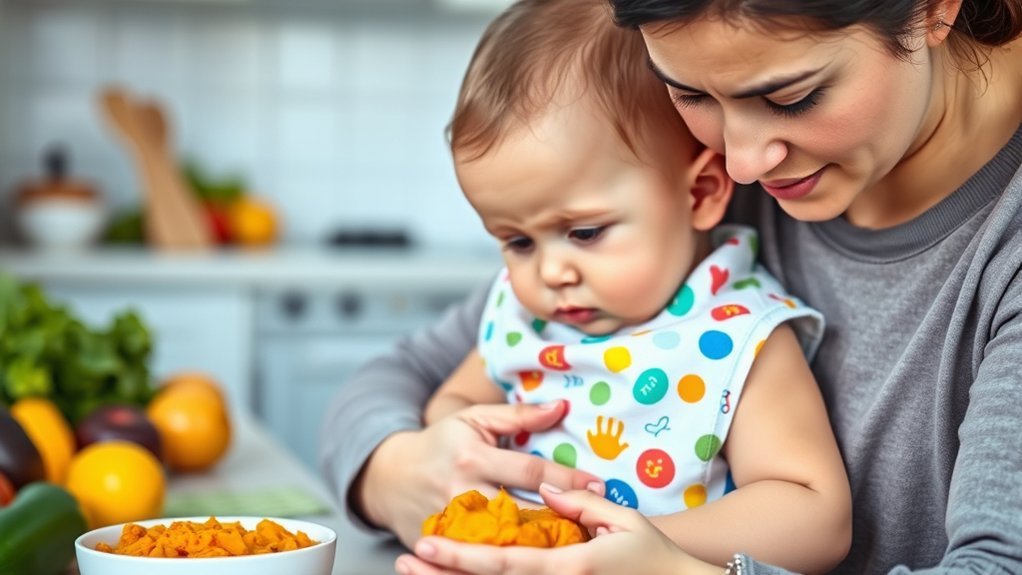
When you start introducing solids to your baby, you might notice some changes in their digestion, including diarrhea. This often happens as their immature digestive system undergoes a significant shift to process new foods and textures.
The introduction of fiber-rich solids can result in looser stools, as your baby’s gut learns to adapt. Some little ones may also have food sensitivities, reacting to specific items—especially acidic or sugary foods—leading to gastrointestinal upset.
It’s common for the frequency of bowel movements to increase during this alteration. While these changes can be concerning, they’re usually temporary.
Just keep an eye on hydration and consult your pediatrician if diarrhea persists or is accompanied by other worrying symptoms.
Recognizing the Signs of Diarrhea in Infants
As your baby starts exploring solid foods, it’s important to be aware of the signs of diarrhea, which can manifest in several ways.
Look for these diarrhea symptoms and changes in stool characteristics:
- Watery, loose stools occurring more than three times a day
- An upset stomach, fussiness, or changes in appetite
- Increased frequency of diaper changes
Keep an eye on the color and consistency of your baby’s stool, as shifts can indicate digestive issues or reactions to new foods.
While diarrhea often resolves within a few days, don’t hesitate to consult your pediatrician if symptoms persist or are accompanied by fever or vomiting.
If diarrhea continues or is paired with fever or vomiting, reach out to your pediatrician for guidance.
Being proactive can help ascertain your little one stays healthy and comfortable.
Ensure Proper Hydration for Your Baby

Keeping your baby properly hydrated is essential, especially during the change to solid foods. Breast milk or formula should remain the primary source of hydration during the first year.
Offer small, frequent sips of these fluids, particularly if diarrhea occurs. Monitor for signs of dehydration, like fewer wet diapers, dry mouth, or lethargy, and adjust feeding practices as needed.
Avoid sugary drinks and juices, since they can worsen diarrhea and lead to further dehydration. If diarrhea persists, consult your pediatrician for tailored hydration methods and fluid recommendations to restore balance.
Staying vigilant about your baby’s hydration will help support their health and well-being during this important change.
Choose Ideal Foods for Babies With Diarrhea
To support your baby during episodes of diarrhea, it’s crucial to choose the right foods that are gentle on their digestive system.
Focus on ideal food combinations that promote healing and comfort. Here are some soothing meal options to take into account:
- Steamed or mashed carrots and sweet potatoes to soothe their tummy.
- Plain shredded chicken or turkey for gentle protein support.
- Grass-fed yogurt with probiotics to restore gut bacteria balance.
Continue offering breast milk or formula to keep your baby hydrated and nourished.
Remember, introducing these soft foods after hydration stabilizes can make a significant difference.
What to Avoid Feeding Your Baby During Diarrhea

When your baby is experiencing diarrhea, knowing what foods to avoid is just as important as selecting the right ones.
Steering clear of sugary drinks and juices is essential, as they can worsen diarrhea and lead to dehydration.
Avoid sugary drinks and juices during diarrhea, as they can exacerbate symptoms and increase the risk of dehydration.
Avoid fried or greasy foods, which are tough on your baby’s digestive enzymes and can irritate their stomach.
Additionally, limit grass-fed dairy products—except yogurt—as they may cause discomfort.
High-fiber foods should also be minimized, as they can increase stool frequency and aggravate symptoms.
Finally, stay away from spicy or heavily seasoned foods, as they can further irritate a sensitive stomach.
Keep an Eye on Your Baby’s Symptoms and Signs of Dehydration
As you navigate the challenges of introducing solids to your baby, it’s essential to stay vigilant for signs of dehydration. Keeping an eye on your little one can make all the difference in their comfort and health.
Remember these key indicators for dehydration prevention:
- Fewer than six wet diapers in 24 hours
- Dry mouth or skin that doesn’t bounce back quickly
- Decreased appetite or refusal to drink fluids
Regular hydration monitoring is vital. If you notice persistent diarrhea lasting more than 24 hours, it’s time to seek help.
Always consult your pediatrician if your baby experiences high fever, severe abdominal pain, or blood in stools. You’re not alone in this; trust your instincts and prioritize your baby’s well-being.
When to Consult a Pediatrician About Diarrhea?
How do you know when it’s time to reach out to your pediatrician about your baby’s diarrhea? If your baby’s diarrhea lasts more than 24 hours, it’s essential to consult a pediatrician to rule out potential diarrhea causes. Look for signs of dehydration, like fewer wet diapers or lethargy, and seek help if diarrhea is accompanied by vomiting, fever, or unusual tiredness. If you notice blood or mucus in the stool, contact a pediatrician immediately. Significant changes in bowel habits after introducing solids could indicate an intolerance or allergy, so don’t hesitate to follow pediatrician guidelines.
| Symptoms to Watch For | Action Needed | Urgency |
|---|---|---|
| Diarrhea lasts over 24 hours | Consult pediatrician | High |
| Signs of dehydration | Seek medical advice | High |
| Blood or mucus in stool | Contact healthcare provider immediately | Critical |
Tips for a Smooth Transition to Solids and Supporting Digestive Health
Changing your baby to solid foods can be an exciting yet challenging journey, and it’s essential to support their digestive health during this time.
Here are some effective shift strategies to ease the process:
- Gradually introduce soft, easy-to-digest food textures like pureed fruits and steamed vegetables.
- Monitor your baby’s reactions by adding new foods one at a time, waiting 2-3 days to spot any issues.
- Keep hydration a priority with plenty of breast milk or formula, especially if diarrhea occurs.
Frequently Asked Questions
Can Teething Cause Diarrhea in Babies Starting Solids?
Yes, teething symptoms can cause digestive changes, leading to diarrhea in babies starting solids. While it’s common, keep an eye on hydration and consult your pediatrician if diarrhea persists or worsens.
How Long Does Diarrhea Typically Last After Starting Solids?
Diarrhea duration after starting solids can vary, typically lasting a few days to a week. During this solid food change, monitor your baby’s hydration and consult a pediatrician if symptoms persist or worsen.
Are There Any Home Remedies for Baby Diarrhea?
You can try offering probiotics for their gut health and guarantee they stay hydrated. Think of it as nurturing a fragile plant; with the right care, it’ll flourish again. Keep love and patience at the forefront.
Can I Mix New Foods With Familiar Ones During the Transition?
Yes, you can mix new foods with familiar ones. This helps ease your baby’s digestive reactions. Introduce food combinations gradually, watching for any signs of discomfort or allergies, ensuring a smoother progression to solids.
Is It Normal for Babies to Have More Gas After Starting Solids?
Yes, it’s normal for babies to experience more gas after starting solids due to digestive changes. For gas relief, try gentle tummy massages or bicycle legs, which can help ease discomfort and support their digestion.
Conclusion
In summary, while baby diarrhea after starting solids can feel like a stormy sea, it’s often temporary and manageable. By choosing the right foods and ensuring hydration, you can help your little one sail smoothly through this shift. Keep an eye on their symptoms and know when to seek help from a pediatrician. With a little patience and care, you’ll both emerge from this phase with stronger digestive health and a happier baby!