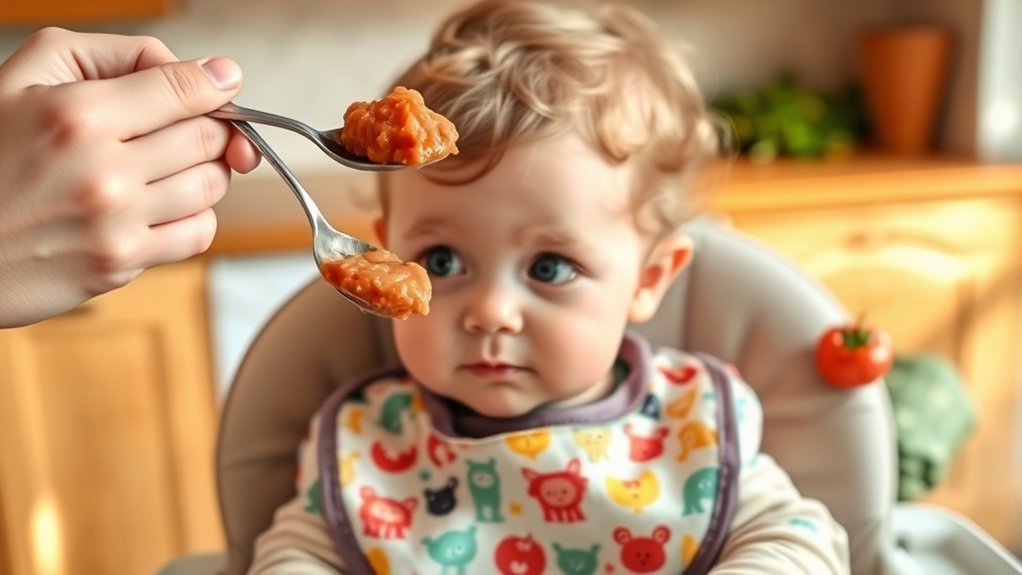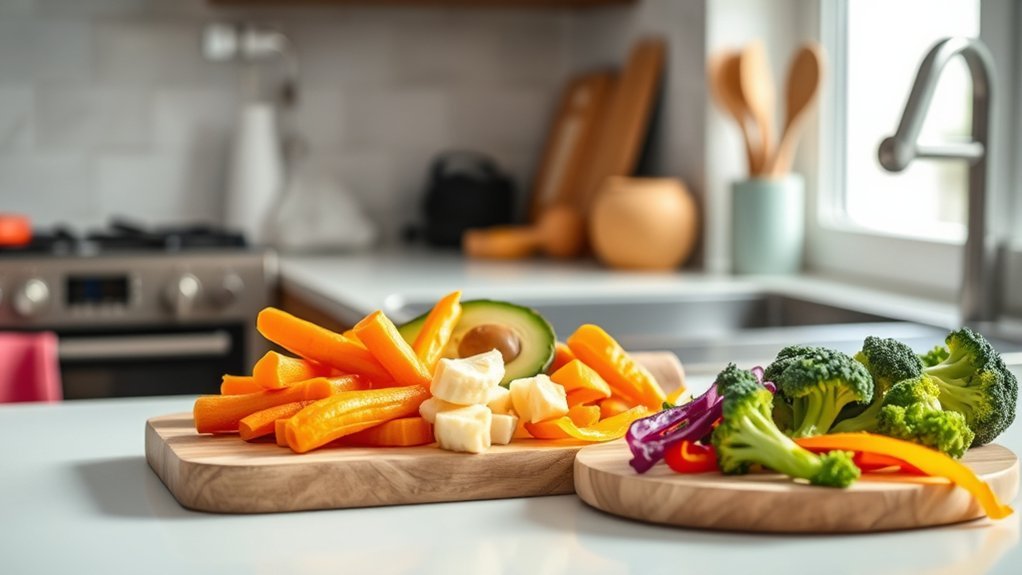
Baby-led weaning can help your baby practice self-feeding while joining family meals, but safety and nutrition matter more than following a strict feeding method. Start at about 6 months when your baby shows developmental readiness, use soft foods in safe shapes, offer iron-rich choices often, and keep breast milk or iron-fortified formula as an important part of the diet.
Quick Answer
To start baby-led weaning, wait until your baby is about 6 months old and can sit upright with steady head control, reach for food, and swallow it. Offer soft finger foods, include an iron-rich choice at meals, supervise closely, introduce allergens in safe forms, and avoid common choking hazards.
Key Takeaways
- Begin at about 6 months only when your baby shows several readiness signs, not just interest in your plate.
- Serve food that is soft enough to mash between your fingers and shaped for your baby’s current grasp.
- Include iron-rich foods such as tender meat, fully cooked egg, mashed beans, tofu, fish, or iron-fortified cereal.
- Introduce common allergens in small, age-appropriate amounts and know the signs of a serious allergic reaction.
- Keep your baby upright and supervised throughout every meal, and learn infant choking first aid and CPR.
At a Glance
| Time Required | About 10–20 minutes to prepare and offer a first meal; skill-building continues over months |
| Difficulty | Moderate; food preparation and constant supervision are essential |
| Tools Needed | Stable high chair with harness, bib, open cup, child-safe spoon, plate or tray, and basic cooking tools |
| Cost | Usually low when you adapt unsalted family foods; equipment costs vary |
Medical note: This guide is general education, not individualized medical advice. Ask your baby’s pediatrician or feeding specialist before starting if your baby was born prematurely, has poor growth, severe eczema, known food allergy, low muscle tone, oral-motor problems, or trouble swallowing.
How to Start Baby-Led Weaning: A Step-by-Step Guide
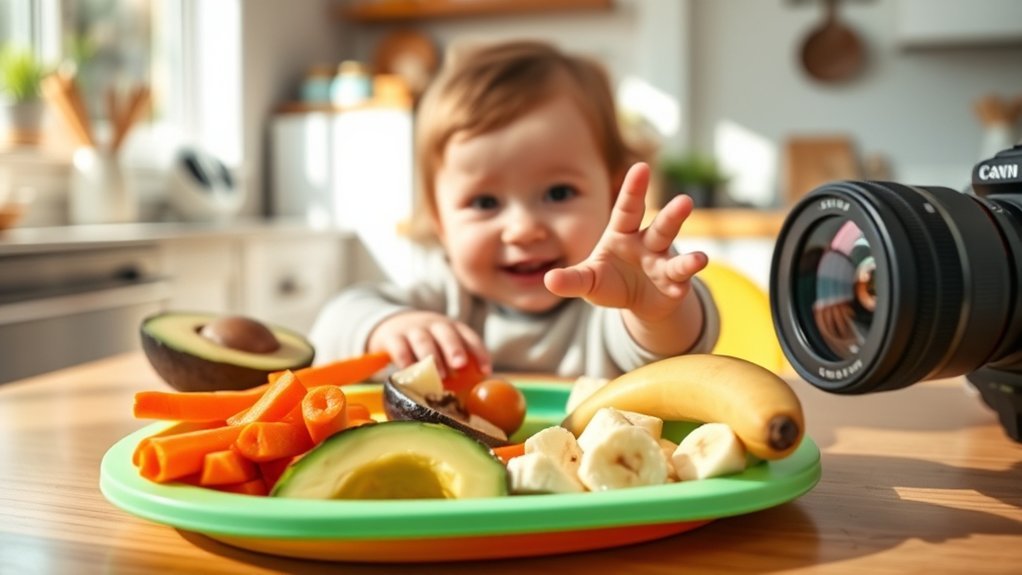
Baby-led weaning, often shortened to BLW, means allowing a developmentally ready baby to pick up and self-feed suitable foods instead of relying only on spoon-fed purées. It does not have to be all or nothing. The American Academy of Pediatrics notes that families can combine finger foods and spoon-feeding while still supporting independent eating.
- Confirm readiness. Most babies begin complementary foods at about 6 months. Look for stable head control, the ability to sit upright with support, reaching and grasping, bringing objects to the mouth, and swallowing food instead of pushing it out.
- Use a safe seat. Place your baby upright in a stable high chair, fasten the harness, and keep feet supported when possible. Do not feed while your baby is reclining, crawling, walking, riding in a stroller, or sitting in a moving car.
- Choose a calm time. Offer food when your baby is awake and relaxed—not exhausted, frantic with hunger, or completely full. Continue breast milk or iron-fortified formula on the usual schedule.
- Start with a small variety. Offer one or two soft pieces at first. Include an iron-rich food, an energy-rich food, and a fruit or vegetable when practical.
- Let your baby lead the eating. Put food within reach and allow your baby to pick it up. Do not push food into the mouth, scrape food off the spoon onto the tongue, or pressure your baby to finish.
- Watch continuously. Stay within arm’s reach and pay attention throughout the meal. Learn the difference between gagging and choking before the first meal.
- Build gradually. Expect licking, squishing, dropping, and small tastes at first. Increase variety and texture as your baby’s skills improve.
Baby-led weaning is a feeding style, not a test. A combination of safe finger foods, mashed foods, and responsive spoon-feeding can work well.

Power your essentials anywhere with a 999Wh pure sine wave power station delivering up to 1000W continuous with 2000W surge. It supports fast charging via USB-C PD 60W and USB-A QC 18W, plus simultaneous output for multiple devices through AC, USB, wireless, and car/DC ports. Recharge using AC, car, or solar with a built-in MPPT controller and dual cooling fans, while the upgraded battery management system protects against surges, short circuits, and overheating.

THOUGHTFULLY DESIGNED: The ezpz food cutters make baby-led weaning food prep ezpz! The cutters assist with preparing foods in two essential shapes: finger-length strips and bite-sized cubes.

Signs Your Baby Is Ready for Baby-Led Weaning
The CDC recommends starting solid foods at about 6 months and not before 4 months. Age alone is not enough. Look for several developmental signs together:
- Your baby can sit upright alone or with support and maintain a steady head and neck position.
- Your baby reaches for objects, grasps them, and brings them to the mouth.
- Your baby opens the mouth for food and can move food toward the back of the mouth.
- Your baby swallows food instead of automatically pushing it back out with the tongue.
- Your baby remains alert and coordinated during the meal.
Interest in your meal, reaching for your plate, or becoming fussy when others eat can happen before a baby has the oral and postural skills needed for solids. Treat those behaviors as interest—not proof of readiness.
Teeth are not required. Babies can mash properly softened foods with their gums. However, they still need enough head, trunk, hand, and swallowing control to manage food safely.
Pro Tip: Take a short video of your baby’s seated posture before the first meal and review it from the side. The head should stay centered and upright rather than tipping forward, backward, or to one side.
Essential First Foods for Baby-Led Weaning Beginners
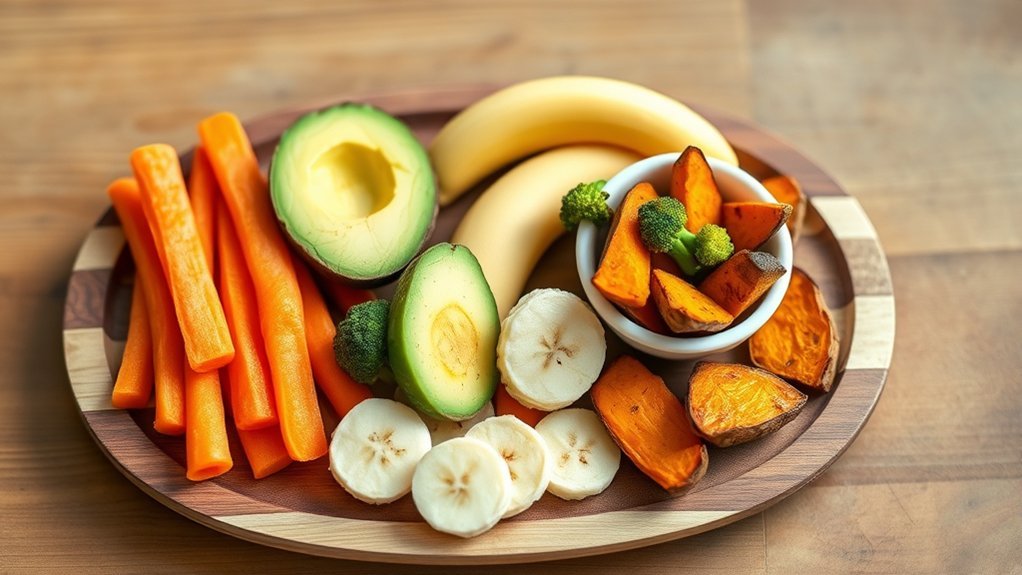
The best first foods are soft, nutrient-dense, and easy to hold. Fruits and vegetables are useful, but they should not crowd out foods that provide iron, zinc, fat, protein, and energy. Breastfed babies especially need dependable iron sources as complementary feeding begins.
Iron-Rich Food Options
Try to include an iron-rich choice at most meals. Suitable options include tender shredded beef or chicken, soft meat patties cut into strips, fully cooked egg, mashed beans or lentils, tofu strips, flaked low-mercury fish with every bone removed, and iron-fortified infant cereal offered on a preloaded spoon.
Pair plant-based iron foods with vitamin C-rich produce such as soft broccoli, ripe mango, strawberries, tomatoes, or sweet potato. Vitamin C can help the body absorb non-heme iron from plant foods.
Protein Sources to Consider
Protein foods add iron, zinc, fats, and other nutrients. Prepare them so they are moist, tender, and easy to break apart. Avoid dry cubes, rubbery chunks, bones, and tough skin.
| Protein Source | Safer Preparation | Nutrition Note |
|---|---|---|
| Chicken or turkey | Tender shredded meat or a moist strip that breaks apart easily | Protein, iron, and zinc |
| Egg | Fully cooked scrambled egg or omelet strips | Protein, fat, choline, and an allergen to introduce safely |
| Beans or lentils | Mashed, flattened, or formed into a soft patty | Plant protein, iron, and fiber |
| Fish | Well-cooked flakes, checked carefully for bones | Protein and healthy fats; choose lower-mercury fish |
| Tofu | Soft strips or crumbled pieces that hold together | Plant protein and iron |
| Plain full-fat yogurt | Preloaded spoon or a thin layer spread on soft food | Protein, fat, and calcium; use pasteurized yogurt without added sugar |
Soft Fruits and Vegetables
Ripe or cooked produce introduces many flavors, colors, and textures. It can also provide vitamin C, potassium, folate, fiber, and other nutrients.
- Ripe banana: Leave part of the peel on as a handle, or offer a thick spear that does not break into a round coin.
- Avocado: Offer a thick wedge. Roll it in finely ground oats if it is too slippery.
- Sweet potato: Steam or roast thick wedges until they mash easily between two fingers.
- Broccoli: Steam until the stalk and florets are very soft, then offer a large floret with the stalk as a handle.
- Pear or apple: Cook until soft. Do not offer hard raw slices to a beginner.
- Peach, mango, or melon: Use very ripe, soft strips with pits, seeds, and hard rind removed.
Energy-Rich Foods
Babies have small stomachs and high nutrient needs. Add energy with avocado, olive oil mixed into soft foods, full-fat plain yogurt, smooth thinned nut or seed butter after safe introduction, soft cheese in suitable forms, or mashed beans. Avoid making every meal only fruit and vegetables.
How to Prepare Essential First Foods for Baby-Led Weaning
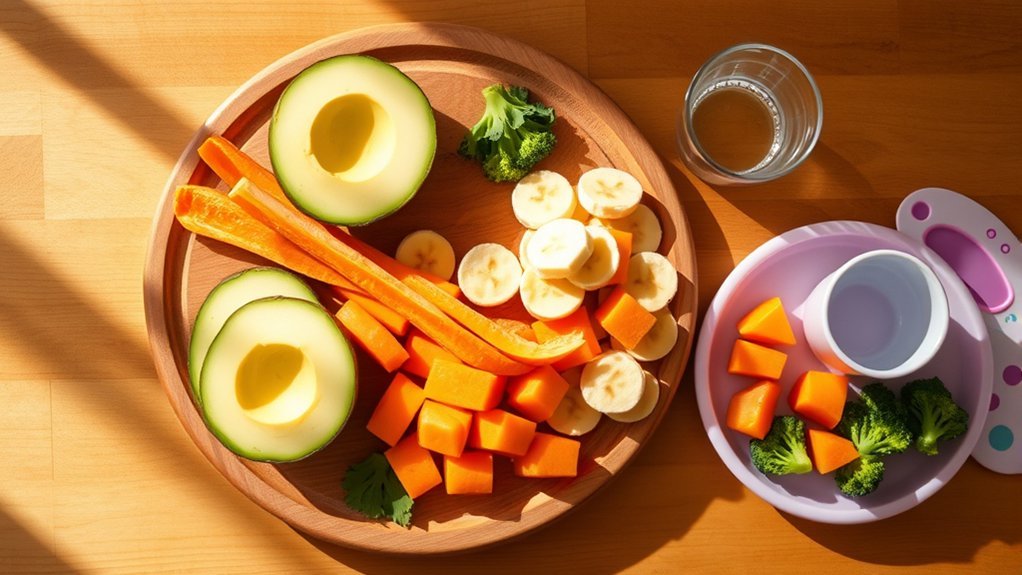
Safe preparation depends on texture, shape, size, and your baby’s skill level. The food should be soft enough to squash between your thumb and forefinger. Remove bones, pits, seeds, tough skin, gristle, and hard peel before serving.
Selecting Suitable First Foods
For a new eater using a whole-hand grasp, offer a soft strip or wedge long enough to extend beyond the fist. A piece roughly the length of an adult finger often works, but texture matters more than an exact measurement. Once your baby develops a pincer grasp, usually later in infancy, smaller soft pieces can be appropriate.
Offer two or three items rather than covering the tray with food. A simple starter plate might include an omelet strip, a soft sweet-potato wedge, and a ripe avocado slice.
Cooking Methods for Safety
- Steam or boil: Cook hard vegetables and fruit until a fork slides through easily.
- Roast or bake: Add moisture and avoid crisp, hard edges.
- Poach or braise: Keep meat and fish tender enough to shred.
- Mash or flatten: Smash beans, chickpeas, berries, and other round foods so they are not firm spheres.
- Cook animal foods thoroughly: Serve fully cooked eggs, meat, poultry, and fish, and use pasteurized dairy products.
Cool food before serving. Test the center, not only the surface, because microwaved food may contain hot spots.
Portion Sizes and Shapes
Start with one or two pieces of food or 1–2 tablespoons of a soft food. Your job is to decide what, when, and where to offer; your baby’s job is to decide whether and how much to eat. Add more when your baby remains interested.
Watch for fullness cues such as turning away, closing the mouth, dropping food repeatedly, slowing down, pushing food away, or becoming distracted. Do not use praise, games, or pressure to make your baby take “one more bite.”
Common Choking Hazards and Safer Preparation
The CDC choking guidance warns that hard, round, sticky, and tough foods can block a young child’s airway. Use safer preparation rather than relying on the baby to bite off a safe amount.
| Avoid This Form | Safer Alternative |
|---|---|
| Whole grapes, cherry tomatoes, cherries, or firm berries | Cook if needed, then quarter lengthwise or flatten until the shape is no longer round |
| Raw apple or carrot pieces | Steam, bake, grate finely, or cook until easily mashed |
| Whole nuts or seeds | Smooth nut or seed butter thinned with water, yogurt, breast milk, or formula |
| Thick spoonfuls of nut butter | A thin, smooth layer or diluted mixture |
| Hot-dog coins, sausage rounds, or firm cheese cubes | Avoid processed meats when possible; cut suitable foods into soft, thin strips rather than rounds |
| Popcorn, chips, hard crackers, candy, or marshmallows | Soft age-appropriate foods that dissolve or mash easily |
| Whole beans or chickpeas | Mash or flatten each one, or blend into a soft spread |
| Large, dry, or tough meat chunks | Moist shredded meat or a soft patty that crumbles easily |
Warning: Never leave a baby alone with food, even for a moment. Do not feed in a reclined seat, stroller, or moving vehicle, and do not put food into your baby’s mouth by hand.
Foods and Drinks to Avoid During Baby-Led Weaning
Baby-led weaning does not change standard infant food-safety guidance. According to the CDC’s current foods-and-drinks guidance, parents should avoid or limit the following:
- Honey before 12 months: Honey can cause infant botulism, including when it is baked into food or added to a pacifier, water, or formula.
- Cow’s milk as a drink before 12 months: Pasteurized yogurt, cheese, and milk used in food can be introduced earlier, but cow’s milk should not replace breast milk or formula as the main drink.
- Added sugars: Choose plain yogurt, unsweetened foods, and whole fruit rather than sweetened snacks or drinks.
- High-sodium foods: Limit processed meats, salty packaged snacks, and heavily salted family dishes.
- Unpasteurized foods or drinks: Avoid raw milk, unpasteurized juice, and unpasteurized yogurt or cheese.
- High-mercury fish: Avoid shark, swordfish, king mackerel, marlin, orange roughy, Gulf of Mexico tilefish, and bigeye tuna.
- Juice before 12 months: Offer whole fruit instead. Small sips of plain water can be offered with meals once complementary feeding begins.
How to Safely Introduce Allergenic Foods During BLW
Potential allergens should not be delayed simply because you are using baby-led weaning. Common allergens include peanut, egg, cow’s-milk protein, wheat, soy, sesame, tree nuts, fish, and shellfish. Serve them in a texture your baby can manage safely.
- Choose a day when your baby is healthy and you can watch closely during and after the meal.
- Introduce one new allergen at a time in a small amount.
- Use a safe form, such as thinned smooth peanut butter, fully cooked egg, plain pasteurized yogurt, soft wheat toast, or finely flaked fish with bones removed.
- If tolerated, continue offering the food as a regular part of the diet instead of giving it once and then avoiding it for weeks.
- Stop feeding the food and seek medical advice if a reaction occurs. Do not deliberately retry it at home after a suspected reaction.
Babies with severe eczema, an existing egg allergy, or a previous food reaction need individualized advice before peanut introduction. The NIAID peanut-allergy prevention guidance recommends medical evaluation and, in some high-risk cases, supervised early introduction.
| Possible Reaction | What to Do |
|---|---|
| A few hives, mild rash, mild vomiting, or swelling limited to one area | Stop the food and contact your child’s healthcare professional promptly for guidance |
| Trouble breathing or swallowing, wheezing, repetitive vomiting, widespread hives, pale or bluish color, sudden limpness, severe swelling, or symptoms affecting more than one body system | Treat as an emergency. Use prescribed epinephrine immediately if available and call 911 |
The AAP’s anaphylaxis guidance explains that severe reactions can begin within minutes or several hours and may look different in infants, including sudden drooling, unusual sleepiness, or inconsolable crying.
Strategies for Encouraging Positive Eating Habits in Baby-Led Weaning
A calm, responsive approach helps your baby pay attention to hunger, fullness, taste, and texture. It also reduces pressure around eating.
- Eat together when possible. Your baby learns by watching family members chew, drink, and enjoy a range of foods.
- Offer variety without pressure. Include familiar foods and one newer food. Acceptance may take many exposures.
- Let mess be part of learning. Touching, smelling, licking, and dropping food are normal early steps.
- Respond to cues. Offer more when your baby reaches and opens the mouth; stop when your baby turns away, closes the mouth, or loses interest.
- Avoid distractions. Turn off screens and keep toys away from the tray so your baby can focus on eating.
- Use neutral language. Describe color, temperature, and texture instead of labeling a baby as “good” for eating or “picky” for refusing.
Repeated exposure may help babies become familiar with more foods, but baby-led weaning does not guarantee that a child will avoid picky eating. Temperament, development, family habits, sensory needs, and many other factors affect food acceptance.
Understanding Gagging and Choking Risks in Baby-Led Weaning
Gagging and choking are not the same. Gagging is a protective reflex and is often noisy. Choking means the airway is partly or completely blocked and may be silent.
| Gagging | Choking |
|---|---|
| Usually noisy; the baby may cough, sputter, retch, or push the tongue forward | May be quiet; the baby cannot cough, cry, breathe, or make normal sounds |
| The face may look red, and the baby continues moving air | The face may become pale or bluish, and the baby may look panicked or become limp |
| Stay calm and allow the baby to work the food forward while you watch closely | Begin the infant choking response you were trained to use and call emergency services |
Do not sweep a finger blindly inside the mouth, because that can push food deeper. Take a hands-on infant first-aid and CPR course before or soon after starting solids, and make sure every regular caregiver knows the same emergency steps.
Research summarized by the American Academy of Pediatrics suggests that baby-led weaning may not create a higher choking risk than traditional feeding when families use safe food preparation and close supervision. That does not make choking impossible; it means technique and supervision remain critical.
How to Make Mealtime Enjoyable for Your Baby
Mealtime is easier when expectations match your baby’s stage. Early meals are practice, and many babies eat very little at first.
- Keep the meal to a comfortable length and end it when your baby is tired or no longer interested.
- Offer a washable mat under the high chair and use a simple bib to reduce cleanup stress.
- Serve foods at a safe temperature and place only a few pieces on the tray at once.
- Give a preloaded spoon for foods such as yogurt, mashed beans, or iron-fortified cereal.
- Offer small sips of water from an open cup with meals while breast milk or formula remains the main drink.
- Expect food refusal and try again another day without pressure.
Pro Tip: Adapt part of the family meal before adding extra salt, sugar, spicy sauce, or hard garnishes. This saves time while giving your baby familiar family flavors.
When to Call Your Baby’s Healthcare Professional
Contact your pediatrician, registered dietitian, or feeding specialist if your baby:
- Frequently coughs, chokes, turns blue, or has a wet or gurgly voice during or after meals.
- Cannot sit upright with enough support to keep the head steady.
- Has repeated vomiting, pain, blood in the stool, poor weight gain, or marked feeding distress.
- Eats a very narrow range of foods and may not be getting enough iron, calories, or other nutrients.
- Has severe eczema, a known food allergy, or a reaction after a new food.
- Was born prematurely or has a developmental, neurological, airway, or swallowing condition.
Call 911 for signs of choking or anaphylaxis. Do not wait for a portal message or routine appointment when your baby cannot breathe normally.
Frequently Asked Questions
What are the best first foods for a baby starting BLW?
Start with soft, nutrient-dense foods such as omelet strips, tender shredded meat, mashed beans on a preloaded spoon, tofu, avocado, banana, cooked sweet potato, soft broccoli, or plain full-fat yogurt. Include an iron-rich option regularly rather than serving only fruit and vegetables.
How do I know if my baby is full?
Fullness cues include turning the head away, closing the mouth, pushing food away, slowing down, dropping food repeatedly, or losing interest. End the meal without pressure and continue breast milk or formula feeds according to your baby’s usual routine.
Can I mix purées with finger foods?
Yes. Baby-led weaning does not need to exclude mashed or puréed foods. Offer them on a preloaded spoon, let your baby bring the spoon to the mouth, or use responsive spoon-feeding while watching hunger and fullness cues.
What if my baby refuses a food multiple times?
Keep the response neutral. Offer a small amount again on another day beside a familiar food, and change the preparation when appropriate. Do not force, bribe, or hide the food. Contact a professional if refusal is severe, causes distress, or limits nutrition.
How do I handle food allergies in siblings?
Follow the allergic child’s written care plan, prevent cross-contact, wash hands and surfaces, use separate utensils when needed, and keep emergency medicine available. A sibling’s allergy does not automatically mean the baby must avoid that food, but discuss introduction with your pediatrician or allergist.
Does my baby need teeth for baby-led weaning?
No. Babies can mash soft food with their gums. The food still needs to pass the finger-squish test, and your baby must have the head, trunk, hand, and swallowing skills needed for safe self-feeding.
How many meals should a 6-month-old eat?
Many babies begin with one small meal a day and gradually move to two or three as interest and skill grow. There is no need to rush. Breast milk or iron-fortified formula remains central while solid foods slowly take a larger role.
Can my baby drink water with meals?
Once complementary foods begin at about 6 months, small sips of plain water from an open cup can be offered with meals. Water should not displace breast milk or formula, and juice is not recommended before 12 months.
Is gagging normal when starting baby-led weaning?
Some gagging can occur as babies learn to manage texture. Gagging is usually noisy and the baby can still move air. Choking may be silent and requires immediate action. Prepare foods safely, supervise every bite, and learn infant choking first aid.
Conclusion
Baby-led weaning can be a flexible way to introduce solid foods when your baby is developmentally ready. Focus on safe seating, soft textures, iron-rich foods, age-appropriate allergen exposure, and responsive feeding rather than following rigid rules. Keep milk feeds in place, expect gradual progress, and ask for professional help when growth, swallowing, allergy, or feeding concerns arise.
Sources
- CDC: When, What, and How to Introduce Solid Foods — readiness signs, timing, food introduction, and preparation.
- CDC: Choking Hazards — meal positioning, supervision, choking hazards, and safer preparation.
- CDC: Foods and Drinks to Avoid or Limit — honey, cow’s milk, added sugar, sodium, mercury, and unpasteurized foods.
- American Academy of Pediatrics: Baby-Led Weaning—Is It Safe? — benefits, limitations, choking considerations, and practical safety advice.
- American Academy of Pediatrics: Anaphylaxis in Infants and Children — severe allergy signs and emergency response.
- NIAID: Peanut Allergy Prevention Guidelines for Parents — high-risk infants and early peanut introduction.