Feeding a baby from 6 to 12 months is a gradual transition, not a race to replace breast milk or formula. Your baby will begin with small tastes, develop chewing and self-feeding skills, and slowly join family meals. The safest plan follows developmental readiness, hunger and fullness cues, and guidance from your baby’s health care professional.
Quick Answer
For babies 6 to 12 months, continue breast milk or iron-fortified formula while adding developmentally appropriate foods around 6 months. Start with 1 to 2 tablespoons, follow hunger and fullness cues, prioritize iron-rich foods, advance textures gradually, introduce allergens safely, and prevent choking with upright, supervised meals.
Key Takeaways
- Begin solid foods at about 6 months when your baby shows developmental signs of readiness.
- Breast milk or iron-fortified formula remains the main drink through the first birthday.
- Start with 1 to 2 tablespoons and increase food according to your baby’s appetite rather than requiring a set portion.
- Offer an iron-rich food regularly and advance from purees to mashed, lumpy, minced, and soft finger foods as skills improve.
- Introduce common allergens in safe forms without unnecessary delay, but ask a clinician about peanut introduction if your baby has severe eczema or an egg allergy.
- Keep your baby upright and supervised while eating, and avoid honey, choking hazards, and cow’s milk as a main drink before 12 months.
At a Glance
| Time Required | About 10–20 minutes to prepare a simple meal; eating time varies by baby |
| Difficulty | Moderate at first; easier as your baby develops feeding skills |
| Tools Needed | Upright high chair, soft spoon, open or straw cup, bowl, knife, cutting board, and optional masher or blender |
| Cost | Varies; many soft family foods can be adapted without specialty baby-food equipment |
Note: This guide provides general feeding information. Ask your pediatrician for an individualized plan if your baby was born prematurely, has poor growth, severe eczema, a diagnosed allergy, frequent coughing during meals, difficulty swallowing, or another medical condition.
Understanding Your Baby’s Nutritional Needs at 6–12 Months
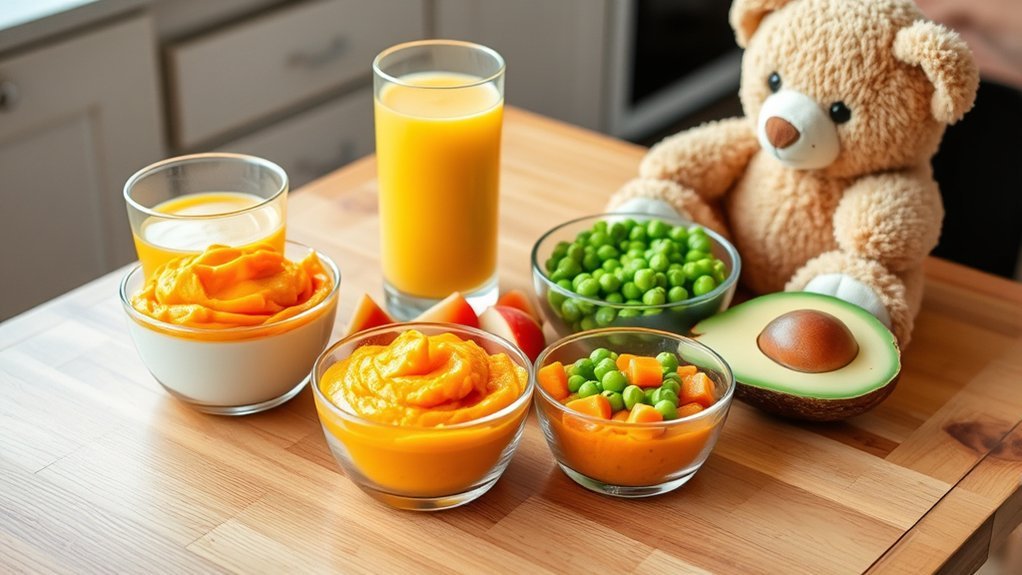
From 6 to 12 months, solid foods complement rather than immediately replace breast milk or iron-fortified formula. According to the Centers for Disease Control and Prevention, most babies can begin complementary foods at about 6 months while continuing their regular milk feeds.
Solid foods become more important as your baby approaches the first birthday, but there is no need to force a rapid reduction in nursing or formula. Follow your baby’s hunger and fullness cues and discuss milk intake with a pediatrician if you are concerned about growth or feeding.

Power your essentials anywhere with a 999Wh pure sine wave power station delivering up to 1000W continuous with 2000W surge. It supports fast charging via USB-C PD 60W and USB-A QC 18W, plus simultaneous output for multiple devices through AC, USB, wireless, and car/DC ports. Recharge using AC, car, or solar with a built-in MPPT controller and dual cooling fans, while the upgraded battery management system protects against surges, short circuits, and overheating.

ON THE GO BABY FOOD: Gerber Stage 2 Baby Food, Fruit & Veggie Favorites Puree Tubs are designed for ease and convenience. Our baby purees are the perfect on the go baby food, made in a portable and easy-to-store format for busy parents. This value pack includes 16 two packs

Nutrients to Prioritize
At about 6 months, babies need a dependable source of iron outside breast milk. The CDC’s infant iron guidance recommends iron-rich foods, iron-fortified cereal, or supplements when advised by a health care professional.
Useful iron and zinc sources include:
- Finely minced or pureed beef, chicken, turkey, pork, or fish
- Well-cooked eggs
- Mashed beans, peas, chickpeas, and lentils
- Soft tofu
- Iron-fortified oatmeal, barley, or multigrain infant cereal
Pair plant sources of iron, such as beans or fortified cereal, with foods containing vitamin C, such as mashed strawberries, broccoli, tomatoes, mango, or sweet potato.
Babies younger than 12 months need 400 international units of vitamin D each day. Breastfed and partly breastfed babies often need vitamin D drops, while sufficient fortified formula may provide the daily amount. Follow your clinician’s recommendation and the CDC vitamin D guidance.
Once solids begin, you may offer small sips of water from an open or straw cup. The CDC states that babies ages 6–12 months can have approximately 4–8 ounces of water per day, although individual needs vary.
Your role is to offer safe, nutritious food at regular opportunities. Your baby decides whether to eat and how much.
Baby Feeding: How to Introduce Solid Foods
Most babies are ready for solid food at about 6 months. Introducing solids before 4 months is not recommended. Age is only part of the decision; your baby should also show the physical skills needed to eat safely.
Signs Your Baby Is Ready
Look for several of these signs together:
- Sits upright alone or with minimal support
- Has steady head and neck control
- Opens their mouth or leans toward offered food
- Brings objects to their mouth
- Swallows food instead of consistently pushing it back out
- Shows interest in food during family meals
The CDC’s solid-food readiness guidance can help you decide when to begin.
A Simple Way to Begin
- Choose one soft food. An iron-rich option, such as iron-fortified oatmeal, mashed lentils, egg, or finely pureed meat, is a strong starting choice.
- Start with 1–2 tablespoons. Your baby may eat less than this during the first attempts, which is normal.
- Use a safe texture. Begin with smooth, mashed, or very soft food that matches your baby’s current skills.
- Let your baby set the pace. Stop when they close their mouth, turn away, push food aside, or become upset.
- Add variety gradually. At first, introduce one new food at a time and wait 3–5 days before another new food so a possible reaction is easier to identify.
Pro Tip: Offer a new food when your baby is awake, calm, and mildly hungry. There is no required one-hour gap after nursing or a bottle. Some babies prefer a small milk feed first, while others are more interested in solids before their usual milk feed.
Do not put cereal or other solid food in a bottle unless a qualified clinician has prescribed it for a specific medical reason. The CDC warns that adding food to a bottle does not help babies sleep longer and may increase choking risk.
Creating a Feeding Schedule for Your 6–12-Month-Old
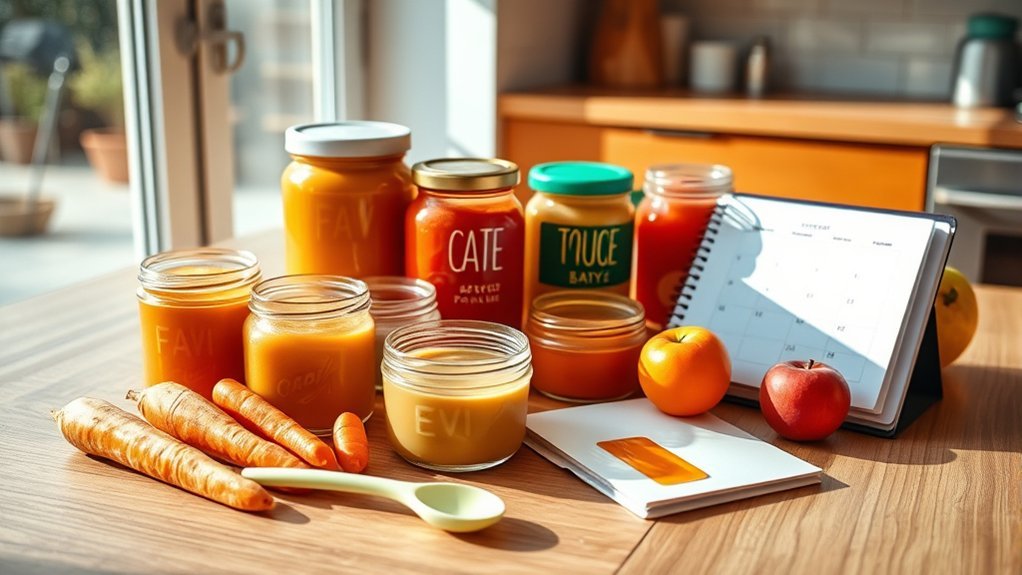
A useful feeding schedule provides regular opportunities without turning meals into a strict clock-based requirement. Breastfed babies may continue nursing on demand, while formula intake gradually changes as solid-food skills and appetite grow.
Flexible Feeding Pattern by Age
| Approximate Stage | Solid-Food Pattern | Portion Approach |
| Around 6–7 months | Begin with one meal or tasting opportunity, then add a second when your baby shows interest. | Start with 1–2 tablespoons. Offer more only when hunger cues continue. |
| Around 8–9 months | Many babies progress toward two or three meals alongside their normal milk feeds. | Offer a few tablespoons of several foods and respond to appetite. |
| Around 10–12 months | Many babies eat three small meals and may have one or two snacks while continuing breast milk or formula. | Provide small family-food portions and allow the baby to request more or stop. |
These are examples, not requirements. Development, appetite, milk intake, illness, teething, and sleep can change how much your baby eats from one day to the next.
Meal Timing Strategies
Many families settle into an eating or drinking opportunity every 2–3 hours during the day. Breastfeeding may occur more often, and some babies need a different rhythm. Use the schedule as a framework rather than withholding food or milk until a certain time.
For easier meals:
- Choose a time when your baby is alert and not overtired.
- Seat your baby upright in a stable high chair.
- Remove screens and distracting toys.
- Eat together when possible so your baby can watch family members.
- Allow mess and food exploration without pressuring your baby to finish.
- End the meal when your baby repeatedly turns away, closes their mouth, drops food, or becomes distressed.
Integrating Solids With Milk Feeds
Milk feeds and solid meals do not need to follow the same order every time. Early in the transition, a baby who is extremely hungry may be too frustrated to practice eating. A small milk feed before solids can help. An older baby who is eager for food may prefer solids first and milk afterward.
Continue offering breast milk or properly prepared iron-fortified infant formula through 12 months. Do not replace these feeds with toddler formula, homemade formula, juice, or cow’s milk as a drink.
Choosing Textures and Varieties for Solid Foods
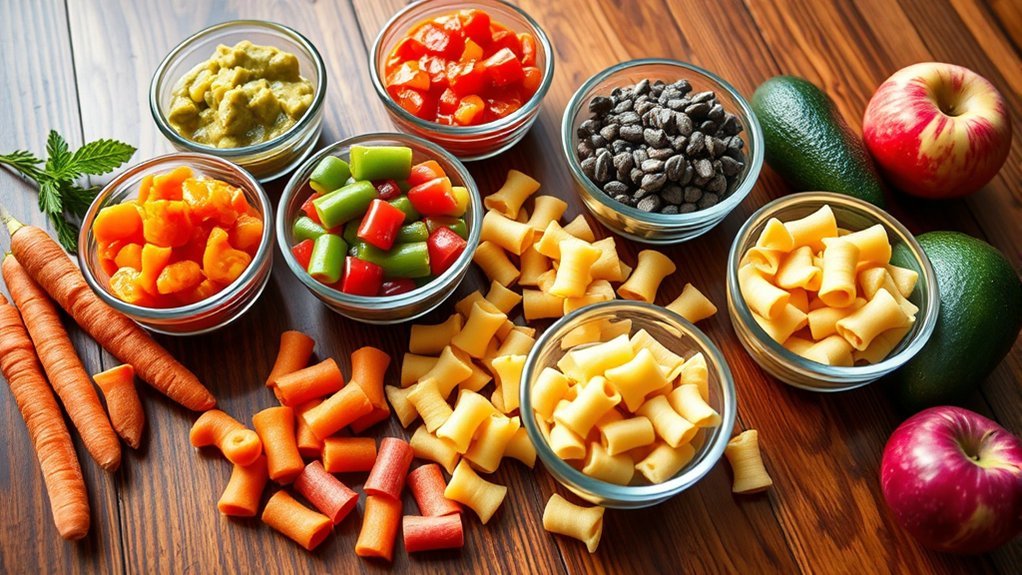
Your baby does not need to remain on perfectly smooth purees for months. Advance texture as their control improves, while continuing to prepare every food in a shape and softness they can manage safely.
Gradual Texture Progression
- Beginning stage: Smooth puree, strained food, or thoroughly mashed food
- Developing stage: Thicker mash with soft lumps
- Next stage: Finely chopped, minced, shredded, or ground food
- Finger-food stage: Soft pieces large enough to grasp or small pieces that can be picked up with a pincer grip
The progression should follow ability, not an exact birthday. The CDC’s texture guidance recommends moving toward thicker, lumpier, finely chopped, and ground foods as eating skills develop.
Warning: Choking can happen with purees, finger foods, or table foods. Keep your baby sitting upright and within arm’s reach throughout the meal. Do not allow eating while lying down, crawling, walking, riding in a stroller, or traveling in a car. Learn infant choking first aid and CPR from a qualified instructor.
Prepare foods according to the CDC choking-prevention recommendations. Avoid:
- Whole nuts and seeds
- Thick spoonfuls of nut or seed butter
- Popcorn
- Whole grapes, cherries, or cherry tomatoes
- Raw hard vegetables and hard fruit pieces
- Hot dogs or sausages cut into round coins
- Hard candy, gum, marshmallows, and sticky sweets
- Large chunks of meat, cheese, or food that cannot be mashed between two fingers
Cook firm foods until soft. Quarter grapes and similar round foods lengthwise. Thin smooth nut butter with warm water, breast milk, formula, yogurt, or puree before serving.
Diverse Food Varieties
Offer foods from several groups over the course of the day. A baby does not need a perfectly balanced plate at every meal.
- Iron-rich foods: Meat, poultry, fish, eggs, beans, lentils, tofu, and fortified infant cereal
- Vegetables: Sweet potato, peas, broccoli, squash, carrots, spinach, and green beans
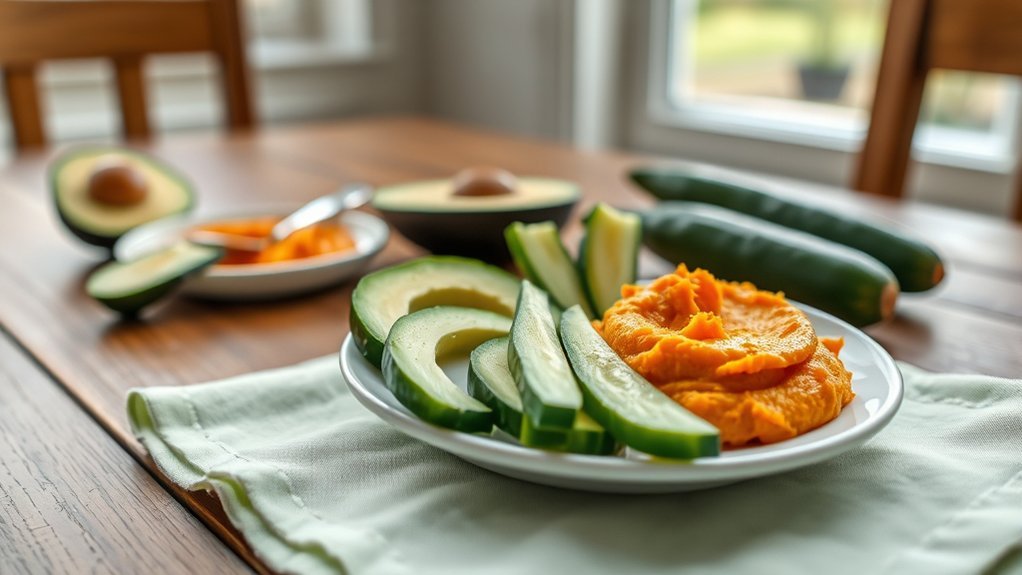
- Fruit: Banana, pear, avocado, berries, peaches, mango, melon, and cooked apple
- Grains and starches: Oatmeal, quinoa, soft pasta, potato, rice, and toast prepared safely
- Dairy foods: Pasteurized plain full-fat yogurt and cheese in safe textures
Simple meal combinations include:
- Iron-fortified oatmeal with mashed berries
- Mashed lentils with sweet potato
- Well-cooked egg with mashed avocado
- Plain yogurt with soft pear
- Finely minced chicken with broccoli and potato
- Tofu with mashed peas and soft rice
A baby may need many calm exposures before accepting a food. Rejection on one day does not mean the food must be removed permanently.
Allergen Introduction Timing
Once your baby is ready for solids, common allergenic foods can be introduced along with other foods rather than being delayed. These include peanut, egg, dairy, wheat, soy, sesame, fish, shellfish, and tree nuts in age-appropriate forms.
The American Academy of Pediatrics states that delaying allergenic foods beyond the time a baby is ready for solids does not prevent food allergy.
Introduce an allergen:
- When your baby is healthy
- At home when you can watch for a reaction
- In a small amount the first time
- As the only new food introduced at that meal
- In a texture that does not create a choking hazard
Safe examples include thoroughly cooked egg, plain yogurt, smooth thinned peanut butter, finely ground nuts mixed into puree, soft tofu, wheat cereal, finely flaked fish with bones removed, and tahini thinned into another food.
After a food is tolerated, continue including it regularly as part of a varied diet rather than offering it once and then stopping for months.
Note: Ask your pediatrician or allergist about peanut introduction before trying it at home if your baby has severe eczema, an egg allergy, a previous food reaction, or an existing food-allergy diagnosis.
Foods and Drinks to Avoid or Limit Before 12 Months
Some foods are unsafe or unsuitable during the first year even when your baby is eating a wide variety of solids.
- Honey: Do not serve honey or foods made with honey before 12 months because of the risk of infant botulism.
- Cow’s milk as a drink: Do not use cow’s milk to replace breast milk or infant formula before 12 months. Pasteurized yogurt and cheese may be offered as foods.
- Juice: Juice is not needed before the first birthday. Whole mashed or soft fruit provides more useful nutrition and texture practice.
- Unpasteurized foods: Avoid unpasteurized milk, cheese, or juice.
- Raw or undercooked animal foods: Fully cook eggs, meat, poultry, fish, and shellfish.
- Added sugars: Avoid sweetened drinks, desserts, flavored yogurt, and other foods with added sugars.
- High-sodium foods: Limit processed meats, salty snacks, heavily salted canned foods, and high-sodium prepared meals.
- Homemade infant formula: Never make formula from an online or household recipe. Use commercially prepared infant formula according to its label unless your clinician prescribes a specialized product.
See the CDC’s current foods and drinks to avoid or limit for additional guidance.
What to Do If Your Baby Shows Signs of an Allergy
Stop serving the suspected food if your baby develops a possible reaction. The appropriate response depends on the symptoms.
Warning: Call 911 immediately for trouble breathing, wheezing, repetitive coughing, swelling of the tongue or throat, difficulty swallowing, sudden pale or bluish skin, limpness, faintness, or symptoms affecting more than one body system, such as hives with repeated vomiting. Use prescribed epinephrine immediately when your child’s allergy plan instructs you to do so.
For a mild isolated symptom, such as a small area of hives or redness without breathing, swallowing, circulation, or repeated vomiting problems:
- Stop the food.
- Watch your baby closely for worsening symptoms.
- Contact your pediatrician promptly for instructions.
- Do not reintroduce the suspected food until a qualified clinician says it is safe.
Do not give an allergy medicine to an infant unless a clinician has provided the correct medicine and dose. Antihistamines do not replace epinephrine for anaphylaxis.
Record the food, amount eaten, preparation method, time eaten, symptoms, and timing of the reaction. Photos of a rash can also help your clinician assess what happened.
Safe Preparation and Storage of Baby Food
Babies are more vulnerable to foodborne illness than healthy adults, so clean preparation and storage matter whether you use commercial or homemade food.
Preparation Safety
- Wash your hands before preparing or serving food.
- Wash produce under running water.
- Keep raw meat, poultry, seafood, and eggs separate from ready-to-eat food.
- Cook animal foods thoroughly.
- Use clean utensils, cutting boards, bowls, and storage containers.
- Transfer a serving to a separate bowl instead of feeding directly from a storage jar.
- Discard food left in the feeding bowl after the meal because saliva can introduce bacteria.
Storage Safety
FoodSafety.gov recommends refrigerating homemade baby food for no more than 1–2 days or freezing it for approximately 1–2 months. Label each container with the food and preparation date.
Cool cooked food promptly in shallow containers. Thaw frozen baby food in the refrigerator or by using a safe reheating method, not by leaving it on the counter. Stir reheated food thoroughly and test the temperature before feeding because microwaves can create hot spots.
Essential Resources for Baby Feeding Support
Your pediatrician should be the first contact for questions about growth, milk intake, supplements, allergies, constipation, swallowing, or feeding refusal. Ask for a referral to a registered dietitian nutritionist or feeding specialist when more detailed help is needed.
Useful official resources include:
- The CDC Infant and Toddler Nutrition hub for feeding, nutrition, formula, and mealtime guidance
- The USDA Special Supplemental Nutrition Program for Women, Infants, and Children for eligible families needing nutrition education and food support
- Your pediatrician, pediatric allergist, lactation consultant, registered dietitian, or feeding therapist for individualized care
Seek professional assessment if your baby regularly coughs or chokes during meals, has a wet or gurgly voice after swallowing, takes an unusually long time to eat, refuses nearly all textures, vomits repeatedly, shows poor weight gain, or appears to be in pain while feeding.
Frequently Asked Questions
How can I tell if my baby is full?
Fullness cues include closing the mouth, turning the head away, pushing food aside, slowing down, dropping food, becoming distracted, or losing interest. Do not require your baby to finish a jar, bowl, bottle, or planned portion.
What are the best first foods for my baby?
Good first foods are soft, developmentally appropriate, and rich in nutrients. Examples include iron-fortified oatmeal, pureed meat, mashed beans or lentils, well-cooked egg, tofu, avocado, vegetables, fruit, and plain pasteurized yogurt. There is no required order for fruit and vegetables.
Can I mix breast milk or formula with solid foods?
Yes. Breast milk or correctly prepared infant formula can thin cereal, puree, mashed vegetables, or smooth nut butter. Discard food left after feeding and never save formula that has already been offered in a bottle.
How do I safely prepare homemade baby food?
Wash your hands and produce, prevent contact between raw and ready-to-eat foods, cook animal products thoroughly, and use clean equipment. Refrigerate homemade baby food for no more than 1–2 days or freeze it for about 1–2 months.
When can my baby start eating finger foods?
Finger foods can begin when your baby sits upright, reaches for food, brings it to the mouth, and manages soft textures. This often develops around 8 or 9 months but may occur earlier or later. Foods must be soft and shaped for the baby’s current grasp and chewing skills.
How much water can a 6- to 12-month-old drink?
The CDC says babies ages 6–12 months may have approximately 4–8 ounces of water per day once complementary foods begin. Offer small sips in a cup without allowing water to replace breast milk or formula.
What should I do if my baby gags on food?
Occasional gagging can occur while babies learn new textures. Stay calm and supervise closely. Choking is an emergency, so learn infant choking first aid and CPR. Contact your pediatrician if gagging is frequent, severe, accompanied by coughing during most meals, or prevents texture progression.
Can my baby drink cow’s milk before 12 months?
No. Cow’s milk should not replace breast milk or iron-fortified infant formula as a drink before 12 months. Small amounts used in cooking are generally acceptable, and pasteurized plain yogurt and cheese may be served in safe textures.
Conclusion
A healthy feeding plan from 6 to 12 months combines breast milk or iron-fortified formula with an expanding range of safe, nutrient-rich foods. Begin when your baby shows readiness, start with small portions, include iron-rich foods, and advance textures according to skill rather than age alone.
Expect appetite and food acceptance to change from day to day. Continue offering variety without pressure, use safe allergen-introduction practices, and keep every meal upright and supervised. Contact your baby’s health care professional when growth, swallowing, allergies, or feeding behavior causes concern.
Sources
- CDC: When, What, and How to Introduce Solid Foods — readiness, starting portions, and new-food introduction
- CDC: Choking Hazards — food preparation, seating, supervision, and choking prevention
- CDC: Foods and Drinks to Avoid or Limit — honey, cow’s milk, added sugar, sodium, and unsafe drinks
- CDC: Iron for Infants and Toddlers — iron needs and food sources
- American Academy of Pediatrics: Introducing Common Food Allergens — early allergen introduction and risk precautions
- FoodSafety.gov: Food Safety for Children Under Five — preparation and baby-food storage guidance