Baby food often looks watery, grainy, or uneven after freezing because ice crystals change how moisture is distributed through the puree. That separation is usually a texture problem rather than a sign that the food has spoiled. In most cases, you can restore it by thawing it safely, stirring or blending it, and adding a small amount of suitable liquid if needed.
Quick Answer
If baby food separates after freezing, thaw it in the refrigerator, stir it well, and gently warm it if needed. Reblend stubborn lumps, then add water, breast milk, or correctly prepared formula a teaspoon at a time. Discard food with signs of spoilage or food that has touched a used feeding spoon.
Key Takeaways
- Water or small lumps after thawing usually reflect a quality change caused by freezing, not automatic spoilage.
- Start with vigorous stirring. Warm and reblend only when stirring does not restore the texture.
- Use water, unsalted cooking liquid, breast milk, or correctly prepared infant formula to thin a puree.
- Microwaved baby food must be stirred, allowed to stand, and temperature-tested because hot spots can burn a baby.
- Store homemade baby food in small, dated portions and use it within one to two months as a conservative freezer guideline.
- Discard leftovers from the baby’s bowl because saliva can introduce bacteria into the food.
At a Glance
| Time Required | About 5–10 minutes after thawing |
| Difficulty | Easy |
| Tools Needed | Spoon or whisk; blender or food processor if needed; microwave-safe dish or small saucepan |
| Cost | Usually no additional cost |
Understanding Why Baby Food Separates After Freezing

Freezing changes the structure of food because its water forms ice crystals. As the puree thaws, some of that moisture may drain away from the fruit, vegetable, grain, or protein solids. The result may look watery on top, thick on the bottom, grainy, spongy, or lumpy.
The amount of separation depends on the ingredients, how finely the food was pureed, how quickly it froze, how much air was left in the container, and how long it remained frozen. Purees with a great deal of water often become thinner, while starchy foods may become gummy or grainy.
Separation alone does not mean the food is unsafe. A puree that was handled safely, remained frozen, and smells and looks normal can usually be stirred or blended back together.
Note: Texture is not a complete food-safety test. Discard food that was left warm too long, came into contact with a used feeding spoon, developed mold, has an unusual odor or color, or was stored beyond the recommended period.
How to Fix Separated Baby Food After Thawing
Use the least aggressive fix first. Stirring preserves the original thickness, while extra liquid and prolonged blending can make the food thinner than intended.
- Thaw the portion safely. Move it to the refrigerator the night before, or use a controlled reheating method immediately before serving.
- Stir or whisk it thoroughly. Scrape the bottom and sides of the container to redistribute moisture.
- Warm it gently if needed. Mild heat can soften starches and fats that became firm in the freezer.
- Reblend stubborn lumps. Use a small blender, immersion blender, or food processor.
- Thin it one teaspoon at a time. Use water, unsalted cooking liquid, breast milk, or correctly prepared formula.
- Check the final texture and temperature. The food should suit the baby’s current eating skills and feel lukewarm, not hot.
The safest texture fix is usually simple: thaw carefully, stir first, reblend only if necessary, and add liquid in very small amounts.
Blend for a Smooth Consistency
Blending is useful when thawed food contains stubborn lumps or a grainy layer that does not disappear with stirring. Place the portion in a clean blender, food processor, or narrow container suitable for an immersion blender.
Blend in short pulses. Stop to scrape the sides so the entire portion becomes uniform. If the blades cannot move the food, add about one teaspoon of liquid and blend again. Continue gradually rather than pouring in a large amount at once.
Appropriate thinning liquids include:
- Water.
- Unsalted water left from cooking the same fruit or vegetable.
- Breast milk that has been handled and stored safely.
- Infant formula prepared exactly according to its label.
Pro Tip: Add breast milk or prepared formula after the puree has been warmed, not before. This gives you better control over thickness and avoids unnecessary reheating of the milk or formula.
Heat to Restore Texture
Gentle heating can loosen a thick or gummy puree and help its moisture mix back in. Use a small saucepan over low heat, a warm-water bath, or a microwave-safe dish.
| Heating Method | Safe Method |
|---|---|
| Microwave | Transfer the food to a microwave-safe dish, heat briefly, stir thoroughly, let it stand for 30 seconds, and test the temperature. |
| Saucepan | Warm over low heat while stirring continuously. Add a teaspoon of suitable liquid if it is too thick. |
| Warm-water bath | Place the closed container in warm water until the food softens, then transfer it to a bowl and stir. |
| Re-puree after warming | Blend briefly if heat and stirring do not remove lumps. |
Warning: Microwaves can create hot spots. Never heat baby food in its original jar. Stir the food, let it stand for at least 30 seconds, and test it before feeding. The FDA recommends heating baby-food meats and egg-based foods on the stovetop instead of in a microwave.
Food that is ready to serve should feel lukewarm. Do not rely on the outside of the container to judge the temperature because the center may be much hotter.
Stir to Reintegrate the Mixture
Many separated purees need only firm stirring. Use a clean spoon, fork, or small whisk and mix from the bottom upward until the watery and solid layers come together.
For a thicker puree, avoid adding liquid until you have stirred it for at least 20 to 30 seconds. Fruit and vegetable purees often look much smoother once their natural moisture is fully redistributed.
If the food remains uneven, warm it slightly and stir again. Reblend only after those simpler steps fail.
Ingredients That Lead to Texture Problems in Frozen Baby Food
Nearly any puree can separate, but some ingredients change more noticeably than others. These changes affect appearance and mouthfeel; they do not automatically make the food unsafe.
Starchy Vegetable Issues
Regular potatoes, rice, pasta, and some thick grain mixtures may become grainy, gummy, or unusually dense after freezing. Starch absorbs and releases water as the food cools, freezes, thaws, and reheats.
To improve a starchy puree:
- Warm it over low heat.
- Whisk it thoroughly.
- Add water or unsalted cooking liquid one teaspoon at a time.
- Blend briefly if graininess remains.
Sweet potatoes, squash, carrots, beans, and peas often freeze more smoothly than plain white potato puree, although the result still varies by recipe.
High Water Content
Water-rich foods such as melon, cucumber, zucchini, pears, and some berries may release a visible layer of liquid after thawing. Stirring or draining a small amount of excess water may be enough.
Spinach and beets can also release moisture, but their nitrate content is not what causes separation. Current CDC infant-feeding guidance includes cooked spinach and beets among foods that may be offered as part of a varied diet when a baby is developmentally ready for solids.
Ingredient Pairing Considerations
Pairing ingredients with different amounts of water and starch can create a more stable texture. A naturally thick ingredient can absorb moisture released by a thinner one.
| Ingredient Type | Common Thawed Texture | Best Fix or Pairing |
|---|---|---|
| White potato | Gummy or grainy | Pair with peas, carrots, or another moist vegetable; warm and whisk after thawing. |
| Sweet potato or squash | Thick or slightly dry | Add water, breast milk, or prepared formula after warming. |
| Pear, melon, zucchini, or berries | Watery | Stir well or pair with banana, avocado, oat cereal, or another thicker food already introduced safely. |
| Meat or beans | Dry, crumbly, or dense | Blend with a familiar vegetable puree or a small amount of unsalted cooking liquid. |
Best Practices for Freezing Your Homemade Baby Food
Good preparation cannot prevent every texture change, but it can reduce large ice crystals, freezer burn, contamination, and waste.
- Wash your hands and equipment. Clean the blender, utensils, trays, lids, work surface, and storage containers before preparing food.
- Cook ingredients safely. Cook meat, eggs, fish, and poultry to safe temperatures and cook firm produce until it can be mashed easily.
- Puree to the intended texture. Match the consistency to the baby’s current eating and swallowing skills.
- Cool and portion promptly. Divide the food into small portions rather than leaving a large batch at room temperature.
- Use freezer-safe containers. Ice cube trays, small food containers, or freezer-safe glass jars can work when used according to their manufacturer’s instructions.
- Leave expansion space. Food expands when frozen. The FDA recommends about one-half inch of space at the top of small jars.
- Cover the food tightly. Airtight packaging limits freezer burn and odor transfer.
- Label every portion. Include the food name and preparation date.
- Freeze at 0°F (-18°C) or below. Place new portions toward the back of the freezer rather than in the door.
- Rotate older portions forward. Use the oldest safe portions first.
The FDA provides instructions for freezing homemade baby food in covered ice cube trays, transferring the frozen cubes to airtight containers, and dating each batch.
Pro Tip: Freeze single-serving portions without formula or breast milk when practical. Add the milk or formula after thawing so you can follow its separate storage rules and adjust the texture more precisely.
How to Safely Thaw Your Homemade Baby Food
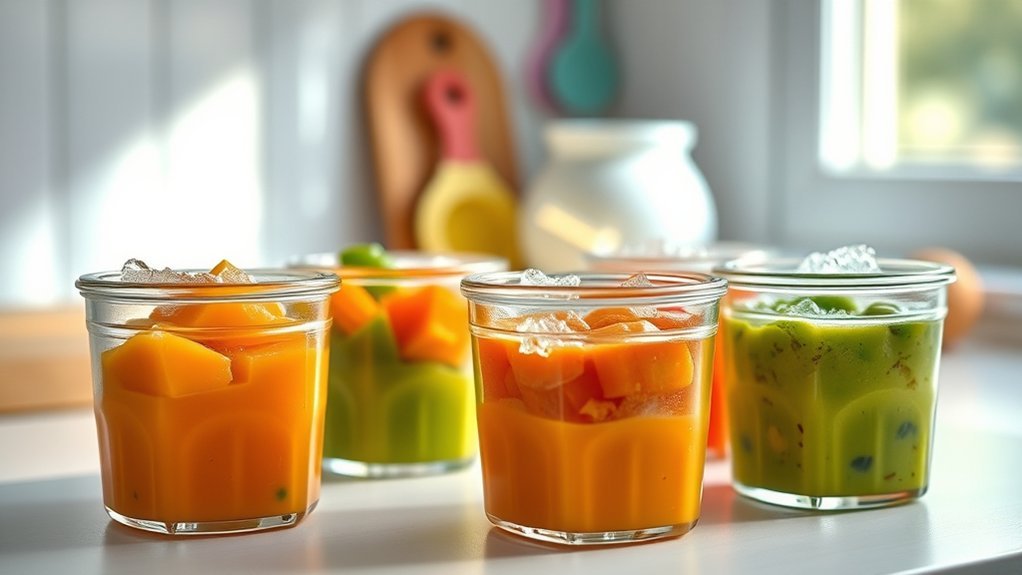
The refrigerator is the most controlled thawing method. Move the amount you need from the freezer to the refrigerator in a covered container and allow it to thaw overnight.
For faster preparation, place the frozen portion in a small saucepan over low heat or transfer it to a microwave-safe dish. Do not thaw baby food on the kitchen counter or leave it at room temperature for an extended period.
When microwaving solid baby food, the FoodSafety.gov guidance for children under five says to transfer it to a dish, stir it thoroughly, let it stand for 30 seconds, and test it before feeding.
Warning: Discard perishable baby food that has remained at room temperature for more than two hours, or more than one hour when the surrounding temperature is above 90°F (32°C). Discard food left in the baby’s serving bowl after feeding because the spoon may have transferred saliva to it.
Routine refreezing is not recommended because repeated thawing and freezing worsens texture and makes safe handling harder to track. General USDA guidance allows many foods thawed in the refrigerator to be refrozen if they stayed at 40°F (4°C) or below, but the following should not be refrozen:
- Food that has touched the baby’s mouth or a used feeding spoon.
- Food that has remained warm beyond the safe time limit.
- Previously frozen breast milk after it has thawed.
- Prepared infant formula.
- Food with an unusual odor, color, mold, damaged packaging, or uncertain storage history.
Enhancing Texture: Adding Ingredients for Smoothness
Choose a thinning or thickening ingredient that the baby has already tolerated, and add only a small amount. The goal is to restore the intended consistency without diluting the meal excessively.
Safe Ways to Thin a Puree
- Water: The simplest choice for most fruit, vegetable, and grain purees.
- Unsalted cooking liquid: Useful when it comes from the same food and has been handled safely.
- Breast milk: Add after warming and follow current breast-milk storage guidance.
- Prepared infant formula: Mix exactly as the label directs, add after warming, and use the portion promptly.
Safe Ways to Thicken a Watery Puree
- Blend in a familiar thick puree such as banana, avocado, sweet potato, or squash.
- Add a small amount of iron-fortified infant cereal.
- Allow the puree to stand for a minute after mixing so cereal or starch can absorb moisture.
The CDC recommends offering varied fortified cereals, including oat, barley, and multigrain cereals, instead of relying only on rice cereal.
Note: Avoid using juice or salty broth as a routine thinning liquid. Children younger than 12 months should not drink fruit or vegetable juice, and foods high in sodium should be limited.
Cow’s milk should not replace breast milk or infant formula as a drink before 12 months. For babies younger than 12 months, water, breast milk, or prepared infant formula is generally a clearer choice for thinning puree. Follow the child’s pediatrician’s instructions if the baby has allergies, swallowing difficulties, was born prematurely, or follows a medical diet.
Storage Tips to Prevent Baby Food Separation
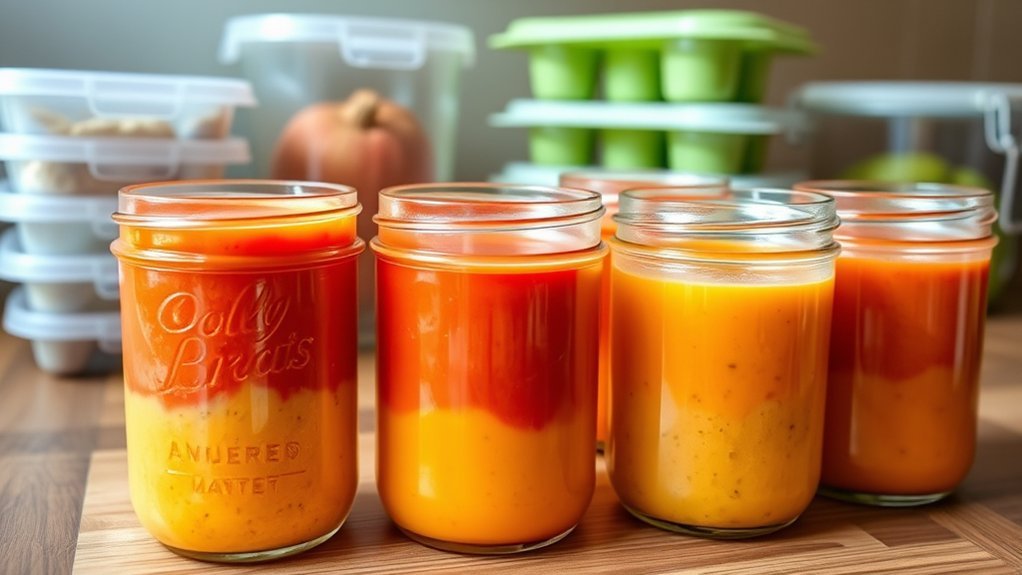
Use clean, airtight containers with as little unnecessary air as practical. Freeze small portions promptly, date them, and keep the freezer at 0°F (-18°C) or below.
Federal sources give slightly different freezer times. FoodSafety.gov lists one to two months for homemade baby food, while an FDA infant-food page permits homemade food cubes for up to three months. A practical conservative rule is to use homemade portions within one to two months and never exceed three months.
| Food or Situation | Refrigerator | Freezer |
|---|---|---|
| Homemade baby food | Use within 1–2 days | Use within 1–2 months as a conservative rule; do not exceed 3 months |
| Pureed meat or egg | Use within 1 day | Use within 1–2 months |
| Food portioned into a clean bowl but not fed from | Refrigerate promptly within the applicable food limit | Freeze only if it has been handled safely and has not already completed a thawing cycle |
| Food left in the baby’s bowl after feeding | Discard | Do not freeze |
Keep the refrigerator at 40°F (4°C) or below. Label each batch with its preparation date and contents, and use older safe portions before newer ones.
When to Stir, Blend, or Discard
| What You See | What to Do |
|---|---|
| A thin layer of water on top | Stir thoroughly. Drain a small amount only if the puree remains too thin. |
| Small soft lumps | Warm gently and mash, whisk, or blend. |
| Gummy potato or grain puree | Warm over low heat and whisk in liquid one teaspoon at a time. |
| Dry meat or bean puree | Blend with a familiar vegetable puree or unsalted cooking liquid. |
| Mold, unusual odor, strange discoloration, damaged package, or uncertain storage | Discard without tasting. |
| Food touched by a used spoon | Discard the remaining serving. |
What Nutritional Factors Should You Consider for Baby Food?
Texture matters, but a baby’s overall dietary variety and developmental readiness matter more. Most children begin complementary foods at about six months when they show signs that they can sit with support, control their head and neck, move food toward the back of the mouth, and swallow it.
According to the CDC’s infant iron guidance, iron-rich foods become especially important when complementary feeding begins. Suitable options may include:
- Pureed or finely prepared meat and poultry.
- Beans, lentils, and tofu.
- Eggs prepared safely.
- Iron-fortified infant cereals.
- Dark green vegetables.
Offer a variety of vegetables, fruits, grains, proteins, and age-appropriate dairy foods without added sugar. Avoid honey before 12 months because of infant botulism risk, avoid unpasteurized foods and drinks, and limit foods high in sodium.
At first, introduce single-ingredient foods one at a time and wait three to five days before introducing another new food. This can make it easier to identify a possible reaction. Potentially allergenic foods can be introduced along with other complementary foods unless the child’s clinician has given different advice.
Warning: Always supervise a baby while eating. Prepare food in a texture that matches the child’s development, remove bones, seeds, pits, tough skins, and hard pieces, and speak with a pediatrician if the child repeatedly coughs, chokes, or struggles to swallow.
Why Choose Homemade Baby Food?
Homemade baby food can provide useful control over ingredients, thickness, seasoning, portion size, and food combinations. It can also be economical when caregivers prepare small portions from foods the household already uses.
Commercial baby food can also be a safe, nutritious, and convenient option when it is age-appropriate, unopened, stored correctly, and used according to its label. Homemade food is not automatically more nutritious than commercial food; nutrient content depends on the ingredients, cooking method, storage, and whether the product is fortified.
Benefits of preparing food at home may include:
- Control over added salt, sugar, and flavorings.
- The ability to adjust texture as the baby develops.
- Easy use of familiar family foods prepared without unsafe ingredients.
- Flexible portion sizes that reduce waste.
- Exposure to a wide range of tastes and textures.
The tradeoff is that homemade food requires careful handwashing, cooking, cooling, storage, labeling, reheating, and leftover disposal. Families can use homemade food, commercial food, or a combination of both.
Sources
- Penn State Extension — Understanding the Process of Freezing — background on how freezing and ice formation affect food quality.
- U.S. Food and Drug Administration — Once Baby Arrives — freezing portions, storage, saliva contamination, microwave precautions, and breast-milk handling.
- FoodSafety.gov — People at Risk: Children Under Five — baby-food storage periods, safe microwave use, and food-safety practices.
- Centers for Disease Control and Prevention — When, What, and How to Introduce Solid Foods — developmental readiness, texture, allergens, cereal variety, and food preparation.
- Centers for Disease Control and Prevention — Cow’s Milk and Milk Alternatives — guidance on cow’s milk before and after 12 months.
- Centers for Disease Control and Prevention — Iron — iron needs and iron-rich complementary foods.
Frequently Asked Questions
Can I refreeze baby food after it has been thawed?
Avoid routine refreezing because the texture declines and repeated handling makes safe storage harder to track. Food thawed entirely in the refrigerator may sometimes be refrozen if it remained at 40°F or below and was never served, but do not refreeze food exposed to saliva, food left warm too long, prepared formula, or thawed breast milk.
How long can I store frozen baby food?
Use homemade baby food within one to two months as a conservative guideline. An FDA page permits homemade food cubes for up to three months, but FoodSafety.gov lists one to two months for homemade baby food. Label every portion and never exceed three months.
Is it safe to freeze baby food with added spices?
Yes. Small amounts of age-appropriate herbs and spices can usually be frozen with the food. Avoid added salt, sugar, honey for babies younger than 12 months, and ingredients the baby has not yet tolerated. Some spices become stronger or weaker after freezing, so season lightly.
Can I use glass containers for freezing baby food?
Yes, but use only glass containers labeled freezer-safe. Leave space for expansion, follow the manufacturer’s temperature instructions, and avoid moving cold glass directly into very hot water or onto a hot surface because sudden temperature changes can cause breakage.
What are signs that baby food has gone bad?
Discard baby food with mold, an unusual odor, unexpected discoloration, leaking or damaged packaging, or an uncertain storage history. Also discard food left at room temperature beyond the safe limit or food remaining in the baby’s bowl after feeding. Do not taste questionable food to decide whether it is safe.
Does separation mean the baby food is spoiled?
Not usually. A watery layer, graininess, or small soft lumps often result from ice formation and moisture movement. If the food was stored safely and has no spoilage signs, stir, warm, or blend it. Separation does not override storage limits or safe-handling rules.
Can I thaw frozen baby food on the counter?
No. Thaw it in the refrigerator, in a controlled warm-water bath, in a saucepan, or in a microwave-safe dish immediately before serving. Counter thawing can leave the outside of the food in the temperature range where bacteria multiply while the center remains frozen.
Conclusion
Baby food that separates after freezing can usually be restored with thorough stirring, gentle warming, or brief blending. Add water, breast milk, or correctly prepared formula only when the puree remains too thick, and add it gradually.
Safe handling is more important than achieving a perfectly smooth appearance. Thaw food under controlled conditions, prevent microwave hot spots, portion food before feeding, discard saliva-contaminated leftovers, and follow conservative storage limits. With small portions, airtight packaging, clear labels, and suitable ingredient pairings, future batches should be easier to thaw and serve.