
Testing private well water for nitrates is a simple lab process, but the result is only useful when the sample is collected correctly and the units are read correctly. This matters most in homes with an infant under six months, because nitrate-contaminated water used for formula can cause a dangerous loss of oxygen in the blood.
Quick Answer
Order a nitrate kit from a state-certified drinking-water laboratory, use only the supplied bottle, follow the laboratory’s collection and shipping directions, and return the sample promptly. Compare the result with the correct unit: the federal limit is 10 mg/L nitrate measured as nitrogen, written as nitrate-N or NO3-N.
Key Takeaways
- Use a state-certified drinking-water laboratory, not an unverified mail-order test.
- Use the laboratory’s nitrate bottle and instructions. A bottle prepared for bacteria testing may contain chemicals that interfere with nitrate analysis.
- The U.S. maximum contaminant level is 10 mg/L as nitrate-nitrogen (NO3-N). If a report lists nitrate as NO3 instead, the equivalent value is about 44.3 mg/L.
- Do not use water above the limit for drinking, cooking, infant formula, or infant food. Boiling does not remove nitrate and can raise its concentration.
- Reverse osmosis, nitrate-selective anion exchange, distillation, a new well, or connection to a safe public supply may solve the problem, but treatment must be maintained and verified by follow-up testing.
At a Glance
| Time Required | About 10–15 minutes to collect the sample; laboratory turnaround varies |
| Difficulty | Easy, provided you follow the laboratory’s directions exactly |
| Tools Needed | Lab-supplied nitrate bottle, submission form, clean sampling tap, and cooler or ice pack if instructed |
| Cost | Varies by laboratory; some local health departments offer free or subsidized private-well testing |
Why Nitrate Testing in Well Water Matters for Infants
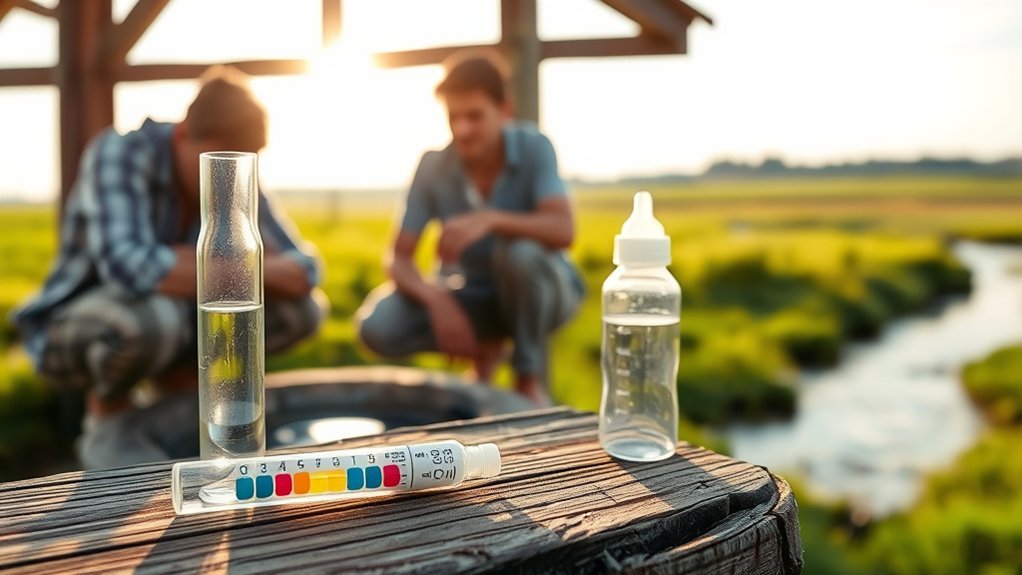
Nitrate can enter groundwater from fertilizer, manure, septic systems, sewage, and natural deposits. You cannot reliably see, smell, or taste it, so laboratory testing is the only way to know the concentration.
Infants younger than six months are the most sensitive group. In the body, nitrate can be converted to nitrite, which interferes with hemoglobin’s ability to carry oxygen. The resulting condition, methemoglobinemia, is often called “blue baby syndrome.” The U.S. Environmental Protection Agency’s drinking-water standard is 10 mg/L for nitrate measured as nitrogen.
The nitrate limit is 10 mg/L when the laboratory reports nitrate as nitrogen—not necessarily 10 mg/L when it reports the full nitrate ion.
Warning: If an infant has blue or gray lips or skin, trouble breathing, unusual sleepiness, weakness, or poor feeding after consuming well water or formula made with well water, seek emergency medical care immediately.
Do not claim that every nitrate exposure causes lasting developmental harm. The well-established immediate concern is reduced oxygen delivery, especially in young infants. People who are pregnant and people with certain health conditions should also discuss elevated nitrate exposure with a health professional or local public-health agency.
Power your essentials anywhere with a 999Wh pure sine wave power station delivering up to 1000W continuous with 2000W surge. It supports fast charging via USB-C PD 60W and USB-A QC 18W, plus simultaneous output for multiple devices through AC, USB, wireless, and car/DC ports. Recharge using AC, car, or solar with a built-in MPPT controller and dual cooling fans, while the upgraded battery management system protects against surges, short circuits, and overheating.

17 IMPORTANT PARAMETERS: The Varify Premium Drinking Water Test Kit offers an unrivaled, complete analysis of your drinking water by testing for 17 essential parameters. This includes crucial tests for chlorine, fluoride, lead, iron, bacteria, and more, ensuring that you're fully informed about the quality of your water. With this extensive range of testing capabilities, you can detect contaminants and imbalances that could affect your health, providing a holistic view of your water's safety.

【22-Parameter Water Testing】We provide a complete testing range of 22 essential water quality indicators including Nickel, Zinc, Tin, Copper, Fluoride, Aluminum, Total Chlorine, Nitrite, Nitrate, Iron, Total Hardness, Free Chlorine, Sodium Chloride, Carbonate, Total Alkalinity, pH, Cobalt, Sulfite, Chromium, Cadmium, Lead, and Bacteria. It offers a thorough and professional overview of your water condition
When to Test Well Water for Nitrates
The EPA recommends testing private wells annually for nitrate, total coliform bacteria, total dissolved solids, and pH. Test more often when local officials recommend it or when your well is at higher risk.
Arrange a nitrate test:
- At least once each year.
- Before well water is used to prepare formula or food for an infant.
- When someone in the household is pregnant or planning a pregnancy.
- After flooding, major land disturbance, nearby construction, or a well repair.
- When nearby farming, manure storage, septic systems, or fertilizer use changes.
- When a previous result was elevated or has been rising toward the limit.
- When the water’s taste, odor, or appearance changes, while remembering that nitrate itself may have no noticeable warning sign.
Note: Private wells are not routinely monitored by a public water utility. The well owner is responsible for arranging tests, interpreting results, and maintaining any treatment system.
How to Obtain a Certified Nitrate Test
1. Contact a Certified Drinking-Water Laboratory
Start with your state or local health department, environmental agency, or a state-certified laboratory. Ask whether the laboratory is certified for nitrate analysis in drinking water and whether local grants cover private-well testing.
2. Ask How the Result Will Be Reported
Before collecting the sample, ask whether the report will show:
- Nitrate as nitrogen, often written as nitrate-N, NO3-N, or mg/L as N; or
- Nitrate as the nitrate ion, often written as NO3 or mg/L nitrate.
This prevents a dangerous unit mix-up when you compare the result with the federal limit.
3. Use Only the Correct Laboratory Bottle
Use the bottle supplied for nitrate testing. Do not substitute a household jar, store-bought bottle, or a bottle prepared for a different analysis. The University of Iowa State Hygienic Laboratory notes that its bacteria and nitrate samples require different bottles because a chemical in the bacteria bottle can interfere with nitrate testing.
How to Collect a Well-Water Sample for Nitrate Testing
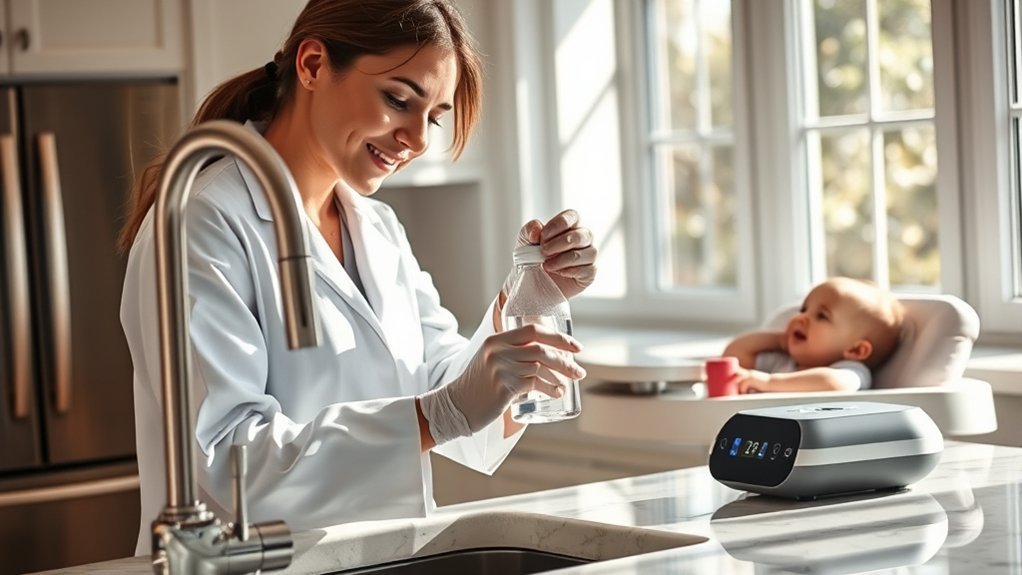
Laboratory instructions take priority because bottle type, preservation, cooling, and holding time can vary by method. Use these general steps unless the laboratory tells you otherwise:
- Choose the sampling point. For the water your family drinks, the kitchen cold-water tap is usually the most useful location. If you are diagnosing the well or checking treatment performance, the laboratory may request separate samples before and after treatment.
- Remove attachments if directed. Take off a hose, faucet filter, or aerator when the laboratory’s instructions require it. Do not sample through a refrigerator dispenser or treatment unit unless that is the specific water you want evaluated.
- Flush the line. Run cold water until the temperature becomes steady or for the period stated by the laboratory. This helps replace water that has been standing in household plumbing.
- Reduce splashing. Set a smooth, moderate stream. Do not touch the inside of the cap or bottle.
- Fill exactly as directed. Do not rinse a bottle that contains preservative. Fill to the marked line or volume specified by the laboratory, then cap it securely.
- Complete the form. Record the date, time, sampling location, whether the sample was collected before or after treatment, and the requested analysis.
- Cool and return promptly. Refrigerate or place the sample on ice if instructed. Ship or deliver it the same day whenever possible so the laboratory’s holding time is met.
Pro Tip: Collect raw and treated samples on the same day after installing a nitrate-removal system. That gives you a baseline for the well and proof that the treatment is working.
How to Interpret Nitrate Test Results
Read the analyte name and unit before comparing the number with a limit. In water, mg/L and ppm are approximately equivalent, but “as nitrogen” and “as nitrate” are not equivalent expressions.
| How the lab reports nitrate | Federal comparison level | What to do |
| Nitrate as nitrogen, nitrate-N, or NO3-N | 10 mg/L as N | At or above 10 mg/L, stop using the water for drinking and food preparation and contact local health officials. |
| Nitrate as NO3 or nitrate ion | About 44.3 mg/L as NO3 | Confirm the reporting basis with the laboratory before deciding whether the result exceeds the limit. |
| Nitrite as nitrogen | 1 mg/L as N | Treat an exceedance as urgent and follow public-health guidance. |
A result below 10 mg/L as nitrate-N meets the federal nitrate standard. Infants remain the most sensitive group, but the standard was set to protect them. If the number is rising, close to the limit, or inconsistent with past results, ask your local health department whether to repeat the test sooner than the normal annual schedule.
Home strips and color tests can be useful for screening or tracking trends, but treatment and infant-feeding decisions should be based on a certified laboratory result.
What to Do If Nitrate Levels Are Too High
1. Switch to a Safe Water Source Immediately
If nitrate is at or above 10 mg/L as nitrate-N, do not use the well water for drinking, cooking, making ice, preparing beverages, mixing infant formula, or preparing infant food. Use water from a regulated public system or bottled water known to meet drinking-water standards. Ready-to-feed infant formula avoids the need to add water.
2. Do Not Boil High-Nitrate Water
Boiling kills many microorganisms, but it does not remove nitrate. Water evaporates while nitrate remains, so the concentration can increase. Ordinary disinfection, ultraviolet light, and chlorine also do not remove dissolved nitrate.
3. Contact Local Health Officials and Confirm the Result
Call your local or state health department for instructions. A confirmation sample may be appropriate, but keep using an alternative water source while waiting. Ask whether nearby wells have similar results and whether a well inspection or source investigation is recommended.
4. Limit Use to Non-Ingestion Purposes
Nitrate is mainly a concern when swallowed. The EPA states that showering and bathing are generally acceptable because nitrate is not readily absorbed through intact skin. Prevent babies from swallowing bath water, and use safe water to wash and sanitize bottles, nipples, pacifiers, breast-pump parts, and other infant-feeding items.
Warning: Do not assume a pitcher filter, refrigerator filter, activated-carbon filter, standard water softener, boiling, or ultraviolet unit removes nitrate. Use a system specifically designed and independently certified for nitrate or nitrate/nitrite reduction.
Nitrate Removal and Long-Term Treatment Options
The right solution depends on the nitrate concentration, water chemistry, household demand, well condition, and whether you need drinking-water treatment at one tap or whole-house treatment.
| Option | Best use | Important limits |
| Reverse osmosis | Point-of-use drinking and cooking water, often at the kitchen sink | Requires membrane and prefilter replacement, produces reject water, and must be certified for nitrate/nitrite reduction rather than merely to a general RO standard. |
| Nitrate-selective anion exchange | Larger-volume or whole-house treatment when designed by a qualified professional | Resin capacity and competing ions affect performance. Regeneration creates a nitrate-rich brine that must be managed properly. |
| Distillation | Small quantities of drinking water | Slower and energy-intensive; requires cleaning and correct operation. |
| New or deeper well | When contamination is linked to a shallow, damaged, or poorly located well | A deeper source is not automatically safe; site evaluation, permits, construction standards, and testing are still required. |
| Connection to a public supply | When a regulated supply is available and treatment or well replacement is impractical | Availability, connection fees, and local requirements vary. |
The EPA identifies anion exchange as a proven nitrate-removal technology, and reverse osmosis and distillation are also established options. Before buying equipment, review the NSF contaminant-reduction listings and verify that the exact model carries a nitrate/nitrite reduction claim.
Have a qualified water-treatment professional or state-licensed well contractor evaluate the complete system. Test the treated water after installation and on the maintenance schedule recommended by the laboratory, health department, and equipment manufacturer.
Long-Term Management and Prevention
Treatment protects the tap, but it does not remove the contamination source. Long-term management should include the well, nearby land use, and household treatment.
- Inspect the well cap, casing, grout, and surrounding drainage for damage or pathways that could let surface water enter.
- Keep fertilizer, manure, fuel, pesticides, and other chemicals away from the wellhead.
- Maintain the septic system and follow local setback requirements between wells, septic systems, manure storage, and other contamination sources.
- Direct runoff away from the well and repair grading problems around the casing.
- Keep records of raw-water and treated-water nitrate results so you can see trends.
- Replace filters, membranes, or resin on schedule and test after service or repair.
- Continue annual nitrate testing even when a treatment system is installed.
If nitrate remains high or continues to rise, ask the health department, environmental agency, or a licensed well professional whether the well should be repaired, replaced, deepened, or abandoned according to local rules.
Other Well-Water Tests to Consider
Nitrate testing does not show whether the well is free of bacteria, arsenic, lead, pesticides, or other contaminants. The EPA recommends annual testing for total coliform bacteria, nitrate, total dissolved solids, and pH. Additional tests should reflect local geology, nearby activities, plumbing materials, flooding, spills, and state guidance.
Common add-on tests include:
- Total coliform and E. coli for possible sanitary contamination.
- Arsenic in areas where it occurs naturally in groundwater.
- Lead and copper when plumbing or fixtures may contribute metals.
- Pesticides or volatile organic compounds near farms, fuel tanks, landfills, dry cleaners, or industrial sites.
- Iron, manganese, hardness, sulfate, and total dissolved solids for water-quality and treatment concerns.
Frequently Asked Questions
How often should I test my well water for nitrates?
Test at least once a year. Test sooner after flooding, well work, major land-use changes, a rising previous result, or before well water is used for infant formula. Follow any more frequent schedule recommended by your state or local health department.
What are the health effects of high nitrate levels?
The clearest immediate risk is methemoglobinemia, which reduces the blood’s ability to carry oxygen. Infants under six months are especially vulnerable. Symptoms can include shortness of breath, weakness, poor feeding, and blue or gray skin or lips.
Can boiling water remove nitrates?
No. Boiling removes water as steam but leaves nitrate behind, which can increase the nitrate concentration. Use a safe alternative water source or a verified nitrate-removal system.
Are home nitrate test kits reliable?
Home strips can screen for nitrate or show a trend, but they are not a substitute for a state-certified laboratory when deciding whether water is safe for an infant or whether treatment is working.
What does “nitrate as nitrogen” mean?
It means the laboratory reports only the nitrogen portion of the nitrate molecule. The federal limit is 10 mg/L as nitrate-N, which is equivalent to about 44.3 mg/L when nitrate is reported as the full NO3 ion.
Can I shower or bathe with high-nitrate well water?
Generally, yes, because nitrate is mainly a concern when swallowed and is not readily absorbed through intact skin. Keep babies from swallowing bath water, and use safe water for infant-feeding items.
Will a carbon or refrigerator filter remove nitrate?
Usually not. Activated carbon, sediment filters, ultraviolet units, and ordinary refrigerator filters are not dependable nitrate-removal methods. Choose a system independently certified for nitrate/nitrite reduction.
What other contaminants should I test for in well water?
At a minimum, discuss total coliform bacteria, nitrate, total dissolved solids, and pH with your testing laboratory. Depending on local geology and nearby activities, you may also need arsenic, lead, pesticides, volatile organic compounds, or other tests.
Conclusion
Safe nitrate testing depends on three details: a certified laboratory, the correct sample bottle, and the correct reporting unit. Test the well every year, test before using it for infant formula, and act immediately when nitrate is at or above 10 mg/L as nitrate-N. Use safe replacement water while you confirm the result and arrange a verified long-term solution.
Sources
- U.S. EPA — National Primary Drinking Water Regulations — nitrate and nitrite limits and infant health effects
- U.S. EPA — Protect Your Home’s Water — testing frequency, certified laboratories, and private-well management
- U.S. EPA — Certified Drinking-Water Laboratories — state laboratory certification contacts
- University of Iowa State Hygienic Laboratory — Private Well Water — sample bottles, collection, and laboratory delivery
- Minnesota Department of Health — Nitrate in Well Water — health, testing, and treatment guidance
- NSF — Contaminant Reduction Claims Guide — finding treatment units certified for nitrate/nitrite reduction