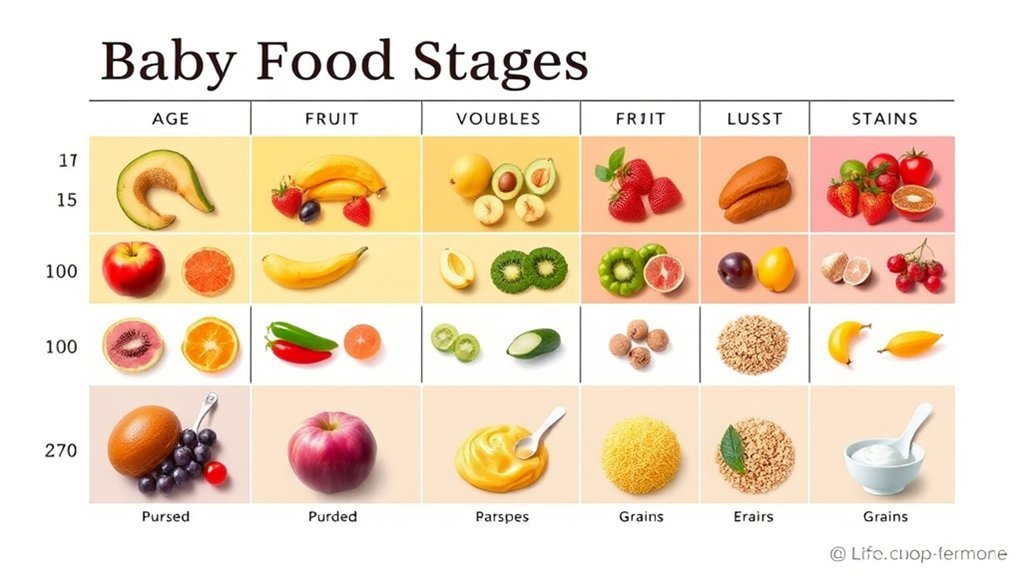
Here’s a quick reference for baby food stages by age. Start solids around 6 months, focusing on Stage 1 purees with single ingredients like sweet potatoes and apples. At 6-9 months, shift to Stage 2 with thicker, combined textures. By 9-12 months, move to Stage 3 with small, soft chunks for chewing skills. Introduce one food at a time, monitoring for reactions. Keep exploring to guarantee your baby enjoys a variety of healthy foods!
Key Takeaways
- Stage 1 (4-6 months): Introduce single-ingredient purees, starting with 1-2 teaspoons and increasing as comfort grows.
- Stage 2 (6-9 months): Offer thicker textures and combinations, serving 2-3 meals with 3-4 tablespoons of mashed foods.
- Stage 3 (9-12 months): Transition to small, soft chunks, incorporating up to 1 cup of fruits, veggies, and proteins daily.
- Allergy Monitoring: Introduce one new food at a time, waiting 3-5 days to observe any reactions.
- Feeding Frequency: Decrease milk intake frequency as solids are introduced, adjusting to individual baby needs.
A Comprehensive Guide to Baby Food Stages

How do you know when your baby is ready to start solid foods? Look for feeding milestones like head control and curiosity about your meals.
Typically, around 6 months, you can introduce baby food, starting with Stage 1. Here, focus on single-ingredient purees, such as sweet potatoes or apples, for gentle digestion.
As your baby progresses to Stage 2 (6-9 months), incorporate thicker textures and soft combinations—think apple and banana or carrot and avocado—to encourage self-feeding.
By Stage 3 (9-12 months), shift to small, soft chunks like bite-sized pasta and shredded chicken, promoting flavor exploration.
Always introduce new foods one at a time and monitor for any reactions to guarantee a safe and enjoyable experience.
When to Start Introducing Solid Foods to Your Baby?
As your baby approaches the 6-month mark, it’s crucial to look for signs of readiness before introducing solid foods. Signs like steady head control and an interest in your meals indicate solid food readiness.
Until then, stick to exclusive breastfeeding or formula to meet their nutritional needs. The American Academy of Pediatrics suggests starting with single-ingredient purees, which allows you to monitor for any allergic reactions when introducing allergens.
Begin with small amounts, about 1-2 teaspoons, and gradually increase as your baby becomes more comfortable with eating.
Always consult your pediatrician before starting solids to verify your baby’s individual readiness and health are taken into consideration. This step sets the foundation for a healthy relationship with food.
Best Foods for Baby Food Stages

As you explore the best foods for each baby food stage, it’s essential to start with simple purees during Stage 1, like sweet potatoes and apples, to ease digestion.
Moving into Stage 2, you can introduce thicker textures with combinations like apple and banana, which also promote self-feeding.
Stage 1 Food Ideas
Introducing Stage 1 baby foods around 4-6 months can be an exciting milestone for both you and your little one.
At this stage, focus on smooth, single-ingredient purees like sweet potatoes, apples, and peas. These foods are gentle on your baby’s digestion and help establish preferences for future meals.
Start with 1-2 teaspoons, gradually increasing to 1-2 tablespoons as your baby adapts to solids. Remember to introduce new foods one at a time, waiting 3-5 days to check for any allergic reactions.
Look for signs of readiness, such as steady head control and interest in adult meals.
Experiment with simple puree recipes to support your baby’s texture progression and make mealtime a joyful experience!
Stage 2 Food Options
Around 6-9 months, your baby is ready for Stage 2 foods, which offer thicker textures and exciting flavor combinations. At this stage, you can introduce purees that combine fruits and vegetables, such as apple and banana or carrot and avocado.
These meals support your baby’s texture exploration, helping them shift to more complex flavors. Soft finger foods, like small pieces of ripe fruits and cooked vegetables, encourage self-feeding, allowing your little one to practice their chewing skills—even without teeth.
Keep an eye on your baby’s reactions to new foods, and be flexible in your approach. This adaptability guarantees they feel comfortable and open to trying various textures, fostering a positive eating experience.
Stage 3 Food Choices
Once your baby reaches 9-12 months, they’re ready to explore Stage 3 foods, which feature small, soft chunks that enhance their chewing skills and encourage self-feeding.
This stage is all about chunk exploration, allowing your little one to confidently handle various textures and flavors.
Consider offering these nutritious options:
- Bite-sized pasta for easy chewing
- Shredded chicken for protein-rich meals
- A colorful array of fruits and vegetables for essential vitamins
These foods not only promote self-feeding skills but also support your baby’s motor development and independence at mealtime.
As you introduce new foods, be certain to observe your baby’s reactions to verify they’re comfortable and excited to explore their culinary journey.
How Much Should Your Baby Eat at Each Age?

Understanding how much your baby should eat at each age is essential for their growth and development.
From exclusive breastfeeding or formula in the early months to gradually increasing solid food portions, each stage has specific guidelines.
You’ll want to follow age-specific portion sizes and feeding frequency to help your baby establish healthy eating habits.
Age-Specific Portion Sizes
At different stages of your baby’s development, portion sizes will vary markedly as they shift from pureed foods to more textured table foods.
Understanding age milestones helps you practice effective portion control for your little one.
- For 4-6 months, start with 1-2 teaspoons of pureed foods, increasing to 1-2 tablespoons.
- At 6-8 months, aim for 2-3 meals with 3-4 tablespoons of mashed foods.
- By 10-12 months, meals typically include 24-32 ounces of milk, 5-8 tablespoons of cereal, and up to 1 cup of fruits, veggies, and proteins.
Navigating these portion sizes guarantees your baby receives adequate nutrition while exploring new flavors and textures.
Feeding Frequency Guidelines
Feeding frequency is essential for your baby’s growth and development, especially during the first year. Understanding how often to feed your baby can help you maximize the breastfeeding benefits or explore formula alternatives. Here’s a quick overview:
| Age | Breastfeeding Frequency | Formula Feeding Frequency |
|---|---|---|
| Newborn | 8-12 times/day | 6-10 times/day |
| 1-3 months | 7-9 times/day | 5-7 times/day |
| 3-6 months | 6-8 times/day | 4-6 times/day |
| 10-12 months | 24-32 oz + solids | 24-32 oz + solids |
As your baby grows, their feeding frequency will decrease, allowing room for solid foods. Remember, each baby is unique, so listen to their cues!
Essential Feeding Tips for New Parents
As your baby approaches six months, you’ll notice signs of readiness for solid foods, like head control and curiosity about what you eat.
Start introducing single-ingredient purees, which can help you identify any feeding challenges or potential food allergies early on. Gradually increase to thicker textures and combinations as your baby becomes comfortable.
- Aim for 1-2 tablespoons of pureed food initially.
- Introduce new foods one at a time and wait 3-5 days between introductions.
- By 10-12 months, include a variety of foods like fruits, vegetables, and proteins.
These steps guarantee your baby enjoys a diverse diet while monitoring for any adverse reactions.
How to Monitor Your Baby’s Reactions to New Foods
Introducing new foods to your baby’s diet can be an exciting yet anxious time for parents. To monitor your baby’s reactions effectively, introduce one food at a time and wait 3-5 days before adding another. This helps you identify possible food allergies.
Keep a food log to track what your baby eats and any reaction signs, such as rashes, vomiting, or diarrhea. If you notice excessive fussiness, consult your pediatrician.
It’s also worth retrying foods your baby initially rejects after a few days, as their tastes can change. Always prioritize safety and seek professional advice if you observe severe reactions or have concerns about your baby’s diet.
Frequently Asked Questions
Can I Mix Breast Milk or Formula With Solid Foods?
Yes, you can mix breast milk or formula with solid foods. This mixing method enhances nutritional benefits, ensuring your baby receives essential nutrients while shifting to solids, promoting a balanced diet during their development.
What Are Common Allergenic Foods to Introduce First?
“Better safe than sorry.” Common allergenic foods like peanuts, eggs, and dairy should be introduced gradually. Use safe introduction methods, like offering small amounts, to monitor reactions and guarantee your baby’s safety and comfort.
How Can I Tell if My Baby Is Ready for Solids?
You’ll know your baby’s ready for solids when they show feeding cues, like reaching for food, and achieve developmental milestones, such as sitting up independently. These signs indicate they’re prepared for this exciting new stage!
When Should I Stop Pureeing Foods for My Baby?
You should stop pureeing foods when your baby confidently handles soft, mashed textures. Embrace baby food changes by introducing small, soft pieces around 8-10 months, encouraging independence and exploration while fostering their developing chewing skills.
Is Homemade Baby Food Safer Than Store-Bought Options?
Homemade baby food can be safer than store-bought options. You control organic ingredients, ensuring nutritional benefits while avoiding preservatives. Plus, you can customize flavors and textures to suit your baby’s preferences, promoting a healthier start.
Conclusion
In summary, steering your baby’s food journey doesn’t have to be an intimidating task. By understanding the stages of baby food and introducing new flavors at the right time, you can set the stage for a lifetime of healthy eating. Remember, every baby is unique, so trust your instincts and keep an eye out for any reactions. With patience and a little trial and error, you’ll soon find what works best for your little one. You’re truly in the driver’s seat!