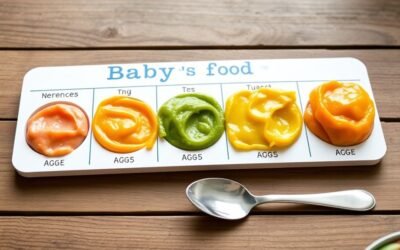


When your baby refuses vegetables, it does not mean they will always dislike them. New flavors, unfamiliar textures, tiredness, teething, appetite changes, and normal developmental behavior can all affect what a child accepts. A calm, no-pressure approach—with safe preparation and repeated opportunities—usually works better than forcing one more bite.
Quick Answer
Keep offering small portions of safely prepared vegetables without forcing your baby to eat them. Try different soft textures, eat the vegetable yourself, and let your child touch or smell it. Acceptance may take 8–10 exposures or more. Contact your pediatrician if refusal affects growth, nutrition, swallowing, or overall food intake.
Key Takeaways
- Food refusal is common and can reflect unfamiliarity, texture sensitivity, changing appetite, or normal toddler independence.
- A child may need 8–10 calm exposures—or more—before willingly trying a new vegetable.
- Serve vegetables in textures and shapes that match your child’s current eating skills.
- Avoid forcing, bargaining, bite-counting, or using dessert as a reward for eating vegetables.
- Seek professional advice when refusal is severe, causes poor growth, or comes with pain, choking, coughing, or difficulty swallowing.
Note: This guidance is for babies who are developmentally ready for complementary foods and for toddlers. The CDC and American Academy of Pediatrics generally recommend beginning foods other than breast milk or formula at about 6 months, based on readiness signs such as head control and the ability to sit with support. Review the CDC’s solid-food readiness guidance before starting.
Why Babies and Toddlers Refuse Vegetables
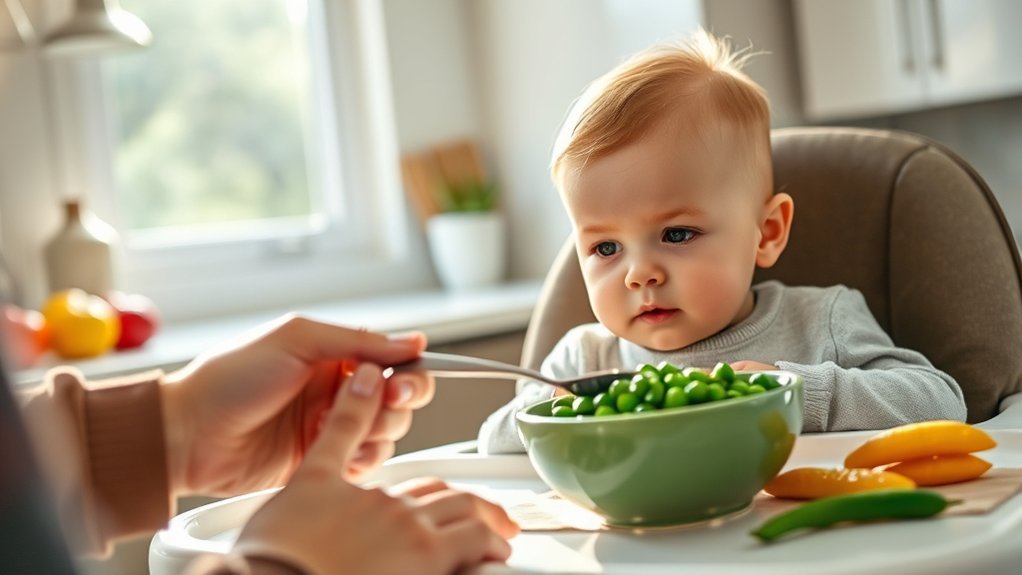
Babies and toddlers may refuse vegetables for different reasons. A baby who has recently started solids is still learning how food feels, tastes, and moves in the mouth. A toddler may reject a familiar vegetable while testing independence or reacting to a change in its color, shape, or texture.
Common reasons include:
- Unfamiliar flavor: Some vegetables taste more bitter than breast milk, formula, fruit, or other familiar foods.
- Texture: A child may accept smooth peas but reject whole peas, or enjoy mashed sweet potato but dislike roasted cubes.
- Changing appetite: Babies and toddlers do not eat the same amount at every meal or on every day.
- Tiredness, teething, or illness: Discomfort can temporarily reduce interest in food.
- Normal independence: Older babies and toddlers may refuse food because they want control over what enters their mouth.
- Too much pressure: Repeated urging, bargaining, or celebrating every bite can make a child more cautious about the food.
A grimace does not automatically mean permanent dislike. Your child may be surprised by the taste or still learning to handle the texture. Watch the whole pattern over several meals instead of judging one facial expression.

Power your essentials anywhere with a 999Wh pure sine wave power station delivering up to 1000W continuous with 2000W surge. It supports fast charging via USB-C PD 60W and USB-A QC 18W, plus simultaneous output for multiple devices through AC, USB, wireless, and car/DC ports. Recharge using AC, car, or solar with a built-in MPPT controller and dual cooling fans, while the upgraded battery management system protects against surges, short circuits, and overheating.
Simply stack and press to chop: The patented stack & press design makes it easy to assemble and use. Simply press the lid to chop and release to stop. Since all you do is stack the lid on top of the bowl, no difficult twist-locking is needed.

Spill-Proof Design: Soft, flexible flaps on lid keep snacks in place—perfect for little hands and mess-free snacking
Use Repeated Exposure Without Pressure
Repeated exposure is one of the most useful ways to build familiarity. According to the CDC’s guidance for picky eaters, it may take 8–10 exposures before a young child is willing to try a new food. Some children need additional opportunities.
An exposure does not have to end with swallowing. Looking at a vegetable, touching it, smelling it, licking it, or allowing it to remain on the plate can all make the food more familiar.
- Serve a very small amount. One soft floret, one spoonful, or two small pieces are enough for practice.
- Include a familiar food. Place the vegetable beside something your child usually accepts without hiding or pressuring them.
- Let your child decide whether to eat it. Avoid putting food into a resisting child’s mouth.
- Offer it again later. Change the preparation or texture while keeping the experience calm.
Success is not limited to taking a bite. Calmly touching, smelling, licking, or tolerating a vegetable on the plate can be a step toward acceptance.
Pro Tip: Freeze small, age-appropriate portions of cooked vegetables. You can thaw one portion at a time for repeated exposure without preparing a full serving or wasting much food.
Match the Vegetable Texture to Your Baby’s Skills
The best texture depends on your child’s development, not only their age. The CDC recommends offering a range of textures and gradually progressing as eating skills improve.
When Your Baby Is New to Solids
Cook vegetables until very soft, then mash, puree, or strain them to a texture your baby can manage. Suitable examples may include:
- Mashed sweet potato
- Pureed peas
- Mashed avocado
- Soft, mashed squash
- Pureed or finely mashed cooked carrots
Breast milk, formula, or water can be used to thin a puree when needed. Breast milk or infant formula should remain an important source of nutrition during the first year.
As Chewing and Hand Skills Develop
Gradually introduce mashed or lumpy foods, finely chopped vegetables, and soft finger foods. Vegetables should be cooked until they can be easily mashed between your fingers or with a fork.
Examples include soft broccoli florets, mashed beans, finely chopped spinach mixed into a familiar dish, soft zucchini, and tender strips of cooked vegetables prepared in an age-appropriate shape.
Warning: Hard raw vegetable pieces, including raw carrot chunks, can block a young child’s airway. Uncut cherry tomatoes, whole corn kernels, and other round or firm foods can also be choking hazards. Seat your child upright, remove distractions, and watch them continuously while they eat. Follow the CDC’s current choking-prevention guidance.
Gagging can occur while a baby learns to manage a new texture. Gagging is usually noisy and may include coughing or retching. Choking may be silent and can prevent breathing or crying. Choking is an emergency; caregivers should learn infant and child first aid from a qualified instructor.
Make Vegetables Familiar and Interesting
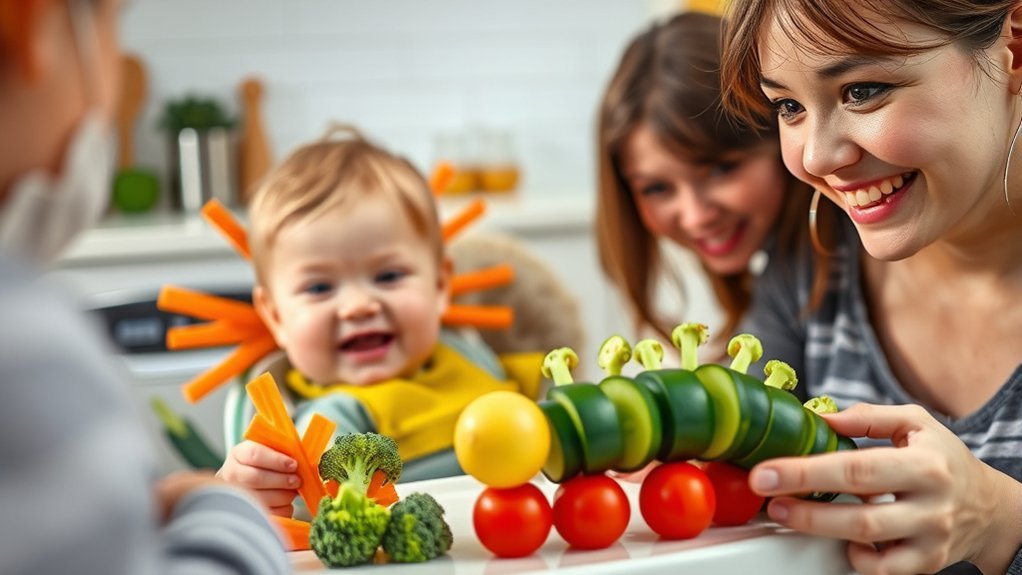
Creative presentation can attract attention, especially for toddlers, but it should not turn the meal into a performance your child must complete. Keep it simple and age appropriate.
- Change the preparation: Try mashed, steamed, roasted, grated, finely chopped, or blended vegetables as appropriate for your child’s skills.
- Use playful descriptions: Toddlers may enjoy names such as “broccoli trees” or “carrot sticks for crunching,” provided the actual food is prepared safely.
- Offer choices: Ask an older baby or toddler to choose between two prepared options, such as peas or soft squash.
- Create simple arrangements: Older toddlers may enjoy vegetables placed in a face, rainbow, or line.
- Pair new and familiar foods: Serve a new vegetable beside a food your child already eats.
- Try different temperatures: Some children prefer a vegetable warm, while others accept it cooled.
Using Dips Safely
A thin layer of plain, unsweetened yogurt, mashed avocado, or smooth hummus may encourage exploration when the ingredients are appropriate for your child. Check for added sugar and excess sodium, and avoid serving thick spoonfuls that may be difficult to manage.
Yogurt and hummus may contain common allergens such as milk or sesame. Introduce allergenic foods in developmentally appropriate forms and follow your pediatrician’s advice if your child has severe eczema, a known food allergy, or a previous reaction.
Note: Never sweeten a baby’s dip with honey before 12 months. Honey can cause infant botulism. Choose foods without added sugar whenever possible.
Involve Your Child at the Right Developmental Level
Hands-on food experiences can increase familiarity, but the activity must match your child’s age and abilities. A baby may watch you cook, safely touch a soft vegetable, or smell food. A toddler may be ready for simple supervised tasks.
Choosing Between Vegetables Together
Offer two acceptable choices instead of asking an open-ended question. For example:
- “Would you like peas or squash on your plate?”
- “Should we cook broccoli or green beans tonight?”
- “Would you like the carrot mashed or cut into soft strips?”
Your child may choose an option and still decide not to eat it. The value comes from familiarity and participation, not a guaranteed bite.
Simple Meal-Preparation Tasks
Depending on your toddler’s development, supervised tasks may include:
- Placing prewashed vegetables in a bowl
- Washing vegetables in a basin with help
- Tearing soft lettuce leaves
- Stirring cool ingredients with a child-safe spoon
- Arranging prepared vegetables on a plate
- Carrying a vegetable from the refrigerator to the counter
Keep knives, peelers, hot cookware, raw meat, and small choking hazards out of reach. Babies and young toddlers should not peel or cut vegetables.
Exploring Food Without Requiring a Bite
Non-eating activities can reduce pressure and build familiarity:
- Texture exploration: Let your child touch a cooked vegetable with clean hands.
- Color sorting: Help an older toddler group prepared vegetables by color.
- Garden exploration: Show your child where a vegetable grows while supervising closely.
- Tasting plate: Offer tiny portions of two or three safely prepared vegetables without asking your child to finish them.
- Food stories: Talk briefly about the vegetable’s color, shape, smell, or how it was cooked.
Praise participation with neutral comments such as, “You touched the broccoli,” or, “You helped put the peas in the bowl.” Avoid promising stickers, sweets, or screen time only if the child swallows the vegetable.
Use Family Meals and Responsive Feeding
Family meals give children a chance to watch trusted adults and siblings eat vegetables. Modeling is often more effective than repeatedly telling a child that a food is healthy.
A responsive feeding approach keeps the caregiver and child in separate, appropriate roles:
- You choose which foods are offered, where the meal happens, and when food is served.
- Your child decides whether to eat and how much to eat from the foods provided.
- You keep the meal calm and avoid forcing, shaming, bargaining, or comparing siblings.
- You offer regular meals and snacks rather than allowing continuous grazing throughout the day.
A shared meal is an opportunity to model eating—not a test your child must pass.
Try eating the vegetable yourself and describing it without pressure: “This squash is soft,” or, “The peas taste a little sweet.” Avoid claiming that a child will love it or asking for an immediate verdict.
What to Do at the Next Meal
When your child refuses a vegetable, use this simple response:
- Stay neutral and avoid showing disappointment.
- Do not force the spoon or return the rejected food to your child’s mouth.
- Allow your child to eat the other foods offered.
- End the meal when your child shows clear fullness cues or loses interest.
- Offer the vegetable again on another day in a small portion.
- Try a different safe texture or preparation if rejection continues.
You do not need to prepare a replacement meal immediately because one vegetable was refused. It can help to include at least one familiar food in the original meal so your child has something they can comfortably eat.
Common Mistakes to Avoid
- Forcing a bite: Pressure can increase distress and resistance.
- Counting bites: “Three more bites” shifts attention away from hunger and fullness.
- Using dessert as payment: This can make dessert seem more valuable and vegetables seem like a chore.
- Offering an oversized portion: A large pile of unfamiliar food may feel overwhelming.
- Serving the vegetable only once: One rejection does not establish a lasting preference.
- Hiding every vegetable: Blending vegetables into sauces can add variety, but children also need chances to see, smell, and recognize vegetables.
- Comparing children: Eating skills and preferences develop at different rates.
- Ignoring texture safety: A creative shape is not helpful if the food is too hard, round, sticky, or large for the child.
When to Contact Your Pediatrician About Food Refusal
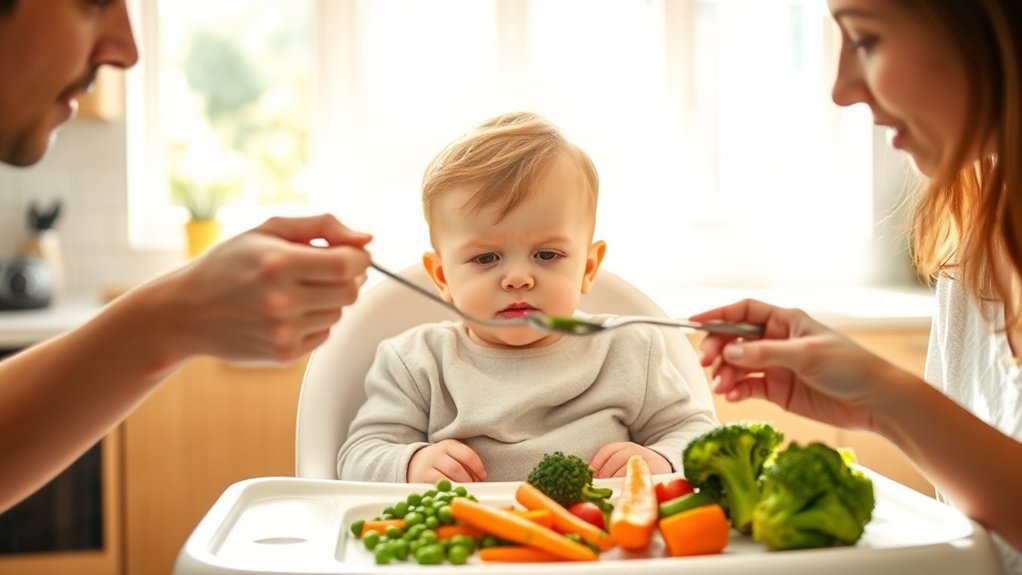
Occasional vegetable refusal is usually not an emergency. Contact your child’s pediatrician when feeding difficulties are persistent, severe, or affecting health or development.
Arrange an evaluation if your child:
- Is not gaining weight as expected or is losing weight
- Eats an extremely narrow range of foods that continues to shrink
- Relies heavily on supplements or special drinks to meet nutritional needs
- Regularly coughs, chokes, gags excessively, or has a wet-sounding voice during meals
- Has trouble chewing or moving food in the mouth
- Refuses all textures except smooth purees beyond the stage expected for their development
- Shows pain, arching, repeated vomiting, or significant distress while eating
- Has meals that routinely last an unusually long time
- Appears unusually tired, pale, weak, or dehydrated
- Shows intense fear of swallowing, choking, vomiting, or particular food textures
A pediatrician may assess growth, nutrition, reflux, constipation, allergies, oral-motor skills, and other medical causes. Depending on the findings, your child may be referred to a registered dietitian, feeding therapist, speech-language pathologist, occupational therapist, gastroenterologist, or another specialist.
Ordinary picky eating is not the same as avoidant/restrictive food intake disorder. ARFID is a clinical diagnosis involving significant nutritional, growth, supplement-dependence, or psychosocial effects and requires a complete professional evaluation.
Emergency warning: Call emergency services immediately if your child cannot breathe, cry, or cough effectively, or develops trouble breathing, facial or tongue swelling, faintness, or other signs of a severe allergic reaction.
Frequently Asked Questions
What if my baby only eats pureed vegetables?
Smooth purees can be appropriate when a baby first begins solids. As chewing and mouth skills develop, gradually offer mashed, lumpy, finely chopped, or other safely prepared textures. Contact your pediatrician if your baby persistently cannot manage thicker textures, coughs or chokes during meals, or shows poor growth.
Are some vegetables easier for babies to accept?
Mild or naturally sweet vegetables such as sweet potato, squash, peas, and cooked carrots may be accepted more readily by some babies. However, preferences vary. Continue offering a range of vegetables, including less-sweet choices, in safe textures and small portions.
Can I mix vegetables with fruit?
Yes. Mixing a vegetable with a familiar fruit can create a bridge to a new flavor. Continue offering the vegetable on its own at other meals so your child can learn its appearance, smell, taste, and texture rather than encountering it only when hidden.
How should I respond when my baby makes a face or spits out vegetables?
Stay calm and avoid immediately deciding that your baby hates the food. The flavor or texture may be unfamiliar. Let your baby stop, clean up without criticism, and offer a small portion again on another day.
How many times should I offer a rejected vegetable?
Many young children need 8–10 exposures or more. There is no exact number that works for every child. Keep portions small, space the exposures over time, and avoid requiring a bite at each meal.
Should I hide vegetables in other foods?
Blending vegetables into soups, sauces, or familiar foods can add variety, but it should not be the only strategy. Offer visible vegetables too, so your child learns to recognize and accept them without feeling misled.
What are signs of a more serious food aversion?
Seek professional advice when the accepted-food list keeps shrinking, growth is affected, meals cause intense distress, the child fears choking or vomiting, or certain textures repeatedly cause coughing, choking, pain, or prolonged gagging.
Will refusing vegetables now cause lifelong picky eating?
Not necessarily. Preferences can change many times during infancy and childhood. Repeated low-pressure exposure, safe texture progression, regular meals, and adult modeling can help children become more comfortable with a wider range of foods.
Conclusion
A baby’s refusal to eat vegetables does not predict their future diet. Keep portions small, match the texture to your child’s abilities, and offer vegetables repeatedly without pressure. Let your child explore food, watch family members eat it, and stop when they are full. Contact your pediatrician when refusal affects growth, nutrition, swallowing, or the child’s comfort and safety.
Sources
- CDC: Picky Eaters and What to Do — repeated exposure, modeling, choices, and normal picky-eating behavior.
- CDC: When, What, and How to Introduce Solid Foods — readiness signs, food preparation, allergens, and texture progression.
- CDC: Tastes and Textures — smooth, mashed, lumpy, finely chopped, and ground food textures.
- CDC: Choking Hazards — unsafe food shapes, supervision, seating, and choking prevention.
- NCBI Bookshelf: Repeated Exposure to Foods and Early Food Acceptance — evidence review on repeated exposure and acceptance of vegetables and fruits.
- American Academy of Pediatrics: Helping a Picky Eater Try More Foods — low-pressure exposure, food involvement, and caregiver modeling.