


Hot dogs can be served to toddlers, but their round, firm shape makes them a serious choking hazard unless they are prepared correctly. The safest approach is to heat the hot dog, let it cool, cut it lengthwise into four narrow strips, and then chop those strips into very small pieces. Whole hot dogs and round slices should never be served to a toddler.
Quick Answer
Heat a fully cooked hot dog until it is steaming hot, then let it cool. Cut it lengthwise into four narrow strips and cut those strips crosswise into pieces no larger than about 1/2 inch. Remove any tough casing. Seat your toddler upright, serve a small portion, and supervise every bite. Never serve a whole hot dog or round slices.
Key Takeaways
- Hot dogs remain a choking hazard throughout the toddler years, regardless of the meat or plant ingredients used.
- Never serve a toddler a whole hot dog or round, coin-shaped slices.
- Cut the hot dog lengthwise into four narrow strips and then chop the strips into pieces no larger than about 1/2 inch.
- Heat ready-to-eat hot dogs until steaming, but let the pieces cool before placing them on your child’s plate.
- Keep your child seated upright and supervise the entire meal without distractions.
- Hot dogs are often high in sodium, so serve them occasionally rather than treating them as a daily protein source.
At a Glance
| Time Required | About 5–10 minutes, including cooling time |
| Difficulty | Easy, but careful cutting and supervision are essential |
| Tools Needed | Clean cutting board, sharp knife and optional food thermometer |
| Cost | Varies by product; no special equipment is required |
Warning: Never give a toddler a whole hot dog, a large chunk or round slices. A round piece can closely match the shape of a young child’s airway and become firmly lodged. Cutting the hot dog lengthwise before making any crosswise cuts is essential.
When Can Toddlers Start Eating Hot Dogs Safely?

There is no single birthday when an unmodified hot dog suddenly becomes safe. Toddlers are still developing their chewing, swallowing and judgment skills, and hot dogs remain a recognized choking hazard throughout these years.
The American Academy of Pediatrics advises keeping high-risk foods away from children until age 4 or later unless those foods are thoroughly modified. It specifically notes that hot dogs can be served only when they are completely chopped into tiny pieces.
Preparation therefore matters more than a fixed 12-month or 24-month milestone. A toddler who is eating table foods may be offered a small amount of hot dog when it has been heated, cooled and cut correctly. A whole hot dog should not be offered at age 2.
Ask your pediatrician or a qualified feeding therapist before serving hot dogs if your child has a swallowing disorder, frequently coughs during meals, pockets food in the cheeks, struggles with textured foods or cannot remain seated upright while eating.
Note: A child’s ability to bite a food does not prove that the child can grind and safely swallow it. Toddlers may bite off a large piece and attempt to swallow it whole.

Power your essentials anywhere with a 999Wh pure sine wave power station delivering up to 1000W continuous with 2000W surge. It supports fast charging via USB-C PD 60W and USB-A QC 18W, plus simultaneous output for multiple devices through AC, USB, wireless, and car/DC ports. Recharge using AC, car, or solar with a built-in MPPT controller and dual cooling fans, while the upgraded battery management system protects against surges, short circuits, and overheating.

Hot Dog Cookie Cutter: Serve up smiles with hotdog shaped cookies that are perfect for backyard BBQs, summer parties, baseball games, or picnic themed events. Let’s be Frank… these cookies are adorable!
Essential Preparation Steps for Toddler Hot Dogs
Use the following steps each time you prepare a hot dog for a toddler.
- Read the package. Confirm whether the product is fully cooked or must be cooked before eating. Do not assume every sausage-shaped product is ready to eat.
- Heat it thoroughly. Reheat a fully cooked hot dog until it is steaming hot. The USDA Food Safety and Inspection Service recommends reheating hot dogs until steaming for people at increased risk of foodborne illness. Follow the package’s cooking directions for an uncooked product.
- Let it cool. A steaming hot dog can burn a toddler’s mouth. Allow it to cool before cutting or serving, and test the center of a piece with a clean utensil.
- Check the casing. Remove any non-edible casing. If an edible casing is thick, rubbery or hard for your child to chew, peel it off.
- Cut it lengthwise. Divide the hot dog into four narrow strips before making any crosswise cuts.
- Chop the strips. Cut each strip into small pieces no larger than about 1/2 inch. The final pieces should not retain a full circular shape.
- Serve a few pieces at a time. A small amount on the tray or plate can help prevent hurried handfuls.
- Supervise continuously. Keep your child seated upright and remain close enough to respond immediately.
| Step | What to Do | Why It Matters |
|---|---|---|
| Heat | Heat a ready-to-eat hot dog until steaming or cook an uncooked product as directed. | Reduces foodborne-illness risk. |
| Cool | Let the center cool to a comfortable eating temperature. | Prevents mouth burns. |
| Quarter | Cut lengthwise into four narrow strips. | Eliminates the full round airway-blocking shape. |
| Chop | Cut the strips crosswise into pieces no larger than about 1/2 inch. | Makes each bite easier to manage. |
| Supervise | Keep the child seated and watch every bite. | Allows an immediate response if choking occurs. |
Pro Tip: Cut the entire toddler portion before placing any food on the plate. This prevents an intact end piece or accidental round slice from reaching your child.
How to Cut Hot Dogs to Minimize Choking Risks

The safest cutting method removes the hot dog’s circular shape before creating small bites:
- Place the cooled hot dog lengthwise on a clean cutting board.
- Slice it from end to end to create two long halves.
- Slice each half lengthwise again, creating four narrow strips.
- Turn the strips and cut them crosswise into short pieces no larger than about 1/2 inch.
- Inspect the pieces and remove any end that still looks large, thick or nearly round.
The CDC recommends cutting cylindrical foods such as hot dogs and sausages into short, thin strips because round pieces can become stuck in a child’s airway.
Always cut lengthwise first. Cutting a hot dog straight across creates the round shape most likely to plug a young child’s airway.
Do not rely on your toddler to take appropriately sized bites from a whole or halved hot dog. Even a child who usually chews well can bite off more than they can safely manage.
Gagging vs. Choking: Know the Difference
Gagging and choking are not the same. Gagging is a protective response that can occur while a child learns to manage food. A gagging child can usually cough, make sounds and move air.
Severe choking occurs when the airway is blocked. Warning signs include:
- An inability to breathe, cry, speak or make normal sounds
- A weak or silent cough
- Sudden distress or clutching at the throat
- Blue, gray or unusually pale coloring around the lips or face
- Loss of responsiveness
Choking Emergency: Call 911 for severe choking. For a responsive child older than 1, current American Heart Association guidance recommends five back blows followed by five abdominal thrusts, repeated until the object is expelled or the child becomes unresponsive. If the child becomes unresponsive, begin CPR. Remove an object only when it is clearly visible; do not perform a blind finger sweep. Infants younger than 1 require different techniques, including chest thrusts rather than abdominal thrusts.
Written instructions cannot replace hands-on training. Parents, relatives, babysitters and other regular caregivers should complete a certified pediatric first aid and CPR course.
How to Keep Mealtime Safe and Fun for Your Toddler
A calm routine helps a toddler focus on biting, chewing and swallowing. Use these habits at every meal:
- Seat your toddler upright in a secure high chair or suitable child-sized seat.
- Do not allow eating while walking, running, playing or lying down.
- Avoid serving food in a moving vehicle whenever possible.
- Keep toys, phones and television from distracting the child during active eating.
- Serve only a few hot-dog pieces at a time.
- Encourage a slow pace without forcing the child to finish.
- Remain close and attentive rather than supervising from another room.
- Check that the child has swallowed before offering another large bite.
Modeling a relaxed pace can help, but do not assume that reminders to “chew well” make an unsafe shape safe. Proper preparation remains the primary protection.
How to Choose Hot Dogs for a Toddler
No single brand is automatically the best choice for every toddler. Compare products using the package rather than relying on words such as “natural,” “uncured,” “turkey” or “plant-based.”
- Preparation status: Choose a product clearly labeled fully cooked when you want the simplest preparation. Follow all cooking directions.
- Sodium: Compare the milligrams of sodium for the same serving size and choose the lower-sodium option when practical.
- Allergens: Check for ingredients such as milk, soy, wheat or other allergens relevant to your child.
- Casing: Avoid a tough casing your child cannot easily chew, or remove it before cutting.
- Serving size: Remember that the label’s serving may be larger than the amount offered to a toddler.
The CDC lists hot dogs and sausages among processed meats that can be high in sodium. Sodium varies considerably between products, so comparing labels is more useful than choosing by meat type alone.
Note: Turkey, chicken and veggie hot dogs have the same cylindrical choking shape as beef or pork hot dogs. They require exactly the same cutting and supervision precautions.
Nutrition and Portion Considerations
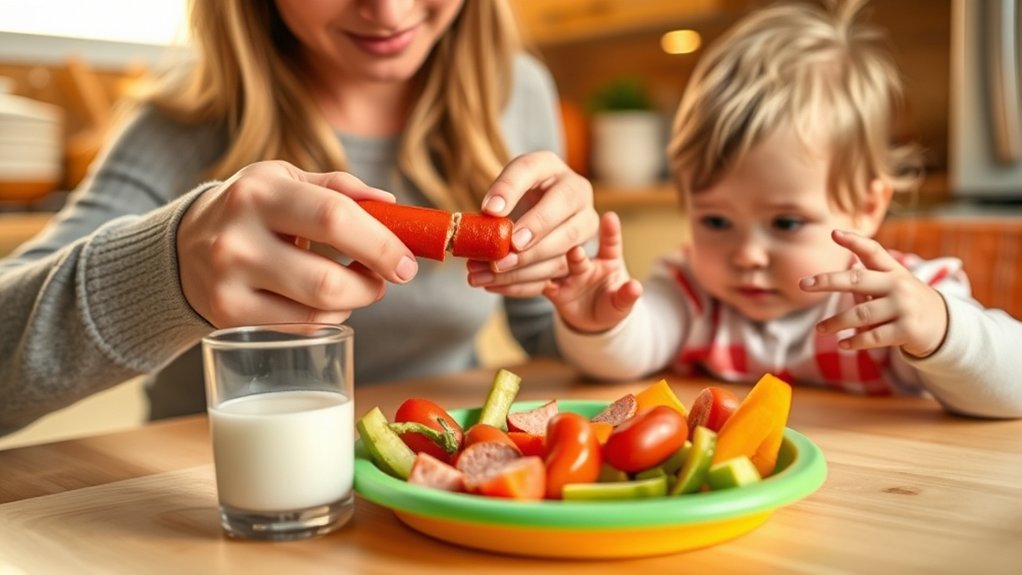
Hot dogs can provide protein, and some products contain iron or zinc. The amount varies by recipe and serving size, however, and a hot dog is not a nutritional requirement for a growing toddler.
Many products are processed and relatively high in sodium or saturated fat. Treat them as an occasional convenience food rather than the main protein served every day. There is no authoritative rule requiring a once-per-week schedule; frequency should be considered in the context of your child’s overall diet and any advice from their pediatrician.
For a more balanced meal, offer a few safely cut hot-dog pieces with foods such as:
- Soft-cooked vegetables cut into manageable pieces
- Soft fruit without pits, seeds or tough skin
- A whole-grain side prepared in an age-appropriate texture
- Water or your child’s usual unsweetened drink
Place only a few pieces on the plate at first and allow your toddler to ask for more. This supports responsive feeding and reduces the chance of stuffing several pieces into the mouth at once.
Softer Alternatives to Hot Dogs
If you would rather avoid the hot dog’s firm, cylindrical shape, consider a softer protein prepared for your child’s feeding skills:
- Finely shredded tender chicken or turkey
- Soft, flaked fish with all bones removed
- Scrambled egg
- Mashed beans, peas or lentils
- Soft tofu cut into small pieces
- Tender ground meat crumbled into very small pieces
Every food can become a choking hazard when served in the wrong size or texture. Continue to supervise meals and account for allergies when trying an alternative.
Hot Dog Storage and Leftovers
Keep hot dogs refrigerated at 40°F or below and follow any earlier use-by instructions printed on the package. According to the FoodSafety.gov cold-storage chart, an opened package of hot dogs can generally be refrigerated for up to one week. An unopened fully cooked package can generally be refrigerated for up to two weeks or until its use-by date.
Refrigerate heated leftovers within two hours, or within one hour when the surrounding temperature is above 90°F. Store the food in a clean, covered container. Reheat leftovers until steaming and then let the toddler’s portion cool again before serving.
Discard hot dogs that have been left out too long, have damaged packaging or show unusual odor, color or texture. Do not taste questionable food to decide whether it is safe.
Frequently Asked Questions
Can I Serve Hot Dogs With Condiments to Toddlers?
Yes, but use only a thin, small amount. Ketchup, mustard, relish and sauces can add sodium or sugar, and a thick or slippery coating can make pieces harder to control. Check for allergens, spread the condiment lightly and keep the hot dog pieces small.
What Is the Best Hot Dog for a Toddler?
There is no universally best brand. Look for a fully cooked product, compare sodium between equal serving sizes, check the allergen statement and avoid a casing that is difficult to chew. The brand or meat type does not change the required cutting method.
How Often Can Toddlers Eat Hot Dogs?
There is no official once-per-week rule. Because hot dogs are processed and can be high in sodium, offer them occasionally within a varied diet rather than as a daily staple. Ask your pediatrician for individual advice if your child has dietary restrictions, kidney concerns, high blood pressure or feeding difficulties.
Are Turkey or Veggie Hot Dogs Safer for Toddlers?
Not from a choking standpoint. Turkey, chicken and plant-based hot dogs have the same round shape and must be quartered lengthwise and chopped small. Their sodium, saturated fat, allergens and other ingredients also vary, so compare the Nutrition Facts and ingredient labels.
Can a 2-Year-Old Eat a Whole Hot Dog?
No. A whole hot dog or large round piece can block a young child’s airway. Continue cutting hot dogs lengthwise into four strips and then into pieces no larger than about 1/2 inch. High-risk foods may need modification until age 4 or later, depending on development.
Can I Microwave a Hot Dog for a Toddler?
Yes, when the package permits microwave heating. Follow its directions, rotate or turn the hot dog for even heating and make sure it is steaming throughout. Microwaves can create hot spots, so allow it to stand and cool before cutting and serving.
What Should I Do if My Toddler Chokes on a Hot Dog?
Call 911 if your child cannot breathe, cry, speak or cough effectively. For a responsive child older than 1, current AHA guidance calls for five back blows followed by five abdominal thrusts, repeated until the object comes out or the child becomes unresponsive. Begin CPR if the child becomes unresponsive. Do not perform a blind finger sweep. Certified pediatric first aid and CPR training is strongly recommended.
How Long Can Leftover Hot Dogs Be Stored?
Refrigerate an opened package at 40°F or below and generally use it within one week, unless the package gives an earlier date. Promptly refrigerate heated leftovers in a covered container. Reheat them until steaming and cool the toddler’s portion before serving.
Sources
- American Academy of Pediatrics — Choking Prevention for Babies and Children — high-risk foods, age considerations, supervision and maximum food-piece guidance.
- CDC — Choking Hazards — foods that may cause choking in infants and toddlers.
- CDC — When, What and How to Introduce Solid Foods — developmental readiness, supervision and cutting cylindrical foods into short, thin pieces.
- CDC — Foods and Drinks to Avoid or Limit — guidance on high-sodium processed meats for young children.
- USDA Food Safety and Inspection Service — Hot Dogs and Food Safety — reheating, handling and refrigerator storage guidance.
- American Heart Association — Pediatric Basic Life Support — current response for severe foreign-body airway obstruction in infants and children.
Conclusion
Hot dogs can be part of an occasional toddler meal, but safe preparation is not optional. Heat the product as directed, let it cool, cut it lengthwise into four narrow strips, and then chop those strips into pieces no larger than about 1/2 inch. Keep your child seated upright and supervise every bite. Never serve a toddler a whole hot dog or round slices, regardless of how well the child appears to chew.