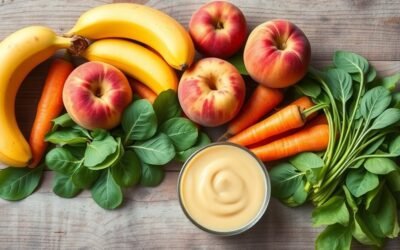
Feeding twins is easier when you use one flexible plan but treat each baby as an individual. Your twins may reach feeding milestones at different times, prefer different textures, or react differently to the same food. Start slowly, keep milk feeds central, track new foods separately, and use batch preparation to reduce daily work without cutting corners on safety.
Quick Answer
Start solids for each twin at about 6 months when that baby can sit with support, control the head and neck, and swallow food. Keep breast milk or formula as the main nutrition through 12 months. Begin with small amounts of iron-rich, soft foods, introduce allergens safely, and track each twin’s reactions separately.
Key Takeaways
- Start solids based on each twin’s developmental readiness at about 6 months, not simply because both babies have reached the same date.
- Breast milk or iron-fortified infant formula remains the main source of nutrition from 6 to 12 months while solids gradually increase.
- Offer small amounts of iron-rich foods, vegetables, fruits, grains, proteins, and healthy fats in safe textures.
- Introduce one new food at a time and record what each twin ate, especially when offering common allergens.
- Batch-cook only with clean tools, freeze promptly, label every portion, and discard food contaminated by a used spoon.
At a Glance
| Time Required | About 10–20 minutes per meal; roughly 60–90 minutes for a simple weekly batch-prep session |
| Difficulty | Moderate at first; easier once you create a repeatable routine |
| Tools Needed | Two safe high chairs, soft-tip spoons, bowls, blender or masher, airtight containers, labels, and a food log |
| Cost | Varies; homemade portions can use ordinary family ingredients prepared without honey, excess salt, or unsafe textures |
Note: This guide provides general feeding information, not individual medical advice. Ask your pediatrician or neonatal team for a personalized plan if either twin was born prematurely, has poor growth, has swallowing trouble, has severe eczema, or has a known or suspected food allergy.
Nutritional Essentials for Feeding Twins
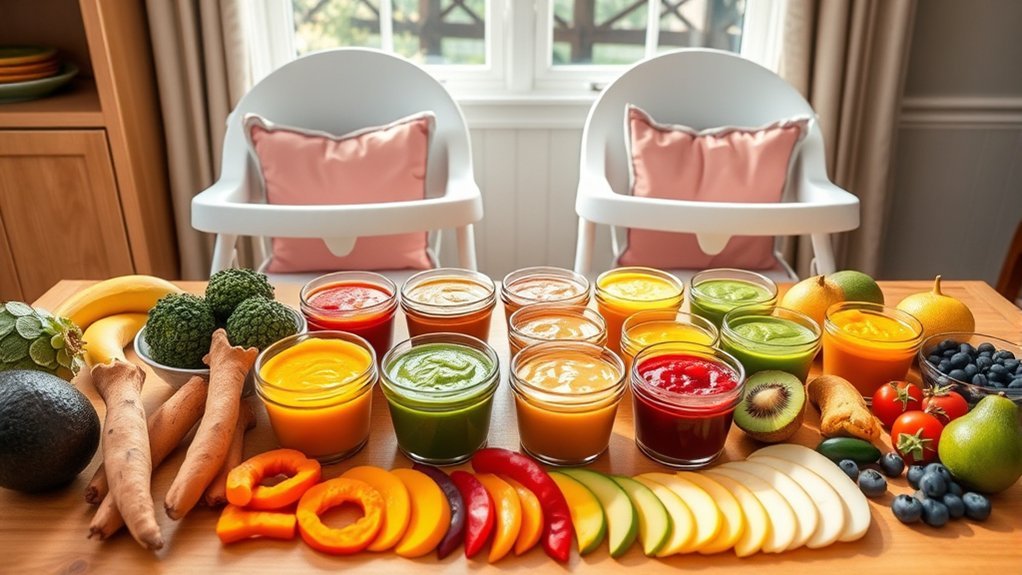
Twins need the same core nutrients as other babies, but each child’s intake and growth should be followed separately. One twin may eat more at a meal, move to thicker textures sooner, or need extra support from a pediatrician or dietitian.
From 6 to 12 months, breast milk or infant formula remains the main source of nutrition. Solid foods complement milk feeds; they do not replace them all at once. Continue breastfeeding as desired, or use properly prepared iron-fortified infant formula according to the label and your clinician’s guidance.
Make iron-rich foods a regular part of the menu because iron needs rise during later infancy. Good options include pureed or finely minced meat, fish with every bone removed, mashed beans or lentils, egg, tofu, and iron-fortified infant cereal. Pair plant sources of iron with fruits or vegetables that contain vitamin C, such as pear, strawberry, broccoli, or sweet pepper.
| Food Group | Baby-Safe Examples | Why It Helps |
|---|---|---|
| Iron-rich foods | Meat, beans, lentils, egg, tofu, iron-fortified cereal | Supports blood and brain development |
| Vegetables and fruits | Soft-cooked carrot, sweet potato, peas, pear, banana, berries | Adds fiber, vitamins, and flavor variety |
| Grains and starches | Oat, barley, multigrain cereal, potato, soft pasta | Provides energy and texture practice |
| Healthy fats | Avocado, full-fat plain yogurt, smooth thinned nut butter when safely introduced | Provides concentrated energy and essential fats |
Pro Tip: Use a simple two-column food log with one column for each twin. Record the food, texture, amount offered, amount eaten, and any reaction. This prevents one baby’s experience from being mistaken for the other’s.

Power your essentials anywhere with a 999Wh pure sine wave power station delivering up to 1000W continuous with 2000W surge. It supports fast charging via USB-C PD 60W and USB-A QC 18W, plus simultaneous output for multiple devices through AC, USB, wireless, and car/DC ports. Recharge using AC, car, or solar with a built-in MPPT controller and dual cooling fans, while the upgraded battery management system protects against surges, short circuits, and overheating.
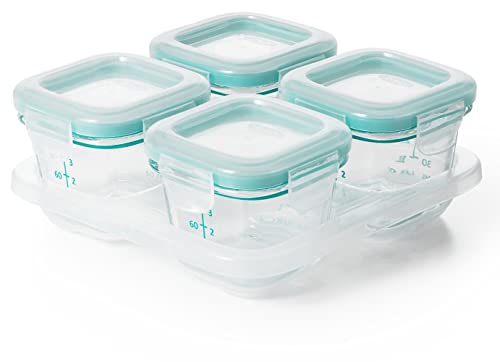
Great for portioning, storing, freezing, heating and serving baby food at home or on the go

Premium Baby Food Storage Containers: The set has 8 food storage containers, 4 oz each. 8 colors, 1 of each color. There are many colors for easy differentiation of use and a large number to meet the daily needs of baby use. A pen can be used to write the name, date or other information on the lid to remind you what is inside the jar. Perfect for storing homemade baby food, solid baby food, fruit and vegetable purees, jams, etc
Introducing Solids to Your Twins
Most babies can begin solid foods at about 6 months, but readiness matters more than starting both twins on the same day. According to the CDC’s current solid-food guidance, a ready baby can sit alone or with support, control the head and neck, open the mouth for food, and swallow rather than push food back out.
Check Each Twin’s Readiness
- Can the baby sit upright in a safe feeding seat with steady head control?
- Does the baby bring objects toward the mouth and show interest in food?
- Can the baby close the lips around a spoon and move food backward to swallow?
- Can the baby remain alert and comfortable for a short meal?
One twin may be ready before the other. That is normal. Do not rush the less-ready baby simply to keep the schedule matched. If either twin was premature or has developmental or swallowing concerns, ask the pediatrician or neonatal team when and how to begin.
Start With Small, Simple Servings
There is no required order for first foods. Start with one single-ingredient food at a time so you can identify a reaction. Offer a small spoonful or two, then gradually increase based on hunger and fullness cues. Good first choices include iron-fortified oat cereal, pureed meat, mashed beans, soft-cooked vegetables, mashed fruit, egg, or plain full-fat yogurt.
Move from smooth purees to thicker mashes, soft lumps, and safe finger foods as each twin develops the skills to manage them. Staying on smooth purees for too long can limit texture practice, while moving too quickly can create choking risks.
Introduce Common Allergens Safely
Common allergens include egg, peanut, milk products, wheat, soy, sesame, fish, shellfish, and tree nuts. Once a twin is developmentally ready for solids, introduce allergenic foods in an age-appropriate form rather than delaying them without a medical reason. For example, offer well-cooked egg, plain yogurt, or smooth peanut butter thinned with warm water, breast milk, formula, or puree. Never give whole nuts or a thick spoonful of nut butter.
Introduce a new allergen when the baby is healthy and when an adult can watch for a reaction. Try it earlier in the day rather than just before bedtime. If the food is tolerated, keep it in the regular rotation. For a baby with severe eczema, egg allergy, or a prior reaction, follow a clinician’s plan; the NIAID peanut-allergy prevention guidelines recommend medical guidance for high-risk infants.
Warning: Stop feeding the new food and seek medical advice for hives, facial swelling, repeated vomiting, or other possible allergy symptoms. Call 911 for trouble breathing, throat or tongue swelling, sudden weakness, loss of consciousness, or another severe reaction. Follow an existing epinephrine plan immediately if your child has one.
Safe Portion Sizes and Feeding Rhythm
At first, eating is skill practice. The CDC advises starting with about 1 or 2 tablespoons of food, not 1 or 2 tablespoons of every food on the plate. Some babies will take less, and others will gradually ask for more.
Use responsive feeding: you decide what safe foods to offer and when; each twin decides whether to eat and how much. Hunger cues may include leaning toward food, opening the mouth, reaching, or becoming excited when food appears. Fullness cues may include turning away, closing the mouth, slowing down, pushing food away, or becoming distracted.
| Stage | Practical Approach | Main Goal |
|---|---|---|
| Just starting solids | Offer a small amount once a day when the baby is alert; continue normal milk feeds | Learn to swallow and explore flavor |
| Building skills | Add meals gradually and increase texture as skills improve | Expand variety and chewing practice |
| Approaching 12 months | Move toward regular meals and snacks while keeping milk guidance age-appropriate | Join family meals with safe modifications |
A shared household routine can reduce stress, but it should not become a rule that both babies must eat the same amount or finish at the same time.
Nutritious Homemade Baby Food Recipes for Twins
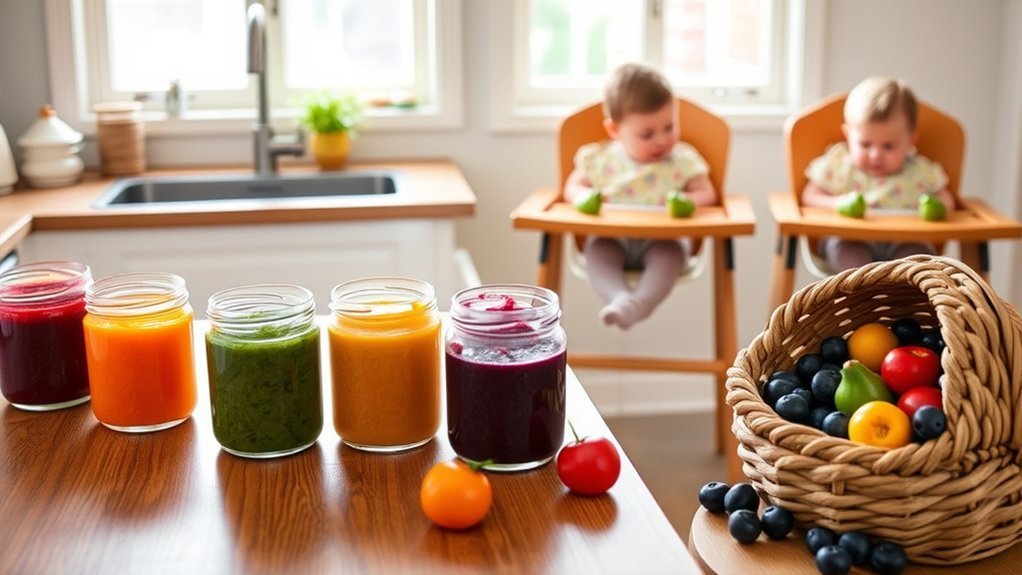
Homemade baby food can be simple, affordable, and easy to customize. Wash your hands, clean all tools, cook ingredients until soft, remove bones and hard skins, and adjust the texture for each twin. Do not add honey for babies younger than 12 months, and avoid adding salt or sugar.
These combinations keep the original meal ideas while adding more iron-rich choices:
| Flavor Combination | Preparation Method | Texture Tip |
|---|---|---|
| Sweet Potato and Carrot | Steam until very soft, then puree or mash | Thin with water, breast milk, or prepared formula as needed |
| Spinach and Pear | Cook the spinach and pear, then blend | Mix with lentil puree for extra iron and protein |
| Banana and Avocado | Mash together just before serving | Serve smooth or leave soft lumps for a more experienced eater |
| Seasonal Berries and Oat Cereal | Wash berries, cook if needed for softness, puree, and stir into prepared infant oatmeal | Strain tough seeds only if they bother the baby |
| Chicken, Pea, and Potato | Cook thoroughly, remove skin and bones, then puree or finely mince | Add cooking water for a soft, moist texture |
| Lentil, Tomato, and Carrot | Simmer without added salt until very soft, then mash | Leave slightly thicker as chewing skills improve |
When introducing a brand-new ingredient, serve it alone before using it in a mixed recipe. That makes it easier to identify which food caused a reaction.
Smart Meal Planning Strategies for Busy Twin Parents
Meal planning for twins works best when it reduces decisions without making meals rigid. Choose a small group of repeatable breakfasts, lunches, and dinners, then rotate the produce, protein, and texture.
A shared routine can save time, but each twin still controls how much to eat and may progress at a different pace.
- Batch-cook basic ingredients: Prepare plain sweet potato, lentils, chicken, oats, or vegetables, then combine them differently during the week.
- Freeze single ingredients first: This makes it easier to build meals and track allergens.
- Create a meal rotation: For example, use cereal and fruit at breakfast, a protein-and-vegetable combination at lunch, and a modified family food at dinner.
- Prepare safe finger foods in advance: Refrigerate soft-cooked strips or small pieces in covered containers and use them within a safe storage window.
- Keep a backup meal: Plain yogurt, mashed avocado, iron-fortified cereal, or a frozen homemade portion can prevent rushed choices.
A slow cooker, pressure cooker, microwave steamer, or ordinary saucepan can reduce hands-on time. For older babies who already manage soft finger foods, low-sodium vegetable muffins or soft pasta with a plain sauce can become quick freezer options when cut to a safe shape. If older siblings want to help, they can wash produce with an adult, place labels on containers, or choose between two vegetables. The tool matters less than cooking food thoroughly and preventing cross-contamination.
Using Leftovers Creatively in Baby Food
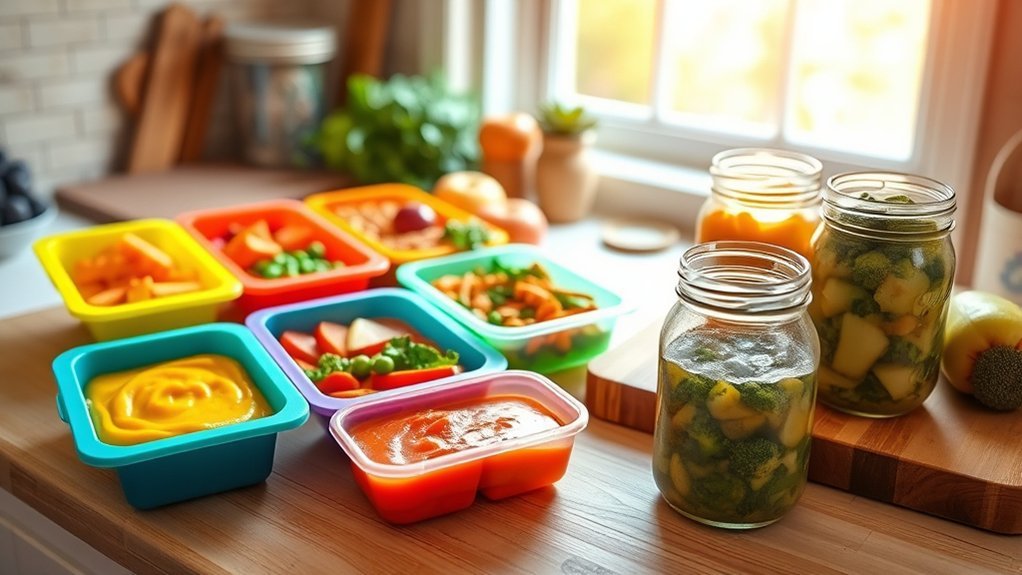
Family meals can become baby food, but the safest approach is to set aside a plain portion before adding salt, honey, spicy sauces, or other ingredients that may be unsuitable. Use food that has been handled safely and has not touched anyone’s plate or used spoon.
- Puree plain roasted sweet potato, carrot, squash, or other soft vegetables.
- Blend freshly cooked chicken, turkey, beans, or low-mercury fish with a soft vegetable or fruit.
- Mash plain rice, oats, barley, potato, or pasta with breast milk, prepared formula, water, or an unsalted puree.
- Use a small amount of an unsalted soup or stew only when every ingredient is age-appropriate and all bones, tough skins, and choking hazards have been removed.
Do not reuse food left in a serving bowl after a baby has eaten from it. Saliva can introduce bacteria. Put a small amount into each twin’s bowl, then add more with a clean spoon if needed.
Warning: Never give honey to a baby younger than 12 months. Avoid unpasteurized milk products, raw or undercooked egg, meat, seafood, or sprouts, and any food that has been left at room temperature for more than two hours.
Why Variety Matters in Your Twins’ Baby Food
Variety helps twins learn that food can taste, smell, look, and feel different. Rotate vegetables, fruits, proteins, grains, and healthy fats instead of relying on a few sweet purees. Offer both familiar and new foods without pressuring either baby to take a bite.
Texture variety is just as important as flavor variety. As skills develop, move from smooth purees to mashed food, soft lumps, finely chopped food, and safe finger foods. Repeated exposure is normal; a baby may need to see or taste a food many times before accepting it.
Use a range of infant cereals such as oat, barley, and multigrain rather than serving only rice cereal. When offering fish, choose lower-mercury options, cook them fully, and remove every bone.
Foods and Drinks to Avoid or Limit
Some common family foods are not suitable for babies. The CDC lists foods and drinks to avoid or limit during infancy.
- Honey before 12 months: Honey can cause infant botulism, even when mixed into another food.
- Cow’s milk as a drink before 12 months: Yogurt and cheese can be introduced in suitable forms, but cow’s milk should not replace breast milk or formula as the main drink before age 1.
- Juice before 12 months: Babies do not need fruit or vegetable juice. Offer whole fruit in a safe texture instead.
- Unpasteurized foods and drinks: Avoid raw milk, unpasteurized juice, and foods made from unpasteurized milk.
- Added sugar and excess salt: Choose plain foods and check labels on bread, sauces, soups, and packaged snacks.
- High-choking-risk foods: Avoid whole nuts, popcorn, hard raw vegetables, whole grapes, chunks of meat or cheese, spoonfuls of nut butter, and other hard, round, sticky, or tough foods.
Preventing Choking When Feeding Two Babies
Feeding twins can divide your attention, so set up the meal before placing either baby in the high chair. The CDC recommends upright seating, calm meals, developmentally appropriate textures, and constant supervision.
- Seat both babies upright in safe high chairs or feeding seats.
- Stay within arm’s reach and watch both babies throughout the meal.
- Do not feed in a moving car, stroller, or while a baby is crawling, walking, or lying down.
- Cook hard produce until soft and cut round foods into small, non-round pieces.
- Remove bones, pits, seeds, tough skins, and gristle.
- Spread nut butter thinly or dilute it; never offer a thick spoonful.
- Learn infant choking first aid from a qualified local course before an emergency occurs.
Gagging can be noisy and may include coughing or a red face. Choking may be silent and can prevent breathing or crying. Treat suspected choking as an emergency and follow your first-aid training.
Essential Tools for Homemade Baby Food Preparation
You do not need a large collection of specialty gadgets. Choose tools that are easy to clean, make safe textures, and help you keep each twin’s food separate when needed.
Must-Have Kitchen Essentials
- Steamer basket or microwave steamer: Softens fruits and vegetables quickly.
- Immersion blender, countertop blender, or food processor: Makes smooth or textured purees.
- Fork, potato masher, or potato ricer: Creates thicker textures without over-blending.
- Ice cube trays or small freezer molds: Portions food for freezing.
- Airtight containers and freezer bags: Protect food from contamination and freezer burn.
- Labels and permanent marker: Record the food, date, texture, and allergen status.
Time-Saving Preparation Tools
A slow cooker can soften beans, meat, and vegetables, while a pressure cooker can shorten cooking time. An immersion blender reduces cleanup because it can blend food directly in the pot. A small kitchen scale is optional but can help you divide a batch evenly; it should not be used to pressure either twin to finish a fixed amount.
Safe Storage Solutions
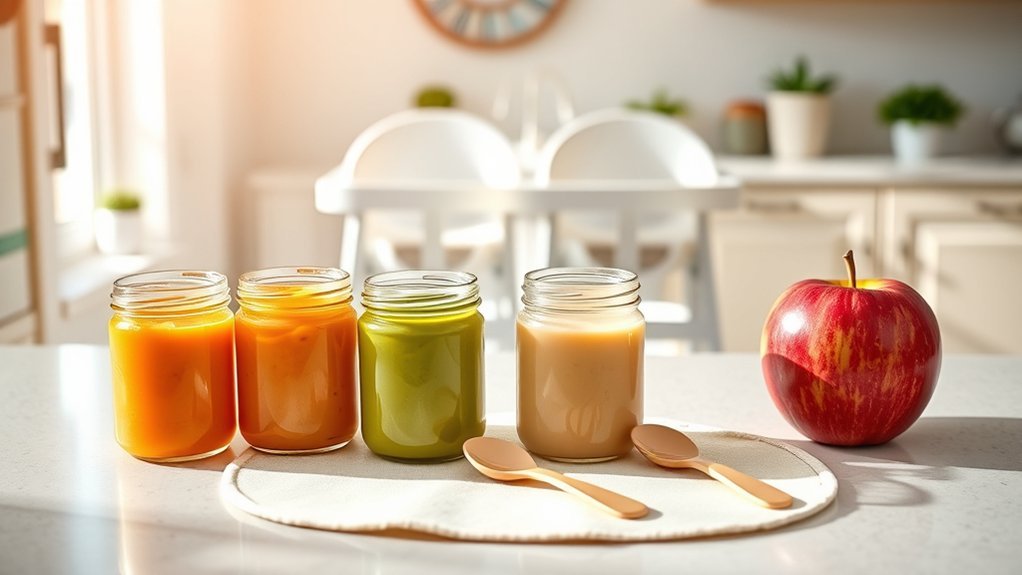
Choose food-grade containers that close tightly. Freeze small portions so you can thaw only what you need. Glass jars may crack if overfilled, so use freezer-safe jars and leave room for expansion.
Engaging Your Twins During Mealtime
Mealtime can support social, sensory, and motor development without becoming a performance. Use calm routines, talk about colors and textures, and let each twin touch safe food. Color-coded bowls can help you track allergens and portions, but the babies do not need matching meals every time.
- Offer one familiar food beside one newer food.
- Let each baby self-feed safe finger foods when developmentally ready.
- Use simple songs or conversation to keep the mood relaxed, not distracting.
- Model eating by sharing a family meal when practical.
- Praise exploration in a neutral way: “You touched the banana,” or “That carrot is soft.”
- End the meal when a baby repeatedly turns away, closes the mouth, or shows other fullness cues.
For older babies, simple themed meals, color contrasts, or safe “food art” can make new foods interesting, but keep the meal calm enough to supervise both children closely. Avoid prizes, pressure, tricks, or forcing bites. These tactics can make it harder for children to notice and trust their own hunger and fullness signals.
Storing and Preserving Your Homemade Baby Food
Safe storage protects both twins and makes batch cooking worthwhile. The FDA advises freezing homemade baby food in covered portions, transferring frozen cubes to an airtight container, dating them, and discarding them after three months.
Safe Storage Techniques
- Wash hands, counters, blenders, utensils, trays, and containers before use.
- Cool cooked food promptly and refrigerate or freeze it within two hours.
- Keep the refrigerator at 40°F (4°C) or below and the freezer at 0°F (-18°C).
- Use a clean spoon to move food from the storage container into each bowl.
- Discard food left in a bowl after feeding; do not return it to the storage container.
Freezing Baby Food
Freeze purees in covered ice cube trays or silicone molds. Once solid, transfer portions to labeled freezer bags or airtight containers. For best quality and according to FDA baby-food guidance, use homemade frozen baby food within three months.
Thaw food in the refrigerator, in a sealed container under safe cold-water methods, or as part of reheating. If you use a microwave, stir thoroughly and test the temperature because hot spots can burn a baby’s mouth. Do not thaw perishable food on the counter.
Labeling and Organization
Label each package with:
- The food or recipe name.
- The preparation or freeze date.
- The texture, such as smooth, mashed, or soft pieces.
- Any common allergen it contains.
- The twin’s name or color code if the portions must stay separate.
Use the oldest safe portions first. Keep a freezer list on the door so you can see what is available without searching through every container.
Feeding Twins Together or Separately
Feeding both twins together can save time when both are ready, safely seated, and calm. Separate feeding may be better when one baby is learning a new allergen, needs a different texture, eats very slowly, or requires close observation.
A practical middle ground is to seat both babies together but introduce a new allergen to only one twin at a time. Use separate bowls and spoons, record the serving, and clean surfaces before the other twin receives a different food. This makes reactions easier to identify and reduces accidental cross-contact.
Do not compare appetites. Growth, temperament, illness, teething, and development can affect how much each twin eats on a given day. The pediatrician should assess each child’s growth on the appropriate chart rather than judging one twin against the other.
Creating a Support Network for Feeding Twins
Support can make feeding feel less overwhelming. Ask family or friends to wash produce, clean containers, shop from a list, or prepare an adult meal while you handle the babies’ food. Facebook or Reddit twin-parent groups, parenting blogs, Instagram accounts, and local meetups may provide practical ideas and encouragement, but verify medical, allergy, and food-safety claims with qualified health professionals.
| Action | Where to Connect | Best Use |
|---|---|---|
| Join a twin-parent group | Local parent organizations or moderated online communities | Routine ideas, equipment tips, and emotional support |
| Ask for practical help | Family, friends, postpartum support workers | Shopping, cleanup, and adult meal preparation |
| Consult the pediatrician | Well-child visits or feeding concerns | Growth, supplements, readiness, and allergy planning |
| Consult a pediatric dietitian | Referral or hospital nutrition service | Prematurity, restricted diets, growth concerns, or complex allergies |
| Use meal swaps carefully | Trusted families who follow the same safety plan | Only with complete ingredient labels, safe temperatures, and no allergy uncertainty |
When to Contact Your Pediatrician
Contact your pediatrician or feeding specialist if either twin:
- Is not showing solid-food readiness near the expected stage or was born prematurely and needs an individualized plan.
- Frequently coughs, chokes, has a wet-sounding voice, or struggles to breathe during meals.
- Has repeated vomiting, diarrhea, blood in the stool, hives, swelling, or another possible food reaction.
- Has severe eczema or egg allergy before peanut introduction.
- Has poor weight gain, fewer wet diapers, unusual tiredness, or feeding sessions that are consistently stressful.
- Accepts only one texture or a very narrow range of foods as the months pass.
Call emergency services for severe breathing trouble, blue or pale color, sudden limpness, loss of consciousness, or suspected severe choking or anaphylaxis.
Frequently Asked Questions
How do I manage food allergies in my twins?
Track each twin separately, introduce one new food at a time, and stop the food if symptoms appear. Routine allergy panels are not needed for every baby and can produce confusing results. Ask the pediatrician about testing or supervised introduction when a twin has severe eczema, egg allergy, a prior reaction, or another high-risk history.
What are easy meal-prep tips for twins?
Cook plain ingredients in batches, freeze them in small portions, keep a labeled inventory, and build meals from two or three components. Set aside baby portions before seasoning the family meal. Keep one fast backup, such as infant oatmeal, mashed avocado, or a frozen homemade portion.
How can I encourage my twins to eat together?
Use safe side-by-side seating, a calm routine, and shared family conversation. Offer similar foods when appropriate, but allow different textures, amounts, and stopping times. Avoid comparing the twins or pressuring one baby to copy the other.
What is the best feeding schedule for twins?
A predictable routine can help, but there is no single schedule that fits every pair. Begin with a small solid-food opportunity when each baby is alert and not overly hungry, then add meals gradually. Keep breast milk or formula central through 12 months and respond to each twin’s hunger and fullness cues.
How do I handle different food preferences between my twins?
Serve a balanced option that includes at least one familiar food, then let each baby decide what and how much to eat. Continue offering rejected foods without pressure. Different preferences are normal and do not require completely separate menus at every meal.
Can both twins try a new allergen on the same day?
They can, but introducing the allergen to one twin at a time is easier to monitor. Use separate bowls and spoons, offer a small amount earlier in the day, and record the result. Follow the pediatrician’s plan for severe eczema, egg allergy, or any previous reaction.
How long can homemade baby food stay frozen?
FDA guidance says homemade baby food can be frozen in covered portions, transferred to airtight storage, labeled, and kept for up to three months. Thaw only what you need, heat evenly, and discard food contaminated by a used spoon.
What if one twin is ready for solids before the other?
Start with the ready twin and continue normal milk feeds for the other. Recheck readiness later rather than forcing both babies onto the same timeline. Ask the pediatrician for guidance if the less-ready twin was premature, has poor head control, or has swallowing or growth concerns.
Conclusion
Feeding twins becomes more manageable when you combine a shared routine with individual attention. Start solids when each baby is ready, keep breast milk or formula central, serve iron-rich foods in safe textures, and track allergens separately. Batch cooking and labeled storage can save time, but responsive feeding, choking prevention, and food safety should guide every shortcut.
Sources
- CDC: When, What, and How to Introduce Solid Foods — readiness signs, first foods, allergens, and safe preparation.
- CDC: How Much and How Often to Feed — milk as the main nutrition from 6 to 12 months, starting portions, and feeding rhythm.
- CDC: Choking Hazards — safe seating, supervision, food preparation, and common choking risks.
- CDC: Foods and Drinks to Avoid or Limit — honey, cow’s milk as a drink, juice, unpasteurized foods, and added sugars.
- FDA: Once Baby Arrives—Food Safety — sanitation, two-hour limits, spoon contamination, and freezing homemade baby food.
- NIAID: Addendum Guidelines for Peanut Allergy Prevention — early peanut introduction and medical guidance for high-risk infants.