Babies should avoid added sugars in their baby food to promote healthy growth and prevent unhealthy eating habits. Introducing sugar too early can lead to preferences for sweet flavors, increasing the risk of cavities and nutritional deficiencies. It’s best to wait until around 6 months for small tastes of sugar, focusing instead on natural sweetness from fruits and purees. By understanding the impact of sugar, you can make informed choices for your baby’s diet and health.
Key Takeaways
- Babies can start tasting sugar around 6 months, but added sugars should be avoided until after their first birthday.
- Introduce natural sugars from fruits and vegetables instead of added sugars in baby food.
- Avoid honey for infants under 12 months due to the risk of botulism.
- Check labels for hidden added sugars in commercial baby food products.
- Emphasize healthy alternatives like pureed fruits and unsweetened yogurt to promote good eating habits.
Why Should Babies Avoid Added Sugars?
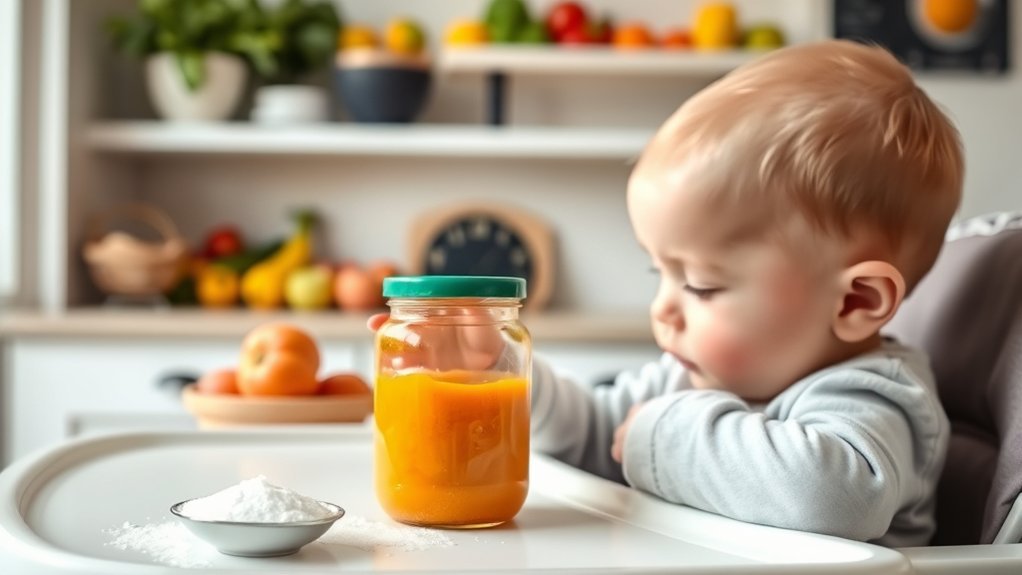
When it comes to your baby’s diet, it’s crucial to understand why added sugars should be avoided. Babies have little room for these empty calories, which can lead to cavities and unhealthy eating habits later on.
Introducing sugar too early can decrease their motivation to try nutrient-dense foods, resulting in imbalanced nutrition. Instead, focus on healthy snacks and sugar alternatives that provide essential nutrients for growth and development.
The American Academy of Pediatrics strongly recommends minimizing added sugars for children under two years old to foster healthier eating patterns.
What Are the Risks of Introducing Sugar Too Early?
Introducing sugar too early in your baby’s diet can lead to several significant health risks that may affect their long-term eating habits. When you allow sugar in their diet, it can skew their taste development and foster unhealthy sugar cravings.
Introducing sugar too soon can harm your baby’s taste development and create unhealthy cravings.
Here are some key risks:
- Developing a preference for sweet flavors, leading to poor dietary choices later.
- Increased chances of dental cavities due to vulnerable, developing teeth.
- Displacement of nutrient-dense foods, causing potential deficiencies during vital growth phases.
The American Academy of Pediatrics recommends avoiding added sugars for children under 2 years old.
What Age Can Babies Safely Start Having Sugar?
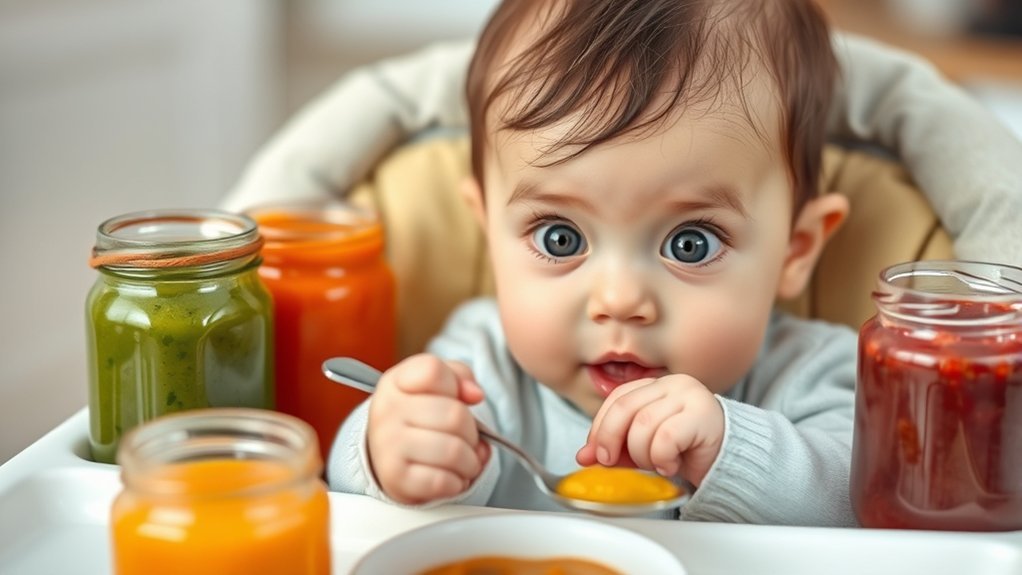
Many parents wonder about the right time to introduce sugar into their baby’s diet. Generally, babies can start having small tastes of sugar around 6 months, coinciding with solid food introduction.
However, it’s essential to avoid regular consumption of added sugars to protect their health. Excessive sugar intake can hinder their willingness to try other foods and increase cavity risks.
While natural sugars from fruits and dairy are fine, added sugars in baby food should be minimized for ideal baby nutrition. Also, it’s best to avoid sugary drinks, like juice, until after their first birthday.
Prioritizing sugar timing guarantees your child develops healthy eating habits that can last a lifetime.
How to Identify Natural Sources of Sweetness for Babies?
When you’re looking for natural sources of sweetness for your baby, consider pureed fruits like bananas, apples, and pears.
These options not only taste great but also come packed with nutrients without any added sugars.
Incorporating naturally sweet vegetables like sweet potatoes and carrots can round out their diet while promoting healthy eating habits early on.
Natural Sweeteners Overview
As you explore options for sweetening your baby’s food, natural sweeteners like pureed fruits can be a fantastic choice.
These fruit alternatives not only provide natural sweetness but also essential vitamins and fiber. When selecting baby food, keep an eye out for products that prioritize whole fruits or vegetable purees as their first ingredient.
Here are some great options to evaluate:
- Bananas: Creamy and naturally sweet, they blend easily into baby food.
- Apples: Packed with vitamins, they can be pureed into a smooth texture.
- Pears: Their mild flavor is often well-accepted by little ones.
Remember to avoid honey for infants under 12 months due to botulism risks and always check labels for hidden added sugars.
Fruit Purees Benefits
Fruit purees offer a delicious and nutritious way to introduce your baby to natural sweetness. By starting around 6 months, you help your little one develop a preference for naturally sweet flavors like those found in bananas, apples, and pears.
These fruit purees provide essential vitamins and minerals without added sugars or preservatives. When choosing store-bought options, look for purees that list only the fruit as the ingredient.
Homemade fruit purees are also a great choice, allowing you to control sweetness and avoid unwanted additives. Offering a variety of fruit purees not only enhances flavor development but also promotes healthy eating habits as your baby grows.
Embrace this opportunity to nourish your child naturally and healthily.
Healthy Recipe Ideas
Introducing your baby to natural sweetness can be both fun and nutritious. Opt for homemade baby food that showcases nature’s flavors without added sugars. Here are some delightful options:
- Ripe bananas, apples, and pears: These fruits are naturally sweet and can be mashed or pureed for easy consumption.
- Steamed or roasted sweet potatoes and carrots: These enhance their sweetness while locking in nutrients, creating a wholesome meal.
- Flavor combinations: Mix mashed fruits with sweet vegetables for exciting tastes, like apple-carrot puree.
Sugar vs. Natural Sweeteners: Which Is Best for Baby’s Health?
When it comes to your baby’s health, choosing natural sweeteners over added sugars is vital.
Natural sweeteners, like those in fruits, offer essential nutrients and support healthy development, while added sugars can lead to cavities and unhealthy eating habits.
Natural Sweeteners Benefits
While many parents seek to provide their babies with delicious flavors, opting for natural sweeteners over added sugars can greatly benefit their health.
These sweeteners, like pureed fruits, not only enhance taste but also support your baby’s development.
Here are some advantages of choosing natural flavors:
- Nutrient-rich: Natural sweeteners offer essential vitamins, minerals, and fiber.
- Balanced preferences: They help cultivate a taste for healthy choices, reducing future cravings for overly sweet foods.
- Dental health: Unlike added sugars, natural sweeteners minimize the risk of cavities.
Risks of Added Sugar
Natural sweeteners may seem like a better option for flavoring your baby’s food, but added sugars pose significant risks that parents should be aware of. Introducing sugar can lead to sugar cravings, decreased motivation to try new foods, and unhealthy eating habits. The American Academy of Pediatrics recommends minimizing added sugars to protect your child’s dental health and overall well-being.
| Risks of Added Sugar | Effects on Baby’s Health | Alternatives |
|---|---|---|
| Cavities | Increased dental issues | Fresh fruits |
| Food preferences | Preference for sweet flavors | Unsweetened yogurt |
| Obesity | Long-term health complications | Whole grains |
How to Read Labels for Added Sugars in Baby Foods?
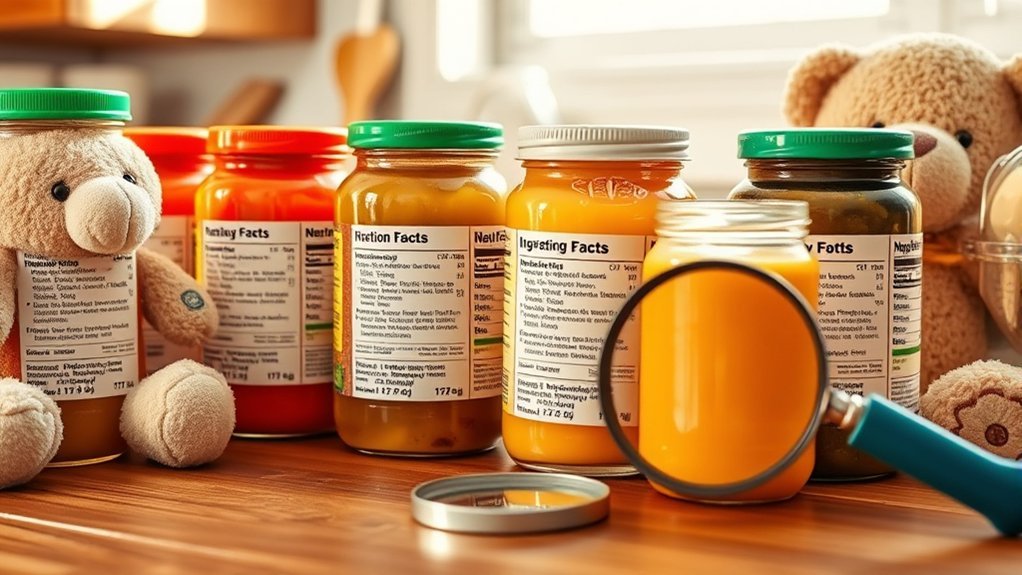
Understanding how to read labels is essential for choosing baby foods without added sugars, as these ingredients can sneak into products you mightn’t expect.
To guarantee your little one’s meals are free from added sugars, focus on these key areas during your label inspection:
- Look for “no added sugars” on the Nutrition Facts label.
- Check the ingredient list for sweeteners like cane sugar, high fructose corn syrup, or fruit concentrates.
- Pay attention to the serving size, as added sugars can vary based on portions.
The American Academy of Pediatrics urges sugar awareness in infants’ diets to prevent obesity and cavities.
Familiarizing yourself with FDA guidelines can help you evaluate the nutritional quality of baby foods effectively.
What Are Healthy Alternatives to Sugar for Babies?
When it comes to sweetening your baby’s food, natural alternatives can be a great choice.
Pureed fruits like applesauce and mashed bananas not only add flavor but also provide essential nutrients.
You can also consider options like unsweetened yogurt or creamy avocado to keep mealtime healthy and enjoyable.
Natural Sweeteners Overview
While you might be tempted to sweeten your baby’s food with sugar, there are healthier alternatives that can provide both taste and nutrition. Focusing on natural sweetness from pureed fruits is a great way to introduce flavors without the risks of added sugars.
Here are some fruit alternatives you can consider:
- Unsweetened applesauce
- Mashed bananas
- Fruit purees
These options not only add sweetness but also essential nutrients for your baby’s growth.
Remember to avoid honey for infants under 12 months due to botulism risks, and steer clear of maple syrup and agave nectar as they can be too sugary.
Prioritizing whole fruits and veggies will help cultivate healthy eating habits early on.
Fruit-Based Alternatives
Choosing fruit-based alternatives to sugar can greatly enhance your baby’s diet by providing natural sweetness and essential nutrients. Mashed bananas, applesauce, and pureed peaches are excellent options, offering a delightful taste without added sugars.
Whole fruits bring essential vitamins and fiber, promoting digestive health while introducing your little one to diverse fruit textures. By preparing homemade baby food, you can blend or mash fruits to create healthy combinations that suit your baby’s palate and developmental needs.
Remember to avoid sweetened fruit products and stick to unsweetened varieties, ensuring your baby enjoys the natural flavors without unnecessary additives. This way, you’ll nurture their taste for real food and help establish healthy eating habits from the start.
How to Start Introducing Solid Foods to Your Baby?
As your baby approaches six months old and shows signs of readiness, it’s important to start introducing solid foods to support their growth and development.
Here are some key baby feeding tips for a successful solid food introduction:
Key tips for introducing solid foods include starting with iron-fortified cereals and gradually introducing diverse flavors and textures.
- Begin with iron-fortified cereals or pureed fruits and vegetables to guarantee nutrients without added sugars.
- Gradually introduce lumpy and soft finger foods by 8-12 months to encourage self-feeding and chewing skills.
- Always supervise your baby during meals and avoid choking hazards like whole nuts and raw carrots.
Introduce a variety of flavors and textures to foster healthy eating habits and reduce picky eating later on.
How Does Sugar Affect a Baby’s Taste Preferences?
How does sugar influence your baby’s taste preferences?
Introducing added sugars can create a strong preference for sweet flavors, which might decrease their willingness to explore a variety of foods. Babies naturally gravitate toward sweetness, but if you frequently include sugary foods, you could heighten their sugar cravings.
This early exposure may lead to long-term unhealthy eating habits, favoring highly processed options. The American Academy of Pediatrics recommends minimizing added sugars in your baby’s diet to promote healthier taste development and overall nutrition.
Tips for Encouraging Healthy Eating Habits in Babies
Encouraging healthy eating habits in babies starts with introducing a diverse range of nutritious foods early on. This sets the stage for lifelong healthy choices. Consider these tips:
- Embrace baby led weaning to let your little one explore food textures and flavors at their own pace.
- Offer self-feeding opportunities with age-appropriate utensils, helping them recognize hunger and fullness cues.
- Create a positive mealtime environment by eating together as a family, minimizing distractions, and celebrating sensory exploration.
Repeated exposure to new foods—sometimes needing 15-20 tries—can reduce picky eating.
Focus on whole foods and the natural sweetness of fruits, limiting sugary options. This way, you’re nurturing a love for nutritious foods while fostering independence and confidence in your baby’s eating journey.
Frequently Asked Questions
Can Babies Have Fruits With Natural Sugars?
Yes, babies can enjoy fruits with natural sugars! Options like bananas, apples, and pears provide essential nutrients. Just make certain they’re age-appropriate and prepared safely, helping your little one develop healthy eating habits from the start.
What Are the Signs of a Sugar Sensitivity in Babies?
You might notice sugar reactions like irritability, digestive issues, or rashes if your baby has a sensitivity. Monitoring these signs is essential for maintaining your baby’s health and ensuring a positive eating experience.
Are There Any Baby Foods That Naturally Contain Sugar?
Many baby food options, like pureed fruits such as bananas and apples, offer natural sugar sources. These sweet delights nurture your baby’s taste buds while providing essential nutrients for healthy growth and development.
How Can Sugar Impact a Baby’s Sleep Patterns?
Sugar can disrupt your baby’s sleep patterns by affecting sugar metabolism, leading to sleep disturbances. When consumed, sugar may cause energy spikes and crashes, making it harder for your little one to settle down at bedtime.
Is It Safe to Give Babies Sweetened Yogurt?
It’s generally not safe to give your baby sweetened yogurt. Instead, opt for plain yogurt or yogurt alternatives. These options provide essential nutrients without added sugars, supporting your baby’s healthy growth and development.
Conclusion
To sum up, avoiding added sugars in your baby’s diet helps promote healthy growth, fosters a preference for natural flavors, and supports better eating habits. By introducing solid foods mindfully, opting for natural sweetness, and exploring healthy alternatives, you can guarantee your little one thrives. Remember, nurturing a love for wholesome foods today sets the foundation for a lifetime of healthy choices. Embrace this journey together, and watch your baby develop a palate that celebrates nutrition over sugar.