


You shouldn’t run dish soap through a coffee maker. It can leave behind a soapy taste that taints your coffee and might cause mild stomach discomfort. Even small residues can affect the quality of your brew. Thorough rinsing is necessary to remove soap, but using vinegar or a commercial cleaner is safer. Regular maintenance helps prevent any buildup. If you want to learn how to clean your coffee maker more effectively, keep going for more tips.
Key Takeaways
- Running dish soap through a coffee maker can leave a soapy taste in your coffee and cause mild stomach discomfort.
- Residual soap requires thorough rinsing and multiple water-only cycles to eliminate any lingering flavors.
- Manufacturers recommend using vinegar or specialized cleaners instead of dish soap for safe cleaning.
- Small amounts of soap are generally non-toxic, but proper rinsing is essential to prevent health issues.
- Regular maintenance, including descaling and cleaning, helps prevent soap buildup and ensures great-tasting coffee.
What Happens When You Use Dish Soap in a Coffee Maker?

Using dish soap in a coffee maker can lead to several undesirable outcomes. The dish soap effects can include altered coffee flavor, as residual soap can impart a soapy taste to your brew.
While small amounts of soap residue aren’t typically toxic, they could cause mild stomach discomfort or nausea. To mitigate these risks, it’s essential to maintain a proper cleaning frequency.
After using dish soap, you should thoroughly rinse the coffee maker multiple times with clean water. Additionally, running several water-only cycles is advisable to eliminate any lingering soap taste before brewing coffee again.
For regular cleaning, manufacturers recommend using vinegar or specialized coffee cleaning solutions instead of dish soap to avoid these complications.
Potential Risks of Soap Residue in Your Coffee
Although many people mightn’t consider the impact of soap residue, it can considerably alter the taste of your coffee and pose potential health risks.
Soap residue left in your coffee maker can result in a bitter or soapy flavor, ruining your morning brew. While small amounts of soap aren’t typically toxic, ingestion may lead to mild stomach discomfort or nausea.
To mitigate these health effects, thorough rinsing is essential. After using soap, you should run several cycles of clean water through your coffee maker to eliminate any lingering residue.
Regular maintenance, including rinsing after each use, helps prevent soap buildup and maintains the integrity of both your coffee maker and your coffee’s flavor.
Best Alternatives for Cleaning Your Coffee Maker Without Dish Soap
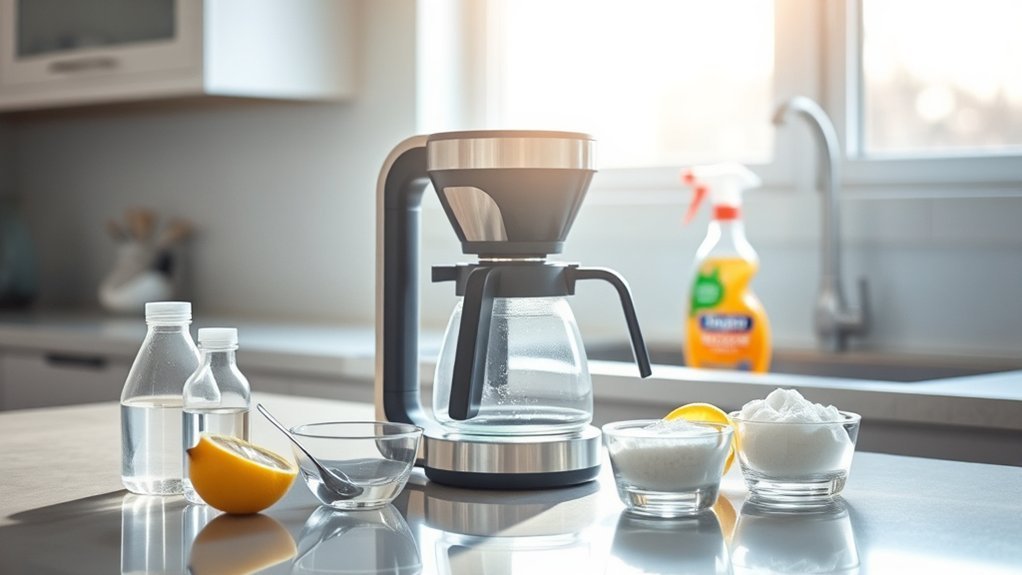
When it comes to cleaning your coffee maker, there are effective alternatives to dish soap that maintain the integrity of your brew.
A vinegar solution, consisting of equal parts vinegar and water, acts as a natural cleaning agent, dissolving mineral buildup and eliminating odors.
A vinegar solution, made of equal parts vinegar and water, is a natural way to dissolve mineral buildup and remove odors.
For tougher stains, mix baking soda with water to create a paste; this gentle abrasive can tackle residues without harming your machine.
Consider using commercial coffee maker cleaning solutions designed to address coffee oils and mineral deposits safely.
Regular descaling with citric acid or lemon juice can also prevent limescale buildup.
Finally, running a cycle with just water can help eliminate any lingering contaminants, ensuring a fresh, clean brewing environment.
Signs Your Coffee Maker Needs Cleaning?
If you notice visible dirt, like coffee stains or loose grounds, it’s a clear sign your coffee maker needs attention.
A decline in flavor quality or an off-taste can also indicate that it’s time for a thorough cleaning.
Additionally, if you spot any mold in the brewing components, you should clean your machine immediately to guarantee your health and the quality of your coffee.
Visible Dirt Accumulation
Visible dirt accumulation in your coffee maker is a clear indicator that it’s time for a thorough cleaning. You should regularly inspect your coffee maker for visible dirt, such as water spots, coffee stains, or loose grounds.
These contaminants not only affect the appearance of your machine but can also impact the quality of your brew. If you notice any buildup in the carafe or other parts, it’s a sign that it’s overdue for maintenance.
Additionally, if you struggle to remember the last time you cleaned it, you likely need to take action. Ignoring these signs can lead to more significant issues, so make it a habit to keep your coffee maker clean for peak performance.
Decreased Flavor Quality
A noticeable decline in the flavor quality of your coffee can signal that your coffee maker requires attention. When residual oils and coffee particles accumulate, they can compromise coffee extraction, leading to rancid or bitter tastes.
If you spot visible dirt, such as coffee stains in the carafe, it’s time for a deep clean to restore flavor preservation. Additionally, a decrease in aroma during brewing indicates that old coffee residues may be affecting your coffee’s profile.
Regular maintenance helps prevent the buildup of these unwanted elements, ensuring a clean brewing environment. Prioritizing cleanliness not only enhances the taste but also safeguards your coffee experience, allowing you to savor every cup as it was intended.
Mold Presence Noted
Mold presence in your coffee maker is a serious concern that can affect both your health and the quality of your brew.
If you notice visible growth, a musty odor, or a change in taste, it’s vital to act quickly.
Mold thrives in damp environments, so proper mold prevention is essential.
Make it a habit to clean your coffee maker after each use and perform a thorough deep cleaning monthly.
Leaving the water reservoir lid open after brewing helps moisture escape, reducing mold risk.
If you detect mold, clean your coffee maker immediately using a vinegar solution or a specialized cleaner.
Regular maintenance and adherence to cleaning frequency can keep your coffee maker safe and your coffee delicious.
Essential Tips for Regular Coffee Maker Maintenance
To keep your coffee maker in top shape, establish a daily rinsing routine to eliminate coffee residue.
Don’t forget to schedule a monthly deep cleaning using equal parts water and distilled white vinegar for effective descaling.
Daily Rinsing Procedures
While many coffee enthusiasts focus on the quality of their beans, the maintenance of your coffee maker is equally important for guaranteeing peak flavor.
Daily maintenance involves rinsing your coffee maker after each use to prevent coffee residue buildup. Disassemble the coffee maker to rinse all components thoroughly, including the carafe, filter basket, and water reservoir.
Warm water is often sufficient for daily rinsing, but you can use mild dish soap occasionally—just make certain you rinse everything well to avoid soap residue.
After rinsing, leave the water reservoir lid open for several hours to dry out any remaining moisture, reducing bacteria risk.
Establishing this routine enhances your coffee maker’s longevity and performance, making your daily brews even better.
Monthly Deep Cleaning
If you want to keep your coffee maker in top condition, monthly deep cleaning is essential. This process removes built-up stains and residue from coffee oils and minerals that can compromise flavor and machine performance.
A common DIY solution involves mixing equal parts of distilled white vinegar and water, allowing it to sit for 3-4 hours before running multiple cycles with clean water to rinse.
While many manufacturers suggest deep cleaning every 3 to 6 months based on usage and water hardness, maintaining a consistent cleaning frequency is key. Regular deep cleaning not only enhances the coffee taste but also extends your coffee maker’s lifespan by preventing limescale buildup and internal corrosion.
Always consult your manufacturer’s guidelines for effective maintenance.
Regular Descaling Schedule
A regular descaling schedule is essential for keeping your coffee maker functioning at its best. Aim for a descaling frequency of every 3 to 6 months, depending on your water quality and how often you use the machine.
This practice prevents limescale buildup, which can impair performance and affect coffee flavor. An effective method for descaling involves using a mixture of equal parts distilled white vinegar and water.
After running this solution through your coffee maker, flush the machine with clean water several times to eliminate any residual vinegar taste. Additionally, keep an eye out for signs of limescale or reduced water flow, as these indicate it’s time to implement your descaling routine.
Regular maintenance enhances both lifespan and brew quality.
Your Coffee Maker Cleaning Questions Answered
Cleaning your coffee maker is essential for maintaining great-tasting coffee and the longevity of the machine. Many people wonder about the best cleaning methods, especially regarding soap.
Experts advise against running dish soap through the coffee brewing cycle, as this can leave harmful residues that alter flavor and may lead to stomach discomfort. Instead, focus on disassembling the machine and washing components separately.
For effective cleaning, a mixture of vinegar and water is a safer alternative for descaling without risking soap residue. Always follow the manufacturer’s cleaning instructions to guarantee peak performance and reduce health risks.
Regular maintenance tips include descaling every few months and thoroughly rinsing with water after cleaning to keep your coffee maker in top shape.
How to Clean Your Coffee Maker Without Soap
While many people reach for soap to clean their coffee makers, using it can actually do more harm than good.
To clean your coffee maker without soap, mix equal parts of distilled white vinegar and water to create a vinegar solution. Run this mixture through a brewing cycle, then let it sit for 30 minutes to an hour to break down coffee oils and mineral deposits.
Afterward, rinse thoroughly by running several cycles of clean water to eliminate any vinegar residue.
For tough stains, create a paste using baking soda mixed with water, apply it gently to the carafe and components, and scrub before rinsing.
Regular descaling every 3 to 6 months helps maintain performance and enhances coffee flavor.
Frequently Asked Questions
Can Dish Soap Damage the Internal Parts of My Coffee Maker?
Yes, dish soap can damage your coffee maker’s internal parts. For effective coffee maker maintenance, consider using soap alternatives like vinegar or baking soda, which clean without risking harm to the machine’s components.
How Often Should I Clean My Coffee Maker?
You should clean your coffee maker every three to six months for peak performance. Regular maintenance tips include descaling and using vinegar or water solutions to prevent buildup and guarantee great-tasting coffee each time.
Is Vinegar Safe for All Coffee Maker Types?
Vinegar’s safe for most coffee maker types, offering benefits like descaling and odor elimination. However, check your manufacturer’s guidelines; some machines may have specific recommendations that could affect performance or warranty if ignored.
What Signs Indicate Soap Residue in Coffee?
If you notice a soapy taste or an unusual film on your coffee, it likely indicates soap residue. This residue can greatly alter your coffee flavor, making it essential to thoroughly rinse your coffee maker.
Can I Use Baking Soda to Clean My Coffee Maker?
Yes, you can use baking soda for coffee maker maintenance. Its benefits include removing odors and residues effectively. Just mix it with water, run it through the machine, then rinse thoroughly for ideal performance.
Conclusion
To summarize, while it might seem tempting to use dish soap in your coffee maker, it’s best to avoid it due to the potential risks of soap residue affecting your brew. As the saying goes, “an ounce of prevention is worth a pound of cure.” Instead, opt for vinegar or dedicated coffee maker cleaners to guarantee your device stays in top shape. Regular maintenance will not only enhance your coffee experience but also prolong the life of your coffee maker.