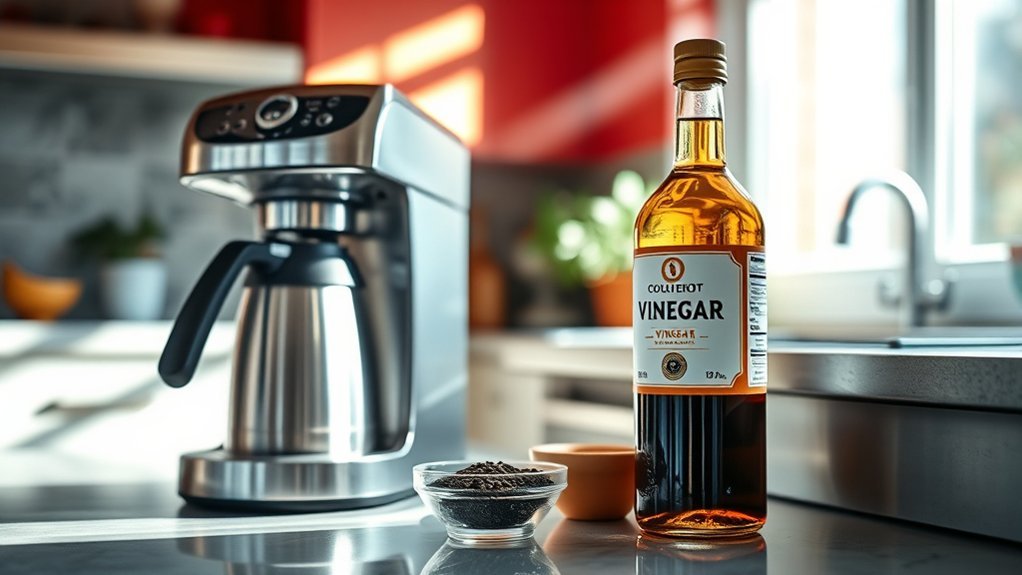
Vinegar can remove mineral scale from many standard drip coffee makers, but it is not safe for every machine. Some manufacturers provide vinegar-cleaning instructions, while others warn that acetic acid may damage internal components or affect the warranty. Before pouring vinegar into the reservoir, identify your model and check its manual.
Quick Answer
Vinegar is safe for many standard drip coffee makers only when the manufacturer allows it. It is not universally safe: Nespresso and some Philips machines warn against vinegar. Check the manual first. If approved, use the stated dilution and clean cycle, then rinse until no vinegar odor or taste remains.
Key Takeaways
- Check the manual for your exact model before using vinegar.
- Some drip coffee makers permit white vinegar, while several pod and automatic espresso machines prohibit it.
- Vinegar removes mineral scale; it does not replace washing the carafe, basket, lid, and other removable parts.
- Use only the dilution, fill level, cycle, and pause time specified by the manufacturer.
- Never mix vinegar with bleach or another cleaning chemical.
At a Glance
| Time Required | About 45–75 minutes, depending on the model’s cleaning cycle and rinse requirements |
| Difficulty | Easy |
| Tools Needed | Owner’s manual, carafe or large mug, soft cloth, dish soap, fresh water, and food-grade distilled white vinegar if approved |
| Cost | Minimal with household vinegar; manufacturer descaling products vary in price |
Is Vinegar Safe for Every Coffee Maker?
No. Whether vinegar is suitable depends on the machine’s materials, internal water system, filter, seals, cleaning program, and manufacturer instructions.
For example, Cuisinart provides vinegar instructions for many of its drip coffee makers. In contrast, Nespresso warns owners not to use vinegar, and Philips prohibits vinegar in specified automatic espresso machines.
| Machine or Example | Vinegar Guidance |
|---|---|
| Many standard drip coffee makers | Often permitted, but the dilution and cleaning cycle vary by model. |
| Many Cuisinart models | Cuisinart describes three parts water to one part vinegar for machines covered by its general cleaning instructions. |
| Nespresso machines | Do not use vinegar; use the approved Nespresso descaling product and model procedure. |
| Specified Philips automatic espresso machines | Do not use acetic acid or vinegar; use the approved Philips descaler. |
Warning: Do not use vinegar unless the manual permits it. Never mix vinegar with bleach, a bleach-containing cleaner, or another cleaning chemical. The CDC warns that mixing bleach with other cleaners can release dangerous vapors.
Power your essentials anywhere with a 999Wh pure sine wave power station delivering up to 1000W continuous with 2000W surge. It supports fast charging via USB-C PD 60W and USB-A QC 18W, plus simultaneous output for multiple devices through AC, USB, wireless, and car/DC ports. Recharge using AC, car, or solar with a built-in MPPT controller and dual cooling fans, while the upgraded battery management system protects against surges, short circuits, and overheating.

One 16-fluid-ounce bottle of Distilled White Vinegar

VERSATILE PANTRY STAPLE: Perfect for cooking, pickling, marinating, and enhancing your favorite recipes with a crisp, tangy flavor.
Cleaning vs. Descaling: What Is the Difference?
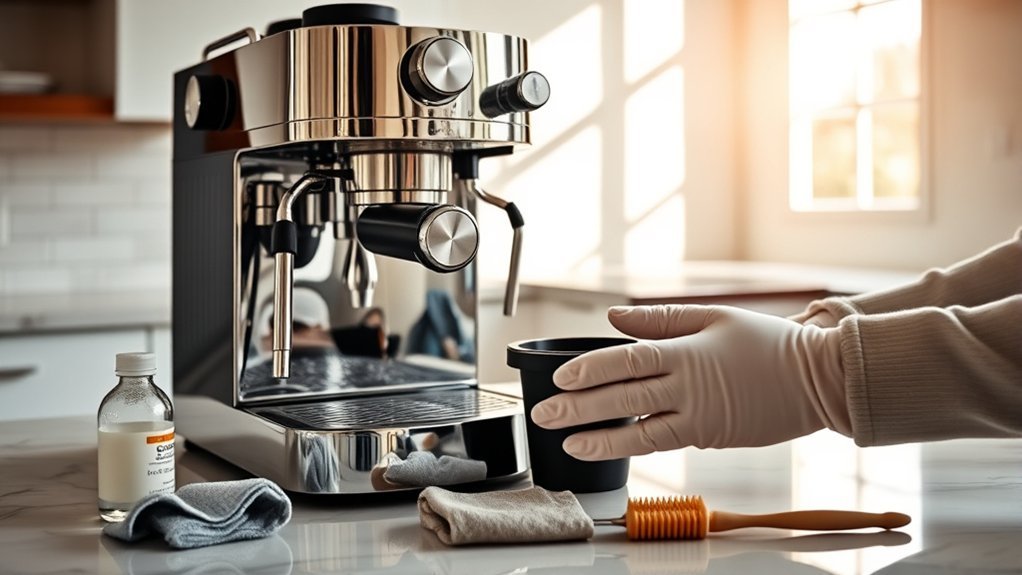
Cleaning removes coffee oils, loose grounds, stains, and other residue from the carafe, brew basket, lid, drip tray, pod holder, and exterior. These removable parts are usually washed with warm water and mild dish soap, subject to the manual’s dishwasher instructions.
Descaling removes calcium and other mineral deposits left behind as water moves through and heats inside the machine. Vinegar is used mainly as a descaler in machines that permit it.
A vinegar cycle should not be treated as a substitute for washing removable parts. The NSF notes that coffee-maker reservoirs that are not regularly cleaned can accumulate yeast and mold, so emptying standing water, washing accessible parts, and allowing them to dry remain important.
How to Clean Your Coffee Maker With Vinegar

The following method is for a drip coffee maker whose manufacturer specifically permits distilled white vinegar. Your manual takes priority over every generic step below.
Before You Start
- Turn off the coffee maker and let hot components cool.
- Discard used grounds, paper filters, or pods.
- Wash the carafe, reusable filter, brew basket, and removable lid with warm water and mild dish soap.
- Rinse and dry the removable parts.
- Check whether the manual tells you to remove a charcoal, resin, or other water-filter cartridge before descaling.
- Confirm the approved vinegar amount, water ratio, reservoir fill line, clean-cycle setting, and pause time.
Step-by-Step Vinegar Cleaning Method
- Prepare the approved solution. Use food-grade distilled white vinegar and fresh water in the exact proportion stated in the manual. Do not assume that equal parts is correct for your model.
- Fill the reservoir. Do not exceed the maximum or cleaning fill line.
- Position the carafe. Place an empty carafe or a suitably sized container beneath the outlet.
- Start the proper program. Select the clean or descale cycle when the machine has one. Otherwise, use the brew procedure described in the manual.
- Pause only when directed. Some drip-brewer instructions include a soaking period, while automatic cleaning programs control the timing themselves.
- Finish the cycle. Allow the approved solution to pass through the machine, then discard it.
- Rinse the reservoir and carafe. Remove any remaining solution before beginning the fresh-water cycles.
- Run fresh-water cycles. Use the number specified by the manufacturer. Continue until the water has no vinegar odor or sour taste.
- Reinstall the water filter. Replace or reinstall it only as directed after the machine has been fully rinsed.
Pro Tip: Keep a digital copy of the owner’s manual on your phone. The model number is often printed on the bottom or rear label, and searching that number with “cleaning” or “descaling” is more reliable than following a universal vinegar recipe.
Why Vinegar Removes Mineral Scale
Distilled white vinegar contains dilute acetic acid. When a manufacturer approves it, that mild acid can help loosen calcium-based mineral deposits inside the water pathway.
Removing scale may restore normal water flow, improve brewing consistency, and reduce strain caused by restricted internal passages. However, vinegar does not dissolve every kind of residue. Coffee oils and grounds still need soap, water, and physical washing on removable components.
Vinegar can be an effective descaler in an approved drip brewer, but the owner’s manual—not a universal recipe—determines the correct concentration and cycle.
Key Rinsing Tips for Your Coffee Maker
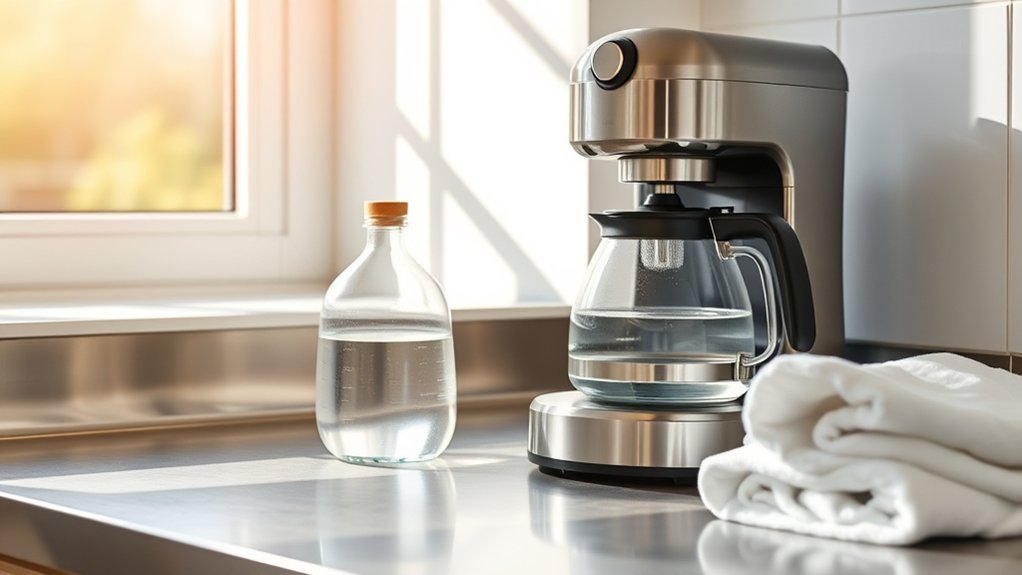
Thorough rinsing keeps the next pot from tasting or smelling sour. It also clears loosened scale from the water pathway.
- Empty and rinse the reservoir before adding fresh water.
- Run the number of full water cycles stated in the manual; two or three cycles are common for compatible drip machines.
- Use fresh water for every cycle rather than recirculating water from the carafe.
- Discard the rinse water after each cycle.
- Smell the final water and let a small sample cool before checking its taste.
- If vinegar remains noticeable, run another fresh-water cycle.
- Wash the carafe and brew basket separately so coffee oils are not left behind.
The coffee maker is ready to use when the rinse water is clear and has no vinegar odor or sour taste.
Note: Do not immerse the coffee maker’s powered base, cord, or plug. Wipe the exterior with a lightly dampened cloth and allow the surface to dry before reconnecting power.
Recommended Cleaning Frequency for Coffee Makers
There is no single schedule for every machine. Use the interval in the manual or follow the clean or descale indicator. Brewing volume and mineral content in the water can shorten the interval.
| Frequency | Maintenance |
|---|---|
| After each use | Discard grounds or pods, empty old water when appropriate, and rinse the carafe and brew basket. |
| Regularly | Wash removable parts with mild dish soap and wipe the exterior and warming plate after they have cooled. |
| At the manual’s interval | Run the approved descale procedure. Some manufacturers use a time interval, a brew count, or a clean light. |
| Earlier when symptoms appear | Descale when brewing becomes slower, output drops, scale is visible, or the machine displays a cleaning alert. |
As one example, Keurig recommends descaling its brewers every three to six months or when the machine prompts for it. That interval should not automatically be applied to another brand or model.
Signs Your Coffee Maker Needs Descaling
- The brew cycle takes longer than usual.
- The machine produces less coffee than the selected amount.
- Water sputters or flows unevenly.
- The machine becomes louder during brewing.
- A clean or descale indicator appears.
- White or chalky deposits are visible around the reservoir, outlet, or heating area.
- The coffee temperature or brewing performance becomes inconsistent.
These symptoms can also result from a blocked basket, clogged pod needle, incorrectly seated reservoir, worn part, or electrical fault. If the approved cleaning procedure does not correct the problem, use the manufacturer’s troubleshooting guide rather than repeatedly running stronger vinegar solutions.
Common Mistakes to Avoid When Cleaning With Vinegar

- Assuming vinegar is safe for every machine: Check the model instructions before adding any acid to the reservoir.
- Using an improvised ratio: More vinegar is not necessarily more effective and may expose seals or internal materials to a stronger acid than approved.
- Using cleaning vinegar: Use food-grade distilled white vinegar only when the manual permits vinegar. Cleaning vinegar may have a different concentration and may not be intended for food-contact use.
- Using apple cider or flavored vinegar: Color, aroma, sugar, or other compounds can leave unwanted residue and odor.
- Leaving the water filter installed: Some filters absorb the descaling solution and must be removed first. Follow the manual.
- Calling baking soda a descaler: Baking soda is not an equivalent replacement for an approved acidic descaling product and can leave powder in narrow passages.
- Skipping removable-part cleaning: A descale cycle does not remove all coffee oils from the carafe, basket, lid, pod holder, or drip tray.
- Stopping the rinsing process too early: Continue with fresh water until no sour smell or taste remains.
- Mixing cleaners: Never combine vinegar with bleach, disinfectant, or another cleaning product.
- Reassembling wet parts for storage: Let washable components dry before closing or storing the machine.
Troubleshooting After Vinegar Cleaning
The Coffee Still Tastes or Smells Like Vinegar
Empty and rinse the reservoir and carafe, then run another full cycle with fresh water. Repeat until the water is neutral. Also wash the lid, basket, reusable filter, and other removable parts that may have trapped solution.
The Coffee Maker Is Still Brewing Slowly
Check the basket, outlet, pod needle, and reservoir connection using the model’s troubleshooting instructions. Do not increase the vinegar concentration or run repeated acid cycles unless the manufacturer directs you to do so.
The Clean or Descale Light Remains On
Many machines require a specific button sequence or completed automatic cycle to reset the indicator. Turning the machine off may not reset it. Repeat only the official reset or descale procedure for your model.
Particles Appear in the Rinse Water
Small pale flakes may be loosened mineral deposits. Continue the approved fresh-water rinses. Stop using the machine and contact the manufacturer if particles are dark, oily, metallic, or accompanied by leaking, smoke, a burning smell, or an electrical problem.
Frequently Asked Questions
Can vinegar damage my coffee maker’s internal components?
Yes, it can damage or adversely affect a machine when the manufacturer prohibits acetic acid or requires a dedicated descaler. Vinegar is suitable only when the instructions for the exact model permit it.
Is there a specific type of vinegar to use?
Use plain, food-grade distilled white vinegar when the manual approves vinegar. Avoid apple cider, wine, balsamic, flavored, or cleaning vinegar because their color, aroma, additives, or acidity may not suit the machine.
How long should I let the vinegar sit?
Use the dwell time in the manual. Some drip brewers pause for about 30 minutes, while other models use an automatic cleaning program with no manually timed soak. Do not leave vinegar in the machine overnight unless the manufacturer specifically directs it.
Can I use vinegar for other kitchen appliances?
Only when that appliance’s instructions allow it. Acid can damage some metals, rubber parts, natural stone, electronic components, and specialty coatings. Never mix vinegar with bleach or another cleaner.
What happens if I forget to rinse after cleaning?
The next drink may smell or taste sour. Empty the machine, rinse the reservoir and carafe, and run fresh-water cycles until the water has no vinegar odor or taste.
Does vinegar disinfect a coffee maker?
Do not rely on a generic vinegar cycle as a validated disinfecting process. Its main purpose in an approved machine is descaling. Wash removable food-contact parts with warm water and dish soap as directed by the manufacturer.
Can I use baking soda instead of vinegar?
Baking soda should not be treated as an equivalent internal descaler. It may leave undissolved material in narrow passages. Use the manufacturer-approved descaling product or permitted vinegar method instead.
Conclusion
Vinegar is a useful, inexpensive descaler for coffee makers that are designed to accept it, but it is not a universal cleaning solution. Check the manual, use the approved concentration and cycle, wash removable parts separately, and rinse with fresh water until no vinegar remains. When the manufacturer prohibits vinegar, use its specified descaling product instead.
Sources
- Cuisinart: How to Clean Your Coffee Maker — vinegar dilution and cleaning guidance for compatible Cuisinart models.
- Nespresso Descaling Kit — official warning not to use vinegar in Nespresso machines.
- Philips: How to Descale My Espresso Machine — warning against acetic acid and vinegar in specified machines.
- Keurig: Descaling Guidance — scale explanation and model-specific cleaning frequency guidance.
- NSF Consumer Product FAQs — findings concerning yeast and mold in coffee-maker reservoirs that are not regularly cleaned.
- CDC: Cleaning and Disinfecting With Bleach — chemical-safety warning against mixing bleach with other cleaners.