

A ceramic nail drill bit is a lightweight, fluted e-file attachment—typically made from zirconia ceramic—designed to remove gel, dip powder, and acrylic enhancements while generating noticeably less heat than metal bits. Because ceramic dissipates friction heat quickly and resists rust, it is a top choice for comfortable product debulking when paired with the right grit color code and safe RPM range.
What Is a Ceramic Nail Drill Bit & Why Does It Stay Cooler?
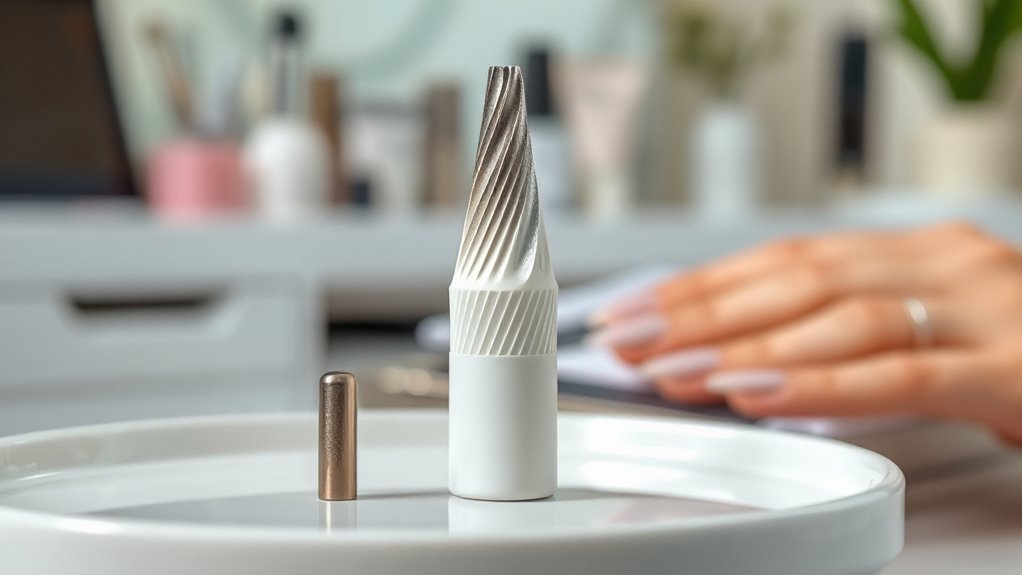
Unlike sanding bands that grind away product through friction, fluted ceramic bits shave product cleanly off the enhancement surface. Ceramic has lower thermal conductivity than metal, meaning less friction heat transfers into the nail plate during continuous passes.
Most ceramic bits come with a standard 3/32-inch (2.35 mm) shank and are available in barrel, flame, cone, and rounded-top safety bit shapes. A safety bit has a smooth, non-cutting dome at the tip to help prevent accidental nicks near the cuticle.
Ceramic Drill Bit Grit Color Codes & Safe RPM Chart
Most nail bit manufacturers use colored bands around the shank to indicate abrasiveness (always double-check your brand’s chart, as minor variations exist). Matching both grit and speed to the task prevents heat spikes and over-filing:
| Band Color | Grit Level | Recommended RPM | Best Uses |
|---|---|---|---|
| Yellow | Extra Fine (XF) | 8,000–12,000 RPM | Light surface smoothing and refining enhancements |
| Red | Fine (F) | 15,000–20,000 RPM | Removing thin gel polish, blending edges, light debulking |
| Blue | Medium (M) | 15,000–25,000 RPM | Removing builder gel (BIAB), dip powder, and medium acrylics |
| Green | Coarse (C) | 20,000–30,000 RPM | Fast debulking of thick acrylic or hard gel (enhancements only) |
| Black | Extra Coarse (XC) | 20,000–30,000 RPM | Heavy acrylic/hard gel removal for experienced techs only |
Beginner speed rule: If you are new to e-filing, stay toward the lower end of each range (around 15,000–20,000 RPM for gel/dip removal with a fine or medium safety bit). Running too slowly can cause the bit to snag or skip, while running too fast with heavy pressure causes friction burns.
Ceramic vs. Carbide Nail Drill Bits
Deciding between ceramic and metal depends on your workload and experience level. For heavy acrylic sculpting and maximum durability, compare this guide with our carbide nail drill bits beginner’s guide, or explore all bit materials—including diamond cuticle bits—in our complete nail drill bits guide.
| Feature | Ceramic Bit | Tungsten Carbide Bit |
|---|---|---|
| Heat buildup | Lower (cooler, more comfortable) | Higher (metal conducts friction heat faster) |
| Durability if dropped | Brittle—can chip or crack if dropped | Very tough and impact-resistant |
| Cutting speed on thick acrylic | Smooth and steady | Faster, more aggressive bulk removal |
| Corrosion resistance | Will not rust in disinfectants | High-quality carbide resists rust if dried properly |
| Best for | Gel, builder gel, dip, and heat-sensitive clients | Heavy acrylic debulking and high-volume salon use |
How to Use a Ceramic Nail Drill Bit Safely (Step-by-Step)
- Lock the bit securely: Insert the 3/32-inch shank fully into the handpiece chuck (leave a tiny 1–2 mm gap if your drill manual specifies) and lock it before turning the motor on.
- Set rotation direction: Right-handed users typically use Forward (F) and sweep right-to-left; left-handed users use Reverse (R) and sweep left-to-right (or choose a two-way cross-cut bit).
- Brace your hand and use light pressure: Rest your pinky on the client’s or your own hand for stability. Let the flutes glide across the product—never press down hard.
- Keep the bit moving: Hovering in one spot creates a friction burn, even with ceramic. Use smooth, continuous strokes from cuticle zone toward the free edge.
- Stop before hitting natural nail: Remove roughly 80%–90% of the bulk, leaving a thin protective base layer to soak off or backfill—especially useful when following our steps on how to remove nail dip powder.
Cleaning, Disinfecting & When to Replace
- Scrub debris immediately: Use a soft nylon brush (never a wire brush, which chips ceramic) with warm soapy water to clear dust from the flutes.
- Disinfect properly: Submerge the clean bit in an EPA-registered salon disinfectant for the manufacturer’s required contact time, rinse if directed, and air-dry completely before storing in a covered case.
- Replace when worn or dropped: Retire any ceramic bit immediately if you drop it on a hard floor, spot chipped flutes, feel unusual vibration, or notice it skating over product instead of cutting cleanly.
Pros and Limitations of Ceramic Nail Drill Bits
- Pros: Runs cooler with less burning sensation, lightweight feel, smooth dust output, and completely rust-free.
- Limitations: Can fracture or chip if dropped, cuts slightly slower than coarse carbide on very thick acrylics, and still causes nail damage if used directly on bare natural nails.
Frequently Asked Questions
Can you use a ceramic nail drill bit on natural nails?
Medium, coarse, and extra-coarse ceramic bits should never touch the bare natural nail plate. Only experienced users should use an extra-fine (yellow) ceramic bit at very low speed for light surface work; for natural nail prep and cuticles, a fine diamond bit or 180–240 grit sanding band is safer.
Are ceramic nail drill bits better than carbide bits?
Ceramic bits stay cooler and feel lighter during gel and dip removal, making them comfortable for heat-sensitive nails. Carbide bits are tougher against drops and cut faster through thick acrylics. Many nail technicians keep both in their kit.
Do ceramic nail drill bits fit all electric nail drills?
Most ceramic bits use the industry-standard 3/32-inch (2.35 mm) shank, which fits nearly all salon and home e-files. Always verify your handpiece chuck size before purchasing.
Can ceramic nail drill bits be sterilized in an autoclave?
Many solid zirconia ceramic bits can be disinfected with EPA-registered liquid disinfectant or autoclaved, provided you check the manufacturer's instructions first—some bonded shanks can loosen under repeated high-pressure heat cycles.
Are ceramic drill bits safe for beginners at home?
Yes, if you start with a fine (red) or medium (blue) rounded-top safety bit, keep speeds moderate, use feather-light pressure, and practice on practice hands or enhancements before working near your own cuticles.


[…] you want a cooler-running removal bit that feels forgiving in the hand, read our dedicated Ceramic Nail Drill Bit Guide: Grits, RPM & Safe Use. For heavy acrylic or hard gel debulking where speed and flute sharpness matter most, compare […]