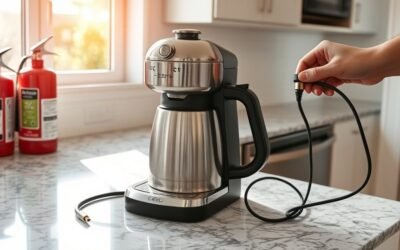
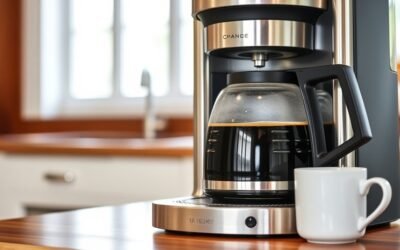
A coffee maker consists of several key components that work together for ideal brewing. The water reservoir stores water, while the heating element guarantees perfect brew temperatures. The brew head distributes water evenly, promoting consistent extraction of flavors from the coffee grounds. The filter basket holds the ground coffee, and the carafe serves as the final container for your brew. Each part requires specific maintenance to prevent issues and enhance performance—more details await on how to care for them effectively.
Key Takeaways
- The water reservoir stores water for brewing, with capacities ranging from 4 to 12 cups, and often features measurement markings for convenience.
- The heating element is vital for reaching the ideal brew temperature, ensuring consistent heat for proper coffee extraction.
- The brew head distributes water evenly over coffee grounds, promoting uniform extraction and avoiding channeling during the brewing process.
- Gaskets, made from materials like silicone or rubber, maintain pressure during brewing, impacting flavor extraction and overall efficiency.
- Regular maintenance of components, including cleaning and replacement of parts, ensures optimal brewing performance and extends the lifespan of the coffee maker.
Understanding the Coffee Maker’s Water Reservoir

The water reservoir is an integral component of any coffee maker, serving as the storage space for water before it’s heated and brewed into your favorite cup of coffee.
The water reservoir is essential for any coffee maker, holding water before it’s transformed into your perfect cup of coffee.
Reservoir capacity varies by model, typically holding between 4 to 12 cups, which directly influences how many servings you can brew at once. Many coffee makers feature transparent reservoirs with measurement markings, allowing you to easily gauge the water level and brew the desired amount.
For user convenience, modern designs often include removable reservoirs, making filling and cleaning straightforward tasks.
Regular maintenance is vital; keeping the reservoir clean prevents mineral buildup and guarantees efficient water flow during brewing, resulting in a consistently great cup of coffee every time.
How the Heating Element Affects Brew Temperature?
When you brew coffee, the heating element plays an important role in reaching the ideal temperature for extraction, typically between 90 to 96 degrees Celsius (194 to 205 degrees Fahrenheit).
The heating efficiency of the element directly impacts how quickly and effectively the water reaches this preferred range. Consistent heat is essential; temperature consistency guarantees uniform extraction of coffee grounds, which is critical for developing rich flavors and aromas.
A malfunctioning heating element can lead to undesirable results, such as under-extraction, giving a sour taste, or over-extraction, which results in bitterness.
Some advanced coffee makers allow you to adjust the heating element for specific brew temperatures. Regular maintenance, like descaling, is key to preserving ideal brew temperatures and enhancing your coffee experience.
Why the Brew Head Ensures Even Water Distribution?

Achieving ideal coffee extraction isn’t just about temperature; it also hinges on how water flows through the coffee grounds. The brew head, or group head, plays a pivotal role in this process. Its design guarantees even water distribution, which is critical for extraction consistency and flavor optimization. A well-engineered brew head prevents channeling through a group screen that disperses hot water uniformly. Regular maintenance assures efficient performance, while proper alignment with the portafilter maintains necessary pressure.
| Brew Head Feature | Importance | Effect on Extraction |
|---|---|---|
| Group Screen | Disperses water | Prevents channeling |
| Design | Affects flow | Guarantees consistency |
| Maintenance | Prevents buildup | Enhances flavor |
The Filter Basket’s Role in Optimal Coffee Extraction
While brewing coffee, the filter basket serves an essential function by holding the ground coffee and permitting water to flow through, ensuring ideal extraction.
Its design greatly impacts brewing efficiency and flavor extraction. To maximize your brewing experience, consider these factors:
- Size: Choose between single or double baskets for varying extraction volumes.
- Material: Stainless steel offers durability and better heat retention compared to plastic.
- Fit: A properly fitting filter basket guarantees even water distribution, enhancing aroma and flavor.
- Cleaning: Regular maintenance prevents coffee oil buildup, ensuring consistent taste.
- Type: Some baskets accommodate paper or metal filters, affecting brew quality.
The Carafe’s Role in Serving Coffee

The carafe serves as an essential component for serving coffee, with its material type greatly impacting durability and heat retention.
Insulation features, like double-walled designs, play a key role in maintaining your coffee’s temperature over time.
Additionally, the carafe’s capacity directly affects how much coffee you can brew and serve, catering to different needs and occasions.
Material Types Impact Durability
When selecting a carafe for your coffee, understanding the impact of material types on durability is essential.
Here’s a quick comparison of common carafe materials:
- Glass: Aesthetically pleasing but prone to breakage.
- Stainless Steel: More durable and resistant to damage.
- Insulation: Stainless steel offers superior thermal retention.
- Cleaning Ease: Stainless steel is less likely to retain stains or odors.
- Spout Design: Both materials can feature controlled pouring to minimize spills.
Insulation Maintains Coffee Temperature
Many coffee enthusiasts appreciate how insulation plays an important role in maintaining ideal coffee temperature.
The carafe, whether glass or stainless steel, is engineered for optimal heat retention, ensuring your coffee stays hot for hours. Insulated carafes eliminate the need for warming plates, which can negatively affect flavor preservation over time.
Glass carafes often feature thermal sleeves or double-walled designs that enhance insulation and reduce heat loss. In contrast, stainless steel carafes utilize advanced vacuum insulation technology, providing exceptional heat retention while being more durable.
To get the best results, proper care and cleaning of your carafe are vital, as they help maintain its insulating properties and deliver the rich taste your coffee deserves.
Capacity Affects Serving Size
Selecting the right carafe size is essential for optimizing your coffee experience, as it directly impacts how many servings you can provide. Understanding carafe sizes can enhance your serving efficiency, ensuring you brew just the right amount for your needs.
Consider these factors when choosing your carafe:
- Capacity: Ranges from 4 to 12 cups, matching your typical consumption.
- Material: Glass and thermal options retain heat effectively.
- Design: A spout and handle enhance pouring comfort.
- Lid: Helps keep coffee warm and prevents spills.
- Practicality: Choose a size that accommodates gatherings or daily use.
Essential Maintenance Tips for Coffee Makers
To keep your coffee maker operating at peak performance, establish a regular cleaning schedule to remove residue and prevent mineral buildup.
You should also inspect gaskets and seals regularly to avoid leaks and maintain the proper brewing pressure.
Finally, monitoring temperature and pressure guarantees that your coffee brews consistently, delivering the best flavor extraction with every cup.
Regular Cleaning Schedule
While enjoying a fresh cup of coffee, you mightn’t realize how essential a regular cleaning schedule is for your coffee maker. Establishing this routine helps prevent buildup of coffee oils and residues, which can impact flavor and aroma.
Follow this maintenance checklist for ideal performance:
- Clean the water reservoir and brew basket daily to prevent mold or bacteria growth.
- Descale your coffee maker with a vinegar and water mixture every 1-3 months to remove mineral deposits.
- Check and replace any gaskets and seals regularly to guarantee a leak-free operation.
- Follow the manufacturer’s instructions for cleaning specific components, as different machines may have unique maintenance requirements.
- Be consistent with your cleaning frequency to maintain your coffee maker’s longevity.
Inspect Gaskets And Seals
Inspecting the gaskets and seals of your coffee maker is important for maintaining its efficiency and performance. These components prevent water leaks during brewing, ensuring a clean operation. Regular inspections help you catch wear and tear early, preventing decreased performance and potential leaks.
| Gasket Material | Advantages | Maintenance Tips |
|---|---|---|
| Silicone | Heat resistance, longevity | Check for cracks monthly |
| Rubber | Flexibility, cost-effective | Replace every 1-2 years |
| Foam | Lightweight, good insulation | Inspect for wear biannually |
Proactive replacement improves seal integrity and extends your coffee maker’s life. Maintaining these components is essential for consistent pressure during brewing, enhancing extraction and flavor. Don’t overlook this important maintenance task!
Monitor Temperature And Pressure
Monitoring temperature and pressure in your coffee maker is essential for achieving the perfect brew. Proper temperature regulation guarantees ideal extraction, ideally around 91 degrees Celsius, while maintaining pressure consistency at about 9 bars ensures even brewing.
Here are key maintenance tips:
- Regularly calibrate temperature sensors to prevent overheating.
- Check pressure gauges to guarantee they’re providing accurate readings.
- Clean sensors to avoid buildup that affects performance.
- Inspect the brewing unit for consistent temperature delivery.
- Replace faulty sensors or gauges promptly to maintain quality.
Frequently Asked Questions
Can I Use Any Type of Water in My Coffee Maker?
You shouldn’t use just any water in your coffee maker. Water quality and mineral content greatly impact flavor and machine performance. Stick to filtered or bottled water to enhance your coffee and prolong your machine’s life.
How Often Should I Replace My Coffee Maker’s Filter Basket?
Think of your coffee maker’s filter basket as its heartbeat; replace it every three to six months for ideal filter maintenance. This guarantees brewing efficiency, keeping your coffee tasting fresh and vibrant with each cup.
What Materials Are Carafes Typically Made From?
Carafes are typically made from glass or stainless steel. Glass carafes offer aesthetic appeal, while stainless steel provides durability and insulation. Choose based on your preference for heat retention and design compatibility with your coffee maker.
Does the Size of the Water Reservoir Affect Brewing Time?
Yes, the water reservoir size impacts brewing time. Larger reservoirs hold more water, allowing for better temperature stability. This can enhance brewing capacity, ensuring ideal extraction and flavor from your coffee, making every cup a delight.
Can I Brew Tea in a Coffee Maker?
Yes, you can brew tea in a coffee maker. Simply replace coffee grounds with tea bags or loose tea in a filter. Adjust the water temperature and brewing time for ideal tea brewing results. Enjoy your tea!
Conclusion
In the world of coffee makers, each component plays a pivotal role, much like a symphony where every instrument contributes to the harmony. The water reservoir guarantees a steady flow, while the heating element fine-tunes your brew’s temperature. As the brew head distributes water evenly, the filter basket captures the essence of your beans. Finally, the carafe serves as the vessel for your creation. By understanding these parts, you can elevate your coffee experience from mundane to extraordinary.