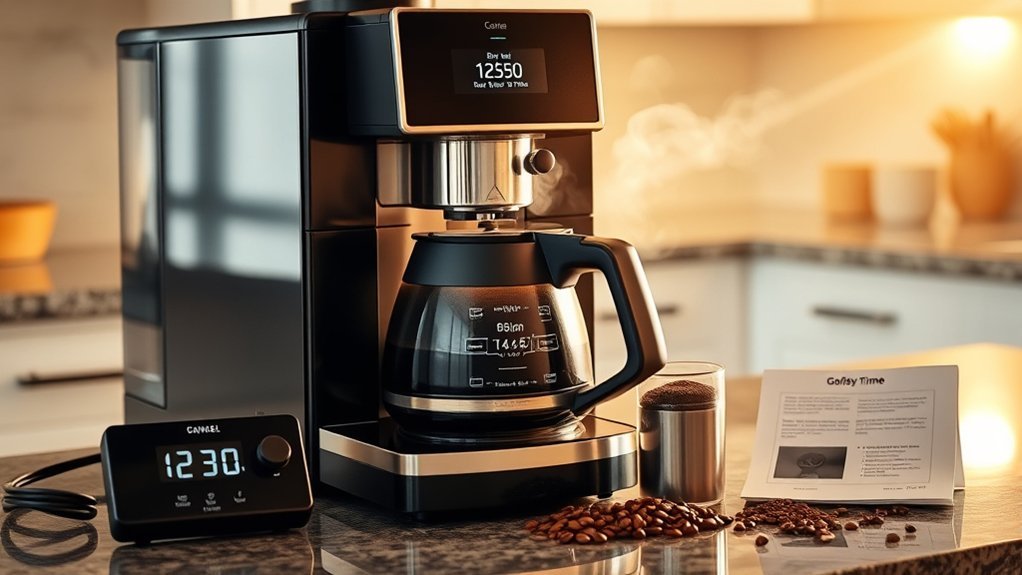

An automatic drip coffee maker looks simple from the outside, but several mechanical, electrical, and structural parts work in tandem to heat water, transport it to the coffee bed, extract flavor, and filter the brewed beverage into a carafe. Understanding these coffee maker parts helps you dial in brew consistency, troubleshoot slow flow or leaks, and perform routine maintenance without confusing drip brewer components with high-pressure espresso systems.
Quick Answer
The primary parts of an automatic drip coffee maker include the water reservoir, one-way check valve, heating element tube, riser pipe, showerhead (sprayhead), filter basket, filter, carafe, and electronic controls. Models with glass carafes feature a warming plate, while thermal carafe models rely on double-wall vacuum insulation to maintain heat.
Key Takeaways
- The water reservoir holds fresh water, which gravity feeds past a one-way check valve into the heating tube.
- A thermosiphon effect or low-pressure pump pushes boiling water up the riser tube to the showerhead.
- The showerhead disperses heated water (ideally 195°F–205°F / 92°C–96°C) evenly over coffee grounds in the filter basket.
- Glass carafes require an active warming plate, whereas stainless steel thermal carafes preserve temperature via insulation without scorching the coffee.
- Drip coffee makers operate under atmospheric pressure and gravity, unlike espresso machines that require 9 bars of pump pressure.
- Routine descaling prevents mineral scale from constricting the one-way valve, heating element, and sprayhead nozzles.
Note: This guide covers automatic drip coffee makers. Espresso machines, single-serve pod brewers, manual pour-overs, and stovetop percolators use distinctly different plumbing, valves, and extraction mechanisms.
Main Parts of an Automatic Drip Coffee Maker
Most automatic drip coffee makers follow a standardized fluid path: cold water flows from the reservoir, passes through a one-way check valve into a heated aluminum tube, rises via steam expansion through an internal delivery tube, showers over ground coffee, and drips through a filter into the carafe below.
| Component | Location | Primary Function |
|---|---|---|
| Water reservoir | Internal or removable tank | Stores brew water with cup-level indicator markings. |
| One-way check valve | Base inlet tubing | Prevents boiling water and steam from backing up into the cold reservoir. |
| Heating element | Base chassis | Heats water rapidly inside an extruded conductive tube. |
| Riser tube / Water outlet | Vertical interior conduit | Channels heated water and steam bubbles upward toward the brew head. |
| Showerhead / Sprayhead | Above the brew basket | Distributes hot water evenly over the coffee bed to ensure uniform extraction. |
| Filter basket | Upper brew chamber | Holds the coffee filter and grounds; shapes flow rate toward the carafe. |
| Drip-stop valve | Filter basket base | Spring-loaded seal that pauses flow when the carafe is removed mid-brew. |
| Carafe | Base rest plate | Receives, retains heat for, and pours the finished liquid coffee. |
| Warming plate | Base (glass-carafe models) | Conducts low heat to glass pots; regulated by a thermal switch. |
Power your essentials anywhere with a 999Wh pure sine wave power station delivering up to 1000W continuous with 2000W surge. It supports fast charging via USB-C PD 60W and USB-A QC 18W, plus simultaneous output for multiple devices through AC, USB, wireless, and car/DC ports. Recharge using AC, car, or solar with a built-in MPPT controller and dual cooling fans, while the upgraded battery management system protects against surges, short circuits, and overheating.

【ENHANCED CAPACITY WATER TANK】SLLFLY offers a water reservoir compatible with for the Ninja 12-cup coffee maker, featuring 60-ounce capacity.

What's in the box: one 75oz Water reservoir replacement part in Brushed Silver. Keurig k-elite Coffee brewer sold separately.
Understanding the Coffee Maker’s Water Reservoir

The water reservoir is the holding tank for brewing water. Depending on brewer engineering, it is either integrated into the chassis or removable for direct sink filling. Transparent measurement windows or stepped internal ridges indicate water volume by cup increments.
Reservoir volumetric markings do not represent standard 8-fluid-ounce culinary cups; most manufacturers calibrate a coffee maker “cup” to between 4.25 and 5.0 fluid ounces (125 to 150 ml).
Modern reservoirs often house an integrated charcoal water filter bracket. These activated carbon inserts trap chlorine, heavy metals, and organic odors before water enters the internal plumbing, preserving cup clarity. Because water sits statically before brewing, keeping the reservoir lid vented and clean prevents algae formation and biofilm buildup.
How the Heating System Affects Brew Temperature
The heating assembly converts electrical energy into thermal energy to heat incoming water. In standard drip brewers, this assembly consists of a dual-chamber aluminum extrusion in the machine’s base: one channel contains a resistive heating coil, while the adjacent channel carries water.
Brew temperature directly dictates extraction yield. According to the Specialty Coffee Association (SCA) Certified Home Brewer standard, water delivered to the coffee bed must reach and maintain 195°F to 205°F (92°C to 96°C). Sub-195°F water under-extracts coffee, yielding a sour, hollow profile, while water exceeding 205°F increases the rate of bitter, astringent compound extraction.
Two essential safety and regulation components manage this system:
- Bi-metal thermostat: Cycles electrical power to the heating element on and off once optimal operating temperatures are achieved.
- Thermal cutoff fuse: A one-time safety component that permanently breaks electrical continuity if the heating element exceeds safe temperature thresholds (e.g., if operated dry).
Pro Tip: If your machine takes more than 8 to 10 minutes to brew a full pot, calcium carbonate (scale) has coated the heating channel. The scale acts as an insulating barrier, reducing heat transfer and choking flow. Descaling clears this restriction.
Why the Showerhead Helps Distribute Water Evenly

Once water reaches the top of the machine, it enters the showerhead (or sprayhead). Rather than allowing water to pour through a single central stream—which creates a localized channel and under-extracts the surrounding bed—the showerhead uses multiple precision nozzles to disperse water across the entire surface of the coffee grounds.
| Delivery Component | Engineering Role | Vulnerability & Maintenance |
|---|---|---|
| Multi-hole sprayhead | Distributes water across the full diameter of the filter basket. | Scale crystallization clogs outer holes, causing uneven channeling. |
| Rotating / pulsed outlet arm | Simulates manual pour-over agitation and bloom stages. | Mechanical pivot joints can bind if mineral residue is not cleaned. |
| Internal riser pipe | Transports boiling liquid upward via thermosiphon action. | Silicone tubing can degrade or slip off barbed fittings over time. |
Unlike an espresso machine’s group head, which secures a metal portafilter under 9 bars of hydraulic pressure, a drip brewer showerhead delivers water at ambient atmospheric pressure, letting gravity pull water through the coffee bed.
The Filter Basket’s Role in Coffee Extraction
The filter basket suspends the filter medium and coffee grounds beneath the showerhead while controlling the drainage rate into the carafe. Commercial and residential drip machines generally use one of two basket geometries:
- Conical baskets (#2, #4): Funnels water down through a deeper coffee bed, producing a longer contact time best suited for smaller batches.
- Flat-bottom (basket-style) filters: Spreads coffee grounds across a wider, shallower bed, promoting uniform saturation for larger, multi-cup batches.
Basket functionality depends on three critical physical factors:
- Filter medium pairing: Paper filters trap diterpenes (cafestol and kahweol) and fine silts for a clean cup; permanent stainless-steel mesh filters allow natural coffee oils and micro-solids to pass into the carafe.
- Drainage hole calibration: The bottom orifice diameter is calibrated to balance contact time. If the grind is too fine, water backs up and overflows the top rim.
- Integrated drip-stop mechanism: A spring-loaded rubber seal at the basket base stays shut until pushed open by the carafe lid. When the carafe is removed to pour an interim cup, the spring seals the outlet to prevent spills onto the hot plate.
The Carafe’s Role in Serving Coffee

The carafe holds the finished brew. Design, thermal retention method, and spout shape determine how long the coffee remains drinkable without oxidation or stewing.
Material Types Affect Durability
Borosilicate glass carafes are completely non-reactive, visually clear, and inexpensive to replace. However, they are susceptible to thermal shock fractures and physical drops, and they require an active heat source to stay hot.
Stainless steel carafes feature double-wall construction and offer complete impact resistance. They eliminate external warming plates, preventing flavor degradation caused by continued direct heating.
Insulation Helps Maintain Coffee Temperature
Thermal carafes use a sealed vacuum between interior and exterior stainless steel walls. This barrier stops conductive and convective heat loss, keeping coffee within the ideal serving range (160°F–175°F) for hours.
Glass carafes sit on an aluminum warming plate heated by the machine’s base coil. While effective for short durations, leaving brewed coffee on an active hot plate beyond 20 to 30 minutes burns delicate aromatic oils, resulting in a bitter, stewed taste.
Capacity Affects Serving Size
Carafes are sized to match the machine’s maximum reservoir capacity (commonly 8-, 10-, 12-, or 14-cup models). Always use the carafe designed specifically for your machine. Incorrect lid heights or diameters will fail to fully actuate the basket’s drip-stop valve, causing the brew basket to overflow grounds and boiling water onto your counter.
Other Coffee Maker Parts You May See
Advanced drip brewers incorporate auxiliary sensors, mechanical valves, and programmable control boards:
- One-way check valve (ball valve): Located at the base of the water reservoir, this silicone flap or glass-ball valve allows cold water into the heater tube but seals tightly when boiling steam pressure expands, forcing water upward rather than backward.
- Flow-control restrictor: Manual or solenoid-activated valves (found on brewers like Technivorm Moccamaster) that adjust the drain speed of the brew basket based on batch volume.
- Microcontroller & PCB: Houses programmable timers, auto-off logic, cleaning-cycle alerts, and PID temperature control circuits.
- Water level sensor: Float switches or capacitive probes that alert the control board when water runs dry, protecting the heating coil from running empty.
How Coffee Maker Parts Work Together
- Filling and priming: Fresh water enters the reservoir and flows down into the base heating chamber by gravity.
- Valve closure: Water fills the aluminum heater channel, resting against the one-way check valve.
- Thermosiphon heating: The heating element energizes. As water boils, expanding steam bubbles close the one-way valve behind it.
- Riser propulsion: Blocked from returning to the reservoir, expanding steam pushes hot water slugs up the riser tube.
- Dispersion and bloom: Hot water enters the showerhead and rains over the coffee bed at 195°F–205°F, saturating the grounds.
- Filtration: Gravity pulls dissolved coffee solids through the filter medium and basket orifice.
- Collection: The stream opens the spring-loaded drip-stop valve and collects in the carafe below.
Essential Maintenance Tips for Coffee Makers
Warning: Always unplug the coffee maker and allow heating surfaces to cool completely before cleaning or inspecting components. Never submerge the machine base in water, as internal electrical wiring and the heating element can short-circuit.
Preventive maintenance extends machine lifespan, prevents heating element burnout, and preserves cup flavor.
Regular Cleaning Schedule
- Daily: Dump spent grounds immediately to prevent mold. Wash the filter basket and carafe with warm, mild soapy water to remove rancid coffee oils.
- Weekly: Wipe down the showerhead and clean the carafe lid’s internal mixing tube.
- Every 1–3 Months: Run a descaling cycle using citric acid or a manufacturer-approved descaling solution to dissolve limescale. Follow guidelines from the National Coffee Association on equipment sanitation.
- Every 60–90 Brews: Replace the internal charcoal water filter insert inside the reservoir.
Inspect Drip-Stops, Seals, and Removable Parts
Over time, heat cycles and coffee oils degrade elastomeric gaskets and springs. Inspect these components periodically:
| Component | Inspection Focus | Corrective Action |
|---|---|---|
| Drip-stop plunger | Coffee residue sticking to rubber seal or weak spring tension. | Soak in espresso detergent solution; replace basket if spring is snapped. |
| Carafe lid gasket | Dry rot, cracking, or coffee oil buildup causing lid leaks. | Clean thoroughly with warm water; replace rubber O-ring if torn. |
| Showerhead insert | White calcium crusting clogging outlet nozzle ports. | Detach if removable (e.g., OXO Brew Rainmaker) and soak in warm descaler. |
Monitor Brew Temperature and Water Flow
Pay attention to subtle changes in machine behavior to spot failures early:
- Excessive gurgling and steam: Indicates scale accumulation in the bottom heating channel, causing localized dry spots and premature boiling.
- Cool coffee in the pot: Points to an aging bi-metal thermostat tripping too early or a failed warming plate circuit.
- Grounds overflowing the basket rim: Caused by using an overly fine grind size (espresso grind in a drip basket), a warped filter basket, or an unseated carafe failing to engage the drip-stop.
Common Coffee Maker Problems by Part
| Symptom | Suspect Component | Diagnostic & Resolution Step |
|---|---|---|
| Slow brew time / excessive steam | Heating tube / Riser pipe | Descale thoroughly with a commercial descaling agent to clear mineral obstruction. |
| Water does not pump up to sprayhead | One-way check valve / Thermal fuse | Check if check valve ball is stuck with limescale; test thermal fuse continuity if totally unpowered. |
| Basket overflows coffee grounds | Drip-stop / Filter medium | Coarsen the coffee grind, avoid doubling paper filters, and ensure carafe is fully seated. |
| Water leaks onto counter | Base reservoir gasket / Silicone hose | Inspect silicone hose clamps at the base inlet; reseat removable reservoir seals. |
| Coffee cools rapidly in carafe | Warming plate / Thermal vacuum seal | Verify auto-off timer settings on warming plates; check thermal carafes for lost vacuum insulation. |
Frequently Asked Questions
Can I use any type of water in my coffee maker?
Use filtered tap water that contains moderate mineral content (approx. 50–150 ppm TDS) for optimal flavor extraction. Avoid 100% distilled or reverse-osmosis (RO) water unless remineralized, as pure demineralized water can leach metals from copper/aluminum heating elements and confuse electronic capacitive water sensors.
How often should I replace my coffee maker’s filter basket?
Permanent plastic or metal filter baskets do not have fixed expiration dates. Replace them only if the basket develops physical cracks, the mesh warps, or the bottom spring-loaded drip-stop valve mechanism fails to seal or open correctly.
What materials are carafes typically made from?
Drip coffee carafes are constructed from thermal-shock-resistant borosilicate glass or double-walled, vacuum-insulated stainless steel. Glass relies on an active heating plate, while stainless steel holds thermal energy passively without scorching.
Does the size of the water reservoir affect brewing time?
The volume of water added directly impacts the total brew duration, but tank capacity alone does not change flow rate. Total brew time is controlled by the wattage of the heating element, the diameter of the riser tube, and the drainage rate of the filter basket.
Can I brew tea in a coffee maker?
While loose leaf or bagged tea can technically be placed in the filter basket to brew with hot water, residual coffee oils embedded in plastic baskets and carafes will impart unwanted coffee flavor into the tea. For best results, use dedicated equipment or run hot water into a separate teapot.
Do drip coffee makers brew at 9 bars of pressure?
No. Nine bars of pressure (approx. 130 psi) are exclusive to espresso machines using electric vibratory or rotary pumps. Automatic drip brewers operate under standard atmospheric pressure, moving water upward via steam expansion and drawing it down through the coffee bed using gravity.
Why is my drip coffee maker suddenly brewing slowly?
A sudden or progressive slowdown is almost always caused by calcium carbonate scale deposits restricting the heating tube or clogging the one-way valve in the base. Run a comprehensive descaling cycle with an acid-based descaler to restore full flow.
Conclusion
An automatic drip coffee maker coordinates a continuous thermal and fluid circuit: the water reservoir supplies water past a one-way check valve, the heating tube rapidly generates steam pressure to elevate water through the riser conduit, the showerhead ensures broad saturation over the filter basket, and the carafe collects the finished brew. Supporting parts like thermostats, thermal fuses, and drip-stop valves ensure the process remains safe and clean.
Diagnosing problems becomes straightforward when you understand this mechanical flow. Slow brewing and gurgling stem from scale build-up inside the heating tube, basket overflows point to grind size or drip-stop misalignment, and flavor issues arise from temperature drift or coffee oil accumulation. Routine descaling and daily washing of contact parts ensure consistent extraction and peak brewer performance for years.
Sources
- Specialty Coffee Association (SCA) — Certified Home Brewer standard requirements for temperature stability (195°F–205°F), extraction consistency, and brew time.
- National Coffee Association (NCA) — Technical standards for water-to-coffee brewing ratios, grind sizes, and equipment cleaning best practices.
- Technivorm Moccamaster Engineering Documentation — Copper heating element design, thermosiphon fluid mechanics, and manual flow-control filter baskets.
- OXO Brew Coffee Equipment Manuals — Rainmaker multi-hole showerhead dispersal dynamics and thermal carafe vacuum design.