


To guarantee your coffee maker operates safely, plug it directly into a wall outlet—never use an extension cord or power strip, as these can overheat. Regularly inspect the power cord for damage, and keep the area around the appliance dry to avoid electrical shorts. Moisture can lead to malfunctions and hazards, so make sure spills are cleaned up immediately. Following these guidelines will help keep your coffee maker safe and reliable; explore more tips for ideal usage.
Key Takeaways
- Always plug your coffee maker directly into a wall outlet to prevent overheating and electrical hazards.
- Use a heavy-duty extension cord rated at least 14 AWG only if necessary, and keep it under 25 feet.
- Regularly inspect the coffee maker’s power cord for frayed wires or damage, and replace immediately if found.
- Ensure the coffee maker is placed on a stable, dry surface to avoid spills and potential electrical shorts.
- Unplug the coffee maker when not in use to prevent accidental activation and potential fire risks.
Avoiding Extension Cord Risks With Coffee Makers
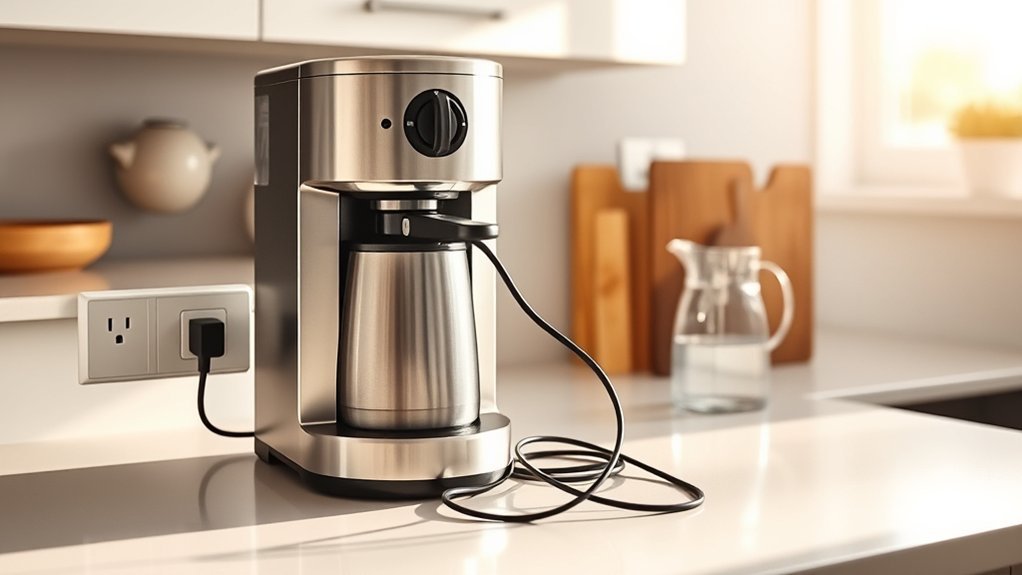
While it might be tempting to use an extension cord for your coffee maker, doing so poses significant safety risks. Coffee makers demand high power, and using an extension cord can lead to overheating and fire hazards.
Instead of relying on extension cords, consider relocating your coffee maker closer to a wall outlet for safer coffee maker placement. If you absolutely must use an extension cord, opt for a heavy-duty cord rated at least 14 AWG and guarantee it’s grounded.
Always keep the length under 25 feet to prevent voltage drops. Avoid daisy-chaining multiple appliances to a single cord, as this can exceed capacity and create dangerous conditions.
Prioritize safety by exploring extension cord alternatives whenever possible.
Best Practices for Coffee Maker Safety
To guarantee your coffee maker operates safely, always plug it directly into a wall outlet rather than relying on power strips or extension cords. Confirm your coffee maker’s power cord is at least 12 AWG, and never use damaged cords.
Proper coffee maker placement is essential; keep the area around it free of flammable materials and place it on a stable surface to minimize spills and accidents.
Regularly inspect the coffee maker for signs of wear, such as frayed cords or scorch marks, and replace any damaged components immediately.
To maintain safe operation, avoid charging devices or using other high-wattage appliances on the same circuit to prevent electrical load overloads.
Prioritize these practices for ideal safety.
Inspecting and Maintaining Coffee Maker Cords: Key Steps

Inspecting and maintaining your coffee maker’s cord is essential for guaranteeing safe operation. Regular cord inspection can help you identify potential hazards before use. Follow these maintenance tips to keep your coffee maker safe:
| Inspection Item | Action Required |
|---|---|
| Frayed Wires | Replace the cord immediately |
| Bent Prongs | Straighten or replace if severe |
| Scorch Marks | Stop using and check outlet |
| Water Contact | Keep the cord dry and away from water |
| Extension Cord Usage | Avoid; plug directly into the wall outlet |
Always unplug your coffee maker when not in use to prevent accidental activation. Following these steps guarantees you minimize risks and maintain the longevity of your coffee maker’s cord.
Why Keeping Water Away From Your Coffee Maker Matters?
Maintaining your coffee maker’s cord is just one aspect of guaranteeing safe operation; keeping water away from your coffee maker is equally important.
Moisture hazards pose significant risks, as water exposure can lead to electrical shorts, increasing the potential for fires and appliance malfunctions. If water seeps into the coffee maker or near electrical outlets, it can conduct electricity, creating dangerous shock conditions.
Always place your coffee maker on a stable, dry surface to prevent spills. Regularly inspect the area around your coffee maker for signs of water accumulation to mitigate these risks.
Choosing the Right Power Source for Your Coffee Maker
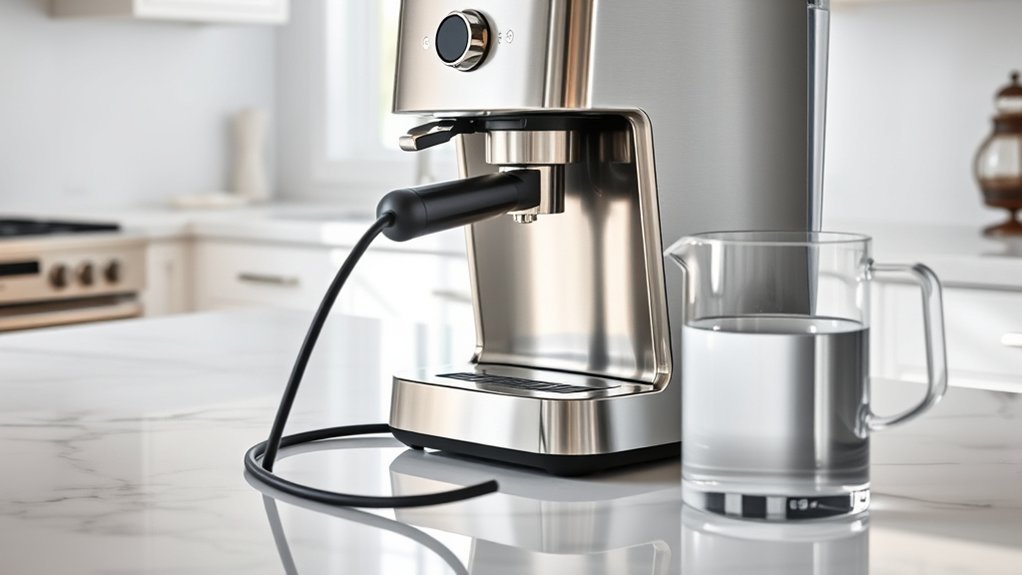
When selecting a power source for your coffee maker, it’s important to plug it directly into a wall outlet rather than relying on power strips or extension cords. This prevents overheating and minimizes fire hazards.
Verify the outlet you choose can handle your coffee maker’s power requirements, typically ranging from 800 to 1,200 watts depending on the model. If short power cords pose placement challenges, consider using a surge protector with a longer cord that meets safety standards.
Always inspect your coffee maker’s cord for signs of wear or damage, as frayed wires can lead to serious electrical hazards.
Frequently Asked Questions
How Often Should I Inspect My Coffee Maker’s Cords?
You should inspect your coffee maker’s cords monthly. Establishing an inspection schedule guarantees cord maintenance, preventing potential hazards. Look for frays, damage, or wear, and replace any faulty cords to maintain safe operation.
Can I Use a Multi-Plug Adapter With My Coffee Maker?
You shouldn’t use a multi-plug adapter with your coffee maker unless it’s specifically designed for that purpose. Verify adapter compatibility with your coffee maker’s wattage requirements to maintain multi-plug safety and prevent electrical hazards.
What Should I Do if My Coffee Maker Shows Signs of Electrical Wear?
If your coffee maker shows signs of electrical wear, immediately unplug it. Inspect the electrical insulation for damage, and schedule appliance maintenance or replace it to guarantee safety and peak performance. Don’t risk electrocution or fire hazards.
Is It Safe to Use My Coffee Maker Outdoors?
It’s not safe to use your coffee maker outdoors unless it’s specifically designed for outdoor usage. Always take safety precautions, like keeping it dry and away from moisture, to prevent electrical hazards and guarantee proper functioning.
How Can I Protect My Coffee Maker From Accidental Spills?
To protect your coffee maker from accidental spills, use spill-proof mats and guarantee it has a drip tray. These additions prevent messes and help maintain a clean workspace, enhancing both safety and convenience during brewing.
Conclusion
In summary, ensuring the electrical safety of your coffee maker is essential for both performance and your well-being. By avoiding extension cords, regularly inspecting cords, and keeping water at bay, you can greatly reduce risks. Have you considered how a small oversight could lead to larger issues? Always choose the right outlet and power source to maintain safety and enhance your coffee brewing experience. Prioritizing these practices makes every cup a safe delight.


