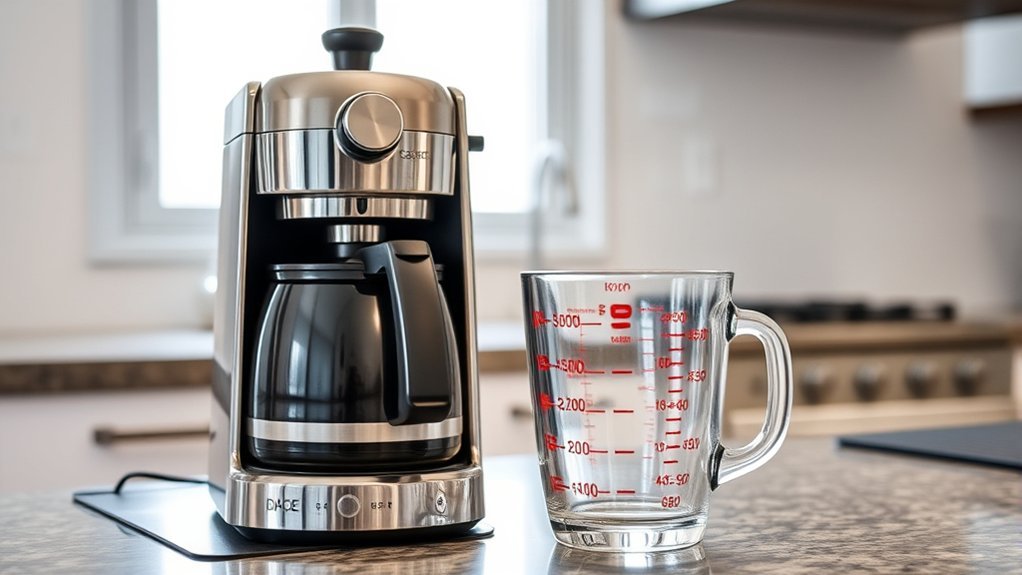
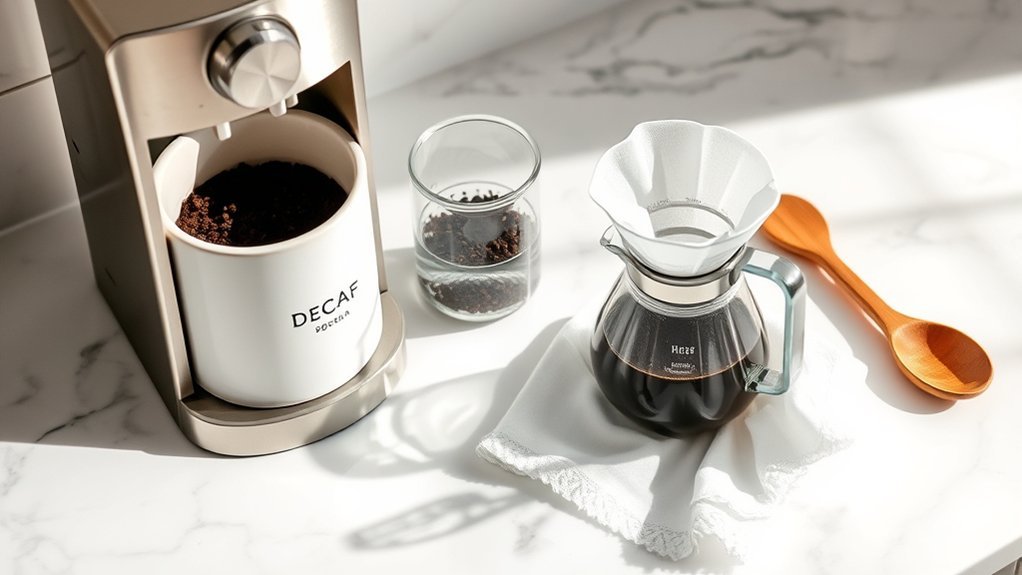
Brewing decaf in a coffee maker without tasting yesterday’s regular coffee depends more on cleaning the coffee-contact parts than on changing the brew recipe. Wash away trapped grounds and coffee oils, rinse the equipment well, and use clean accessories before measuring fresh decaf. A consistent ratio, medium grind, and properly maintained brewer will then produce a cleaner, more balanced cup.
Quick Answer
To brew decaf without regular-coffee carryover, wash the carafe, brew basket, lid, reusable filter, scoop, and grinder parts that touch coffee. Rinse thoroughly with warm water, then run an empty water-only brew cycle if permitted by the manual. Brew fresh decaf at a 1:16 ratio using a medium grind, and use dedicated accessories if caffeine avoidance is strict.
Key Takeaways
- Wash all removable coffee-contact parts after use because trapped grounds and oxidized oils are the primary causes of flavor carryover.
- Decaf beans are more porous and brittle than regular coffee, making them extract faster and generate more fines during grinding.
- Start with a medium grind and a 1:16 brew ratio (1 g decaf to 16 ml water), adjusting the dose in small 5% to 10% increments.
- Treat regular washing and mineral descaling as separate maintenance tasks; only use vinegar when approved by the manufacturer.
- Decaffeinated coffee still contains small traces of caffeine, so dedicated equipment is necessary when strict avoidance is required.
At a Glance
| Time Required | 10–15 minutes for routine cleaning and brewing; 30–45 minutes if descaling is required |
| Difficulty | Easy |
| Tools Needed | Mild dish soap, soft brush or sponge, clean towel, paper or mesh filter, coffee scale or measuring scoop, and fresh decaf coffee |
| Cost | $0–$20 (depending on filters and descaling supplies) |
How to Clean Your Coffee Maker for Decaf Brewing
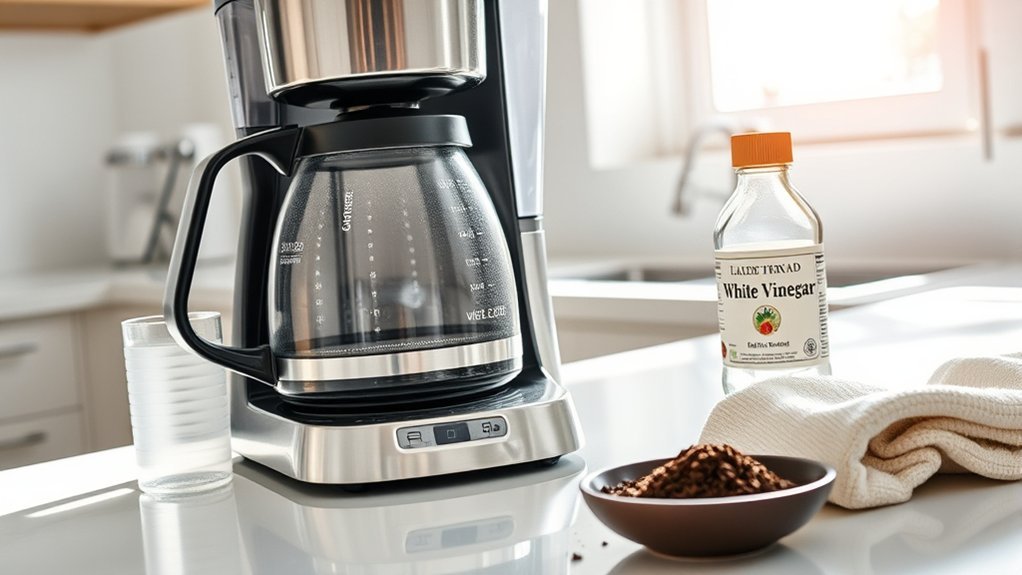
A clean coffee maker ensures that decaf tastes like the beans you selected rather than residual oils from earlier regular brews. The most critical focus areas are the parts that directly touch grounds or brewed coffee: the filter basket, reusable filter, carafe, carafe lid, showerhead, scoop, and grinder chute.
Warning: Unplug the coffee maker and allow it to cool completely before removing or washing parts. Never submerge the electrical base in water, put dish soap in the water reservoir, or use vinegar unless explicitly approved by the manufacturer’s manual.
Follow this step-by-step cleaning sequence before brewing decaf in a shared machine:
- Discard old grounds and spent filters: Check the brew basket, drip-stop valve, and lid recesses for trapped coffee particles.
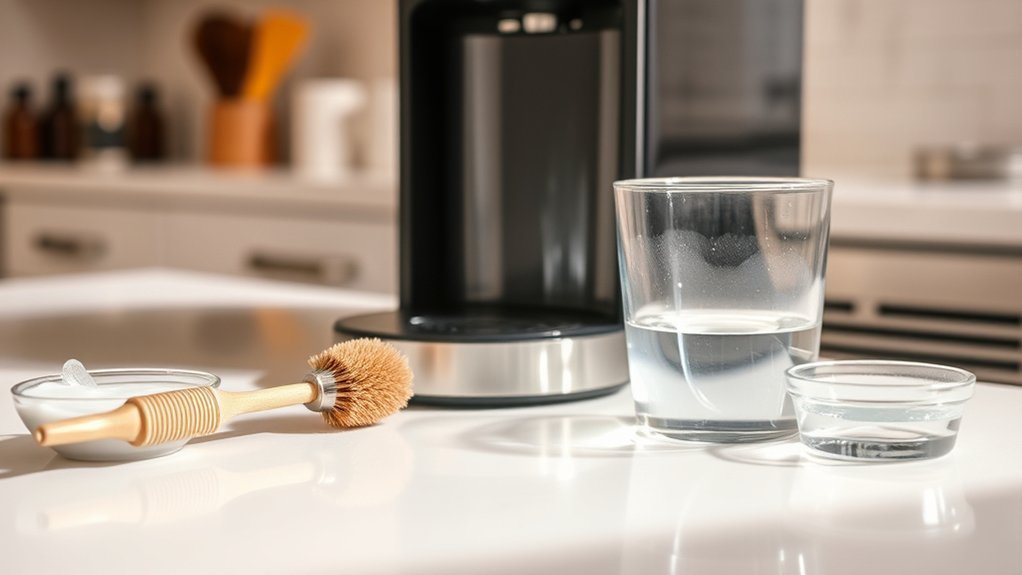
- Wash all removable coffee-contact parts: Clean the carafe, brew basket, lid, and reusable mesh filter using warm water and mild dish soap. Use a soft bottle brush or sponge to clear oil buildup from narrow spouts and mesh seams.
- Rinse thoroughly: Wash away all soap residue until the water runs clear and neutral, as dried detergent spoils coffee aroma.
- Wipe exterior contact surfaces: Using a damp microfiber cloth, wipe down the showerhead and the underside of the brew head where coffee steam condenses.
- Clear shared prep tools: Wash the measuring scoop and brush out retained grounds from the grinder burrs and chute.
- Run a clear-water rinse cycle: If permitted by your brewer’s manual, run an empty brew cycle with fresh water to flush internal lines before loading decaf.
Guidance from the National Coffee Association’s drip-coffee guide highlights that washing coffee-contact parts regularly prevents old coffee oils from oxidizing and contaminating subsequent pots.
Power your essentials anywhere with a 999Wh pure sine wave power station delivering up to 1000W continuous with 2000W surge. It supports fast charging via USB-C PD 60W and USB-A QC 18W, plus simultaneous output for multiple devices through AC, USB, wireless, and car/DC ports. Recharge using AC, car, or solar with a built-in MPPT controller and dual cooling fans, while the upgraded battery management system protects against surges, short circuits, and overheating.

PREMIUM MEDIUM ROAST ORGANIC COFFEE: Copper Moon Coffee's USDA Certified Organic Swiss Water Decaf is a true testament to nature's artistry. Grown in nutrient-rich volcanic soils on an organic-certified farm, our beans are naturally cultivated without harsh chemicals. Using the pure, chemical-free Swiss Water decaffeination process, we ensure every cup is free of additives—99.9% caffeine-free—while preserving 100% of the rich, vibrant flavor you love.

Our Decaf Gourmet Blend is comprised of 100% arabica beans from Central and South America, this medium roast results in a lively, well-rounded and smooth coffee.
Routine Cleaning vs. Mineral Descaling
Routine washing removes coffee oils, organic residues, and flavor carryover. Mineral descaling removes calcium, lime, and mineral buildup from internal heating elements and plumbing. A coffee maker can be completely free of mineral scale yet still produce harsh, stale decaf if its brew basket or carafe lid retains rancid coffee oils.
Descale only according to your machine’s recommended schedule using compatible solutions. While some manufacturers permit diluted white vinegar, others require citric acid or dedicated descaling solutions to protect internal seals. For instance, Hamilton Beach’s cleaning guidance specifies distinct vinegar ratios, soaking intervals, and fresh-water flushes tailored to specific models.
Choosing the Right Decaf Coffee for Optimal Flavor
While equipment cleanliness prevents cross-contamination, bean quality dictates the sweetness, aroma, body, and acidity of the finished cup. Select freshly roasted decaf coffee and buy quantities you can consume within three to four weeks of the roast date.
Whole-bean decaf protects aromatic compounds until brewing. If using pre-ground decaf, select vacuum-sealed bags with explicit roast dates ground to a standard medium drip consistency.
The decaffeination process influences green coffee characteristics. The Swiss Water® Process utilizes pure water, Green Coffee Extract (GCE), temperature, and activated carbon filtration to remove caffeine without chemical solvents. Other regulated methods—such as Sugarcane Ethyl Acetate (E.A.) or Supercritical Carbon Dioxide ($CO_2$)—also preserve distinct regional flavor profiles. Bean variety, origin, processing, and roasting development remain the primary drivers of cup quality.
The best-tasting decaf is not defined by one process alone. Fresh beans, a suitable roast, clean equipment, and a consistent recipe matter together.
Medium roasts offer a versatile starting profile, balancing caramel sweetness with moderate acidity. Darker roasts emphasize smoky, roasty notes with reduced acidity, while light roasts preserve delicate floral and fruit notes. Choose based on flavor preference rather than roast darkness.
Note: Decaf is not 100% caffeine-free. The National Coffee Association notes that standard decaffeination processes remove approximately 97% or more of the original caffeine, leaving about 2 to 5 milligrams per cup.
Measuring Coffee and Water for the Perfect Brew
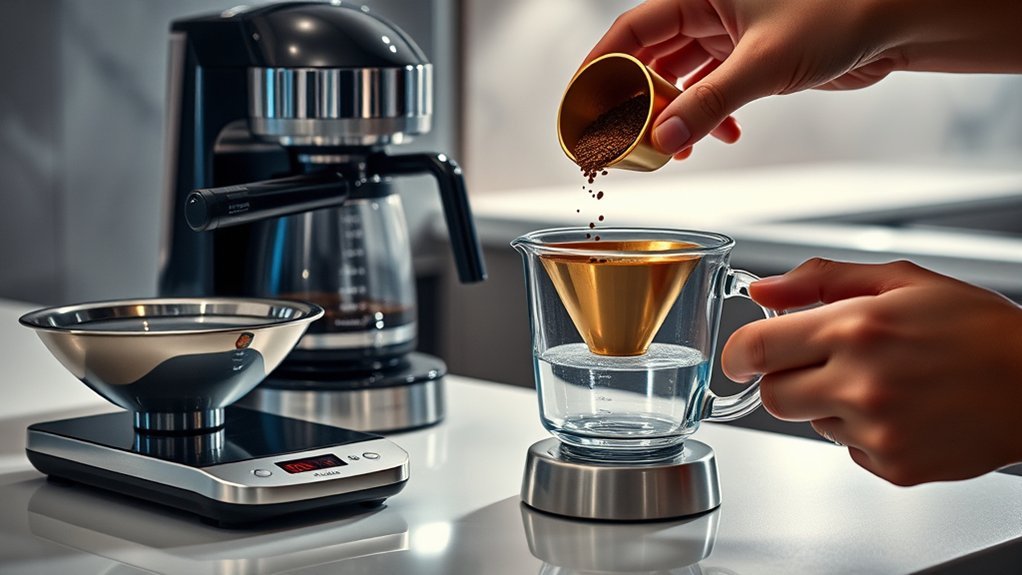
A brew ratio of 1:16 (1 gram of coffee for every 16 grams or milliliters of water) is the standard baseline for automatic drip brewing. This ratio provides balanced extraction without under-extracting acidity or over-extracting bitterness.
| Water Volume | Decaf Coffee at 1:16 Ratio |
|---|---|
| 300 ml (10 oz mug) | 19 g |
| 500 ml (~2 small cups) | 31 g |
| 750 ml (~5 brewer cups) | 47 g |
| 1,000 ml (Full 8-cup pot) | 62–63 g |
Using a digital scale eliminates volumetric discrepancies caused by grind size variations and bean density. If relying on tablespoons, use roughly 2 level tablespoons per 6 ounces of fresh water as an initial guideline.
To increase body and intensity, increase coffee dose by 5% to 10% while keeping water volume constant. Use clean, cold filtered water to avoid chlorine and excessive mineral hardness. Avoid distilled or zero-TDS water unless explicitly required by the manufacturer, as minerals are essential for flavor extraction.
Quick Rinsing and Turnover Maintenance
A full machine teardown is unnecessary between daily brews when the brewer is properly maintained. A targeted rinse protocol effectively removes loose particles and fresh oils between regular and decaf cycles.
Daily Turnover Steps
- Discard promptly: Remove used filter papers and grounds immediately after brewing finishes so steam does not bake grounds onto the showerhead.
- Rinse the basket and carafe: Flush the brew basket, drip-stop valve, and carafe lid under hot tap water.
- Single-serve pod machines: If using a capsule machine, eject the regular pod, check the puncture needle for stuck grounds, and run a water-only brew cycle into a mug before inserting a decaf pod.
Pro Tip: Keep a dedicated scoop and a secondary brew basket for decaf. These inexpensive accessories prevent up to 90% of flavor carryover in shared households without requiring a second machine.
Filter Selection and Storage
Oxygen-bleached paper filters yield a cleaner cup by trapping fine particulate sediment and diterpenes (coffee oils). If unbleached paper imparts a slight cardboard flavor, pre-rinse the filter with hot water before loading coffee grounds.
Store whole-bean and pre-ground decaf in an airtight, opaque container in a cool pantry. The National Coffee Association’s storage guidance confirms that moisture, oxygen, heat, and direct light accelerate staling.
Best Brewing Temperature for Decaf Coffee
The optimal water temperature range for drip coffee extraction is 195°F to 205°F (90°C to 96°C). The Specialty Coffee Association’s certified home brewer standards require machines to maintain this temperature range throughout the extraction cycle.
Most automatic drip brewers use automated internal thermostats. If coffee brews sour or lukewarm, check for scale buildup on the heating element or confirm that the reservoir is not filled past maximum capacity. For manual pour-overs, use a digital kettle set directly to 200°F (93°C).
Water below 195°F produces under-extracted, sour, and hollow coffee. Water above 205°F increases the rate of bitter tannin extraction, compounding the astringency of darker roasts.
Optimal Brewing Time and Decaf Extraction Dynamics
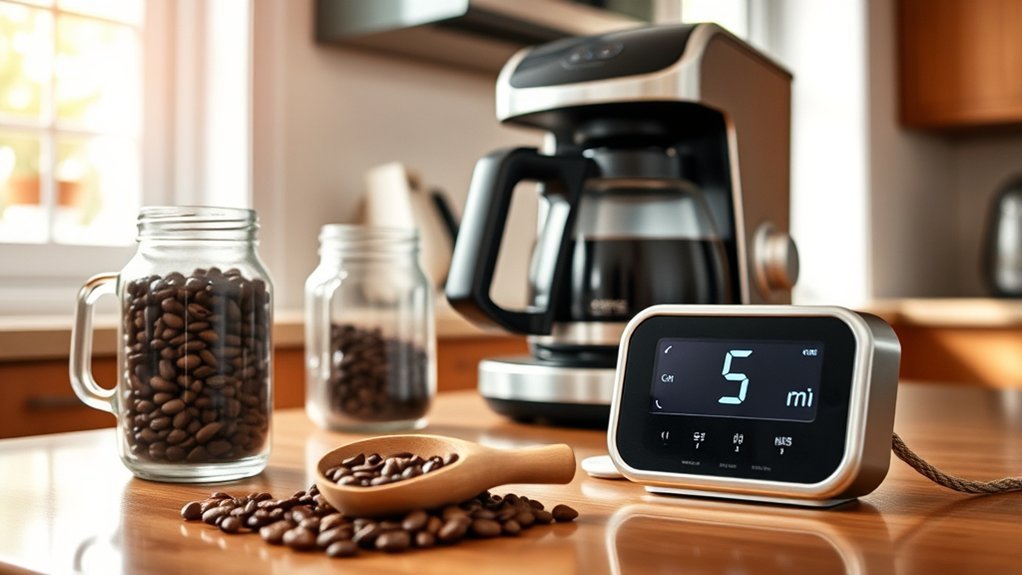
For automatic drip coffee makers, target a water-to-coffee contact time of 4 to 6 minutes. Full pots take longer to finish due to water delivery volume, but the contact time across the coffee bed should remain within this window.
Decaf Porosity and Grind Calibration
The decaffeination process modifies the physical structure of green coffee beans. Decaf beans are more brittle and porous than regular beans. Consequently, grinding decaf produces a higher proportion of microscopic coffee particles (“fines”), and water dissolves solubles from decaf grounds faster than from caffeinated coffee.
- Target grind: Medium (resembling coarse kosher salt).
- If water pools or drains slowly: The bed contains excessive fines; adjust the grinder slightly coarser to prevent clogging and over-extraction.
- If water flows too fast (<3 minutes): The cup will taste weak and sour; adjust the grind slightly finer.
Preventing Over-Extraction
Over-extracted decaf tastes dry, hollow, and unpleasantly bitter. Grinding too fine increases surface area and slows drainage, which raises extraction and pulls bitter compounds into the pot.
To eliminate bitterness:
- Adjust your grinder one notch coarser.
- Ensure the showerhead and basket are clear of fine sludge.
- Stick to a precise 1:16 ratio on a scale.
- Serve coffee immediately rather than letting it sit on a heated hot plate, which scorches organic acids into bitter quinic acid.
Tips for Eliminating Cross-Contamination
- Use a clean paper filter: Never brew decaf through a reusable mesh filter containing residue from dark roast regular coffee without deep cleaning it first.
- Purge the grinder: Regular grounds sit in burr chambers and chutes. Run 3–5 grams of decaf beans through the grinder and discard them before grinding your actual dose.
- Separate flavored coffee accessories: Artificially flavored beans (hazelnut, vanilla, French vanilla) leave strong aromatic oils on plastic and silicone. Maintain dedicated baskets for flavored coffee.
- Preheat thermal carafes: Rinse stainless steel carafes with boiling water before brewing to maintain brew temperature without cooking the coffee on a heating element.
How to Troubleshoot Common Decaf Brewing Problems
| Symptom | Root Cause | Corrective Action |
|---|---|---|
| Tastes like regular coffee | Residual regular coffee grounds or oils in grinder, basket, lid, or scoop | Wash coffee-contact parts with dish soap, purge 5 g decaf through grinder, and use fresh paper filter |
| Bitter, astringent, or dry | Grind too fine, excessive contact time, or burnt on warming plate | Adjust grind one notch coarser, verify 1:16 ratio, and pour into a thermal carafe |
| Weak, watery, or thin | Under-dosing, grind too coarse, or stale grounds | Increase dose by 5%–10%, grind slightly finer, and verify roast freshness |
| Sour, sharp, or salty | Under-extraction caused by low water temperature or fast channel flow | Grind finer and ensure brewing water reaches 195°F–205°F |
| Vinegar or chemical odor | Incomplete rinsing after a descaling cycle | Run 2–3 consecutive full water-only brew cycles and wash the carafe |
| Basket overflow / slow brew | Too many fines clogging paper pores, or clogged drip-stop | Grind coarser to reduce fines and scrub the basket drip-stop spring valve |
| Papery or woody taste | Dry paper filter residue | Rinse paper filter with hot water before loading coffee grounds |
Best Alternative Brewing Methods for Decaf
While automatic drip brewers offer daily consistency, manual brew methods give greater control over water temperature and extraction rates.
| Brewing Method | Flavor Profile | Best Practice for Decaf |
|---|---|---|
| Automatic Drip | Clean, balanced, light-to-medium body | Use medium grind, fresh paper filter, and a 1:16 ratio |
| Pour-Over (V60 / Kalita) | High clarity, pronounced acidity and sweetness | Rinse paper filter, pour in slow pulses, and aim for a 3-minute brew time |
| French Press | Full body, rich mouthfeel, prominent oils | Grind coarse, steep for 4 minutes, and disassemble plunger mesh when washing |
| Cold Brew | Ultra-smooth, low perceived acidity, chocolate notes | Steep coarse grounds at a 1:8 ratio in the refrigerator for 14–16 hours |
| Espresso | Concentrated, dense crema, intense flavor | Purge the grinder thoroughly and wipe the shower screen before pulling a shot |
Frequently Asked Questions
Can I use flavored decaf coffee in my coffee maker?
Yes, but artificially flavored coffee leaves persistent aroma oils on silicone seals, brew baskets, and grinder parts. Use a separate brew basket or wash coffee-contact parts with dish soap immediately after brewing to prevent flavor transfer to unflavored coffee.
How often should I clean my coffee maker?
Discard spent grounds and wash the brew basket, carafe, and lid with warm soapy water after every brew cycle. Descale the water reservoir and internal boiler every 3 to 6 months depending on regional water hardness and brewer usage.
Does water quality affect decaf coffee flavor?
Yes. Coffee is over 98% water. Chlorinated tap water or softened water with high sodium levels distorts flavor and mutes coffee sweetness. Use fresh, cold filtered water with moderate mineral content for optimal extraction.
Can I reuse coffee grounds for a second decaf brew?
No. The primary aromatic oils, sugars, and organic acids extract during the initial brew cycle. Passing water through spent grounds a second time extracts bitter, astringent compounds and wood fiber, resulting in a thin and bitter cup.
Is it safe to brew decaf in a used coffee maker?
Yes, as long as the machine is structurally sound and thoroughly cleaned. Wash all removable coffee-contact parts with dish soap, flush the machine with an approved descaling solution, and run 2 to 3 water-only rinse cycles before brewing.
Do I need a separate coffee maker for decaf?
A dedicated brewer is not necessary for flavor management. Washing the basket and carafe, using a fresh paper filter, and purging the grinder burrs eliminates flavor transfer. A dedicated brewer is only needed if severe medical conditions require absolute zero caffeine exposure.
Does decaf coffee contain any caffeine?
Yes. Decaffeinated coffee is not 100% caffeine-free. Commercial decaffeination processes remove approximately 97% or more of caffeine, leaving roughly 2 to 5 mg of residual caffeine in an 8-ounce cup.
Should I run vinegar through the machine every time I switch to decaf?
No. Vinegar is a descaler for mineral deposits, not an everyday flavor rinse. Washing removable parts with dish soap and running a plain-water cycle removes coffee oils without leaving lingering acid odors.
Conclusion
Brewing clean, flavorful decaf in a shared coffee maker requires simple prep rather than duplicate machinery. Wash coffee-contact parts, brush regular grounds out of the grinder chute, and rinse the brew basket thoroughly before measuring fresh decaf. By pairing clean equipment with a consistent 1:16 ratio and a calibrated medium grind, you can enjoy the full flavor, aroma, and sweetness of decaf coffee with zero carryover.
Sources
- National Coffee Association — Drip Coffee Guide — provides baseline parameters for drip ratios, brew temperatures, and cleaning best practices.
- National Coffee Association — Decaffeinated Coffee Facts — verifies decaffeination efficacy standards and residual caffeine concentrations.
- National Coffee Association — Storage and Shelf Life — details environmental storage factors that degrade whole-bean freshness.
- Specialty Coffee Association — Certified Home Brewers — defines professional standards for water delivery temperature and contact duration.
- Swiss Water® — Decaffeination Process — documents chemical-free water diffusion and carbon-filtration decaffeination mechanics.
- Hamilton Beach — Coffee Maker Cleaning Guide — outlines model-specific maintenance schedules, descaling mixtures, and water flushing cycles.