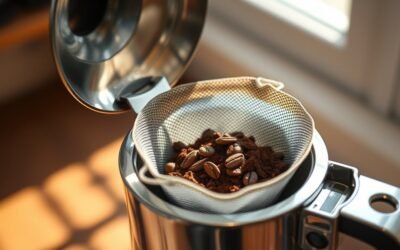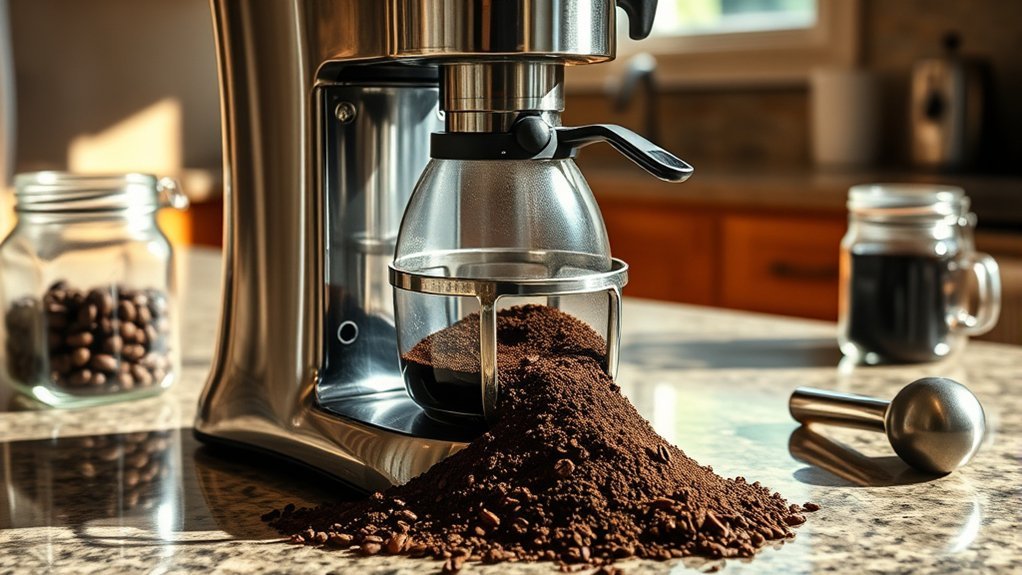
If your coffee maker’s grounds basket is overflowing, it’s likely due to excessive coffee grounds, an improper filter size, or clogged drainage. Check your grind size and keep it between medium and medium-coarse for better drainage. Make sure you’re using a single, high-quality filter of the correct size. Regularly clean the filter basket and drain hole to prevent blockages. For more detailed solutions and tips, you can explore further options to optimize your brewing experience.
Key Takeaways
- Excessive coffee grounds or too fine a grind can clog filters, leading to overflow issues in the grounds basket.
- Regularly clean the filter basket and drain hole to ensure proper water flow and prevent blockages.
- Use the correct filter size and avoid multiple filters to maintain unobstructed drainage.
- Adjust grind size to medium or medium-coarse and create a center hole in the grounds for better water distribution.
- Brew smaller amounts and monitor the coffee-to-water ratio to prevent over-extraction and spillage.
Why Your Coffee Maker Is Overflowing: Common Causes

When your coffee maker overflows, it’s often due to a few common culprits that you can address. One major cause is using excessive coffee ground types or grounds that are too fine, which can clog filters and obstruct water flow.
Coffee maker overflow can often be traced back to using too many fine grounds or unsuitable filters, leading to clogs and blocked water flow.
Additionally, poor-quality or unsuitable filters—like using multiple filters—can contribute to overflow issues. Deep ridges in filter baskets may trap oils, hindering effective drainage.
Ensuring that your brewing temperature is ideal and adjusting techniques, such as using the “Bold” setting or gently shaking the basket to settle the grounds, can improve water flow and reduce the risk of overflow.
Regular maintenance, including cleaning the filter basket, is essential to prevent these problems from recurring.
Easy Maintenance Tips to Stop Coffee Overflow
To prevent coffee overflow from your maker, implementing a solid maintenance routine is crucial. Regular filter maintenance can greatly reduce the chances of overflow. Follow these easy tips for ideal performance:
- Clean the filter basket: Remove coffee oils after each use to prevent buildup that causes overflow.
- Clear the drain hole: Rinse it after each brew to guarantee proper water flow, essential for overflow prevention.
- Use a single filter: Multiple filters can obstruct water flow; one high-quality filter is sufficient.
Additionally, adjust the amount of coffee grounds and consider a coarser grind to minimize clogging.
Store the filter basket tilted to allow evaporation of residual water, improving its performance and reducing overflow risk.
Brewing Techniques to Avoid Coffee Ground Spillage

To prevent coffee ground spillage, you should adjust your coffee grind size, opting for a coarser grind if necessary.
This change improves water flow and reduces the risk of clogging.
Additionally, using the appropriate filter type that matches your grind can further enhance brewing efficiency and minimize overflow.
Adjust Coffee Grind Size
Adjusting your coffee grind size can greatly enhance your brewing experience and prevent those frustrating overflow situations. Fine grounds can clog your filter, so aim for a medium or medium-coarse grind coarseness. This adjustment improves drainage and minimizes spillage during brew timing.
Here are some effective techniques:
- Tamp Down Grounds: Compact the coffee bed to manage water flow better, reducing overflow risk.
- Create a Center Hole: Before brewing, make a small hole in the center of the grounds to enhance water distribution.
- Shake the Filter Basket: Gently shake the basket after filling it to settle the grounds, which reduces fluffiness and spillage.
Implementing these methods will optimize your brewing process and keep your coffee maker clean.
Use Proper Filter Type
Choosing the right filter type is key to preventing coffee ground overflow during brewing. Using high-quality, appropriately sized filters guarantees all grounds stay contained.
For instance, taller Bunn coffee filters can greatly improve performance, especially in older Mr. Coffee models. Avoid using multiple filters simultaneously; this can obstruct water flow and lead to spillage.
Regularly clean the filter basket and confirm the drain hole is clear to enhance water passage. Additionally, consider the grind size of your coffee; a coarser texture can help prevent clogging in the filter, reducing the risk of overflow.
How to Choose the Best Filters for Your Coffee Maker
When choosing filters for your coffee maker, guarantee they match the specified size to prevent overflow issues.
Prioritize high-quality materials, like Bunn filters, which enhance drainage and minimize grounds escaping into your pot.
Additionally, consider design features such as mesh inserts that improve water flow and reduce the risk of clogging.
Filter Size Compatibility
To guarantee your coffee maker functions efficiently and prevents overflow, selecting the right filter size is vital. Using filters that match the brew basket‘s dimensions specified by the manufacturer is imperative.
Here are three key considerations:
- Filter Size: Verify the filter fits your brew basket; standard 12-cup filters are common, but taller filters like Bunn can enhance performance.
- Filter Type: Choose between paper or mesh filters. Mesh filters often provide better drainage, improving brewing efficiency.
- Single Use: Avoid using multiple filters at once, as this can block water flow and worsen overflow issues.
Regularly assess and replace your filters according to the manufacturer’s guidelines to maintain peak brewing performance and minimize overflow incidents.
Material Quality Considerations
While selecting coffee filters might seem straightforward, the quality of the materials can greatly impact your brewing experience.
Focus on high-quality, single-use paper filters specifically designed for your coffee maker. These filters should have an appropriate filter thickness to guarantee peak drainage and minimize the chances of blockage.
Be wary of deep-ridge filters; while they may seem appealing, they can trap coffee oils and hinder water flow. Avoid using multiple filters at once, as this can create obstructions, leading to overflow issues.
Regularly examine your filters and replace any worn or degraded ones, as poor filter material can compromise brewing efficiency and contribute to overflow problems in your coffee maker.
Choose wisely for the best results.
Design Features Impacting Performance
Choosing the right filters for your coffee maker greatly influences brewing performance and overflow prevention.
To optimize your coffee experience, consider these design features:
- Filter Height: Use taller Bunn coffee filters to effectively contain grounds and minimize overflow, especially in older Mr. Coffee models.
- Size Compatibility: Guarantee the filter size matches your coffee maker’s specifications; using filters that are too short can lead to grounds spillage.
- Quality Materials: Opt for high-quality filters that complement your machine’s brewing technology. Poor quality filters can clog and trap coffee oils, hindering drainage.
Troubleshooting Coffee Overflow
When coffee grounds overflow from your coffee maker, it often stems from a combination of excessive grounds and fine grind sizes that can clog the filter.
To troubleshoot this issue, start by ensuring your filter basket design is compatible with your grind size—switching to a taller Bunn coffee filter can enhance performance.
Ensure your filter basket suits your grind size; consider upgrading to a taller Bunn coffee filter for better performance.
Regularly clean the filter basket and check that the drain hole is clear to promote proper flow. Adjusting your coffee brew temperature can also optimize extraction and reduce clogging.
Additionally, consider brewing smaller amounts and tweaking the coffee-to-water ratio. Using a single high-quality filter instead of multiple ones can help maintain unobstructed water flow, further minimizing the risk of overflow.
User Experiences and Solutions for Coffee Overflow
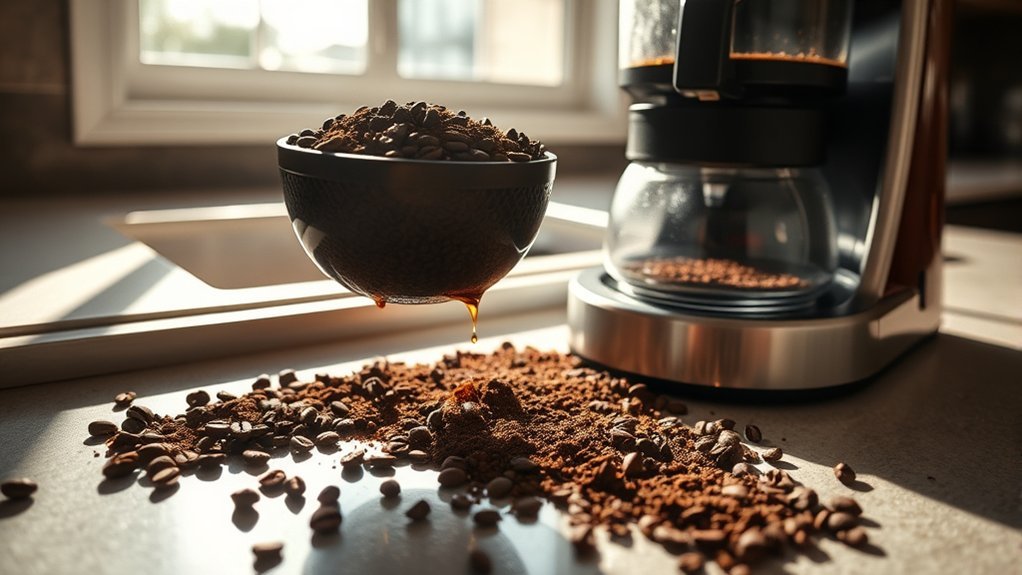
Many users facing coffee maker overflow have found themselves frustrated despite following troubleshooting steps.
To tackle this common issue, consider these user experiences and overflow solutions:
- Adjust Grind Size: Many users report success by switching to coarser coffee grounds, which helps prevent clogging and overflow.
- Routine Maintenance: Regularly clean your filter basket and guarantee proper drainage. This simple practice can considerably reduce overflow incidents.
- Shake the Grounds: After filling the filter basket, gently shake it to settle the grounds. This reduces the chance of overflow during brewing.
Additionally, some have experimented with adding cinnamon to their coffee grounds, enhancing flavor while mitigating overflow.
Implementing these strategies can lead to a more enjoyable coffee brewing experience.
Frequently Asked Questions
Can Using Different Coffee Brands Affect Overflow Issues?
Yes, different coffee brands can affect overflow issues. Variations in coffee grind size and brewing method impact extraction rates, leading to clogs. Adjusting grind size and optimizing your brewing method can help prevent overflow problems.
How Often Should I Replace My Coffee Maker?
You should replace your coffee maker every 5 to 7 years, depending on its usage and maintenance. Regular filter maintenance can extend its lifespan, but signs of wear could mean it’s time for an upgrade.
Does Water Temperature Influence Coffee Grounds Overflow?
Yes, water temperature greatly influences coffee grounds overflow. Higher temperatures can increase extraction rates, leading to faster brewing times and more expansion of grounds. Adjusting temperature helps maintain ideal flow and prevents overflow issues effectively.
Are There Specific Brands Known for Overflow Problems?
Some brands, unfortunately, have a reputation for overflow issues, which can be frustrating. When choosing a coffee maker, prioritize brand reliability to avoid such pitfalls and guarantee a smoother coffee-making experience.
Can I Use Reusable Filters to Prevent Overflow?
Yes, using reusable filters can enhance overflow prevention. They’re designed to fit snugly and allow maximum water flow, reducing clogging. Just make sure you’re using the right size and not overfilling with coffee grounds.
Conclusion
In the world of brewing, a perfect cup can quickly turn into a messy disaster. By understanding the causes of overflowing grounds and implementing easy maintenance techniques, you can enjoy a smooth, flavorful brew without the hassle. Choosing the right filters and mastering your brewing technique can elevate your coffee experience, transforming frustration into satisfaction. Remember, a little attention to detail can prevent overflow chaos and lead you to the rich, aromatic coffee moments you crave.