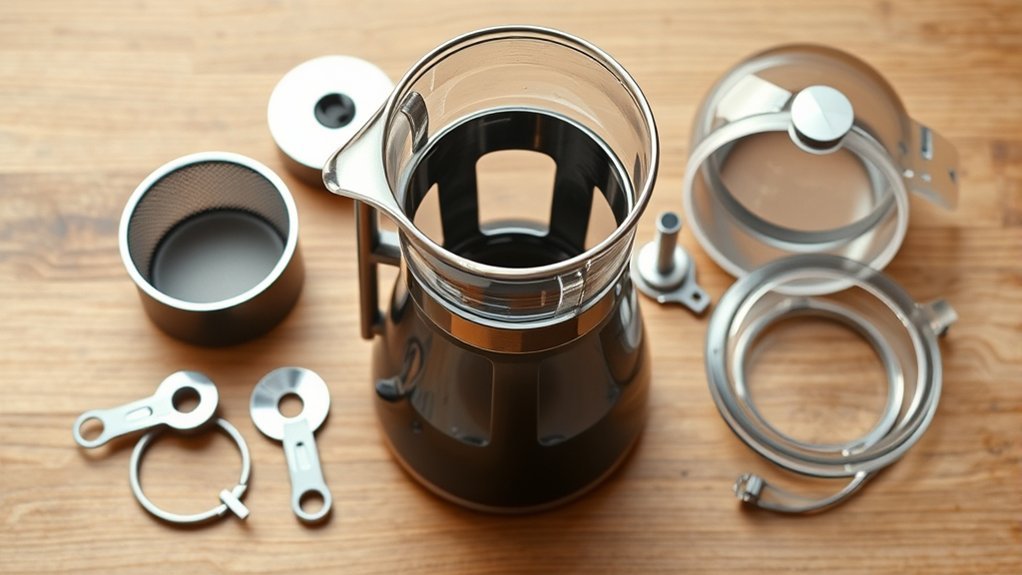
A coffee maker is easier to diagnose, clean, and master once you break down its internal anatomy. While all coffee makers heat water and extract coffee solids, a standard automatic drip coffee maker relies on a gravity-fed thermo-siphon system, an espresso machine uses a pressurized pump and group head assembly, and a single-serve pod machine utilizes high-pressure piercing needles.
Quick Answer
A standard drip coffee maker consists of a water reservoir, a one-way check valve, an aluminum heating tube, a riser pipe, a sprayhead, a brew basket, and a carafe. Espresso machines add a high-pressure pump, boiler or thermoblock, group head, portafilter, 3-way solenoid valve, and steam wand. Single-serve pod brewers incorporate piercing needle chambers.
Key Takeaways
- Drip brewers move water without a mechanical pump: They rely on a one-way ball check valve and thermal siphoning created by boiling water inside an aluminum heating pipe.
- Espresso requires active pressurization: A vibration or rotary pump creates 9 to 15 bar of pressure, guided through an overpressure valve (OPV) into a locked portafilter.
- Pressure release prevents mess: Commercial and semi-automatic espresso machines use a 3-way solenoid valve to vent pressure immediately after extraction.
- Internal safety systems prevent thermal runaway: Thermal cut-off fuses and bimetallic thermostats cut power if water runs dry or temperatures spike.
- Component-specific maintenance prevents failure: Descaling treats internal boilers and heating tubes, while backflushing and wiping maintain group heads and steam wands.
Overview of Coffee Maker Components
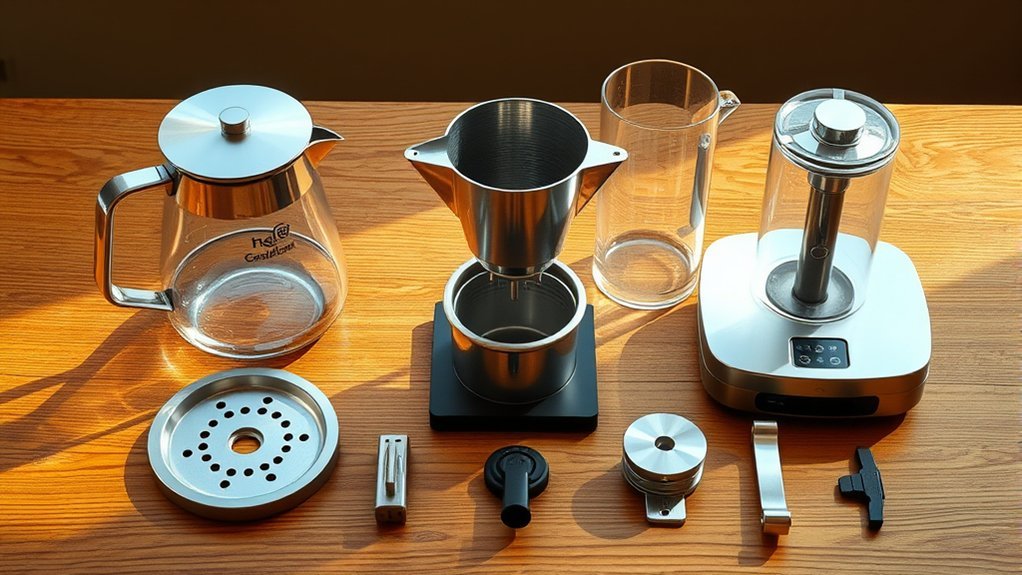
Every coffee maker falls into a specific category of fluid mechanics. A basic drip machine is a low-pressure thermal lift system, an espresso machine is a high-pressure hydraulic circuit, and single-serve brewers blend rapid thermoblock heating with targeted puncture needles.
| Component | Drip Coffee Maker | Espresso Machine | Single-Serve Pod Brewer |
|---|---|---|---|
| Water Reservoir | Standard (fixed or removable) | Standard (tank or plumbed-in) | Standard (removable tank) |
| One-Way Check Valve | Yes (ball or flapper valve) | Yes (inlet check valves) | Yes (flow direction valve) |
| Heating System | Dual-purpose heating tube | Boiler, thermoblock, or thermocoil | Compact thermoblock |
| Pump | No (thermal siphon only) | Yes (15–20 bar vibration or rotary) | Yes (compact vibration pump) |
| Brew Basket / Chamber | Gravity brew basket & filter | Portafilter & metal filter basket | Enclosed capsule puncture chamber |
| Dispersion Element | Sprayhead / showerhead | Group head shower screen | Top puncture needle nozzle |
| Pressure Management | Open gravity system | OPV & 3-way solenoid valve | Internal check valve / relief exit |
| Steam Wand | No | Common on milk-capable units | Rare (external frother standard) |
For a detailed breakdown of residential drip equipment, BUNN’s Speed Brew documentation highlights how internal hot-water reservoirs and sprayheads interact to brew without standard mechanical pumps.
How a Drip Coffee Maker Moves Water: The Thermo-Siphon System
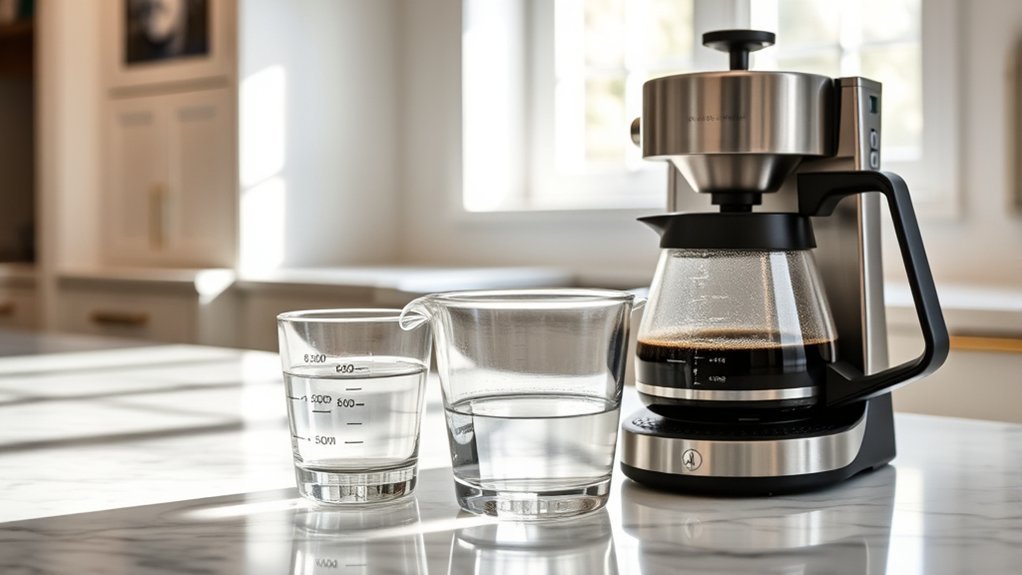
Most automatic drip coffee makers contain zero mechanical pumps or moving impellers. Instead, they rely on thermodynamics, a resistive heating element, and a specialized valve system to lift boiling water upward.
- Gravity Feed: Water poured into the reservoir flows down through a silicone tube toward the base of the machine.
- The One-Way Check Valve: Located at the entrance of the heating element, a small ball or flapper check valve allows cold water to enter the heating tube but prevents hot water and steam from backing up into the reservoir.
- Flash Boiling in the Heating Tube: An extruded aluminum tube houses both the water channel and an electric resistive heating element. As the element heats up, a small portion of the water inside boils rapidly, turning to steam.
- Thermal Siphon (Bubble Pump Action): The expanding steam creates bubbles that push columns of hot water up the heat-resistant vertical riser tube. Because the one-way valve blocks the backward path, the water has only one exit: upward.
- Sprayhead Dispersion: The water emerges at the top of the machine and drips onto the sprayhead, which distributes it across the coffee grounds.
- Gravity Extraction: Brewed coffee drains through the filter and basket into the glass or thermal carafe below.
Note: If a drip coffee maker heats up and gurgles loudly but produces no coffee, the failure is almost always a clogged or stuck one-way check valve or severe mineral scale inside the narrow aluminum heating pipe.
Water Reservoir, Heating Tube, and Sprayhead
The water reservoir stores fresh brewing water. Advanced models feature volume-level markings, internal float switches to prevent dry running, or active charcoal water filter pods seated at the intake.
The heating element in a drip brewer performs a double duty. It heats water moving through the internal channel while conducting residual heat to the integrated warming plate directly above it. In high-end brewers, separate heating elements are used for brewing water and the warming plate to prevent scorching.
The sprayhead (or showerhead) controls water distribution. Basic brewers utilize a simple single-hole outlet, while certified high-performance brewers use wide-pattern multi-hole sprayheads that saturate the entire coffee bed evenly to avoid tunneling.
The Specialty Coffee Association (SCA) sets water temperature standards via its coffee standards program, requiring home brewers to deliver water between 90.5°C and 96°C (195°F to 205°F) at the point of contact with the coffee grounds.
Brew Basket, Filter, Carafe, and Warmer
The brew basket supports the filter medium. It is engineered with specific drainage geometry (conical or flat-bottom) to control the contact time between water and ground coffee.
The filter separates insoluble bean particles from the liquid extraction. Options include:
- Paper Filters: Trap fine particles and diterpenes (cafestol and kahweol), producing a clear, light-bodied cup.
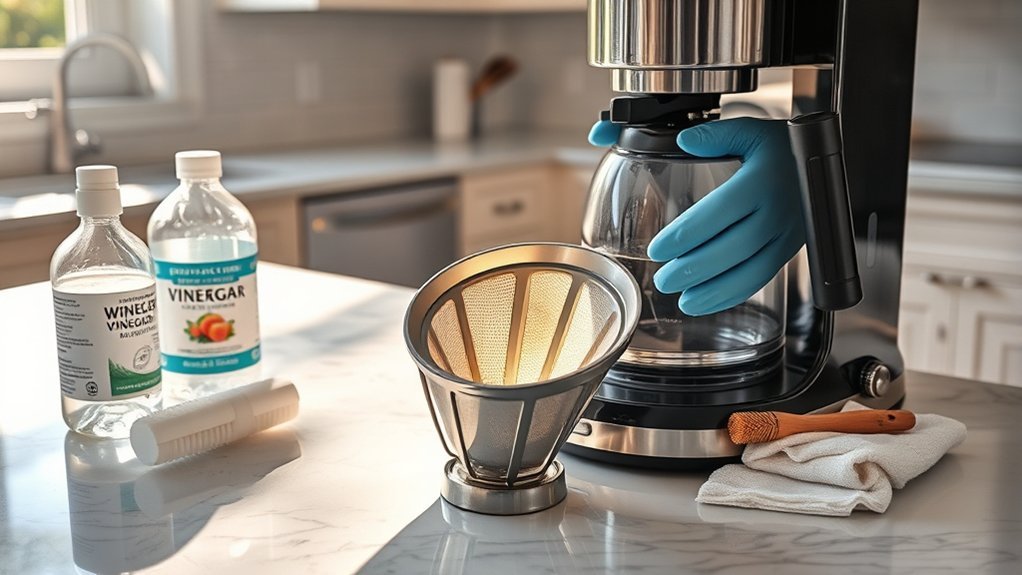
- Permanent Mesh Filters: Stainless steel or gold-toned mesh that allows micro-fines and natural oils to pass into the cup, increasing body.
The carafe collects the finished brew. Glass carafes require a heated warming plate underneath, whereas double-walled, vacuum-insulated stainless steel thermal carafes retain heat through insulation without altering coffee flavor through continuous cooking.
An anti-drip valve (or pause-and-serve mechanism) uses a spring-loaded plunger at the base of the brew basket. When the carafe is removed during a brew cycle, the plunger drops to close the drain hole, preventing spills on the hot plate.
Internal Safety, Electronics, and Thermal Protection
Beneath the plastic housing, modern coffee makers contain electrical components designed for precision and fire prevention:
- Thermal Cut-Off Fuse (TCO): A one-time safety device wired in series with the heating element. If the thermostat fails and the temperature exceeds safe limits (typically around 180°C to 240°C), the fuse blows permanently to cut all electrical current.
- Bimetallic Thermostat: A cycling switch made of two bonded metals with different expansion rates. It opens to cut power when the heating element reaches operating temperature and snaps closed when it cools.
- NTC Thermistor: Negative Temperature Coefficient sensors in digital machines that send real-time resistance data to the control board for micro-adjusted brewing temperatures.
- Main Control Board (PCB): Manages timers, delay-brew clocks, flow sensors, auto-shutoff safety switches, and cleaning alert reminders.
Warning: Always unplug your coffee maker and allow it to cool completely before inspecting internal parts. Never bypass a blown thermal fuse or tamper with internal wiring, as this eliminates the machine’s primary protection against electrical fires.
Single-Serve Pod and Capsule Components
Single-serve pod machines (such as Keurig K-Cup and Nespresso machines) operate differently from standard drip systems by utilizing pressurized piercing chambers:
| Component | Function & Operation |
|---|---|
| Top Puncture Needle | A hollow, beveled stainless steel needle that pierces the foil lid of the capsule to inject heated water under pressure. |
| Bottom Exit Needle | Punctures the plastic or aluminum base of the pod to provide a clean exit channel for the brewed coffee into the cup. |
| Compact Vibration Pump | Delivers pressurized water (ranging from 1.5–3 bar in standard pod brewers up to 19 bar in original Nespresso capsules). |
| Pod Chamber Collar | Secures and seals the capsule during brewing to prevent water from bypassing the coffee grounds. |
Understanding the Portafilter Assembly
The portafilter (short for “portable filter”) is the heavy, handled metal assembly that holds ground coffee during espresso extraction. It is exclusive to espresso machines and does not exist in drip coffee makers.
Portafilter Design Features
The portafilter consists of a handle, a heavy brass or stainless steel body, locking “ears” (lugs) that seal into the group head, and spouts underneath that guide espresso into demitasse cups.
Machines such as the Breville Barista Express use a 54 mm stainless-steel portafilter with interchangeable filter baskets. Commercial espresso machines typically use a standard 58 mm diameter format.
- Single-Wall (Non-Pressurized) Baskets: Feature hundreds of laser-drilled micro-holes. Extraction resistance is generated entirely by the grind size, dose, and tamping pressure of the coffee puck.
- Dual-Wall (Pressurized) Baskets: Feature a false bottom with a single exit hole that forces artificial pressure, allowing coarse or pre-ground coffee to produce crema.
- Bottomless (Naked) Portafilters: Feature an open base without spouts, exposing the bottom of the filter basket so baristas can visually diagnose channeling and extraction flaws.
Extraction Dynamics and Puck Resistance
During extraction, the portafilter must withstand 9 bar (130 psi) of hydraulic pressure. Water takes the path of least resistance; if the coffee grounds are unevenly distributed or tamped with inconsistent density, water drills localized fissures through the puck (channeling), causing bitter, under-extracted espresso.
Portafilter and Basket Care
| Component | Practical Care | Watch For |
|---|---|---|
| Portafilter & Basket | Knock out spent pucks and rinse after every shot; soak weekly in espresso cleaning powder. | Blocked basket micro-holes, rancid coffee oil buildup. |
| Group Head Shower Screen | Flush with water after every session; backflush with a blind basket on compatible models. | Uneven water jetting or dark coffee oils backing into the group. |
| Group Gasket | Wipe clean daily with a group brush; replace annually. | Hardening, cracking, or water leaking over the portafilter rim. |
The Function of the Group Head and Solenoid Valves
The group head is the structural hub where pressurized hot water meets the coffee puck. It houses the dispersion block, the shower screen, and the rubber or silicone group gasket that seals the portafilter in place under pressure.
Inside advanced and commercial espresso machines, the group head is paired with critical pressure-control components:
- 3-Way Solenoid Valve: When the brew switch is activated, this electric valve opens the path from the boiler to the coffee puck. The instant extraction stops, the valve shifts position, sealing the boiler and opening an exhaust port directly to the drip tray. This immediately dumps residual hydraulic pressure, preventing “portafilter sneeze” (explosive grounds when removing the handle) and leaving a dry, solid puck.
- Overpressure Valve (OPV / Expansion Valve): Regulates maximum brewing pressure. While most vibration pumps produce up to 15 bar, the OPV uses a calibrated spring to bleed off excess water back to the reservoir or drip tray, maintaining a precise 9 bar across the coffee bed.
- Shower Screen: A perforated metal plate secured by a center screw or friction fit that evenly distributes water across the entire surface of the coffee puck.
The Pump’s Role in Brewing Quality

Pump-driven espresso machines require a mechanical pump to push water through tightly compacted, finely ground coffee. Standard espresso extraction is calibrated to 9 bar of pressure (roughly 130 psi), which emulsifies coffee oils with carbon dioxide to create rich crema.
| Pump Mechanism | Operating Mechanism | Pros & Best Use Cases |
|---|---|---|
| Vibration Pump (Ulka style) | An electrical coil moves a magnetic piston back and forth with a spring at 50–60 Hz, creating rapid pressure pulses. | Inexpensive, compact, easily replaceable; standard in most domestic machines. |
| Rotary Vane Pump | An electric motor spins a mechanical rotor with sliding vanes inside an offset cylindrical chamber. | Near-silent, delivers instant constant pressure, long operational lifespan; supports direct plumbing. |
Pro Tip: Do not be misled by espresso machines advertising “15-bar” or “20-bar” pumps. That rating reflects the maximum theoretical stall pressure of the pump. Premium machines use an OPV to regulate extraction down to the optimal 9 bar.
Boilers, Thermoblocks, and Thermocoils
Espresso machines require higher thermal stability than drip brewers because brewing temperature drastically impacts solubility and flavor.
- Single Boiler Dual Use (SBDU): Uses one internal boiler for both brewing (~93°C / 200°F) and steaming (~130°C / 266°F). You must wait between brewing and steaming while the boiler changes temperature.
- Heat Exchanger (HX): Uses a large steam boiler with an isolated copper tube passing through the center. Fresh water for brewing is flash-heated as it travels through the tube, allowing simultaneous brewing and milk steaming.
- Dual Boiler: Features two dedicated, independently controlled boilers—one optimized for brewing temperature and a separate high-pressure boiler for steam production.
- Thermoblock / Thermocoil: Heats water on demand as it passes through a coiled metal tube cast inside an aluminum or brass block. Modern units paired with PID controllers provide rapid heat-up times and precise temperature regulation.
Burr Grinder Anatomy and Components
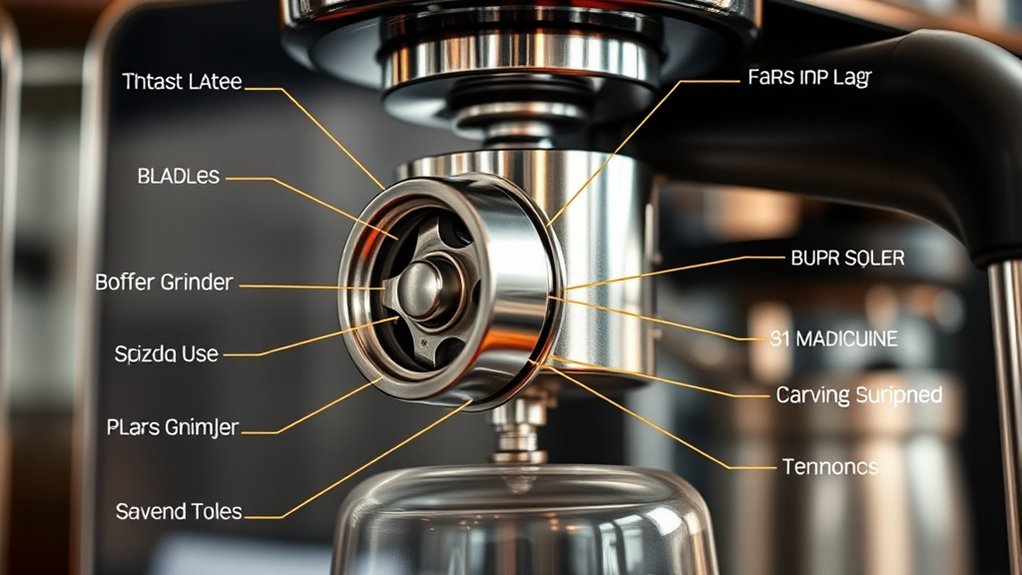
While not built into every brewer, an integrated or standalone burr grinder is an essential partner to the brewing system. Unlike blade choppers that shatter beans into uneven dust and boulders, burr grinders crush coffee between precision-machined cutting surfaces.
- Hopper: The plastic or glass container that feeds whole beans into the burr chamber via gravity.
- Conical Burrs: A cone-shaped inner burr rotates inside an outer ring burr. They excel at low RPM operation, generate minimal heat, and produce a bimodal particle distribution ideal for espresso.
- Flat Burrs: Two parallel horizontal rings with precision teeth facing each other. They create a highly unimodal particle size distribution, resulting in exceptional flavor clarity in pour-overs and specialty espresso.
- Adjustment Collar / Stepping Mechanism: Changes the microscopic gap between burrs to calibrate grind size from ultra-fine espresso to coarse French press.
- Impeller & Chute: Wipes ground coffee out of the burr chamber and down the delivery spout to minimize coffee retention.
The Steam Wand: Key to Frothing Milk
The steam wand is an external metal pipe that directs dry, high-pressure steam from the boiler or thermoblock into milk to create microfoam for lattes, flat whites, and cappuccinos.
Its primary components include:
- Steam Valve / Knob: An internal needle or ball valve that controls the volume of steam released.
- Ball Joint: Allows 360-degree articulation for positioning the wand inside milk pitchers.
- Steam Tip: Features 1 to 4 precision-drilled holes that accelerate steam velocity to create a vortex in the pitcher.
- No-Burn Sleeve: An internal Teflon tube inside the wand that keeps the outer stainless steel cool to the touch and prevents milk from baking onto the exterior.
Proper hygiene is vital. Follow Breville’s steam wand maintenance protocols by purging steam through the wand before and immediately after every use, followed by wiping down the exterior with a damp microfiber cloth.
Key Maintenance Tips for Coffee Maker Components
Proactive care prevents component failure, maintains temperature accuracy, and ensures food-safe operation.
| Component | Frequency | Required Maintenance Action |
|---|---|---|
| Carafe & Brew Basket | After each use | Hand wash with mild dish soap to strip rancid coffee oils. |
| Drip Sprayhead | Monthly | Unscrew or wipe to clear dried coffee particles and scale crusting. |
| Group Head & Screen | Daily / Weekly | Brush group daily; chemical backflush weekly on 3-way solenoid models. |
| Internal Water Path & Boiler | Every 1–3 months | Run a dedicated descaling solution (citric/sulfamic acid) through the water circuit. |
| Steam Wand Tip | After each use / Monthly | Purge and wipe after every drink; soak tip in milk-line cleaner monthly. |
| Burr Grinder Chamber | Bi-weekly | Vacuum out old grounds and run grinder cleaning tablets to absorb oils. |
For detailed drip cleaning protocols, consult BUNN’s Heat N’ Brew manual, which outlines how lime scale accumulation specifically reduces water flow and lowers brewing temperature.
Water Quality and Mineral Buildup
Coffee is roughly 98% water in drip brewing and 90% in espresso. The mineral balance of your source water directly impacts taste extraction and machine longevity. The U.S. EPA Drinking Water Standards provides guidelines on household water parameters.
- Calcium and Magnesium Carbonates: Necessary in moderate amounts (50–150 ppm) to extract flavor compounds from ground coffee, but excessive hardness causes rapid limescale buildup inside boilers, check valves, and narrow thermoblocks.
- Why Distilled Water Can Damage Machines: Pure distilled or reverse-osmosis water without remineralization is slightly acidic and mineral-hungry, which can leach metals from copper boilers and brass fittings. Additionally, electronic water-level probes in espresso machines require dissolved ions to detect water presence.
Troubleshooting Common Coffee Machine Issues
| Symptom | Probable Component Culprit | Actionable Solution |
|---|---|---|
| Drip machine gurgles, heats, but moves no water | Stuck one-way check valve or scaled heating tube | Perform deep descaling; gently tap the base to free a stuck check valve ball. |
| Machine is completely dead (no lights, no heat) | Blown Thermal Cut-Off Fuse (TCO) | Check wall outlet; replace thermal fuse if authorized or take for professional service. |
| Water leaking around portafilter during extraction | Worn group head gasket or coffee debris on basket rim | Wipe basket rim clean; replace the rubber/silicone group gasket. |
| Espresso extraction chokes (no flow or drops only) | Overly fine grind, clogged shower screen, or blocked basket | Coarsen grind setting, reduce dose, and scrub/soak the filter basket and shower screen. |
| Steam wand has low pressure or won’t froth | Blocked steam tip holes or calcified thermoblock | Use a steam-tip cleaning tool/needle to unblock holes; descale the steam circuit. |
| Coffee overflows the drip brew basket | Stuck anti-drip valve, paper filter collapse, or fine grind | Use medium grind; ensure carafe lid is centered under the anti-drip plunger. |
Common Brewing Techniques and Associated Mechanics
| Brewing Method | Core Equipment & Internal Parts | Pressure & Extraction Character |
|---|---|---|
| Automatic Drip | Check valve, heating element tube, riser pipe, sprayhead, brew basket, carafe | Atmospheric pressure; gravity percolation yielding balanced, clean-bodied filter coffee. |
| Espresso | Pump, boiler/thermoblock, OPV, 3-way solenoid, group head, portafilter | 9-bar forced hydraulic pressure; intense, concentrated extraction with crema emulsion. |
| Single-Serve Capsule | Compact pump, piercing needles, capsule collar, heating block | Pressurized pod extraction; rapid single-cup delivery with minimal cleanup. |
| Manual Pour-Over | Dripper cone (V60, Chemex, Kalita Wave), paper filter, gooseneck kettle | Gravity flow; full manual control over water temperature, flow rate, and bloom duration. |
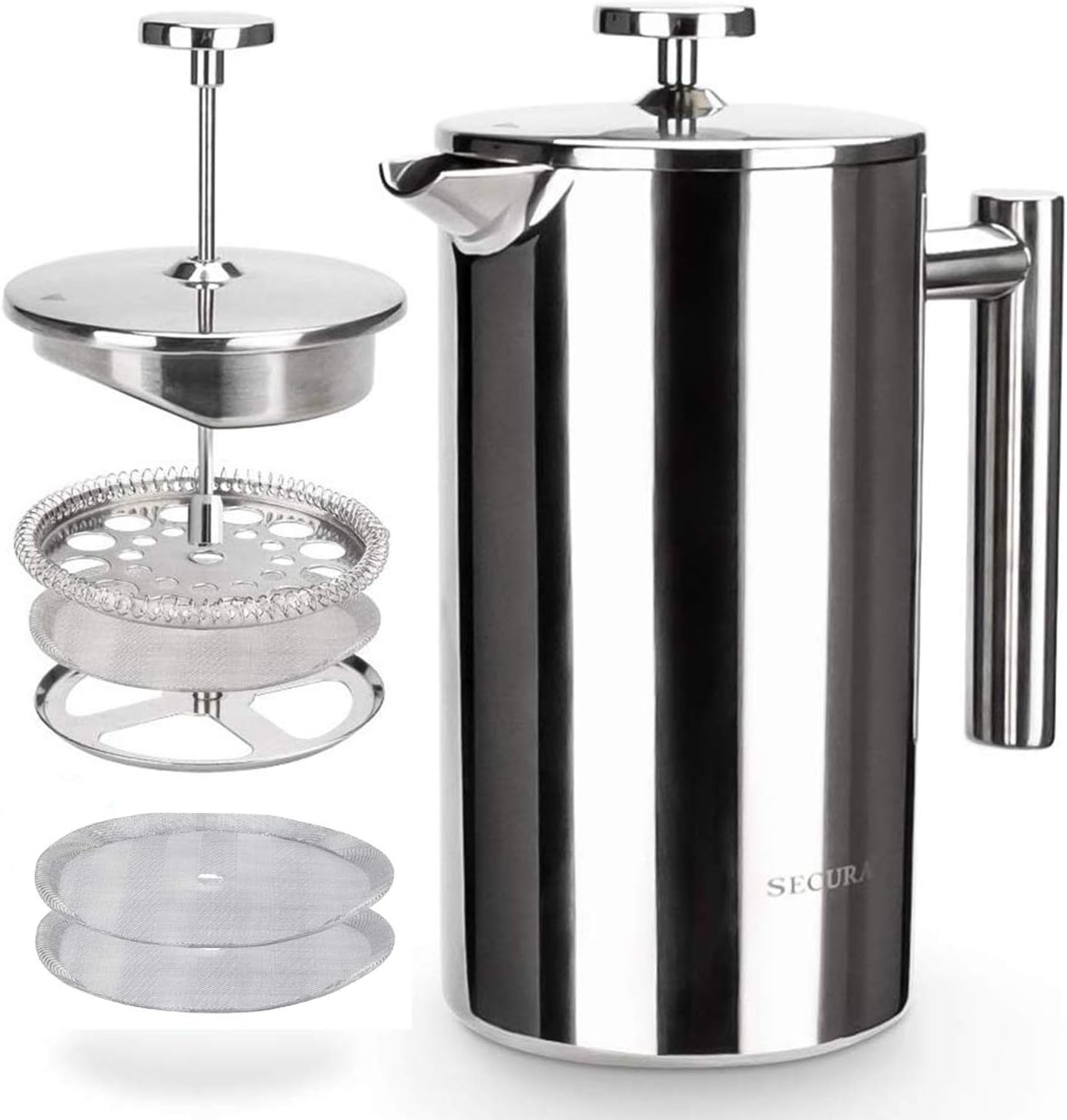
| French Press | Borosilicate beaker, stainless steel rod, mesh filter screen assembly | Direct immersion; rich, full-bodied coffee with heavy mouthfeel and suspended oils. |
Frequently Asked Questions
How Often Should I Clean My Coffee Maker’s Components?
Wash removable coffee-contact parts (carafe, brew basket, portafilter, and drip tray) after every use. Steam wands must be purged and wiped immediately after milk frothing. Descaling of the internal boiler, heating tube, and valves should be done every 1 to 3 months depending on your water hardness and daily volume.
What Type of Coffee Beans Is Best for My Machine?
Any whole coffee bean roast can be used in any machine, but grind size must be matched to the brewing mechanism. Drip brewers require a medium grind, espresso machines require a fine grind calibrated to puck resistance, and French presses use a coarse grind to avoid clogging mesh filters.
Can I Use Pre-Ground Coffee in My Coffee Maker?
Yes. Standard grocery store pre-ground coffee is ground to a medium consistency, making it well-suited for automatic drip machines. For espresso machines, pre-ground coffee only works reliably with pressurized (dual-wall) filter baskets, as standard commercial baskets require precise grinder calibration.
What Is the Lifespan of a Typical Coffee Maker?
Entry-level drip coffee makers typically last 3 to 5 years. Quality domestic espresso machines last 5 to 10+ years with regular descaling and group gasket replacement. Commercial-grade machines can operate indefinitely with routine maintenance, rebuilding of valves, and heating element replacements.
Are There Specific Water Requirements for Brewing Coffee?
Use fresh, potable, filtered water with moderate mineral content (approx. 50–150 ppm total dissolved solids). Avoid 100% distilled or deionized water, which can corrode metallic boilers and prevent electronic water level probes from detecting water.
Does Every Coffee Maker Have a Portafilter?
No. A portafilter is used exclusively on manual, semi-automatic, and commercial espresso machines. Automatic drip brewers use a gravity brew basket, and single-serve machines use internal capsule puncture chambers.
What Does the Showerhead or Sprayhead Do?
In a drip coffee maker, the sprayhead evenly disperses heated water over the dry coffee bed to ensure uniform extraction. In an espresso group head, the shower screen disperses high-pressure water across the top of the coffee puck to prevent channeling.
When Should I Have a Coffee Maker Professionally Serviced?
Seek professional service if you detect internal boiler leaks, persistent electrical tripping, a failed heating element, pump failure, or a blown internal thermal cut-off fuse that requires opening the sealed housing.
Conclusion
Understanding the internal parts of a coffee maker demystifies how brewing water is heated, routed, and extracted. Whether troubleshooting a gravity-driven drip brewer with its one-way check valve and heating tube, maintaining a 9-bar espresso system equipped with an OPV and 3-way solenoid valve, or clearing the puncture needles of a capsule machine, knowing how each component functions allows you to maintain consistent brew quality and extend the life of your appliance.
Sources
- Specialty Coffee Association — Coffee Standards — Technical extraction, temperature, and water standards framework.
- BUNN — Speed Brew Owner’s Manual — Component diagrams, thermal reservoirs, and internal sprayhead layout.
- BUNN — Heat N’ Brew Use & Care Manual — Descaling procedures, heating element care, and scale impact diagnostics.
- Breville — Barista Express Technical Specifications — 9-bar extraction dynamics, thermocoil architecture, and portafilter dimensions.
- Breville — Steam Wand Cleaning Guide — Steam-tip cleaning protocols and maintenance.
- U.S. Environmental Protection Agency — Drinking Water in Your Home — Household water quality, mineral content, and filtration benchmarks.