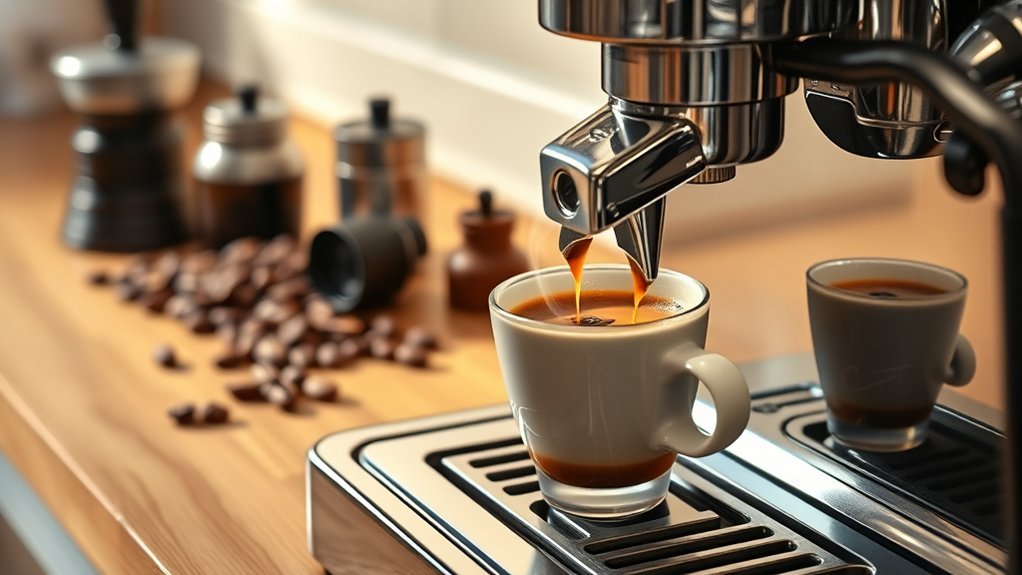
Understanding coffee maker terminology makes recipes, equipment manuals, product descriptions, and troubleshooting guides much easier to follow. Terms such as grind size, brew ratio, extraction, retention, thermoblock, portafilter, pre-infusion, and brew pressure describe different parts of the brewing process. Once you know what they mean, you can make deliberate adjustments instead of guessing why a cup tastes weak, harsh, sour, bitter, or unbalanced.
Quick Answer
Coffee maker terminology covers the equipment, measurements, water, and processes used to prepare coffee. Key terms include dose, yield, brew ratio, extraction, TDS, grind size, retention, immersion, portafilter, group head, pre-infusion, boiler, thermoblock, and brew pressure. Knowing these definitions helps you follow recipes and troubleshoot brewing more consistently.
Key Takeaways
- Brew ratio: For filter coffee, it normally compares dry coffee with brewing water; for espresso, people often use the same phrase for the relationship between dry dose and finished beverage yield.
- Extraction: Describes soluble material moving from the coffee grounds into the water. Strength and extraction are related but are not the same measurement.
- Burr grinder: Uses two cutting surfaces and gives you more control over grind size than a blade grinder.
- Stepped versus stepless: Stepped grinders use fixed settings, while stepless grinders allow smaller changes between settings.
- Espresso pressure: Nine bars is a common reference point, but pressure works together with grind, dose, yield, flow, temperature, and puck preparation.
- Machine terminology matters too: Boiler, thermoblock, PID, pressurized basket, OPV, and three-way solenoid describe different parts or control systems rather than coffee recipes.
Core Coffee Brewing Terms
These terms apply across automatic drip machines, pour-over brewers, French presses, AeroPress brewers, and espresso machines. The Specialty Coffee Association’s discussion of brewing measurements is especially useful for understanding the relationship between beverage strength, extraction yield, and brew ratio.
| Term | Meaning |
|---|---|
| Dose | The mass of dry ground coffee used for a brew, usually measured in grams. |
| Yield | The amount of brewed coffee produced. Espresso beverage yield is normally measured by mass in grams. |
| Brew ratio | The relationship between coffee and water or beverage yield. For filter coffee, a 1:17 recipe commonly means 1 gram of dry coffee for every 17 grams of brewing water. |
| Extraction | The process in which water dissolves and carries soluble material from ground coffee into the beverage. |
| Extraction yield | An estimate of the percentage of the dry coffee dose that was dissolved into the finished beverage. |
| TDS | Total dissolved solids. In brewed-coffee measurement, TDS describes the concentration or strength of dissolved coffee material in the beverage. |
| Contact time | How long brewing water remains in contact with the coffee grounds. |
| Bloom | The initial wetting stage in which freshly roasted grounds release trapped gas, especially carbon dioxide, before or during the main addition of water. |
| Agitation | Movement from pouring, stirring, swirling, or turbulence that changes how water contacts the grounds. |
| Body | The perceived weight, texture, or fullness of coffee in the mouth. |
| Clarity | How distinctly individual flavors can be identified, often influenced by filtration, sediment, roast, and brewing technique. |
| Channeling | Uneven flow through weak paths in a coffee bed or espresso puck. Some areas receive too much water while others receive too little, creating uneven extraction. |
Note: “Brew ratio” can mean different things depending on the method. Filter recipes normally compare dry coffee with brewing water, such as 1:17. Espresso recipes commonly compare the dry dose with beverage yield, such as 18 grams in and 36 grams out, or 1:2. Some technical writers call the espresso calculation a beverage ratio to keep the two meanings separate.
Strength Versus Extraction
Strength describes how concentrated the beverage is. Extraction describes how much soluble material was removed from the grounds. These are not interchangeable. A concentrated espresso can be unevenly extracted, while a lighter filter coffee can be evenly extracted.
This distinction matters when troubleshooting. Adding more coffee can make a drink stronger without necessarily solving poor extraction. Likewise, changing grind size can change extraction and flow even if the coffee-to-water ratio remains unchanged.
Note: Acidity, sourness, bitterness, and astringency also describe different sensory experiences. Taste words are useful clues, but they are not perfect laboratory diagnoses of what happened during brewing.
Key Coffee Grinder Terms Every Enthusiast Should Know
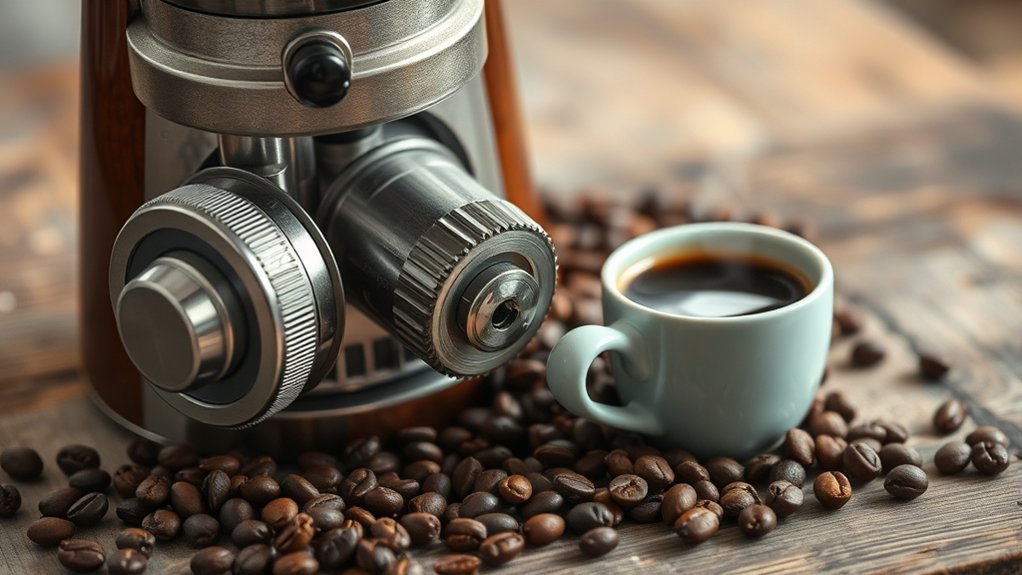
Grind size affects surface area, water flow, contact time, and extraction. A grinder therefore does more than make coffee smaller: it helps control how quickly and evenly water interacts with the ground coffee.
Burr Grinder
A burr grinder crushes and cuts beans between two shaped surfaces. It normally gives you better control over grind size than a blade grinder, which repeatedly chops beans into a less-controlled mix of particle sizes.
Flat and Conical Burrs
Flat burrs use two ring-shaped burrs that face each other. Conical burrs use an inner cone-shaped burr inside an outer burr. Neither geometry is automatically better for every use. Burr design, alignment, diameter, cutting pattern, motor speed, and the rest of the grinder all affect its output.
Stepped and Stepless Grind Adjustment
A stepped grinder clicks into fixed settings. Its settings are easy to record and repeat. A stepless grinder can move anywhere within its adjustment range, allowing very small changes that are especially useful when dialing in espresso.
Grind Range, Particle Distribution, Fines, and Larger Particles
A grinder’s grind range describes the brew methods it can support, from fine espresso settings to coarse French press or cold-brew settings.
Particle distribution describes the mix of particle sizes produced by the grinder. Very small particles are commonly called fines. Much larger particles are sometimes informally called boulders. A grinder does not need to create perfectly identical particles, but it should produce a controlled distribution that works for the intended brewing method.
Retention, Static, and Single Dosing
Retention is coffee left in the burr chamber, chute, or other internal spaces after grinding. Lower retention reduces the amount of older grounds that may mix with the next dose.
Static can make particles cling to each other and to grinder surfaces. It can increase mess, clumping, and retention. Research discussed by the Specialty Coffee Association shows that electrostatic charging can also alter clumping and bed structure, which can affect brewing repeatability.
Single dosing means weighing one portion of beans, placing only that portion in the grinder, and grinding it immediately. A hopper workflow instead stores a larger quantity of beans above the burrs.
Popcorning describes the tendency of the last few beans in a nearly empty hopper or single-dose grinder to bounce around instead of feeding steadily into the burrs. Grinder design can reduce or increase this effect.
Pro Tip: When adjusting flavor, change only one major variable at a time. Keep the coffee dose and water amount fixed while changing the grind. Otherwise, you may not know which adjustment improved or harmed the result.
Essential Tools for Coffee Brewing
Understanding grinder terminology sets the stage for choosing tools that make brewing more consistent. Not every method requires every accessory, but a suitable grinder and a scale provide useful control across many recipes.
| Tool | What It Does | Common Uses |
|---|---|---|
| Burr grinder | Produces an adjustable and more controlled grind. | Nearly every brew method |
| Coffee scale | Measures coffee, water, and espresso yield by mass. | Recipe consistency and dialing in |
| Timer | Tracks bloom, pouring, steeping, and shot time. | Pour-over, immersion, and espresso |
| Pour-over dripper | Holds a filter and coffee bed while water passes through by gravity. | Manually controlled filter coffee |
| Gooseneck kettle | Provides controlled placement and flow during manual pouring. | Pour-over coffee |
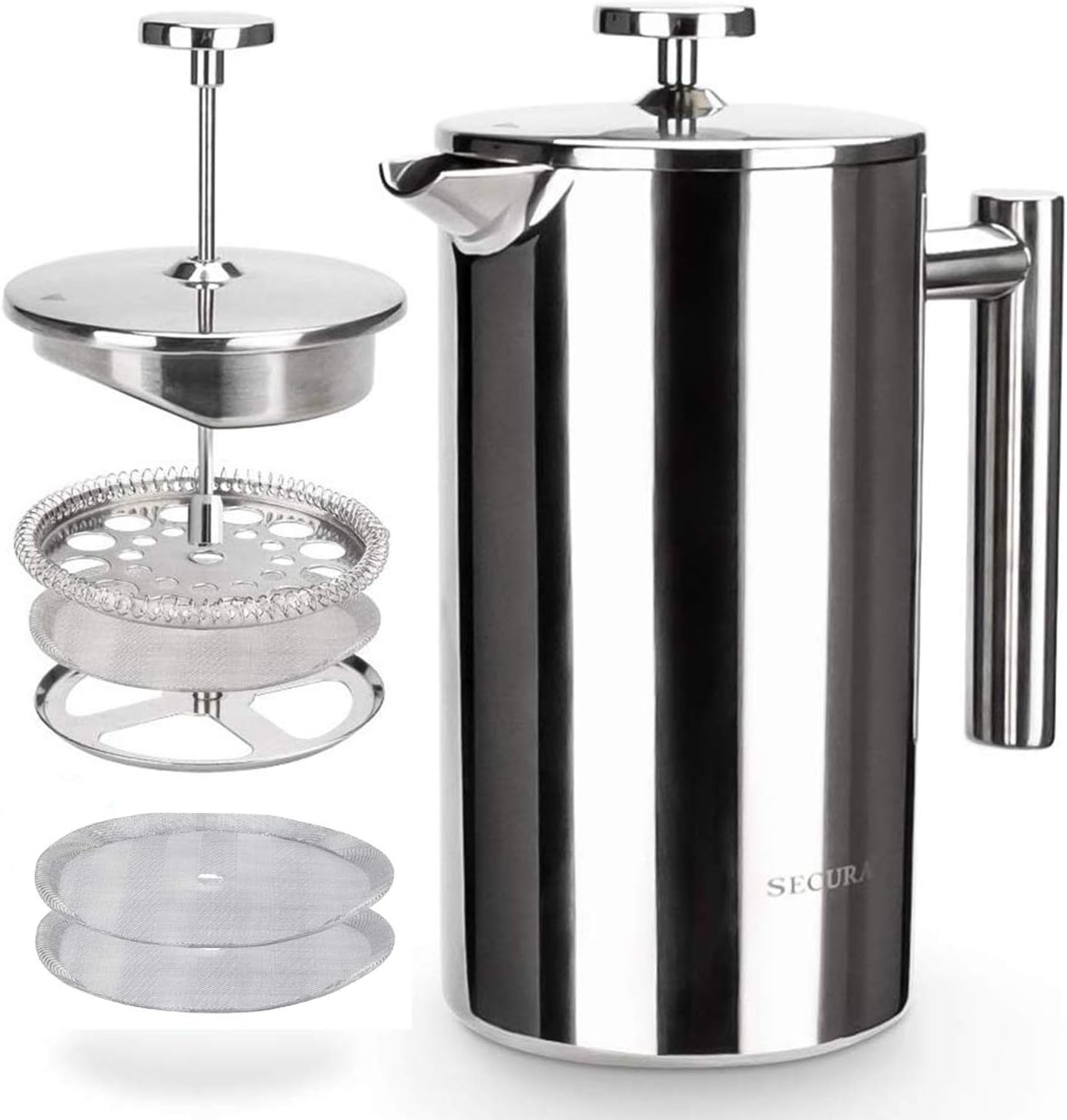
| French press | Steeps grounds directly in water before a mesh plunger separates most of them from the drink. | Full-bodied immersion coffee |
| AeroPress | Combines immersion, filtration, and hand-applied pressure. | Short, versatile brews and travel |
| Chemex | Uses a pour-over design and thick paper filters that capture oils and fine sediment. | Clear, clean-tasting filter coffee |
A precise recipe starts with mass rather than scoops: weighing the coffee and water makes the same brew easier to repeat.
How Brewing Methods Impact Flavor
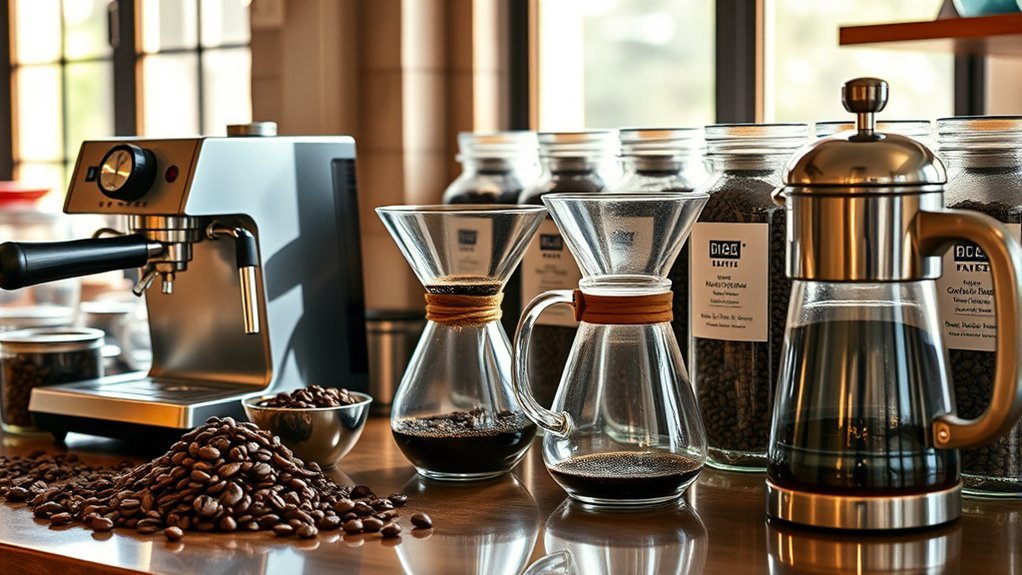
Brewing methods shape flavor by changing grind size, filtration, temperature, contact time, agitation, and the way water moves through the grounds. Bean origin, processing, roast, water, and freshness also matter, so the descriptions below are tendencies rather than guaranteed results.
| Brewing Method | Typical Grind and Process | Common Cup Character |
|---|---|---|
| Automatic drip | Medium grind; hot water passes through a filtered coffee bed. | Balanced and familiar, with clarity influenced partly by the filter. |
| Pour-over | Medium-fine to medium grind; manual control of pouring and agitation. | Clear flavors and a lighter body when paper-filtered. |
| French press | Medium-coarse to coarse grind; full immersion followed by mesh filtration. | Full body, more oils, and some fine sediment. |
| AeroPress | Fine to medium grind; immersion followed by hand pressure and filtration. | Flexible flavor and body depending on recipe and filter. |
| Espresso | Fine grind; pressurized water passes through a compact coffee puck. | Concentrated flavor, heavier texture, and crema when conditions support it. |
| Moka pot | Fine to medium-fine grind; vapor pressure pushes hot water through the coffee bed. | Strong and concentrated, but not the same as pump-driven espresso. |
| Cold brew | Often medium-coarse to coarse; long contact with cool or room-temperature water. | Smooth and often perceived as less sharp, with strength depending heavily on recipe and dilution. |
Immersion brewing keeps the grounds surrounded by water for most of the brew, as in a French press. Percolation brewing moves fresh water through a bed of coffee, as in automatic drip and pour-over brewing. Some devices combine both processes.
The Specialty Coffee Association currently lists SCA-310 Home Coffee Brewers: Specifications and Test Methods as its certification standard for home filter brewers. For everyday home filter coffee, a practical recipe starting point is roughly 1:16 to 1:18 coffee-to-water by mass, followed by small adjustments for the coffee, brewer, and preferred strength.
Common Coffee Maker Parts and Features
Coffee-maker manuals and product descriptions often use the following terms:
- Water reservoir: The tank that holds water before brewing. It may be removable or built into the machine.
- Heating element: The electrical component that supplies heat to brewing water or, on some drip machines, to a warming plate.
- Boiler: A heated vessel that stores water or steam. Espresso machines may use one boiler, two boilers, or another heating arrangement.
- Thermoblock or thermocoil: A compact flow-through heating system that heats water as it moves through a heated block or channel rather than storing a large boiler full of hot water.
- Heat exchanger: In some espresso machines, a tube or heat-exchange path lets brewing water pass through a steam boiler while keeping the brew-water circuit separate.
- Dual boiler: An espresso-machine layout with separate boilers for brewing and steaming, allowing each system to operate at an appropriate temperature.
- Showerhead: The outlet that distributes water over the grounds in an automatic drip brewer.
- Brew basket: The holder for the filter and coffee grounds.
- Paper filter: A disposable filter that captures much of the sediment and some oils from the brew.
- Permanent filter: A reusable metal or synthetic filter that normally allows more oil and fine sediment into the cup than a paper filter.
- Glass carafe: A glass serving container, often paired with a warming plate.
- Thermal carafe: An insulated container that holds heat without continuously warming the coffee from below.
- Warming plate or hot plate: A heated surface that keeps a glass carafe warm after brewing.
- Programmable brew: A timer function that starts a brewing cycle at a selected time.
- Pre-infusion or bloom mode: A stage that wets the grounds before the machine delivers the rest of the brewing water.
- Pod or capsule system: A brewer designed around a sealed, pre-portioned container of ground coffee.
- Auto-off: A safety or energy-saving feature that switches a heater or machine off after a set period.
- Pause-and-serve or drip stop: A mechanism that temporarily limits coffee flow when the carafe is removed during or after brewing.
Coffee Machine Types and Control Terms
- Automatic drip brewer: Heats water and sends it through a basket of ground coffee into a carafe or cup.
- Manual espresso machine: Uses manual force or lever control for much of the extraction process.
- Semi-automatic espresso machine: Uses an electric pump to create brewing pressure, while the user normally starts and stops the shot.
- Automatic or volumetric espresso machine: Stops an extraction automatically after the machine detects or dispenses a programmed amount of water or beverage, depending on its design.
- Super-automatic or bean-to-cup machine: Automates several steps such as grinding, dosing, brewing, and often milk preparation.
- PID controller: An electronic control system used to regulate temperature around a selected target more precisely than a simple on/off thermostat.
Coffee Water Terminology
Water terms appear frequently in coffee-maker manuals because water affects both flavor and mineral buildup. The Specialty Coffee Association’s discussion of water chemistry explains why hardness, alkalinity, and mineral composition matter during extraction.
- Hardness: A measure associated mainly with dissolved calcium and magnesium. Hard water can increase the potential for mineral scale in heated equipment.
- Alkalinity: The water’s ability to neutralize acids. In coffee, alkalinity can strongly influence how bright or muted acidity tastes.
- Water TDS: A broad measurement of dissolved material in water. Do not confuse water TDS with coffee beverage TDS, which refers to dissolved coffee material in the finished drink.
- Scale or limescale: Mineral deposits that can build up on heaters, boilers, valves, and internal water paths as water is repeatedly heated.
- Descaling: Using a manufacturer-approved procedure and descaling product to remove mineral buildup from the machine’s water system.
- Filtered water: Water that has passed through a filter. The exact minerals removed depend on the filtration technology; a basic carbon filter does not necessarily remove hardness.
- Softened water: Water treated to reduce certain hardness minerals. The treatment method matters because different systems change water chemistry in different ways.
Note: Do not choose coffee-maker water by TDS alone. Two waters can have similar total dissolved solids but very different hardness and alkalinity. Follow the machine manufacturer’s water specifications when they are provided.
Understanding Extraction and Flavor
Underextraction means too little desirable soluble material was removed from the coffee, or the coffee extracted very unevenly. The cup may taste thin, sharply sour, salty, or incomplete. Depending on the brewing method, possible contributors include a grind that is too coarse, insufficient contact time, water that is too cool, poor wetting, or a recipe that does not suit the brewer.
Overextraction describes a brew in which too much material has been extracted for the desired flavor balance. The coffee may taste bitter, drying, hollow, or harsh. A grind that is too fine, excessive contact time, or excessive agitation can contribute, depending on the brewing method.
Uneven extraction is a separate problem. Channeling, dry pockets, uneven pouring, poor espresso-puck preparation, or an uneven grind can make some areas extract more than others. The same cup may then contain flavors associated with both low and high extraction.
These flavor labels are guides, not laboratory diagnoses. Roast style, water composition, bean age, brewing temperature, concentration, and personal preference can produce similar sensations.
What Does “Dialing In” Mean?
Dialing in is the process of adjusting a recipe until the coffee tastes balanced and repeats reliably. Start with a measured dose and water amount or beverage yield. Taste the result, identify the main problem, and change one variable. For example, make the grind slightly finer if a filter brew runs unusually quickly and tastes thin, or slightly coarser if it drains slowly and tastes harsh.
Key Terms Related to Espresso Machines
Espresso terminology describes the machine, the packed coffee bed, and the relationship between the dry dose and finished drink. The Specialty Coffee Association’s espresso survey illustrates how professionals evaluate dose, output weight, ratio, time, temperature, pressure, pre-infusion, and basket size together rather than treating one number as the entire recipe.
Espresso Recipe and Puck Terms
- Portafilter: The handled part that holds the filter basket and locks into the group head.
- Filter basket: The perforated metal basket that contains the espresso grounds.
- Group head: The part of the machine that receives the portafilter and delivers brewing water.
- Puck: The compact bed of ground coffee inside the basket.
- Tamper: A tool used to press the grounds into a level, stable puck.
- Distribution: The process of spreading grounds evenly through the basket before tamping.
- WDT or Weiss Distribution Technique: A puck-preparation technique that uses thin needles to break up clumps and redistribute grounds before tamping.
- Pre-infusion: An early wetting stage at lower flow or pressure before the main extraction.
- Shot time: The measured extraction time. Recipes may count from pump activation or from the first visible liquid, so record which method you use.
- Espresso yield: The mass of liquid espresso produced.
- Espresso brew ratio or beverage ratio: The relationship between dry dose and beverage yield. For example, 18 grams of dry coffee producing 36 grams of espresso is 1:2.
- Ristretto: An espresso made with a lower beverage yield relative to its dose.
- Lungo: An espresso made with a higher beverage yield relative to its dose.
- Crema: The foam-like layer that forms on fresh espresso from gas and surface-active material in the beverage. Its appearance alone does not prove that the espresso tastes good.
- Steam wand: A tube that releases steam for heating and texturing milk.
- Microfoam: Steamed milk with very small, evenly distributed bubbles and a glossy texture.
- Pressure profiling: Deliberately changing pressure during different stages of an espresso shot.
Espresso Hardware Terms
- Pressurized basket: A basket or basket system that creates extra flow restriction after the coffee bed, making pressure generation less dependent on a precisely dialed-in grind.
- Non-pressurized basket: A conventional basket in which the prepared coffee puck supplies most of the resistance to brewing water.
- Bottomless or naked portafilter: A portafilter without a bottom or spouts beneath the basket, allowing you to see the underside of the extraction. It is useful for spotting visible signs of poor puck preparation or channeling.
- Shower screen: A screen in the group head that helps distribute brewing water across the top of the puck.
- OPV or over-pressure valve: A valve used on some pump machines to limit or regulate pressure in the hydraulic system.
- Three-way solenoid valve: A valve found on many espresso machines that can release pressure from the group after brewing, helping stop flow and dry the puck more quickly.
- Pressure gauge or manometer: A gauge that displays pressure at a particular point in the machine. Its reading does not automatically equal the exact pressure throughout the coffee puck.
- Flow control: A system that lets the user alter water flow during extraction. Flow changes can also affect pressure because the coffee puck provides resistance.
- Purge or flush: Running water or steam briefly through part of the machine to clear residue, stabilize conditions, or prepare the system, depending on the machine and procedure.
- Backflush: A cleaning procedure used only on compatible espresso machines, normally with a blind basket or cleaning disc, to clean the group and valve pathway. Follow the machine manual because not every machine uses the same procedure.
The group head connects the portafilter to the espresso machine, but good extraction also depends on an even puck, suitable grind, controlled flow, stable temperature, and a sensible dose-to-yield ratio.
Brew pressure is the pressure present while water moves through the puck. Nine bars is a common reference point, but it is not a universal quality setting. SCA research into modern espresso practices has documented baristas using pressure alongside dose, beverage yield, ratio, time, temperature, basket size, and pre-infusion.
Note: Pump pressure or the value shown on a machine’s gauge may not equal the exact pressure experienced throughout the coffee puck. Gauge location, water flow, puck resistance, valves, and machine design affect what the reading represents.
What Are the Different Waves of Coffee?
The “waves of coffee” are informal labels used to describe broad changes in coffee production, marketing, retail, and consumer interest. They overlap and should not be treated as strict historical periods.
First-Wave Coffee
The first wave refers to coffee becoming an accessible mass-market household product. Convenience, shelf stability, consistent flavor, pre-ground coffee, and large-scale distribution were central features.
Second-Wave Coffee
The second wave is associated with the expansion of coffee shops, espresso-based drinks, darker specialty roasts, and stronger consumer interest in producing countries and café experiences. Peet’s and Starbucks are often linked with this period, although many independent businesses also shaped it.
Third-Wave Coffee
The third wave places greater attention on coffee as an agricultural product and craft beverage. Common themes include traceable sourcing, producer relationships, origin-focused roasting, manual brewing, detailed sensory language, and careful control of extraction.
The movement became increasingly visible during the 2000s and later spread across many specialty-coffee markets. The Specialty Coffee Association’s discussion of third-wave growth also emphasizes that these categories overlap rather than replacing one another in a clean sequence.
Note: “Specialty coffee” and “third-wave coffee” are related but not identical terms. Specialty coffee can refer to a coffee or coffee experience valued for distinctive attributes, while “third wave” is a broader cultural and business label.
Frequently Asked Questions
What is the ideal coffee-to-water ratio for brewing?
A practical starting point for filter coffee is about 1 gram of coffee for every 16 to 18 grams of water. Treat that as a recipe range rather than a universal rule. Adjust the ratio, grind, and brewing method according to the coffee and the strength you prefer.
What is the difference between brew ratio and espresso ratio?
Filter-coffee brew ratios normally compare dry coffee with brewing water, such as 1:17. Espresso recipes usually compare the dry dose with the finished beverage yield, such as 18 grams in and 36 grams out, or 1:2. Some technical sources call the espresso measurement a beverage ratio to avoid confusion.
How does grind size affect brewing time?
A finer grind exposes more surface area and usually creates more resistance in percolation brewers, which can slow flow and change extraction. A coarser grind generally provides less resistance or may suit a longer immersion. The exact result also depends on the brewer, filter, coffee dose, and particle distribution.
What is the difference between TDS and extraction yield?
Coffee-beverage TDS describes how concentrated the drink is, while extraction yield estimates what percentage of the original dry coffee dose dissolved into the beverage. A coffee can therefore have a high concentration without necessarily having an ideal or even extraction.
What is the difference between light and dark roast?
Light roasts often emphasize more origin-specific, floral, fruity, or bright flavors, while dark roasts develop stronger roast-driven, smoky, bitter, caramelized, or chocolate-like notes. Neither roast level always produces more caffeine in the finished cup. Dose, roast, bean type, extraction yield, and brewing method all affect the result.
Can I reuse coffee grounds for brewing?
You can pass water through used grounds again, but much of the easily extracted material has already been removed. The second drink will normally taste weak, thin, or unbalanced. Used grounds are generally better suited to composting or another appropriate household use.
How should I store coffee beans for freshness?
Store beans in an airtight, opaque container in a cool, dry, dark location away from the oven, dishwasher, sunlight, moisture, and strong odors. Buy manageable quantities and grind only what you need shortly before brewing. The National Coffee Association’s storage guidance recommends protecting coffee from air, moisture, heat, and light.
What does it mean to dial in coffee?
Dialing in means adjusting a measured recipe until the coffee tastes balanced and repeats reliably. Begin with a known dose, water amount or espresso yield, and brewing procedure. Then change one variable—often grind size—taste again, and record the result.
Is a burr grinder better than a blade grinder?
A burr grinder is usually better when you want repeatable brewing because it offers an adjustable grind and a more controlled particle distribution. A blade grinder can make usable ground coffee, but its chopping action gives you less control over particle size and recipe repeatability.
What is the difference between a boiler, thermoblock, and dual boiler?
A boiler stores and heats water in a vessel. A thermoblock or thermocoil heats water as it passes through a heated flow path. A dual-boiler espresso machine uses separate boilers for brewing and steaming, which allows the two systems to operate at different temperatures at the same time.
Does nine bars of pressure guarantee good espresso?
No. Nine bars is a common brewing reference, but pressure cannot correct an unsuitable grind, uneven puck, incorrect dose, poor temperature control, or badly chosen beverage yield. Evaluate pressure together with flow, ratio, time, temperature, and puck preparation.
Conclusion
Coffee terminology gives you a shared language for understanding equipment, recipes, water, and troubleshooting. Learn the basic measurements first—dose, water, yield, ratio, time, grind setting, TDS, and extraction—then add machine terms such as retention, channeling, pre-infusion, thermoblock, PID, portafilter, and brew pressure. You do not need to chase one “perfect” number. Measure consistently, change one variable at a time, and use taste plus repeatable observations to decide whether the result improved.
Sources
- Specialty Coffee Association — Coffee Standards — current SCA equipment standards, including home brewers, home grinders, and espresso machines.
- Specialty Coffee Association — Towards a New Brewing Chart — beverage strength, TDS, extraction yield, and brew-ratio terminology.
- Specialty Coffee Association — Defining the Ever-Changing Espresso — espresso dose, yield, ratio, time, temperature, pressure, basket size, and pre-infusion.
- Specialty Coffee Association — Understanding Static Electricity During Grinding — grinder static, clumping, retention, and brewing repeatability.
- National Coffee Association — Storage and Shelf Life — protection from air, moisture, heat, and light and grinding shortly before brewing.
- Lindsey et al., Scientific Reports — Caffeine Content in Filter Coffee Brews as a Function of Degree of Roast and Extraction Yield — why roast level alone does not determine caffeine in a finished cup.