The difference between a coffee maker and a coffee brewer is smaller than it may sound. In fact, the terms often overlap. A coffee brewer is any device used to brew coffee, while “coffee maker” commonly refers to an automatic countertop appliance. The most useful comparison is therefore between automatic coffee makers and manual brewing devices.
Quick Answer
A coffee maker and a coffee brewer are not opposites. “Coffee brewer” is the broader term for any device that brews coffee, including automatic drip machines, pour-over drippers, French presses, and espresso machines. In everyday shopping, “coffee maker” usually means an automatic appliance, while “brewer” may describe manual or automatic equipment.
Key Takeaways
- Coffee brewer is an umbrella term that includes automatic coffee makers and manual devices.
- Automatic drip machines offer convenience, repeatability, and the ability to brew several cups at once.
- Manual methods such as pour-over and French press give you more direct control but require more attention.
- Espresso machines are pressure-based brewers and should not be treated as representative of every coffee brewer.
- The best choice depends on your preferred coffee style, batch size, available time, cleanup tolerance, and budget.
Coffee Maker vs. Coffee Brewer: What Is the Real Difference?
There is no universal industry rule that places coffee makers and coffee brewers into two opposing categories. The Specialty Coffee Association, for example, describes certified home brewers as coffee makers that meet its performance requirements.
In ordinary conversation, however, people often use the terms differently:
- Coffee maker: Usually means an automatic electric appliance that heats and distributes water for you.
- Coffee brewer: May refer to any automatic or manual device used to extract coffee from ground beans.
- Manual brewer: Usually means a pour-over dripper, French press, moka pot, AeroPress-style device, or another tool that requires direct user involvement.
Note: Product names are not always consistent. A Chemex may be called a coffeemaker even though it is a manual pour-over brewer, while an automatic drip appliance may be sold as either a coffee maker or a coffee brewer.
Power your essentials anywhere with a 999Wh pure sine wave power station delivering up to 1000W continuous with 2000W surge. It supports fast charging via USB-C PD 60W and USB-A QC 18W, plus simultaneous output for multiple devices through AC, USB, wireless, and car/DC ports. Recharge using AC, car, or solar with a built-in MPPT controller and dual cooling fans, while the upgraded battery management system protects against surges, short circuits, and overheating.
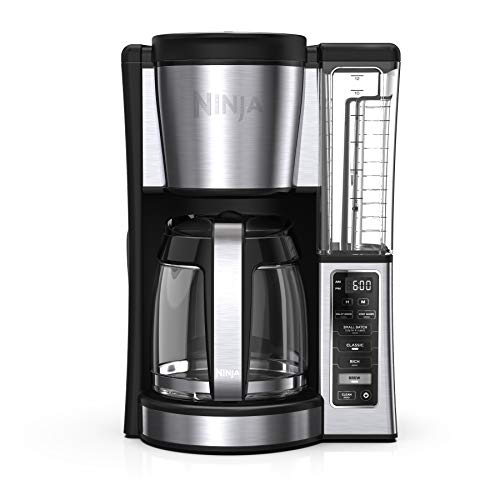
2 BREW STYLES: Classic or Rich, each brew is flavorful and never bitter with custom brew strengths.

SEMI-TRANSPARENT WATER RESERVOIR holds up to 5 cups of water capacity with a level indicator to always ensure you have enough water ready for brewing.
What Is a Coffee Maker and How Does It Work?

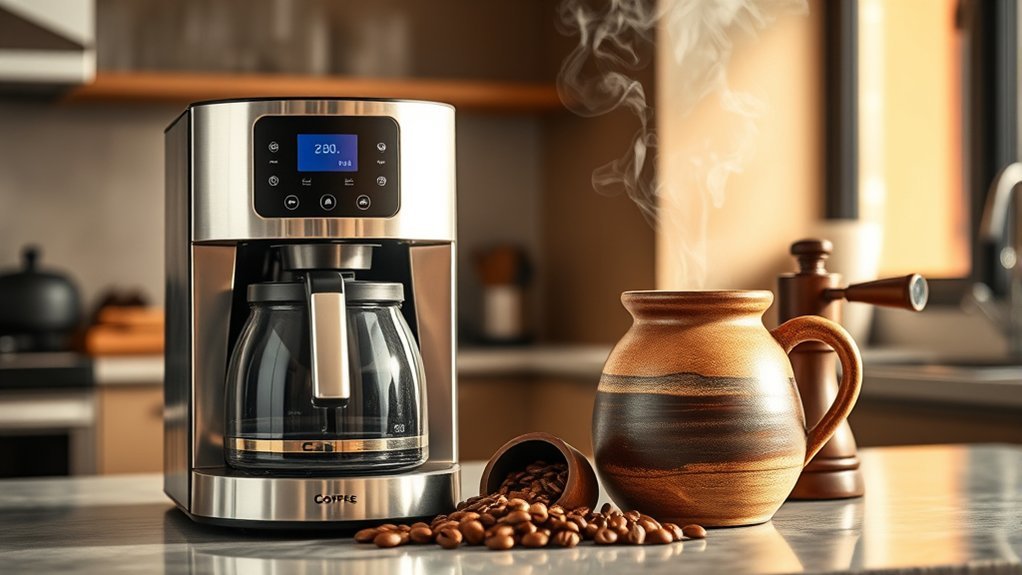
An automatic drip coffee maker heats water from a reservoir and sends it through a tube to a showerhead above the brew basket. The hot water passes through the ground coffee and filter before dripping into a carafe or cup.
Paper filters generally produce a cleaner-looking cup with less sediment. Reusable metal filters allow more fine particles and oils to pass through, which can create a heavier body.
Depending on the model, an automatic coffee maker may include:
- Programmable start times
- Adjustable batch sizes
- Brew-strength settings
- A thermal or glass carafe
- A warming plate
- Automatic shutoff
- A removable water reservoir
- A built-in grinder or water filter
Automatic operation does not guarantee excellent coffee. Water temperature, grind consistency, coffee-to-water ratio, water quality, and cleanliness still affect the final cup.
What Counts as a Coffee Brewer?
A coffee brewer can be automatic or manual. The National Coffee Association presents drip, pour-over, espresso, French press, and cold brew as distinct brewing methods rather than treating all brewers as one type of machine.
| Brewing Method | How It Works | Typical Strength | User Effort |
|---|---|---|---|
| Automatic drip | A machine heats and distributes water through a filter basket. | Standard brewed coffee | Low |
| Single-serve pod | The machine sends water through a sealed capsule or reusable pod. | Standard brewed coffee | Very low |
| Pour-over | You manually pour water over coffee in a filtered dripper. | Clear and aromatic | High |
| French press | Coffee steeps in water before a mesh plunger separates the grounds. | Full-bodied, with some sediment | Medium |
| Espresso | A machine forces hot water through a compact bed of finely ground coffee. | Highly concentrated | Medium to high |
| Moka pot | Stovetop steam pressure pushes water through coffee grounds. | Concentrated, but not true espresso | Medium |
| Cold brew | Ground coffee steeps in cool water for an extended period. | Smooth concentrate or ready-to-drink coffee | Low active effort |
Is an Automatic Coffee Maker Easier to Use?
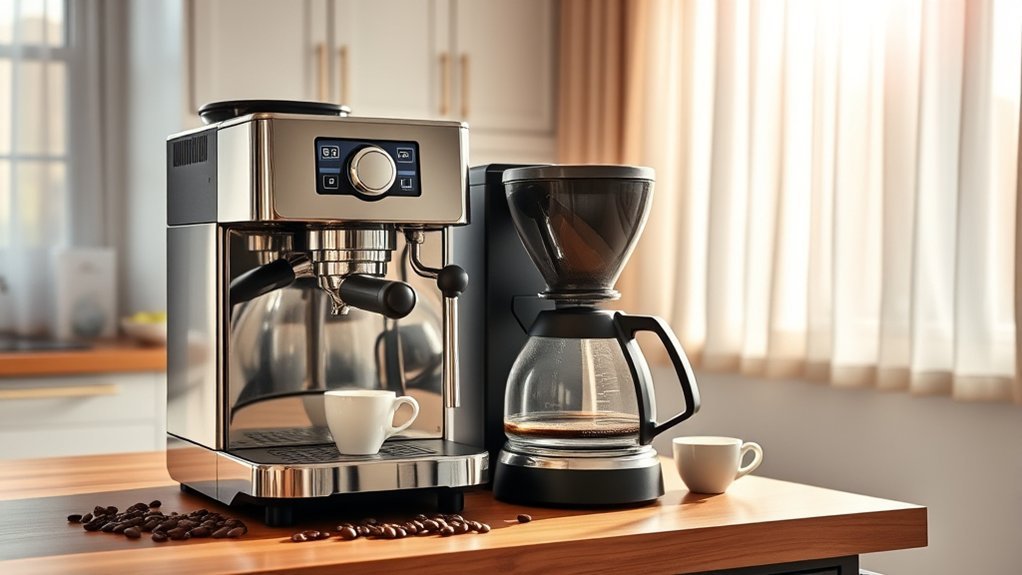
An automatic coffee maker is usually easier for daily batch brewing because the machine controls water heating and distribution. You add water and coffee, press a button, and wait for the brew cycle to finish.
Manual brewers require more participation. With a pour-over dripper, you control the pouring rate and water distribution. A French press requires measuring, steeping, plunging, and prompt serving. Manual espresso also requires careful grinding, dosing, tamping, and adjustment.
Active Effort and Brewing Time
| Method | Active Attention | Useful Timing Reference |
|---|---|---|
| Automatic drip | Low after setup | SCA certification does not permit more than eight minutes of water-contact time at full capacity. |
| French press | Low during steeping | Bodum’s instructions use a four-minute brew before plunging. |
| Pour-over | High throughout the pour | Recipes vary; one official Hario V60 recipe targets about three minutes. |
| Espresso | High for manual machines | The extraction is brief, but heating, grinding, dosing, tamping, and cleanup add time. |
Essential Differences Between Automatic and Manual Brewers
The most meaningful differences involve automation, control, serving size, consistency, and cleanup—not whether the product label says “maker” or “brewer.”
| Feature | Automatic Coffee Maker | Manual Brewer |
|---|---|---|
| Automation | Heats and distributes water automatically | User controls most or all brewing steps |
| Learning curve | Usually low | Ranges from low to high |
| Control | Limited unless the machine has adjustable settings | Direct control over ratio, timing, agitation, and pouring |
| Batch size | Often suitable for multiple cups | Commonly one to four cups, depending on the device |
| Repeatability | Can be highly repeatable when measurements remain consistent | Depends more heavily on technique |
| Storage | Usually requires permanent counter space | Many devices fit in a cabinet or drawer |
How Does Brewing Equipment Affect Coffee Quality?
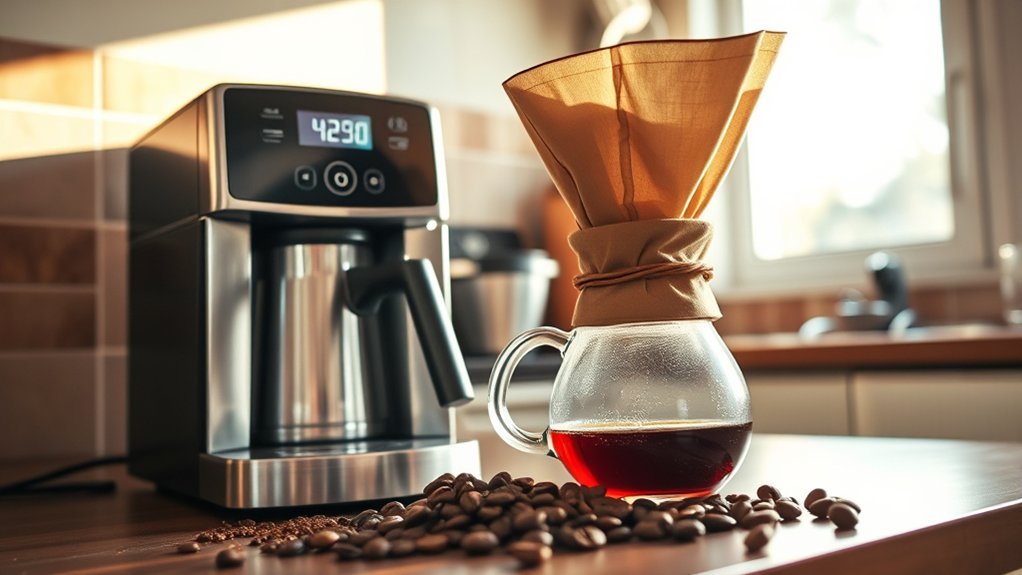
The equipment matters, but it is only one part of coffee quality. A costly machine can still make weak or bitter coffee when the grind, dose, water, or cleaning routine is wrong.
The most important brewing variables include:
- Coffee-to-water ratio: Too little coffee tastes weak; too much can taste overly concentrated or wasteful.
- Grind size: Finer grounds slow water flow and expose more surface area, while coarser grounds allow faster flow.
- Water temperature: Water that is far too cool may underextract coffee, while excessive heat can make control more difficult.
- Contact time: Each brewing method has a suitable range. Espresso, pour-over, French press, and cold brew should not use the same timing.
- Water quality: Strong odors, excessive hardness, or unsuitable mineral content can affect flavor and scale buildup.
- Freshness and cleanliness: Stale coffee oils and mineral deposits can create unpleasant flavors.
For certified automatic drip equipment, the SCA Home Brewer Program Requirements specify that water should contact the grounds within a range of 92–96°C during certification testing. These requirements are useful when evaluating automatic drip performance, but they are not universal instructions for every brewing method.
A brewer does not create quality by itself. Consistent measurements, suitable grinding, good water, and regular cleaning matter just as much as the device.
Pro Tip: Use a digital scale to measure coffee and water. A repeatable ratio makes it easier to identify whether a flavor problem comes from the beans, grind, water, or equipment.
Customization Options
Manual brewing usually provides more direct control, but advanced automatic machines can also offer meaningful adjustments.
Automatic Coffee Maker Controls
Depending on the model, you may be able to adjust:
- Brew strength
- Water temperature
- Pre-infusion or bloom time
- Batch volume
- Scheduled start time
- Hot-plate duration
Manual Brewer Controls
Manual methods allow you to change the coffee-to-water ratio, grind size, water temperature, steeping time, pouring pattern, agitation, and filter material. This flexibility can be rewarding, but it also gives you more opportunities to produce inconsistent results.
Espresso offers extensive control over grinding, dose, beverage weight, pressure behavior, extraction time, and milk texture. For example, the Breville Barista Express describes low-pressure pre-infusion followed by nine-bar extraction. That pressure-based process is specific to espresso equipment and does not describe coffee brewers as a whole.
Maintenance and Cleanup
Maintenance depends on the device, filter system, water quality, and frequency of use.
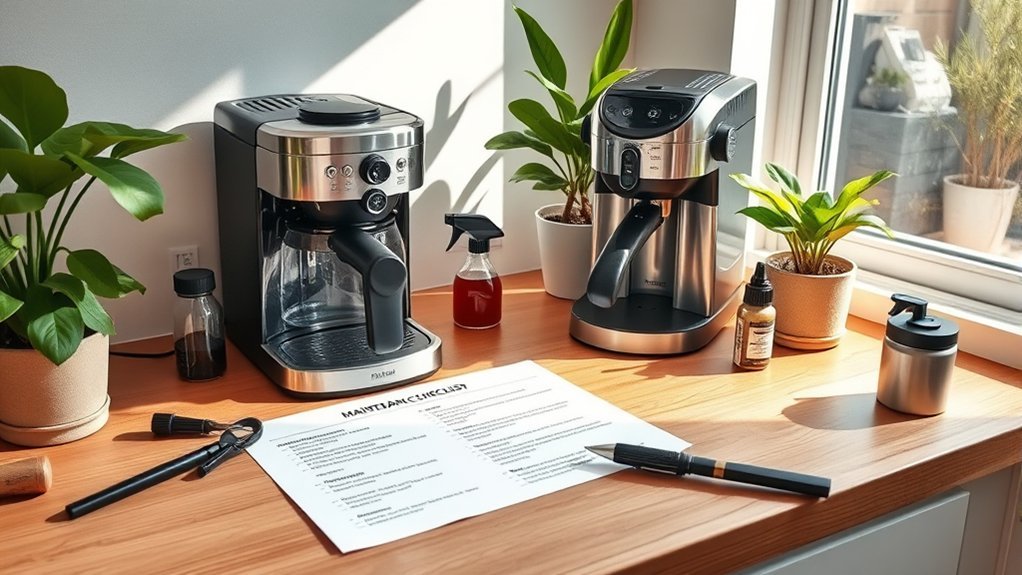
- Automatic drip coffee maker: Wash the basket and carafe regularly, remove coffee residue, and descale according to the manufacturer’s schedule.
- Pour-over dripper: Discard or empty the filter, rinse the dripper, and wash away any oil buildup.
- French press: Remove the grounds, separate the plunger components when needed, and clean the mesh thoroughly.
- Pod machine: Empty used pods, clean the drip tray and pod area, and descale the water system as directed.
- Espresso machine: Clean the portafilter and steam wand frequently. Many machines also require backflushing, water-filter replacement, descaling, or cleaning cycles.
- Moka pot: Allow it to cool, empty the grounds, rinse the components, and inspect the gasket and filter plate for wear.
Warning: Coffee equipment can contain hot water, steam, pressurized components, and heated metal or glass. Unplug electric appliances when required, allow parts to cool, and follow the model’s instruction manual before cleaning, opening, or disassembling the brewer.
How to Compare Brands and Models
There is no single best brand for every coffee drinker. Compare individual models based on independent performance information, replacement-part availability, warranty support, capacity, and the type of coffee you actually drink.
For an automatic drip machine, consider:
- Whether the model appears on the current SCA Certified Home Brewer list
- Maximum and minimum batch size
- Thermal carafe versus glass carafe and warming plate
- Ease of filling the reservoir and brew basket
- Availability of replacement carafes, filters, and removable parts
- Automatic shutoff and overflow protection
- Cleaning and descaling instructions
- Warranty length and local service options
For a manual brewer, check its capacity, filter requirements, material, durability, ease of cleaning, and whether you already own a suitable kettle and grinder.
Price Comparison and Ownership Cost
Prices change by size, seller, material, and feature set, so an exact category-wide starting price can quickly become outdated. It is more useful to compare the full cost of ownership.
| Device Type | Typical Upfront Cost | Possible Ongoing Costs |
|---|---|---|
| Basic pour-over | Low | Paper filters; kettle and grinder if not already owned |
| French press | Low to moderate | Few consumables; occasional replacement screen or glass |
| Automatic drip | Low to premium | Filters, descaler, water filters, and replacement carafe |
| Pod machine | Low to premium | Capsules or reusable pods, descaler, and water filters |
| Espresso machine | Moderate to very high | Capable grinder, cleaning products, filters, accessories, and service |
A manual dripper may be inexpensive by itself but less economical when you also need a quality grinder, pouring kettle, scale, and filters. A more expensive automatic machine may be worthwhile when several people use it every day.
Choosing the Right Coffee Device for Your Needs
Choose based on how you plan to use the equipment rather than the words printed on the box.
- Choose an automatic drip maker when you want several cups with little active effort.
- Choose a single-serve machine when speed, portion control, and minimal preparation matter most.
- Choose a pour-over brewer when you enjoy a hands-on process and want direct control over extraction.
- Choose a French press when you prefer a fuller body and do not mind some fine sediment.
- Choose an espresso machine when you want true espresso, cappuccinos, lattes, or other concentrated café-style drinks.
- Choose a moka pot when you want concentrated stovetop coffee without purchasing an espresso machine.
- Choose a cold-brew setup when you prefer preparing coffee in advance and serving it chilled or diluted.
Also consider your normal serving volume, counter space, access to a grinder, willingness to clean the device, and the cost of filters or capsules.
Frequently Asked Questions
Is a coffee brewer the same as a coffee maker?
The terms often overlap. A coffee brewer is any device that brews coffee, while coffee maker commonly refers to an automatic appliance. Manufacturers may use either term for automatic drip machines.
Can a coffee maker brew espresso?
A standard automatic drip coffee maker cannot produce true espresso because it does not use the same pressure-based extraction system. A combination appliance may make both drip coffee and espresso if it contains a separate espresso group.
Do manual coffee brewers require more maintenance?
Not necessarily. A simple pour-over dripper may require only rinsing and routine washing. Automatic drip machines need periodic descaling, while espresso machines usually have the most involved cleaning requirements.
Are coffee makers more affordable than coffee brewers?
There is no reliable category-wide answer because coffee makers are themselves coffee brewers. A basic manual dripper is often inexpensive, while premium automatic drip and espresso machines can cost considerably more. Include filters, capsules, grinders, cleaning products, and replacement parts when comparing cost.
Which is more popular: coffee makers or coffee brewers?
The categories overlap, so they cannot be compared cleanly by popularity. Automatic drip and single-serve machines are common household choices because they require little active effort, while manual brewers appeal to people who want more control.
Which brewing method makes the strongest coffee?
Espresso is highly concentrated, but perceived strength also depends on the coffee-to-water ratio, extraction, roast, and serving size. A French press or drip machine can make stronger brewed coffee when you increase the coffee dose within a suitable recipe.
Can I use a coffee maker for tea?
Some coffee makers can dispense hot water for tea, but brewing tea directly through a coffee basket may transfer coffee oils and flavors. Check the appliance manual, clean the machine thoroughly, and use a kettle or dedicated tea brewer when precise steeping temperature and time matter.
Conclusion
A coffee maker and a coffee brewer are not truly competing categories. A coffee brewer is any device that prepares coffee, while coffee maker is often used for an automatic machine. For a useful comparison, focus on automatic versus manual operation, the brewing method, serving capacity, flavor style, cleanup, and total ownership cost.
An automatic drip machine is a practical choice for convenient batch brewing. Pour-over and French press devices offer more hands-on control, while an espresso machine is necessary for authentic pressure-extracted espresso. The best option is the one that fits your daily routine and helps you make consistent coffee without creating more work than you enjoy.
Sources
- Specialty Coffee Association — Certified Home Equipment — terminology, certification, and current certified automatic brewers
- National Coffee Association — How to Brew Coffee — overview of major brewing methods
- SCA Home Brewer Program Requirements — automatic drip brewing temperature and contact-time criteria
- Bodum Caffettiera Instructions — French press brewing procedure and four-minute steeping reference
- Hario USA — V60 Recipe — pour-over preparation and timing example
- Breville Barista Express — espresso pre-infusion and nine-bar extraction information