

Using a coffee maker water filter greatly improves your coffee by ensuring ideal water quality, which is essential for flavor and aroma extraction. Filtered water eliminates contaminants like chlorine and sediments, enhancing the overall taste profile. If you notice off-flavors or live in a hard water area, it’s time to switch to filtered water. Consistent use not only refines your brewing skills but also leads to a more enjoyable cup. Discover more about choosing the right filter and its benefits.
Key Takeaways
- Filtered water enhances coffee flavor by removing contaminants like chlorine and sediments that distort taste.
- Use filtered water when off-tastes are detected or in hard water areas to prevent mineral buildup.
- Specialty coffee brewing significantly benefits from consistent water quality, leading to predictable flavors.
- Choosing the right filter type, such as carbon block or reverse osmosis, helps maintain optimal mineral balance.
- Regularly replacing filters ensures peak performance and preserves the brewing quality of your coffee.
Why Water Quality Matters for Your Coffee Brewing
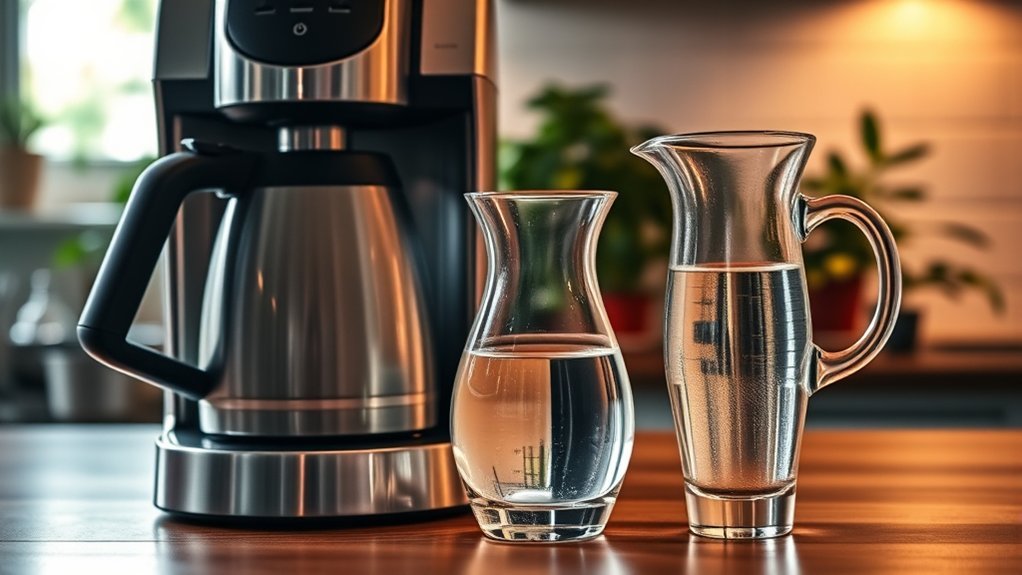
When it comes to brewing coffee, water quality is vital, as about 98.75% of your cup consists of water. The water temperature and mineral balance directly impact the extraction of flavors.
If you use hard water containing high levels of calcium and magnesium, you might face scale buildup in your coffee machine and bitter flavors due to excess bicarbonate. The Specialty Coffee Association recommends a pH level around 7.0 and a hardness range of 6 to 8 dGH for ideal brewing.
How Filtered Water Enhances Coffee Flavor and Aroma
Using filtered water markedly enhances the flavor and aroma of your coffee by eliminating contaminants that can distort its natural qualities.
By removing chlorine and sediments, filtered water guarantees a cleaner brew, allowing for better flavor extraction. This results in a balanced taste profile, enhancing sweetness while reducing bitterness.
High-quality filtered water maintains the integrity of your coffee blends, preserving essential oils and aromas for a more aromatic experience.
Additionally, consistent water quality contributes to uniform brewing results, helping you refine your skills over time.
The Specialty Coffee Association highlights the importance of water hardness and pH, both achievable with filtered water, to optimize flavor extraction and guarantee ideal water temperature during brewing.
Enjoy a superior cup every time.
When to Start Using Filtered Water for Better Coffee?

Have you ever wondered if the water quality affects your coffee’s taste? If you notice an off-taste, it’s time to start using filtered water. Unfiltered water often contains chlorine and other contaminants that can ruin your brew. If you live in a hard water area, filtered water helps prevent mineral buildup, ensuring your coffee maker runs efficiently. For consistent coffee results, switch to filtered water; varying water quality leads to unpredictable flavors. For those pursuing a refined coffee experience, filtered water enhances flavor extraction, making each cup more enjoyable. Here’s a quick table to guide you:
| Situation | Action | Result |
|---|---|---|
| Off-taste detected | Start using filtered water | Improved flavor |
| Hard water in your area | Switch to filtered water | Prevents buildup |
| Brewing specialty coffee | Use filtered water | Highlights unique notes |
Choosing the Right Water Filter for Your Coffee Maker: Key Criteria and Options
Selecting the right water filter for your coffee maker is vital for achieving ideal flavor and machine longevity.
Start by evaluating filter types; carbon block filters effectively remove chlorine and organic compounds, while reverse osmosis systems tackle a broader range of impurities.
Evaluating filter types is crucial; carbon block filters eliminate chlorine, while reverse osmosis systems address a wider array of impurities.
It’s important to maintain a proper mineral balance, as overly soft water can lead to under-extraction, while hard water may cause scaling.
Consider filters specifically designed for coffee brewing, like the BWT pitcher system, which enhances taste while preserving necessary minerals.
Regularly check your filter’s lifespan; systems like the Aqualizer Kit offer visual indicators for replacements.
Utilizing manufacturer-recommended filters can prolong your coffee machine’s life and guarantee consistent flavor in every brew.
Common Misconceptions About Coffee Water Filtration

What misconceptions might you hold about coffee water filtration? Many coffee enthusiasts underestimate the importance of using filtered water.
Here are some common misunderstandings:
- Any water works for brewing coffee, but unfiltered water can disrupt flavor balance.
- Boiling water doesn’t eliminate hard water minerals or chlorine, so contaminants remain.
- Only espresso makers need filtered water; all brewing methods benefit from it.
- Tap water might seem fine, but chlorine and sediments can ruin taste and texture.
- Water temperature isn’t the only critical factor; the quality of water greatly affects extraction and flavor.
Understanding these misconceptions can help you improve your coffee experience by ensuring you use the right water for brewing.
Frequently Asked Questions
How Often Should I Replace My Coffee Maker Water Filter?
You should replace your coffee maker water filter every two months for peak performance. This filter replacement frequency guarantees you enjoy the water filter benefits, such as improved taste and reduced mineral buildup in your coffee.
Can I Use Bottled Water Instead of a Filter?
Yes, you can use bottled water instead of a filter. Bottled water benefits include consistent taste and purity, serving as an effective filter alternative. However, make certain it’s suitable for your coffee maker’s requirements before using it.
Do All Coffee Makers Require a Water Filter?
Not all coffee makers require a water filter, but using one can dramatically boost coffee quality and brewing efficiency. It’s like adding rocket fuel to your morning brew—transformative, enhancing every sip into a flavorful experience!
Is Filtered Water Safe for All Coffee Brewing Methods?
Yes, filtered water enhances brewing quality across all methods. You’ll notice improved taste and aroma, as filtered water eliminates impurities. Embracing these benefits guarantees your coffee delivers a consistently enjoyable experience every time.
What Happens if I Don’T Use a Filter?
If you don’t use a filter, your coffee’s taste may suffer, and mineral buildup can clog your machine. Over time, this can lead to poor brewing quality and potential damage to your coffee maker.
Conclusion
Incorporating a water filter into your coffee brewing process can greatly elevate the flavor and aroma of your cup. By using filtered water, you’re not just ensuring a cleaner brew but also enhancing the overall coffee experience. So, why settle for mediocre coffee when a simple filter can make such a difference? Remember to choose the right filter to suit your coffee maker. Elevate your brewing routine and enjoy the rich, full taste that only quality water can provide.