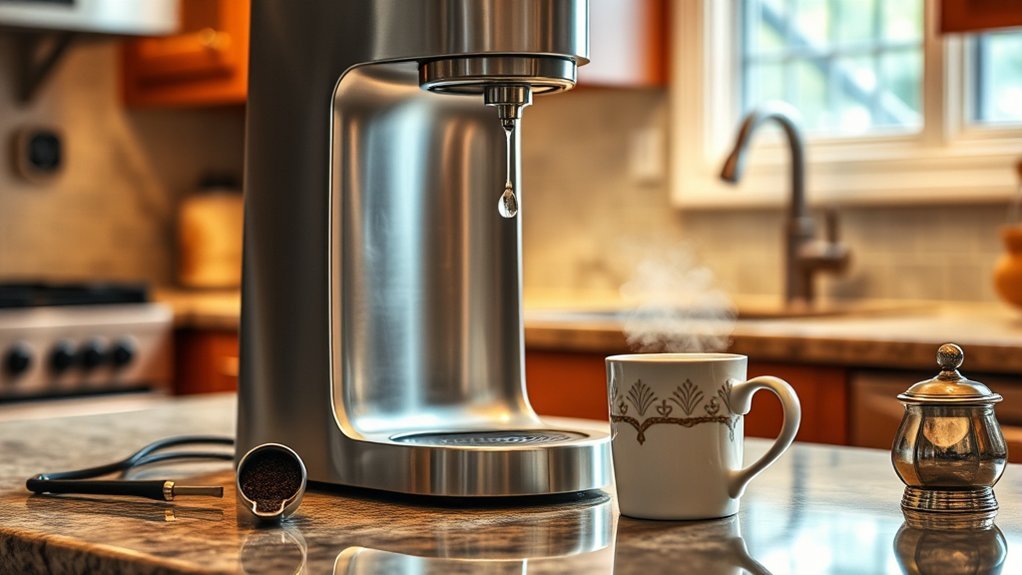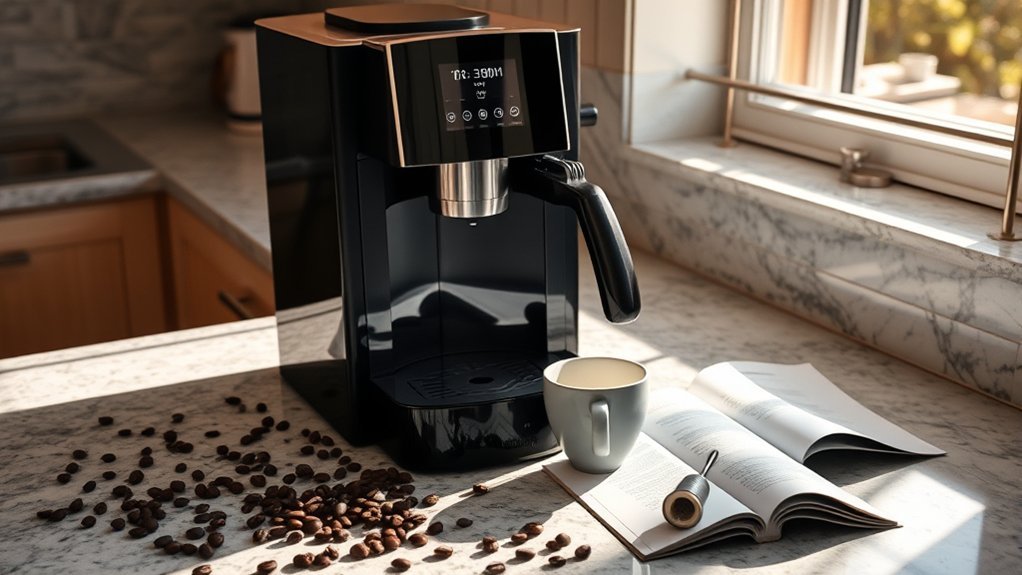

A coffee maker water filter can improve coffee when your tap water has noticeable chlorine, sediment, excessive hardness, or an unpleasant taste. The key is choosing the right type of filtration. A basic carbon filter may improve taste and odor, while hard-water scale usually requires ion exchange, softening, or another treatment designed to reduce hardness.
Quick Answer
Use filtered water when your tap water tastes or smells strongly of chlorine, contains sediment, or falls outside a suitable mineral range for brewing. Match the filter to the problem: carbon improves taste and odor, while hardness reduction requires ion exchange, softening, reverse osmosis, or another treatment designed for dissolved minerals.
Key Takeaways
- Water quality affects coffee flavor because brewed coffee is mostly water.
- Activated-carbon filters can reduce substances such as chlorine, taste, and odor when the filter is certified for those claims, but they do not automatically soften hard water.
- Hard water contains higher amounts of dissolved calcium and magnesium and can form scale inside a heated coffee maker.
- Reverse osmosis greatly reduces dissolved solids, while ion-exchange systems can target hardness; very low-mineral water is not automatically ideal for every coffee maker.
- A water filter does not automatically replace descaling. Follow your coffee maker’s maintenance schedule.
- Filter replacement intervals vary by product, water quality, and use, so the manufacturer’s instructions take priority over a universal schedule.
Why Water Quality Matters for Your Coffee Brewing
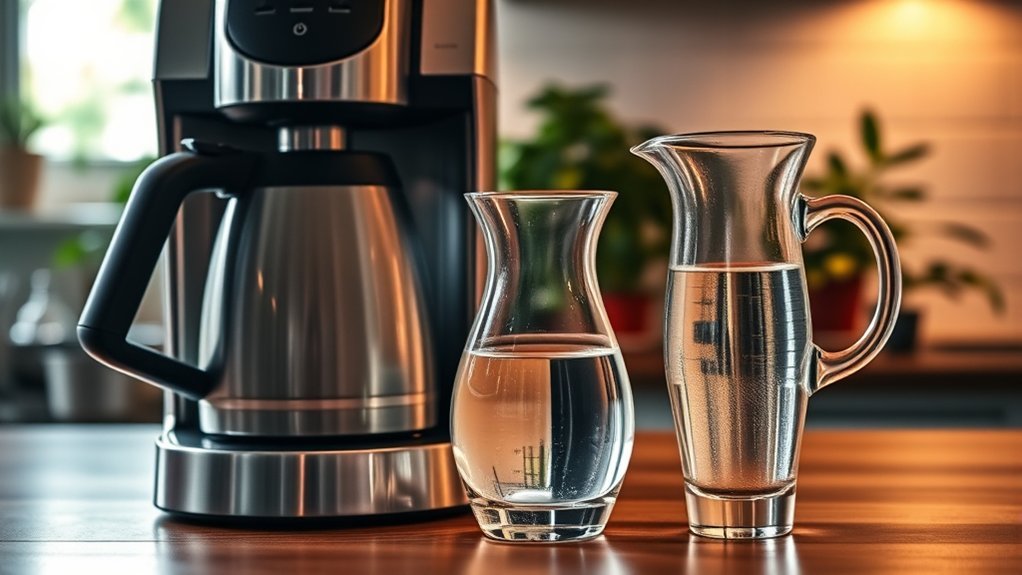
Brewed coffee is roughly 98% water, so the water you pour into the reservoir can affect aroma, acidity, sweetness, and overall balance. Water chemistry also affects what happens inside the brewer.
The Specialty Coffee Association’s brewer certification requirements use test water with about 150 ppm dissolved mineral content, a calcium hardness range of 17–85 mg/L as CaCO3, and a pH of 7.0 ± 0.5. These numbers are useful reference points rather than a rule that every home brewer must match exactly.
| Water Factor | SCA Certification Test Water | Why It Matters |
|---|---|---|
| Dissolved mineral content | About 150 ppm, ±20 ppm | Provides a repeatable mineral baseline for brewing tests. |
| Calcium hardness | 17–85 mg/L as CaCO3 | Hardness affects extraction and the potential for mineral scale. |
| pH | 7.0 ± 0.5 | Provides a near-neutral starting point for standardized testing. |
According to the U.S. Geological Survey, water hardness mainly comes from dissolved calcium and magnesium. When hard water is heated, calcium-carbonate deposits can form and create scale inside appliances, including coffee makers.
Note: Hardness, alkalinity, and total dissolved solids are not the same measurement. A TDS reading alone cannot tell you how much of the water’s mineral content is scale-forming calcium or magnesium. If scale is your concern, check hardness specifically.
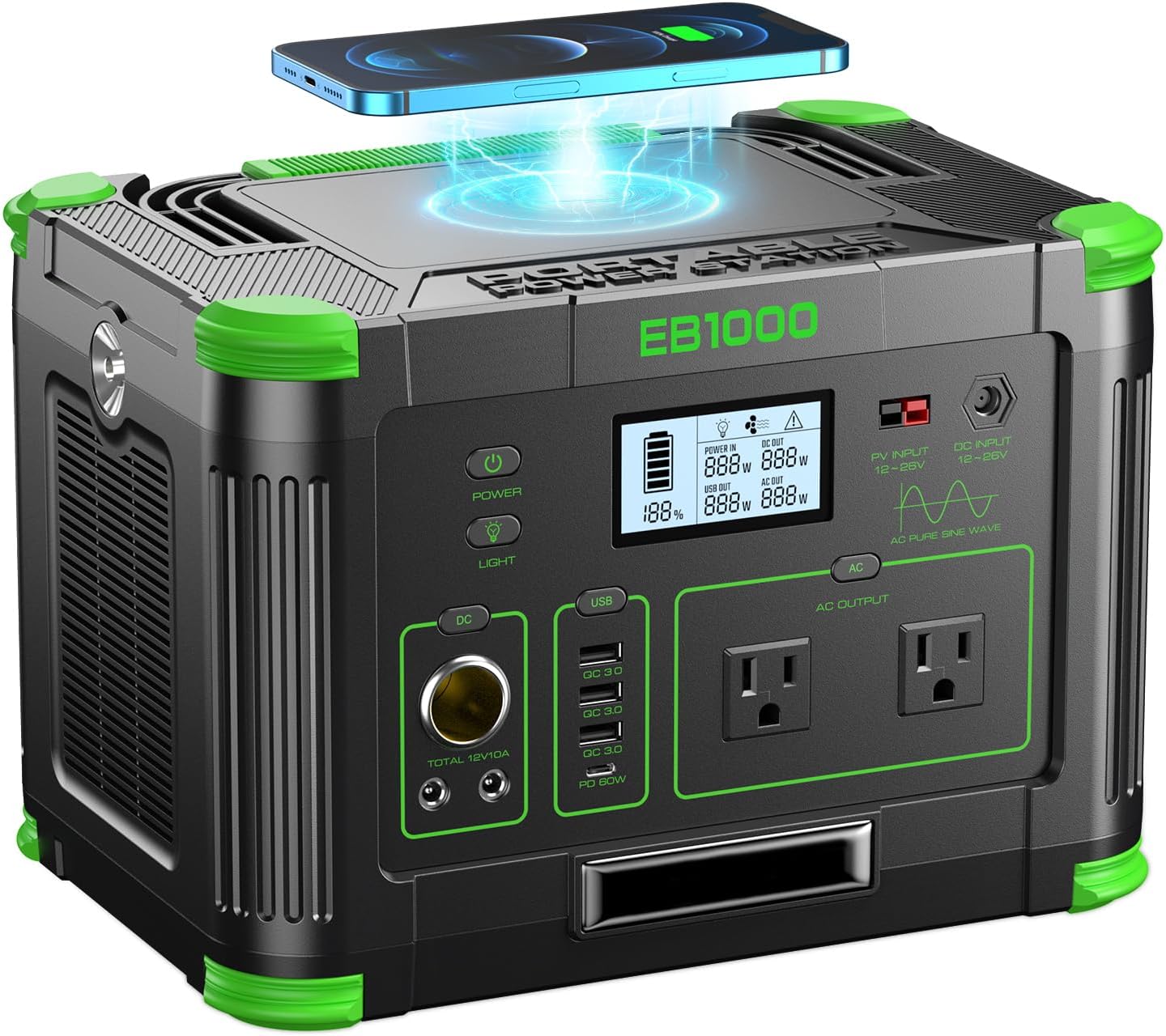
Power your essentials anywhere with a 999Wh pure sine wave power station delivering up to 1000W continuous with 2000W surge. It supports fast charging via USB-C PD 60W and USB-A QC 18W, plus simultaneous output for multiple devices through AC, USB, wireless, and car/DC ports. Recharge using AC, car, or solar with a built-in MPPT controller and dual cooling fans, while the upgraded battery management system protects against surges, short circuits, and overheating.
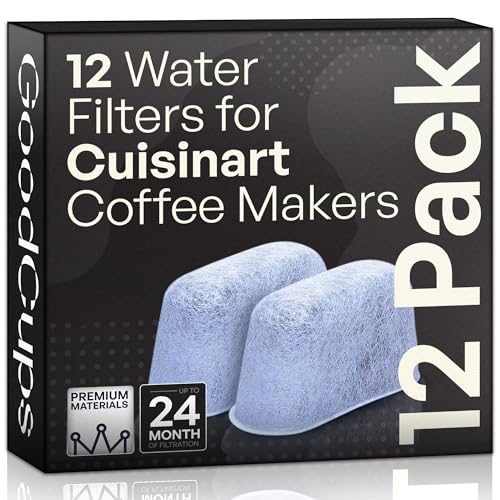
Universal Compatibility: These premium replacement charcoal water filters are designed to fit all Cuisinart coffee maker models, ensuring a perfect fit for both newer and older models, including Cuisinart coffee maker 12 cup, Grind and Brew, and coffee maker with grinder.

【Ideal Replacement】- The cafe coffee maker carbon filter fit for GE cafe drip coffee maker compatible with coffee maker model G7CDABSSTSS G7CDAASSTSS C7CDAAS2PS3 C7CDABS2RS3 C7CDAAS3PD3 C7CDABS3RD3 C7CDAAS4PW3 C7CDABS4RW3, compared to part UNIV1CFLTR6PK. Our cafe water filters ensuring a perfect fit and optimal performance.
How Filtered Water Can Improve Coffee Flavor and Aroma
Filtered water can improve coffee when the filter removes something that is hurting the taste. Chlorine, certain odors, and suspended particles are common examples.
NSF/ANSI 42 covers filters designed for aesthetic effects such as chlorine, taste, odor, and particulate reduction. The important detail is that certification applies to specific claims. A filter labeled “carbon” should not be assumed to remove every contaminant or reduce hardness unless its documentation says so.
Cleaner-tasting water also makes brewing more consistent. When the same water is used from one batch to the next, changes in grind size, coffee dose, and brew time are easier to evaluate because the water itself is less of a moving target.
Pro Tip: Choose a filter by its certified reduction claims, not just the words “premium,” “purified,” or “coffee filter.” NSF/ANSI 42 is commonly associated with aesthetic concerns such as chlorine and taste/odor, while other standards cover different health or treatment claims.
When to Start Using Filtered Water for Better Coffee

You do not need to filter water simply because you own a coffee maker. Start by looking at what is actually wrong with your water.
A filter is worth considering when tap water has a noticeable chlorine smell, unpleasant taste, visible particles, or mineral hardness that causes frequent scale. Filtered water can also help when you are brewing specialty coffee and want a more consistent water profile from day to day.
| Situation | Best First Step | Likely Benefit |
|---|---|---|
| Chlorine taste or odor | Use a filter certified for chlorine/taste/odor reduction | Cleaner-tasting brewing water |
| Hard water and frequent scale | Test hardness and use treatment designed to reduce it | Less scale formation |
| Good-tasting, moderately mineralized tap water | Filtering may not be necessary | Avoids unnecessary filtration and replacement cost |
| Brewing specialty coffee | Use consistent water with a suitable mineral profile | More repeatable flavor from brew to brew |
Water Filtering vs. Descaling: They Are Not the Same
A water filter treats water before brewing. Descaling removes mineral deposits that have already formed inside the coffee maker.
A basic charcoal or activated-carbon cartridge may improve taste without removing much calcium or magnesium. In that situation, scale can still build up even though the water tastes better.
Some filters combine carbon with ion-exchange media that reduces hardness. Reverse-osmosis systems can also reduce dissolved solids substantially. These treatments may reduce scale potential, but you should still follow the brewer manufacturer’s maintenance instructions.
This distinction is reflected in manufacturer guidance. Keurig, for example, treats water-filter replacement and descaling as separate maintenance tasks.
Warning: A coffee-maker filter is not automatically a water purifier or disinfectant. Use potable water and never assume a filter makes microbiologically unsafe water safe unless the complete treatment system is specifically certified for that purpose.
Choosing the Right Water Filter for Your Coffee Maker
The best water filter depends on what you need to change. Do not choose a filter until you know whether your problem is chlorine, sediment, hardness, very high dissolved solids, or simply inconsistent taste.
| Filter Type | What It Is Good For | Important Limitation |
|---|---|---|
| Activated carbon / carbon block | Chlorine, taste, odor, and certain other substances when certified for the claim | Does not automatically reduce calcium and magnesium hardness |
| Ion exchange / hardness-reduction cartridge | Reducing scale-forming minerals | Performance and capacity depend heavily on starting hardness |
| Reverse osmosis | Large reduction in dissolved solids and broader treatment options | May produce very low-mineral water that requires blending or remineralization for some brewing goals or machines |
| In-brewer cartridge | Convenient treatment designed for a specific coffee maker | Must match the brewer and cartridge holder |
NSF/ANSI 58 covers point-of-use reverse-osmosis systems and includes required testing for TDS reduction along with optional contaminant-reduction claims.
Coffee-focused pitchers, including BWT AQUAlizer-style systems, may combine several treatment methods rather than acting as simple carbon filters. Treat those products as examples, not as an automatic recommendation. Check exactly what the installed cartridge is designed to reduce.
If your pitcher, filter holder, or AQUAlizer-type setup has a replacement indicator, use it as a reminder. The cartridge’s actual capacity and replacement instructions still matter.
1. Check Your Water First
Your municipal water-quality report can identify many characteristics of your local supply. For scale concerns, a water-hardness test strip or hardness test kit is more useful than relying only on taste.
The USGS classifies water as soft at 0–60 mg/L as CaCO3, moderately hard at 61–120 mg/L, hard at 121–180 mg/L, and very hard above 180 mg/L. A coffee-machine manufacturer may set its own preferred range, so its manual takes priority for equipment care.
2. Match the Treatment to the Problem
If chlorine is the problem, look for a verified chlorine-reduction claim. If scale is the problem, choose technology that actually reduces hardness. If your water has unusually high dissolved solids or several treatment concerns, an RO system may be more appropriate.
3. Check Coffee Maker Compatibility
Manufacturer-recommended filters are often the simplest option for machines with built-in filter holders. Using the correct cartridge also avoids fit problems and makes replacement reminders easier to follow.
Do not assume distilled or nearly mineral-free water is best simply because it cannot form much scale. Some coffee makers specifically discourage distilled water, and extremely low-mineral water can produce different brewing results. Follow your machine’s manual before switching to distilled, deionized, or very low-TDS water.
Does a Carbon Filter Remove Hard Water?
Usually not by itself. Activated carbon is excellent for many taste and odor problems, but water hardness comes mainly from dissolved calcium and magnesium. Reducing those minerals generally requires ion exchange, softening, reverse osmosis, or another treatment specifically rated for hardness reduction.
Better-tasting water and softer water are not the same thing. A carbon filter can improve flavor while leaving most scale-forming hardness behind.
If your kettle, faucets, or coffee maker quickly develop chalky white deposits even after you begin using a carbon pitcher, the filter may be improving taste without solving the hardness problem.
Can You Use Bottled or Reverse-Osmosis Water?
Bottled water can work well, but “bottled” does not describe one mineral profile. Spring, purified, mineral, and RO-treated bottled waters can contain very different amounts of dissolved minerals.
Choose water that tastes clean and is compatible with your brewer. Very mineral-heavy bottled water can contribute to scale, while extremely low-mineral water may not be appropriate for every machine or flavor preference.
Reverse osmosis gives you much more control because it removes a large share of dissolved solids. Coffee enthusiasts sometimes blend RO water with mineralized water or remineralize it to create a repeatable brewing profile.
How Often to Change a Coffee Maker Water Filter
There is no single replacement interval for every coffee maker. Cartridge size, water quality, water hardness, and brewing volume all affect filter life.
Some manufacturers use a roughly two-month schedule. Keurig, for example, recommends replacing certain cartridges every two months or after 60 reservoir refills. Cuisinart also gives approximately 60-day or usage-based guidance for some charcoal filters. Other systems use different capacities or machine-generated reminders.
Replace the cartridge sooner if the manufacturer’s rated capacity is reached, the water develops its old taste or odor again, flow through the filter becomes unusually slow, or the machine tells you the filter is due.
Note: Replacing a filter and descaling the coffee maker are separate jobs. A new filter does not remove scale that is already attached to the heater, tubing, or other internal surfaces.
Common Misconceptions About Coffee Water Filtration

Coffee-water advice often becomes confusing because filtration, purification, softening, and descaling are treated as though they mean the same thing. They do not.
- “Any tap water works equally well.” Water that is safe to drink can still have chlorine, hardness, or a mineral balance that changes coffee flavor.
- “Any water filter prevents limescale.” A carbon-only filter may improve taste without significantly reducing hardness.
- “Boiling fixes hard water.” Boiling is not a substitute for hardness treatment; heating hard water is actually when calcium-carbonate scale can form.
- “Only espresso machines benefit from better water.” Water composition can affect drip, pour-over, immersion, pod, and espresso brewing, although equipment-protection needs differ.
- “Reverse-osmosis water is automatically perfect.” RO greatly reduces dissolved solids, but very low-mineral water may need blending or remineralization depending on the brewer and desired flavor.
- “Filtered water means purified water.” A filter only provides the reduction claims its design and certification support.
- “Using a filter means I never have to descale.” Many coffee makers still require periodic descaling even when a water filter is installed.
Frequently Asked Questions
How Often Should I Replace My Coffee Maker Water Filter?
Follow the filter or coffee maker manufacturer’s schedule. Two months or about 60 uses/refills is common for some brands, including certain Keurig and Cuisinart systems, but it is not a universal rule. Hard water and heavy use may shorten cartridge life.
Can I Use Bottled Water Instead of a Filter?
Yes. Bottled water can be a practical alternative when your tap water tastes unpleasant or is difficult to treat. Check the mineral content when possible because very hard mineral water can cause scale, while extremely low-mineral water may not suit every coffee maker.
Do All Coffee Makers Require a Water Filter?
No. Many coffee makers can brew with suitable tap or bottled water without an internal filter. A filter is most useful when it solves a specific water problem or when the manufacturer recommends one for that machine.
Is Filtered Water Safe for All Coffee Brewing Methods?
Potable filtered water can be used for drip coffee, pour-over, immersion, pod brewers, and espresso, but the ideal mineral profile and machine requirements can differ. Always follow the brewer manufacturer’s water recommendations.
What Happens if I Don’t Use a Filter?
Nothing may be wrong if your tap water already tastes clean and has a suitable mineral level. If it contains noticeable chlorine or high hardness, however, coffee flavor may suffer and scale may form faster inside the machine.
Will a Charcoal or Carbon Filter Soften Hard Water?
A carbon-only filter generally should not be expected to remove significant calcium and magnesium hardness. Look for a cartridge that specifically uses ion exchange or is rated for hardness or scale reduction if limescale is your main problem.
Does Using a Water Filter Mean I Can Stop Descaling?
Not necessarily. Filtration may slow scale formation if the system actually reduces hardness, but it does not remove existing scale. Continue descaling according to your coffee maker’s instructions or maintenance indicator.
Conclusion
A coffee maker water filter is most useful when it solves a real problem with your water. Carbon filtration can reduce chlorine and unwanted tastes, while hardness reduction requires the right ion-exchange, softening, or reverse-osmosis treatment. Test or check your water first, match the treatment to the problem, and follow your brewer’s instructions for both filter replacement and descaling. The goal is not the purest possible water—it is clean, consistent water with a mineral profile that works well for both your coffee and your machine.
Sources
- Specialty Coffee Association — Certified Home Brewer Program Requirements — brewing-water mineral content, calcium hardness, and pH parameters.
- U.S. Geological Survey — Hardness of Water — calcium and magnesium hardness, hardness classifications, and scale formation.
- NSF — NSF/ANSI 42, 53 and 401 Filtration Standards — chlorine, taste, odor, particulate, and other certified filtration claims.
- NSF — NSF/ANSI 58 Reverse Osmosis Systems — TDS reduction and RO treatment-system performance.
- Keurig — Brewer Care Guidance — water-filter replacement and descaling as separate maintenance tasks.
- Cuisinart — Coffee Maker Cleaning Guidance — charcoal-filter replacement and coffee-maker maintenance.