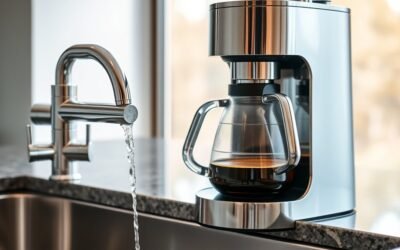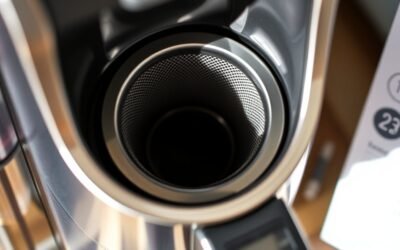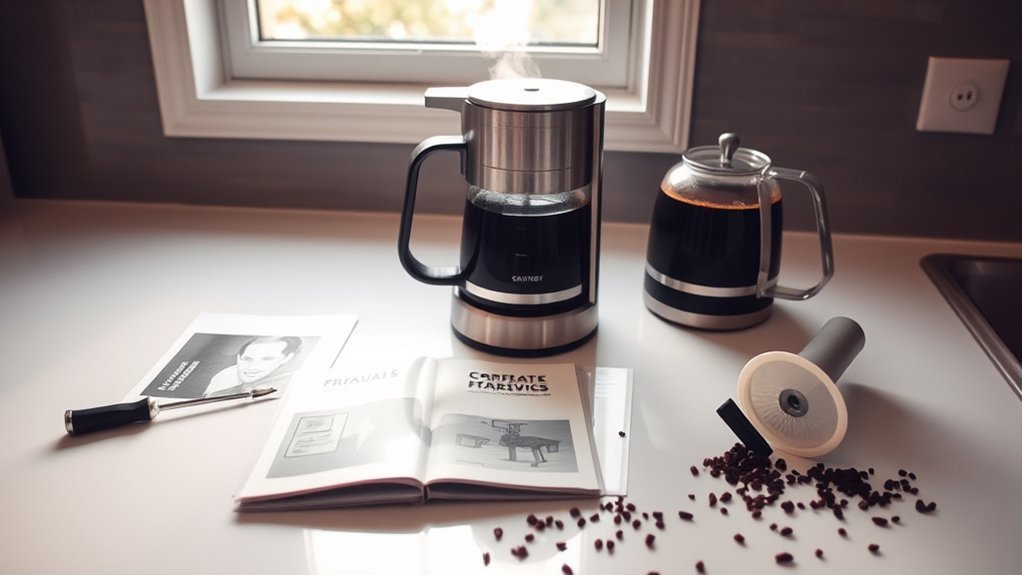
If your coffee maker won’t brew a full pot, check for clogged coffee grounds, a jammed one-way valve, or insufficient water levels. Disassemble the unit to inspect and clean the valve, ensuring there are no blockages. Use the correct grind size and water temperature to promote ideal flow. Regular maintenance, like rinsing the valve with water and setting a monthly cleaning schedule, will prevent future issues. There’s more to learn about keeping your coffee maker in top shape.
Key Takeaways
- Check for clogged coffee grounds that may hinder water flow through the coffee maker.
- Inspect the one-way valve for blockages that prevent water from reaching the heating unit.
- Ensure water levels are sufficient and verify the intake system is functioning properly.
- Examine heating elements for wear that could affect water heating capacity.
- Perform regular maintenance, including cleaning and inspections, to prevent brewing issues.
Causes of Brewing Issues in Coffee Makers
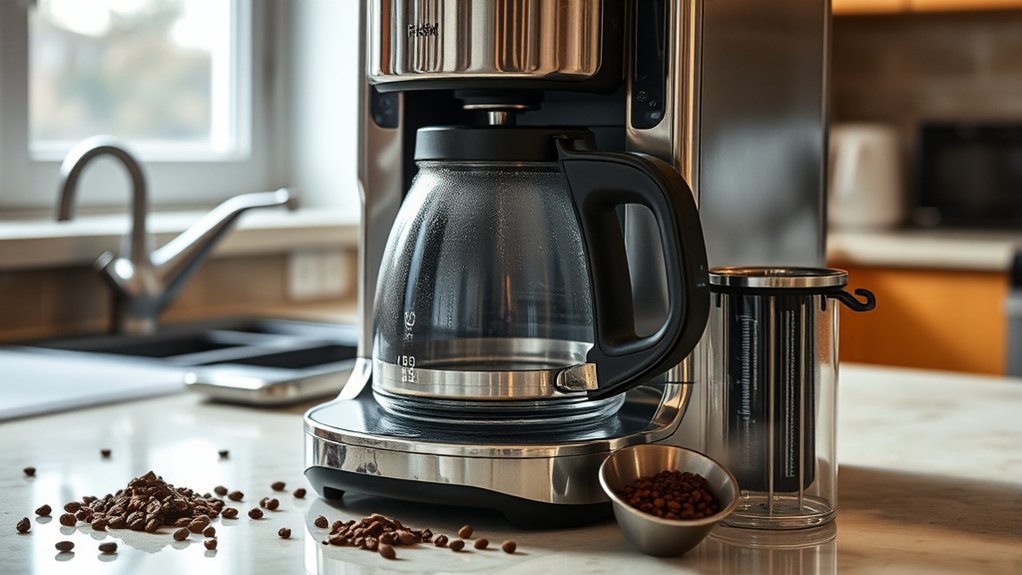
When you experience brewing issues with your coffee maker, several factors might be at play. Different coffee maker types can have unique quirks, but common problems include clogged coffee grounds that hinder water flow.
When the one-way valve in the hoses jams due to debris, it disrupts water reaching the heating unit, affecting brewing temperatures. Insufficient water levels in the reservoir can also lead to incomplete brews, often stemming from a faulty intake system or mismeasurement.
Additionally, worn-out heating elements may fail to adequately heat the water, resulting in weak coffee. Regular maintenance, including cleaning and inspecting components, can prevent these issues, ensuring your coffee maker consistently produces a full pot of perfectly brewed coffee.
How to Fix Coffee Grounds Accumulation Issues?
Brewing issues often stem from coffee grounds accumulation, which can lead to gurgling noises and prevent your coffee maker from brewing a full pot.
To tackle this problem, follow these steps:
- Disassemble your coffee maker by turning it upside down and removing rubber plugs to access screws.
- Inspect the one-way valve within the hoses; a jammed valve can cause a blockage.
- Clean out any accumulated coffee grounds, especially around the hole where they enter.
- Verify you’re using the correct coffee grind size and water temperature to prevent future buildup.
Inspecting Your Coffee Maker’s One-Way Valve for Blockages
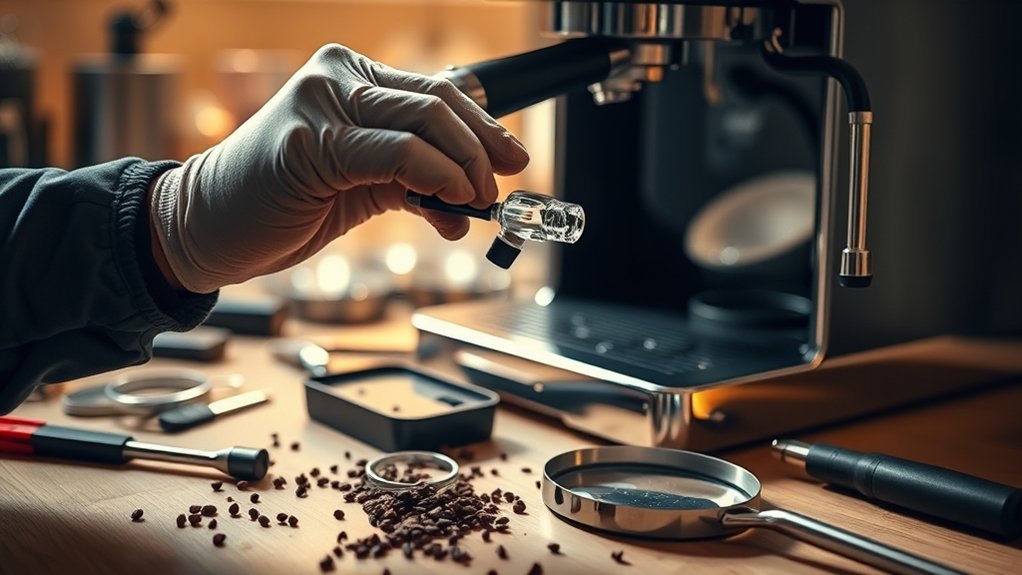
To keep your coffee maker functioning at its best, you need to inspect the one-way valve for potential blockages.
A hard spot in the hose often indicates a jam that prevents the internal ball from moving freely, disrupting water flow.
Identifying Blockages Effectively
How can you guarantee your coffee maker brews perfectly every time? Start with effective blockage detection through a thorough valve inspection. A jammed one-way valve can halt water flow, leading to incomplete brewing.
Here’s how to identify blockages:
- Look for hard spots in the hose indicating a stuck ball inside the valve.
- Confirm the valve is correctly positioned for ideal water flow from the tank to the heating unit.
- Listen for rattling sounds, which indicate that the valve is clear.
- Rinse the valve regularly at the sink to maintain its functionality.
Cleaning Techniques Explained
While regular maintenance is essential for your coffee maker’s performance, cleaning the one-way valve is often overlooked and can make a significant difference.
To start, inspect the hoses for any signs of blockage; a hard spot usually indicates a jammed valve. This valve should allow a ball to move freely to facilitate water flow.
Use cleaning tips like using compressed air or manually manipulating the valve to clear any blockages. Rinsing the valve under running water can also help remove coffee grounds and debris.
After cleaning, verify that the valve rattles and allows water to flow freely. Consistent valve maintenance will guarantee your coffee maker brews a full pot every time.
How to Take Apart and Clean Your Coffee Maker
Start by turning your coffee maker upside down to access the internal components for cleaning.
Remove the rubber plugs to reach the screws. Use Phillips and star bit screwdrivers to disassemble the coffee maker. This allows you to inspect the hoses and heating element.
- Check for a jammed one-way valve in the hoses.
- Look for hard spots indicating blockages.
- Clear any obstructions using compressed air or rinse it manually.
- Verify the one-way valve rattles and flows correctly.
Regular coffee maker maintenance is essential; aim to clean it every few months to prevent issues.
Reassemble Your Coffee Maker for Optimal Function
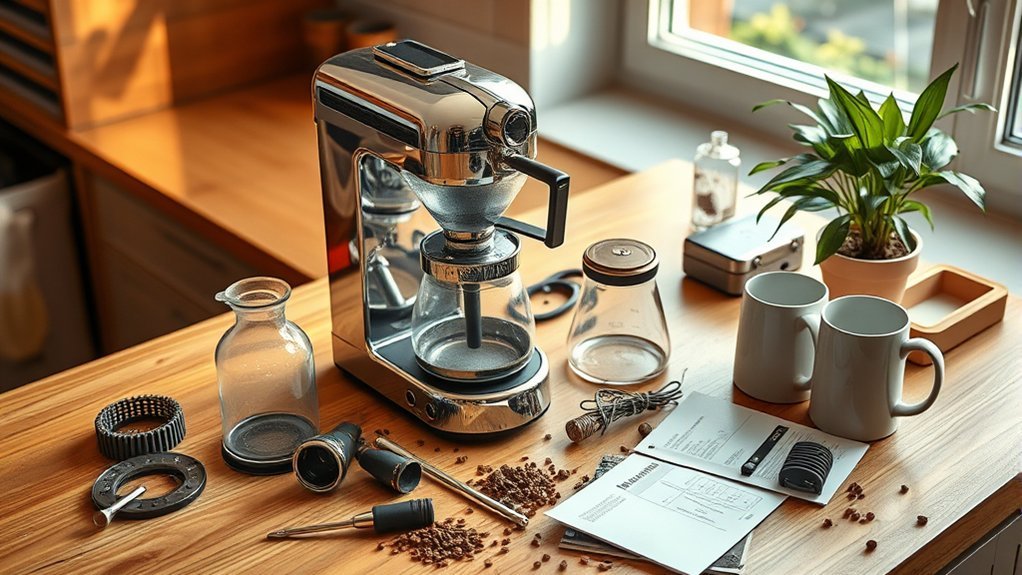
After confirming all components of your coffee maker are clean and inspected, it’s time to reassemble the machine for perfect function.
First, pay close attention to valve positioning; make sure the one-way valve is correctly placed to facilitate water flow from the tank to the heating unit.
Ensure proper valve positioning by placing the one-way valve correctly for optimal water flow from the tank to the heating unit.
Next, securely reattach all hoses using clamps to prevent leaks and guarantee proper operation.
Before sealing your coffee maker, double-check that all components are oriented correctly. This step is essential for avoiding functionality issues.
After reassembly, verify the one-way valve is functioning properly by confirming it can rattle and allows water to flow freely.
Following these reassembly tips will help restore your coffee maker to peak performance.
Maintain Your Coffee Maker to Prevent Future Problems
To keep your coffee maker running smoothly, establish a regular cleaning schedule to eliminate coffee grounds buildup, which can cause brewing issues.
Make sure to dispose of grounds properly and use the right filters to prevent clogs that disrupt water flow.
Regular Cleaning Schedule
Establishing a regular cleaning schedule for your coffee maker is essential to ensuring its longevity and peak performance. Aim for a cleaning frequency of every month to prevent coffee grounds accumulation that can lead to brewing issues.
Here are some maintenance tips to keep your coffee maker in top shape:
- Disassemble and inspect the one-way valve and hoses for blockages.
- Clean internal components using a vinegar and water mixture to remove mineral buildup.
- Rinse the coffee pot and filter basket after each use to prevent clogs.
- Wipe down the exterior frequently to keep it clean and functional.
Proper Grounds Disposal
Proper grounds disposal is essential for maintaining your coffee maker’s efficiency and preventing future problems.
Always dispose of used coffee grounds responsibly to avoid clogging your machine. Instead of pouring them down the sink, which can cause plumbing issues, opt for a compost bin or the trash.
Regularly clean the filter basket and surrounding areas to reduce the risk of grounds entering the coffee maker’s internal components. Consider using a paper filter to catch finer particles, preventing them from causing disruptions in the brewing system.
Establishing a routine cleaning schedule, including proper grounds disposal, will extend your coffee maker’s lifespan and guarantee peak brewing performance, allowing you to enjoy your favorite brews without hassle.
Frequently Asked Questions
What Type of Water Should I Use in My Coffee Maker?
You should use filtered water for the best taste and performance in your coffee maker. Tap water might contain impurities, while bottled and distilled water can lack essential minerals, affecting flavor and extraction.
How Often Should I Descale My Coffee Maker?
You should descale your coffee maker every three to six months. Regular descaling improves performance and extends lifespan, with 90% of users noticing better taste. Incorporate this maintenance tip into your routine for ideal results.
Can I Use Regular Filters Instead of Coffee Filters?
You can’t use regular filters instead of coffee filters. Different filter types affect brewing methods, impacting flavor and extraction. Always opt for coffee-specific filters designed to enhance your brewing experience and guarantee peak taste.
Why Does My Coffee Taste Weak Even With a Full Pot?
Your coffee might taste weak due to insufficient coffee strength or inadequate brew time. Make certain you’re using the correct coffee-to-water ratio and allow enough time for extraction, enhancing the flavor and overall quality of your brew.
Should I Unplug My Coffee Maker When Not in Use?
Absolutely, unplugging your coffee maker when not in use enhances energy savings and increases appliance longevity. It prevents unnecessary power consumption and reduces wear on internal components, ensuring your machine operates efficiently for years to come.
Conclusion
Ultimately, addressing brewing issues in your coffee maker can restore its efficiency. Did you know that nearly 30% of coffee drinkers experience brewing problems at some point? By regularly cleaning and maintaining your machine, you can avoid these frustrating situations. Remember to check for blockages, particularly in the one-way valve, and take the time to disassemble and clean your coffee maker. With proper care, you can enjoy a full pot of coffee every time.