Understanding common choking hazards is essential for your baby’s safety. Avoid foods like whole grapes, uncut cherry tomatoes, and large chunks of meat. Cut foods into pieces smaller than a thumb’s width to reduce risks. Sticky items, like peanut butter, should be modified as they can block airways. Supervise meals closely to spot potential dangers early. You’ll also find valuable tips on how to handle choking emergencies effectively and create a safe mealtime environment for your little one.
Key Takeaways
- Always cut foods into small, manageable pieces, ideally smaller than a child’s thumb width, to prevent choking hazards.
- Avoid serving whole grapes, uncut cherry tomatoes, and large chunks of meat, as they pose serious choking risks.
- Be cautious with sticky foods like peanut butter and marshmallows; modify them to reduce the risk of adhering to the throat.
- Supervise mealtime closely to monitor for signs of gagging or choking and ensure safe eating practices.
- Start with soft textures and mashed foods to help babies develop chewing skills safely, avoiding tough or large items.
Choking Hazards: Foods to Avoid for Your Baby

When it comes to keeping your baby safe during mealtime, knowing which foods to avoid is essential. Certain fruit choices, like whole grapes and uncut cherry tomatoes, can pose serious choking hazards due to their shape and size.
Snack options, such as popcorn, hard candies, and gummy snacks, should be off-limits for children under four. Large chunks of meat, whole nuts, and hot dogs are tough for infants to chew and swallow properly.
Additionally, sticky foods like peanut butter and marshmallows can adhere to your baby’s throat, increasing risk. Always cut foods into small, manageable pieces—smaller than a thumb’s width—to create a safer eating experience and empower your child to explore new tastes without fear.
Gagging vs. Choking: How to Tell the Difference?
Understanding choking hazards is just the start; recognizing the difference between gagging and choking is equally important for your baby’s safety.
Gagging is a normal reflex during your baby’s shift to solid foods, often marked by loud noises and a reddened face. You might hear coughing or gurgling sounds as they manage to expel food on their own.
In contrast, choking is silent and poses a severe risk, leading to cyanosis and inability to breathe or cry. Familiarize yourself with the signs of choking—these require immediate action.
Trust your instincts and monitor your child’s reactions during meals. Embrace the learning process of the gag reflex while staying vigilant, ensuring that you can respond promptly to any choking emergencies.
Common Mistakes in Baby Food Preparation
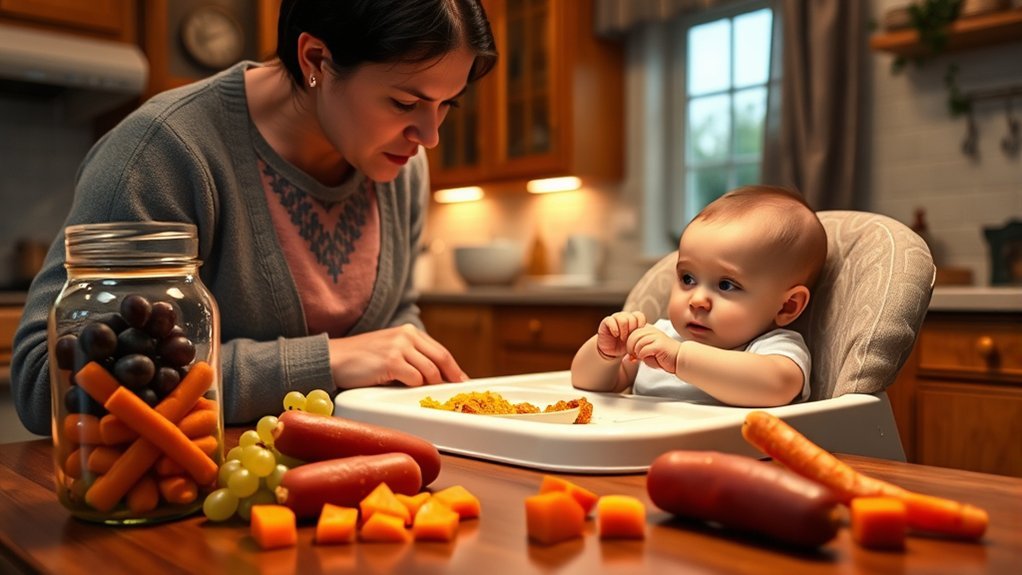
Many parents unknowingly make critical mistakes during baby food preparation that can increase choking hazards. One common error is serving whole pieces of hard fruits and vegetables, like raw carrots or uncut grapes, which are risky for young children.
It’s crucial to cut food into smaller, manageable pieces—ideally smaller than your child’s thumb width—to reduce choking risks. Additionally, sticky foods like peanut butter should be modified, perhaps by watering them down, as they can easily obstruct airways.
Introducing tough or large items, such as whole nuts or large meat chunks, is another frequent mistake.
Finally, always supervise your child closely during mealtime; distractions can lead to undetected choking incidents when they’re exploring solid foods.
How to Help Your Baby in a Choking Emergency
If your baby is choking, remaining calm and acting quickly is essential.
First, shout for help and carefully remove your baby from their high chair to guarantee they’re safe.
Start your choking response by delivering five sharp back blows between their shoulder blades using the heel of your hand.
If that doesn’t work, move on to chest thrusts: place your hands just above their belly button and push inward and upward.
Always check for visible obstructions in their mouth, but avoid blind sweeps that could push the object further down.
If your baby becomes unconscious or choking persists, call 911 immediately and begin CPR if you’re trained.
Acting swiftly can make a difference in this critical emergency.
Tips for Safe and Enjoyable Mealtimes With Your Baby

After managing a choking emergency, it’s crucial to create a safe and enjoyable mealtime experience for your baby.
Always supervise your baby closely during mealtime, ensuring a calm environment that encourages focus on chewing and swallowing. Cut food into smaller pieces, no larger than your child’s thumb width, to greatly reduce choking risks.
Start with a variety of soft textures and mashed foods, allowing your baby to develop chewing skills without hazards. Avoid hard, sticky foods or those with shapes that can block airways, like whole grapes or raw carrots.
Frequently Asked Questions
What Are the Signs That My Baby Is Ready for Solid Foods?
Your baby’s ready for solid foods when they show feeding cues like sitting up independently, reaching for food, and showing interest in what you eat. These signs indicate their developmental readiness to explore new textures and flavors.
How Can I Encourage My Baby to Try New Textures?
To encourage your baby to explore new textures, embrace baby-led weaning. Offer a rainbow of soft, textured foods, letting them play and discover. Celebrate each messy moment—it’s a beautiful journey of texture exploration and growth!
Are There Specific Foods That Can Help Prevent Choking?
To prevent choking, focus on safe foods like soft fruits, well-cooked vegetables, and pureed options. These choices promote safe eating while encouraging exploration of new textures, helping your baby build confidence and skills.
How Often Should I Introduce New Foods to My Baby?
Introduce new foods to your baby every three to five days. This frequency keeps mealtime exciting while ensuring you watch for allergies. Embrace the vibrant variety of flavors and textures to nourish your little one’s palate.
What Should I Do if My Baby Refuses to Eat Solid Foods?
If your baby’s refusing solid foods, try baby food alternatives like purees or soft fruits. Experiment with different feeding techniques, like letting them self-feed, to make mealtime enjoyable and stress-free. Patience is key!
Conclusion
As you commence on the journey of feeding your little one, think of yourself as a vigilant guardian of a treasure chest filled with nourishing delights. By steering clear of choking hazards and mastering the art of preparation, you create a safe haven for mealtime adventures. Remember, understanding the signs of gagging versus choking is your trusty map. With compassion and knowledge as your compass, you’ll navigate these waters confidently, ensuring every meal is both safe and enjoyable for your precious explorer.