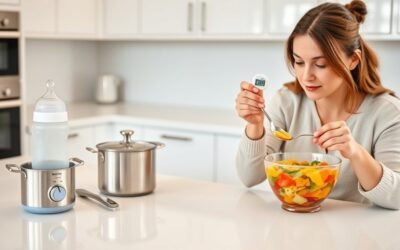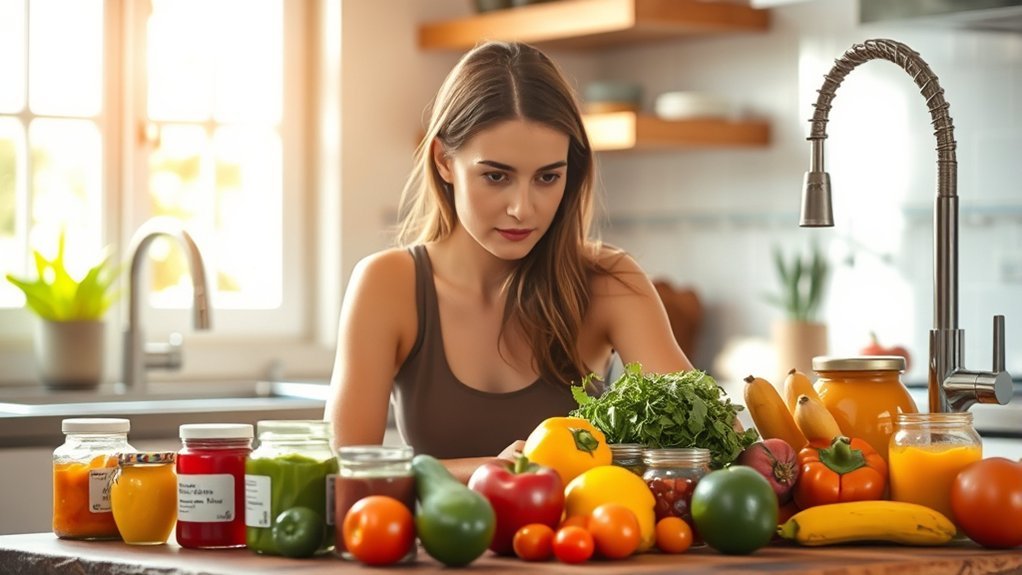
Lead can enter baby food before, during, or after crops are harvested. Some lead occurs naturally in soil, while past and current pollution can add more to soil, water, and air. Plants may absorb small amounts as they grow, and contaminated water or ingredients can introduce additional lead during processing. Although exposure cannot be reduced to zero, practical food and household choices can lower your baby’s overall risk.
Quick Answer
Lead gets into baby food mainly through contaminated soil, irrigation water, air pollution, and ingredients used during processing. Crops can absorb lead as they grow, so washing cannot remove all of it. Parents can reduce repeated exposure by serving varied foods, using safe water, rotating grains, and checking current recalls.
Key Takeaways
- Lead and other environmental contaminants can reach food through soil, water, air, ingredients, processing, and packaging.
- A laboratory detection does not automatically mean a food is unsafe; risk depends on the amount, serving size, frequency, age, and total exposure from all sources.
- Organic and homemade baby foods are not automatically lower in heavy metals because the raw ingredients may already contain them.
- A varied, nutrient-dense diet helps prevent one food from becoming a repeated source of the same contaminant.
- Most children with lead in their blood have no obvious symptoms. A blood lead test is the best way to assess suspected exposure.
Medical warning: This article provides general educational information and is not a substitute for medical care. Contact your child’s pediatrician if your baby may have eaten a recalled product, been exposed to lead in the home or water, or needs a blood lead test.
How Can Parents Choose Safer Baby Food Options?
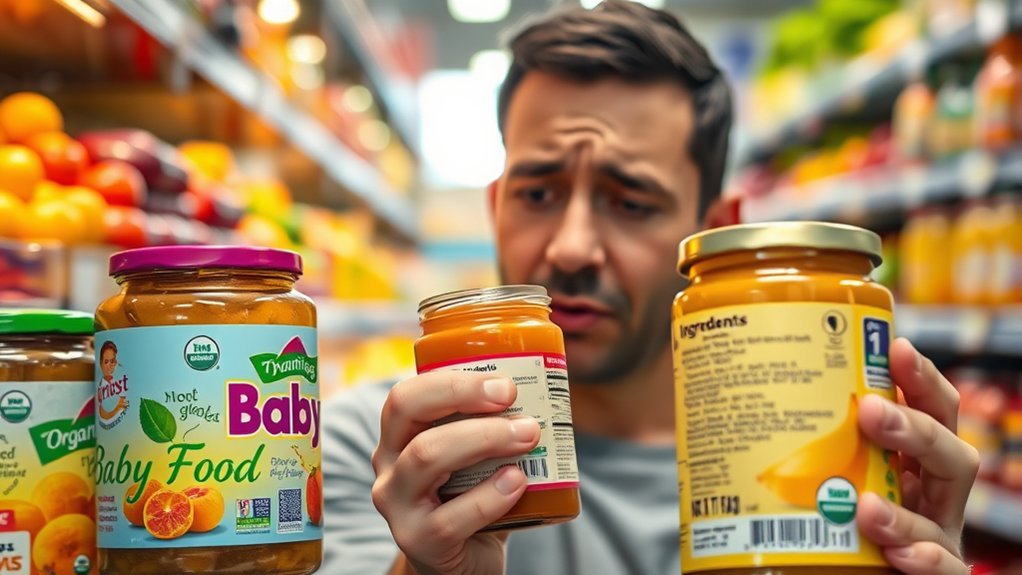
No baby food can be guaranteed to contain zero lead or other environmental contaminants. The most useful strategy is to reduce repeated exposure while continuing to provide the nutrients your baby needs.
- Serve a varied diet: Rotate fruits, vegetables, grains, dairy foods, proteins, and age-appropriate textures. The FDA recommends variety because it reduces the chance that one food will repeatedly provide the same contaminant. See the FDA’s healthy food guidance for babies aged 6 to 12 months.
- Rotate grains: Do not rely only on rice cereal. Offer iron-fortified oat, barley, multigrain, or other age-appropriate cereals as part of the rotation.
- Choose whole fruit instead of juice: Pureed, mashed, or soft whole fruit provides more fiber and nutrition. The FDA advises waiting until at least age 1 before offering fruit juice.
- Choose lower-mercury fish: When your baby is developmentally ready, select age-appropriate fish from the FDA and EPA “Best Choices” list.
- Wash produce under running water: Washing and peeling can remove dirt and contaminated surface soil. They cannot remove lead or another metal that the plant absorbed while growing.
- Use safe water: Prepare cereal and other foods with cold tap water. Test the water if your home has a lead service line, older plumbing, or another known risk.
- Check recalls by product and lot number: Use the FDA’s current recall and safety-alert database rather than relying on an old list of brands.
Pro Tip: Keep a simple weekly feeding log. If rice cereal, sweet potatoes, carrots, or another favorite appears almost every day, swap in different grains, vegetables, and proteins rather than eliminating a nutritious food entirely.
Power your essentials anywhere with a 999Wh pure sine wave power station delivering up to 1000W continuous with 2000W surge. It supports fast charging via USB-C PD 60W and USB-A QC 18W, plus simultaneous output for multiple devices through AC, USB, wireless, and car/DC ports. Recharge using AC, car, or solar with a built-in MPPT controller and dual cooling fans, while the upgraded battery management system protects against surges, short circuits, and overheating.

HEAVY METAL TESTED — A cleaner alternative to traditional baby rice cereal. Every batch independently third-party tested for arsenic, lead, cadmium, and mercury. Clean from the very first bite.
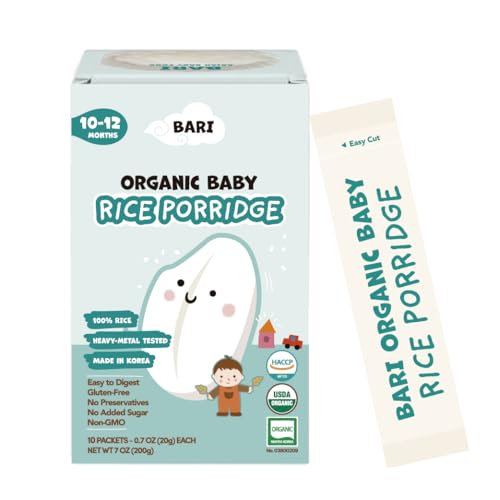
HEAVY METAL TESTED — A cleaner alternative to traditional baby rice cereal. Every batch independently third-party tested for arsenic, lead, cadmium, and mercury. Clean from the very first bite.
What Are Heavy Metals and Why Are They a Concern in Baby Food?
Lead, arsenic, cadmium, and mercury are often grouped together as heavy metals or toxic elements. They occur naturally in the earth’s crust, but mining, manufacturing, fuel use, old paint, pesticides, waste, and other pollution can increase their concentrations in the environment.
Plants and animals may take up these elements from soil, water, feed, and air. They can also enter food through contaminated water, ingredients, processing aids, food-contact surfaces, or packaging. The FDA’s Closer to Zero initiative is intended to reduce dietary exposure to lead, inorganic arsenic, cadmium, and mercury in foods commonly eaten by babies and young children.
Note: “Detected” does not mean “poisonous.” Modern laboratory methods can measure extremely small amounts. Whether a result presents a health concern depends on the concentration, the amount eaten, how often it is eaten, the child’s age, and exposure from other sources.
Infants and toddlers deserve special protection because they eat more food relative to their body weight than adults, and their brains and nervous systems are still developing. However, parents should not remove entire food groups without medical guidance. Many foods that may contain trace environmental contaminants are also important sources of iron, calcium, protein, vitamins, and healthy fats.
How Do Heavy Metals Affect Your Baby’s Health?
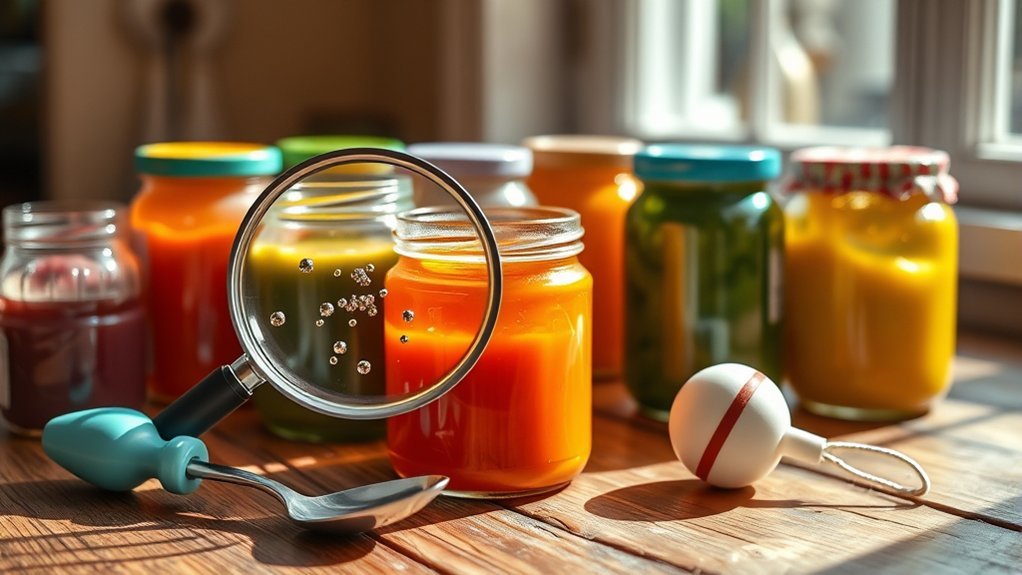
Lead can harm the developing brain and nervous system. Childhood exposure has been associated with slower growth and development, learning and behavior problems, hearing or speech problems, reduced attention, and lower cognitive performance. The CDC states that no safe blood lead level in children has been identified.
That statement does not mean every detectable amount in food causes an immediate injury. A child’s health risk depends on the dose and total exposure over time. Food is also only one possible source. Lead paint, household dust, contaminated soil, water, imported spices or remedies, and certain adult jobs or hobbies may contribute to exposure.
Arsenic, cadmium, and mercury have different effects:
- Inorganic arsenic can affect neurological development when exposure is high or prolonged. Rice tends to absorb more arsenic than many other grains.
- Cadmium can build up in the body over time and may affect the kidneys and bones at harmful exposure levels.
- Mercury, especially methylmercury from certain fish, can affect the developing nervous system. Lower-mercury fish still provide valuable protein, fats, vitamins, and minerals.
A balanced diet with adequate iron and calcium supports healthy development. If a blood test shows elevated lead, a clinician may recommend nutrition support as part of a broader plan to identify and stop the exposure. Food is not a substitute for environmental correction or medical follow-up.
How Does Lead End Up in Baby Food?
Lead may enter baby food at several points between the farm and the finished jar, pouch, tub, cereal box, or homemade meal.
Contaminated Soil and Crop Uptake
Lead occurs naturally in some soil and can also remain from older industrial activity, leaded gasoline emissions, exterior paint, mining, waste, and other pollution. Crops grown in affected soil may take up small amounts through their roots. Soil particles can also cling to the outside of produce.
Root vegetables have direct contact with soil, which is one reason the FDA uses a different lead action level for single-ingredient root-vegetable baby foods. Washing and peeling can reduce surface dirt, but they cannot remove lead that has entered the plant tissue.
If you grow food at home in an older urban area, near a busy roadway, beside a pre-1978 building, or on land with an industrial history, ask your local extension service or health department about soil testing. Use clean raised-bed soil when contamination is known or suspected.
Water Used for Growing, Cooking, or Processing
Irrigation water can expose crops to environmental contaminants. At home, lead can enter tap water when lead service lines, solder, faucets, or fixtures corrode. Homes and neighborhoods with older plumbing may have a higher risk, but the age of the house alone cannot confirm whether lead is present.
The EPA states that laboratory testing is the only way to know the lead concentration in a particular home’s water. Use a state-certified laboratory and follow its sample-collection directions carefully.
- Use water from the cold tap for drinking and food preparation.
- Do not use hot tap water to prepare cereal, formula, or baby food because hot water can dissolve lead more quickly.
- Boiling does not remove lead and may concentrate it as water evaporates.
- If filtration is needed, choose a product specifically certified to reduce lead and replace cartridges on schedule.
- Contact the water utility or a licensed plumber to identify the service-line and plumbing materials.
Ingredients, Processing, and Packaging
Manufacturing does not create all heavy-metal contamination. In many cases, the metal is already present in agricultural ingredients. However, processing can introduce or concentrate contaminants when a company uses affected water, poorly controlled ingredients, contaminated processing aids, unsuitable food-contact materials, or inadequate supplier testing.
Responsible manufacturers can lower concentrations through careful sourcing, soil and water controls, ingredient testing, supplier verification, equipment maintenance, sanitation, and rejection of lots that do not meet specifications.
| Contamination Point | How It Can Affect Food | Useful Control |
|---|---|---|
| Soil and irrigation | Crops absorb contaminants or carry contaminated soil. | Farm assessment, soil and water controls, washing, peeling, and ingredient testing. |
| Incoming ingredients | One high-concentration ingredient can affect an entire production lot. | Supplier verification and representative lot testing. |
| Process water | Contaminated water may be added directly or used during processing. | Water monitoring, treatment, plumbing controls, and corrective action. |
| Processing and packaging | Unsuitable materials or poor controls may introduce contaminants. | Food-contact compliance, preventive controls, maintenance, and finished-product testing. |
Common Sources of Lead Exposure Around Babies
Food deserves careful oversight, but it should be considered alongside other possible lead sources. According to the American Academy of Pediatrics, older paint and household dust remain major sources of childhood exposure.
| Possible Source | What Parents Should Know | Practical Action |
|---|---|---|
| Older paint and dust | Paint in homes built before 1978 may contain lead. Renovation can release contaminated dust. | Keep babies away from peeling paint and use lead-safe renovation practices. |
| Drinking water | Service lines, solder, faucets, and fixtures can release lead. | Test through a certified laboratory and use an appropriate certified filter when needed. |
| Soil | Exterior paint, traffic emissions, and industry may leave lead in soil. | Cover bare soil, wash hands, remove shoes, and test gardens when risk factors exist. |
| Food and spices | Contaminants may be naturally absorbed, introduced by pollution, or added through unsafe production. | Serve varied foods and buy products from regulated, traceable sources. |
| Jobs, hobbies, and cultural products | Construction dust, shooting ranges, pottery glazes, cosmetics, remedies, or imported products may contain lead. | Change clothes, wash hands, separate work items, and discuss possible sources with a clinician. |
What Are the FDA Action Levels for Lead in Baby Food?
In January 2025, the FDA issued final guidance for processed food represented as being for babies and children younger than 2. The guidance lists the following lead action levels:
| Processed Food Category | FDA Lead Action Level |
|---|---|
| Fruits, vegetables other than single-ingredient root vegetables, mixtures, yogurts, custards, puddings, and single-ingredient meats | 10 parts per billion |
| Single-ingredient root vegetables | 20 parts per billion |
| Dry infant cereals | 20 parts per billion |
An FDA action level is not a promise that every amount below it is risk-free. It is a concentration at which the agency may consider a food adulterated when deciding whether enforcement action is appropriate.
The guidance reflects FDA’s current recommendations and is not itself a legally enforceable regulation. Manufacturers are still responsible for producing food that complies with federal food-safety law and for reducing preventable chemical hazards.
The action levels are also not intended to tell parents to avoid the covered food categories. FDA recommends a varied, nutrient-dense diet rather than removing vegetables, grains, meat, or dairy foods because of the possibility of trace contaminants.
Are Organic Baby Foods Safer From Heavy Metals?
Organic baby food is not automatically lower in lead, arsenic, cadmium, or mercury. Organic certification may reduce exposure to certain pesticides, but environmental metals can occur naturally or result from pollution in the same soil, water, and air used by conventional farms.
Organic Versus Conventional Food
Either type can be part of a healthy diet. Instead of treating the organic label as a heavy-metal certification, consider:
- Whether your baby receives a varied mix of foods and ingredients.
- Whether the manufacturer identifies products and lots clearly.
- Whether current recalls or FDA alerts affect the product.
- Whether the company explains its ingredient-sourcing and contaminant-testing program.
- Whether the food is appropriate for your baby’s age, texture skills, allergies, and nutritional needs.
A company’s statement that it tests for heavy metals can be useful, but results may not be directly comparable unless the company publishes the laboratory method, detection limits, sampling plan, product lot, and numerical findings.
Homemade Versus Packaged Baby Food
Homemade baby food gives you control over ingredients, texture, salt, sugar, and portion size. It may also reduce contamination opportunities associated with some processing or packaging. However, it cannot remove metals that were already absorbed by the fruit, vegetable, or grain.
Packaged baby food is not automatically more contaminated, and homemade food is not automatically safer. Both approaches benefit from varied ingredients, safe water, good hygiene, correct storage, and age-appropriate preparation.
Note: Do not buy a home heavy-metal test kit for food and use the result to make medical decisions. Reliable testing requires validated laboratory methods, careful sampling, quality controls, and expert interpretation.
Which Foods Should Parents Vary Rather Than Avoid?
The goal is not to create a long list of forbidden foods. A better approach is to avoid serving the same higher-exposure food many times each day while keeping the diet nutritionally balanced.
Rice and Infant Cereal
Rice absorbs more inorganic arsenic than many other grains. Iron-fortified rice cereal can still provide useful nutrition, but it should not be the only cereal your baby eats. Rotate it with oat, barley, multigrain, and other iron-rich options.
The FDA has established an action level of 100 ppb for inorganic arsenic in infant rice cereal. When preparing ordinary rice for older babies or toddlers, rinsing it and cooking it in extra water that is drained afterward can reduce some inorganic arsenic, although this method may also reduce nutrients.
Root Vegetables
Carrots, sweet potatoes, beets, and other root vegetables grow in direct contact with soil. They should not be eliminated because they provide fiber, vitamins, color, and texture variety. Rotate them with peas, beans, squash, broccoli, cauliflower, avocado, and other vegetables.
Fruit and Fruit Juice
Offer mashed, pureed, or soft whole fruit instead of juice. Whole fruit provides fiber and is more filling. Babies younger than 12 months generally should not receive fruit juice unless a clinician recommends it for a specific reason.
Fish
Fish provides protein, healthy fats, vitamins, and minerals. Choose lower-mercury options and age-appropriate portions instead of avoiding all seafood. Examples on the FDA and EPA “Best Choices” list include salmon, pollock, cod, shrimp, and canned light tuna.
How Are Manufacturers and Regulators Lowering Heavy Metals?
Manufacturers can reduce contamination through:
- Selecting farms and regions with lower contaminant levels.
- Testing soil, irrigation water, and high-risk ingredients.
- Setting supplier specifications and rejecting nonconforming lots.
- Using safe process water and suitable food-contact materials.
- Applying preventive controls during processing and packaging.
- Testing representative finished-product lots.
- Maintaining records that allow affected lots to be traced and recalled.
The FDA tests foods for arsenic, lead, cadmium, and mercury to monitor the food supply, guide policy, support compliance work, and investigate potential problems. Its public testing-results page contains datasets from different sampling programs and years.
Those datasets should be interpreted carefully. They may be targeted to particular products or risks and do not necessarily estimate the percentage of all baby food that is unsafe.
Can Parents Recognize Lead Exposure From Symptoms?
Usually not. Most children with lead in their blood have no obvious immediate symptoms. A baby can appear healthy while still having been exposed.
At higher exposure levels, children may develop symptoms such as abdominal pain, vomiting, constipation, unusual tiredness, irritability, appetite loss, weakness, or neurological problems. These symptoms have many possible causes and should not be used to diagnose lead exposure at home.
Long-term effects may involve development, learning, speech, hearing, behavior, growth, or attention. Developmental differences also have many causes, so a pediatric evaluation is needed.
Warning: Do not wait for symptoms if there is a known exposure. Contact a healthcare professional promptly if your child swallowed paint chips or another suspected lead-containing object, consumed a product recalled for lead, or had substantial contact with contaminated dust or water.
When Should Parents Consult a Pediatrician?
Ask your child’s pediatrician about lead testing when:
- Your child consumed a food specifically recalled for elevated lead.
- Your home has peeling paint, renovation dust, or another possible lead hazard.
- Your drinking water has tested high for lead or a lead service line is present.
- A household member works with lead, shoots firearms, restores furniture, makes stained glass, works with batteries, or has another lead-related hobby or occupation.
- Your child has pica or regularly puts soil, paint chips, pottery, jewelry, or other nonfood objects in their mouth.
- Your local health department identifies the neighborhood or housing as high risk.
- Your child has developmental concerns that need medical evaluation.
A blood lead test is the best way to determine whether a child has been exposed. CDC currently uses a blood lead reference value of 3.5 micrograms per deciliter to identify children whose results are higher than those of most U.S. children. The reference value is not a safe-versus-unsafe cutoff.
Children enrolled in Medicaid are required to receive lead testing at ages 12 and 24 months and between ages 24 and 72 months if they have no record of a previous test. Other children may be tested according to local risk, state requirements, and their healthcare provider’s assessment.
Hair testing and unvalidated mail-order “toxin” panels are not recommended substitutes for a properly collected and interpreted blood test.
What Should You Do After a Baby-Food Recall?
- Stop serving the product. Separate it from other food so another caregiver does not use it accidentally.
- Match the exact details. Check the brand, product name, package size, UPC, lot code, and best-by date. A recall may affect only specific lots.
- Keep the packaging temporarily. The label and lot code may be needed for a refund, report, or medical discussion.
- Follow official instructions. Return or discard the product as directed by the FDA, retailer, or manufacturer.
- Contact your pediatrician when advised. This is especially important if the recall involves lead or another toxic element and your child ate the affected product.
- Do not induce vomiting or start supplements. Medical testing and treatment depend on the substance, dose, timing, and the child’s test results.
Frequently Asked Questions
What government rules exist for lead in baby food?
FDA’s January 2025 final guidance recommends action levels of 10 ppb for several processed-food categories and 20 ppb for single-ingredient root vegetables and dry infant cereals intended for children younger than 2. The guidance describes FDA’s current enforcement approach but is not itself a legally binding regulation.
How can I test my home or water for lead?
Use a certified lead professional for paint or dust concerns and a state-certified laboratory for drinking water. Contact your health department or water utility for local programs. Consumer swabs may help screen some surfaces, but they cannot replace a professional risk assessment or certified water analysis.
Are homemade baby foods safer from lead?
Not automatically. Homemade food gives you control over ingredients and preparation, but produce and grains may absorb contaminants before you buy them. Use safe water, wash produce, rotate ingredients, and avoid relying on one food every day.
Is organic baby food lower in heavy metals?
Organic certification does not guarantee lower lead, arsenic, cadmium, or mercury. These contaminants may occur naturally or come from pollution in soil and water. Organic and conventional foods can therefore have similar heavy-metal concentrations.
Can washing or peeling produce remove lead?
Washing under running water and peeling can remove dirt and contaminated soil from the surface. They cannot remove lead or another metal that the plant absorbed internally while growing.
Which baby-food brands are safest?
There is no permanent, independently verified list of brands that are always lowest in every heavy metal. Recipes, suppliers, lots, and recall status change. Check current FDA alerts, review lot information, look for meaningful testing transparency, and serve foods from varied sources.
How often should I check for baby-food recalls?
There is no required monthly schedule. Check FDA alerts when you hear about a recall, before using an unfamiliar or stored product, and whenever the package or food seems abnormal. You can also subscribe to FDA recall notifications for automatic updates.
Should my baby receive a blood lead test after eating packaged baby food?
Eating ordinary packaged baby food alone does not mean a child needs extra testing. Discuss testing with a pediatrician when a recalled product was consumed or when food exposure occurs alongside risks such as old paint, contaminated water, renovation dust, or occupational lead.
Conclusion
Lead can reach baby food through soil, water, air, agricultural ingredients, and processing, but parents do not need to eliminate nutritious food groups out of fear. Serve a varied diet, rotate grains and vegetables, choose whole fruit and lower-mercury fish, use tested water, and follow current recall notices.
Remember that food is only one possible source of childhood lead exposure. Address old paint, household dust, soil, plumbing, and work-related hazards as well. Because most exposed children have no obvious symptoms, discuss a blood lead test with your pediatrician whenever a known or credible exposure has occurred.
Sources
- FDA: Action Levels for Lead in Processed Food Intended for Babies and Young Children — January 2025 action levels and their regulatory meaning.
- FDA: Healthy Food Choices for Babies Aged 6 to 12 Months — varied-diet and environmental-contaminant guidance.
- CDC: Testing for Lead Poisoning in Children — blood testing, reference values, and testing recommendations.
- CDC: Lead Exposure Symptoms and Complications — developmental effects and the absence of obvious symptoms in many children.
- EPA: Basic Information About Lead in Drinking Water — plumbing sources, service lines, and household water risks.
- American Academy of Pediatrics: Heavy Metals in Baby Food — practical food, organic, homemade-food, water, and household-exposure guidance.