
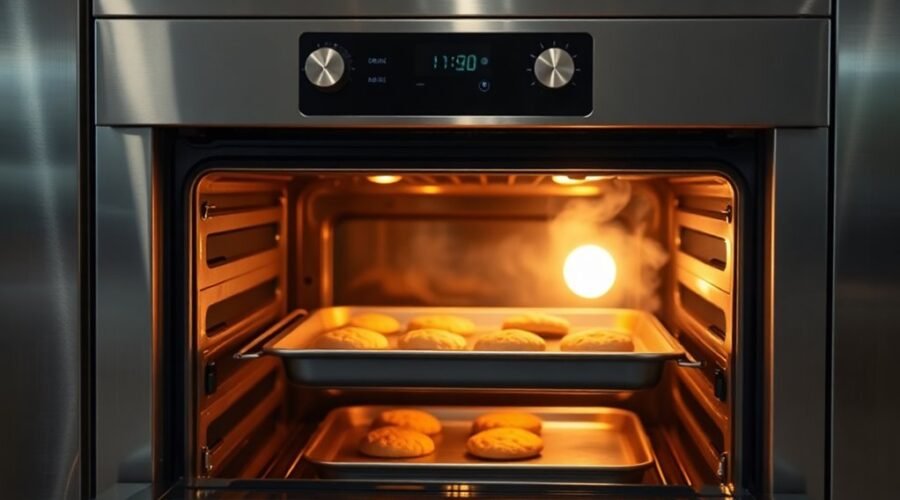
Yes—do convection ovens cook faster than conventional ovens? In most roasting and baking tasks, convection ovens cook 20% to 25% faster because a built-in fan and exhaust system continuously circulate hot, dry air across the food surface. To avoid overbrowning the exterior before the center finishes, follow the standard rule of thumb: reduce the recipe temperature by 25°F (15°C) or cut the cooking time by 20% to 25%.
Why Do Convection Ovens Cook Faster? Airflow Physics Explained

In a conventional (static) oven, heat radiates from the top and bottom elements while air inside the cavity stays relatively still. As food heats up, a thin, cooler layer of moisture-heavy air—called a thermal boundary layer—clings to its surface and slows down heat transfer.
A convection oven breaks up that insulating boundary layer using a rear fan and an exhaust vent. Moving hot air contacts the food surface continuously, transferring thermal energy much faster while venting excess steam out of the cavity. That lower-humidity environment accelerates Maillard browning and caramelization, producing crisper roasted vegetables, flakier pastries, and browner poultry skin without cranking up the thermostat.
The 25°F Temperature Rule vs. 20–25% Time Reduction
Because forced-air heat transfer is more intense than radiant heat alone, conventional recipes usually need a simple adjustment when you switch to convection mode:
- For baked goods (cookies, pies, pastries, casseroles): Lower the oven temperature by 25°F (about 15°C) and start checking for doneness when 75% to 80% of the conventional cook time has passed.
- For roasted meats and poultry: Keep the recipe temperature the same if you want crisp skin, and expect the meat to finish 20% to 25% faster—always confirm doneness with an instant-read thermometer rather than relying solely on the clock.
- Check for Auto Convection Convert: Many modern wall ovens and ranges automatically subtract 25°F when you select Convection Bake, so check your owner’s manual before manually lowering the temperature twice.
If you are roasting a holiday bird, our step-by-step guide on how to cook a turkey in a convection oven walks through exact 325°F timing and safe internal temperature targets.
Conventional vs. Convection Temperature & Time Conversion Chart
Use this quick reference chart to convert standard still-air recipes to convection settings. Begin checking food at the lower end of the convection time range.
| Conventional Temp | Convection Temp (−25°F) | Conventional Time | Est. Convection Time (−20% to 25%) | Best Dishes |
|---|---|---|---|---|
| 300°F (150°C) | 275°F (135°C) | 60 minutes | 45–48 minutes | Slow-braised meats, meringues |
| 325°F (165°C) | 300°F (150°C) | 90 minutes | 68–72 minutes | Whole poultry, large roasts |
| 350°F (175°C) | 325°F (165°C) | 45 minutes | 34–36 minutes | Cookies, multi-rack baking, casseroles |
| 375°F (190°C) | 350°F (175°C) | 30 minutes | 22–24 minutes | Fruit pies, tarts, sheet-pan chicken |
| 400°F (205°C) | 375°F (190°C) | 30 minutes | 22–24 minutes | Roasted root vegetables, puff pastry |
| 425°F (220°C) | 400°F (205°C) | 25 minutes | 19–20 minutes | Crisp potatoes, blistered Brussels sprouts |
| 450°F (230°C) | 425°F (220°C) | 20 minutes | 15–16 minutes | Flatbreads, thin-crust pizza, high-heat sear |
True European Convection vs. Regular Fan Convection
Not every oven labeled “convection” heats the same way. Understanding which system your kitchen uses explains why some models cook more evenly across multiple racks:
- Regular (Standard) Convection: Uses a fan in the back wall to blow air heated by the standard bottom bake and top broil elements. It speeds up cooking and reduces hot spots compared to a still oven, though racks closest to the bottom element can still brown faster.
- True European (Third-Element) Convection: Places a dedicated third ring-shaped heating element directly around the rear fan. Air is heated as it enters the cavity, keeping temperatures remarkably consistent from top rack to bottom rack—ideal for baking three sheets of cookies simultaneously.
If you are shopping for a built-in or countertop upgrade with third-element heating, compare top performers in our roundup of the best premium convection ovens. For tighter kitchens that combine microwaving and forced-air baking in one footprint, see our review of the GE Café convection over-the-range microwave oven.
When NOT to Use Convection Mode
Faster, drier airflow is not an advantage for every recipe. Switch back to conventional (static) Bake mode for foods that rely on gentle, still heat or trapped surface moisture to rise properly:
- Soufflés and Popovers: Strong directional airflow can push fragile rising tops off-center or set the crust too early before the interior expands.
- Custards, Flans, and Cheesecakes: These egg-based desserts need slow, moist, even heat; convection airflow dries the surface and increases the risk of cracking or curdling.
- Quick Breads (Banana Bread, Zucchini Bread, Muffins): Moving air sets the outer batter quickly, often producing a peaked, cracked dome while the dense center remains underbaked.
- Delicate Layer Cakes and Sponge Cakes: Loose batters can ripple or bake unevenly under a strong fan, and thin cake layers dry out rapidly if left in even a few minutes too long.
- Open-Baked Hearth Breads (First Stage): Artisan loaves baked on a stone need steam during the first 15–20 minutes for maximum oven spring; convection exhausts that steam and hardens the crust prematurely. (Baking inside a covered Dutch oven shields the dough from the fan.)
Practical Tips for Reliable Convection Results
- Use low-sided pans: Rimmed baking sheets and shallow roasting pans let moving air reach the sides of the food; tall-sided roasting pans block circulation.
- Leave space between pans: Keep at least 1 to 2 inches of clearance around pans and away from oven walls so the rear fan can circulate air freely.
- Pat proteins and vegetables dry: Removing surface water before roasting lets convection airflow brown food immediately instead of spending energy evaporating puddles.
- Avoid covering oven racks with foil: Foil across a rack chokes airflow and traps heat underneath, creating burnt bottoms and pale tops.
- Verify with an oven thermometer: If your convection bakes consistently run dark even after a 25°F drop, check cavity accuracy with a standalone oven thermometer and adjust in 5°F to 10°F increments.
Frequently Asked Questions
How much faster do convection ovens cook than conventional ovens?
Convection ovens typically cook food about 20% to 25% faster than conventional still-air ovens. For baking, most appliance makers recommend lowering the recipe temperature by 25°F (15°C) and checking for doneness 20% to 25% early.
What is the difference between true European convection and regular convection?
Regular fan convection uses a rear fan to circulate heat from the top and bottom elements. True European convection adds a dedicated third ring heating element around the fan, delivering more uniform temperatures across multiple racks.
Which foods should you not bake in a convection oven?
Avoid convection mode for delicate rising batters and custards—including soufflés, cheesecakes, flans, quick breads like banana bread, and loose-batter layer cakes—because fast-moving air can dry and set the crust before the center rises evenly.
Can you use aluminum foil in a convection oven?
Yes, you can line baking sheets with aluminum foil, provided the edges are tucked securely so the fan cannot lift the foil into the heating elements. Never cover oven racks or block rear fan vents, as restricted airflow causes uneven cooking.
Do convection ovens need longer preheating than standard ovens?
No. Convection ovens usually preheat in the same amount of time or slightly faster than conventional ovens because the circulating fan distributes warm air evenly throughout the cavity from the start.


[…] For those seeking versatility in their kitchen, the CHEFMAN Multifunctional Digital Air Fryer (10L) stands out as an exceptional choice. With its 10-quart capacity, you can easily air fry, dehydrate, roast, or bake without needing to preheat, thanks to rapid air heating elements. You’ll love the 17 touch screen presets for hassle-free operation and the health benefits of using 98% less oil. The included accessories make cooking and cleanup a breeze, while the large window and interior lights let you monitor your food. Backed by a one-year warranty, this 120V countertop air fryer oven is built for quick single- or two-person meals. To understand why fan-driven heat speeds up cooking, see our guide on whether convection ovens cook faster. […]