
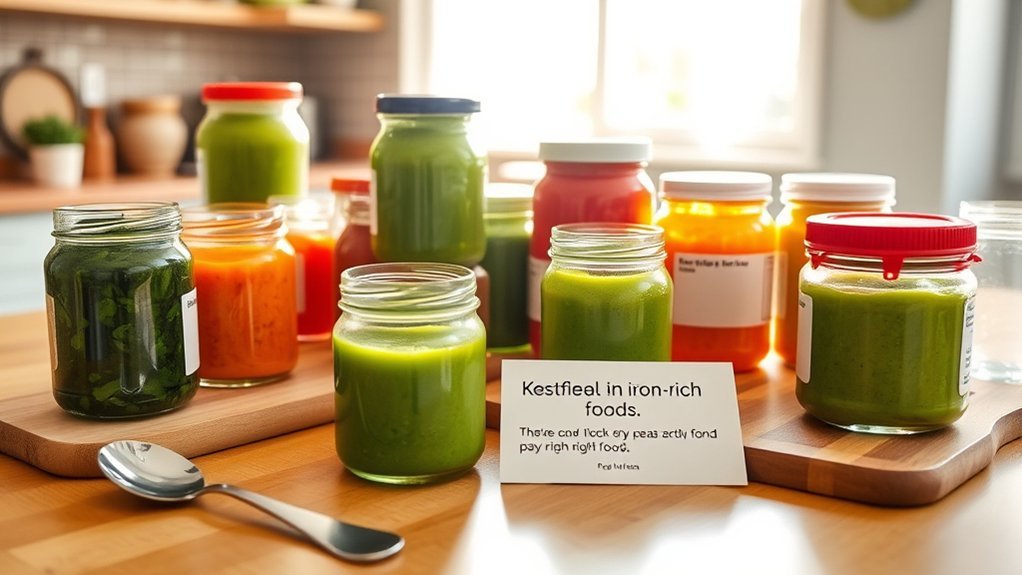
Yes, baby food can be a great source of iron, which is essential for your baby’s growth and brain development. Infants need 11 mg of iron daily, especially after six months when their iron stores deplete. Look for pureed meats, iron-fortified cereals, and dark leafy greens. Pairing these with vitamin C-rich foods can enhance absorption. However, iron deficiency is a risk for breastfed infants, so it’s important to choose the right foods. Discover more tips on keeping your baby’s iron levels healthy.
Key Takeaways
- Many baby foods, especially iron-fortified cereals, contain significant amounts of iron essential for infants’ growth and development.
- Pureed meats, such as beef and chicken, are excellent sources of heme iron, crucial for hemoglobin production.
- Non-heme iron is found in dark leafy greens and legumes, but should be paired with vitamin C-rich foods to enhance absorption.
- Exclusively breastfed infants are at higher risk for iron deficiency, making it vital to monitor iron intake from solid foods.
- Always check nutrition labels for iron content and choose whole ingredients to ensure quality nutrition for your baby.
What Is Iron’s Role in Baby Nutrition?
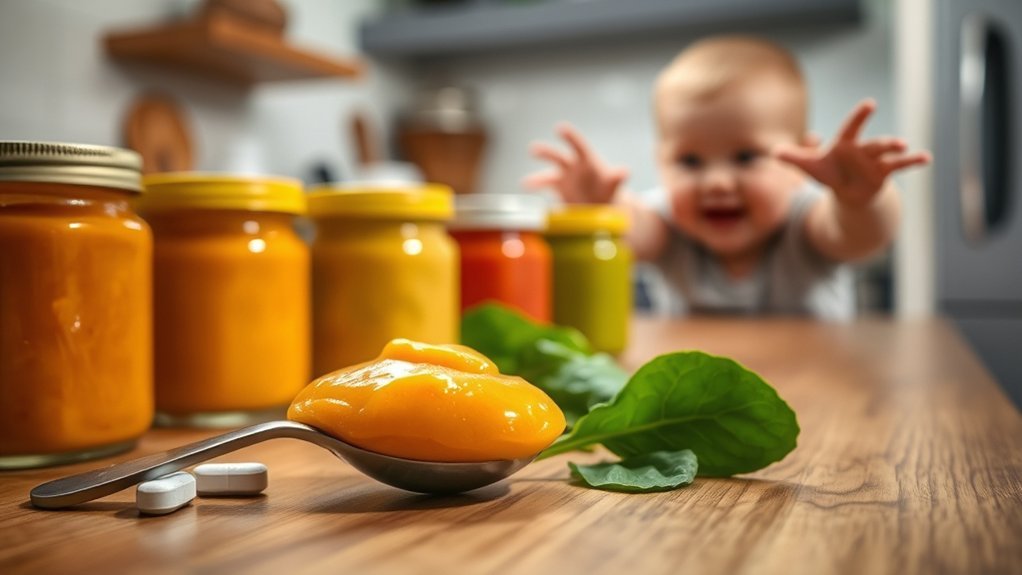
Iron plays an essential role in your baby’s nutrition, acting as a key player in the production of hemoglobin, which is important for transporting oxygen throughout the body.
Adequate iron is critical for healthy iron metabolism, directly impacting your child’s growth and brain development. As your baby reaches developmental milestones, from rolling over to walking, iron helps guarantee they’ve the energy and cognitive function needed to thrive.
Between 7-12 months, infants need 11 mg of iron daily, as their initial stores deplete. Without enough iron, they risk anemia, which can lead to tiredness, weakness, and potential delays.
Including both heme and non-heme iron sources, along with vitamin C-rich foods, is essential for enhancing absorption and supporting your baby’s health.
How Much Iron Do Babies Really Need?
While your baby’s iron needs may vary, understanding the specific requirements for different age groups is crucial for their development. Here’s what you should know about daily requirements:
- Babies aged 7-12 months need 11 mg of iron daily.
- Children aged 1-3 years require 7 mg.
- Kids aged 4-8 years need 10 mg each day.
Iron needs increase during growth spurts, especially in infancy.
To guarantee your baby gets enough iron, focus on iron sources like iron-fortified cereals, ground meats, and pureed legumes.
Remember, heme iron from animal products is absorbed more easily than non-heme iron from plants.
If you’re exclusively breastfeeding, consult your pediatrician about iron supplements starting around 6 months to meet those crucial requirements.
Which Baby Foods Are Naturally Rich in Iron?
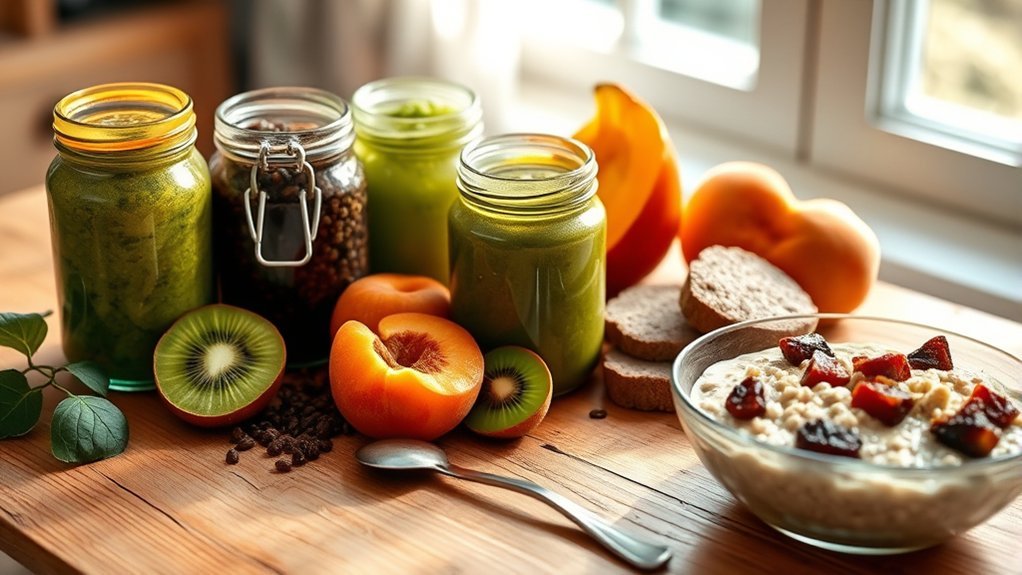
Are you wondering which baby foods can help meet your little one’s iron needs? Pureed meats like beef, chicken, and turkey are fantastic sources of heme iron, which your baby’s body absorbs easily. Incorporating these can greatly boost their iron intake.
Additionally, consider adding dark leafy greens such as spinach and kale. While these contain non-heme iron, cooking and pureeing them makes it easier for your baby to digest.
Iron-fortified cereals are also great, providing around 5-6 mg of iron per serving, which meets a substantial part of their daily requirement.
Enhancing Iron Absorption in Baby Foods
To guarantee your baby absorbs enough iron from their foods, it’s important to contemplate how you prepare and pair their meals.
Combining non-heme iron sources with vitamin C-rich foods can greatly boost absorption, while cooking in cast-iron cookware adds even more iron.
Pairing With Vitamin C
When you’re introducing solid foods to your baby, pairing non-heme iron sources with vitamin C-rich foods can greatly boost iron absorption.
This nutrient synergy can make a significant difference in your little one’s diet. Consider these delicious combinations:
- Serve iron-fortified cereals with mashed strawberries for a tasty breakfast.
- Pair pureed legumes with citrus combinations like orange segments.
- Mix sweet potatoes with a side of mashed avocado.
- Add broccoli or bell peppers to iron-rich meals for extra flavor.
Vitamin C can enhance iron absorption from non-heme sources by up to four times, ensuring your baby gets the nutrients they need for healthy growth and development.
Embrace these combinations to support your baby’s journey into solid foods!
Choosing Heme Iron Sources
Including heme iron sources in your baby’s diet is essential for ensuring they get enough iron during their rapid growth phase. Heme iron, found in animal products like meat and fish, is more readily absorbed by the body than non-heme iron from plant sources.
Introducing pureed meats, poultry, and fish around six months can greatly boost your baby’s iron intake, aiding hemoglobin formation and helping prevent iron deficiency anemia. Cooking with cast-iron pans can also add extra iron to their meals.
To enhance absorption further, pair these heme iron sources with vitamin C-rich foods, such as mashed sweet potatoes or fruits. This thoughtful approach empowers you to support your child’s nutritional needs effectively.
Cooking Methods Impact Absorption
Cooking methods play an essential role in how well your baby absorbs iron from their food. By choosing the right cooking techniques, you can maximize nutrient preservation and enhance your child’s health.
Here’s how you can optimize iron absorption:
- Steam or sauté instead of boiling to preserve nutrients.
- Pair non-heme iron sources with vitamin C-rich ingredients to boost absorption.
- Use cast-iron cookware to increase iron content in meals.
- Cook meat to break down proteins, making heme iron more accessible.
Risks of Iron Deficiency in Infants
Many parents may not realize that iron deficiency is a significant risk for infants, especially those who are exclusively breastfed.
By six months, their iron stores usually deplete, making it critical to guarantee they get enough iron daily—11 mg for babies aged 7-12 months.
Without adequate intake, you might notice iron deficiency symptoms like tiredness and weakness, which can lead to anemia and developmental delays.
Furthermore, insufficient iron during these essential growth periods could impair cognitive development and learning later on.
It’s important to introduce iron-rich solid foods, like iron-fortified cereals and pureed meats, while considering iron absorption factors that can affect how well your baby utilizes the iron they consume.
Regular check-ups with your healthcare provider can help prevent these risks.
Choosing the Right Iron-Fortified Baby Foods?
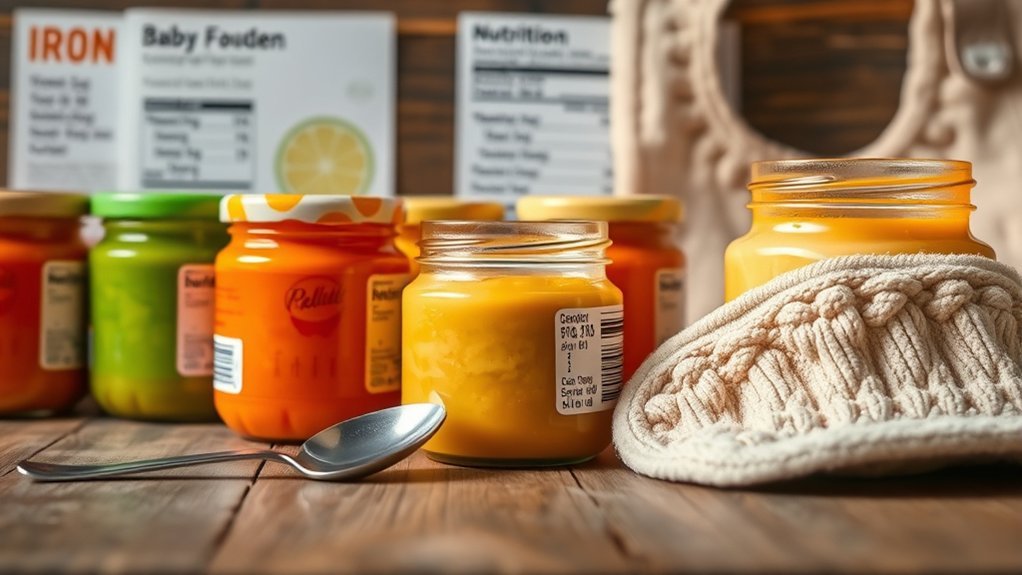
Choosing the right iron-fortified baby foods is vital for your little one’s growth and brain development.
You’ll want to prioritize options like iron-fortified cereals and meat-based purees, as these provide the essential iron your baby needs.
Always check the labels to guarantee the foods are fortified and meet their daily iron requirements.
Importance Of Iron Intake
When it comes to your baby’s nutrition, guaranteeing adequate iron intake is vital for their growth and brain development.
Iron plays a significant role, especially during infancy and toddlerhood. Here’s why you should prioritize it:
- Supports healthy brain function
- Promotes physical growth and development
- Prevents iron deficiency anemia
- Enhances overall well-being
To optimize iron absorption, include both heme iron from meats and non-heme iron from plant sources in their diet.
Iron-fortified cereals are a great choice, especially when paired with vitamin C-rich foods.
Consulting with your healthcare provider can help tailor iron supplementation or dietary sources based on your baby’s needs, particularly if they’re breastfed.
Regularly monitoring their iron levels guarantees they thrive and reach their full potential.
Iron-Rich Food Options
Ensuring your baby gets enough iron doesn’t just rely on understanding its importance; it also means knowing which foods can help you meet their needs.
Iron-fortified cereals are excellent, providing 7-11 mg of iron per serving. Incorporate iron-rich vegetables like spinach and lentils into their diet, but remember that non-heme iron in plants is best absorbed when paired with vitamin C-rich foods, like pureed oranges or strawberries.
Heme iron from pureed meats and poultry is even more easily absorbed, so consider including these options as well. The American Academy of Pediatrics recommends 11 mg of iron daily for babies aged 6-12 months, so choosing iron-rich grains and fortified products is essential for your child’s growth and development.
Reading Nutrition Labels
How can you be certain you’re picking the right iron-fortified baby foods for your little one? Start with label comprehension to guarantee you’re making informed choices.
Look for these key factors:
- Iron Content: Check if it provides a significant percentage of daily iron needs.
- Type of Iron: Prioritize heme iron from meat sources for better absorption.
- Whole Ingredients: Choose options with minimal additives or sugars.
- Complementary Ingredients: Pair with vitamin C-rich foods for enhanced absorption.
Frequently Asked Questions
Can I Make My Own Iron-Fortified Baby Food at Home?
Yes, you can make your own iron-fortified baby food at home! Try baby food recipes that include lentils, spinach, or iron-rich cereals blended into homemade purees, ensuring your little one gets essential nutrients in every bite.
Are There Specific Brands Known for High Iron Content?
You’ll find several high iron brands that cater to your baby’s needs. Look for baby food options like Gerber, Happy Baby, or Earth’s Best; they’re known for their iron-fortified products, ensuring your little one stays healthy.
How Can I Tell if Baby Food Is Iron-Fortified?
Check the nutrition label for “iron” or “iron-fortified.” You’ll find this information in the ingredients. Ensuring proper iron absorption is essential for your baby’s nutrition, so choose products that meet these criteria for ideal growth.
Is It Safe to Give My Baby Too Much Iron?
It’s essential to guarantee your baby doesn’t exceed safe iron levels. Too much iron can lead to symptoms like nausea and constipation. Always consult your pediatrician before introducing iron-rich foods to avoid any risks.
What Are Signs of Iron Deficiency in Babies?
You might notice signs of iron deficiency in your baby, like fatigue, irritability, or pale skin. Iron benefits include healthy growth and development, so watch for these deficiency symptoms to guarantee your little one’s well-being.
Conclusion
Incorporating iron into your baby’s diet is essential for their growth and development. By choosing iron-rich foods and understanding how to enhance absorption, you can help set the stage for a healthy future. While it may feel overwhelming at times, remember that you’re not alone in this journey. With the right knowledge and choices, you’re nurturing not just a meal but the foundation of your little one’s well-being. Your careful attention today can pave the way for a brighter tomorrow.