
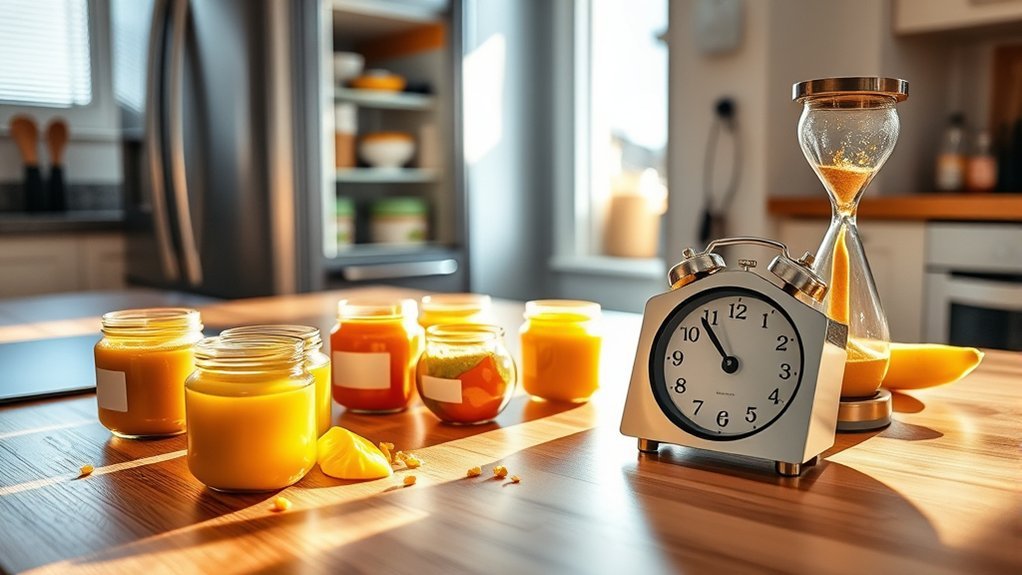
Opened baby food usually lasts 2-3 days in the fridge. For best freshness, pureed fruits and vegetables should be used within 48-72 hours, while pureed meats must be consumed within 24 hours. Always refrigerate immediately after use and be cautious of signs of spoilage, like off smells or color changes. It’s crucial to follow proper storage practices to keep your baby safe. There’s more important information to help you guarantee your baby’s food is safe and nutritious.
Key Takeaways
- Opened baby food should be refrigerated immediately and consumed within 2-3 days for optimal freshness.
- Pureed fruits and vegetables are best used within 48-72 hours after opening.
- Pureed meat, poultry, or fish should be consumed within 24 hours of opening.
- Always inspect for spoilage signs, such as off smells, color changes, and mold growth.
- Store baby food in airtight containers and label with dates to monitor freshness.
How Long Does Opened Baby Food Last in the Fridge?

When you’ve opened a jar or pouch of baby food, it’s important to know how long it lasts in the fridge to keep your little one safe and healthy.
Opened baby food, like Beech-Nut® jars, should be refrigerated and consumed within 2-3 days for best freshness. If you’re using pouches, make sure to reseal them and also stick to that 2-3 day guideline.
Opened baby food should be refrigerated and consumed within 2-3 days for optimal freshness and safety.
For pureed fruits and vegetables, aim to use them within 48-72 hours, while pureed meat, poultry, or fish should be eaten within 24 hours.
If you prepare homemade baby food, store it in the fridge for 24-48 hours.
Always avoid feeding directly from the jar or pouch to prevent contamination and maintain food safety.
Best Practices for Storing Baby Food Safely
To keep your baby’s food safe, it’s essential to follow proper refrigeration techniques and watch for signs of spoilage.
Always store opened jars and pouches in the fridge, and discard any food that’s been at room temperature for over two hours.
Proper Refrigeration Techniques
Storing baby food safely is essential for ensuring your little one’s health, and knowing the right techniques can make a big difference. Always refrigerate opened jars of Beech-Nut® baby food immediately, consuming them within 2-3 days. Use proper storage containers to prevent contamination—never return leftover food that’s been served back to the jar. For ideal safety, maintain your refrigerator at or below 40 degrees Fahrenheit. Here’s a quick reference for refrigeration methods:
| Food Type | Storage Time |
|---|---|
| Pureed fruits/veggies | 48-72 hours |
| Pureed meats | 24 hours |
| Opened jars | 2-3 days |
| Temperature | ≤ 40°F |
Signs of Spoilage
Identifying signs of spoilage in baby food is essential for keeping your little one safe. Always trust your senses; an off smell is a clear indicator that the food has gone bad.
Additionally, watch for color changes or texture alterations, as these can signal spoilage. If you notice bulging or damaged packaging, it’s best to discard that jar.
Remember, safety seals should pop when opened; if they don’t, toss the jar to avoid contamination.
For extra precautions, never return served baby food to the jar, as saliva can introduce harmful bacteria.
With pouches, reseal and refrigerate leftovers, and consume them within 24 hours.
Can You Freeze Baby Food After Opening?

While it might seem convenient to freeze opened baby food for later use, doing so can compromise its texture and flavor, making it less appealing for your little one. Instead, consider refrigerating any unused portions and using them within 2-3 days. Here’s a quick look at the best practices:
| Freezing Methods | Recommendations |
|---|---|
| Opened Jars | Consume within 2-3 days |
| Opened Pouches | Reseal and refrigerate; use within 2-3 days |
| Texture Changes | Freezing can alter consistency |
| Safety Check | Always inspect for spoilage before serving |
How to Tell If Baby Food Has Gone Bad?
Knowing how to tell if baby food has gone bad is essential for keeping your little one safe and healthy.
Always trust your senses—if you notice an off smell, discoloration, or mold growth, it’s time to toss it out. For opened jars, remember they should be refrigerated right away and consumed within 2-3 days to maintain freshness.
If the jar lid doesn’t pop when you open it, that’s a sign the product may be compromised, and you should discard it. Baby food pouches also need to be resealed and refrigerated after opening, with a shelf life of just 24-48 hours.
Always check the best-by date, as unopened baby food can last up to a year. Stay vigilant for your child’s health!
Safety Tips for Feeding Baby Food From Jars and Pouches
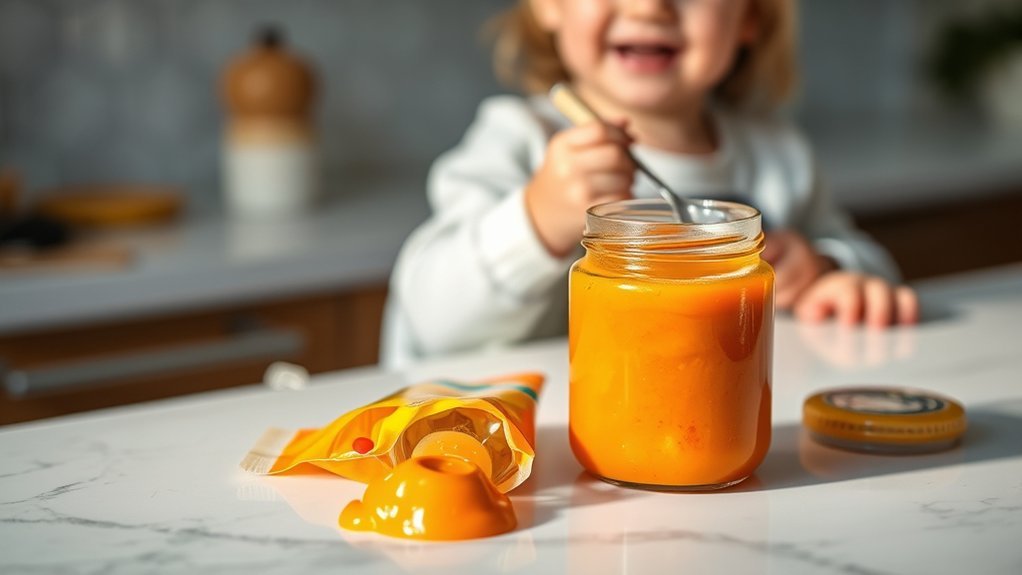
When it comes to feeding your baby food from jars and pouches, safety is a top priority. Always refrigerate opened jars immediately and use them within 2-3 days for freshness.
Pouches should be resealed and refrigerated, ideally consumed within 48 hours. To guarantee bacteria prevention, never feed directly from the jar or pouch. Instead, spoon feed from a separate bowl to maintain food safety.
Remember to discard any leftover food that’s been served to your baby, as it may be contaminated with saliva. Before using jars, check for safety seals; if a jar doesn’t pop when opened, throw it away.
These steps can help keep your little one safe and healthy as they explore new flavors.
How to Properly Reheat Leftover Baby Food
When it comes to reheating leftover baby food, it’s crucial to do it safely to protect your little one.
You can use a microwave at 50% power in short intervals or opt for the stovetop method in a small saucepan.
Either way, be sure to transfer the food to a separate bowl first to avoid contamination.
Microwave Reheating Techniques
Reheating leftover baby food in the microwave can be a convenient option to guarantee your little one enjoys a warm meal.
To confirm microwave safety and proper reheating, follow these tips:
- Use 50% power to promote even heating and avoid hot spots.
- Warm the baby food in 15-second increments.
- Stir thoroughly between increments for a consistent temperature.
- Always check the temperature, confirming it exceeds 140°F before serving.
- Discard any leftover baby food that’s been reheated, as it can’t be re-refrigerated or refrozen.
Stovetop Reheating Methods
Although microwaving is a popular option, stovetop reheating can be just as effective for warming leftover baby food. This method offers stovetop advantages like preventing hot spots and guaranteeing even heating. Here are some reheating tips to keep in mind:
| Step | Action | Purpose |
|---|---|---|
| 1. Heat | Place food in a small saucepan over low heat | Gently warms without burning |
| 2. Stir | Stir frequently | Guarantees even temperature |
| 3. Check temperature | Use a food thermometer to reach 140°F | Confirms safety before serving |
Understanding Baby Food Expiration Dates
Understanding baby food expiration dates is essential for ensuring your little one’s safety and nutrition. When you look at baby food labeling, remember the expiration date significance.
Understanding baby food expiration dates is crucial for your child’s safety and nutrition. Always pay attention to labeling for proper use.
Here are key points to keep in mind:
- Check the best-by date on the jar or lid before use.
- Refrigerate opened jarred baby food and consume within 2-3 days.
- Reseal and refrigerate pouches, using them within 24-48 hours.
- Jarred purees can be safe for up to a year after the best-by date, while pouches should be consumed within three months.
- Always inspect for safety seals; discard any jars that don’t pop upon opening.
What Parents Should Know About Homemade Baby Food Storage
When you prepare homemade baby food, knowing how to store it properly is crucial for your baby’s health and safety. Here’s what you need to keep in mind:
| Storage Method | Duration |
|---|---|
| Refrigerate (airtight containers) | Up to 48 hours |
| Freeze (individual portions) | Best quality up to 3 months; safe for up to 6 months |
Always label your storage containers with the preparation date to track freshness. When serving, spoon out the desired portion instead of feeding directly from the container to prevent contamination. Using ice cube trays for portioning your homemade recipes makes mealtime quicker and easier. By following these guidelines, you can guarantee your homemade baby food is safe and nourishing for your little one.
Frequently Asked Questions
Can I Mix Opened Baby Food With New Batches?
You shouldn’t mix opened baby food with new batches due to safety concerns. Following mixing guidelines helps prevent contamination. Stick to using one batch at a time to guarantee your baby’s health and safety.
What Should I Do With Expired Baby Food?
Dispose of expired baby food safely by throwing it away. Consider baby food alternatives like homemade purees or fresh fruits and veggies. You’re providing the best nutrition, so don’t hesitate to make the switch!
Is It Safe to Use Baby Food Past the Expiration Date?
You can’t judge a book by its cover—expired baby food isn’t always unsafe, but it’s best to trust your instincts. Follow storage tips and prioritize expiration safety for your little one’s health.
How Can I Tell if Baby Food Is Safe to Eat?
To tell if baby food’s safe, inspect the packaging for damage and check for unusual smells or colors. A quick taste test can help, but trust your instincts—if in doubt, it’s better to discard it.
Can I Store Opened Baby Food in the Freezer?
Yes, you can freeze opened baby food! Use airtight baby food containers for ideal freezing techniques. This way, you’ll keep nutrients intact and guarantee your little one enjoys fresh flavors later, just like nature intended.
Conclusion
In summary, knowing how long opened baby food lasts can ease your worries and keep your little one safe. Store it properly in the fridge and remember to check for signs of spoilage. If you’re considering freezing leftovers, remember it’s possible, but always prioritize freshness. By following these guidelines, you can guarantee your baby’s meals are both nutritious and safe. Trust your instincts as a parent, and you’ll navigate baby food storage with confidence.