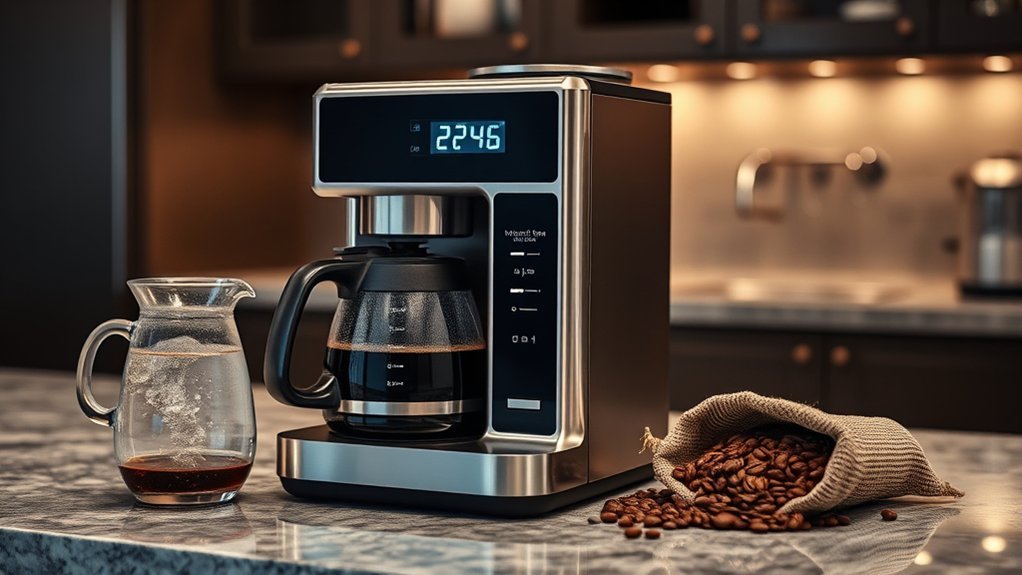

There is no single number of coffee scoops that is correct for every 12-cup coffee maker. Many 12-cup drip machines hold about 60 fluid ounces, but manufacturers can recommend very different amounts of ground coffee for that same volume. Check your machine’s manual first. If it gives no dose, a weight-based starting point of about 55 grams per liter can help you build a repeatable recipe without guessing from the number “12” on the carafe.
Quick Answer
There is no universal scoop count for every 12-cup coffee maker. Many hold 60 fluid ounces, but official recipes differ. OXO recommends 96 grams for 12 marked cups, while one Hamilton Beach 12-cup manual specifies 60 grams. Follow your manual first; use about 55 g/L only when you need a general fallback.
Key Takeaways
Key Takeaways
- A “12-cup” coffee maker does not necessarily make twelve 8-ounce servings. Many popular models use about 5 fluid ounces for each marked cup and hold roughly 60 fluid ounces total.
- The coffee maker’s manual should come before a generic ratio. Two 60-ounce brewers can have very different manufacturer-recommended doses.
- OXO recommends 8 grams per 5-ounce marked cup for its 12-cup brewer, or 96 grams for a full 12-cup batch.
- A Hamilton Beach 12-cup manual for a 1.77-liter brewer specifies six included 10-gram scoops, or about 60 grams.
- If your manual does not give a coffee dose, about 55 grams per liter is a practical weight-based fallback. That is about 98 grams for 60 fluid ounces.
- Coffee scoops are not standardized. Check the scoop size before converting grams into scoops.
- A kitchen scale gives more repeatable results than tablespoons because coffee density changes with roast, grind, and how tightly the grounds are packed.
At a Glance
| Time Required | About 5–10 minutes, depending on the brewer |
| Difficulty | Easy |
| Tools Needed | 12-cup drip coffee maker, correct filter, medium-ground coffee, fresh cold water, and preferably a kitchen scale |
| Cost | Depends on your coffee and filter; the amount of grounds needed varies by brewer and recipe |
Power your essentials anywhere with a 999Wh pure sine wave power station delivering up to 1000W continuous with 2000W surge. It supports fast charging via USB-C PD 60W and USB-A QC 18W, plus simultaneous output for multiple devices through AC, USB, wireless, and car/DC ports. Recharge using AC, car, or solar with a built-in MPPT controller and dual cooling fans, while the upgraded battery management system protects against surges, short circuits, and overheating.
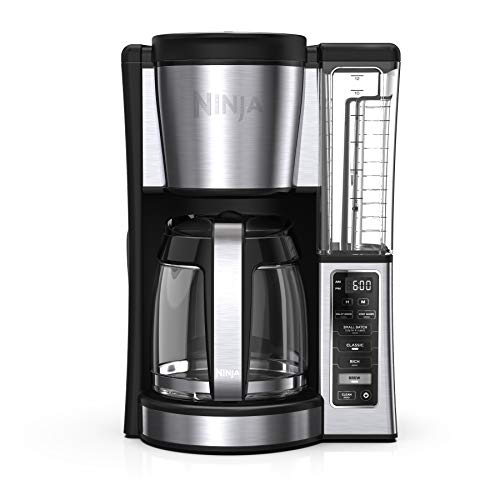
2 BREW STYLES: Classic or Rich, each brew is flavorful and never bitter with custom brew strengths.

2 WAYS TO BREW: SINGLE CUP OR FULL POT. The included single-serve scoop makes it easy to just scoop, place and brew. You can brew up to 14 oz. into a cup or travel mug on the single-serving side or make up to 12 cups on the carafe side with ground coffee.
How Many Scoops of Coffee Do You Need for 12 Cups?

The first step is to find out what “12 cups” means on your specific machine. Do not automatically multiply 12 by 6 or 8 ounces, and do not assume that another brand’s scoop recommendation will fit your brewer.
For example, Mr. Coffee lists a current 12-cup model as 60 fluid ounces, with each marked cup equal to approximately 5 fluid ounces. OXO also describes its 12-cup brewer as having a 60-ounce carafe.
Note: Coffee-maker cup markings are manufacturer-defined serving marks. They are not the same as an 8-fluid-ounce U.S. measuring cup. Also, the amount of brewed coffee can be slightly lower than the water added because some water remains in the coffee grounds.
Why 12-Cup Coffee Makers Can Need Different Coffee Doses
Capacity alone does not tell you the manufacturer’s intended coffee dose. Official instructions for different 12-cup brewers show why a single scoop count cannot be applied to every machine.
| Manufacturer Example | 12-Cup Capacity | Manufacturer Guidance | What It Shows |
|---|---|---|---|
| Mr. Coffee 12-Cup | 60 fl oz / 1.774 L | Check the linked manual for the exact model’s coffee measurement | A marked cup is about 5 fl oz, not 8 fl oz |
| OXO 12-Cup | 60 fl oz | 8 g per 5-fl-oz marked cup, or about 96 g for 12 cups | This model uses a relatively high weight-based dose |
| Hamilton Beach 12-Cup Model 49500 | 1.77 L | 6 included scoops; each scoop is 10 g, for about 60 g total | A similar-capacity brewer can use much less coffee according to its manual |
The most reliable answer to “how many scoops for 12 cups?” starts with the brewer’s own manual, then its actual water capacity—not the number 12 printed on the carafe.
If your manual gives a coffee measurement, start there. If it does not, you can use a general weight-based recipe as a fallback and adjust it within the safe capacity of the filter basket.
Using about 55 grams of coffee per liter of water as a fallback gives these approximate full-pot measurements:
| Full Water Capacity | 55 g/L Fallback | Approx. Tablespoons* | Approx. 2-Tbsp Scoops* |
|---|---|---|---|
| 60 fl oz / 1.77 L | About 98 g | About 19–20 | About 9.5–10 |
| 64 fl oz / 1.89 L | About 104 g | About 20–21 | About 10–10.5 |
| 72 fl oz / 2.13 L | About 117 g | About 23–24 | About 11.5–12 |
*Tablespoon and scoop conversions assume roughly 5 grams per level tablespoon and exactly 2 tablespoons per scoop. Real coffee density and scoop size vary, so grams are more dependable.
These fallback figures are not permission to exceed the dose or basket capacity specified by your coffee-maker manufacturer. A machine designed around a smaller manufacturer dose may not safely accommodate a generic 98-gram recipe.
What’s the Right Coffee-to-Water Ratio for You?
A coffee-to-water ratio becomes most useful when your machine does not provide a clear coffee dose or when you are fine-tuning a recipe within the manufacturer’s limits.
A ratio of 1:18 means about 1 gram of coffee for every 18 grams of water. A 1:17 ratio uses slightly more coffee, while a 1:16 ratio uses more again. Lower second numbers generally mean a more concentrated recipe when the grind, machine, and brew cycle remain similar.
The National Coffee Association’s current drip-coffee guide gives a broad household guideline of 1–2 tablespoons of ground coffee for every 6 ounces of water. Because a tablespoon of coffee has no fixed weight, using grams is easier when consistency matters.
For a practical fallback when your manual gives no dose, you can start with:
Coffee in grams = water in liters × 55
For a 1.77-liter/60-ounce pot, that equals about 98 grams. For 2.13 liters/72 ounces, it equals about 117 grams. Treat those figures as starting points only, and never use them to override the brewer’s maximum-fill or coffee-measurement instructions.
Pro Tip: Once you find a recipe that works in your specific machine, write down the water amount, coffee weight, grind setting, and brew-strength setting. Repeating those four variables is much more reliable than trying to remember how full yesterday’s scoop looked.
Factors That Affect Coffee Flavor and Strength

The amount of coffee matters, but it is only one part of the finished flavor. Bean choice, roast, grind, water, filter, brew cycle, and machine cleanliness all affect the result.
Bean and roast: Coffees from different origins and roast levels can taste very different at the same weight-based ratio. Roast level also changes bean density, which is one reason volume measurements are less consistent than grams.
Grind size: For an automatic drip brewer, start with a medium grind. The National Coffee Association recommends medium grind as the starting point for drip coffee. If the coffee tastes harsh and the basket drains slowly, try slightly coarser grounds. If it tastes thin and water runs through unusually fast, try slightly finer grounds.
Water: Use fresh, cold water that tastes pleasant on its own. The NCA recommends cold water, filtered if possible, and advises against using distilled or softened water as the normal starting choice for drip brewing.
Filter: Use the filter size and style specified by the manufacturer. A filter that folds over, collapses, or blocks drainage can contribute to uneven extraction or overflow.
Brew-strength setting: A Strong, Bold, or Robust button usually changes how the machine runs the brew cycle rather than simply telling you to add more coffee. Follow the instructions for your machine. For example, the Hamilton Beach manual notes that stronger brew settings increase brewing time.
Cleanliness: Old coffee oils and mineral scale can change flavor and restrict water flow. Rinse the basket and reusable filter after use, wash the carafe regularly, and descale according to your brewer’s manual and your water hardness.
Adjusting Coffee for Your Desired Strength
Once you have a safe baseline from the manual or a fallback ratio, change one variable at a time.
- For a milder cup: reduce the coffee dose by about 5–10% while keeping the water amount the same.
- For a stronger cup: first check whether your brewer has a Strong, Bold, or Robust setting. If you still want more concentration, increase the dose modestly without exceeding the basket or manufacturer guidance.
- For bitter or harsh coffee: do not assume you simply used too much coffee. Grounds that are too fine, a dirty machine, or an unusually slow brew can also create harsh flavors.
- For thin or watery coffee: increase the dose slightly if your manual and basket allow it. If the cup still tastes weak, check whether the grind is too coarse or the machine is brewing unusually quickly.
If your baseline is 100 grams, a 5% adjustment is only 5 grams. Testing 95, 100, and 105 grams gives clearer feedback than changing the coffee, grind, water amount, and brew-strength mode at the same time.
The Best Measurements: Tablespoons vs. Scoops
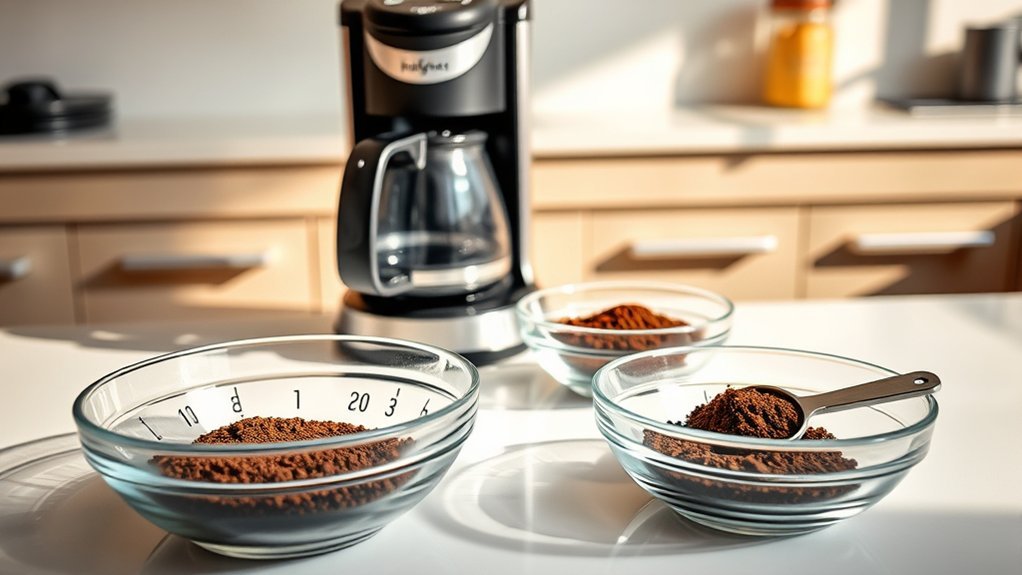
Tablespoons and scoops are convenient, but neither is as dependable as weighing coffee. A scoop is especially easy to misinterpret because there is no single scoop size used by every coffee-maker manufacturer.
Understanding Scoop Measurements
Some manufacturers provide a scoop equal to 2 tablespoons. For example, an official Hamilton Beach 12-cup coffee-maker manual identifies its included scoop as 2 tablespoons or 10 grams. The same manual’s measurement chart recommends six of those scoops for a 12-cup/1.77-liter batch.
Other manufacturers define their supplied scoop differently. OXO states that one level scoop supplied for its 12-cup brewer equals 8 grams, and recommends 8 grams for each 5-ounce marked cup.
That difference is large enough to make “use 10 scoops” an unreliable instruction unless you know both the machine and the scoop. Check the scoop, read the manual, or weigh one level scoop on a kitchen scale before converting a recipe.
Tablespoons vs. Scoops Debate
If you do not own a scale, level tablespoons are easier to compare than an undefined scoop. Some manufacturer instructions treat a level tablespoon of ground coffee as about 5 grams, but the actual weight changes with roast, grind size, and how the spoon is filled.
Using the generic 55 g/L fallback, a 60-ounce batch works out to about 98 grams. If your particular ground coffee averages roughly 5 grams per tablespoon, that is about 19–20 tablespoons. If your scoop is confirmed to hold exactly 2 tablespoons, it is about 9.5–10 scoops.
That conversion is a fallback calculation—not a replacement for model-specific instructions. A manufacturer may intentionally specify a lower dose for its basket and brew cycle.
Essential Tips for Brewing Consistently Great Coffee
Consistency comes from controlling a few variables instead of trying to fix every cup at once. Start with the brewer’s instructions, measure the water, measure the coffee, use an appropriate grind, and keep the machine clean.
Perfect Coffee-To-Water Ratio
There is no single perfect ratio for every coffee drinker or every automatic brewer. Manufacturer recipes can differ substantially even when two machines have similar water capacities.
If your machine provides a full-pot coffee measurement, use it as your baseline. If it does not, about 55 grams per liter is a simple starting point. From there, change the dose in small increments while staying within the filter basket’s safe capacity.
Do not copy an espresso, French press, cold-brew, or pour-over recipe directly into an automatic drip machine. Those methods use different grinds, contact times, filters, pressures, or flow patterns.
Measuring Techniques for Precision
A kitchen scale makes brewing easier because it removes scoop-size uncertainty. If your machine has no stated dose and safely accommodates a ratio-based recipe, these amounts can be used as taste-test starting points per liter:
| Fallback Strength Starting Point | Coffee (grams) | Water (liters) |
|---|---|---|
| Mild | 50 | 1 |
| Balanced starting point | 55 | 1 |
| Stronger | 60 | 1 |
These are taste-adjustment ranges, not universal manufacturer specifications. If your coffee maker gives a different coffee measurement, begin with its instructions instead.
Experimenting With Brew Methods
If you also use a French press, pour-over brewer, espresso machine, or another method, keep a separate recipe for it. A grind and ratio that perform well in an automatic drip coffee maker may behave very differently in another brewing method.
Keep a simple record of coffee weight, water amount, grind setting, brew-strength mode, brew time, and your impression of the finished cup. That makes it much easier to identify which change actually improved the flavor.
How to Measure Coffee for Your Specific 12-Cup Maker
- Read the coffee-measurement instructions first. Check the manual for a recommended tablespoon, scoop, or gram dose. If the manufacturer gives one, use it as your starting point.
- Check the machine’s true capacity. Look at the manual, manufacturer specifications, reservoir, or carafe. Do not assume every marked cup equals 6 or 8 ounces.
- Use a fallback only when needed. If the manufacturer gives no dose, multiply the water volume in liters by about 55 grams as a practical starting point.
- Confirm the basket can handle the dose. Never force a generic ratio into a basket that is smaller than the recipe requires.
- Measure the coffee. A scale is best. If you use tablespoons or scoops, keep them level and use the same measuring tool every time.
- Use the correct filter and grind. Start with a medium grind for ordinary automatic drip brewing unless your manufacturer says otherwise.
- Brew the full cycle. Use the regular or manufacturer-recommended strength mode and let the cycle finish before judging the coffee.
- Taste and adjust. Change the next batch by about 5–10%, or try the machine’s Strong/Bold mode, while remaining within its operating instructions.
Warning: Do not overfill the brew basket just to match a generic gram ratio. Excess grounds, coffee ground too finely, a misplaced or collapsed filter, certain decaffeinated or flavored coffees, and restricted drainage can contribute to overflow. If overflow occurs, stop using the machine and follow the manufacturer’s cooling and safety instructions before handling the basket.
Troubleshooting Common Coffee Brewing Issues
When a full pot does not taste right, change one variable at a time. That makes the cause easier to identify and prevents you from accidentally creating a second problem.
| Problem | Likely Cause | What to Try |
|---|---|---|
| Weak or watery | Too little coffee for your taste, grind too coarse, or water moving through too quickly | Increase the dose modestly if the manual allows it; otherwise try the Strong/Bold mode or a slightly finer grind |
| Bitter or harsh | Grind too fine, excessive contact time, stale coffee oils, or an overly concentrated recipe | Try a slightly coarser grind, clean the machine, or reduce the dose modestly |
| Sour or thin | Insufficient extraction or unusually fast water flow | Try a slightly finer grind and make sure the brewer is clean and operating normally |
| Basket overflowing | Too many grounds, grind too fine, filter misplaced, carafe not seated correctly, or slow drainage | Stop using the machine until safe to handle, then follow the manual, reduce the dose if necessary, correct the filter, and check drainage |
| Generic ratio will not fit the basket | The machine is designed around a different dose or filter-basket capacity | Do not force the generic recipe into the basket; use the manufacturer’s measurement instead |
| Brew takes unusually long | Mineral scale, excessively fine grounds, Strong/Bold cycle, or restricted flow | Check whether a stronger brew mode is active, descale as directed, and try a slightly coarser grind if appropriate |
| “12 cups” fills fewer mugs than expected | The brewer uses smaller manufacturer-defined cup markings and some water remains in the grounds | Check the machine’s stated fluid-ounce capacity rather than counting household mugs |
Frequently Asked Questions
Can I Use Pre-Ground Coffee Instead of Whole Beans?
Yes. Pre-ground coffee works in a drip coffee maker as long as the grind suits the machine. Medium grind is a good starting point for ordinary drip brewing. Whole beans ground shortly before brewing can preserve more aroma, but properly stored pre-ground coffee is convenient and can still make a good pot.
How Long Does Brewed Coffee Stay Fresh?
There is no universal minute at which brewed coffee suddenly becomes stale. Flavor changes gradually as it sits, especially on a hot plate. For the best taste, drink it reasonably soon after brewing. A clean thermal carafe can hold coffee hot without continuously heating it from below.
Is It Okay to Use Flavored Coffee?
Yes, if your brewer permits it. Follow the coffee package and coffee-maker instructions because some manufacturers recommend a lower dose for flavored or decaffeinated grounds to reduce the risk of slow drainage or overflow. Clean the basket and carafe afterward so residual oils or flavoring do not affect later batches.
What Type of Water Is Best for Brewing?
Use fresh, cold water that tastes clean on its own. Filtered water can help when tap water has noticeable chlorine or other off flavors. The National Coffee Association recommends cold water, filtered if possible, and advises against assuming that distilled or softened water is automatically better for normal drip brewing.
Can I Brew Less Than 12 Cups in This Machine?
Yes. Follow your machine’s measurement chart for the smaller batch when one is provided. If the manual gives no dose, calculate from the amount of water you actually add instead of using the full-pot dose. If your machine has a dedicated 1–4 cup or small-batch mode, use it as directed.
Why Doesn’t a 12-Cup Coffee Maker Make Twelve 8-Ounce Cups?
Coffee-maker cup markings are often smaller than a household measuring cup. Mr. Coffee, for example, identifies approximately 5 fluid ounces as one marked cup on a current 12-cup model, giving a 60-fluid-ounce total capacity. Check your model’s manual or stated reservoir capacity for the exact number.
How Many Grams of Coffee Should I Use for a 12-Cup Coffee Maker?
Use the manufacturer’s recommendation when one is available. For example, OXO recommends about 96 grams for its 60-ounce 12-cup brewer, while one Hamilton Beach 1.77-liter 12-cup manual specifies about 60 grams. If your manual gives no dose, about 55 grams per liter is a practical fallback, which is roughly 98 grams for 60 fluid ounces.
Is One Coffee Scoop Always Two Tablespoons?
No. Some manufacturers supply a two-tablespoon scoop, but scoop definitions differ. Hamilton Beach identifies one included scoop in a 12-cup manual as 2 tablespoons or 10 grams, while OXO defines its supplied scoop by an 8-gram coffee dose. Check your scoop or manual before converting a recipe.
Should I Trust My Coffee Maker Manual or a Generic Coffee Ratio?
Trust the coffee maker’s manual first. It is written for that machine’s basket size, filter, water flow, and brew cycle. Use a generic ratio only when the manufacturer does not provide a dose, and never exceed the machine’s stated capacity just to reach a ratio found online.
How Many 8-Ounce Cups Come From a 60-Ounce 12-Cup Coffee Maker?
Sixty fluid ounces equals 7.5 eight-ounce measuring cups before brewing losses. The amount that reaches the carafe can be slightly lower because some water remains in the coffee grounds, so the number of full 8-ounce servings may be a little less in practice.
Conclusion
The best answer to how many scoops of coffee you need for 12 cups is to check your coffee maker’s own measurement instructions first. A 12-cup machine may hold about 60 fluid ounces, yet official recipes can still differ dramatically: OXO recommends about 96 grams for one 60-ounce model, while a Hamilton Beach 1.77-liter model specifies about 60 grams. If your manual gives no dose, about 55 grams per liter is a practical fallback—roughly 98 grams for a 60-ounce pot. Weighing the coffee, using the correct filter and grind, and changing one variable at a time will give you far more consistent results than relying on an undefined scoop count.
Sources
- National Coffee Association — Drip Coffee — supports current drip-coffee ratio, grind, water, cleaning, and brewing guidance.
- Specialty Coffee Association — Coffee Standards — identifies SCA-310 Home Coffee Brewers as the current home-brewer specification.
- Mr. Coffee — 12-Cup Programmable Coffee Maker — documents a 60-fluid-ounce water capacity and approximately 5-fluid-ounce cup marking.
- OXO — How to Use the 12-Cup Coffee Maker — documents a 60-ounce carafe, 8-gram manufacturer dose per 5-ounce cup, and an 8-gram supplied scoop.
- Hamilton Beach — 12-Cup Programmable Coffee Maker Use & Care — documents a 1.77-liter 12-cup capacity, 2-tablespoon/10-gram included scoop, full-pot measurement, brew-strength settings, and overflow precautions.