Adjusting coffee strength is easiest and most reliable when you change one brewing variable at a time. Start by engaging your machine’s dedicated Aroma, Bold, or Strong setting, then measure both your coffee grounds and water with precision. If the finished cup still tastes weak or watery, increase the coffee dose before making fine grind adjustments. The exact method depends on whether you brew with an automatic drip coffee maker, single-serve pod brewer, French press, or espresso machine.
Quick Answer
To make coffee stronger, select your machine’s Bold or Intense Aroma setting, use a measured 1:15 to 1:16 coffee-to-water ratio (about 30 to 33 grams of coffee per 500 ml of water), and use a consistent medium grind for drip machines. Adjust only one variable per batch to systematically optimize flavor without introducing bitterness.
Key Takeaways
- On a Smeg DCF02, press the Aroma button to toggle between Delicate (1 bean) and Intense (2 beans) modes.
- Machine “Bold” and “Aroma” buttons work by pulsing water delivery, creating a pre-infusion bloom that extends contact time.
- Follow the Golden Cup standard: start with 1 to 2 level tablespoons per 6 ounces of water, or 28–32 grams per 500 milliliters.
- Increase ground coffee dose by 5% to 10% before adjusting grind size finer to prevent basket overflows and harsh bitterness.
- Ensure water brews between 195°F and 205°F (90°C–96°C); water below this range causes sour, weak under-extraction.
- Rinse removable filters after every cycle and descale regularly to maintain proper brewing temperature and water flow.
At a Glance
| Time Required | 1 to 3 test brewing cycles (5–15 minutes) |
| Difficulty | Easy |
| Tools Needed | Coffee maker, digital gram scale (or measuring scoop), burr grinder, fresh coffee, filtered water |
| Cost | $0 (standard coffee beans and water) |
What Brew Strength Really Means
Coffee drinkers frequently use the word strength to describe completely different sensory characteristics. Isolating these technical factors makes troubleshooting a weak or disappointing cup simple and predictable.
- Concentration (Total Dissolved Solids / TDS): Concentration refers to the ratio of dissolved coffee solids relative to water in your final cup. A higher dose of ground coffee per ounce of water increases TDS, yielding a heavier, more viscous body.
- Extraction Yield: Extraction measures the percentage of soluble compounds pulled out of the coffee grounds by hot water (ideally 18% to 22%). Under-extracted coffee tastes sour, acidic, and thin; over-extracted coffee tastes intensely bitter, dry, and astringent.
- Flavor Intensity & Roast Density: Dark roast coffees are physically more porous and soluble, delivering bold, roasty bitterness quickly. Light roast coffees are denser and require slightly higher extraction temperatures or finer grinds to release their full flavor spectrum.
- Caffeine Content: Caffeine levels depend on total coffee bean mass, species (Robusta vs. Arabica), and brewing contact time. A dark, bitter cup does not automatically contain more caffeine than a lighter, brighter cup brewed from the same dose.
For a stronger, richer cup without acrid bitterness, increase the measured coffee dose before altering grind size or extending steep times.
Power your essentials anywhere with a 999Wh pure sine wave power station delivering up to 1000W continuous with 2000W surge. It supports fast charging via USB-C PD 60W and USB-A QC 18W, plus simultaneous output for multiple devices through AC, USB, wireless, and car/DC ports. Recharge using AC, car, or solar with a built-in MPPT controller and dual cooling fans, while the upgraded battery management system protects against surges, short circuits, and overheating.
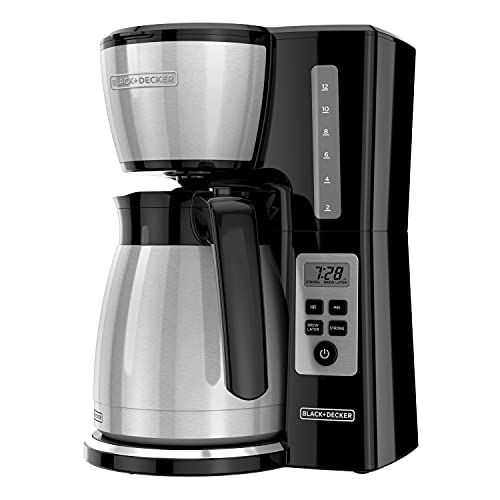
4-LAYER VACUUM SEALED THERMAL CARAFE: Double-walled 4-layer carafe keeps coffee hot for up to two hours—no warming plate needed. Preheat with hot water before brewing for best results.

SEMI-TRANSPARENT WATER RESERVOIR holds up to 5 cups of water capacity with a level indicator to always ensure you have enough water ready for brewing.
How to Adjust Brew Strength on Your Coffee Maker
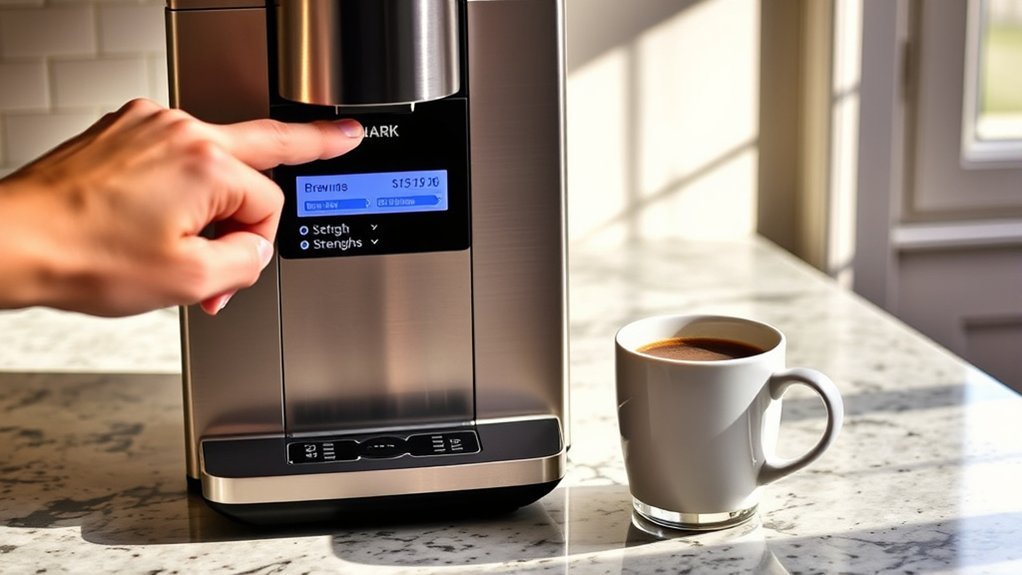
Follow this systematic process on any automatic drip coffee maker. Consult your user manual for model-specific naming conventions, as manufacturers label their strength setting Aroma, Bold, Strong, Rich, or Intense.
- Engage the stronger machine setting. Press the Bold, Aroma, or Strong button prior to starting the brew cycle. This initiates a pulsed water flow program.
- Measure water precisely. Fill the reservoir using a graduated measuring cup rather than estimating by eye on the carafe markings.
- Weigh the coffee grounds. Start with a baseline ratio of 1 to 2 tablespoons per 6 fluid ounces of water, or 30 grams per 500 milliliters. Using a digital gram scale eliminates density discrepancies between different roasts.
- Increase the dose incrementally. If your initial brew tastes watery, increase the ground coffee weight by 5% to 10% (e.g., from 30g up to 33g) while keeping the water volume constant.
- Inspect grind consistency. Use a medium grind resembling table or kosher salt. Move one notch finer only if the brew remains thin and your brew basket drains with zero pooling.
- Taste at moderate temperature. Allow the coffee to cool below 140°F (60°C) before evaluating. Boiling-hot coffee masks natural sweetness and amplifies perceived bitterness.
Warning: Never lift the brew basket lid or remove the filter holder during an active cycle. Escaping steam and scalding water can cause severe burns. Allow the machine to finish dripping completely before handling internal parts.
Using the Aroma Button to Adjust Brew Strength
The Smeg DCF02 Drip Coffee Maker features built-in coffee intensity management through its dedicated Aroma button. Smeg confirms this functionality in the official Smeg DCF02 Instruction Manual and on the official Smeg DCF02 Product Page.
Aroma Button Functionality
When you toggle the Aroma button, the internal brewing logic modifies the water pump rhythm. In standard (Delicate) mode, water flows steadily through the coffee bed. In Intense mode, the heating element and water pump pulse intermittently. This creates a pre-infusion “bloom” that fully saturates the coffee bed, extending total water-to-coffee contact time without requiring a dangerous powder-fine grind.
- Fill the water reservoir with fresh, cold filtered water up to the required cup marking.
- Insert the permanent stainless steel mesh filter or a high-quality No. 4 paper filter into the basket holder.
- Add fresh, medium-ground coffee to match your water volume.
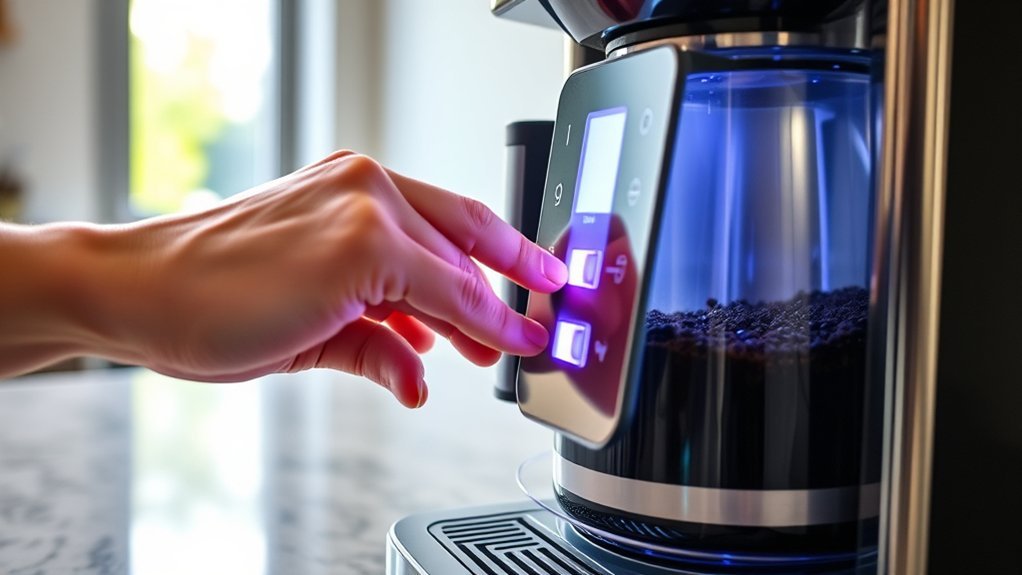
- Press the Aroma button on the front control panel to switch between Delicate and Intense Aroma.
- Confirm your setting on the LED screen before pressing the ON/OFF switch.
The DCF02 automatically stores your selected Aroma setting in memory for subsequent brewing cycles. Always check the display icons before brewing if multiple household members use the machine.
Note: While Smeg does not publish the exact millisecond pump timing, testing shows the Intense setting extends total brew cycle time by roughly 1 to 2 minutes via pulsed water distribution, maximizing extraction efficiency.
Strength Setting Indicators
The digital display on the Smeg DCF02 communicates the active extraction profile using coffee-bean symbols:
- One illuminated bean: Delicate Aroma (standard water flow, lighter body).
- Two illuminated beans: Intense Aroma (pulsed extraction, higher dissolved solids).
If your coffee remains mild with two beans illuminated, keep the Intense setting active and increase your ground coffee dose. When preparing smaller volumes (under 4 cups), activate the dedicated 4-Cup function button to recalibrate flow rate specifically for smaller brew beds.
How to Determine the Ideal Coffee-to-Water Ratio for Stronger Brew
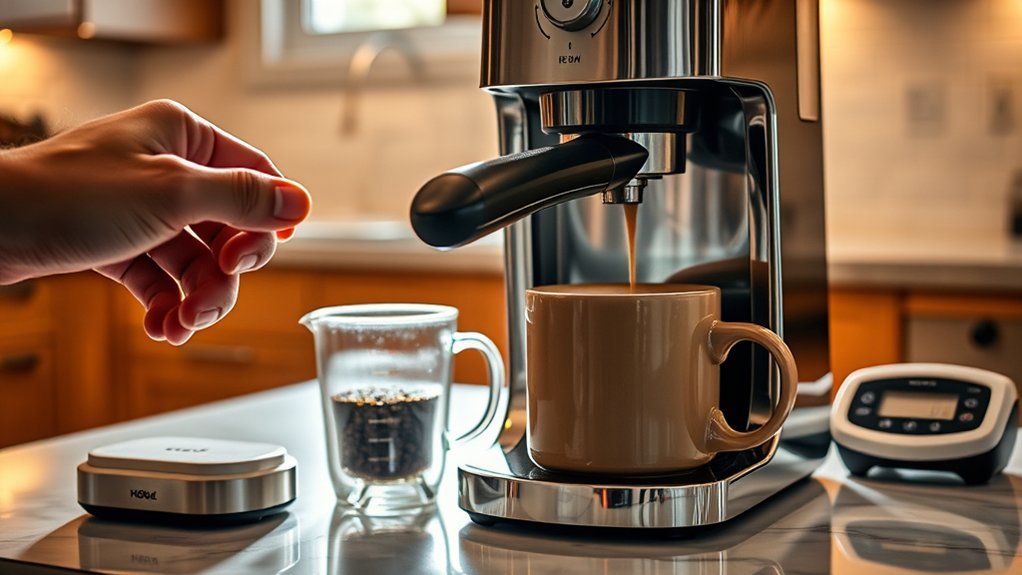
Adjusting your coffee-to-water ratio is the single most predictable method for managing coffee concentration. The National Coffee Association Drip Guide recommends a baseline ratio of 1 to 2 tablespoons of ground coffee per 6 ounces of water. For exacting results, professional baristas use brewing ratios based on weight (grams of coffee to grams/milliliters of water).
The Smeg Filter Coffee Brewing Guide specifies a baseline recipe of 30 grams of coffee per 500 milliliters of water (a 1:16.7 ratio). To achieve a bolder, stronger profile without bitterness, tighten this ratio toward 1:15.
| Brew Profile | Weight Ratio (Coffee : Water) | Metric Recipe (500 ml / ~17 oz) | Volume Estimate |
|---|---|---|---|
| Milder Cup | 1:18 | 27 grams coffee | ~3.5 level tbsp |
| Balanced Standard | 1:16.7 | 30 grams coffee | ~4 level tbsp |
| Strong & Rich | 1:15 | 33.5 grams coffee | ~4.5 level tbsp |
| Extra-Strong / Bold | 1:14 | 35.5 grams coffee | ~5 level tbsp |
Volumetric measurements (spoons and scoops) can fluctuate by up to 25% depending on bean size, roast darkness, and grind coarseness. A digital kitchen scale provides exact repeatability across different coffee bags.
Pro Tip: Keep water volume, bean variety, and machine settings fixed during testing. Increase your dry coffee dose by 2 to 3 grams per batch until you hit your ideal mouthfeel, then lock in that weight.
How Grind Size Affects Coffee Strength
Grind particle size governs the total surface area exposed to water and controls the speed at which water filters through the coffee bed. Finer particles extract rapidly but slow down water flow; coarser particles extract slowly and let water pass through quickly.
- Automatic Drip Brewers: Medium grind (similar in texture to coarse beach sand or table salt).
- French Press & Cold Brew: Coarse grind (similar to sea salt crystals or cracked peppercorns).
- Stovetop Moka Pots: Medium-fine grind (finer than drip, coarser than espresso).
- Espresso Machines: Fine grind (resembling powdered sugar with slight grit).
The goal is to match grind size to brewing contact time. If water passes too quickly through coarse grounds, the cup will taste sour and weak. If water is trapped too long by excessively fine grounds, harsh phenols and bitter tannins leach into the brew.
- Weak, sour, or tea-like: Adjust the grinder 1–2 clicks finer or increase the dose.
- Bitter, dry, or chalky: Adjust the grinder 1–2 clicks coarser.
- Water backing up in the filter basket: The grind is too fine, creating an impermeable mud bed.
- Excessive sediment in the cup: Grounds are too fine or the filter mesh is misaligned.
Using a burr grinder rather than a spinning blade grinder ensures consistent particle uniformity, preventing fine dust (“fines”) from clogging the filter while larger chunks under-extract.
How to Control Brew Time for Stronger Coffee
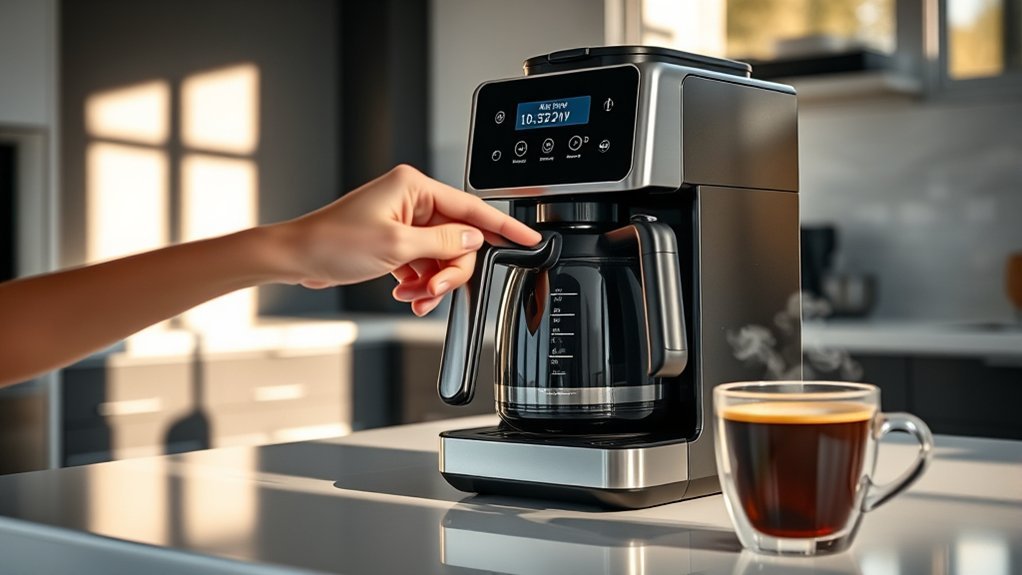
Contact time determines whether you extract desirable sugars and aromatic oils or harsh, astringent compounds. How you adjust brew time depends on the degree of manual control your coffee brewer permits.
Brew Time Impact
Water-to-coffee contact must remain within optimal windows. According to the National Coffee Association, automatic drip coffee requires approximately 5 minutes of total contact time. Single-serve pod systems run for 45 to 60 seconds, while immersion methods like the French press require 4 minutes.
If water moves through a drip machine in under 3 minutes, the brew will taste underdeveloped. If a brew stalls past 7 minutes due to overly fine coffee grounds, over-extraction and extreme bitterness will result.
Adjusting Brew Duration
- Automatic Drip Machines: Use the Aroma/Bold setting or 4-Cup function to engage pulsed brewing cycles that prolong contact time safely.
- Single-Serve Pod Brewers: Press the Bold button (which slows water pump velocity) and select a 6 oz or 8 oz cup size rather than running 10 oz or 12 oz through a single pod.
- French Press Brewers: Maintain a 4-minute steep before plunging. According to the NCA French Press Guide, decant coffee immediately after plunging; leaving liquid sitting on the grounds causes progressive over-extraction and bitterness.
- Espresso Machines: Regulate shot duration (typically 25–30 seconds) by fine-tuning grind size and tamp pressure rather than extending pump run times.
Optimal Steeping Times
| Brewing Method | Optimal Contact Time | Mechanism for Adjustment |
|---|---|---|
| Drip Coffee Maker | 4 to 6 minutes | Select Aroma/Bold mode; adjust grind slightly coarser/finer. |
| French Press | 4 minutes | Manual timer; plunge and decant immediately. |
| Pod Machine | 45 to 60 seconds | Select “Strong” option; reduce cup output setting. |
| Espresso Machine | 25 to 30 seconds | Refine dose mass and adjust grind setting on burrs. |
Adjusting Strength by Coffee Maker Type
| Coffee Maker Model / Type | Best First Adjustment | Common Mistake to Avoid |
|---|---|---|
| Smeg DCF02 Drip | Select Intense Aroma (2 beans) and increase dose to 33g per 500 ml. | Pouring pre-heated water into the tank or grinding to espresso-fine powder. |
| Standard Drip Brewer | Engage Bold mode and tighten ratio to 1:15 using a digital scale. | Overfilling the filter basket beyond its max line, causing dry bypass. |
| Single-Serve Pod Machine | Select Strong/Bold and brew at 6 oz volume instead of 10 oz. | Running a second brew cycle through a spent coffee pod. |
| French Press | Increase dose to a 1:14 ratio while keeping a strict 4-minute steep. | Letting coffee sit inside the press carafe after plunging. |
| Espresso Machine | Dose up to basket capacity (e.g., 18g in an 18g basket) and grind finer. | Letting the shot pull for 50+ seconds to fill a mug. |
Troubleshooting Brew Strength Adjustments
Use this diagnostic reference to pinpoint extraction issues based on flavor profiles and water drainage behavior.
| Symptom | Underlying Cause | Corrective Action |
|---|---|---|
| Weak, Watery, or Hollow | Low ground dose, coarse grind, Delicate setting, or water channeling around grounds. | Engage Bold/Intense mode, increase dry dose by 10%, ensure level bed, and adjust grind one step finer. |
| Sour, Sharp, or Salty | Severe under-extraction caused by low water temperature (<195°F) or excessively coarse particles. | Grind finer, use fresh beans, and descale heating elements if the machine brews lukewarm water. |
| Bitter, Dry, or Harsh | Over-extraction from fine grounds, excessive brew time, or rancid coffee oils in the basket. | Adjust grind one notch coarser, reduce brew time, and scrub the filter basket with warm soapy water. |
| Slow Draining / Pooling | Excess fines clogging filter pores, or internal mineral scale constricting flow valves. | Switch to a quality burr grinder, step grind coarser, and run a complete descaling cycle. |
| Filter Basket Overflow | Overdosed basket, collapsed paper filter, ultra-fine grind, or misaligned carafe drip stop. | Turn off machine, clear blockage, reduce dose, and ensure carafe is centered under the anti-drip valve. |
Why Coffee May Stay Weak on the Intense Setting
If your Smeg DCF02 or comparable drip maker still produces weak coffee while running on its highest strength setting, check these core issues:
- Memory Reset: Verify that the 2-bean icon is illuminated. Unplugging the unit can reset the machine to 1-bean Delicate mode.
- Grounds Channeling: Level the coffee bed inside the filter before brewing. If coffee grounds slope steeply, water cuts a channel straight through the center and bypasses the coffee.
- Under-Dosing: Standard coffee scoops vary widely. Weigh out at least 30 to 33 grams of coffee per 500 ml of water.
- 4-Cup Button Inactive on Small Batches: If brewing under 500 ml without engaging the 4-Cup function, water flows too fast through the small coffee bed.
- Mineral Scale Buildup: Limescale restricts the heating chamber, lowering water temperature below the critical 195°F extraction threshold.
Water Quality and Maintenance for Consistent Strength
Water constitutes approximately 98.5% of a brewed cup of drip coffee. Mineral composition and brewing temperature directly govern how efficiently flavor compounds extract.
According to the Specialty Coffee Association (SCA), water should heat to 195°F–205°F (90°C–96°C) at the point of coffee contact. Water below 195°F cannot dissolve sweet, aromatic compounds, leaving the brew weak and sour. Water above 205°F scalds the bed and extracts astringent wood tannins.
Follow these maintenance practices to keep brew strength consistent:
- Use Filtered Water: Use carbon-filtered water with moderate mineral content (approx. 75–150 ppm TDS). Avoid untreated hard tap water (which causes scaling) and 100% distilled or reverse-osmosis water without re-mineralization (which extracts flat, sour coffee and can trigger machine sensor errors).
- Clean Removable Components: Coffee oils oxidize into an insoluble, rancid varnish inside filter holders and carafes. Wash carafes and reusable mesh filters after every single brew cycle.
- Descale Regularly: Run an organic descaling solution or commercial coffee descaling liquid through the machine every 40 to 60 brew cycles (or whenever your brewer’s descaling light activates). Avoid household vinegar unless permitted by the manufacturer, as acetic acid degrades silicone seals and leaves lingering odors.
- Maintain the Warming Plate: Wipe the carafe warming plate clean once cooled. Do not leave brewed coffee on a hot plate for longer than 20–30 minutes, as heat breaks down aromatics into bitter quinic acid.
Frequently Asked Questions
Can I use any type of coffee with my coffee maker?
Yes, you can use whole-bean or ground coffee from any origin, blend, or roast profile. However, the grind size must match your brewing apparatus. Automatic drip coffee makers require a medium grind, French presses need a coarse grind, and espresso machines require a consistent fine grind. Never put instant coffee granules in a drip machine filter basket.
What maintenance is needed for my coffee maker?
Daily maintenance involves discarding spent grounds, rinsing the filter basket, washing the carafe, and wiping the warming plate once cool. Periodically (every 1 to 3 months depending on water hardness), descale the internal boilers using a manufacturer-approved descaling solution to remove mineral deposits that disrupt brewing temperatures and water flow.
How often should I clean my coffee maker?
Wash the carafe, filter cone, and reusable mesh filter after every single brew cycle with warm water and mild dish soap to remove stale coffee oils. Perform an internal system descaling every 40 to 60 brewing cycles, or immediately when your machine’s descaling indicator LED turns on.
Does brew strength affect caffeine content in coffee?
Yes, but perceived taste strength does not directly correlate with caffeine levels. As documented in a study published in PMC / NIH, total caffeine extraction depends primarily on total dry coffee mass, bean genetics (Robusta contains roughly double the caffeine of Arabica), and water contact duration. A strongly concentrated light roast often contains as much or more caffeine than a dark, intensely bitter brew.
Can I brew tea in my coffee maker?
Do not brew loose tea or tea bags inside a Smeg DCF02 or standard drip coffee maker filter basket. The machine’s instruction manual strictly designates drip coffee as the intended use and requires clean water only in the reservoir. Brewing tea in a coffee basket imparts persistent coffee-oil flavors into the tea and risks clogging the drip-stop valve.
Should I use a fine grind to make drip coffee stronger?
No, you should not jump straight to an extra-fine grind. Fine grounds trap water, resulting in filter basket pooling, overflowing, and over-extracted bitterness. Instead, keep a consistent medium grind and increase your ground coffee dose by 5% to 10%. Adjust grind size one notch finer only if the brew remains watery and drains too rapidly.
Why is my coffee weak even when the Strong or Intense setting is on?
If coffee tastes weak despite having the Bold or Intense Aroma setting activated, the root cause is typically under-dosing (using too little dry coffee for the water volume), an excessively coarse grind, stale beans, or severe limescale buildup preventing the internal boiler from reaching the required 195°F–205°F extraction temperature.
Conclusion
Mastering coffee strength on any brewer requires controlling the relationship between coffee mass, water volume, and extraction time. Begin by engaging your machine’s built-in strength setting—such as the Intense Aroma 2-bean mode on a Smeg DCF02—to optimize water delivery. Next, weigh your grounds to establish a proven 1:15 to 1:16 brewing ratio.
Maintain a clean medium grind for automatic drip brewing, avoid the temptation to use espresso-fine powder in a drip basket, and test only one adjustment per batch. Once you log the ideal balance of dose, grind, and machine setting, you can consistently reproduce a rich, full-bodied cup of coffee every morning.
Sources
- Smeg DCF02 Instruction Manual — Official controls, Aroma levels, 4-Cup function, and safety parameters.
- Smeg DCF02 Product Specifications — Two coffee-intensity settings, LED indicators, and appliance technical data.
- Smeg Filter Coffee Brewing Guide — Recommended 30g per 500ml recipe, grind textures, and flavor balance.
- National Coffee Association (NCA) Drip Brewing Guide — Golden Cup brewing ratios, medium grind standards, and contact times.
- National Coffee Association (NCA) French Press Guide — Coarse grind recommendations, 4-minute steep guidelines, and decanting instructions.
- PMC / NIH Extraction Research — Scientific analysis of caffeine concentrations and dissolved solids across brewing methods.